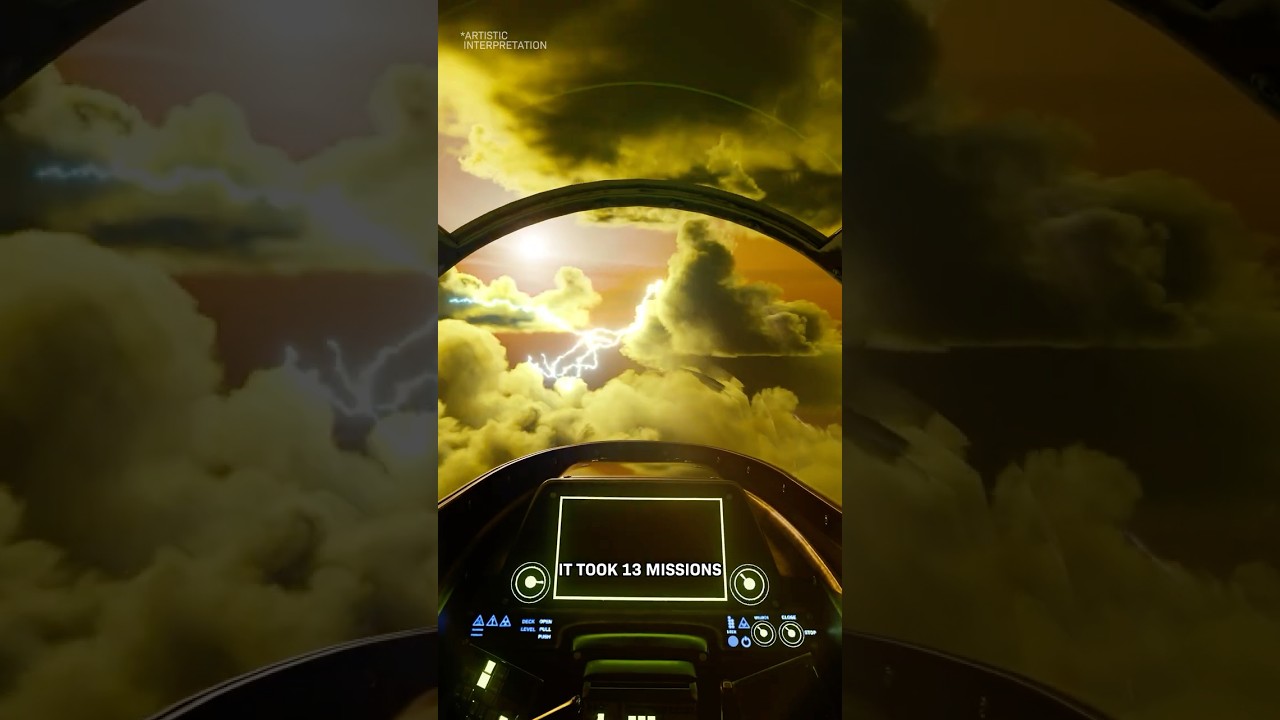
The destruction of Truk Lagoon in February 1944 demonstrates that even the most heavily fortified naval base can be neutralized if its logistical infrastructure is destroyed, as the Japanese Combined Fleet had evacuated before the American attack, leaving only merchant ships, tankers, and supplies that were systematically destroyed, ultimately contributing to Japan's defeat at Leyte Gulf eight months later.
Install our extension to search inside any video instantly.
Japan Called Truk "Untouchable" — America Erased It in a Day
Added:It is February 17th, 1944.
The hour is 0400 somewhere in the Central Pacific in a darkness so complete that the carrier decks are lit only by the blue exhaust flame of aircraft engines turning over.
A man climbs into the rear seat of a dive bomber and straps himself in.
His name is Dave Corley. He is an aviation radio man, first class, attached to a squadron aboard the USS Enterprise.
His seat faces backward toward where he has been, not where he is going.
And where he is going for the previous 2 years of the war has carried a weight that no briefing could entirely account for.
The very thought of approaching Truk, he would later recall, seemed fatal.
He is not alone in that thought. He is one man in 74 aircraft preparing to launch from five carriers in the pre-dawn dark.
Around him, the Pacific Fleet, the most powerful naval force ever assembled in this ocean, is holding its breath.
There are men across those flight decks who have been fighting this war since December 1941.
They have earned every mile of ocean between them and where they are going, and still this morning they feel it, the fear of a place.
What was Truk? What did it take to make the United States Navy flinch at the sound of a name?
And what actually happened in 48 hours of February 1944 when it finally stopped flinching?
The Caroline Islands sit in the Western Pacific roughly equidistant between the Philippines and the Marshall Islands, a thousand miles of open ocean in every direction with Truk at the center of it all.
The lagoon is enormous, 40 miles wide, 25 miles long, enclosed by a coral barrier reef broken only by a handful of navigable passes.
The high volcanic islands ringing that lagoon, Moen, Dublon, Eten, Param, provided natural positions for gun emplacements commanding every approach.
The deep, calm water inside offered superb anchorage in almost any weather.
Nature had designed a fortress.
Japan improved on the design.
Japan moved into Micronesia in 1914, occupying the German-held islands when the war in Europe stripped Germany of the ability to defend them.
After 1919, the League of Nations formalized Japanese control through a mandate. With one explicit condition, the islands were not to be fortified.
Japan agreed to this condition.
Japan then immediately began fortifying the islands.
Through the 1920s and into the 1930s, the Carolines were closed to the outside world entirely.
What was being built no one outside Japan could confirm.
What was built was this.
Five airstrips, seaplane bases, a torpedo boat station, submarine repair shops, a communication center and a radar station, coastal defense guns terraced into the volcanic hillsides, underground fuel storage capable of holding 10,000 tons of oil, above ground steel tanks holding three times that, roads, trenches, bunkers, and caves carved throughout the major islands. And at the center of it all, anchored in that vast, quiet lagoon, the headquarters of Japan's combined fleet.
The battleships, the carriers, the cruisers and destroyers, the merchant vessels loaded with ammunition and supplies bound for the front lines in New Guinea and the Solomons, the tankers that kept all of it moving.
Admiral Yamamoto kept his headquarters aboard the battleship Yamato at anchor in this lagoon from August 1942 until the following year.
Truk was not merely a base, it was the logistical heart of a Pacific empire pumping fuel, ammunition, and soldiers across a thousand miles of ocean.
The warships anchored inside it were the visible symbols of Japanese power.
The tankers, the merchant ships, the maris loaded with supplies, those were the substance.
The machine that the warships existed to protect and project. The allies could not know the full scale of what had been built.
That was partly the point.
The secrecy was as much a weapon as the guns.
Allied intelligence could probe the edges of what was there, estimate and calculate, but could not penetrate the reef or the closed doors. And when you cannot confirm the extent of a threat, fear fills the gap.
By 1943, Truk had a name in the Allied Pacific Theater that functioned like a warning.
The Gibraltar of the Pacific, a place not to go.
By autumn of 1943, Japan is on the defensive.
The victories of the early war years, the cascade of islands taken, the Allied fleets shattered, belong to another phase of this conflict. The Solomon's campaign has bled Japan's air groups.
MacArthur is grinding up the New Guinea coast.
Nimitz is driving west through the Central Pacific, and his pace is not slowing.
In November 1943, American Marines land on Tarawa Atoll.
The battle lasts 76 hours.
More than 3,000 Marines are killed or wounded taking an island barely 2 miles long.
Every planner in Nimitz's command carries that number through every subsequent decision.
Tarawa does not end the island hopping campaign.
It clarifies the price of it.
By early 1944, the next objective is Eniwetok, 669 nautical miles from Truk.
If Truk remains operational, it can sortie warships against the invasion fleet.
It cannot be contained or bypassed. It must be struck.
The question no one has yet answered is whether the Gibraltar of the Pacific can survive a direct blow from Task Force 58, and whether, if the air attack fails to neutralize it, the fortress will have to be stormed from the sea.
Every planner in the room knows what Tarawa cost.
None of them wants to find out what Truk would cost.
Under Vice Admiral Raymond Spruance, commanding the Fifth Fleet, the planning falls into place.
Spruance is not a man given to bold gestures.
His nickname in the fleet is electric brain.
Deliberate, methodical, intellectually rigorous to the point of seeming cold.
He walks the decks of his flagship every morning regardless of what is happening around him. He is not an aviator, has no carrier background, and this creates a quiet tension with his air officers.
He trusts his carrier commander to manage what he cannot fly himself.
That carrier commander is Rear Admiral Marc Mitscher.
Where Spruance is precision and control, Mitscher is something harder to define.
Slight, weather-beaten, his face burned dark brown by years at sea.
He sits backward on the flag bridge in a battered long-billed cap, not standard Navy issue, worn to shield eyes damaged by decades of Pacific sun.
And he whispers his orders.
"Only a damn fool faces into the wind," he says, and his pilots understand that the remark contains something about how he leads.
He trusts them.
They know it.
He was on the Hornet during the Doolittle Raid.
He commanded the air war over the Solomons in 1943.
He has never stopped learning how to fight from a carrier deck.
Task Force 58, five fleet carriers, four light carriers, six battleships, 10 cruisers, 28 destroyers, 560 aircraft is his first major command.
February 17th is his moment to use everything he knows.
On February 10th, 1 week before the scheduled raid, a Consolidated PB4Y Privateer reconnaissance aircraft is spotted over Truk Lagoon. The Japanese know immediately what it means.
Admiral Mineichi Koga, who replaced the killed Yamamoto in April 1943 and has been managing a war already turning against him, makes the decision quickly.
Evacuate the capital ships. The battleships, the heavy cruisers, the fleet carriers, everything Japan spent years positioning inside that lagoon, slips out through the barrier reef passes and steams for Palau.
The Combined Fleet is gone.
Koga survives Hailstone. He dies in a plane crash over the Philippines in March 1944, 1 month later.
Japan believes it has protected what mattered.
It has not.
The lagoon, when Task Force 58 approaches in the darkness of February 16th to 17th, is still full.
Merchant vessels, tankers, auxiliary cruisers, transports loaded with ammunition, dozens of ships sitting at anchor with no air cover, defended only by the shore-based guns on the island hillsides.
Japan evacuated its warships and left everything else behind because the warships were what required protecting.
The supplies, the fuel, the logistical machinery, the fortress would shelter those.
That is what fortresses are for.
On February 15th, 2 days before the Americans arrive, the destroyer Oite departed Truk on a routine escort mission.
Assigned to accompany the light cruiser Agano northward toward Japan.
The launches begin at 04:43.
74 Hellcat fighters staggered off five carrier decks in the dark, climbing into the Pacific night and turning toward Truk.
They arrive over the airfields as dawn is breaking.
The Japanese aircraft on the ground, the zeros, the Kates, the bombers that were Truk's air defense, are caught in the same posture that Japan caught American aircraft at Pearl Harbor 2 years and 2 months before.
Lined up, parked, unable to respond before the guns find them.
Those that scramble are shot down on the climb. Within half a day, 2/3 of Truk's air strength has been destroyed. The airstrips are cratered.
The lagoon below is open. The 30 strike waves that follow are deliberate, engineered. Bombs on ships first.
The plan is specific about this sequence, and the sequence matters. If the shore facilities burn first, the smoke blinds the follow-up strikes against ships.
So, the ships burn first in the morning hours of the 17th, and the fuel and the ammunition and the infrastructure burn after.
Mitcher and Spruance planned the order in which Truk would die.
This is not a rampage.
It is a schedule.
In the fourth fleet anchorage, a Grumman TBF Avenger from torpedo squadron six off the carrier Intrepid drops low over its target.
The pilot is Lieutenant James Bridges.
His aircraft carries one Mark 13 aerial torpedo.
His target is the Aikoku Maru. 10,000 tons packed with ammunition and carrying nearly a thousand soldiers and crew.
Bridges makes his run.
The torpedo enters the water and runs straight.
What happens next is photographed from American aircraft above. The Aikoku Maru does not burn. It does not list and settle.
It detonates.
A secondary explosion of such force that it tears the ship apart in an instant, and the column of fire and smoke that rises above the lagoon climbs thousands of feet into the sky.
In the photograph against that column, at its edge, in the smoke tumbling, is the small dark silhouette of an aircraft.
Bridges' Avenger.
Caught in the explosion of the ship it just killed.
A witness watching from above writes it plainly in a letter that survives, "The aircraft was seen to flutter helplessly into the lagoon."
Bridges and his two crewmen are not recovered. They went into the water at the moment of their kill.
The interval between the torpedo running true and the explosion that destroyed them was not long enough for knowing.
Beyond the anchorage at North Pass, Vice Admiral Spruance has taken personal command of Task Group 50.9.
The battleships Iowa and New Jersey, 45,000 tons each, nine 16-in guns apiece, and brought them out to intercept Japanese vessels fleeing through the reef. They find the Katori, a 5,500-ton training cruiser. The disproportion is not subtle. The Katori continues to fire back. She fires until the Iowa's guns and the aircraft above her leave nothing to fire with.
Every Japanese ship in the lagoon that can still fight does the same.
Night falls.
The Japanese are not finished.
At 22:11, a lone torpedo bomber, a Nakajima B5N, radar-equipped, flying low through the dark, finds the Intrepid and puts a torpedo into her starboard quarter.
11 men are killed. The rudder jams. The carrier withdraws, trailing damage, and will not fight again for months.
Mitscher's response is not to stand down. His response is to launch torpedo bombers into the darkness, the first carrier night strike in the history of the Pacific War.
His pilots go back over Truk in the dark, keeping Japanese crews from sleeping, from repairing, from organizing whatever is left.
No pause, no rest.
The full measure of February 17th is in that exchange.
Japan lands one meaningful blow across two days of fighting.
America's answer is to keep attacking.
The second morning over Truk is different from the first. The air battle is over.
The surviving Japanese aircraft number fewer than a hundred, and most are no longer in a condition to fly.
The second day's strikes move methodically to the shore.
The fuel depots, the ammunition dumps, the communications center, the cratered airfields now struck again.
The smoke from burning oil tanks rises high enough to be seen from the open ocean.
90% of Truk's fuel supply catches fire.
Nine in every 10 gallons stored in the Gibraltar of the Pacific burning in the lagoon it was supposed to supply. The underground tanks, the massive above ground steel reservoirs, the tankers sitting at anchor because Japan believed the fortress would protect them. All of it burning. When the fuel is gone, the base is finished. Every other loss, the ships, the aircraft, the shore installations, is punctuation around that fact. Now, the Oite.
On the night of February 15th, as the Oite sailed north with the Agano in company, the American submarine USS Skate was tracking the same route.
Approximately 160 nautical miles northwest of Truk at sundown, Skate fired four torpedoes at the Agano from 2,400 yards. Three of them found the ship. The Agano caught fire and began to die slowly.
The Oite searched for the submarine. It did not find it. Skate went deep and was gone.
What the Oite did next was its duty. It stayed with the stricken cruiser through the night. It received the transfer of the Agano's crew, all of her officers and men, 700 survivors, onto its own decks.
A destroyer loaded to its limits with sailors pulled from a dying ship in open ocean at night.
Then, it received its orders.
Return to Truk.
The Oite did not know what had happened at Truk.
The commands that sent it back may not have fully known either.
Communications from a base being systematically destroyed are not always reliable. What the Oite knew was its heading.
Back through open Pacific water, back toward home, laden with 700 men it had pulled from the sea.
It had fought for the Agano. It had saved the Agano's crew.
It was going home.
On the morning of February 18th, Hellcats from the Bunker Hill and the Monterey spotted the Oite entering through North Pass. They attacked. The captain was killed on his bridge. Fires broke out after the smokestack. The destroyer, carrying its own crew and the 700 men it had pulled from the sea, sank in the lagoon it had been trying to reach. The Oite did not fail. It did not make a mistake. It obeyed its orders, saved the men it was sent to save, and returned home.
That is why it had to die.
Admiral Nimitz, reading the after-action reports, reaches for a comparison.
"The Pacific Fleet," he says, "has returned Japan's visit to Pearl Harbor."
The line captures what the men who flew those missions felt. The weight of December 7th, 1941, carried across 2 years and 2,000 miles of ocean. But the comparison does not fully hold. Where it fails is where the story becomes more significant.
At Pearl Harbor, America's fuel tanks survived. The repair yards survived. The oil that would have burned, millions of gallons sitting in the tank farms above the harbor, was never touched.
America lost its battleships on December 7th and rebuilt the Pacific Fleet around its carriers, fueled by infrastructure the Japanese planes had missed.
A truck, the infrastructure is ash and slag and cooling steel.
45 Japanese ships sunk, more than 220,000 tons, the largest two-day shipping loss of the entire war.
250 aircraft destroyed, the majority on the ground.
90% of fuel reserves gone.
More than 4,500 men killed.
Against this, 40 Americans dead, 25 aircraft lost, one carrier limping toward dry dock.
The warships that fled to Palau survived. Koga made the rational decision and the warships lived.
Those warships were at Leyte Gulf in October 1944.
Eight months after Hailstone.
And they did not fight there with full bunkers.
Admiral Kurita sent a force sorted from Brunei rather than a central fleet anchorage. Its operations compromised from the start because the fuel situation Japan had been managing since the fall of Truk had no clean solution.
The five tankers that went down in the lagoon on February 17th and 18th were not present at the largest naval battle in history.
Their absence was Japan saved its fleet from Truk.
That fleet was destroyed at Leyte Gulf anyway. Partly because the logistical foundation that might have sustained it had already been erased.
And Truk itself.
The joint chiefs, looking at what 48 hours of carrier aircraft had accomplished, make their decision.
No amphibious assault. The fortress does not need to be stormed. It needs to be ignored. The garrison, eventually more than 40,000 men, is left inside the barrier reef.
Supply ships do not come. American submarines and aircraft attend to anything that tries to get in or out.
The men inside begin growing their own food, tending small plots on islands that once hosted the headquarters of an empire. They wait for a relief that will not arrive.
They are still inside it in August 1945.
Marc Mitscher commanded carrier operations for the rest of the Pacific War.
The Philippine Sea, Iwo Jima, the strikes on the Japanese home islands. He died in February 1947. He was 60 years old.
In April 1944, Task Force 58 returns to Truk.
84 Hellcats sweep the atoll.
62 zeros rise to meet them and are shot down.
Shore installations that survived the February raids are struck again.
Among the last things found and sunk in this Aichi lagoon, fishing boats, small craft the garrison is using to catch food from the water.
By April 1944, this is what remains of the Gibraltar of the Pacific.
Men fishing inside its walls, waiting.
The lagoon is still there.
The reef still rings it. The passes through the coral are still navigable, but the world above the water and the world below it have exchanged their meaning.
More than 60 wrecks lie on the bottom of Truk Lagoon. Over 220,000 tons of steel resting in water too deep for Japanese salvage divers in 1944, preserved by darkness and depth and 80 years of Pacific quiet.
Coral has grown over the gun turrets.
Fish move through the gangways where sailors once ran to their battle stations. In the holds of the merchant ships, the cargo is still there.
Zero fighters sealed in their delivery crates, never opened. Sake bottles, letters, the personal effects of men who believed they were passing through a place on their way to somewhere else.
The lagoon is now the most famous dive destination in the Pacific.
People travel from every part of the world to descend through warm water and move through the holds of ships that went down before most of their grandparents were born.
The place that was once the most feared base in the Pacific.
The name that made crews go quiet is a place where on a Tuesday afternoon you can drift above a destroyer's bridge and watch the light scatter through the reef.
In 2024, researchers documented the first three American aircraft from Operation Hailstone identified on the lagoon floor.
One of them, located approximately 600 m from the wreck of the Aikoku Maru, is believed to be the Avenger flown by Lieutenant James Bridges on the morning of February 17th, 1944.
He has been there since that morning. He has not been recovered.
35 American service members from Operation Hailstone remain listed as missing in action.
The man who put a torpedo into the Aikoku Maru lies beside his kill in the same lagoon, in the same dark water, 80 years later.
Neither has moved.
What was destroyed at Truk in February 1944 was not a fleet.
Japan sailed the fleet away.
What was destroyed was the certainty that any place in the Pacific remained beyond American reach.
The myth of the fortress, the idea that distance and reef and the weight of accumulated terror could hold back what was coming.
By the time Mitchel's last aircraft landed back on its carrier on the evening of February 18th, that idea was on the bottom of the lagoon alongside everything else Japan had left behind to protect. The coral grows over it still.
Related Videos

How a jobs crisis helped Tibet become the centre of the Buddhist world
ThePrintIndia
2K views•2026-06-22
The Mogilev Pocket: The Soviet Encirclement That Became a Mass Grave – WW2 Documentary
HistoryCommand
589 views•2026-06-21

How WWII Became a Global War - Pearl Harbor, U-Boats, and the Fall of Empires
WW2VaultChannel
187 views•2026-06-21

Myths About Juneteenth, Correcting & Protecting The History; Was NOT The Last Day of Slavery
MichaelImhotep
330 views•2026-06-22

Juneteenth NYC: A celebration of history and culture
PIX11News
687 views•2026-06-19

THE BELGRADE MEET THAT TITO'S UDBA TURNED INTO A MANHUNT
WarStoriesInspiredbyBillyWaugh
743 views•2026-06-19

Who Benefited from Karl Liebknecht's Death? The Murder That Changed Germany
TheRedCentury
169 views•2026-06-18
Why Kursk Didn't Destroy Germany's Tanks (Something Else Did)
TheDictatorLab
2K views•2026-06-18