Neuroscience reveals that the sense of a unified, continuous self is largely a brain-generated narrative rather than a fixed entity, as demonstrated by the default mode network's role in constructing self-referential thought, Hume's bundle theory of self, and Damasio's finding that the self is produced moment-by-moment through brain-body interaction. Mirror neurons further blur the boundary between self and others by allowing our brains to simulate others' experiences using the same neural machinery. This suggests that the apparent separation between individuals may be a neurological illusion, as consciousness could potentially be one process running in different configurations rather than billions of separate containers.
Instala nuestra extensión para buscar dentro de cualquier video al instante
What If YOU Are Everyone?Añadido:
There's a thought experiment that has spread quietly across the internet for over a decade. It goes like this. What if every human being who has ever lived, every person you've ever passed on the street, every stranger, every enemy, every person who ever did something unforgivable was you? Not metaphorically, literally. What if there's only one consciousness in the universe and it has been living every human life one after another from the first human who ever existed to the last one who ever will? Most people dismiss it immediately. It sounds like science fiction. It sounds like something you believe at 19 and abandon by 25. But here's the problem. The more seriously you take it, the harder it becomes to dismiss. Because the question it's really asking isn't spiritual. It's scientific and it's one that neuroscience, philosophy, and physics have been circling for decades without quite being able to answer. The question is this, what exactly separates you from everyone else? And the answer, it turns out, is much less solid than you think.
Let's start with what you actually are.
You have a strong intuition that you exist as a continuous unified self. The person reading this now is the same person who woke up this morning. The same person who is a child. The same person who will exist tomorrow. There is a you stable persistent located somewhere behind your eyes experiencing the world from a fixed point of view.
This intuition is so fundamental that most people never question it. It feels like the most obvious fact of existence.
It is also according to modern neuroscience largely constructed. In 2001, neuroscientist Marcus Rakel at Washington University discovered what he called the default mode network, a set of brain regions that activate specifically when you're not focused on any external task, when you're doing nothing, when you're just existing. What he found was that this network is consistently active during self-referential thought, thinking about yourself, your past, your future, your relationships, your identity. It's the network that constructs and maintains the story of who you are. And it's a story, not a recording, not a direct readout of a fixed entity. A narrative your brain generates continuously updating itself, filling in gaps, smoothing over inconsistencies, creating the impression of a unified, continuous self from what is actually a constantly changing collection of neurons, memories, and processes. You're not a thing. You're a story your brain tells about a thing. This isn't new.
Philosophers figured it out long before the neuroscience existed to confirm it.
In 1739, David Hume wrote something that neuroscientists are still catching up to. He described what happens when you try to introspect to look inward and find yourself. What you actually find, he said, is never a self. You find a perception, a thought, a memory, a sensation. You find contents of consciousness one after another, but never the container itself, never the you that's supposedly having them. He called this the bundle theory of self.
There is no unified self. There's only a bundle of experiences loosely tied together moving through time. In the 1980s, philosopher Derek Parett took this further in a book called Reasons and Persons. One of the most quietly radical works of philosophy of the 20th century, Harit argued that personal identity isn't what we think it is.
There is no deep fact about whether you're the same person you were 10 years ago. Identity is a matter of degree.
It's a spectrum. The continuity between you now and you in 10 years is real but partial. Like the continuity between a river today and the same river a century from now. Same river, different water.
And if that's true, if the self is a construction, not a fixed entity, then the wall between you and other people is less solid than you assumed. Here's where it gets strange. In the 1990s, neuroscientist Jakamo Ritzelotti at the University of Parma discovered mirror neurons, brain cells that fire both when you perform an action and when you watch someone else perform the same action.
When you see someone stub their toe, the same neurons that would fire if you stubbed your own toe activate in your brain. Your brain doesn't just observe other people. It simulates them from the inside. When you watch someone in pain, you don't just understand their pain cognitively. Your nervous system runs a partial version of that pain inside your own body. When you watch someone laugh, your brain activates the same circuits that activate when you laugh yourself.
The boundary between your experience and other people's experience is not as clean as it looks. At the neurological level, you're partly made of other people. Ritzelotti described mirror neurons as the neurological basis of empathy. But some researchers have gone further. Neuroscientist Villianoer Ramachandran called them one of the most important discoveries in neuroscience.
The mechanism that allows one mind to model another mind from the inside. the thing that makes human social life possible. And if your brain is constantly running simulations of other people using the same hardware it uses to run simulations of yourself, then where exactly does you end and other people begin? Let's come back to the egg theory. The core of it isn't really about reincarnation. That's the narrative container. The actual idea inside it is this. that the sense of separation between yourself and other people, the sense that you are here and they're out there fundamentally different, fundamentally other might be an illusion, not a poetic illusion, a neurological one. In 2008, neuroscientist Antonio Deacio published a study on what he called the proto self, the most basic level of self-representation in the brain. What he found was that the self isn't generated by a single location in the brain. It's generated by the interaction between the brain and the body continuously in real time. The self isn't stored anywhere. It's produced moment by moment like a flame that looks stable but is actually never the same flame twice. And here's the implication nobody talks about. If the self is produced rather than stored, if it's a process rather than a thing, then there's no fundamental reason why that process couldn't in principle produce a different self, a different person, someone else entirely. You're not your body. Your body is one of the inputs that generates you. Change the inputs, you change the output. Change the output, you change who is there. The egg theory asks, "What if the process that generates you is the same process that generates everyone? What if consciousness isn't divided into billions of separate containers, but is one process that runs in billions of different configurations, each one experiencing itself as separate because that's what the process does. It generates the experience of being someone specific, someone distinct, someone real. Physics doesn't rule it out. The hard problem of consciousness.
The question of why physical processes in a brain produce subjective experience at all remains completely unsolved. We know which brain regions activate during different experiences. We don't know why any of it feels like anything. We don't know why there is something it is like to be you rather than nothing. Some physicists and philosophers have proposed what's called pansychism. The idea that consciousness isn't produced by brains but is a fundamental feature of the universe like mass or charge.
Brains don't create consciousness. They concentrate it. They organize it into the specific configurations we call selves. This is a minority position in academic philosophy. It's also taken seriously by serious people. Philosopher David Chowmer's who coined the term the hard problem of consciousness has described pansychism as one of the few positions that genuinely confronts the problem rather than explaining it away.
If pansychism is right, if consciousness is fundamental rather than produced, then the idea of one consciousness running through many bodies isn't mysticism. It's just an unusual configuration of something that was always there. Here's what all of this adds up to. We started this series with dreams. Your brain building people who don't exist. Populating your sleep with strangers assembled from fragments of everyone you've ever seen. Then we looked at touch. The discovery that you have never made physical contact with anything. That the solid world is a construction your nervous system generates from electrical signals. And now this the self, the you that is having all these experiences is another construction, a story. The brain tells a process not a thing. A flame that looks stable and has never been the same twice. The egg theory asks, "What if you were everyone?" Neuroscience asks what exactly you even is. Philosophy asks where you end and others begin and finds no clean answer. None of this proves the egg theory. It doesn't need to. The point isn't whether one consciousness is literally living every human life sequentially. The point is what happens when you take seriously the possibility that the wall between yourself and other people is thinner than it looks. Because if the self is constructed, if it's a process rather than a fixed entity, then the stranger sitting across from you isn't categorically different from you.
They are another configuration of the same kind of thing running the same basic process generating a different output. Every person you have ever dismissed, misunderstood or failed to imagine from the inside. They were built from the same materials as you. They were produced by the same process. The experience of being them felt exactly as real, exactly as central, exactly as undeniably present as the experience of being you. The egg theory is a story, but the thing it's pointing at is real.
You're not everyone, but you're much less separate from everyone than you feel. And the distance between those two statements is where everything interesting lives.
Videos Relacionados

Recovery pronouns. Neuroplasticity & practical neuroscience tips to help recover from pain & fatigue
Fantasticneuroplastic
907 views•2026-05-31

No Eyes, No Darkness? 👀😱
Huwatif
630 views•2026-06-02

I Saw the Thing Crash. Then I Lost Hours | Beyond Black Budget
BeyondBlackBudget
148 views•2026-05-30

Your Brain Is Actively Deleting Your Childhood Memories! 🧠🗑️ #Shorts #Anatomy #DidYouKnow
voiceless2345
225 views•2026-06-01
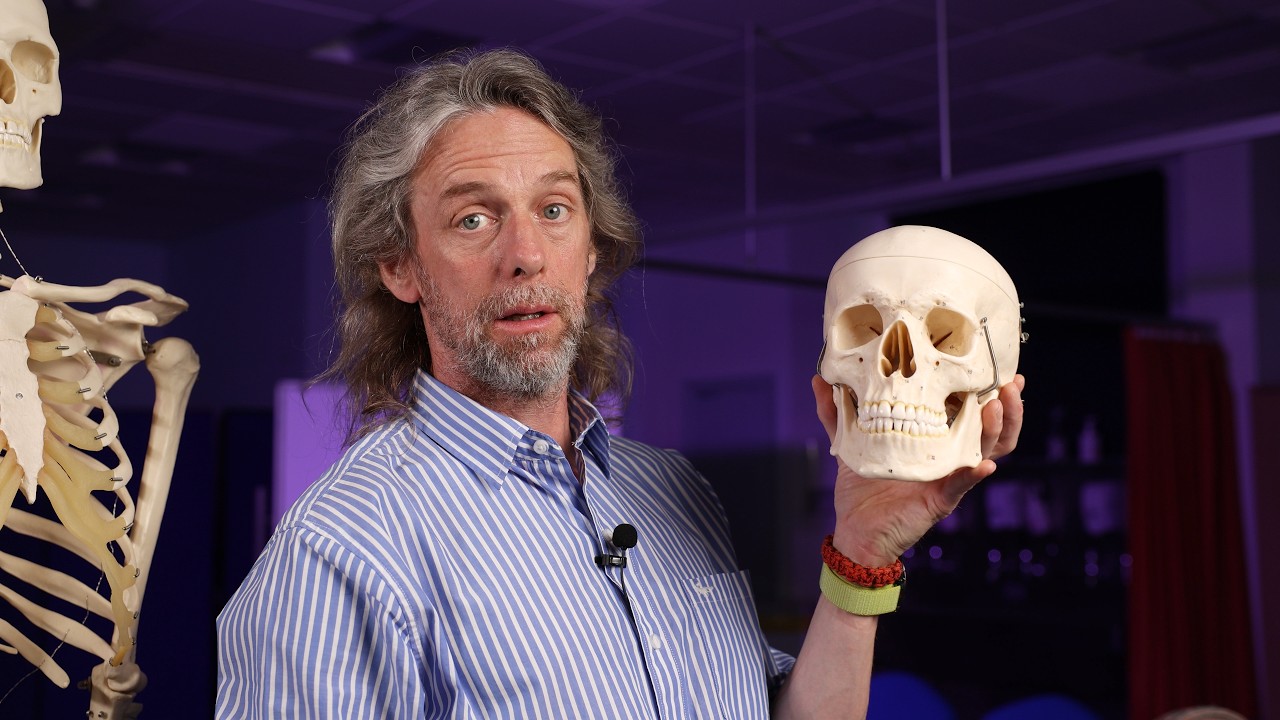
Neuroanatomy of smell (olfaction)
SamWebster
644 views•2026-05-28

What are you looking at
SuperStaticPro
1K views•2026-05-31

Size Illusion
WTFactt_t
1K views•2026-06-03

Why Trauma Doesn’t Just 'Go Away'
historyofsimplethings
1K views•2026-05-28



