This video provides a cold, tactical blueprint for conquering the IB's calculator-dependent hurdles by stripping away theoretical fluff. It is a masterclass in the ruthless optimization of exam performance over genuine mathematical inquiry.
Install our extension to search inside any video instantly.
IB Math AA Common Paper 2 Topics (with GDC)Added:
All right, this is a short video where we are going to talk about common paper 2 topics for IBA. This is not a prediction on what's coming up on the exam. It's just topics that are historically uh featured in paper 2 given the nature that they need a calculator to be solved. So, we're going to go through five SL topics plus one HL topic and we'll get right into it.
So, the first topic that is heavily featured in a lot of paper 2's yeartoyear is normal distributions.
Okay, these are your bell curves uh defined by a mean and a standard deviation where you find probabilities using the area under that Gaussian curve and those calculations from those integrals have to be done on the calculator. So this is a very very common paper 2 problem for both SL and HL and the beauty of these problems is they always tell you in the question that you're dealing with a normal distribution so there's no guessing or interpreting the problem. So make sure you study those normal distributions for your paper too.
All right. Second topic that is very common for those with calculator questions is non-right triangle trigonometry. So think law of signs, law of cosiness and area of a non-right triangle. Also your bearings and navigations problems. Okay, these are commonly with calculator because they can give you angles in degrees that are not special triangles. So 30 60 90 or 4590s and they can give you lots of angles that are measured from north for those true bearings as well as um any kind of navigation problem involving a speed equals distance over time formula. Okay, so watch out for these on paper two and make sure you know how to switch that calculator from degrees to radian mode to make sure you're getting the correct values out at the end. So that's non-right triangles, trigonometry along with navigation and bearing problems.
Okay. Third kind of problem for paper two that we see a lot is optimization problems. So finding the maximum or the minimum of some desired function. Okay.
And having a calculator on these problems can drastically change the approach you take to solving these guys.
So for paper one any kind of optimization is done by taking a derivative and setting it equal to zero to find the stationary points. But on a calculator often you can build that function to optimize and simply graph it to find the maximum or minimum within the given domain that you care about.
Okay. So these are commonly quite difficult problems for students just given the nature of the number of things they can ask you as well as the ties into geometry or uh some physics problems that they can do. Okay. So, make sure you know how to answer those with a calculator given that it's a drastically different style and approach that you can take there to get your full credit. Okay. So, it doesn't have to be using calculus. It can just be graphing and finding a maximum or a minimum that way. So, the fourth kind of problem we see a lot on paper two is our statistics questions and in particular calculations for standard deviation. So at HL the standard deviation formula is given in the formula booklet but that's a big time trap if you don't know that you can do those standard deviations on your calculator using your statistics features. Okay so make sure you know how to calculate things like mean standard deviation variance all of those you should know how to do on your calculator very very quickly so you don't get stuck in those big long calculations when you don't need to for that paper too. Okay, so make sure you know all your statistics stuff including standard deviations and variance for your paper two. So somewhat connected to statistics is R values and linear regressions.
Okay, these are nearly always paper 2 problems. And again, all the calculations to find an R value, also called the correlation coefficient or Pearson's product moment correlation coefficient, PMCC. All of these are done on the calculator most of the time in your IB exam both for SL and HL. So make sure you know how to do those on your calculator. Linear regressions as well.
So that's X on Y regression and Y on X regression. Again coming right out your calculator. No need to do these calculations manually by hand, especially given the constraints of time that you have on these exams. Data should go straight in your calculator.
values can pop right out with no work and that's what the examiners will be expecting to see. Okay, so our sixth and final topic is a higher level only one and this is Oilers's method. Okay, Oilers's method again is nearly always 99.9% of the time in an IV exam going to be on paper two and it's that iterative process to approximate the solution of a differential equation. Okay, the formulas for this are given in the foyer booklet, but make sure you practice the steps to get this done on your calculator to save as much time as possible and just write out a table of values to show your steps and get that partial credit. Okay, I do have videos on Oilers's method on both the TI Inspire and the TI84 that I will link in the description to this video as well.
So if you use either of those two calculators, you can see how to do these problems fairly quickly and fairly repetitively to make sure you get through them in a good amount of time.
Okay, so that's higher level only. If you are a standard level uh candidate, don't worry about that. You won't need to know how to do that.
That wraps up this short video on common paper two topics for IB analysis and approaches, both standard level and higher level. We got a nice little summary on the screen here. So, if you are finished with your paper one and you've made a mental note of what didn't come up on paper one, pay particular attention to any of these topics that weren't covered in the paper one. And I think you're very likely to see them on your paper two the next day. Okay? If you haven't taken your exams yet, keep these in mind as you balance your revision and your studies leading up to both your paper one and your paper two exam. Okay? Please check out my other videos including my uh lastminute tips for IB exams and continue to support the channel by subscribing, liking the videos and leave us a comment for any topic you think we missed in terms of either paper one or paper two studying.
Good luck to all the candidates testing and we'll see you again soon in another video.
Related Videos

A Brutal Radical Expression Made Easy! The Shortcut Changes Everything.
tamoshop
112 views•2026-06-02

V : jee main /advance class 11 mathematics : Binomial Theorem class-1 ( 29 may 2026 )
dcamclassesiitjeemainsadva9953
125 views•2026-05-29

Is This Pentomino Tileable?
3cycle
241 views•2026-05-30

This Sudoku Has Many Lines!!
CrackingTheCryptic
2K views•2026-05-29

Olympiad Mathematics | Indian Can You Solve This One?
PhilCoolMath
268 views•2026-06-02
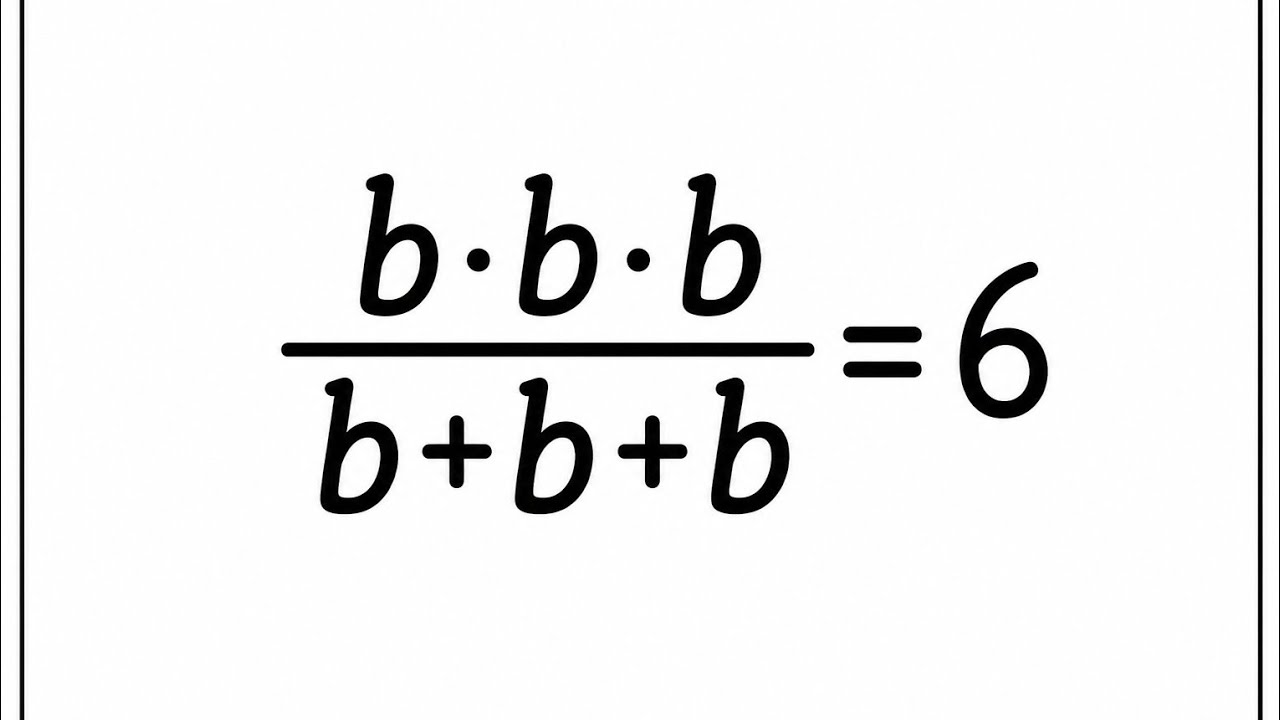
Olympiad Mathematics | Indian | Can You Solve This?
PhilCoolMath
669 views•2026-06-02

Can you get the Correct answer for this Math Quiz?
Fendora01
24K views•2026-05-29

NUMBERBLOCKS COUNT THE TOTAL SUM OF TEN NUMBERS | ADD SMALL TO BIGGEST NUMBER | hello george
hellogeorge2294
5K views•2026-05-28



