This lesson masterfully distills the complex harmonic language of Manouche jazz into a practical bridge for blues guitarists. It proves that a sophisticated sound often relies on the strategic addition of just a few key intervals.
Installez notre extension pour rechercher instantanément dans n'importe quelle vidéo
The Django Blues Scale - Instant Gypsy Jazz Sound 🎸Ajouté :
Yeah, Django. Yeah.
>> [music] [music] >> Hey, it's Robin. And in this video lesson, I'm going to show you how you can use a very cool scale. It's the Django blues scale to make your gypsy jazz solos sound way cooler. Now, I've made a free PDF for this lesson and you can get it below. Just give me your email. I will send you the tab and you'll see the scale tabbed out on all the cool chords you can play it over.
And stick to the end of the video. I'm going to show you how to use it in Swing 42, and Honeysuckle Rose, and Blues en Mineur, and Django-ology. So, grab your guitar. Now, when I was just jamming on that intro, I was jamming over Honeysuckle Rose, which is in [music] F major. And when I landed on the F, I didn't play F major, right? I played F Django blues, and it's this sound.
>> [music] >> There's the F.
And it's got a really gnarly cool sound and it sounds way hipper than just playing F major. So, what is the Django blues scale? Let's have a look at it in A, okay? And if you started guitar like I did, probably the first thing you learned was a >> [music] >> like an A blues scale or a minor pentatonic.
>> [music] >> And all we're going to do is add a couple of notes to that minor pentatonic and make it the really cool Django blues scale. So, for in A, and this scale I'm going to show you in a second works over A major, A7, right?
And A minor and D7. So, that's four chord types. I'll show you in a sec.
First, the scale. We're in A major, so fifth position, there's your A.
>> [music] >> So, the regular minor blues scale would be and the minor [music] pentatonic.
Right?
And all we're going [music] to do is add two notes. We're going to add the ninth, which is that note, the B.
>> [music] >> So, we're going from C to A, we're going to go A 7 5, [music] right?
So, that introduces the ninth there, the B, a very cool note. And we're going to do exactly the same on the B string, really easy. So, we're going to we're going to then going to go right? [music] So, 8 7 5, 8 7 5. That's 8 7 5 on the E string.
And then 8 [music] 7 5 on the B string.
Right? So, over A major, A7, A minor, D7, we can go right? [music] And when we carry on down the scale, this is important, we go >> [music] >> right? There's the D.
Then to the minor third.
And if you're playing over a major chord or a dominant seventh chord, you resolve to the the major third. [music] So, if I'm playing over A7 or A major, I go >> [music] >> right? And resolve to the major third.
That That's really important. And if I'm using [music] it over a minor chord like A minor, I just stick to the minor third. So, right? That's on [music] the fifth fret, G string. So, major >> [music] >> right? To the C sharp minor.
>> [music] >> Minor. So, it's actually really easy.
You probably already know the minor pentatonic scale. So, all you're adding is the ninth and [music] the sixth.
Two big notes in jazz that will kind of instantly make your your solo sound more jazzy and more gypsy jazzy, right? So, A major.
>> [music] >> Let's chuck it around a few keys. If we're in G, then we're going to go >> [music] >> Right? If we're in C, So, it's kind of the stuff we already know if you're brought [music] up with like me with the blues, we kind of find it easy to noodle in a in a minor pentatonic way, but it kind of sounds a bit off, doesn't it? When compared to proper gypsy jazz players.
But, if you just add these couple of notes, you'll get the Django blues scale and then it'll all come together. Let me show you a couple of examples. This is Honeysuckle Rose.
And uh Honeysuckle Rose goes >> [music] [singing] >> So, then when it goes to the F, >> [music] >> that's where I'm going to use the Django blues scale, right? On F major. And even though it's the minor third, you're still going to use it and that's what makes it sound edgy and cool.
So, let's play along with the backing track with Honeysuckle Rose and every time I hit that F, I'm going to do the F Django blues scale. Don't forget to get the tab to this lesson. It's got it all tabbed out beautifully. You can get the free PDF.
Here we go. So, this is Honeysuckle Rose.
>> 12 >> So, C7.
>> [music] >> Here we go. F.
C7, [music] all right.
C7, Django blues scale.
>> [music] >> All right? So, you can see how it gives a real edgy cool sound, um which is totally different than if you just did a regular major pentatonic.
Which is all happy and cool, but this has got a little bit more edge to it.
Let me show you on Swing 42. So this is a rhythm changes style song from Django in C. And we're just going to put the Django blues scale on the whole thing. Let's see what it sounds like. So we're going to have the chords going 1 >> [music] >> 6 2 5, that kind of thing. So let's see how the Django blues scale sounds on it.
1 2 3 So it's Swing 42.
>> [music] >> All right, this one.
Okay, Django blues scale.
>> [music] [music] >> So you can see how it worked perfectly there.
Um excuse the little mistake with the melody there, but um you can see how it works over a major context, but you've got the the minor pentatonic turned into the Django blues scale. I just want to make sure you get this because it can really change your playing in a lot of ways really simply just by adding the Remember, we're on the C minor pentatonic.
And we just add the All right, we're adding the ninth and the sixth.
>> [music] >> And then we're resolving to the [music] major because we're in a major key with Swing 42. Djangoology, this is in G, so let's line up the G minor pentatonic.
And then the G Django blues scale.
>> [music] >> And then let's see how it sounds on Djangoology. Here we go.
1 2 3 Djangoology.
>> [music] >> Here we go.
>> [music] [music] >> Use it over the whole thing.
>> [music] >> Bridge, go up a fret.
And again.
>> [music] [music] >> So it's rocking on Django-ology. Any of these pieces, which you know, they're all in a major key or a minor key, so you can literally use this Django up blue scale on just about every piece you know. It's going to sound really cool.
That's why I'm really kind of enthusiastic about this. Let's try it on an actual minor tune now. This is Blues en mineur, a minor 12 bar blues in G minor, right? So we're going to line up the G minor pentatonic.
And then add the ninth.
>> [music] >> And then the sixth.
But we're not going to resolve to the major because we're in a minor key, [music] G minor.
And let's just see how that sounds over a minor blues, Blues en mineur.
>> [clears throat] [music] >> Now we go C minor.
>> [music] >> So you could see how it's Obviously, it's going to sound great over a minor, right? Just make sure we don't resolve to the We're going to stick in the minor world there.
>> [music] >> All right, on a C minor.
And of course there's licks and ideas that can come out of this scale, but in this video I'm just showing you the scale to get your juices flowing and to get you going into this world. Inside the Gypsy Jazz Club, we have a whole course dedicated to the Django blues scale. It's got seven Django blues licks, and it's also got five of my own Nolan blues licks, and how we can use them in loads of tunes. So, when you really get serious, come and join us in the Gypsy Jazz Club. You can take a 2-week free trial, and I'll point you to the Django blues scale course. It's a great place to bridge the gap from playing blues to playing jazz to playing Gypsy jazz. So, let's have a look at Honeysuckle Rose again. Remember, we're in F. Let's hear it again. The Django blues scale in F.
Right, just practice it slowly, then add it to the repertoire like this.
Honeysuckle Rose.
>> [music] >> Here we go. F.
>> [music] >> And you also got to have to play it fast. C7, I'll show you how to do that.
So, it's going quite quick, but here we go.
>> [music] >> So, even though it was going like >> [music] >> you can go It's going to sound really cool. Let's hear it on Swing 42 again. Remember, this is C major. This is a rhythm changes in C major.
>> [music] >> Sorry.
>> [music] [music] >> Right. So, it kind of gets you going, and it gives you a lot of confidence because like I say, if you've grown up with playing blues, it feels really natural when you're in C to go right here to the blues position. When you're in G, to go right here. And just make sure we're going to add the ninth and the sixth, and bang, you've got your Django blues scale. So, that's it from me. Get those notes under your fingers. Get the PDF.
It's got all the tab, chord boxes for the chords it works over.
It'll be really useful because you'll show you exactly where to put your fingers. And leave us a comment. Let me know how you getting on with the Django blues scale. And that's it from me. You know the drill. Have a go. Take it slow.
Stay inspired. Lots of love from Robin.
Vidéos Similaires

HOW to VISUALIZE the FRETBOARD like a PRO/LEGEND
NassorTafari
273 views•2026-05-31
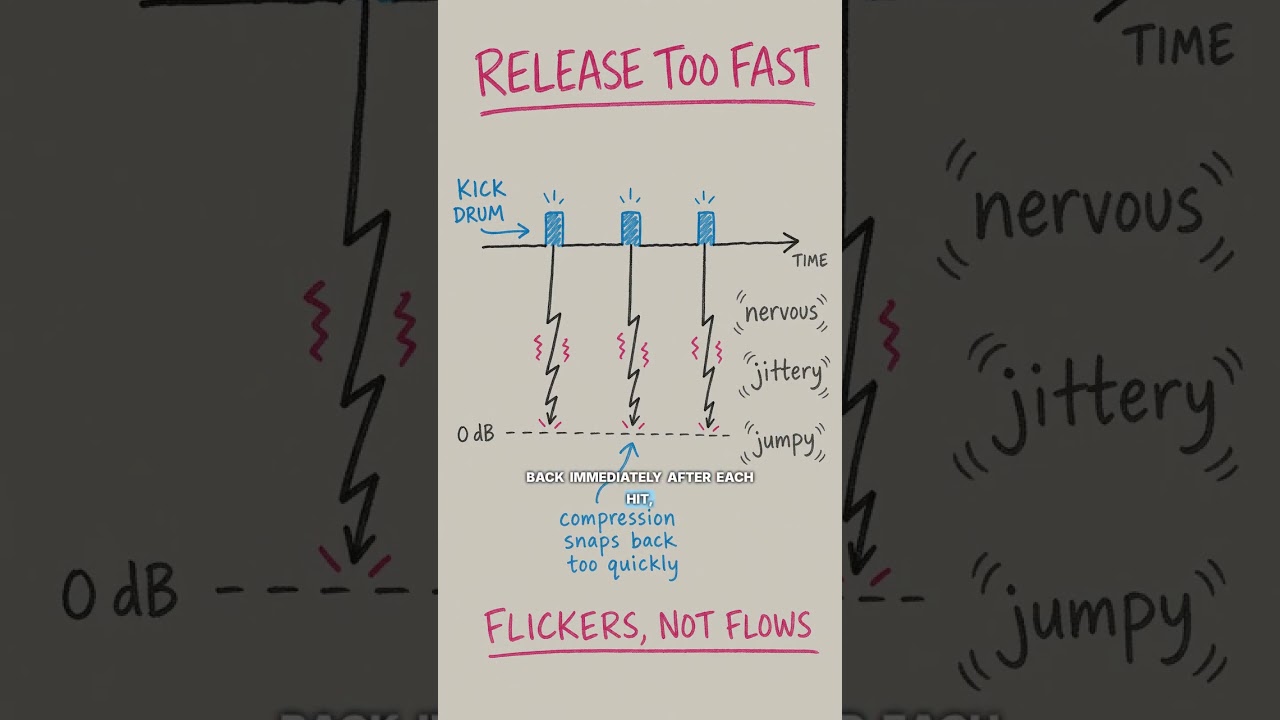
Your Release Time Is a Tempo Decision, Not a Feel Decision #musicproducer #musicproduction #typebeat
abletonppr
995 views•2026-06-01

Music Teacher reacts - Beauty and the Beast - Gabriel Henrique, Jade Salles
jennifersmusicpage
178 views•2026-06-03
Don’t be the fool
ijadamademusic
2K views•2026-05-31

🚕 Taxi Amarillo - Proyecto Cumbia | Cumbia de Guitarra 🎸
Proyecto_Cumbia
284 views•2026-05-30

Unraveling the Dark Musical Tension in Shows
bobcieslinski
945 views•2026-05-30
An Evening with the UCSB Middle East Ensemble
ucsantabarbaradepartmentof5290
134 views•2026-05-31

REMRUATKIMA - 13 ( Mizo Ngaihnawm ) By Mawitei Bawihtlung
Rp_Huapzau_Channel
9K views•2026-06-02



