It elegantly reduces the daunting complexity of musical literacy to a simple exercise in spatial mapping and geometric logic. This is a masterclass in functional clarity that values the learner's time over traditional academic pretension.
Instala nuestra extensión para buscar dentro de cualquier video al instante
How to read sheet music (for beginners)Añadido:
A set of five horizontal lines is called a staff. Notes can be placed on the lines or in the spaces between them. The range of our staff can be extended with the help of ledger lines. A higher position on the staff represents a higher pitch. So if we want to write the scale going up, we simply add a sequence of notes from left to right, each one higher than the last. For piano notation, we don't use one staff, but two, a so-called grand staff. The upper staff contains the notes for the right hand and the lower staff for the left hand. To indicate that they represent different regions of the keyboard, we use musical cliffs, the treble cliff and the bass clef. These symbols tell us how to interpret the note positions in each staff. This means that even though two notes might look the same, they represent different notes on the keyboard depending on the cliff.
This might be a little confusing at first, but there's a simple way to connect the two cliffs. They meet at middle C.
In the bass clef, middle C is placed on the first ledger line above the staff.
In the treble cliff, middle C is on the first line below the staff.
So we can use middle C as a point of orientation to figure out any note in our system.
The next important thing to understand is that this system of music notation directly corresponds to the layout of the piano keyboard. Without any sharps or flats, the notes in each staff correspond to the white keys on the piano. So if we write a scale beginning on C using every possible placement in our staff between the lines on the line between the lines and so on. That's a C major scale. Of course it works the same way in the bass clef.
Now in order to use the black keys we can place a sharp or flat symbol in front of a note. Let's write a D major scale. Since we know that this is middle C, going up one step in our notation system takes us to the next white key.
Going up another step takes us to E, followed by F. Now we simply place a sharp symbol in front of the F to turn it into F sharp.
And then we have G, A, B, C sharp before we get back to D.
Now, if a piece of music is in the key of D major, of course, it would be kind of redundant to place sharp symbols in front of every single C and F. To simplify this, we use key signatures, a set of sharps or flats placed at the beginning of each staff, right after the cliff. These key signatures tell us which notes are sharp or flat throughout the whole piece. So if a song is in D major, it will have two sharps in its key signature.
But what if you want to use a C in this piece despite the key signature telling us that every C should be a C sharp. For this purpose, we place a natural symbol in front of the note. This symbol tells us that we need to read this note without any sharps or flats, turning it back to a white key.
[Applause] [Music]
Videos Relacionados

HOW to VISUALIZE the FRETBOARD like a PRO/LEGEND
NassorTafari
273 views•2026-05-31
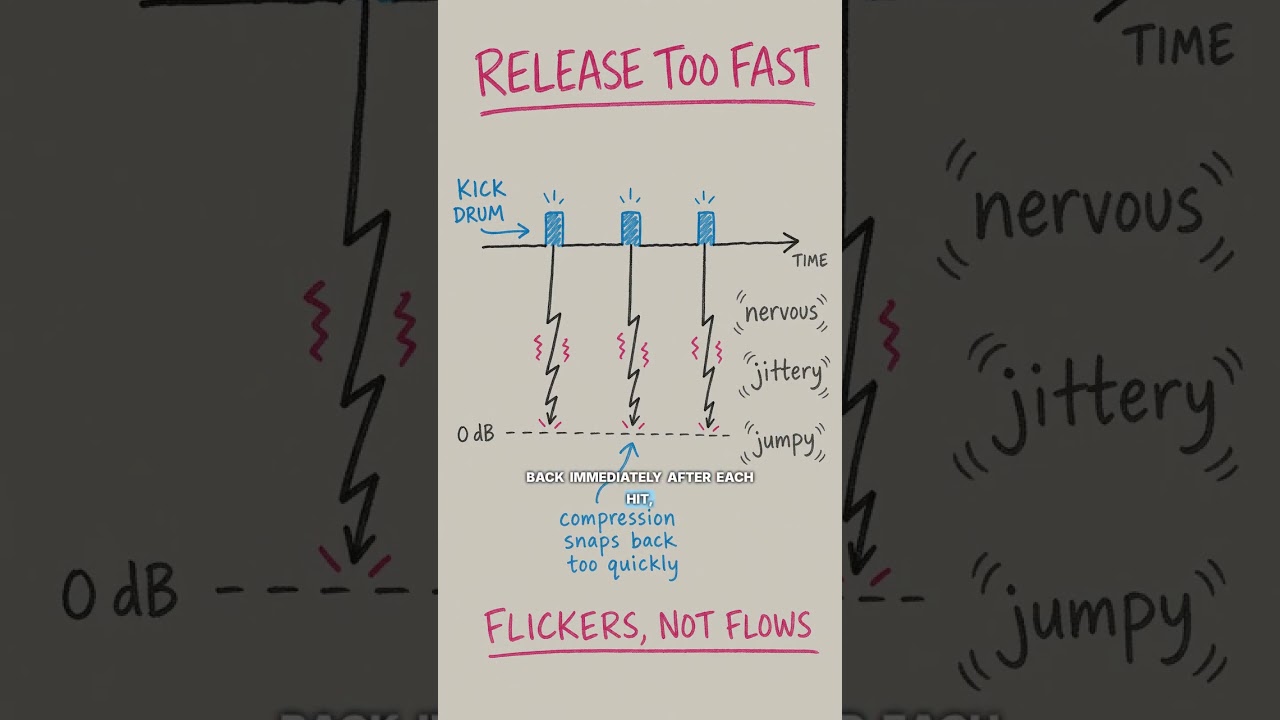
Your Release Time Is a Tempo Decision, Not a Feel Decision #musicproducer #musicproduction #typebeat
abletonppr
995 views•2026-06-01

Music Teacher reacts - Beauty and the Beast - Gabriel Henrique, Jade Salles
jennifersmusicpage
178 views•2026-06-03
Don’t be the fool
ijadamademusic
2K views•2026-05-31

🚕 Taxi Amarillo - Proyecto Cumbia | Cumbia de Guitarra 🎸
Proyecto_Cumbia
284 views•2026-05-30

Unraveling the Dark Musical Tension in Shows
bobcieslinski
945 views•2026-05-30
An Evening with the UCSB Middle East Ensemble
ucsantabarbaradepartmentof5290
134 views•2026-05-31

SpaZm - Cake
TheSpaZmMusic
313 views•2026-06-06