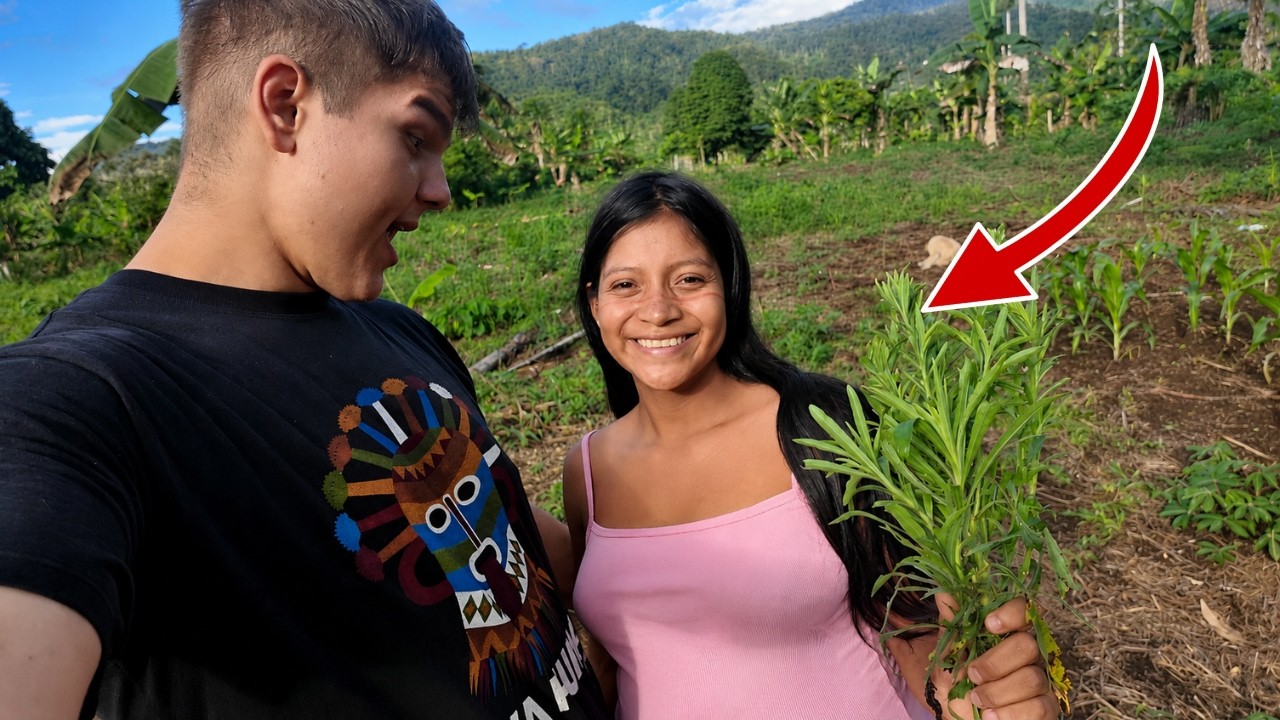
Remote mountain villages in Fiji, such as Salandra Village in Namosi, maintain traditional lifestyles despite geographic isolation, with communities relying on agriculture (particularly taro cultivation taking 8 months), local transportation methods including horse riding and river crossing, and sharing cultural practices through food exchange and daily activities like swimming in crystal-clear rivers.
Install our extension to search inside any video instantly.
Life in a Remote Mountain Village in FijiAdded:
In this video, I travel all the way back from Japan to Fiji, then jump on a local bus for 6 hours to reach a remote mountain village. This is so sick.
>> Wow. Wow. Wow. To get there, we even had to walk across [music] the river. I stay with a local family, share Japanese snacks, and after 1 month away, finally got to eat [music] Nana's homemade Fijian food again.
The next day, [music] we visited the Daryl farm, saw what everyday life looks like here, and somehow I ended up riding a horse for the first time ever. [music] >> I'm riding the horse with my friend over here. Yeah, we are going [music] up to our settlement over there.
>> Then the locals took me to a crystal clear river [music] and we spend the rest of the day swimming and having the good time together. Welcome to Salandra Village.
>> [music] [music] >> What are you doing?
[music] Heat. Heat. Heat.
[music] What's happening? [music] [music] [music] >> [music] >> Hey, [singing] [music] [music] dancing.
The power Take out.
[music] [music] [music] [music] [music] brother.
>> How are you? Nice to meet you. All right, guys. Welcome to Fiji, guys.
>> And now we are going to Namosi >> Namosi Island, >> which is a very remote place, interior, deep in interior. I've never been to Namosi before, but I've heard the some uh rafting rivers like >> Yeah, >> you know, they're famous for the rivers.
So, we're going to go explore with uh this guy. It's the >> Kalisto. Kalista.
>> Kalisto.
>> Yeah.
>> Nice to meet you.
>> Namosia Adventures. All right. Now, we're going to go to the bus station and go to Suba by bus.
Guys, we're so packed.
It's a full seat cuz we still have 4 hours bus ride after 9 hours flight from Japan.
But I'm so glad to see the nature in Fiji again and like villages.
Holy smokes. We arrived in Sububa.
Uh took me took 4 hours. Yeah.
>> From Nadi airport.
It's like completely other side of uh BT Island from Nadi.
Oh, I'm pretty exhausted after 9 hours flight, brother.
Now we're going to go to Namosi.
>> How many hours?
>> Another 4 hours.
>> Almost 2 hours. Yeah, >> 2 hours. The >> Tapu city.
>> Tap city. That's the one you're talking about.
>> Yeah. Yeah.
>> Yeah. Yeah. That's the mall.
>> Suba. I I think I've been there just one time. Suba is the capital of Hij, right?
Hij. Yeah, >> feels like not many people in the suba city like last time when I came here it's packed people like tourist but the Sunday is the the thing they stay at home and go to church this uh School of Park School.
>> Oh, I need to lie down.
>> Yeah, just go [laughter] there.
>> All right, it's almost 300 p.m. and we're going to take the bus to go to Namosi.
Another 2 hours.
I think if I say I'm not tired, it's going to be like but I'm pretty I don't know like it's different like a strange feeling because uh my mind very I'm like excited to see the uh the new place but my body is very tired After 14 hours of a flight and bus drive in another two hours only our bus is here.
It's parked there.
This bus is going to straight to Namosi this way and uh what we before the Namosi right before >> the main road. Yeah. So, here's the $20 in Fiji. It's a waterproof.
You can literally like swim with the money.
All right. This is my very first bus ride in Fiji.
>> The music on it. Music.
Good trip.
>> Good trip. Yeah.
Yes. One of the second school second or secondary school.
Okay, first stop.
Quick stop.
I'm going to get some water here. Can I have water?
>> Yeah. [music] As we go up getting feel like chilly, getting colder.
This is a way to go to interior.
I'm going to interior.
The mountains tip is like sharp.
Wow. Beautiful village.
>> [cheering] >> What an epic ride. This is one of the most remote place I've been I've ever been in. It's one of the most remote.
This view.
Look at that. The water is clear.
This driver knows how to drive.
He never dropped the speed while it's turning.
Holy smokes, we arrived.
[music] >> Thank you.
Wow.
Wow.
All right.
>> Thank you, brother.
>> Thank you so much, brother, for this opportunity.
>> Oh, yeah.
>> This is what an epic uh bus drive I've ever done.
>> So, we reach the destination.
>> This is so sick.
>> This our location.
>> Yeah.
>> The most the most remote place I've ever been in Fiji.
Oh, this the Oh, this brother. This mean Okay.
>> What are you carrying?
>> Terot.
>> What? No. We >> Oh, we like pan with wei.
This your aunt. Uh, sister. Sister.
>> Sister. Okay. M >> what a >> what a nice village here.
>> Yeah, nice.
>> Like imagine like the way back then there was no road of course and then people still live here, right? The Namosi people.
That's insane.
Yeah. How do they like reach to this place first of all? Cuz there's no road.
Must be like there's no road, right?
>> Like trail, no bus.
Wow. Wow. Oh wow.
>> What's a Japanese company?
>> Yeah, they finance the the food bridge.
>> Where?
>> The food bridge like crossing from the >> Oh, yeah.
>> Yeah.
>> The Japanese company.
>> They coming for me.
>> Your son? Yeah.
Yeah.
>> So now to get to the village, we have to cross this river.
It's not that deep shallow. So it should be fine for this one.
>> Oh, thank you.
>> All right. Now we're crossing the river.
All right, we made it.
We made it here.
>> Go inside the village.
>> Yeah.
>> Oh, take off hot like when you have rain.
>> Storm. Yeah. Storm like that.
>> Yeah. Floody.
>> Oh, water. Going to the village. Yeah.
Kari kar.
>> Okay.
>> And this is my son Judah.
>> Yeah. Judah.
>> Nice to meet you. Father.
>> Yeah.
>> Sometimes when I do my follow your pizza.
>> Oh the island.
>> Yeah. Yeah. Yeah. Numbati. Your name again?
>> Numbati island.
>> Yeah. Yeah. Thank you. What's your name?
>> Sunonny.
>> My name is Subasa.
>> Do you guys go to school by never?
>> Oh, carrier.
So, I got Japanese snack like here. So, you can share and eat.
>> Some interesting taste, too.
>> It's a little bit like a sour and like I think you guys never eaten before like this kind of taste. Yeah. Just try. Oh, this is like a dry sweet potato. This one is just a classic uh candy like a kind of jelly and jelly.
>> Yeah. Yeah. Yeah. It's a good taste, but this is a very interesting taste. So, I want to see you guys reaction. This one very interesting. Taste it.
>> Yeah.
>> But very popular in Japan. This one [laughter] >> tasty.
Dry sweet potato. Dry sweet potato.
like a traditional snack.
>> I don't know to be honest.
>> Tastes good. Sweet.
>> Kumar. No.
>> Nice.
>> Okay.
>> Yeah. Nice. Really?
>> Just like Kumar. But it's a dry dry.
>> So it's most like sweeter. Sweeter than Okay. This is the most interesting one.
This is a Japanese plum. Yeah. Just taste. I want to see the reaction. It's sour. No. Like sweet. Sweet. Sweet.
Three, two, one.
Nice. Yeah.
Sour. Sour. Sour. Sour. So >> sour [laughter] like >> Yeah. Yeah. Yeah. Sweet and sour. Yeah.
Sweet and sour.
>> Any any fruits like this in Fiji?
>> Yeah. Chinese.
>> Yeah.
>> Same like this.
>> You like it?
>> It's fruits candy.
>> Just like [clears throat] good. This one is a rice cracker with a seaweed. [laughter] >> Interesting. Maybe this is very common traditional snack from Japan.
>> From Japan, >> this one. H maybe you guys main food is tero or casaba.
>> We eat the rice as a main dish.
>> So instead of eating taro, >> we eat the rice.
>> Rice.
Nice.
>> You try.
>> You open it. You open it and you try.
>> You keep rubbish with you.
>> Tastes like rice.
>> Yeah.
>> Seaweed with rice.
>> Let me try this one.
>> You eat together.
>> Eat together with bite.
>> Okay.
Yeah. Yeah. It's good. [snorts] If >> I can find you on Tik Tok.
Tastes like fish. Tastes like fish.
>> Yeah.
>> Seaweed with a rice cracker.
>> This seaweed is >> like raw fish.
>> Yeah.
>> How it taste?
>> Yeah. Taste like what?
>> Fish.
>> Fish. Yeah. [laughter] >> Okay. Now we're going to get the wei.
>> Yes. Yes. Yes.
>> It's a fishian fruits.
This is the house.
[laughter] >> Big big big.
>> What's your favorite thing to do in this village?
>> To bring the forest.
>> Shamano.
>> Hey, what's that?
Oh, frog.
>> Grog.
>> Oh, the grog.
>> Swim the river.
>> Swim the river. Yeah.
>> Everyone's related. Related. Cousin.
>> Yes. Cousin.
>> Yeah.
>> Your name?
>> My name?
>> Yes.
>> Oh, my name is Tubasa.
>> Tubasa.
>> Tubas.
>> Tubasa. Yeah.
>> Tubasa.
>> Tubasa.
This one is >> sour.
>> Yeah.
>> Sour. [laughter] >> Sour.
>> This is a sour [laughter] >> before eating.
>> See you eat.
This is a sour. [laughter] Oh, guys. Smells like a curry.
>> Yes.
>> You smell curry.
>> Yes.
>> Smells like a curry.
>> Yeah. Curry horse.
>> Horse.
>> Yeah.
>> Horse curry.
>> Wow.
>> Good.
>> So, now I'm going to uh top up the Wi-Fi here.
>> So, in this village, you have to pay for the Wi-Fi to use. And of course, there's no signal and there's only one Star Link in this village.
>> Yes. I would like to pay the Wi-Fi.
>> I only have $20.
>> Yeah.
>> Change change for dollar or the $10.
>> $10, please. Yeah. 7 days.
>> Nice to meet you.
>> Okay. [sighs] Where are you from? [laughter] >> I'm from Japan.
>> Before two two months ago >> the video.
>> This me.
>> Yeah.
>> You watch?
>> Yeah.
>> Yeah. And now this in this village I'm going to make a video. Yeah.
>> Okay. Thank you.
>> That's one week.
>> Okay.
Have a good night.
>> Okay.
Yeah.
>> What's this?
>> Lolo. Lolo with >> lolo with lolo.
>> With lolo.
>> Taro leaves.
Thank you.
>> Fijian family, >> they always have a chili.
>> [clears throat] >> this terrible [laughter] >> good. [laughter] >> Well, thank you for coming to all the way to Nandi for me to pick me up.
Definitely I'm tired, but it was worth it to see this village. Nice people.
Definitely higher higher elevation makes the taro tastier.
>> It's one of the best taro I've ever eat in Fiji. Yeah. Different.
>> Enjoy your food.
>> How's the hood? [laughter] >> Thank you for the Thank you for the food.
>> Thank you.
>> Okay. Yeah, I'm so tired. Probably going to go sleep. But so this is the traditional Fijian mattress made by this and like comfy.
Feels warm. I don't know. You guys don't use blanket or nothing.
>> Just sleep on the floor.
>> Yeah.
Okay guys, it was a long day today for me flight and to come to this village but has nice people, nice village and I probably go to sleep soon. So I'll see you guys tomorrow.
>> Yeah.
>> All right. Good morning guys. Yandra >> morning ever.
morning.
>> Everyone has their low and they're doing something in the morning before the breakfast.
All right, these kids want me to see the billiard playground.
How are they playing? It's a village pool.
Good morning.
>> Good morning.
Okay guys, see you later.
>> Okay, Nana is cooking.
>> Nice cooking.
>> Nice cooking.
>> Yeah, >> rice cooking. Uh like cooking >> with a coconut or just water?
>> Uh coconut with water.
>> Coconut with water.
>> Yeah.
>> And then rice.
>> Yeah. And rice. [snorts] >> Okay. We're going to have a breakfast.
And this is the lemon glass. The lemon glass >> and rice with coconut.
>> Oh, look at this. Looks good. Ah yeah.
>> This is roti.
>> Roti. The Indian >> roti. Yeah.
>> Yeah. It's like a naan.
>> Naan is like more the thicker but the the flour and water.
>> Flour and water.
>> The roti. It's my favorite actually.
>> Thank you for the food. Lemongrass tea and >> Yeah. And the rice. rice. Yeah, that's a kind of like we have a similar dish in Japan.
>> It's called oazuk.
>> Yes.
>> And tea with a rice and seaweed.
>> Yes.
>> Yeah. That's how we eat.
>> I like it.
>> Good.
Tasty. Yeah. It just looks like a pancake but little bit like a chewy texture.
>> All right, let's try this uh rice.
>> Yeah, little like tastes like a coconut and little salty and one.
Yeah. Usually like a rice doesn't taste at all, but this rice is good.
>> Yeah. Has the flavor.
>> I think with with this rice I can eat just only rice. It's no problem.
>> Food was good.
>> How are they? Fijian ricey rice in pig.
Ricey >> ricey >> ricey.
>> Yes.
>> How about Yeah, I know. Suka scared.
>> So she's scared of me.
>> Yeah.
>> Foreigner. Maybe first foreigner she ever seen. Yeah. Okay. Now we are going to the farm.
But look at this river. This is the most clear water I've ever seen in Fiji as well.
I mean that makes sense though cuz uh this remote area apart from the city and the river is not polluted.
This is straight from the mountain.
Last night when we came here, we couldn't see the water cuz it was too dark. But now so clear.
So this is the village.
>> Thank you very much.
>> You've been going around Fiji?
>> Yes.
>> I have follow you.
>> Oh, thank you.
This is the the village I'm filming now.
>> Oh, >> yeah.
Nice. Really nice. The village project, right?
>> Yeah. Village project.
>> Yeah.
>> Eventually, eventually this is going to be the footpath, the people and government of Japan.
Yeah.
Yeah. I'm Japanese.
Welcome to Salandra village.
These are some houses here separating from that village but it's a part of the village actually.
>> Okay, that's the farmal darl.
The one I had last night, the soft daro.
This is the one. How to makes them soft, >> tastier.
Facebook. My first time in Namosi. First time.
>> First time in Namosi.
>> Very cool place. The rivers.
Great viewer from here.
>> So they are clearing up the uh daro farm while firing the woods burning then.
So as you said like everything looks green, right? Like when I back to Japan, I thought the the color [snorts] was not vivid like Fiji. Everything was like how can I say like fading like the brown maybe that was because of the season. It was uh like spring before the spring but everything looks like vivid color like even what they wearing is a colorful color you know. How long does it take to actually harvest the daro from planting?
>> Oh yeah.
>> When can you actually harvest?
>> Almost like 8 months. Yeah.
>> 8 months.
>> Okay.
>> 8 months. And mostly you guys are exporting right?
>> This one maybe high quality tarot like even in Fiji this one is high quality.
So they are all like most of them going to ship to Australia, New Zealand and stuff like that like other country. But good thing for the Darrow is uh there's no season. So you can plant all year long.
>> So even though like you harvest like other tarot is growing same time like while you're harvesting. So there's no time that there are no harvesting. So which is good. Yandra >> where you from?
>> Japan.
>> Japan. Oh, nice to meet you.
>> Nice to meet you.
>> Nice. Okay. [music] Clearing up.
>> They're collecting the bread fruits.
Look at that climbing yandra >> climbing to get the bread fruits.
Oh, >> bread fruits.
What's what's the name in Fijian?
[laughter] >> Four bread fruits.
Nice.
Good job, guys. Oh, yeah.
Nice. Hot.
you going?
>> Okay. Yeah.
>> Where did you guys come from today?
>> Come from uh Seleno >> hospital. You went to hospital.
>> We came back from hospital now.
>> Wow. How long? 2 hours?
>> Yeah.
>> 2 hours.
>> Wow.
Horse must be tired. [laughter] >> Why? Japan.
>> Japan. Japan >> when this one go. He want to red.
>> Yeah. Yeah.
>> Yeah. It's easy.
>> Easy. Okay.
>> It's like a merch.
[laughter] >> Marching of village people.
>> You guys all going to the hospital?
>> Yes.
>> Okay.
>> All right.
>> Okay guys, uh we are going to the >> We are going to the Wrath swimming.
>> Swimming.
>> Yeah.
>> With a horse.
>> With a horse. My first time riding a horse.
>> A horse is hanging.
>> Oh wow.
>> And welcome.
>> That is so good.
>> Bula, I'm riding the horse with my friend over here. Yeah, >> we are going up to our settlement over there where our business uh where our business grow over there. Yeah, we go and see the pool. The pool >> and many animals over there. Yeah.
>> Go up the village.
>> Oh, wow.
>> Enjoy music everywhere and a time.
>> This is my house and us just living over here.
>> Okay. But this water for the tourism will come over here.
Yeah. As we going up over there.
>> Okay.
>> And see the pool over there.
>> Wow.
>> Yeah.
>> Look at that.
>> As we walk beside the >> beside the mountain down the mountain as we walk and see the pool over there. Yeah.
>> Okay. Thank you.
>> Yeah. Yeah.
I see usually in this village.
>> I see.
>> Yeah, I see.
>> Yeah.
>> Oh, wow.
Look at this village.
Bula sir >> nice to meet you.
>> Nice to meet you.
>> One of our family members I stay in over in Kukalan in Australia.
>> So all the siblings.
>> No, this one from that house. This one from this house. They don't >> those two are my siblings.
>> So they they they wait up wait them up there to kill the enemy.
>> Yes. Yeah. Before >> what was the enemy?
>> No, you know, you know before the olden old days, you know, they have to the men have to eat eat >> another village.
>> Yeah. Eat another man.
>> Yeah. So they have to go to find a place to hide, find a place to save themselves from the enemy. So they >> they live up there.
>> Yeah. They live up there. They live up there. Yeah. before Christian. So then after Christianity they came down here.
Yeah.
>> Yeah. Yeah.
>> We're going to swim.
>> So that's the pool. Yeah. Yeah.
>> Oh, there's a pig cage.
>> Yeah. In front.
>> Oh, yeah.
>> Wow.
>> Us. We just feeding the pig. over here.
>> This pig we go and get earn money over here.
>> Earn money for this pig. We go and sell >> to our ear money.
>> Yeah.
>> You You guys don't eat.
>> Yeah, we eat.
>> We eat too >> when other people go and just slow.
>> Yes.
Go slow. Go slow. Slippery.
>> Why? You know how to come.
You're very strong tourism.
>> Cuz in Japan too, we have we got to cross the river.
>> Why?
>> Slowly. Sorry.
>> The two kids are helping me crossing the river.
Oh man, look at this river.
>> So clear.
>> Yeah, >> we just make lamboo to my friend. Thank you. Beautiful.
This one.
>> Good.
>> Oh, so fresh.
>> Very good. Eh, very nice.
>> Okay, guys. Let's go to swim.
>> Let's go.
>> Let's go.
>> Let's go.
>> Oh, feels so good.
>> [screaming] >> Oh, refreshing.
The water is not so cold. Eh, >> it's hot outside.
>> Oh, so nice.
HERE comes [laughter] [laughter] Okay, thank you guys.
>> Thank you.
>> We are about to eat the coconut.
This coconut you will eat.
>> This coconut it not belong to us. This coconut belongs to you.
>> Thank you.
>> Yeah.
>> Thank you. Yeah. About to eat.
>> Yeah. From tomorrow we have a lot of things to do. horse riding, terraforming, duna, the eel catching.
>> So stay tuned. But uh thank you for watching and I'll see you guys on the next one.
>> Thank you.
>> Thank you.
Related Videos
She Taught Me What Most Americans Will Never Learn
JustinAlvo
259 views•2026-06-03

Native Americans in Pacific Northwest preserve salmon fishing tradition for future generations
CBSMornings
719 views•2026-05-30

Before Castles: Discovering Portugal’s Colossal Chalcolithic Stronghold
prehistoricportugal
184 views•2026-05-29

5 Mistakes Americans Make in Australia That Australian Spot Instantly
Auzura-i2e
159 views•2026-05-29

“Much Larger Than Any Man Back Home” — German POW Women Compared American Cowboys to German Men
ForgottenFronts-d6q
2K views•2026-06-01

Americans Losing Their Minds In Europe..
camkirkhambabyy
54K views•2026-05-29

Discover the survival and hunting methods of the Hadzabe tribe — Cooking in the wildest way
hadzapeopledocumentary
507 views•2026-05-28

ETHIOPIA — The Most Misunderstood Country In East Africa?
ZiAfreen
165 views•2026-05-31



