While it cleverly markets fundamental neuroscience as a revolutionary "hack," the video provides a solid, if slightly reductive, bridge between biological theory and practical self-improvement. It effectively translates complex neural mechanisms into a compelling argument for personal agency and lifelong growth.
Install our extension to search inside any video instantly.
The Brain Hack That Can Change Your Life | Neuroplasticity #neurozeniqAdded:
Have you ever [music] felt trapped by your past? That feeling like you're stuck in a loop of old habits, unable to break free no matter how hard you try.
For years, the scientific world told us our [music] brains were like a finished sculpture, fixed, permanent, and unchangeable after a certain age. But what if that [music] was a lie? What if the key to your future isn't about fighting against your brain, but about learning to literally rebuild it?
[music] This is the revolutionary truth of neuroplasticity. And in this video, we're going to show you how to start the [music] rewiring process today. Number one, the brain as a supercomput.
What if your brain wasn't a fixed piece of hardware, but a living, changing supercomput? For decades, the prevailing belief was that once you reached a certain age, your brain was hardwired and set in its ways, that its circuits were permanently fixed and unable to change. But that belief was fundamentally wrong. New research in neuroscience has revealed a different truth entirely. Your brain is not a static organ. It's an incredibly dynamic and adaptable supercomput.
This concept is known as neuroplasticity. The brain's remarkable ability to reorganize itself by forming new neural connections throughout life.
Every time you learn a new skill, form a new memory, or even experience a new emotion, you are physically changing your brain, rewiring its circuitry, and strengthening its pathways. It's in designed for continuous growth, adaptation, and lifelong learning.
Number two, welcome [music] to the new science. This new revolutionary science is called neuroplasticity.
Think of it as the brain's incredible ability to reorganize itself by forming new neural connections throughout [music] life. It's not a rigid finished sculpture. It's a piece of clay that is constantly being molded and reshaped [music] by your experiences, your thoughts, and your actions. This is the ultimate blueprint for personal growth.
Every new skill you learn, every new memory you form, and every new habit you build isn't just a mental [music] exercise. It's physically changing your brain. You are actively rewiring its circuitry, strengthening the pathways [music] that serve you, and even creating entirely new ones. This means your brain is never truly fixed [music] or set in its ways. It's a dynamic, adaptable organ capable of learning, healing, and evolving [music] at any age. Neuroplasticity proves that your capacity for change is limitless, offering you a path to [music] becoming the person you've always wanted to be.
Number three, the promise of a new you.
Are you ready to unlock the full potential of your mind? In this video, we'll dive deep into the science behind this incredible phenomenon. We're going to give you more than just theory. We're going to share 25 practical neurosciencebacked strategies that you can start using today. [music] These are actionable steps to actively harness the power of neuroplasticity and build a brain that is not just smarter, but truly wired for success. focus and resilience. Whether your goal is to master a new language, overcome anxiety, cultivate a healthier mindset, or break a long-standing bad habit, these strategies will show you how to physically reshape your brain to get there. It's time to stop feeling like a passive passenger in your own life and start consciously becoming the architect of a new and better you. Number four, what is neuroplasticity? [music] So, what exactly is neuroplasticity?
At its simplest, it's [music] the brain's amazing adaptability. Its remarkable ability to change and rewire itself throughout your entire life.
[music] It's the very reason you can learn a new skill like playing the guitar, form a new habit [music] like morning exercise, or even recover from a significant brain injury. To understand it, think of your brain like a vast [music] uncharted forest with countless interconnected dirt paths. Every time you think a new thought [music] or practice a new behavior, you are walking a specific path. The more you walk [music] that path, the more it becomes a well-worn trail. And with enough repetition, it turns into a paved [music] road and eventually a super highway. This process makes [music] it faster and easier to travel that same route in the future. Number five, synaptic pruning. Neuroplasticity isn't just about building new connections.
It's also about strategically letting go of old, inefficient ones. This essential process is called synaptic pruning.
Think of it as the brain's use it or lose it policy, a crucial cleanup operation. Imagine your brain's neural network as a garden being meticulously maintained. Synaptic pruning is the gardener, trimming away the weak, unused, or inefficient neural pathways to make room for stronger, more active, and more efficient ones to flourish.
This is a natural and crucial process that optimizes your brain's performance, improves memory, and helps with faster learning. By consciously directing our focus and energy towards the things that matter, we can influence this process, helping our brains to clear out the old to make way for the new.
Number six, long-term potentiation, [music] LTP.
At a cellular level, every time you learn something new, [music] you're strengthening the connections between your individual neurons. This powerful process [music] is known as long-term potentiation or LTP. Think of it like a [music] handshake between two brain cells. The more they communicate with each other, the stronger and more efficient [music] that connection becomes, making it easier for them to communicate next time. This is the biological basis for how your brain forms and [music] stores memories. And it's the physical foundation of all learning. It's what happens [music] inside your brain when you study for an exam, practice a sport, or master a [music] new skill. The more you practice, the more these specific neural pathways [music] get reinforced, leading to a state of unconscious competence.
Number seven, experience dependent plasticity.
Every single experience you have, every book you read, every conversation you hold is actively shaping the physical structure of your brain. This profound process is called experience dependent plasticity.
Your brain isn't a static organ. It's a dynamic living map of your life, and it's constantly being redrawn and updated with every new encounter.
Think of your mind as a vast landscape being sculpted by your daily journey.
Whether you're learning a new language, traveling to a new city, or simply engaging in a meaningful conversation, you are leaving a physical imprint on your neural pathways. This is the proof that your brain is a direct reflection of your experiences and that a rich, varied life leads to a rich, complex, and well-connected brain. [music] It empowers you with the knowledge that your choices today are physically building the brain of tomorrow.
Number eight, the hippocampus. The brain's learning center.
The hippocampus is a small but mighty region deep inside your brain, [music] acting as the main learning and memory center. It's an engine for growth and is incredibly plastic, meaning it has the remarkable ability to create new neurons and [music] connections when you learn new information or practice new skills.
This process [music] known as neurogenesis is why challenging yourself to learn something new is so powerful. It physically builds and strengthens your hippocampus, [music] boosting your overall capacity for learning and memory by regularly stepping [music] out of your mental comfort zone and engaging in stimulating activities like learning to play an instrument, mastering a complex [music] puzzle, or navigating an unfamiliar city. You are literally exercising [music] one of the most critical parts of your brain for memory and growth. Number nine, the preffrontal cortex, your control center.
Your preffrontal cortex is essentially the CEO of your brain, responsible for all your executive functions like decision-m, focus, and delayed gratification. It's the part of your brain that helps you override impulses, plan for the future, and make rational, thoughtful choices instead of simply reacting. Think of it as the control center for your conscious mind. By deliberately training this part of your brain with focused practice, you can consciously override old, unhelpful habits and choose new, more productive ones. It's through this practice that you build mental strength and resilience. When you strengthen its ability to direct your attention and actions, you are giving yourself the superpower of self-control, allowing you to stay focused on your long-term goals and build the life you truly want to live. Number 10, the power of neurons that fire together wire [music] together. This famous phrase coined by neuroscientist Donald [music] Heb is the core principle of neuroplasticity and the foundation of all habit formation. It's a simple idea with [music] profound implications. The more you repeat a specific thought or action, the stronger and [music] more efficient the neural pathway for that thought or action becomes. Think of it as a groove [music] being carved deeper and deeper into your brain circuitry with every repetition. This isn't just a metaphor. It's the biological reality [music] of how habits are formed. Every time you practice a skill or perform a behavior, [music] you are physically reinforcing the pathways you want to strengthen, making them [music] faster and more automatic.
It proves that repetition is a biological superpower. It allows you to [music] physically rewire your brain to work for you, not against you.
Number 11, the power of deliberate practice. Success isn't just about effort. It's about focused, deliberate practice. This isn't mindlessly repeating a task over and over. It's an intentional, highly focused process where you are actively concentrating on improving a specific skill with focused attention and immediate feedback. Think of an athlete replaying a difficult moment in slow motion to perfect a single movement or a musician isolating one measure to fix a single mistake.
When you practice in this deliberate way, you're not just going through the motions. [music] You're actively strengthening the specific neural connections for that skill, making them more efficient and automatic over time. By breaking down a complex skill into smaller, manageable parts, and focusing intently on each one, you are giving your brain the precise input it needs to build a stronger, more robust neural network.
This is the scientific path to mastery.
Number 12, embrace novelty and [music] challenge.
To keep your brain growing, you have to step out of your comfort zone. This is a crucial strategy [music] for neuroplasticity.
By learning a new language, trying a different hobby, or taking [music] on a new project at work, you're forcing your brain to create new connections and [music] adapt to a novel environment.
Your brain loves routine because it's efficient. But to create [music] new pathways, you have to introduce novelty.
This constant exposure to new and challenging stimuli is what keeps your brain dynamic and healthy. It prevents stagnation [music] and encourages the formation of new neural pathways, giving you a greater capacity [music] for learning and problem solving. So next time you feel an urge to stick with [music] what's familiar, choose the new path. It's the fastest way to build a more resilient and adaptable brain.
Number 13, master focused attention. In a world filled with constant notifications and digital distractions, focused attention isn't just a good habit. It's an absolute superpower. When you intentionally concentrate on a single task, you're not just getting work done. You're actively strengthening the very neural networks responsible for focus and deep work. This practice improves your ability to filter out distractions and stay on task for longer periods of time. It's like a targeted workout for your prefrontal cortex, the part of your brain responsible for executive functions like decision-m and planning.
Just like a muscle, this ability gets stronger with consistent practice. By training yourself to focus on one thing at a time, you are physically rewiring your brain for better productivity, greater mental clarity, and the ability to achieve your most important goals.
Number 14, visualize your success.
Visualization isn't just feel-good [music] psychology. It's a powerful neurological tool that can literally prime your brain for [music] success.
When you vividly imagine yourself performing an action, you're activating [music] the exact same brain regions that are used when you actually perform that action. For example, [music] athletes use visualization to mentally rehearse a perfect free throw or a [music] flawless routine, priming their brains for that precise performance. By repeatedly and vividly imagining your success, you are literally [music] strengthening your brain's pathways for that outcome, making it more likely that you will follow through and achieve your goals in reality.
It's a form of mental [music] rehearsal that physically prepares your brain, builds confidence, and makes the path to your desired outcome feel more familiar and easier to execute.
Number 15, cultivate a growth mindset.
Believing that your abilities can be developed is one of the [music] most powerful things you can do for your brain. This isn't just a feel-good attitude. It's a belief that has [music] been shown to physically change the brain's response to challenges.
When you have a growth mindset, [music] when you believe you can improve through effort, your brain lights up with activity in areas related to learning and [music] problem solving. It sees a mistake not as a failure but as [music] an opportunity for growth. Conversely, a fixed mindset [music] where you believe your abilities are innate can cause your brain to shut down in the face of difficulty. This belief makes [music] you more resilient and more likely to persist through difficulties, which in turn leads to real measurable changes [music] in your brain structure and function. It's the ultimate superpower for [music] lifelong learning and continuous improvement.
Number 16, break down your goals.
Feeling overwhelmed by a big goal? The key isn't to force yourself to tackle the whole thing at once. The key is to break it down into smaller, more manageable steps. Your brain's reward system is designed to release a clean hit of dopamine for every small win, which makes you feel good and gives you a burst of motivation. By tackling one tiny step at a time, you're not just making progress. You're building momentum and creating a powerful positive feedback loop that encourages you to keep going. This process trains your brain to associate progress with pleasure, making it easier to stick with a goal until it's complete. [music] This simple strategy literally hacks your own neurochemistry, teaching your brain to find satisfaction in the journey, not just the destination.
Number 17, meditate daily. [music] It may sound simple, but just 10 minutes of mindfulness meditation a day can literally change the physical [music] structure of your brain. Scientific studies have shown that regular meditation can [music] increase gray matter in areas related to focus, emotional regulation, and self-awareness.
It strengthens the [music] crucial connection between your prefrontal cortex and the amygdala, the brain's fear center, [music] helping you respond to stress more calmly and intentionally instead of reacting with [music] panic.
Think of it as a workout for your mind, a daily practice that builds the neural pathways for peace and clarity, making you more resilient [music] in the face of life's challenges. It's a foundational habit that helps prune away unnecessary mental chatter, leaving you with a mind [music] that's more focused, less anxious, and more capable of handling whatever comes your way.
Number 18, the brain as a muscle. The more you use a skill, the stronger the neural pathways become. The analogy of the brain as a muscle is incredibly accurate. Just as lifting weights and consistent effort strengthens your biceps, working out your memory, focus and creativity strengthens the brain circuitry. When you practice a new language, solve a difficult puzzle, or play a musical instrument. You are giving your brain the exercise it needs to grow. It's not about doing a single hard task. It's about consistent mental effort and challenge.
These are what build a brain that is resilient, adaptable, and ready for any challenge you throw at it. By putting in the work and consistently pushing your mental limits, you are building a more powerful, capable mind for the rest of your life.
Number 19, the role of journaling.
[music] Journaling is more than just a way to record your daily thoughts.
[music] It's a powerful tool for brain training and self-discovery. When you put your thoughts and feelings onto paper, you're helping your brain process complex emotions in [music] a structured way. This simple act of writing strengthens the neural connections between the thinking parts of your brain like [music] the prefrontal cortex and the emotional centers centers such as the amygdala. This allows you to gain a clearer perspective and [music] learn to regulate your emotions more effectively.
It's a way to literally write your way [music] to a calmer, clearer mind, making it easier to solve problems, reduce stress, and gain deeper self-awareness. By making journaling a consistent habit, you are giving your brain a crucial practice in sorting, organizing, and understanding its own [music] inner workings. Number 20, a simple action to get started. We've already covered some incredibly powerful strategies to start your brain rewiring journey. If you're finding this information valuable and you're ready to put these insights into action, please take a moment to hit the like button.
It's a small action that makes a big difference, helping us reach more people who want to understand their brain and take control of their lives. And now [music] I want to hear from you. The first step to change is commitment. Let me know in the comments below. What is one new skill you're excited to learn?
One habit you're motivated to change, or one old belief you're ready to let go of using these new insights. Share your promise to yourself right now. Number [music] 21, the power of sleep.
Sleep isn't just [music] downtime for your body. It's a vital and incredibly active period of brain [music] maintenance and a cornerstone of neuroplasticity.
While you're asleep, your brain is hard at work consolidating memories from [music] the day and strengthening the new connections you've formed.
This is the crucial stage where [music] short-term memories become long-term knowledge. It also literally cleans itself [music] out, clearing away waste products and toxins that build up in the spaces between your [music] brain cells during the day through a process known as the glimpmphatic system. Prioritizing 7 to N hours [music] of quality sleep each night is not a luxury. It's essential for optimal neuroplasticity, allowing your brain [music] to rest, repair, and prepare to learn and adapt the next day. It's the most powerful and accessible tool [music] you have for a healthy, adaptable brain.
Number 22, nutrition for brain health. Imagine trying to run a high performance computer with outdated parts or a faulty power supply. It wouldn't matter how powerful the software is. The machine simply couldn't perform at its [music] best.
The same is true for your brain.
Neuroplasticity, the brain's ability to rewire, learn, and adapt depends heavily on the fuel you give it. Every bite you eat is either supporting your brain's growth or slowing it down. A diet rich in omega-3 fatty acids, antioxidants, and B vitamins provides the essential raw materials for building new neural pathways and protecting existing ones.
Omega-3s found in foods like salmon, sardines, chia seeds, and walnuts are vital for building and maintaining the membranes of brain cells. They don't just keep neurons structurally healthy.
They also improve the efficiency of communication between them, which is key for learning and memory. Antioxidants, on the other hand, act like a shield.
Every day, your brain is bombarded by oxidative stress. The damaging effects of free radicals that can slowly wear down your brain cells. Foods like blueberries, dark chocolate, green tea, and leafy greens are rich in antioxidants that neutralize this damage, helping your brain stay sharp and resilient.
Meanwhile, B vitamins, especially B6, B12, and folate, play a critical role in producing neurotransmitters like serotonin and dopamine, which regulate mood, focus, and motivation.
Deficiencies in these vitamins have been linked to brain fog, memory issues, and even depression. But nutrition isn't just about individual nutrients. It's about overall patterns of eating. Diets such as the Mediterranean diet and the mind diet, a hybrid of Mediterranean and DASH diets, have been shown in countless studies to support cognitive health and reduce the risk of neurodeenerative diseases. These diets emphasize whole foods, vegetables, fruits, whole grains, legumes, lean proteins, and healthy fats while limiting processed foods, refined sugars, and unhealthy fats that cause inflammation in the brain. Number 23, [music] exercise, the ultimate brain booster.
When most people think about [music] exercise, they immediately picture toned muscles, stronger lungs, or [music] weight loss. But what if I told you that one of the most powerful benefits of physical activity has nothing to [music] do with your body at all and everything to do with your brain? Exercise is not just about [music] looking good or staying fit. It's one of the most direct and effective ways to supercharge your brain's ability to learn, grow, [music] and adapt. Here's how it works.
Every time you engage in [music] physical activity, whether it's a brisk walk, a morning jog, a dance class, or lifting weights, you're increasing blood [music] flow to the brain. This surge delivers a fresh supply of oxygen and [music] essential nutrients that your neurons desperately need to function at their best. But that's just the [music] beginning. Exercise also triggers the release of a remarkable protein called brain [music] derived neurotrophic factor or BDNF.
Think of BDNF as fertilizer for your brain. It encourages the growth [music] of brand new neurons, strengthens the survival of existing ones, and helps build [music] stronger neural pathways.
Without enough BDNF, your brain struggles to learn [music] and form long-term memories. With it, your brain becomes a thriving, [music] adaptable network, ready to take on new challenges. Studies consistently [music] show that people who exercise regularly have better memory, sharper focus, and even greater creativity.
Aerobic exercises [music] like running or cycling are especially powerful. But even simple movement like [music] walking outdoors can have profound effects. In fact, some researchers [music] have found that just 20 to 30 minutes of moderate exercise can significantly increase cognitive [music] performance for hours afterward. That means a short workout before studying, brainstorming, or tackling a project could literally [music] make your brain more efficient. And the benefits don't stop there. Exercise [music] also reduces stress by lowering cortisol levels, boosts mood through the release of endorphins and dopamine, and even [music] protects against age- related cognitive decline. In other words, it doesn't just help your brain grow, it helps keep [music] your mind young and resilient for decades to come.
Number 24, the impact of managing stress.
While short-term stress can sometimes act as a useful motivator, helping you meet deadlines, perform under pressure, or rise to a challenge, long-term unmanaged stress is one of the most dangerous enemies of neuroplasticity.
When you're constantly stressed, your body is in a near-permanent state of fight or flight, flooding your system with cortisol. This hormone, in excess, doesn't just make you feel anxious or restless. It actually interferes with the brain's ability to form new neural pathways, slows down learning, and can even shrink parts of the brain, such as the hippocampus, which is responsible for memory and learning. Over time, this toxic cycle reduces your brain's ability to adapt, making it harder to bounce back from setbacks or learn new skills.
That's why managing stress isn't just about feeling calmer. It's about protecting the very wiring of your brain. Healthy stress management techniques act like a shield, lowering cortisol levels and creating an environment where your brain cells can grow, connect, and thrive. Practices like mindfulness meditation teach your brain to return to a state of balance.
Spending time in nature reduces stress hormones and restores attention.
Pursuing a creative hobby, whether it's painting, writing, [music] or even playing a musical instrument, helps redirect mental energy into growth instead of worry. And sometimes even a few deep, intentional breaths can reset your nervous system, bringing you back into a state of clarity. By actively managing stress, you're not just improving your mood or preventing burnout. You are literally defending your brain's capacity to learn, adapt, and rewire itself for the better.
Number 25, your brain's limitless [music] potential.
The science of neuroplasticity has completely overturned the outdated belief that the brain is fixed, [music] unchanging, or doomed to decline after a certain age. In reality, your [music] brain is a living, breathing, dynamic organ. One that reshapes itself with every thought, every choice, and every repeated [music] action. Think of it like a sculptor's clay. Every day [music] you are molding and shaping your mind, whether you realize it or not.
When you learn a new language, [music] practice a skill, or change a habit, your brain lays down fresh connections, and strengthens existing ones. Even failures and mistakes [music] can be opportunities because each attempt rewires your neural circuits toward mastery. This truth is both [music] powerful and liberating. It means your past habits, traumas, [music] or limitations do not have to define your future. You're not a prisoner of how you've [music] always been. Instead, you are the conscious architect of your own neural landscape. With consistent [music] practice, intention, and awareness, you can rewire yourself for resilience, creativity, confidence, and even joy. The potential is limitless because the brain itself is limitless [music] in its ability to adapt. So the real question is not can you change because science has already proven that you can. The deeper more personal question is what kind of brain [music] and by extension what kind of life do you want to intentionally build for yourself? Every moment you hold the tools [music] to sculpt your mind and in turn your destiny. If you're ready to start rewiring your [music] brain today, we've created a free downloadable guide with a summary of these 25 strategies and [music] practical exercises to get you started. Just click the link in the description to get it now and begin your journey. Don't forget to subscribe [music] to our channel for more sciencebacked strategies for personal growth, and be sure to hit the notification bell [music] so you don't miss our next video. Thank you for watching, and we'll see you in the next one. Heat. Heat.
>> [music] >> money.
Hey [music] >> [music]
Related Videos

Recovery pronouns. Neuroplasticity & practical neuroscience tips to help recover from pain & fatigue
Fantasticneuroplastic
907 views•2026-05-31

I Saw the Thing Crash. Then I Lost Hours | Beyond Black Budget
BeyondBlackBudget
148 views•2026-05-30

Your Brain Is Actively Deleting Your Childhood Memories! 🧠🗑️ #Shorts #Anatomy #DidYouKnow
voiceless2345
225 views•2026-06-01
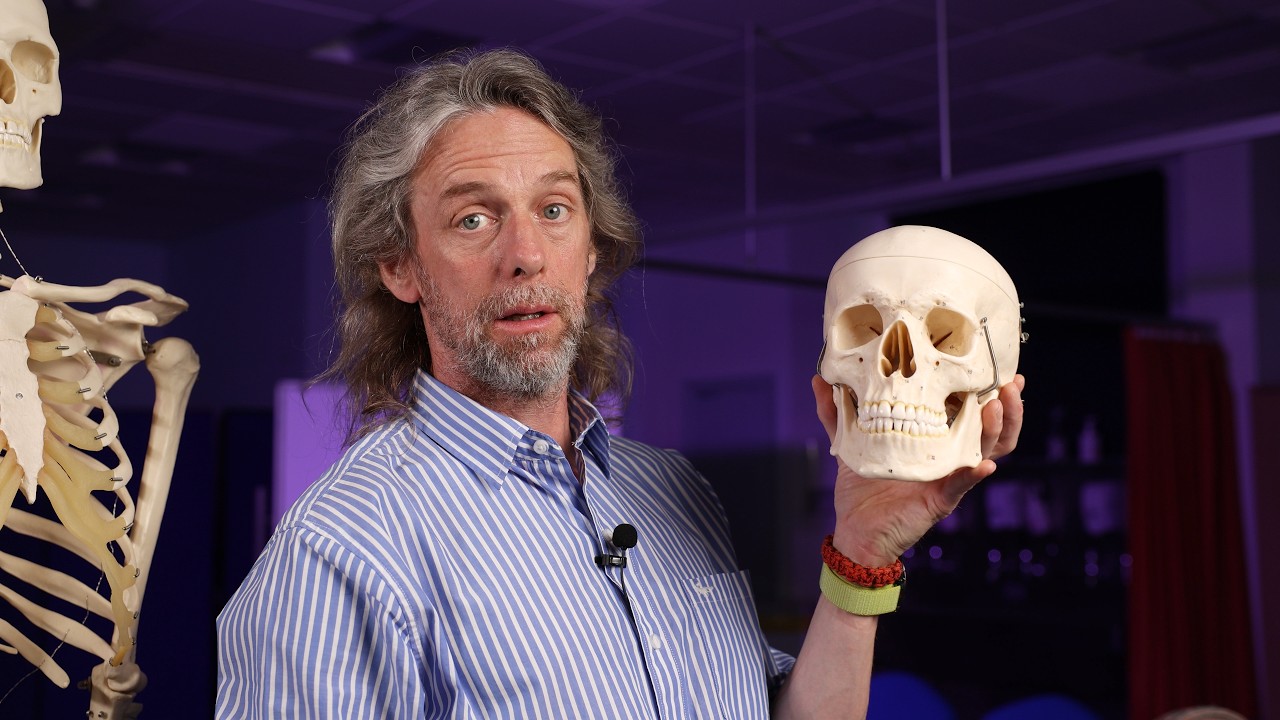
Neuroanatomy of smell (olfaction)
SamWebster
644 views•2026-05-28

What are you looking at
SuperStaticPro
1K views•2026-05-31

Why Trauma Doesn’t Just 'Go Away'
historyofsimplethings
1K views•2026-05-28

This Lifestyle Is Addictive - Kerri Interview
USAFOX2024
695 views•2026-06-02

Your Brain Is Smarter When You're Desperate To Pee🚽
BrokeBrainflims
2K views•2026-05-28



