This analysis efficiently reduces Shakespeare’s complex tragedy to a practical, high-yield checklist for exam success. It is a masterclass in academic pragmatism that prioritizes clear results over poetic depth.
Install our extension to search inside any video instantly.
15 of the BEST Macbeth quotes WITH ANALYSISAdded:
Today I'm going to take you through 15 of my favorite key quotes from McBTH with detailed analysis. You asked for it, you got it. So get your pens and papers ready. Let's blow up your grades.
Fair is foul and foul is fair. Hover through the fog and build the air. The opening scene of the play and the witches are discussing how they will meet McBth. And they are plotting when they will meet again so they can tell him their prophecies. Here, the fricative alliteration illustrates the witches as aggressive and disrespectful as it almost creates a spitting sound, portraying them as dangerous characters who McBTH should be wary of. Shakespeare makes it clear right at the beginning of the play that the witches will not use their power for good, but will in fact use it to cause McBth's tragic downfall.
This idea of the witches abusing their power is further conveyed through the semantic field of nature. Air is supposed to be clean and pure. Yet the witches make it dirty and tainted filthy air which mirrors what they will do to McBTH. Now Shakespeare intentionally employs the pathetic fallacy of fog to subtly link to the theme of deception which permeates through the play and this could also represent the witch's evil intentions. Fog is hard to see through, emphasizing the fact that the witches are hiding something or that perhaps they are blinding the aonomous hero from seeing the truth. Now hold.
What does aonomous mean? Eonomous is our key word for when the book or the play is named after a certain character. So McBth is the aonomous character because the play is called McBTH. Now, that's not all I'm going to say about the quote because, you know, we need to get as much juice from these quotes as possible. So, moreover, the extent of the witch's evil power is cemented through the verb hover. I can't hover.
Can you hover? No. So, that makes the witches seem inhumane, as if their powers are superior to human beings, foreshadowing the negative effect that they will have on Brave McBth. Now it's clear that the witches cannot distinguish between good and evil. And this is depicted through the oxymoronic phrase fair is foul. And this distorted sense of morality is portrayed again through the kayasmus. Kayasmus means when a phrase is repeated but switched around. So fair is foul, foul is fair.
Do you get it? And this highlights how the witches invert their language the same way they want to invert McBth's goodness.
This idea is further reinforced structurally too by Shakespeare through the use of rhyming couplets within the witch's speech. It creates a chantlike rhythm which is emblematic of the witch's supernatural powers evoking an image of them enjoying the chaos they're about to cause like they're chanting about it. So they are the embodiment of pure evil because they take pleasure in the suffering that they orchestrate.
unseen him from the nave to the chaps.
This quote is about Mc Beth from the opening of the play. Now, isn't it interesting that we hear about McBth through what other characters say about him before we actually meet him as an audience? So, because the audience are already made aware that McBth is a wellrespected, valiant soldier, they also begin with a positive impression of him and are encouraged to admire him. A seam is the part of your clothes where you know like the thread is. So if someone is unseamming the enemy on the battlefield, that's a metaphor because you can't actually unseamm a human. So the metaphor unseen highlights how skilled McBth is on the battlefield and the ease with which he kills a traitor like he's just taking a thread out. The creremmorphism, comparing a human to an object, also conveys how brutal and ruthless McBth is capable of being. And that's really interesting because we often talk about how McBth starts off as a loyal and good man, but becomes a tyrant as the play progresses. However, it's evident here that he was always capable of extreme violence. But when he was doing it in support of our country, he was viewed as a hero. And when he does it against Scotland, we say he's a tyrant. So perhaps it's not actually McBTH who changes as the play progresses, but it's simply the audience's perception of him. Stay you imperfect speakers. Tell me more. McBth says this when he first meets the witches and they give him their first three prophecies. Stay. Tell me. These are imperatives. They're command words.
And this creates a sense of urgency and shows McBth's desperation to find out more information from the witches. So, it reveals how quickly he becomes obsessed with their prophecies and the idea of power. Now, it's ironic that he's commanding the supernatural as if he's in control and has power over them when in reality he's the one who's dependent on their prophecies and is driven by them. The fact that he references the witches as imperfect suggests that he is aware that the witches are deceptive and evil. Yet he still chooses to interact with them simply because of his greed for power.
Now this idea of his megalomania which means his love for power is further reinforced by Shakespeare through the alliteration of M in memore which almost mimics the sound of hunger emphasizing how hungry McBth is to become king. My dearest partner of greatness. McBth says this line to Lady McBth when he first writes a letter to her and he's telling her all about the witch's prophecies. The superlative dearest implies how he gives his wife an elevated status as if he values her more than anything or anyone else. The possessive pronoun my conveys the closeness between them, suggesting a deep emotional bond and mutual trust, as if Lady McBth is the first person McBth instinctively turns to when something significant happens. The fact that he calls her his partner is particularly significant because it is clear he views Lady McBth as his equal, a partner. This suggests their relationship was anacronistic. It wasn't like other relationships and marriages during that time because during the Jacabian era context, women were expected to be submissive to men in a patriarchal society. I have begun to plant thee and will labor to make thee full of growing.
King Duncan, bless, he says this to McBTH after he makes him the thing of Cordor. Now, obviously, he isn't literally planting Mc Beth. So, it's a metaphor and it shows that Duncan believes Mc Beth is full of potential and he wants to help him to flourish.
The fact that he uses a semantic field of nature conveys how Duncan believes McBth is full of goodness and purity.
And the chrommorphism here suggests that Duncan sees McBth as something elevated above ordinary men, almost exceptional in his potential and worth. The repetition of the direct address the the emphasizes how Duncan is focused on McBth's growth and success, and he will work hard to invest in his development, establishing how Duncan embodies the qualities of a benevolent and nurturing king.
Take my milk for ghoul, you murdering ministers. Lady McBth, the most iconic female character of all time, she says this quote in her saliloquy when she finds out about the witch's prophecies for McBTH and she starts plotting how to take the crown. The imperative take creates a sense of urgency as if she is desperate to abandon her humanity and moral conscience in pursuit of power.
And the fact that she's commanding the supernatural makes her seem almost devillike, reinforcing how evil she is.
Now, milk is associated with birth and life. Yet, the fact that she juxtaposes this with gaul, which is poison, indicates how Lady McBth values power over morality and compassion. She wants to eradicate herself of all feminine qualities. She doesn't want to be nurturing. She doesn't want to be a caregiver. She wants to replace these with jackabian masculine traits such as violence and aggression. The director address you exposes that rather than being afraid of the supernatural as most people were during that time, she summons them to help her in her plans, suggesting that she is willing to reject God and align herself with evil forces.
The alliteration of M in murdering ministers evokes an image of hunger as if Lady McBth is greedy for power establishing her megalomania. Yet on the other hand, the repeated M sound h also mimics the sound of thinking as Lady McBth is already plotting Duncan's murder and how to manipulate her husband. His virtues will plead like angels, like a naked newborn babe. This is a quote from the long speech McBth does when he's listing all the reasons why he doesn't want to kill Duncan. And the simile here comparing Duncan to an angel elevates Duncan to a divine almost sacred status. This links to the divine right of the king which was the Jacabian belief that the king had been selected by God and therefore going against him wasn't just considered treason but a religious sin. The alliteration of N in naked newborn N almost creates an impression that McBth is stuttering and doesn't want to fully confront the consequences of murdering such an innocent figure. Poor Dunks. Yet, the fact that he is then compared to a newborn baby is also emblematic of Duncan's innocence and vulnerability. So although Duncan is a good and virtuous king, thinking about the theme of kingship, his naivity and trusting nature leaves him exposed, which makes it easier for someone like McBth to take advantage of him. Thus, perhaps Shakespeare was suggesting that moral goodness alone is not enough to sustain effective leadership. Duncan's innocence, whilst we admire it, ultimately makes him susceptible to betrayal, exposing the limitations of being a king who rules through trust rather than caution. What beast was it then that made you break this enterprise to me? Enterprise means promise. Lady McBth says this to McBTH after he tells her, "We will proceed no further in this business. He doesn't want to kill Duncan anymore." And does she support her husband's decision? like a good Jacabian wife. No, she doesn't. She's angry. She is raging. So, the rhetorical question here shows that she is boldly challenging her husband's decision. And the alliteration of W emphasizes her confusion. She cannot understand why McBTH does not want to commit reicside. The direct address you creates an accusatory tone as if she's blaming McBth for being too weak, too full of the milk of human kindness. The bilabial possive alliteration makes a harsh, aggressive sound, showing how manipulative Lady McBth can be. And isn't it interesting? What's the last word of the quote? Me. The personal pronoun me. That's her final thought because she's so selfish. She wants McBth to kill the king for her own personal gain, establishing her megalomania. The juxaposition of you and me contrasts how McBth always uses the inclusive pronouns we. She doesn't see them as a partnership the way that he does. And the metaphor beast, because there isn't actually a beast, that's ironic because she is actually the one who is asking her husband to do a beastly and monstrous thing. even though she's trying to tell him that he's the beast. If we should fail, we fail. This is a weird one because it's not usually one that people talk about, but I think it's really clever. This quote might be a bit difficult to understand, but try and follow what I'm saying. So, Lady McBth manages to convince McBth to kill the king, and he's really nervous, and he asks her if we should fail. So, he's basically asking her, "What if we fail?"
Now, if you're scared and you ask your partner the conditional clause, if we fail, what do you expect them to say in response? Something like, "Don't worry, darling. We won't fail. We're in this together." But no, that's not how Lady McBth rolls. Rather than giving McBth the reassurance that he is seeking, she asks a question back to his question.
She responds to his interrogative with a rhetorical question. We fail. We call that breaking adjacency pairs. When you ask a question back to a question, and that's not how you would expect a normal conversation to go. It's like someone saying, "How are you?" and you respond, "How are you?" That's not normal or expected. But by asking a question back to his question, Lady McBth is almost mocking McBth's fears and dismissing them. She's ridiculing him for being a coward. And by doing so, she gains control not only of this conversation, but of their relationship. Once again, look like the innocent flower, but be the serpent under it. One of the most famous lines of the play said by Lady McBth when she is instructing McBth on how to act and deceive Duncan.
Shakespeare utilizes the imperative look, which highlights how Lady McBth commands her husband and dominates their relationship. It's clear that she's in control of both the aonomous hero McBth and also of Duncan's murder as she outlines every detail. The simile of the flower suggests that Lady McBth wants McBth to act pure and innocent when he meets Duncan. However, the fact that she uses the juxaposition of serpent means she's encouraging McBth to be deceptive.
Serpent is also a religious illusion.
And in this sense, Lady McBth is asking McBth to embrace his evil and almost act like the devil so he can betray Duncan in deepest consequence. The bilabial possive alliteration in but BB creates a harsh aggressive tone which mirrors her violent intentions. Yet this contrasts with the alliteration of L which creates a songlike rhythm insinuating that she is enjoying and celebrating the thought of committing reicide. It is particularly important that Shakespeare employs a semantic field of nature here because a flower is associated with beauty and innocence whereas a serpent has connotations of deceit and danger. Hence by linking both both are a part of nature. Shakespeare subtly exposes how human beings are capable of duality and how good and evil are intrinsically both a part of human nature. Is this a dagger I see before me? The handle before my hand. Come, let me clutch thee. This is such a juicy quote. Make sure you're making notes.
So, here McBth is about to go and kill Duncan. And he starts hallucinating that this dagger is floating in the air in front of him. The rhetorical question signifies how McBth is doubting his own mind. Is this a dagger? Suggesting his mental state is already deteriorating even before the murder as he is unable to distinguish between reality and illusion. It also conveys his inner conflict as though he is questioning whether to proceed with the murder or resist his ambition. The alliteration of H in handle hand mimics the sound of heavy breathing which on the surface seems to depict his fear at the thought of betraying his cousin Duncan. But on a deeper level perhaps the repeated H sound could also reveal his excitement at the thought of usurping the crown.
Now structurally the predominantly mono syelabic word is this uh dagger reinforces as it seems McBth can barely articulate his words due to the overwhelming anxiety, guilt and psychological turmoil that he is feeling. This is further corroborated through the imperative come. The imperative come makes it seem as though McBth is trying to force himself into the action almost persuading himself to commit the crime. The forceful verb clutch represents how he knows he's about to physically grasp the dagger, but more importantly sees the act of reicide itself, showing a conscious decision McBth is making to take hold of his violent ambition. He's no longer resisting. He wants to clutch it. He's reaching out for it. The guttural alliteration in come clutch creates a choking effect which mirrors McBTH's violent and murderous thoughts. The internal rhyme in see me the creates a hypnotic rhythm as if he's being drawn in by the dagger taking a disturbing sense of pleasure in the idea of committing reicide. The fact that he personifies the dagger and directly addresses it is that normal talking to a dagger? No. It indicates that he's losing his sanity even before he's committed. So perhaps Shakespeare was warning the audience against allowing ambition to override moral judgment and warning the audience of the detrimental consequences of going against the king like Guyforks. I'm not done with this quote, but bear with me. This is where it gets really clever. As the siloquy progresses, McBth describes how the dagger gets gouts of blood on it which weren't there before. So the dagger which used to be clean gets blood on it.
It becomes tainted. It becomes corrupted. Who does that remind you of?
McBth. So the way the dagger becomes tainted and corrupted could make it a microcosm of McBth himself who used to be strong and honorable and respected but has now become morally corrupted and tainted by his ambition. Oh, full of scorpions is my mind, dear wife. Act free scene two we begin to see the shift in the relationship between McBth and Lady McBth. Now firstly that's visually evident by Shakespeare through the structure because at the beginning of the play Lady McBth used to speak in long monologues and dominate the conversation compared to McBth's short predominantly monoselabic responses. But here everything is different. Darling McBth is now speaking in longer dialogue and Lady McBth speaks in shorter lines emphasizing her loss of power. McBth has just planned to kill Banquo, his bestie, and Lady McBth never told him to do that. So, not only did he decide to do that all by himself, but he also is now hiding it from his wife and lying about it. I thought she was his partner. The interjection, oh, makes it seem as though McBth can barely articulate his words because he's feeling such intense mental torture. The metaphor scorpions, cuz there ain't no scorpions in anyone's mind, suggests that his thoughts are dangerous and harmful. It's clear that he is losing his humanity and descending into something wild and animalistic. The alliteration of M mimics the sound of thinking or contemplating which implies McBth is consumed by his thoughts of both murder and paranoia. Now it is particularly interesting that he refers to Lady McBth as dear which starkly juxtaposes earlier in the play when he refers to her using the superlative dearest. She has lost her value because now he's more concerned with maintaining control and protecting his position as king. He also refers to her as wife rather than partner, reducing her to the inferior status of a stereotypical Jackabian wife. The exclamation mark conveys a sense of hysteria and loss of sanity as McBth becomes increasingly unstable and erratic. However, alternative interpretation coming up.
Scorpions also release poison. So perhaps, hear me out, Shakespeare is employing this zumorphism to demonstrate how McBth has actually been poisoned by the witches. So he isn't actually in control of his actions. Perhaps in this sense, McBth is a helpless victim rather than the tyrant everyone perceives him to be. Now my little highlevel perceptive point for this scene is also that Lady McBth's language is the same in this scene. She is still repeatedly asking questions like she used to.
They're no longer rhetorical the way they were at the beginning of the play when she was challenging her husband's masculinity, but are now interrogatives as she is desperate to regain control of the situation and understand what McBth is planning and to get him to confide in her once again. Hence, Shakespeare seems to be reversing their power dynamic, showing how ambition has shifted control from Lady McBth to McBTH. Black McBth will seem as pure as snow. This quote is said by Malcolm. It's quite a difficult scene, but it's Duncan's son, and later in the play, he is testing McDuff to see if he can trust him. Now, the color imagery of black has connotations of evil and darkness. And by placing this next to McBth's name, it's evident that McBth's identity has become inseparable from his wrongdoing. If I see color imagery, you know I'm going to talk about it. Interesting to note here that Shakespeare used positive epithets earlier in the play when any character spoke about McBTH. Brave McBth. Well, he deserves that name. An epithet is when you put an adjective before someone's name that describes them. Like, oh, naughty Sarah, clever marine. However, by the end of the play, the epithets have now changed negative, which represents McBth's complete tragic downfall from hero to villain. The juxaposition of black and snow signifies that good and evil are not always clear, but can be manipulated and presented in different ways depending on someone's intentions. Linking to the theme of appearance versus reality. Malcolm is basically telling McDuff here that he's a bad person. He's so bad that even McBth will seem good compared to him because he wants to see what McDuff will say. But ironically, this is a scene that reveals McDuff is actually a suitable king because he is more cautious and wise than his father who used to put his absolute trust in everybody. So perhaps Shakespeare is showing how the divine right isn't enough. But in order to achieve successful kingship, it's not enough to just be the son of the king. You actually need to earn it through being perceptive and morally aware. Out damn spot. Out. I say we're getting to the end of the play now and Lady McBth is losing her mind. She is hallucinating that there is blood on her hands and every night she sleepwalks and she tries to wash this blood off but she can't.
And this is a stark contrast to earlier in the play when she claimed a little water will clear us of this deed. The repetition of out creates a sense of desperation as she struggles to remove both the imagined blood and her overwhelming guilt. The religious imagery in damned has connotations of hell and it's as if Lady McBth is aware that she has committed such a sinful act that it is inevitable that she will face eternal punishment. The exclamation mark further corroborates this sense of hysteria showing her complete mental breakdown. Structurally now her monoselabic words out damp spot reflects how her once powerful and articulate speech has deteriorated into fragmented panic mirroring her mental state. Now here's my little perceptive high-grade point for you. Blood is used as a motif throughout the play as a physical manifestation of guilt. First McBth sees it on the dagger. Then he has it on his hands after he actually commits reticide and says, "Will all of great Neptune's ocean wash this blood clean from my hand?" And now Lady McBth is haunted by imagined blood that she cannot cleanse from her conscience. So it's interesting how Shakespeare moves blood from something physical to psychological and perhaps suggests that guilt cannot be escaped but gradually consumes those who act immorally. Shakespeare seems to also intertwine female power with villain throughout this play. Every time a woman has power, she is evil. Not sure about that, Shakespeare. I've written a whole section about that, about how I would put that in my essay in my revision guide, which is called Glow Your Grades.
Tell thee McDuff was from his mother's womb untimely ripped. How ridiculous.
that this is the final battle where McBth, who's going around like he's invincible, is finally told by McDuff that he wasn't born from a woman. And McBth realizes that he has been tricked by those juggling fiends, the witches.
Do you see how I embed quotes all the time? It's what you got to do. The fact that Shakespeare employs an imperative here, tell thee, creates a sense of dominance and bravery. It is clear that McDuff is not afraid of McBth despite him being a tyrant and the man who murdered his entire family. And this is further reinforced through the direct address the you which creates an accusatory tone. And McDuff is clearly challenging McBth and asserting both his physical and his moral superiority by referring to himself in third person.
McDuff McDuff is here. McDuff gives himself this elevated status as if he represents justice and retribution. The violent verb ripped is almost unamatopic. You can hear it ripped which reveals McDuff's brutal and forceful entrance into the world. He was born by C-section baby and that foreshadows his role in violently overthrowing McBth.
Untimely is interesting here because it suggests McDuff defied nature when he was born. So ultimately he can defeat McBTH. Oh, and there you have it. A full analysis of my 15 favorite quotes from McBth. If you don't feel confident with the play, make sure you make a note of all of these and it should cover a wide range of themes and characters.
Supernatural, kingship, Lady McBth, McBth. Now, if you don't know the story, remember I have more videos on YouTube where I talk about it in more detail.
And I've got loads of helpful tips and tricks on my Tik Tok. And if you want to know how to take all of this information that I've just given you and how to structure it into a top grade essay, then please don't forget to buy my revision guide. You can buy it from all good bookshops, Amazon, or the Tik Tok shop. It is also called Glirt for Grades.
Related Videos
I Loved the Duke in Silence for Years. My Final Act? Choosing His Rival. 🤫💔 | DramaBox
DramaBox-PrimeDramaShorts
228 views•2026-05-31
⚡Harry Potter Book 4 [CH 23]⚡(CEFR A2+) Audiobook with Full Text
InglêsEssencial
880 views•2026-05-31
She Saved a Dying Prince Everyone Feared. Now the Empire Hunts Them Both.
NovelFilmz
462 views•2026-05-28

অর্জুনের প্রতিজ্ঞা: জয়দ্রথের পতন |#shorts #mohavarat
ChildhoodTea
129 views•2026-05-31

10 Books I Wish I Would Have Read Sooner!
BrianBell7
204 views•2026-05-29
How The Boys Fumbled The Most Iconic Villain of The Past Decade...
TeddySlump
5K views•2026-05-30

the legend of wayland the smith — a story of cruelty and revenge #norsemythology #mythsandlegends
tinyrainboot
1K views•2026-06-01
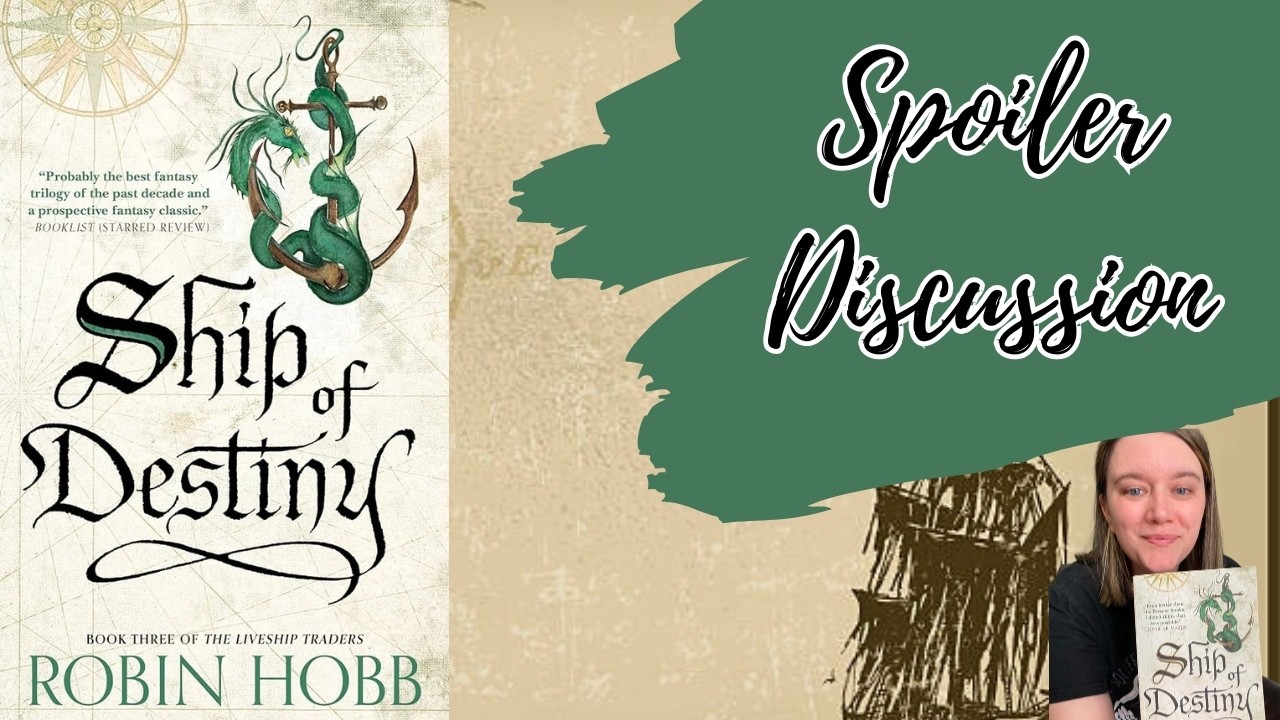
Ship of Destiny: Spoiler Discussion!
TheBookCure
105 views•2026-05-28



