Roy transcends typical book reviews by treating physical volumes as living artifacts with their own unique histories and souls. This is a sophisticated exploration of reading that values the tangible legacy of literature as much as the text itself.
Installieren Sie unsere Erweiterung an, um sofort in jedem Video zu suchen
April Reads #peopleaprilHinzugefügt:
Here's where I talk about stuff I read in April. A new wave memoir, a quest for books, a lost lord in a lost bestseller, and an anthology of the macab.
Welcome, welcome back to my channel where I talk about books, magazines, comics, and other cultural bits and bobs and connections between them. So yeah, April pretty good month really. Um, eventwise it was people April which is a really good event where folks read biographies, memoirs, life writing, that sort of stuff. And I'll put the hosty details down below. Um, and I didn't read everything I set out to, but what I did finish was really good. Starting with Shadow Lines by Nicholas Royal.
Nicholas Royal I've sort of been aware of him as a editor and author for quite a long time. I did meet him briefly once at an event um way back in the early 90s. I bought an anthology of horror stories that he had edited um and also aware that he's an academic and in fact he was a external examiner at the university where I worked. So I might have glimpsed him in the corridor or something like that. So in amongst all of this, Nicholas Royals written some really interesting books about his passion for collecting books and his search for them and the way he goes about that. So the first one was called White Lines. Um this one shadow, what's it called? No, the first one was called White Spines. This one shadow lines. And the title comes from the little effect you can see when you're in a secondhand bookshop and you can see that there's some sort of enclosure like um you know could be a postcard, a bookmark, something like that what Royal calls uh an inclusion. Um and so it's partly about that. So basically it's an account of his endless questing for books and he tends to do that on foot. So he's walking around cities which is something I tend to like to read about as well. Um yeah so this is really good. While I was reading it turned out I'd pre-ordered another one, Finders Keepers. So I guess it's like a trilogy or an ongoing series. So I feel like a sort of King Canoot of Nicholas Royal books really just when just when I think I've finished they keep flooding in. So I don't know what this one's about yet except broadly the same sort of things I suppose. So I found this really compelling. We don't tend to read the same sort of things. I've been to a lot of the same bookshops. There are some overlaps. he's read or mentions um Freaks, which I reviewed last year. Um mentions a book called Possible Tomorrows, a paperback science fiction collection edited by Grath Conklin. I got mine in Woolworth's in god knows when. Probably when it was just about out really. Um he also mentioned picking up a I think this edition of Mr. James, probably for the same reasons of it just being a nice book. So, here's the thing.
This isn't just a guy who buys books to read. This is a guy who buys multiple copies of the same book and sometimes buys them purely because they might have an inclusion. And he even goes further than that. Following up on the inclusions and also stuff that might be written in the books, like texting or phoning any phone numbers that are in there or sending the book back to an address it came from or popping around and putting it through the door. So that's like you actually realize, hang on a sec, we've gone from you know what everybody does buying a book to this kind of um intense focus on the on the previous ownership and the life of the book. So the books themselves have this kind of life and although it doesn't present a kind of grand purpose overtly, I think there's a meditation on aging and mortality going on as well, you know. So it's sort of the books and the finding the books and the history of the books is is actually quite a poignant kind of counterpoint to what we gather from Nicholas Royal's actual life through through the lens of this book.
So um yeah, really enjoyed that. Um I'm glad there's another one. So there you go. certainly recommended and I like the fact that the publishers salt are sort of replicating the picador like white spines. I also finished and enjoyed life's a gamble by Pauline Murray. So this is a memoir of a musician basically. So, as the lead singer in Penetration, a uh punk new wave band, um who were around in the early days of all of that, 77, 78, 79, um and there and they're around now, but there's been a big gap in between. Um and there was another band, she had the Invisible Girls, and she's done solo stuff. It's an account of her life and career and really it's a sort of among other things it's about persistence. You know this is someone who's carried on being creative, carried on working as an artist despite all the challenges which are considerable. I probably when I sort of knew them in the early days sort of thought oh they're bands with you know albums out they're well reviewed. They're always touring.
They're on some big festivals. I would have thought they'd be doing sort of okay really, but apparently like no, very handto-mouth. And it's a story you see in lots of um musical recollections. You know, the the monies all seem to disappeared and there's things they probably should have done legally and in terms of management and so on that they they basically didn't. any of these books like this, you end up shouting, "Get a lawyer. Get a lawyer." Uh, but um, yeah, it's good.
I mean, I guess it's really a read for people who know the artist or interested in that period. Very early stuff is really interesting, too. So, in the Northeast, she is born in a little sort of mining village, and the mine is one of the first ones to be closed down. And bizarrely, the whole village is kind of disappeared and erased. You know, it stops existing as a as a name on maps.
The buildings are all like knocked down and buried even though they weren't like, you know, there's nothing wrong with the houses. They've all gone. It's just like this erased past. When you read a book by someone who is roughly the same age, obviously there's lots of cultural touch points, except I think she was a little bit more fortunate than me in seeing some of the great artists um like Bowie and so on uh in in their prime. Uh again, you know, I would have thought in terms of creativity, my vision at the time of how people go about people in bands go about creating their stuff, I probably would have seen the David Bowie uh documentary, Cracked Actor, I think it's called, where you see him in some what looks like an swanky apartment working with cut up text and explaining how cut-ups work and you know that all looks like great you know ideal conditions. Um not being hurtled around the country sleeping in vans and having to find like a few hours to generate all these songs so they can fill another album that sort of thing. Um and you know getting ill because of it. Um it's refreshing that it isn't a um substance abuse memoir like a lot of music ones also are. So, it's it's not about that.
It's about doing the work. Like I say, it's about staying true to being creative and also supporting other artists as well. So, yay, Pauline Murray.
Enjoyed that. Good. Those are my people reads that I finished. I'm still proceeding with the H Rider Haggard biography. I'm going to stop talking about it until I finished it. uh just to say it's really good, but um you know it's it's not a quick read and uh I didn't finish it in April. So there you go. The axe came down. No more biographies and memoirs apart from that one. Okay. So, April also was the month when in the neglected Victorian bestsellers read along, we read a book called Lost Sir Massing Bird by uh it looks like I'm initiating a a revolution here. [laughter] Um, Lost Sir Massing Bird by James Payne. So, came out in the 1860s and pretty enjoyable. I mean, I don't think any of us thought this book's going to change my life, but equally, I think most of us in the group, so basically it's a group reading it. Uh, we talk on Discord and stuff like that.
Um, we did think this is this is like really enjoyable. Um, and that seems to be what people thought of James Payne at the time, you know, really reliably enjoyable, you know, great, you know, sort of books you might get to read on a train or something like that. This was his breakthrough novel and brief plot in a nutshell because you can get it by the way it's on project Gutenberg um in two volumes but it's not a long book so the multi-olume thing of Victorian times it was more about how the circulating libraries wanted to operate so they basically said give us give us books in multiple volumes so it doesn't necessarily mean they're incredibly long set at the beginning of the 19th century There's a young fellow who's the narrator and he's been sent back to England having originally been brought up in India where his parents have stayed out there and he's being tutored by a clergyman. The other pupil is a guy called Mamajuke Heath and he's in a bit of a pickle because he's under the guardianship of Sir Massingbird of the title who is kind of a monster. He's, you know, sort of really well depicted as this kind of impious bullying.
um occasionally violent, immoral fellow and he's also virtually broke. So he's living on this crumbling estate and he can't realize it. He can't like mortgage it and stuff like that because Marmaduke is the one who's going to inherit it when he dies. So it would actually be in Sir Massingird's interest for Marmaduke to die [snorts] by let's say a accident of some kind. So there's Mama Jeopardy there and lots of cool stuff happens. I think one reason for its appeal at the time was it sort of has a everything in it. Had lots of things that people enjoyed, you know, so it's a bit sensation fiction. It's very gothic. It's got some romance.
There's this inheritance plot, curious happenings, mysterious figures, sinister secrets. So there's lots of things like effortlessly woven together and it's all like a written in a a pretty light readable style. It has a detective. It has highwaymen, you know, everything.
Not too much of a spoiler. Sir Massing Bird disappears and there's a big mystery about what's happened to him.
You think people would be just saying, "Well, good riddance then." Uh but the fact that he might still be alive again still leaves Marmaduke in trouble because he can't actually inherit the estate and all that sort of business.
This like well what's happened to Massing Bird was the sort of water cooler talking point at the time. uh like a lot of books first of all it was a serial then it was the novel and like you know huge huge bestseller all his subsequent books said by the author of Lost Sir Massing Bird uh and he wrote like over 40 I think I would read more like I say these aren't like the sort of um you know this this kind of this informs my soul kind of books but pretty good I recommend James Payne certainly deserves to be slightly remembered bird rather than as he is apparently completely forgotten. Also, props to him for treating the Romany characters certainly relatively well. So, they're not just the sort of anonymous gypsy menace. They they have lives. They're they're not the baddies. There's uh even some interesting stuff about um the language Hindustani being similar and having some similar words. Remember the narrator comes from India so he like you know they have surprise dialogue. Uh so that was pretty good as well. Yeah. All right then.
James Payne, we salute you. Um, and alone on the borderland. Here we have an anthology of Macabb tales and they're all set in the early part of the 20th century. So that means you know we've left the Victorian era behind although it's still sort of there but we're in this interesting period where on the one hand you get further progress on the basis of how the 19th century developed but you also get the first world war Spanish flu that kind of stuff. So you arrive at the 20s with this very kind of um changed changed world really. So, great setting for horror stories. I really enjoyed it. I'd say the standard here is very high. If you want engaging stories where the characters feel real and you got a variety of interesting settings against this particular historical background, probably a pretty good book to get really. Um, edited by John Lynwood Grant. Let's see. I'm not going to go, well, this story is this and this story is that, cuz A, it'll be tedious. B, you won't remember, and C, I haven't written enough notes for that. But, um, among other things, you get some fantastic folk horror, you get a revenant, you get objects and places with a cult powers, you get the great god Pan in suburbia.
There's one story that links exploration and Arctic horror really cleverly with a sort of domestic setting. Uh fraught domestic setting in fact uh strangeness entwined with life on this globe.
Um, and yeah, going back to the background, you got big stuff like the war, but there's also stuff that happened in that early period of the 20th century like spiritualism that obviously forms a great background for this kind of story. Also, the the passion people had for esoteric gurus as well, you know, that's a good one. um surrealism and daar.
What if some of the stuff in those avantgard art forms, >> it didn't make any sense, but it wasn't supposed to make any sense.
>> Subversive art, things like Alfred Jerry's Perubu, what if they were real?
Not good. And there is the devastation of the war. Uh, in fact, it's divided into two parts. A preirst world war and a during and after section, which which sort of makes sense. So, you know, the tone does change if you if you read through consecutively.
So, that was good. Um, I did read other things, but they've all been covered in videos as well, so I won't say too much about them. I uh have been until yesterday subscribed to the Bob Dylan's Patreon. So, I've been reading the things on there or listening to things like the spoken word biographies like the Wild Bill one. I've talked already about Judy Garland and the Hudoo costume, juvenile book from the 40s where she solves a mystery. Um, and much more recently, Louise Brooks detective graphic novel, uh, Rick Giri and Superman Spider-Man 2026. So, those are all in other vids should you care to partake of them. Okay, I think that's about it for an April wrap-up. Okay, so back soon with something else. Uh-huh.
Ähnliche Videos
I Loved the Duke in Silence for Years. My Final Act? Choosing His Rival. 🤫💔 | DramaBox
DramaBox-PrimeDramaShorts
228 views•2026-05-31
⚡Harry Potter Book 4 [CH 23]⚡(CEFR A2+) Audiobook with Full Text
InglêsEssencial
880 views•2026-05-31
She Saved a Dying Prince Everyone Feared. Now the Empire Hunts Them Both.
NovelFilmz
462 views•2026-05-28

অর্জুনের প্রতিজ্ঞা: জয়দ্রথের পতন |#shorts #mohavarat
ChildhoodTea
129 views•2026-05-31

10 Books I Wish I Would Have Read Sooner!
BrianBell7
204 views•2026-05-29
How The Boys Fumbled The Most Iconic Villain of The Past Decade...
TeddySlump
5K views•2026-05-30

the legend of wayland the smith — a story of cruelty and revenge #norsemythology #mythsandlegends
tinyrainboot
1K views•2026-06-01
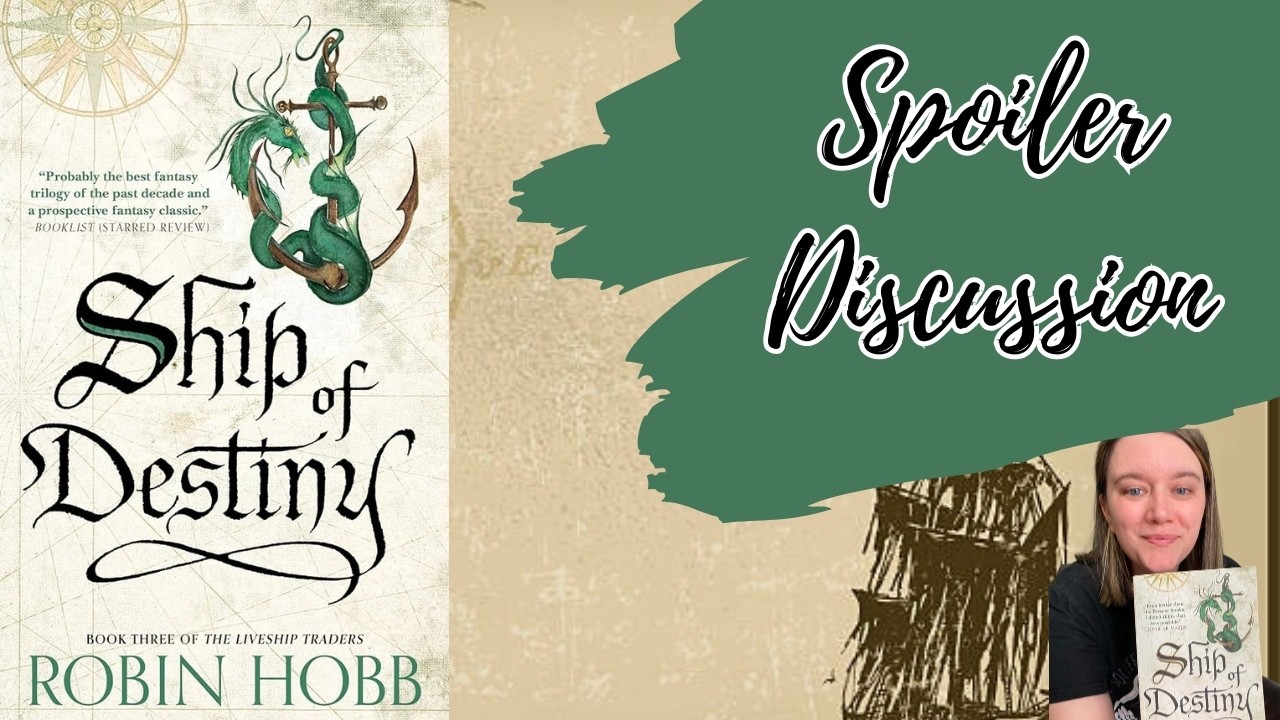
Ship of Destiny: Spoiler Discussion!
TheBookCure
105 views•2026-05-28



