This tutorial effectively strips away the academic gatekeeping of music theory by focusing on intuitive, iterative songwriting. It transforms a daunting technical subject into a practical toolkit for immediate creative expression.
Install our extension to search inside any video instantly.
How To Make Chords Less Scary
Added:Learning how to write music is not a straight line. Typically, your first songs sound okay at best or tolerable at least. When I was first creating an ADA for the first time, I also had this struggle. To me, it sounded good, but upon further analysis, I felt that something was missing. I was missing movement or that sense of progression that most songs have. But then I found out about something that I was ignoring up until this point. Chords. Now, I've spoken with a few people from different stages of their music making journey about what they consider to be the hardest part or the most difficult part of making music. Pretty much told me the same exact thing. Chords are so hard to write, or in other words, they're scary.
Well, I'm going to show you what I found on my musical journey that can help you when making your songs. My hope is that you're able to take these findings as a way to fit chords naturally as a piece of your full song and not just feel like a requirement that you have to wedge in there. Before we can use them, it's best to know what a chord is. A chord is simply a collection of notes played at the same time. So technically, that means this is a chord, even though it doesn't sound like one you normally hear. Chords are like a story that the song tells. It has movements, changes, and progressions.
Songs that don't use more than a few tend to get repetitive quickly. By changing up the chords every so often, you freshen the song up again, giving it a feeling of motion. Listen to this piece.
to hear how it moves from somber and sad to hopeful and optimistic. That's how powerful the chords can be.
Now, chord progressions are pretty simple to understand. Just like chords are a group of notes, progressions are a group of chords. And just like the chords themselves, progressions can have as many chords as you want. Most chord progressions are actually quite simple.
They usually have no more than four chords in one or two shapes. The power of chords come from switching from one progression to a whole new progression.
And these progression changes are that magical movement stuff that we're looking for. Now, let's try doing some of that ourselves.
Now, one thing to keep in mind with chords and progressions is that discovery is a powerful tool. Most people learn chords through a theory course or memorize a dry list, but I want to show you a different way. Most chords in music have three notes in them. So, let's try making some with just three notes in them. So, let me just pick three notes at random.
Okay, that's something at least. Let's move only one note at a time until it sounds like something we want to keep.
Ah, there we go. Now that sounds interesting. Now, let's create another chord just like that, but use some different notes. Okay, that sounds pretty good. H, even though both of these chords sound good alone, they don't really work together. I'm going to go and change this second chord one note at a time until it fits with that first chord.
There we go. Now it sounds connected.
Let's add a third chord the same way we did the other two, but make sure it works with the second chord as well.
Okay, that seems to fit well together.
Now, let's complete this loop with a fourth chord. The important thing to remember is that when you're creating the end of the loop, it needs to match the second to last chord as well as the first chord. This is probably the most difficult part when it comes to creating loops. So, let's keep trying things until it works.
Nice. Now everything fits together very well. Remember, if you really like a progression that you've discovered, you can hold on to it and use it again in other songs, too. Or you can tweak it a bit and make a new one. And well, that's how making chords and progressions works. It's not some secret dark magic or hidden technique. It really should be like finding something new by making small changes one at a time. Now, the way that I just showed you works very well, but it doesn't mean you can't be inspired by the chords of your favorite songs. A lot of the songs that I've made have been inspired by songs that I've listened to throughout my life.
Honestly, some of the coolest chord changes that I've used are from other songs with some changes to fit my style.
There's nothing wrong with listening to other creations to build an idea of your own. So, feel free to consider this as another way to get those chord ideas for your next song.
I haven't really gone into detail about chord theory because it's a little deeper of a topic than I really wanted to talk about, but I will say that studying chord theory can enable you to consider new ideas for your chord progressions. Just don't try to force this knowledge if you don't see any value in it. Many great composers go through their entire career without learning formal music theory from a course. If you do have a genuine curiosity for learning some great chord progressions, you can check the description of this video to see some of the great resources that go a bit more in-depth than this video does.
I've been avoiding formal labels and terminology for the chords we made since they might make these seem too intimidating. I would say that using the actual names or labels for the chords should be a choice that fits your creative thinking. I don't see any importance to memorizing relative or absolute names for chords or progressions unless you plan to use them. I will say that many others online will use these names and labels to tell you their ideas. So, understanding what they are helps you communicate with others, but it's not a requirement to understand these labels. Consider learning these when you feel comfortable.
Sometimes your chord progression can end up going far away from where you started. This can make it hard to get back, but sometimes just changing that one note is all the difference. Try seeing if that's the case with your progression. If you're using a DAW and you know what scales are, you can also check to see if there's a way to lock your notes to that specific key.
After you made your chord progression, there's a chance that you're now stuck wondering what to do next. This is where your creativity shines, though, as now you have something to listen to to help you come up with the next parts. Whether you prefer to do drums, a lead, a baseline, or something else, the chords are meant to be the backbone that allows other parts to connect to it. If you don't know how to get started, just try placing notes that are within the chords that you placed with a different instrument or at a different octave, like C5 for C4. This should allow you to come up with some new ideas to take advantage of that road that you've already paved.
I hope this explanation of chords makes them look a little clearer to you. They aren't meant to be these complex methods of writing that separate the pro from the learner. They're supposed to be a path that your song travels down along with some movement and some freshness.
And most songs only have a few regressions, not five or six. So don't get too stressed on trying to compose a 15-minute piece as your first shot at this. The fact that you're here looking for some help is already amazing. I can only wish the best for you as you grow on your musical journey. Let me know in the comments or an email any of your thoughts. Other than that, have a fantastic day. Light blue out.
Related Videos

0:30
Music Theory
We Turned to War - Epic Orchestral Metal - For Broken Bonds and Final Battles
WaveEchoes-universe
226 views•2026-04-21

56:17
Music Theory
Speaking of Music David Hush
RoyalSocNSW
132 views•2020-04-28
13:08
Music Theory
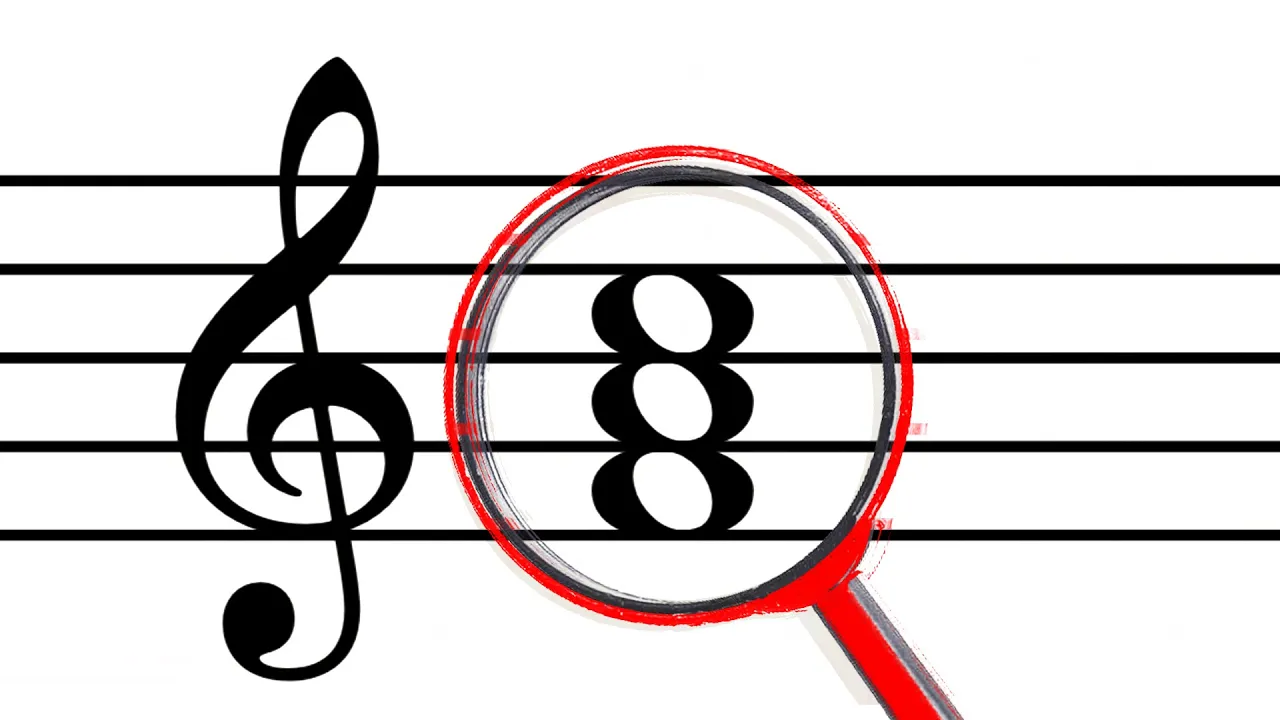
How to Identify Chords Written on Sheet Music
LessonsOnTheWeb
202K views•2016-10-28

9:05
Music Theory
Essential II-7 V7 I Lines/Progressions you must know
JazzDuets
24K views•2021-04-06

28:55
Music Theory
Barry Cooper speaks for Beethoven 10th Symphony
tommyvichev
10K views•2011-10-08
3:40
Music Theory
THEME & VARIATIONS
ecai
820 views•2020-05-17
3:34
Music Theory
MUS 2702 - 03 - Elided and Overlapping Phrases
bfuhrman
268 views•2019-08-02

3:44
Music Theory
Gloria - Act 1 for Alto
Whatchdis1
3K views•2013-02-07
Trending

13:25
Business
Playstation NO DISC/NO BUY Fight Is Over...
DavidJaffeGames
4K views•2026-07-23

22:40
Business
Steam and Xbox Just Dropped The Hammer On PlayStation
OhNoItsAlexx
9K views•2026-07-23

16:52
Anthropology
Americans Confused in Australia for 17 Minutes Straight
IWrocker
17K views•2026-07-23

20:36
Business
SuperBike Factory Has Gone... What's Next for the Motorcycle Industry?
thatbikersimon
11K views•2026-07-22