This analysis brilliantly demonstrates how Tolkien anchors profound moral weight within a simple game of wits. It serves as a sharp reminder that the most enduring literature is often found in the most accessible stories.
Installieren Sie unsere Erweiterung an, um sofort in jedem Video zu suchen
Riddles in the Dark is Tolkien's MASTERPIECEHinzugefügt:
I just finished the most popular chapter in all of literature. Perhaps the most popular chapter that's ever been written in human history and I need to talk about the brilliance of it just for a few minutes. I know brilliance is a buzzword and lately everything is either a masterclass or brilliant or perfect, but this chapter genuinely for what it accomplishes for its audience is beyond brilliant. It's the riddles in the dark chapter written by J.R. Tolken in The Hobbit. Now, I feel like all of us kind of remember those middle school days where we read the chapter slowly in class and kind of just tried to guess at what each of the riddles were. And for all the fun of the chapter, it was also one of the creepiest chapters that I've ever read in my entire life cuz I just read it a few days ago for pretty much the first time. As well as simultaneously being one of the silliest and the most fun chapters. Now, maybe you like a chapter or remember a chapter more that I don't really, you know, maybe there's a more popular chapter in all literature than Riddles in the Dark.
Let me know in the comments if there is or if you think there is. But I want to spill the beans on why I think this chapter is actually brilliant at the beginning of the video and just kind of show you in the rest of the video the examples and do a walkthrough of this chapter to just kind of prove it. But this chapter is brilliant because of who the audience is. And I have said this in almost every single Habit video that I've made. So maybe it's boring to you right now, but I'll say it again.
Tolkien wrote this with the intention of it being read for a bedtime story to a kid.
Not only do I find that this is true in the stories of Tolki and reading this to his own kids at their own bedtime, but it also comes in the way that he writes the story just in general. It all just perfectly coded for a bedtime story. So parents reading this to their kids need a story that doesn't get too creepy before they nod off to bed. So J.R.
Tolken creates a chapter where Bilbo gets left behind in a cave after his company kind of completely abandons him and he falls and gets knocked out only to wake up and start walking down a dark corridor where he has no idea where he's going to end up only to find himself walking into water where he's accosted by a creature who in all honesty is kind of like a hobbit from the very first thing that Tolken says about him which we'll talk about which is crazy but also is terrifying and skullking and deadly quiet who challenges to him a challenges him to a game of riddles that if Bilbo loses to this creature named Gollum, that Gollum gets to eat him.
Legitimately one of the creepiest chapters I've ever read in my life. This is the last place on God's green earth that I would want to be or even on God's caved earth that I would rather be. And I should say this is kind of the chapter where Bilbo finds the ring, the one ring to rule them all. And it is very much a side piece to the whole chapter. I mean, yes, this is how Bilbo ends up winning the riddle game and everything kind of culminates in him with culminates with him finding this one ring in this chapter, but you're essentially kind of forgetting all about the ring in this chapter because on the first page and that doesn't happen again till later.
And even though this chapter is terrifying in theory, when you read it, you actually kind of laugh out loud and you ponder things that you're as you're trying to figure out the riddles for yourself. It is a wildly cooperative chapter that encourages parents to pause and ask their kids the questions for the answers to the riddles. Kind of lets the parents and the kids figure it out for a moment together, but I'll talk about that in a few moments. The first thing that I want to talk about that kind of proves this whole idea. This is a brilliant piece of children's literature, and it's the greatest chapter of all time is the horror elements in the story are always kept well until the riddles are actually kind of done. But even after the riddles are done, there are comedic elements of the story that just make the horror more palatable for kids. You cannot get to a point for a children's story where the horror is just all over the place. He does not want to scare his audience asleep because again, we're in a dark cave with a creature who wants to eat us if we don't win his game. Terrifying.
But listen to the interaction, the first interaction that we have with Gollum and how Tolken essentially makes it both terrifying and hilarious. This is what he writes. Deep down here by the dark water lived old Gollum, a small slimy creature. I don't know where he came from, nor who he was or what he was. He was Gollum, as dark as darkness, except for two big round pale eyes in his thin face. He had a little boat, and he rode about quietly on the lake. For lake, it was wide and deep and deadly cold. He paddled it with large feet dangling over the side, but never a ripple did he make, not he. He was looking out of his pale lamp-like eyes for blind fish, which he grabbed with his long fingers as quick as thinking. He liked meat, too. Goblin he thought good when he can get it. But he took care they never found him. He just throttled him from behind, if they ever came down alone, anywhere near the edge of the water while he was prowling about. They very seldom did, for they had a feeling that something unpleasant was lurking down there down at the very roots of the mountain. They had come on the lake when they were tunneling down long ago and they found they can go no further. So there their road ended in that direction and there was no reason to go that way unless the great goblin sent them.
Sometimes he took a fancy for fish from the lake and sometimes neither goblin nor fish came back. Actually Gollum lived on a slimy island of rock in the middle of the lake. He was watching Bilbo now from the distance with his pale eyes like telescopes.
Bilbo could not see him, but he was wondering a lot about Bilbo, for he could see that he was no goblin at all.
Gollum got into his boat and shot off from the island while Bilbo was sitting on the brink altogether flumxed and at the end of his way and his wits.
Suddenly up came Gollum and whispered and hissed. Bless us and splash us, my precious.
I guess it's a choice feast. At least a tasty morsel make us Gollum. And when he said Gollum, he made a horrible swallowing noise in his throat. That is how he got his name. Though he always called himself my precious, the hobbit jumped nearly out of his skin when the hiss came in his ears and he suddenly saw the pale eyes sticking out at him.
"Who are you?" he said, thrusting his dagger in front of him.
So Tolken makes the dread huge and it just grows every single word he writes until Gollum speaks his first word and it kind of catches the reader off guard a little bit where he says, "Bless us and splash us." What kind of ridiculous creature would say that? So, he's not really all that scary. And the parents reading this story can kind of go into that element even more. They can make more voices for the kids and make them laugh so that as a listener, you go from a moment of terror to a moment of levity with the things that Gallum says. Even the way he gets his name feels less scary than how they even portray it in the films where Andy Circus is kind of creating this cough rather than a gulp, which is what it seems like in the book.
He's terrifying and slightly ridiculous at the same time. And a kid listening to this can laugh and be simultaneously scared, which means they never tip over into genuine distress, too, which I think Tolken is just so good at managing their nervous system in real time, which I think is pretty genius. And I'm going to go over the riddles in the next section, too. But all they're just so ridiculous as well. Imagine having a riddle contest with a creature like Gollum.
That's not how the world would work, I think, if you meet a creature like Gollum. But Gollum isn't going to immediately eat us. He actually wants to have fun and play a game with us first, which I'll talk about again, too.
There's another whole thing in that. But after the rail contest, the writing takes a turn because the writing does get a little bit more terrifying. The games are over. So, this is kind of Tolken taking a plunge for the reader into a horror-like scenario with Gollum behind us, finally recognizing what happened with Bilbo and what he does have in his pockets is listen to the writing of Tolken and how he just changes this based on how I would interpret the tone of Gallum. But perhaps I might be wrong in how I interpret this tone. Um, maybe if you're a parent, you're reading in this in a different way. So, let me know in the comments if you read this or interpret this differently. But this is how I read the post riddle section. This is the section right as Gollum is looking for his ring and he wants to slip on his ring and kill Bilbo. It says, "This is what was in his wicked little mind as he slipped suddenly from Bilbo's side and flat back to his boat and went off into the dark. Bilbo thought he had heard the last of him. Still, he waited a while, for he had no idea how to find his way out alone. Suddenly, he heard a screech.
It sent a shiver down his back. Gllum was cursing and whailing away in the gloom, not very far off by the sound of it. He was on his island, scrabbling here and there, searching and seeking in vain. Where is it? Where is it? Bilbo heard him crying. Lost it it is my precious. Lost. Lost. Curse us and crush us. My precious is lost. What's the matter? Bilbo called. What have you lost? It mustn't ask us. Shri Gallum.
Not its business. No, Gollum. It's lost.
Gollum, column, Gollum. Well, so am I, cried Bilbo. And I want to get unlost, and I won the game. And you promised. So come along. Come and let me out. And then go on with your looking. Utterly miserable as Gallum sounded, Bilbo could not find much pity in his heart, and he had a feeling that anything Gollum wanted so much could hardly be something good. "Come along," he shouted. "No, not yet, precious," Gollum answered. We must search for it. It's lost, Gollum.
But you never guessed my last question as you promised, said Bilbo. Never guessed. Never guessed, said Gollum.
Then suddenly out of the gloom came a sharp hiss.
What has it got in its pocketses?
Tell us that. It must tell us first.
As far as Bilbo knew, there was no particular reason why he should tell.
Gollum's mind had jumped to a guess quicker than his. Naturally, forgum had brooded for ages on this one thing, and he was always afraid of it being stolen.
But Bilbo was annoyed at the delay.
After all, he had won the game pretty fairly at a horrible risk. Answers were to be guessed, not given, he said. "But it wasn't a fair question," said Gollum.
"Not a riddle, Precious. No." "Oh well, if it's a matter of ordinary questions," Bulber replied. Then I asked one first, "What have you lost? Tell me that. What has it got in its pocketses?"
The sound came hissing louder and sharper. And as he looked toward it, to his alarm, Bilbo now saw two small points of light peering at him as suspicion grew in Gollum's mind. The light of his eyes burned with a pale flame.
I mean, this story has just gone from being kind of comedic to being flatout terrifying. But it's also a little bit of like a gimly in the Lord of the Rings movie kind of thing where Bilbo is just like offish. He doesn't really suspect that much foul play even though he kind of does at the same time. Like Bilbo needs to wake up a bit here. He might have some kind of paralysis at the moment, which might explain why he's just acting the way he is, but he's not kicking into higher gear like he should.
But Tolken still does some slip some humor in here because Bilbo is trying to get through a small little narrow crack in the stone at the end of this chapter and he can't do it because he's just too big around the waist. And so the book says Bilbo struggled but he could not move it. He tried to squeeze through the crack. He squeezed and squeezed and he stuck.
It was awful. His buttons had got wedged on the edge of the door and the doorpost. He could see outside into the open air. There were a few steps running down into a narrow valley between tall mountains. And the sun came up out from behind a cloud and shone bright on the outside of the door, but he could not get through. Suddenly, one of the goblins inside shouted, "There is a shadow by the door. Something is outside." Bilbo's heart jumped into his mouth. He gave a terrific squirm.
Buttons burst off in all directions. He was through with a torn coat and waste coat, leaping down the steps like a goat, while bewildered goblins were still picking up his nice brass buttons on the doors stop. To me, the image that Tolken gives here is just so comedic, and I think it's going to make both the kids and the parents laugh. And so, Tolken does a really good job in this whole chapter of making the tension really intense, but also capping it. But I want to talk now about the riddle game, which I think increases, you know, with difficulty for each riddle that he gives. And I think this is Tolkien being aware of his audience. And I think it's when his audience when his awareness of his audience is most visible. And so the riddles, they don't just happen randomly. They're really arranged. So they kind of go in degree of difficulty with them getting more and more difficult as they go on. And the first riddle that Gallam asks is about the mountain. What has roots as nobody sees?
Is taller than trees. Up it goes and yet it never grows.
And Bilbo gets it. He goes, "Easy mountains, I suppose." And I think when he says the word suppose, it's really important for us as readers, too.
Because Bilbo almost sounds bored. Now, why does Tolkien start here? Because I think for a child hearing this for the first time, they can actually get it.
Maybe not instantly, but they can get there. And that feeling of solving something alongside the hero, I think, is the game of this chapter. Tolkien is building your child's confidence from the very first riddle, not just helping them cap their fear. Then Bilbo asks one back. 30 white horses on a red hill, which is the teeth thing. Callum gets it. And then you get this wonderful little detail where he goes, "We has only six." Which is horrifying and genuinely funny. If you're a parent reading this aloud and you don't do a little voice there for your kid, I don't know what you're doing. Then the next riddle is the wind and then the sun on the daisies, which is actually is a little bit harder. Honestly, I couldn't solve that one because I thought it was pretty tough. And here is when I think the reader knows that Tolkien is slowly turning up the dial here. So we kind of focus up when we are when we're reading this and we're trying to solve this. But we also feel good because the parents might say, "Hey, that was a tough one."
And the kid is going, "Oh, that was tough for my parent. That's why I didn't get it." But the next one is about darkness. And here's where Tolken does something really, really smart, too, because Bilbo gets it immediately. And the narration tells us why because the answer was all around him. And so the kid who gets it before Bilbo feels really validated. and the kid who didn't get it as fast as Bilbo or maybe got it after him is kind of let in gently on the joke or the riddle. So, nobody loses. And I think that's kind of brilliant game design disguised as literature. But then we have the egg riddle and then we have the fish riddle, which is a lie without breath, as cold as death, never thirsty, ever drinking, all in male, never clinking. And this one stumps Bilbo. And it kind of stumped me as well. And Tolki knows it's going to stump some of the kids, too. So, how does Bilbo get to it? A fish literally jumps out of the lake and lands on his toes and he shouts, "Ugh, it's cold and clammy." And then fish. The answer arrives physically before it arrives mentally. And the child hearing this doesn't feel stupid for not getting it because Bilbo didn't get it either and he got hit with it. It's honestly one of the funniest moments in the entire chapter. And it's also terrifying because otherwise Gollum would eat him.
It's like great writing here. and we don't really feel that dumb for not getting it because Bilbo Bow didn't get it. Then we have the leg riddle, which is probably my least favorite of them.
And then we get to the time riddle, which I think is the last and the hardest riddle of them all. Now it says, "This thing all things devour birds, beasts, trees, and flowers. Naws iron, bites steel, grinds hard stones to meal, slays kings, ruins towns, and beats high mountains down." This one Tolken doesn't even pretend Bilbo solves. Bilbo panics and he wants to give a shout, "Give me more time. Give me more time." And just what comes out is time. Time. He screams the answer by accident. And I think this is really profound in the entirety of the chapter because maybe it's just so like he he's answered this by pure luck and panic. And I think that's one of the most brilliant moments that Tolken has in this chapter because imagine how the reader or listener feels. He's telling children here, you don't have to be the smartest in the room. You don't have to solve everything. Sometimes you just get lucky and that's all right. And I think here's the whole amazing part of this whole, you know, chapter here is that Tolken isn't just writing the riddles for Bilbo and Gum to exchange. He's writing them for me and for you and for the people that are reading this story.
He even says this directly in the text.
After the fish jumps and or after the fish riddle stumps Bilbo, he writes, "I imagine you know the answer of course or can guess it as easy as winking since you are sitting comfortably at home and have not the danger of being eaten to disturb your thinking." So he's talking to you as the listener, the parent sitting in the chair next to the bed.
He's kind of giving you a wink over your child's head and saying, "Pause here and ask them. Let them try to solve this."
This chapter is not just a story to be read. It's a game to be played together.
And Tolken, I think, builds it on that uh builds it for that purpose. That's why this is endured because we all didn't just read it. We played this game. We played it maybe with someone we love, maybe with our parents or like you know a school teacher that we had or classmates. So I think that's why this chapter gets even more brilliant for this reason. But it's not necessarily even the grandest reason why I think this is brilliant and why I think this is going to stand for the test of time for all of time. I think that reason is because of Gallum because I truly think that Gallum is the heart of this entire chapter in his comedy and terror and miserableness. And I don't think that he gets enough credit for what Tolken is actually doing with him here. And I probably will write another essay on Gollum just in this chapter because I want to get, you know, all my thoughts out. But I just want to get some thoughts out here. So when Gallum first appears in this chapter, he is genuinely terrifying, but also kind of hilarious.
Tolken takes time setting him up. Before Gollum even shows up on the page, Tolken is already describing the lake, which is this wide and deep and deadly cold thing. And the things that live in it are blind and they're they have bigger eyes that they can see things in the darkness. They can try to see things, but they're slimy things and things that sneaked from the outside to lie in the dark. dark and Tolken is painting this picture of a place that kind of exists outside of time and has no light and it's just there's nothing warm about this. It's the complete opposite of a hobbit hole. And then into that picture he places Gollum who's small, slimy, has you know a lot of dark around him except for two round paid pale eyes. He's paddling a boat without making a single ripple. And I want to this is a side quest for this but where did he get that boat from? One of my terrifying theories is that this is actually some kind of goblin leather. Like he's taking the skin of a goblin and making a boat around it with like maybe fishbones or something like that. Otherwise, how is he getting this boat? Is he did he sneak like a goblin barrel or something like that? I don't know. It's just terrifying to think of how he would obtain this boat. But anyway, I digress. The whole point of this chapter is Gollum here.
This creature who throttles goblins from behind when they wander too close to the water. And he does this so well, the goblins are actually afraid of this nameless thing down by the water and down by the lake that they don't even want to go there unless their boss tells them to go get fish for him. That is a horror movie monster right there. And this is genuinely one of the creepiest character introductions that I've ever read. And Tolken wrote it for bedtime.
But at the same time that this is terrifying. Here is when Tolken does something that I think separates him and separates this chapter from anything else that I've read in the majority of children's literature. He makes you feel sorry for Gollum. He doesn't do this right away, but he kind of quietly plants it in a few sentences.
He has one when Gallum proposes the riddle game. Tolken tells us why riddles are the first thing that come to his mind. He says asking them and sometimes guessing them had been the only game he had ever played with other funny creatures sitting in their holes in the long long ago before he lost all his friends and was driven away alone and crept down down into the dark under the mountains. I've never read this story to a child at bedtime, but I would be so curious to see what the child's expression would be after you read that sentence to them. Because what Tolken just told them is that this monster used to have friends. He used to sit in warm holes above the ground and play games and laugh. He had a grandmother. He remembers son on the daisies. And that memory surfaces during the riddle game almost involuntarily like it kind of escaped somewhere from his locked away mind. He talks to himself because there is genuinely no one else to talk to. Which is another sad point of this. He has been alone down here for so long in the dark that he has split into two voices in his head. And he has conversations with himself.
That's not just a monster. That is a tragedy. And it's the most brilliant tragic monster that I've ever read about. And it's wrapped up in children's literature. So Tolken just disguises all this perfectly. But it's there in between the lines. And a child hearing this doesn't process that intellectually. I don't think they can at the moment. Maybe they can. Maybe I'm discounting children too much. But I think more than that, they feel it.
There's something wrong about Gollum that goes deeper than it is scary. He is scary and sad at the same time. And that combination, I think, is something that children instinctively understand. Even though when even though they don't have the words for it, but I think Tolken kind of pays this off here. And by the end of the chapter, when Bilbo has the ring on as and is invisible, Gallum is crouched in the tunnel entrance blocking Bilbo's way. And he has all the advantage. He has a sword and he's invisible. Gallum can't see him and Bilbo almost does it. He thinks about it directly in the text. He must stab the foul thing, put its eyes out, kill it.
It meant to kill him. Then Tolken writes one of the most extraordinary passages in this entire book, which I'm probably going to write another full essay about later this week, but he says, "A sudden understanding, a pity mixed with horror welled up in Bilbo's heart. A glimpse of endless unmarked days without light or hope of betterment. hard stone, cold fish, sneaking and whispering.
Bilbo sees Gollum's whole life in a flash and he chooses not to kill him. He jumps over him instead. Now, I think, think about what the kid is absorbing there at bedtime when this parent is reading this to their child. They are learning that the creature who wanted to eat you is also a creature deserving of pity. Don't give me that garbage about Tolki not writing great characters.
Redemption is always, it seems to always be the goal with characters that Tolken writes about that are evil. Even Sarman and Sauron. But the kids are learning that understanding someone's suffering does not just mean excusing what they do, but it also means something else.
That they are learning that mercy is not weakness, that it's something that brave people do. And Tolken hides this entire moral education inside a riddle game in a cave. And he doesn't lecture at us. He tells us in a story. He never slows it down to explain it. He just shows you Bilbo's heart making a decision in the dark and kind of just moves on from that. That is what knowing your audience at the highest level looks like. It's so brilliant. It's a bedtime story that plants something in a child that they will carry for the rest of their life without ever quite knowing that they picked up on it. So Tolken sat down to write a bedtime story for his children.
And what he produced was a chapter that teaches kids how to be brave without lecturing them about bravery. It teaches pity. He kind of lets them feel smart at the same time and makes them cackle with laughter at every single turn of this page. It's one that does enough terror just enough, but it also releases the pressure with this swallowing noise and a stuck uh button on Bilbo's shirt. And then he hides one of the most consequential objects in all of fantasy literature in a moment that you probably miss it where Bilbo trips and feels something on his hand. And he does all this in like 20 pages. Tolkien knew he was writing for, and I've said this before, but dang, Tolkien knew how to write. He was writing for children in the dark who just needed to be scared enough to feel something, but also safe enough to fall asleep. And there's so much that contributes to this brilliant chapter that I'm going to keep talking about this for all of my days. I just think this is such brilliant writing.
And so, I'm going to keep writing essays on this kind of stuff. If you want or you like this video, make sure you subscribe. You can like the video, too.
You can become a member for some members onlyly content, early access to videos.
If you want to support the channel or you just like the stuff that I'm doing and want me to keep doing it, that helps a ton. And as always, remember to look toward new that was and beyond to Elvin home that is and to that which is beyond Elvin home and will ever be. I'll see you in the next one.
Ähnliche Videos
I Loved the Duke in Silence for Years. My Final Act? Choosing His Rival. 🤫💔 | DramaBox
DramaBox-PrimeDramaShorts
228 views•2026-05-31
⚡Harry Potter Book 4 [CH 23]⚡(CEFR A2+) Audiobook with Full Text
InglêsEssencial
880 views•2026-05-31
She Saved a Dying Prince Everyone Feared. Now the Empire Hunts Them Both.
NovelFilmz
462 views•2026-05-28

অর্জুনের প্রতিজ্ঞা: জয়দ্রথের পতন |#shorts #mohavarat
ChildhoodTea
129 views•2026-05-31

10 Books I Wish I Would Have Read Sooner!
BrianBell7
204 views•2026-05-29
How The Boys Fumbled The Most Iconic Villain of The Past Decade...
TeddySlump
5K views•2026-05-30

the legend of wayland the smith — a story of cruelty and revenge #norsemythology #mythsandlegends
tinyrainboot
1K views•2026-06-01
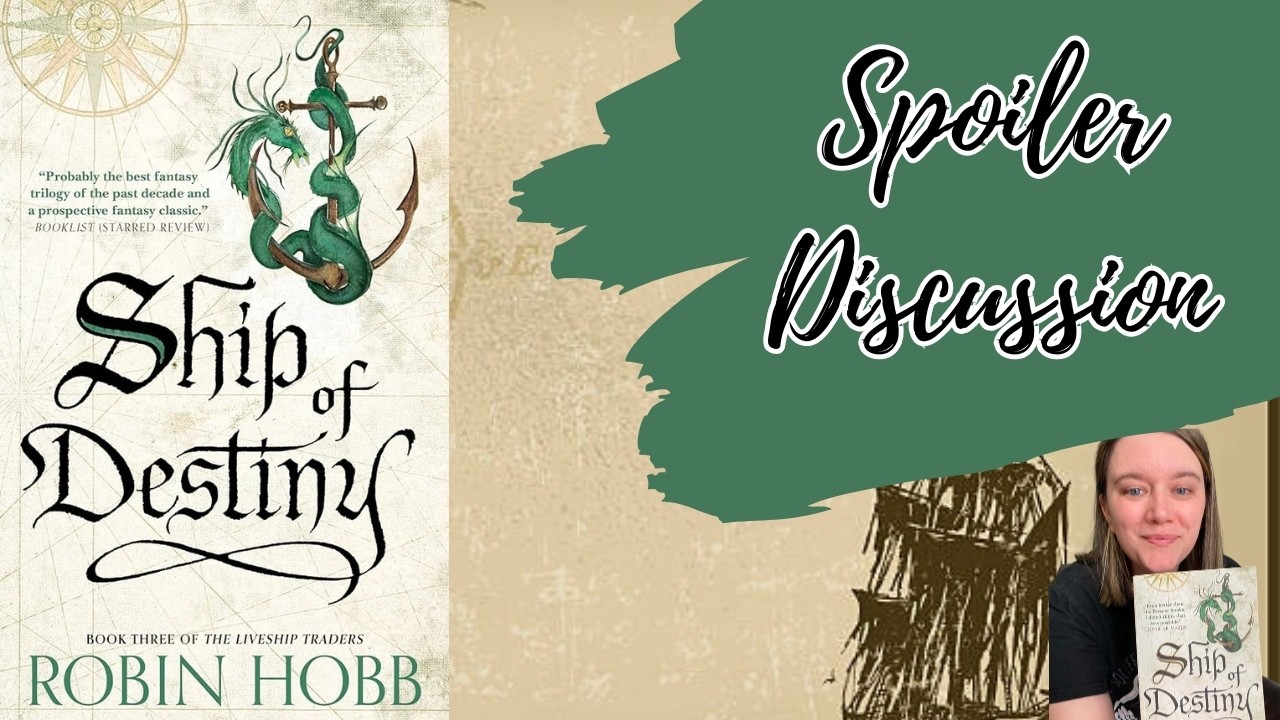
Ship of Destiny: Spoiler Discussion!
TheBookCure
105 views•2026-05-28



