This video provides a systematic and clear breakdown of complex problems, making it an essential resource for mastering the logic of standardized mathematics. It effectively bridges the gap between abstract theory and practical examination success.
Install our extension to search inside any video instantly.
Grade 12 Maths Past Question Paper Full Solution 🔥 | NEB Class 12 Maths Complete AnswerAdded:
So hey guys, welcome back to my channel.
So as we are going to any big rate to work with mathematics subject to the final exam as we take a question solution video here I go to so without wasting any time let's move into our video so many screen mathematics subject to the final question paper is solution going to so so group a group a first question when you go to the permutation of young things taken at our our time when each things may occur any numbers of times is when you go to option number a and which be my article power and which is option number C and always is option number D and and into our weight so it's correct answer option number C and our weight is question number two so which one of the following is Euler's form of complex I when you go to option number a power pi I upon four B equal power three pi upon two C equal power three pi I upon four and equal power pi I upon two so it's correct answer option number B equal power three pi I upon two equal correct answer I go to equal power three pi I upon two Euler's form of complex number minus I go to correct answer question number three when you go to angle a 30 degree angle B 45 degree which one of the following is a to C when you go to option number a under root of two upon under root of three plus one option number B three plus one upon under root of two is option number C under root of three plus one upon two root two is option number D two root two upon under root of three plus one is so it's correct answer option number a under root of two upon root three plus one is correct answer I go to question number four when you go to which one of the following has transverse exist and conjugate exist when you go to option number a y square minus four y minus four x plus four zero option number B two y square minus three x square minus six zero option number C two y square plus three x square minus six is equal to zero option number D two x square plus two y square is equal to 72 so it's correct answer option number B two y square minus three x square minus six is equal to zero question number five is equal to so when you go to it is given that a vector and B vector are two vectors such that modulus of a into B is equal to modulus of a into B what is the angle between a vector and B vector when you go to option number a B pi upon two C pi upon option number D upon six so it's correct answer I go to option number C pi by four correct answer I go to question number six when you go to question number six in a school there were 100 students 35% students failed in mathematics 20% students failed in science and 15% failed in both of the subjects when you go to the security students selected at random probability I go to the probability of the student failed in mathematics given that failed in science already is option number a 3 by 7 option number B 4 by 7 option number C 3 by 4 option number D 1 by 4 is correct answer I go to option number C 3 by 4 correct answer I go to probability I go to the question number seven when you go to question number seven which one of the following is is the derivative of cosec x inverse x when you go to option number a one upon x under root of x square plus one option number B minus one upon x under root of x square plus one option number C one upon under root of one upon x under root of one minus x square where modulus of x is less than one option number D minus one upon x under root of one minus x square where modulus of x is less than one so it's correct answer I go to option number B minus one x under root of x square plus one is correct question number eight when you go to which one of the following is equal to limit x tends to zero equal power of three x minus one upon two x option number a zero option number B one by two option number C three by two option number D three so it's correct answer I go to option number C three by two is correct answer I go to question number nine when you go to which one of the following represents the equation of normal to the curve x square is equal to two y at the point minus two comma two when you go to option number a two x plus y plus six is equal to zero option number B two x minus two y plus six is equal to zero option number C two x minus y plus six is equal to zero option number D x minus two y plus six is equal to zero so it's correct answer I go to option number D x minus two y plus six is equal to zero question number 10 when you go to which one of the following is the solution of differential equation x d y minus y d x is equal to zero when you go to option number a x is equal to c y B y is equal to c y c x option number C x y is equal to c option number D x minus y is equal to c so question number 10 correct answer I go to option number B y is equal to c x answer I go to final answer I go to question number 11 question number 11 when you go to in Gauss elimination method the coefficient of the variables of the element a i j where i is equal to j are known as option number a pivot element option number B common element option number C non basic element option number D basic element so it's correct answer I go to option number a pivot element final answer I go to question number group B when you go to question number 12 a write the number of total terms in the expansion of x minus one upon x whole square whole square 25 when you go to first question when you go to write the number of the total terms in the expansion of so it's correct answer I go to x minus one upon x square whole square 25 when you go to x minus one upon x when you go to 50 25 into 250 is number number of total terms when you go to when you go to young plus one when you go to when you go to young when you go to 50 50 plus one when you go to 51 terms answer I go to so I go to answer so I go to question number a answer when you go to 51 terms question number B write the middle term in the expansion of x plus a power when young is even when you go to one mark question so it's correct answer I go to so in the expansion of a plus x young when young is even when you go to even case so I go to mid term when you go to t young by two plus one young c young by two a young minus young by two and x power young by two so it's young c young by two young by two young x young by two young young factorial upon young young upon two factorial into young upon two factorial is equal power young upon two x power young upon two mid term when you go to correct answer I go to question number c when you go to what is the sum of binomial coefficient in the expansion of one plus x power young when you go to one mark question so it's correct answer I go to so c when you go to sum of the binomial coefficient in the expansion of one plus x young is when you go to young c zero plus young c one plus young c two plus plus young c young is equal to two young when you go to one mark question I go to question number D when you go to write log e one plus x in series form range minus one is less than x is less than or equal to one when you go to one mark question so it's correct answer I go to so log to the base e one plus x is equal to x upon one minus x square upon two plus x cube upon three minus x four upon four plus infinity range when you go to minus one is less than x is less than or equal to one is correct answer I go to question number so it's correct answer I go to question number e when you go to write e power minus x in series form when you go to one mark question so it's correct answer I go to so e power minus x when you go to minus x is equal to one minus x upon one factorial plus x square upon two factorial minus x three upon three factorial plus x power four upon four minus infinity is correct answer I go to question number final correct answer I go to question number 13 when you go to 13 when you go to find the value of one minus w plus w square power four plus one plus w minus w square power four where w and w square are imaginary cube roots of unity when you go to so it's correct answer I go to so I go to 13 when you go to one minus w plus w square power four plus one plus w minus w square power four one plus w square when you go to minus w minus w power four is minus w square minus w square power four when you go to one plus w plus w square when you go to zero so it's correct answer I go to so I go to minus two w four plus two w square minus two w square four is I go to 16 w power four is plus 16 W ^ 8 This is going to be your 16 by 100 to the power 4 16 16 W ^ 4 + 16 W ^ 16 into W cube W cube 11 100 So 16 into W cube into W plus 16 into W cube It's like 2 square W square 16 into 1 W cube 11 100 into W plus 16 into 1 square W cube 1 square into W square so 16 common W plus W square It's equals to 16 into minus 1 minus 16 correct final answer so important 1 plus W plus W square 0 100 W cube 11 100 1 plus W plus W square is equals to 0 question number B is going to be 100 Solve the following system of equations using inverse matrix method Question number 100 X plus 2 Y plus 3 Z is equals to 20 5 X is equals to 2 Y plus 4 3 Z is equals to 4 X plus 4 So writing the given equations in matrix form 100 X is equals to B 100 where A 100 1 5 minus 4 2 minus 2 0 3 0 3 This is going to be X 100 X Y Z 100 B 100 100 24 or 4 I you got it 100 by 100 short message you equation by the same matrix form convert by So I'm working 100 X is equals to A 100 of B 100 first money So I'm going to determine it of A 100 by 100 determine it of 1 5 minus 4 2 minus 2 0 3 0 3 So it's going to determine it 100 minus 60 100 100 co-factor Now co-factor of A R A 11 co-factor minus 6 minus 0 minus 6 100 A 12 100 minus 15 plus 0 100 minus 15 100 A 13 co-factor 100 0 minus 8 100 minus 8 100 A A 21 co minus 6 minus 0 minus 6 A 22 co 3 plus 2 by the 15 100 A 23 minus 0 plus 8 minus 8 100 A 31 0 plus 6 6 100 A 32 minus 0 minus 15 100 15 100 A 33 A 33 minus 2 minus 10 100 minus 12 I So I'm working inverse co-formula 100 1 upon determine it of adjacent of A 100 So 1 upon minus 60 100 minus minus 100 100 A 11 12 13 21 22 23 31 32 33 co-power transverse 100 transverse 100 100 100 co-final A inverse is equals to minus 1 upon 60 minus 6 minus 6 6 minus 15 15 15 minus 8 A minus 8 100 12 Now I'm Now from equation equation first X is equals to A inverse of B So I'm going to be 100 minus 1 upon 60 100 minus 6 minus 15 minus 8 100 by 100 100 minus 6 15 minus 8 6 15 minus 12 same or 100 B 100 by 100 24 or 4 100 100 100 100 100 100 100 100 calculation 100 multiplication 100 100 calculator 100 multiplication perform by 100 1 upon 60 100 minus 120 minus 180 minus 240 100 2 3 or 4 100 I So X co-value 100 2 X is equals to 2 Y is equals to 3 or Z is equals 4 100 correct answer 100 100 question number 14 100 14 co A 100 If 1 upon P plus 100 3 upon P plus Q plus R minus 1 upon Q plus R P Q R prove that angle R 100 60 degree 100 3 marks 100 So it's going to be 100 So quiz 14 A co answer 100 100 1 upon P plus R is equals to 3 upon P plus Q plus R minus 1 upon Q plus R So 1 upon P plus R plus 1 upon Q plus P plus Q plus 100 you minus 1 upon is equals to 100 I 100 I is equals to 100 upon P plus Q plus R Q plus 100 P plus upon P plus R Q plus R is equals to 3 upon P plus Q plus R 100 P plus Q plus 2 plus P plus Q plus 2 R P plus Q plus R is equals to 3 P plus R Q plus R 100 100 multiply multiply P square plus P Q plus P R plus P Q Q square plus Q R plus 2 P R plus 2 Q R plus 2 R square is equals to 3 P Q plus 3 P R plus 3 Q R plus 3 R square 100 100 P square plus Q square is minus R 100 P Q So you slide solve 100 100 P square plus Q square minus R square upon P Q is equals to 1 100 P square plus Q square minus R square upon 2 P Q 100 1 100 100 100 cos R 100 1 by 2 by 100 100 cos R 100 cos 60 So R co-value 60 degree 100 question prove question number 100 100 question number 14 B 100 find the eccentricity 4 K ellipse 100 2 marks 100 question 100 9 X square plus 4 Y square 18 X 16 Y 11 is equals to 0 100 100 100 14 co co-correct answer 100 9 X square plus 4 Y square 18 X 16 Y 11 is equals to 0 100 sorry 100 question 100 or 100 100 9 X square minus 18 X plus 4 Y square minus 16 Y is equals to 11 100 X or X 100 100 100 100 100 single 11 bracket right move 100 9 X square 2 X 100 common 100 X square 2 X plus 4 Y square minus 4 Y is equals to 11 100 4 common 100 Y square minus 4 Y is equals to 11 9 X square minus 2 into X into 1 plus 1 minus 1 square plus 4 100 Y square minus 2 into Y into 2 2 square minus 2 square is equals to 11 100 9 100 100 X minus 100 minus 100 plus Y minus 100 minus 100 100 100 100 100 100 X minus 100 minus 9 1 9 plus 4 Y minus 100 minus 4 4 16 is equals to 11 100 100 or 100 9 X minus 1 square plus 4 Y minus 100 is equals to 36 100 100 100 X 100 square upon 4 100 100 plus Y minus 100 9 100 100 100 100 is equals to 1 100 compare 100 comparing X minus 100 upon A square plus Y minus 100 square upon B square is equals to 1 100 100 100 100 A square 100 B square 100 100 B greater than A 100 100 100 So it's equals to under 1 minus square upon B square is equals to under 1 minus A square 100 B square 100 100 100 under under 100 5 upon 9 100 9 100 100 100 5 under 100 100 100 under 100 5 upon 100 correct answer 100 100 question number 100 question 100 100 100 100 find the equations tangent normal circle X square Y square is equals to 13 at the point 2 3 100 3 marks 100 100 100 100 100 question number 100 question number A co solution 100 100 100 equation of circle 100 X square plus Y square is equals to 13 100 equation first 100 100 equation tangent at 2 3 is given by X into X 1 plus Y Y 1 is equals to 13 100 100 or 2 X plus 3 Y is equals to 13 100 100 is the equation tangent 100 tangent equation 100 equation normal perpendicular to the tangent equation 2 is 3 X minus 2 Y is equals to K 100 equation 100 100 100 passes through 2 100 100 100 100 So 3 into 2 minus 2 into 3 100 K So K is is equals to 0 equation 3 becomes 3 X minus 2 Y is equals to 0 is the equation 100 normal 100 question number 100 100 100 100 question number 100 100 100 100 100 100 in a rhombus two of the diagonals perpendicular to each other verify by vector product two vectors 100 100 two marks 100 question 100 100 15 100 co-solution 100 100 100 100 let take a rhombus A B C D Here AB is equals to BC is equals to CD is equals to DA.
equal so AB vector is equals to DC vector is equals to A vector.
Now, we can write diagonals AC vector and BD vector as below.
AB vector plus AD vector is equals to A vector plus B BC vector plus BA vector Now AC vector into BD vector is equals to A vector plus B vector into B vector minus A vector A vector into A vector plus B vector into B vector minus B vector minus into A vector step goes to A vector into B vector A square plus B square minus A vector into B vector key A vector into B vector when you go B vector into A vector B B square minus B square since AC vector into BD vector is equals to zero so the diagonals AC vector and BD vector are perpendicular to each other So over question number 16 A goes to answer question number 16 A solution differential equation D cube Y upon DX DY upon DX square plus five is equals to zero three right goes to So question number B write the derivative of sine HX with respect to X So D sine HX upon DX cos X question number write an example exact differential equation in X and Y So it's cool solution an example of exact differential equation is X and DY plus Y DX when you go zero answer question number write the integral of integral of one upon X square minus A square DX one So integral integral of one upon X square minus A square DX is equals to one upon two A log X minus A upon X plus A plus C formula in the money answer So this is a good question number answer make it so they go to state L hospitals So it's cool So L hospitals rule key one if if if limit X tends to A FX upon GX takes the indeterminate form zero upon zero infinity upon infinity then we can solve it limit X tends to A only F dash X upon G dash X solve question number 17 question number 17 when you go to the one that the supply and price of a commodity for the last six year is given below So I'm a table price in rupees per kg 100 110 112 115 120 140 supply in kg 30 40 45 20 55 55 question number A find the coefficient of correlation between price and supply question number estimate supply in kg on which rate of price is rupees 150 when you go three max when you solution question number 17 solution one two three four five total six late price per kg when you go X up supply in kg when you go Y now X Y over X square it's cool Y square X Y multiplication X Y 100 30 110 40 112 45 115 20 220 55 140 55 So it's cool X square it's cool Y it's cool X into Y table and that say column wise last month some nickel summation of X is equals to 697 697 summation of Y 247 summation of X when you go 81869 it's cool summation Y square one one zero 975 summation of X 29040 over when you go over question number find the coefficient correlation price and when you go I'm going to say formula coefficient correlation R is equals small R small R small R is equals to N summation of XY summation of into summation of Y under root N summation of X minus summation of X into under root N summation of X square minus summation of X six into 29040 minus 697 into 245 of Y final answer 0.62 under root of six into 81869 697 under six into 10975 minus 245 square I'm going to correct 20. 62 correct answer question number B estimate supply in kg on which rate of price rupees 150 three max X bar mean when you go summation of when you go 697 697 upon six go to the 116.17 correct answer Y when you go summation of Y upon N is equals to 245 upon six 40.83 answer over when you go we go continue regression regression of XY on X BYX is equals to formula when you go N summation of XY minus summation of X into summation of Y N summation of X square summation of X over when you go six into 29040 minus 697 into 245 upon six into 81869 minus 697 formula answer 0.64 this is a good when you go regression equation of Y on Y minus Y bar is equals to B Y X X minus bar Y minus 40.83 is equals to 0.64 only X minus 116.17 hence Y is equals to 0.64 minus 33.52 equation at rate price X is equals to rupees rupees 150 rupees 150 So Y is equals to 0.64 150 minus 33. 52 hence Y is equals to 62.48 kg supply correct answer question number 18 A goes to So 18 A when you go to integrate integral DX upon three sine minus four cos when you go two max when you So it's cool solution So it's cool solution late is equals to integral of DX upon three sine minus four cos question format integral of DX upon three two sine X by two into X by minus four X square X by two sine X by two integral of DX upon six sine X by two cos X by two minus cos X by two plus four sine square X by two over integral sec square X by two DX upon six tens X by two minus four plus ten square X by two is equals to integral sec X by DX upon four ten X by plus six ten X by two four over put ten X by two when you go differentiating with respect to X sec square by two one one upon DX is equals to DY hence sec square X by two DX when you go now when you go is equals to integration of two DY upon four Y square six Y minus four is equals to two by four two two by four DY upon Y square three by two Y minus is equals to one by integral of DY Y square plus two into Y into three plus three four square minus three by four minus over one by DY upon Y three by four square minus five upon four square B square formula is equals to A one by two into one upon two into five by four log Y plus three by four minus five by four Y plus three four plus five by four and you buy the C constant is equals to 1/5 log y - 1/2 upon y + 2 + C is equals to 1/5 log on a 2y - 1 upon 2y + 4 + C is going 1/5 log 2 tan x by 2 - 1 2 tan x by 2 + 4 + C and we say correct answer like over say I mean question number 18 question number B and so question number 18 question number B is going to be the from the solve dt by dx is equals to e to the power tan inverse x - t upon 1 + x square so you say I'm like 3 marks because it's going to solution that we want to so many things question number 18 B solution like so B to give some dt upon dx is equals to e tan inverse x t upon 1 + x square so I'm going to say I'm going to solve or so say or say dt upon dx say I'm going to tan inverse x upon 1 + x t upon 1 + x square so it's like the dt upon dx + 1 upon 1 + x into t is equals to e tan inverse upon 1 + x is equation first e tan inverse x upon 1 + x say after that say you minus t upon 1 + x say equals to say left side to the I also plus this also say I'm going to give some equation first and you equation first comparing equation first with linear equation linear equation key to the dy upon dx + py is equals to Q that is compare going to compare I'm going to give to the you I Q I t p Q p say 1 upon 1 + x and you Q Q Q Q I bracket the right side you say e tan inverse x upon 1 + x say I'm going to over give some integration factor is equals to e integral of p dx is equals to e integral of 1 upon p p 1 upon 1 + x dx you 1 say e power tan inverse x like this over say I'm going to now solution of differential equation is t into integration factor I of is equals to integral of Q into I of integration factor into dx or you going to t into e Q tan inverse x is equals to integration of e tan inverse x upon 1 + x into e tan inverse x dx you say I'm going to equation second this put or put t put on the tan inverse x is equals to z I put on the say I'm going to differentiate with respect to x 1 upon 1 + x dx is equals to dz over going to hence equation two becomes t into e Q power tan inverse x is equals to integral of integral of is equals to integral of z into z dz or t into e Q power tan inverse x is equals to integral of z square dz or t into e Q power tan inverse x is equals to z Q power keep z keep upon 3 + C hence t into e Q power tan inverse x is equals to e Q power tan inverse x Q keep upon 3 + C hence t is equals to 1 upon 3 e Q power tan inverse x square + C e Q power minus tan inverse x hence t is equals to 1/3 e Q power 2 tan inverse x + C e Q power minus tan inverse x correct answer like over say I'm going to question number 19 so question number 19 I'm going to give some using simplex method maximize p x y x y is equals to 15 x + 10 y subject to 2 x + y is less than or equals to 10 x + 3 y is less than or equals to 2 and x y is greater than or equals to 0 I'm going to give some question number 19 A solution solution let S1 and S2 be the stack variables S1 and S2 variables so the equations can be rewritten by below 2x + y + S1 + 0 into S2 is equals to 10 x + 3y + 0 into S1 + S2 is equals to 12 - 15x - 10y + 0 into S1 + 0 into S2 + P I'm going to give some so initial simplex table is going to BB x y S1 S2 RHS ratio is going to say S1 this S2 ratio is going to say most negative number is in last row is minus 15 so C1 is pivot column C1 pivot column also lowest ratio is due to minus 2 also lowest ratio is due to 2 so 2 of R is pivot element by answer like R1 tends to R1 upon 2 so BB x S2 BB x y S1 S2 RHS same as this x 2 so minus 15 minus 10 table value 0 0 0 over say I'm going to R2 tends to R2 minus R1 R3 tends to R3 + 15 R1 I'm going to BB x y S1 S2 RHS same as this ratio so say x and x S2 1 0 1 by 2 5 by 2 1 by 2 minus 1 by 2 0 1 5 7 0 minus 5 by 2 15 by 2 0 75 over say I'm going to here most negative number in last row is minus 5 by 2 minus 5 by 2 so C2 is pivot column also I'm going to 14 upon 5 is lowest ratio so 5 by 2 of R2 is pivot element I'm going to R2 tends to 2 by 5 R2 BB x y x y S1 S2 RHS table over I'm going to 0 minus 5 by 2 15 by 2 0 to 75 R1 tends to R1 minus R2 by 2 and R3 tends to R3 + 5 by 2 R2 BB x and table I'm going to 0 0 7 1 82 value since there is no negative negative since there is no negative in the last row so we stop simplex calculation here hence maximum P is equals to 82 at x is equals to 18 by 5 and y is equals to 14 by 5 correct answer so I'm going to question number 19 so I'm going to group C question number 20 question number 20 A question number if 1 + x n is equals to C0 + C1 x + C2 x + dot dot dot plus Cn x n prove that C1 + 2 C2 + 2 3 C3 + dot dot dot plus Cn minus 1 by 2 n into 2 n is equals to 0 I'm going to 3 marks so I'm going to question number 20 A question number 20 A question number A LHS C1 + 2 C2 + 3 C3 + dot dot dot plus 3 n Cn is equals to x upon 1 factorial + 2 into n n minus 1 upon 2 factorial + 3 n minus n n minus 1 n minus 2 upon 3 factorial + dot dot dot plus n into 1 is equals to n this I'm going to 1 upon 1 factorial + 2 n minus 1 upon 2 into 1 factorial + 3 n minus 1 n minus 2 upon 3 into 2 factorial + dot dot dot plus 1 I'm going to 1 upon 1 factorial 1 + n minus 1 upon 1 factorial + n minus 1 n minus 2 upon 2 factorial + dot dot dot plus 1 n minus 1 C0 + n minus 1 C1 + n minus 1 C2 + plus n minus 1 Cn minus 1 is equals to n into 2 n minus 1 since n Cn + n C1 + dot dot dot plus n Cn is equals to 2 n is equals to 1 by 2 n into 2 x is equals to 1 by 2 n into 2 n is equals to RHS is equals to prove so I'm going to question number B question number B find the square root of 1 minus the root of 3 I using De Moivre's theorem 2 marks so I'm going to question number 20 question number 20 question number B is equals to so let z is equals to 1 minus the root of 3 I R on the root of 1 plus on the root of minus 3 square is equals to 2 since z lies in fourth quadrant Q is equals to 360 degree minus tan inverse modulus of minus on the root of 3 upon 1 is equals to 360 minus tan inverse on the root of 3 is equals to 360 degree minus 60 degree is equals to 300 degree quadrant so I'm going to now over say I'm going to z is equals to 1 minus on the root of 3 is equals to 2 cos 300 plus I sin 300 so theta 300 so I'm going to theta 300 for cos 300 sin 300 from De Moivre's theorem yes for roots can be given by z k is equals to R 1 by n cos 360 into k plus theta upon n plus I sin 360 into k plus theta upon n where n is equals to 2 1 0 1 so I'm going to question number z0 z0 is equals to 2 1 by 2 cos 300 upon 2 plus I sin 300 upon 2 so on the root of 2 cos 1 by 150 plus I sin 150 2 by 150 is equals to on the root of 2 minus on the root of 3 upon 2 plus 1 upon 2 I is equals to minus on the root of 2 minus on the root of 3 upon 2 minus 1 by 2 I is equals to z1 1 2 1 on the root on the root of 2 into on the root of 3 upon 2 minus 1 upon 2 is equals to square so square roots are plus minus under root of two bracket with under root of three upon two minus one upon two I I'm a use principle of mathematical induction to prove that one plus three plus five plus seven plus dot dot plus two n minus one is equals to n squared minus one prove so you three max so so it's so question number uh 20 C solution so P N P N is equals to uh one plus three plus five plus seven dot dot plus two n minus one is equals to x squared n squared uh for n is equals Q R S hence L is equals to R S basically hence P one is true let us suppose that it is true for n is equals to m you a young belongs to young hence P M is equals to one plus three plus five plus seven plus dot dot plus two m minus one is equals to m squared for n is equals to L S is equals to one plus three plus five plus seven plus dot dot plus two m minus one plus uh bracket two two into m plus one minus one is equals to m squared plus two m plus two minus one is equals to m squared plus two m plus one is equals to m plus one whole squared is equals to R S hence P M plus one is true whenever P N is true hence from principle of mathematical induction P N is true for all x belongs to n prove going to second time so question number 21 so question number 21 A find the equation of the parabola focus is at the point minus three four and the directrix two x plus five is equals to y you question so it's so I'm going to number 21 question number answer for parabola F money which are F is equals to minus three comma four question of directrix two x plus five is equals to y hence two x minus y plus five is equals to zero P X comma be any point on parabola hence perpendicular distance from P X comma Y two directrix is equals to distance between P X comma Y and minus three comma Y modulus of two x minus y plus five under root of two squared plus minus one is equals to under root of X plus three whole squared plus y minus four whole squared taking squares on both sides two x y plus five whole squared two five x squared plus six plus nine y squared eight y plus 16 uh or four x squared four x squared four x squared minus four y plus y squared plus two x minus 10 y plus 25 is equals multiply five x squared three eight 30 x plus 125 five y squared 40 y hence x squared four y squared four x y plus 10 minus plus 100 zero I'm the so I'm 21 question number B find area of parallelogram diagonals represented by the vectors two I vector plus three minus four K vector three I minus five plus two K vector uh you say number three so uh you solution number 20 number B answer yeah right good here D one vector two I plus three minus four K vector D two vector three I vector minus five Z vector two K vector uh D one into D two vector is equals to I Z K two three three minus five minus four two I uh I vector six minus 20 minus Z vector six plus 12 K vector minus 10 minus nine is equals to minus 14 I vector minus 16 minus 19 K vector hence area of parallelogram is equals to one by two modulus of D one vector into D two vector is equals to one upon two under root of minus 14 squared minus 16 plus minus minus 19 squared is equals to under root of 813 is equals to under root of 813 upon two is squared units area of parallelogram uh answer question number 21 question number C question number uh 21 number C in a triangle ABC A is equals to B is under root of six and angle is equals to 45 degree solve the triangle you question two max so it's so uh question number 21 question number solution given in triangle ABC A money which B money which are under root of six angle 45 degree from sign sign sign B upon is equals to sign A upon is equals to sign B upon of six is equals to sign 45 degree upon two or sign B is equals to under root of six two into one by root under root of is equals to under root of three upon two hence B is equals to 60 degree or 180 minus 60 degree hence B is equals to 60 degree or 120 degree also one A plus B plus C is equals to 180 degree hence C is equals to 180 degree minus A plus B at B is equals to 60 degree uh C is equals to 180 minus 45 degree plus 60 degree is equals to 180 minus 105 degree is equals to 75 degree at B is equals 120 degree C is equals to one 180 degree minus 45 degree plus 120 degree 15 degree basically from sign sign C upon sign C is equals to A upon sign A hence C is equals to sign C upon sign A at C is equals to 75 degree C is equals to sign 75 degree sign 45 degree is equals to one plus under root of three at C is equals to 15 C is two sign 15 sign 45 degree is equals to minus one plus under root of three is equals to under root of three minus one hence B is equals to 60 degree C is equals to 75 degree C is equals under root of three plus one B is equals to 120 degree C is equals to 15 degree C is equals to under root of three minus one I'm the answer right good I'm a number 22 question number number 22 number A question number water flows in an inverted tank at the rate of 36 centimeter per minute when the depth of water is 12 centimeter how fast is level rising the radius base and height the tank is 21 centimeter and 35 centimeter respectively so you I'm a three so question number 22 question number solution let us consider an inverted conical tank with radius R and height H let it any instant of time H T is equals to and radius is R figure you say R basically I'm a H basically you say R basically height right good basically given D V by D T is equals to 36 centimeter cube per minute D H by D T is equals to what when H is equals to 12 centimeter R is equals to 21 centimeter H money H is equals to 35 centimeter from similar D property H upon R is equals to capital H upon capital R is equals to H is equals to H capital H upon capital R into small R hence is small H is equals to 35 upon 21 R 35 or 21 cut away of five upon three or is small H is equals to five upon three R hence is small is equals to three H upon also is equals to pi R is squared H uh or is equals to pi three H upon whole squared is equals to nine pi H upon 25 I'm a with respect to T D V upon D T nine pi upon into three D H upon D T or D H upon D T is equals to 25 upon 27 pi into one upon H is squared into D V upon 25 27 pi one upon 12 whole squared into 36 is equals to 0.073 centimeter per minute answer I'm the so I'm number 22 number B so question number B the concept anti derivative for solving differential equation justify statement an example two max question number so it's I'm a uh so it's solution solving differential equation during inter integration anti derivative midway it can be justified with following example differential question x squared y d x or d y by y is equals to d x by x squared uh integration d y by d y is equals to integration of d x by x squared uh log log y is equals to integration x to power minus two d x uh or log y is equals to x inverse upon minus one plus C or log y is minus one x plus C uh you say correct question I'm a number 22 number C so question C number a differential equation of the first degree and first order homogeneous if it satisfies condition d y by d x is equals to F y by x justify statement an example solve it three max it's good solution so it's consider example d y by d x x squared y squared x y equation now solving d y by d x x squared x y y squared x y is equals to x upon y y upon x is equals to one upon y upon x plus y upon hence d y d x is equals to y by x here equation first is a homogeneous equation and also it satisfied condition d y by d x is equals to y by x now y is equals differentiating with respect d y by d x is equals to plus x upon d x hence equation becomes V plus d V d x x squared plus V square X square upon X into VX or X DV upon DX is equals to 1 plus V square upon V minus V or X DV upon DX is equals to 1 upon V or V DV is equals to DX upon X. Now integral of V DV is equals to integration of DX upon X or V square upon 2 is equals to log X plus C. Hence Y upon X whole square upon 2 is equals to log X plus C. Hence Y square upon X square is equals to 2 log X plus C.
So like Thank you very much.
Related Videos

A Brutal Radical Expression Made Easy! The Shortcut Changes Everything.
tamoshop
112 views•2026-06-02

V : jee main /advance class 11 mathematics : Binomial Theorem class-1 ( 29 may 2026 )
dcamclassesiitjeemainsadva9953
125 views•2026-05-29

Is This Pentomino Tileable?
3cycle
241 views•2026-05-30

This Sudoku Has Many Lines!!
CrackingTheCryptic
2K views•2026-05-29

Olympiad Mathematics | Indian Can You Solve This One?
PhilCoolMath
268 views•2026-06-02
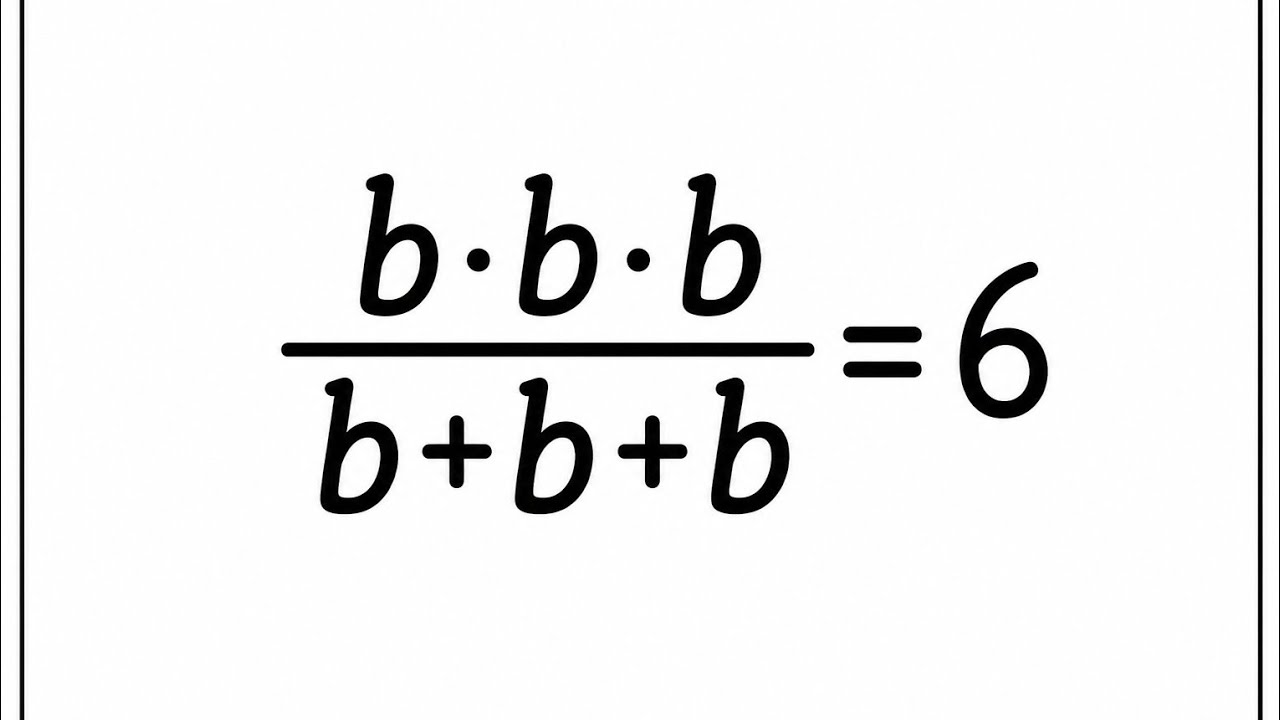
Olympiad Mathematics | Indian | Can You Solve This?
PhilCoolMath
669 views•2026-06-02

Can you get the Correct answer for this Math Quiz?
Fendora01
24K views•2026-05-29

NUMBERBLOCKS COUNT THE TOTAL SUM OF TEN NUMBERS | ADD SMALL TO BIGGEST NUMBER | hello george
hellogeorge2294
5K views•2026-05-28



