The conjunction fallacy is a cognitive bias where people incorrectly judge specific scenarios (like 'Lucy is a portrait artist who plays poker') as more likely than general ones (like 'Lucy is a portrait artist'), because additional details create a more plausible narrative even though statistically, the general scenario must always be more probable since it requires fewer conditions to be true.
Install our extension to search inside any video instantly.
Can you outsmart this logical fallacy? - Alex Gendler
Added:Meet Lucy.
She was a math major in college, and aced all her courses in probability and statistics.
Which do you think is more likely: that Lucy is a portrait artist, or that Lucy is a portrait artist who also plays poker?
In studies of similar questions, up to 80 percent of participants chose the equivalent of the second statement: that Lucy is a portrait artist who also plays poker.
After all, nothing we know about Lucy suggests an affinity for art, but statistics and probability are useful in poker.
And yet, this is the wrong answer.
Look at the options again.
How do we know the first statement is more likely to be true?
Because it’s a less specific version of the second statement.
Saying that Lucy is a portrait artist doesn’t make any claims about what else she might or might not do.
But even though it’s far easier to imagine her playing poker than making art based on the background information, the second statement is only true if she does both of these things.
However counterintuitive it seems to imagine Lucy as an artist, the second scenario adds another condition on top of that, making it less likely.
For any possible set of events, the likelihood of A occurring will always be greater than the likelihood of A and B both occurring.
If we took a random sample of a million people who majored in math, the subset who are portrait artists might be relatively small.
But it will necessarily be bigger than the subset who are portrait artists and play poker.
Anyone who belongs to the second group will also belong to the first– but not vice versa.
The more conditions there are, the less likely an event becomes.
So why do statements with more conditions sometimes seem more believable?
This is a phenomenon known as the conjunction fallacy.
When we’re asked to make quick decisions, we tend to look for shortcuts.
In this case, we look for what seems plausible rather than what is statistically most probable.
On its own, Lucy being an artist doesn’t match the expectations formed by the preceding information.
The additional detail about her playing poker gives us a narrative that resonates with our intuitions— it makes it seem more plausible.
And we choose the option that seems more representative of the overall picture, regardless of its actual probability.
This effect has been observed across multiple studies, including ones with participants who understood statistics well– from students betting on sequences of dice rolls, to foreign policy experts predicting the likelihood of a diplomatic crisis.
The conjunction fallacy isn’t just a problem in hypothetical situations.
Conspiracy theories and false news stories often rely on a version of the conjunction fallacy to seem credible– the more resonant details are added to an outlandish story, the more plausible it begins to seem.
But ultimately, the likelihood a story is true can never be greater than the probability that its least likely component is true.
Related Videos

0:39
Psychology
Inside Ronaldo’s Team Meeting
RonoSphereCR7
1K views•2026-04-17

7:25
Psychology
You Are Not So Smart: Chapter 4 Hindsight Bias, What is it?
TheBey8nD8
230 views•2019-09-15
49:35
Psychology
Sigmund Freud's Mind - Master Your Inner World (Your Unconcious Mind)
Ngaslife
1K views•2025-01-25

11:29
Psychology
What affects your mood?
RandyPaterson
602 views•2019-05-16

1:02:21
Psychology
Understanding the Relationship between Fear of Falling and Mobility in Older Adults
fallpreventioncommunityofp3788
823 views•2019-04-08
54:04
Psychology
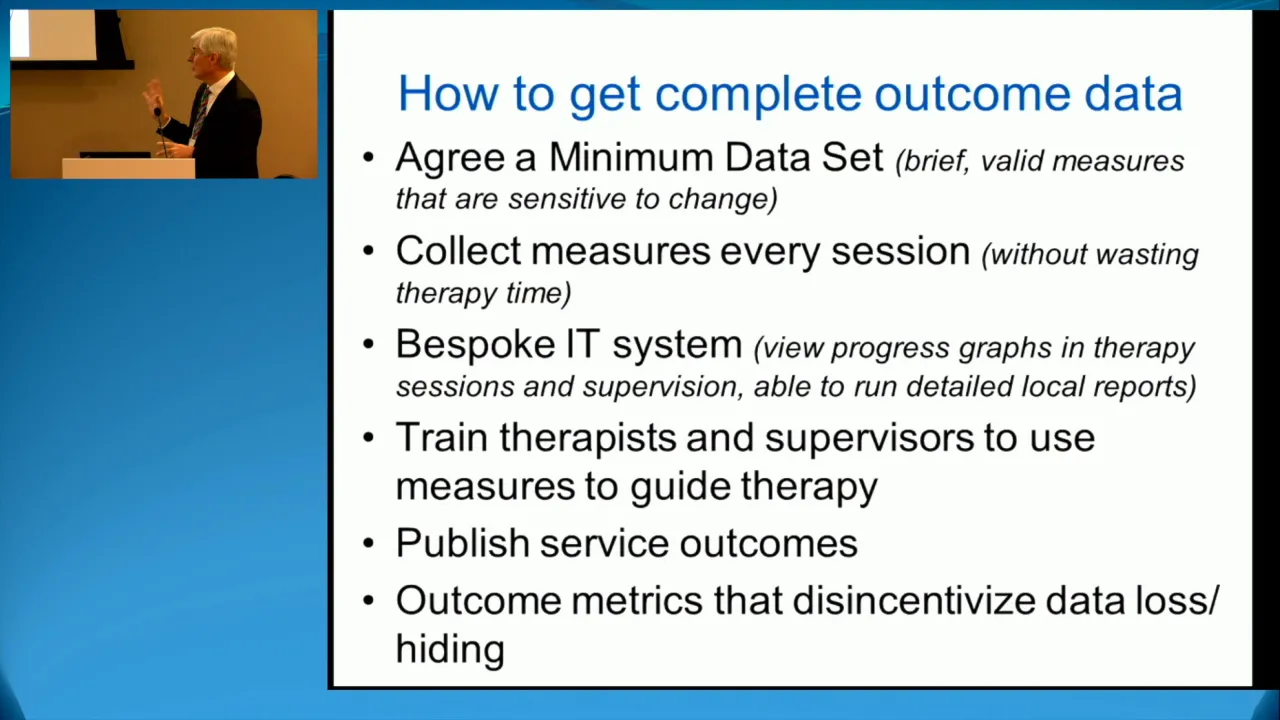
Measurement-based Care in Psychotherapy Workshop - Future of Psychotherapy Conference 2019
UofTPsych
243 views•2019-04-25

51:52
Psychology
Dr. Carol Tavris — Mistakes Were Made (But Not by Me)
skepticmagazine
14K views•2019-05-02
3:29
Psychology
Decision making Bias
theoxfordreview4272
104 views•2025-01-17
Trending

8:17
Literature
Lupita Nyong'o Goes Viral For Her Horrible Take On The Odyssey
TheAmalaEkpunobi
62K views•2026-07-06

23:35
Film Analysis
What Went Wrong With Alpha? | Spoiler Talk & Discussion
TriedRefusedProductions
76K views•2026-07-06

10:17
Business
Ford Rehires Engineers They Had Replaced With AI
stevelehto
39K views•2026-07-06

11:10
Business
CHINA BANS GOLD TRADING
lenapetrova
69K views•2026-07-06