This video offers a concise look at how a localized chemical breakthrough at Iowa State bridged the gap between theoretical physics and industrial reality during the Manhattan Project. It serves as a powerful reminder that the atomic age was built as much on metallurgical pragmatism as it was on abstract science.
拡張機能をインストールして、あらゆる動画内を即座に検索しましょう
Ames Laboratory #interestingthings #ManhattanProject #WorldWarII #Chemistry #IowaState #podcast追加:
Professor's name was Frank Spedding. His laboratory sat in Ames, Iowa, far from the places that most people associate with the Manhattan Project.
There were no desert test sites here, no dramatic mountain compounds, just scientists, furnaces, and a race against time.
At the start of the war, uranium metal was rare. Researchers could make tiny amounts, but the process, it was very slow and expensive. The emerging atomic program needed something completely different. It needed production on an industrial scale.
Spedding and chemist Harley Wilhelm, they set out to solve that problem.
Their breakthrough became known as the Ames process. They mixed uranium tetrafluoride, sometimes called green salt, with powdered magnesium inside sealed steel containers.
When heated, a violent chemical reaction stripped away the fluorine and left behind a solid mass of remarkably pure uranium metal.
What had once been difficult suddenly became practical.
And then the real challenge, scaling it up.
Within months, the team moved from laboratory experiments to production.
And by the end of the war, the Ames project had produced more than 2 million pounds of purified uranium metal, more than 1,000 tons.
About a third of the uranium used in the world's first controlled nuclear chain reaction beneath the stands of the University of Chicago, it all came from Ames, Iowa. What's remarkable is that most Americans, they've never heard of it. When people tell the story of the Manhattan Project, they usually mention Los Alamos, Oak Ridge, or Hanford. Those places earn their place in history, but none of them could move forward without materials.
Before there could be reactors, bomb designs, or chain reactions, somebody had to solve the basic chemistry problem. Somebody had to turn a scarce laboratory curiosity into a usable metal, and that happened in Iowa.
The work was so important that Iowa State received the Army-Navy E award for excellence in production in 1945, an honor usually reserved for industrial manufacturers and not universities.
After the war, the success of the Ames project led directly to the creation of the Ames Laboratory in 1947.
The laboratory would go on to become a national center for material science and rare earth research, but its origin story remains tied to a moment when a small group of scientists solved one of the biggest technical bottlenecks of the atomic age.
The atomic era is often remembered through explosions, treaties, geopolitics, yet one of its most important chapters began with chemists standing around a hot steel container in the middle of Iowa figuring out how to make a metal that the world suddenly needed.
関連おすすめ

The real reason your phone battery gets worse #LithiumIon #BatteryLife #shorts
EchoesOfTimeTV-1
440 views•2026-05-31

Total Synthesis of (±)-Dhilirolide U with Henrik Wilke
SynthesisWorkshopVideos
385 views•2026-05-30

Lecture - 03 - Summer Batch (Demo) - OL/IG O/N '26 & M/J '27 Live Class Solids,Liquids & Gas KPT
carboxylchem
105 views•2026-06-01

AMINES🔥video coming soon #shorts #chemifysudarshangurav
sudarshangurav699
272 views•2026-06-03

Lakshya NEET in English 2027 Solutions 🧪 Class 12 Backlogs Class
PWNEETEnglish
1K views•2026-05-31

A splash of chemistry, a dance of electrons, and a beautiful color transformation. 🧪✨#redoxreaction
harshrani_5920
1K views•2026-05-31

Roadmap Explained! Inorganic Chemistry Part 1, 4e | Cengage JEE Advanced | Dr Balraju Karri
cengageindia
112 views•2026-06-04
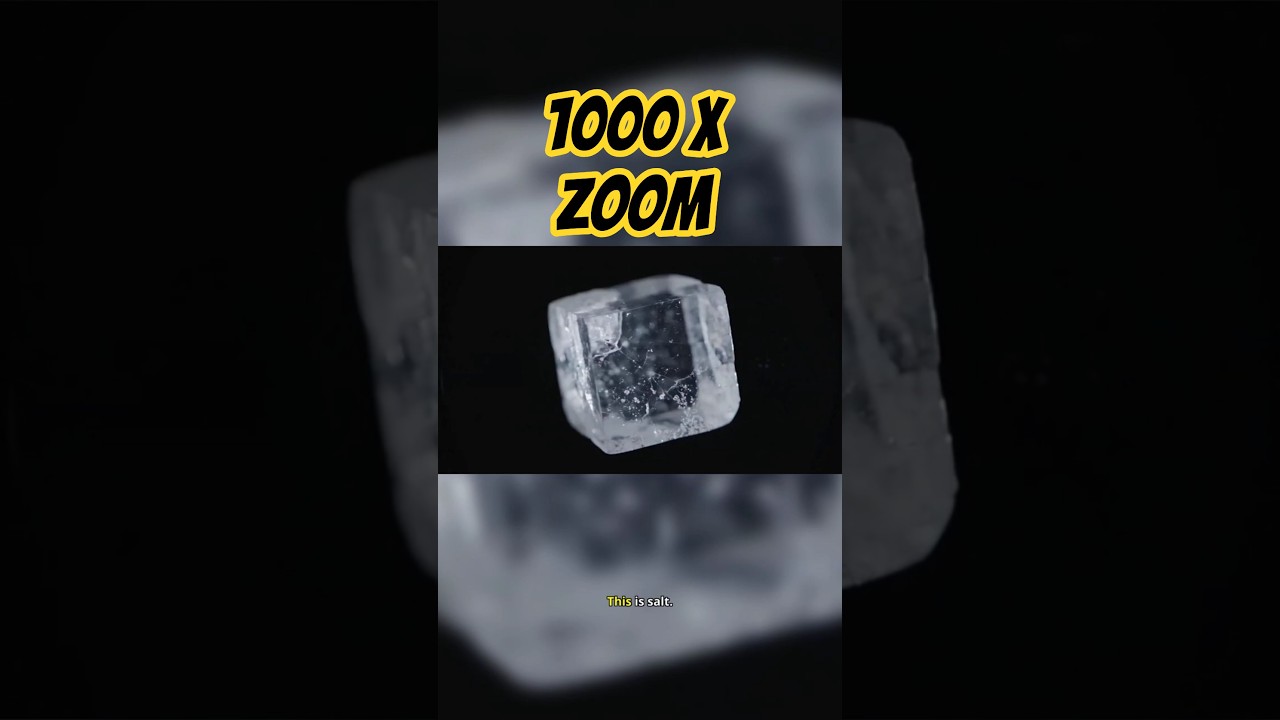
This Is Salt at 1000x Zoom
Mr.VelMash
112 views•2026-05-31



