The video offers practical corrections for common speaking mistakes that often hinder clear communication. It is a straightforward and effective guide for anyone looking to polish their English skills.
Install our extension to search inside any video instantly.
Avoid these mistakes in your speaking : sorry for my late, for learn , suggest to , question fromAdded:
Check this sentence out.
Is it correct?
No, there is a mistake in this sentence.
But, it sounds natural to most of you.
So, in this video, we are going to learn about five common mistakes that most students have when they speak English and they don't know anything about it.
So, let's see what they are.
The first one, suggest. After suggest, we don't use to.
You can There are two forms you can use after suggest. You can use verb ing, not to. Suggest that I, you, he, she, them, somebody and simple verb. In the second one, we use simple verb, no to, no ing. So, the first sentence, I suggested to watch a movie. It's wrong. So, you can use you can correct this sentence in two forms. First, verb ing.
I suggested watching a movie or I suggested that we, you, they watch a movie.
No to, no ing. Okay, these are the two correct forms you can use after suggest.
Another example.
He suggested moving to another city.
Suggest verb ing, moving. Or, he suggested that they, that us, that you move to another city. All right, we don't use to.
Now, I have a question for you.
There are two sentences. I'm going to say the first one, you say the second one. The first one is, my friend's phone was very old.
The second sentence is this. You use these words to make the second sentence. I suggest buy a new one.
So, my friend's phone was very old. I There are two forms. The first one, verb ing. So, I You say it. Say it out loud.
I suggested buying a new one.
Or the second form, that we that, him that, them. I suggested that he buys a new phone. I suggested buying a new phone. I suggested that he buys a new phone. That in the second one is optional. Sometimes you don't say it. I suggested he buys a new phone. So, never use to uh plus verb after suggest. It's a very common mistake.
The second one. Look at the sentence. I asked a question from my teacher.
It sounds normal, natural.
But the problem is, which one?
From.
Ask from somebody? No. Ask somebody something. Ask somebody a question. So, instead of I asked a question from my teacher, you need to say I asked my teacher a question. We don't use from after ask.
Ask from somebody is not correct. I asked my teacher a question.
Or sometimes you can say, I have a question for you.
We can use for. I have a question for you. He had a question for me.
So, a question for somebody is correct.
But from, no.
Or sometimes you're going to ask somebody a question. You can say, "Excuse me, a quick question." That's it. That's enough. A quick question.
So, a question for you or a quick question. But a question from is not correct.
Number three, you arrive somewhere late.
You are late for your class, for your meeting.
So, you're going to apologize. You're going to say sorry.
Most of the time most of the students say this sentence.
Uh sorry for late. Excuse me, sorry for my late or sorry for late.
No, no, no. This is not how we say it.
There are many different forms you can say this. Listen. Sorry for being late.
So, sorry for late, no. Sorry for being late or sorry I'm late or I'm sorry I'm late.
Or sorry for my delay. So, you can say my delay, but you can't say my late cuz late is an adjective. We don't use my before an adjective. So, sorry for my delay. Or if it is formal, like a job meeting, it's more formal, you can say I apologize for my delay. I apologize is more formal than I'm sorry.
I apologize for my delay or I apologize for being late. These are all of the sentences you can use, but we never say sorry for late or sorry for my late is wrong.
Number three, look at the sentence. You should watch movies for learn English.
Again, it sounds natural.
For learn English, you should watch movies. The problem is which one? For. For is wrong here.
Uh when you're talking about purpose, your target, your goal, it means your goal is learning English, so uh you should watch movies. This is your purpose. When you speak, when you are speaking about your purpose, your target, we can use to and verb or for and verb and ing. So, if you use for, you need ing after that.
The second the the first form to verb is the most natural one.
So, if you use for and ing, it's correct, but it's not natural. So, you should watch movies to learn English. That's the best form. Or, you should watch movies for learning English. But, for learn is not correct.
Uh you need special equipment this job.
Okay, there are two forms. You need special equipment.
Your purpose is doing this job. So, for this purpose, you need special equipment. So, you need special equipment to do this job or for doing this job. To do, for doing. But, for do is wrong. Now, it's your turn. You answer this question.
I save money.
My purpose is buying a house.
I save money buy a house. Now, how would you say the sentence? I save money There are two forms. The first one is with to. So, I save money to buy a house or for buying a house. But, for buy is wrong. I'm saving money to buy a house or for buying a house. Be careful.
And the last one, uh listen, uh look at the sentence. After immigrate, I was homesick.
Homesick means you miss your family and your city and your town. So, after immigrate, I was or I felt homesick.
What's wrong with it?
Nothing after immigrate. The problem is in the beginning, immigrate. After immigrate is wrong. There are two forms to say the sentence. After I immigrated or after immigration.
These are the two correct forms. After immigrate is wrong.
This is about parts of speech. We have a verb, [clears throat] a noun, an adjective. You need to use them in the correct place in a sentence.
So, immigrate is the verb. Like, I immigrated to Canada 5 years ago.
Immigration is the noun.
Like, the process of immigration when you start it. My immigration was a big change in my life. So, my immigration, I immigrated.
My immigration.
And immigrant, immigrant means immigrants, people who uh immigrate. So, there are many immigrants in Canada and the US. So, immigrate, immigration, immigrant. Be careful not to mix them up. After immigration, after I immigrated. Now, you answer this one.
Before I tried to improve my English. So, immigration, immigrated, immigrant, which one? There are two forms.
Before immigration or before my immigration or before I immigrated, my immigration, I immigrated. Before my immigration or before I immigrated, I improved my English. So, these were five common mistakes uh most of you had in your speaking, but from now on you won't have these. You won't repeat these mistakes and you can level up your speaking.
Uh try to watch the video again. The I will write the mistakes and the correct form in the description. You can take a screenshot if you wish.
And that's it. Take care. See you soon.
Related Videos

Trump’s Reflecting LAKE update
concussiontalks_slp
15K views•2026-05-28

WIL in Afrikaans is not WILL in English? | Ek leer Afrikaans | Part 6
afrikaanswithannelize
229 views•2026-05-28

How Brits Say British Pronunciation
MrBranicus
1K views•2026-05-30

🎵 A to Z Kids Song | Cute ABC Animation for Children
ABC_Little_Heros
10K views•2026-05-30

basque influence uniquely different spanish
Davantsi
761 views•2026-05-31

10 German Grammar Rules That Unlock the German Language | A1-B1 | Learn German
LearnGermanOriginal
357 views•2026-05-29

How To Express Disappointment In English #english #speakenglish #languagelearning #airlearn #viral
english_w_remi
6K views•2026-05-29
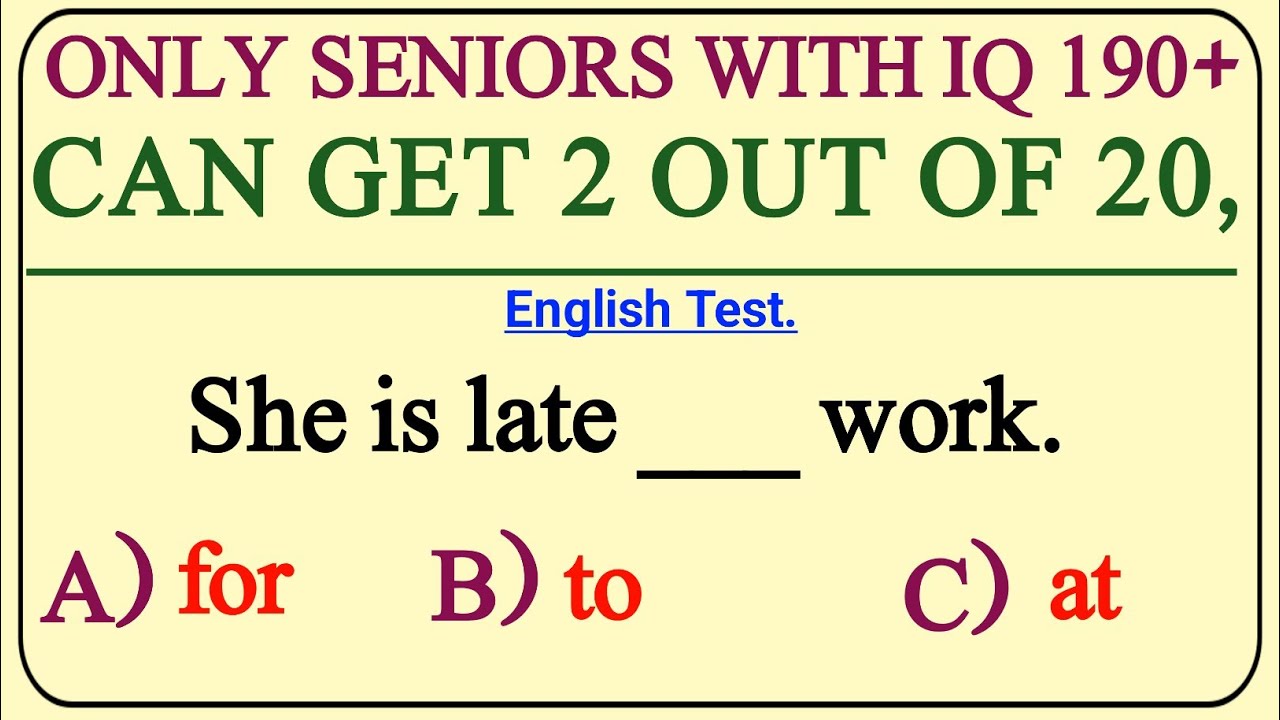
ONLY SENIORS WITH IQ 190+ CAN GET 2 OUT OF 20, | English grammar skills
EforEnglish161
582 views•2026-05-29



