The video effectively exposes the biological cost of chronic seriousness, proving that a "grind" mindset is often just a recipe for cognitive decline. It serves as a sharp, science-backed reality check for high-achievers who have optimized themselves into a state of creative paralysis.
Install our extension to search inside any video instantly.
Neuroscience shows: taking everything too seriously is making you dumber | how to fix itAdded:
Neuroscience shows that taking everything in life too seriously can actually make you dumber. And in this video, I'm going to tell you the neuroscience behind exactly why that is, and give you three of my top solutions to shift your brain back into its ultimate performance state. By the end of this video, you're going to be able to think better, create more, and actually enjoy the life that you're living. And if you're new here, hi, I'm Emily, also known as Em on the Brain.
I'm a trained neuroscientist. I've got two degrees in neuroscience as well as many years of research experience in the lab. But I am now a creator, author, speaker, and coach to people in over 55 countries all over the world. And I'm here to help you rewire your brain so that you can live your best life. Now, most people think that seriousness is a sign of ambition, that if you're not stressed, you're not trying hard enough, that you need to push and force and take yourself seriously. Now, if you're like me, growing up, I actually was told you need to be taking this more seriously. I think a lot of us grew up hearing that.
But neuroscience actually says the opposite. And constant seriousness is actually probably costing you more than you realize. When you are moving through life, taking everything so seriously, every goal, every task, every hobby, everything that you do so seriously, and constantly putting this pressure on yourself to perform, that weight has an effect on your brain and on your nervous system. Your amydala takes over, which is the brain's fear center. It's often associated with stress and anxiety.
Constant pressure is stressful and so your amigdula takes over and your amydala scans your reality for potential threats, potential things that could go wrong to keep you safe. You can think of your brain as being in two modes, smart or safe. And this is where the constant seriousness, constant pressure actually makes you dumber. Because when your brain shifts into this state of safety, your prefrontal cortex activity actually turns down. You lose cognitive flexibility. Your nervous system literally becomes less open. You get this sort of tunnel vision. Your brain gets focused on problems and filters your reality for problems rather than possibilities. When your nervous system shifts into the state of safety, you also shift into this sort of reactive mode. So you are reactive rather than creative. Now me being a creative person, I've personally experienced this in my own life. When I'm putting too much pressure on myself, the ideas don't flow. I don't know what I should create about. I don't know what I should talk about. I'm more stressed. I'm more easily triggered. I'm not enjoying the process. I'm not having fun. I'm less connected to my intuition. They've actually shown this in studies that your intuition is less accurate when your nervous system is in this state, this disregulated state when you're anxious or stressed. And so, taking everything in life so seriously, while you might get caught up in the noise thinking that this is how I'm going to get all this done, it's actually not helping you. But on the other hand, playing the game of life flips the switch. Research shows that play boosts dopamine. It also increases creativity and cognitive flexibility. Play also boosts BDNF in the brain, brain derived neurotropic factor, which is like fertilizer for your brain. It helps you learn better and faster, remember longer, and actually gives you greater access to rewiring your brain so that you can start to shift the beliefs and shift your mindset and do all the other things that you're probably doing. Play improves your brain's performance and problem solving abilities. And that reduction in stress because you're playing actually frees up cognitive resources so that you can do more. So you can think faster, adapt quicker, and you're open to the possibilities that your serious self might have missed.
Every time I remember to play the game of life, the weight lifts and immediately ideas start flowing. The things that I want automatically I start attracting them more. I start noticing more possibilities. is I started thinking more outside of the box.
Playing the game of life, activating your whimsy really is a prolevel brain hack. And if you're like, "Okay, um, I get it. I need to activate my whimsy. I need to play the game of life. It's an ultimate brain hack. How do I do it?"
I'm going to give you three of my top solutions or hacks to implement this into your life so that you can be more whimsical, have more fun, but do it in a way so that you can actually get more of what you want in life. Number one is to adopt play as a literal way of life.
There's a quote by Alan Watts and he says, "Don't separate work and play.
It's all play." So, I actually have an alarm that goes off every single morning and it says, "How can you make the tasks of today more fun?" When you are getting ready to do a task, you're probably going to want dopamine to go and do it, right? Dopamine helps you be motivated.
It helps you focus. It helps you kind of feel like you're wanting to go and move toward this thing, right? To do the task, to accomplish something. Now, what happens when the task at hand just feels like it's going to suck? Your brain does not release dopamine to help you go and do it. If you're sitting there thinking about how much this workout is going to suck at the gym, your brain is not going to give you the dopamine to go and do it. it's not going to motivate you to go and do it because the perceived effort, the effort that this thing is going to take is not greater than the reward. So, you don't really get very much dopamine to go and do it. But activating your whimsy or infusing play into the task at hand, it literally tells your brain that this is going to be an enjoyable experience. And now you can get dopamine to go and do the thing and you'll have more dopamine while you do it because it literally is more fun for you to do. And I'll tell you one example of how I did this when I was writing my book. So when I was writing my book, what I did was I literally bought a pink keyboard. It seems so simple, but I bought a pink keyboard. And this writing my book took forever. It took so long. It was a an ongoing task that genuinely was not always fun. But buying this keyboard actually made it more fun. I have so many pictures in my phone. If you went into my camera roll, you would see pictures of like my nails next to the keyboard because it like was aesthetically pleasing for me and it made it more fun to write. So, I asked myself like, how can I make the tasks of today more fun? How can you infuse play into what you're doing? Maybe, you know, for example, one of my clients that's in Minecraft that I coach, she let me know that something that she does, right? So, she doesn't really love to clean or do chores around her house. Well, now she infuses play by listening to her favorite podcasts or listening to her favorite music. and she doesn't really let herself do it unless she is doing these chores. And so now it's her brain has kind of learned that this is a fun thing because I get to listen to my favorite podcast while I do it. Another way that I like to activate my whimsy while I'm accomplishing certain tasks is to involve a friend in whatever I'm doing. I have my one friend that I made while I was in my PhD. She's still in her PhD and when I was writing my book, she's writing up her dissertation and we're sending each other pictures of our setups and just knowing that I have a friend that's in it, too. Even though we're not in the same place, not in the same room, it literally made it more fun. There are so many ways to infuse play into what you do. I mean, you can be at the gym and actually allow yourself to dance and be free with it and just not take yourself so damn seriously. The options are endless.
Number two is to do things for no reason at all. And I'm going to let you in on a little secret. Because when you have a reason for everything that you do, your workouts, your walks, your hobbies, your brain turns your entire life into a task and you steal your own joy. In society, like so it's become so popular in culture and on social media is like optimization, optimization, optimization. And I was actually on a a hike maybe a couple months ago and I was on this hike and I was just like, why isn't this hike feeling magical like it used to? Cuz I used to go on these hikes and just feel so magical and then I hadn't done it in a while because I was working and I just had like no time at all. And I finally finished the project I was working on and I decided to go on this hike to celebrate. I was just like, why isn't this hike feeling magical like it used to? And what I realized was that I was so focused on how long it was going to take, how far I was going to go, completing the trail. I had turned the hike into a task. I gave it a purpose rather than just going and wandering around because my most magical hikes, they were the ones where they had absolutely no agenda. And I remembered that on this hike, I was like, "Okay, you know what? It doesn't matter what time I finish. It doesn't matter if I even finish this trail. I could just turn back around. I'm just going to do it for the no reason and just do it for the sake of hiking. like just be present. About 10 minutes later, I was literally dancing on a mountain top.
Like literally dancing on a mountain top. When everything is a task, when you're doing everything for a specific reason, you're constantly delaying dopamine. Now, delaying dopamine isn't always bad, right? Like delayed reward can be good, but when everything is a delayed reward because everything has a purpose. Like, right? Like, so now my hike, I'm not going to get the dopamine while I'm on the hike. I'm going to get it when I finish the trail because that's the purpose or to get my cardio in at the end of it. That was the purpose. So now I'm going to get that reward for completing it rather than being present. There is also something in psychology called the overjustification effect where as soon as you attach a reason or a reward for something that you already love to do, you get less enjoyment out of it, which is what happened to me with my hike. So do things for no reason other than that you enjoy them. Watch what it unlocks for you. Now I'm going to take this one step further because if you want to train your brain to be in this state more often, you're going to need to schedule this. Something I always say is to schedule your priorities rather than prioritizing your schedule. I literally have brain playtime in my calendar where I will look into different topics, investigate different things, maybe read research papers, maybe just go online and read articles or, you know, search up things that I'm genuinely curious about. I have hours blocked off where I literally can just go and be curious because that's something that I genuinely enjoy. So maybe think of one thing in your life right now where you took something that you love, something that's fun for you, and you turned it into a task. Or maybe you just stopped doing it because it wasn't productive and put it in your calendar and start doing it. I'm telling you, when you start to do things for no reason, and you actually just genuinely do things for fun, you become more productive because fun is a performance enhancer.
And number three, adopt the game of life mindset. They don't call it the game of life for no reason. We are all here playing the game of human in this life.
Like life is is genuinely a game. And the more often that you can remember that and zoom out and remember that we are on a giant ball hurtling through space like you we are literally on a giant ball. And I have a whole philosophy of how this game of life works. For example, like challenges and tests in life are opportunities to level up, right? Like you grow through what you go through. Like these things arrive to strengthen us, to strengthen our character in this game. Or maybe you take a more spiritual kind of perspective on it and you think about soul contracts that your soul kind of signed up for the curriculum that you were going to go through here and you're here to kind of go through all these all these lessons, all these trials and tribulations because you were meant to learn these things. You were meant to download all this wisdom and have these experiences, right? And I think really the point of this step, step three, is really just to zoom out. It's so easy to get caught up in kind of like the micro and and just what's going on in your life and all the little things that are happening in your life. But zoom out and remember that we are a part of something much greater like we are a part of a much bigger picture. But here's the thing about playing the game. The game is fun to play because you get emotionally wrapped up in it. Because you become immersed in playing this game. Like if you played the game and just remembered the whole entire time that you were not a part of it, it just wouldn't be as fun. Like what makes the game fun to play is that you do get immersed in the game. And so it's not a problem to get wrapped up in things now and then. It just means you play better when you're not afraid to lose. Like when you're playing a game, you're going to still try to win. You're still going to try your hardest. But when you fail, when you make mistakes, when there's pressure and all that, like you can step back and remember that this is a game.
And that's where this mindset is really helpful. So many of my clients, I mean, me myself, I've used this mindset just to manifest and create so many things in my life. Um, but so many of the students and the people that I coach use this.
One of my clients actually that I was talking to on Monday was just sharing with me about how he has used this activating your whimsy and playing the game of life to take steps that used to terrify him. There were things and and goals that he had and things that he wanted to accomplish, but he was, you know, he let fear kind of hold him back from doing the thing that he really wanted to do. And when he realized, oh yeah, like life is a game. I can just activate my whimsy and go have fun with it. Now he's doing the thing. He's actively moving toward his dream. So it's a huge unlock when you kind of move into this mindset. And if you are interested in coaching with me or you just want to know more about what all of that is about, check the description because all the information that you're going to need is in there. Thank you for listening. I appreciate every single one of you so much. and go out there and be your most whimsical, fun, loving self because you deserve it and the world needs more of it. I'm sending you so much love. I'll see you next time.
Related Videos

Why can’t Trump take sleep meds?
concussiontalks_slp
14K views•2026-05-29

Recovery pronouns. Neuroplasticity & practical neuroscience tips to help recover from pain & fatigue
Fantasticneuroplastic
907 views•2026-05-31

I Saw the Thing Crash. Then I Lost Hours | Beyond Black Budget
BeyondBlackBudget
148 views•2026-05-30
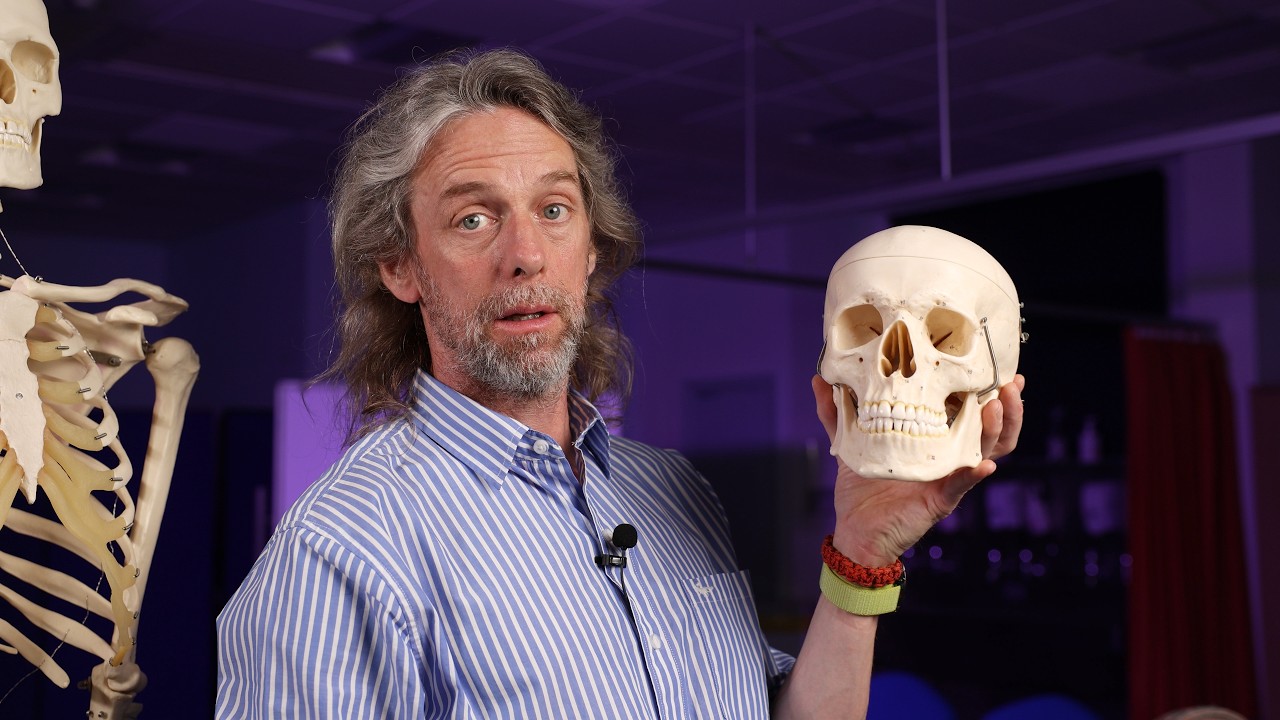
Neuroanatomy of smell (olfaction)
SamWebster
644 views•2026-05-28

women never forget when you upset them
healsick
745 views•2026-06-01

Your Brain Is Actively Deleting Your Childhood Memories! 🧠🗑️ #Shorts #Anatomy #DidYouKnow
voiceless2345
225 views•2026-06-01

What are you looking at
SuperStaticPro
1K views•2026-05-31

Why Trauma Doesn’t Just 'Go Away'
historyofsimplethings
1K views•2026-05-28



