Rectangles, rhombuses, and squares are special types of parallelograms that share five fundamental properties (opposite sides parallel, opposite sides congruent, opposite angles congruent, diagonals bisect each other, consecutive angles supplementary) while each having unique properties: rectangles have four right angles and congruent diagonals; rhombuses have four congruent sides and perpendicular diagonals that bisect opposite angles; squares combine both properties with four right angles and four congruent sides. These shapes can be solved using properties like Pythagorean theorem, angle bisection, and supplementary angles.
Install our extension to search inside any video instantly.
Notes 6.3 Rectangle, Rhombus, Square
Added:all right hello everybody and today we're talking about note 6.3 which is we're going to be talking about uh uh the figure a rectangle a rhombus and a square so the rectangle rawness and square are special types of parallelograms each shape already has the same five properties as the parallelogram and each shape will have some properties of its own so remember that as a parallelogram the rectangle rhombus and square all have the five following properties one is that opposite sides are parallel two opposite sides are congruent three opposite angles are congruent four diagonals bisect each other and five consecutive angles are supplementary and again all of these are different properties from parallelograms they're also going to apply to these three new shapes today so our first one that we're going to talk about is probably the one you're most familiar with which is a rectangle and if a parallelogram is a rectangle then it has four right angles okay so here i have in my picture i have a angle a angle b angle c and angle d are all right angles so that's the big thing about a rectangle okay number two if a parallelogram is a rectangle then the diagonals are congruent okay so in my picture here you can see that my diagonals are this length ac and it's going to be congruent to length bd so that again i'm just looking at this diagonal here and this diagonal here these two diagonals are going to be congruent okay because a rectangle is also a parallelogram the diagonals bisect each other forming four congruent segments so again what we're doing is we're kind of expanding on our parallelogram rules so you can go back to your previous notes if you want to take a look at those again but we're going to expand them and apply them into the rectangles so what we learned about with parallelograms is that the diagonals bisect each other okay well now you know in a rectangle that the diagonals are congruent and they're bisecting bisecting each other which is going to mean that basically every little piece in here that i have marked is congruent so that's going to mean that line segment ae is going to be congruent to line segment be which is going to be congruent to ce it's going to make congrats to d e so basically every line segment uh inside the rectangle on its diagonals is going to be congruent in every single way okay so let's go through some examples about rectangles here so i have my picture on the right and then i also have the information on the left it says the diagonals of rectangle q r s t intersect at p the measure of angle pts is 34 degrees qt is 10 and qs is 26. so what we want to do is figure out these different questions that it's going to ask us okay let's start off with part a want to know what the length of rs is well because we know that rectangles are parallelograms opposite sides are going to be congruent so this opposite side is going to be equal to 10 because the left side is 10. let's go to part b we want to know what the length from r to t is so this one might be a little bit harder to see but i want you to recall what we learned originally up here qs is 26.
qs is this line here and our new rule that we learned today is that the diagonals are congruent so if qs is 26 that means rt must also be 26 because it is the other diagonal part c what is the length of tp well what we know is that the diagonals are all biasing each other so that means that if the whole thing is 26 what two number is going to add up to make 26 and they both have to be the same be 13 and 13. 13 plus 13 is going to get us 26. so we have to have a length of 13 here what about qp well it's pretty much the same exact property here or you could take the fact that all of these inner pieces here are going to be congruent so they're all going to be 13.
okay part e is asking us about the length of ts so this one is a little bit trickier now what i've done is i've kind of outlined that what i want you to look at in uh just below here so let me draw this highlights on here okay this green triangle is what i have represented right here okay and what i want you to look at is how can you possibly figure out the length of ts now now you've kind of narrowed down your picture here well i hope you're thinking to yourself the pythagorean theorem because you have a right triangle and you could talk about this side being side a this side being side b and this side being side c if you run through and use the pythagorean theorem you could say that 26 squared is equal to 10 squared plus b squared and you could go through and get 676 is equal to what we'll call it 100 plus x squared because x is b and we can say 576 is x squared and so x once you take the square root would be 24 and that's what we're looking for the side length of ts okay part f we want to know what the measure of angle qts is well you can look at my little green triangle here you can go back up to the main rectangle the qts is this corner right here and part of what makes a rectangular rectangle is that it has right angles in its corners so a right angle is of course 90 degrees okay keep on moving here okay so what i've tried to do is i've tried to take part of my my picture and just tear out a piece of it so we can focus on this so this is what i'm talking about right here this is what i want you to look at but realize what we did is we basically just took out a piece of this picture see it's the same letters up here q t r and s and we got the same ones up here um so basically we're just looking at part of it okay now here's what we want to focus on first of all in part g they want us to find the measure of angle qtr measure of qtr i might have left it in the picture there is 56 and here's why we know that originally there was this line here right and it gave us the 34 degrees right in there well we also know that that was a right angle to begin with so because it's a right angle we can say that 90 take away 34 is going to get you 56 which is where that angle measure is coming from okay let's look at h we want to know what about the measure of angle tqs okay well tqs if you focus in on that picture again let me grab a highlighter here and let's go with purple if we look at this triangle right here many of you should recognize that as an isosceles triangle and we know i saw these triangles they have two congruent sides and they have two congruent base angles so because that 56 is there it must also be right there so we have 56 degrees going on okay in part i they want us to find the measure of angle rps well of course rps is going to be in this spot right over there and the best way of going about this is uh using the fact that we have we're going to use the fact that we have the um the 256 in the purple triangle there and the angle that we're looking for is vertical to this angle right here so they're going to be congruent and what we can do is we can actually add up the two angles that we have in our triangle we can add that 56 plus 56 add in what we don't know and because it's triangle it must sum to 180 degrees if you solve this we're looking at 112 plus the question mark is 180. and we solve for this we're going to figure out that it's going to be 68 degrees so the measure of angle rps is going to be 68 degrees add that into our picture there then they want to know what about tps well tps we can kind of build on the one that we just had so if we look at the fact that this right here is a straight line and we know this piece on the on the right this piece is 68 degrees what is this piece going to be well we know straight angles are 180 degrees so i can say that 68 plus that missing information in red is going to be 180 degrees and if i solve for that i'm going to get 112.
so that's what i'm looking for for the measure of angle tps all right move my markers out of the way here uh in part k we're looking for the measure of angle rsp so okay uh angle rsp first you gotta find it rsp is uh we're gonna have to kind of draw it back into our picture or we can go down here for a minute okay i look for the measure of angle rsp it's uh highlighted down here r to s to p so looking for that angle right there now here's how once you handle this one there's actually a lot of different ways of going about this but we know that all of the diagonals are congruent right so this piece and this be circling ground as well um so what that's going to tell us is that we also have an isosceles triangle down here on the bottom and this angle is going to be 34 degrees right because of the isosceles triangle base angles so if we know that this right here is 90 then we can set 90 take away the 34 that's going to put you back at 56.
so we're going to have 56 for the measure of angle rsp and lastly once you look at the measure of angle qrt so let's change colors one more time here so we can kind of focus on what we're looking at we want qrt from q to r over to t so i want this purple angle right there and again there's lots of ways to maneuver yourself around this triangle one of my favorite ways is actually using the rules from chapter three in geometry one we learned about transversals and we could start talking about how if we have two parallel lines again they're parallel because remember a rectangle is a parallelogram we have two parallel lines here and we have a transversal that's cutting them we know alternate interior angles are congruent so because i have this 34 down here i know this angle up here is ultimate interior angle compared to it so it's also going to be 34 degrees okay now what i'm going to do is i'm just going to fill in all of the angle measures on the inside of this triangle here and let you just kind of see the symmetry so hang on one second okay so i filled in all the angles of this rectangle and i just wanted you to kind of focus and see how many repeating angles we have right basically every corner is going to be some variation that's similar there's just so much symmetry going on here and basically every rectangle is going to end up in some form like this with different numbers of course but it will have the same relative locations all right let's move on to our second shape so we're also going to talk about the rhombus and so first of all let's talk about what makes it a rhombus so in step one here we have if a parallelogram is a rhombus then it has four congruent sides so aromas must have four congruent sides and in my picture you see them represented that would be the fact that a b is congruent to bc which is congruent to cd which is congruent to i forgot all my line space can go to uh a d so they're all congruent okay let's keep on moving along here number two if a parallelogram is a rhombus then the diagonals are perpendicular okay so if the diagonals are perpendicular we could write that as line segment ac is perpendicular to line segment b d and again perpendicular means that it creates this right angle you see that it's nine degrees okay let's move on to rule number three if a parallelogram is a rhombus then the excuse me then the diagonals bisect the opposite angles okay so what i'm talking about here is that the diagonals which again are ac and bd they're bisecting the opposite angles so what you're getting is something along the lines of this you see how i have the angles marked in here well angle one is congruent to angle two which is also congruent to angle three which is also congruent to uh angle four so all of these angles they all have the two marks one two three and four they all have the same measure similarly the other diagonal forms the angles five six seven and eight and all of those angles are congruent as well so angle five that's congruent to angle six which congruent to angle seven which is congruent to angle eight so this is the property that the diagonals are bisecting the opposite angles all right and lastly your last shape of today is going to be the square so square is a parallelogram or sorry if a parallelogram is a square then it has four what do you think is going to go in there we're going to fill it in we have four right angles and four congruent sides so it's almost like it's the combination of a rhombus and a rectangle okay so here we have again the takeaways here angle a angle b angle c angle d are right angles yes they are all congruent as well but let's be more specific and say that they are right angles and we also know that the different side links are all congruent as well it's also a square property so we have a b congruent to bc congruent to cd congruent to d a or a b okay so let's move on and do some examples with these two rules all right an example two first one we're going to talk about here we have the diagonals of a rhombus intersect a b c d at a at point e we have the measure of angle bac is 53 degrees d a is 10 and d e is eight so they've already got that kind of in a picture for us let's figure out what we can so we want to know what the length of db is so when we look at db we're again finding that whole diagonal there and we know that the diagonals are bisecting each other so we have this 8 that's on the first part of the diagonal right there so there's going to be an 8 it's going to be on the second part of the diagonal right there and of course if we add 8 plus 8 we're going to get 16 which is the length of db all right let's look at part b we want to look at the length of a b well a b there's nothing up there right now there's nothing across from it this would be where i would look first right because i know it's a parallelogram so i'd look across from it first i don't see anything but now i remember this is a rhombus right so a rhombus has a special rule that all the sides are congruent so because i see a 10 here this side is also going to be 10.
okay part c we want to find the length of ae so again we're looking in right there what's the length of that piece right there well this piece what we want to do is we want to remember that in a rhombus the diagonals are perpendicular so we have this as a right angle right here and that means that i can now focus in on this green triangle i'm highlighting for you and this green triangle is of course a right triangle and so we can use the pythagorean theorem to solve for that missing side so if you solve for that missing side you would be going through and saying something like 10 squared is equal to 8 squared plus let's call it x just for a variable sake and if i go through and i solve this 100 oops equals 64 plus sorry i'm messing up here let's actually fix this now we have 100 equals 64 plus x squared and then x squared would be 36 and then of course x is going to be six the length from a to e is six part d we want to find the measure of angle b e c so again moving right along here b e c is this angle right there uh well again this is the fact that the diagonals and a rhombus are perpendicular so it's going to be 90 degrees we belong to part e we want to know the measure of angle d a b so i want to figure out where d a b is i'm going to switch colors we've been using red a lot here so d to a to b this angle up here so again this is one of your new rhombus rules here we know the diagonals are are bisecting the opposite angles right so because you have 53 right there there's also going to be 53 here and of course we want to find the bigger angle angle dab we're just going to add 53 plus 53 and we're going to get 106 here okay finding the measure of angle dcb well guys dcb goes from d to c to b that's the angle that is opposite of it and we know because it's parallelogram the opposite angles are congruent so we're going to have 160 degrees here move on to part g we want to find measure of angle bce so from b to c to e let's switch colors again here trying not to uh overcrowd you guys but we're going from b to c to e okay guys we're still following this rule here that opposite angles are going to be bisected so we're looking at this length um we're looking right here right but we're also going to look directly across mid see the 53 there because this is the rhombus and that's going to give us this 53 here as well all right let's try something new the measure of angle abc okay finally something different here so let's grab pink i don't know from a to b to c we're looking this pink corner up here i want to know what this big angle is right there really your best way about this one is the fact that we still have a parallelogram here so because we still have a parallelogram the consecutive angles on the interior are going to be supplementary so what i can take away is that the fact that the top left corner this angle up here of 106 we can say 106 plus our question mark has to be supplementary so we can say 106 plus the missing angle which is measure of angle abc has to be 180 degrees and if you solve that for what we're looking for we figure out this angle is going to be 74 degrees just by subtracting 106 on both sides all right a couple more here we want to figure out the measure of angle ade our pictures get a little bit messy here we're going from a to d to e so again we're going to be now looking down at this angle right in here my new pink question mark is now we previously know that this big angle up here on the top right was 74 degrees right so that means that this angle down here has to also be 74 degrees but that is the entire angle we're looking for just part of it that i have there in the green highlight as well well because the diagonals are bisecting these angles that angle is going to be half of 74. so if we just take 74 and divide it by 2 we're going to get our answer for this one which is going to be 37 degrees all right our last one on this picture here i want to figure out the measure of angle d e c so measure of angle d e c d e c fall it from d to e to c that's one of those uh interior angles there formed by the diagonals that is of course going to be 90 degrees okay guys so i'm going to take a second here and fill out this uh this promise here with all the different angle measures so you could you can again notice the symmetry so just a quick second here so again take a minute pause the video copy that down but again we're just trying to focus in look at the symmetry look at how the angles are lining up and see where uh they're all congruent because again that's it's going to change in individual numbers but the same idea is going to apply here so again pause if you need to and then copy those down but we're going on to example three all right example three we are going to be talking about the square so we have the diagonals of square l m and p intersected k we have the fact that lk is equal to three we have to figure out all these different pieces about it so to start us off we want to figure out what the length from k to n is well from k to n we're gonna have three here and the reason because is because the square is also a rectangle so we know that all these pieces in here this one this one this one this one they're all going to be congruent so k n is going to be three p m p m well again we know this must be three and this must be three so if i add three and three i'm going to get six then we want to figure out what m n is right so m n is something new that's going to be this right side over here and to figure out that right side well we're going to have to use a pythagorean theorem let me bring up y if you focus in on the triangle that also is involved with this problem then we have a three a three and a question mark and that triangle is a right triangle because remember a square is a type of rhombus it's a more specific rhombus because the rhombus has uh uh excuse me diagonals that are perpendicular to each other then a square also has diagonals that are perpendicular to each other um so we have that being in there so i can go through and i can say okay this is going to be my hypotenuse which is what i'm looking for the question mark is the hypotenuse so i can say 3 squared plus 3 squared it's going to equal my question mark let's actually give it a variable let's give it x call it x squared and we're going to go through and solve for x we're going to have a 9 plus 9 it's x squared so 18 is going to be x squared and if you take the square root of both sides then you would find out the x would be about 4.2 okay let's keep on going here i want to find the measure of angle lkp i'm going to switch colors here lkp so we're going from l to k to p all right this one we just talked about this guys diagonals are perpendicular right so this angle there is a right angle okay what about l m k l to m to k we're going to switch colors here again so we're going from l to m to k so on this tank uh angle right up there well these angles are being bisected by the diagonal so we have this total of 90 degrees up here the purple and the pink adding to 90 because it's being bisected both of them must be the same so i need to take 90 and divided by 2 to get my two equal angles there it's going to be 45 and 45 so i have 45 degrees for this angle find the measure of angle lpn oh this is a nice one here check this out from l to p to n let's go with blue here l p n that is the corner of the square that's 90 degrees we have the measure of angle mln okay so from m to l to n m to l down to n all right guys this is a very similar situation that we had in the top right corner right uh we have this uh you know the top left corner is 90 degrees and the diagonal is bisecting that angle so what's happening here is we have a 45 degree angle and a 45 degree angle adding up to make that 90 so we have 45 45 adding up to make the 90 there and the one we're actually talking about is of course the 45 degree angle mln our last one is the measure of angle n km so i will need one more color because we haven't used red yet so let's find n k m so n to k to m all right hopefully you can kind of see the red there that we had from the beginning the problem i already have it marked as 90 degrees that is the right angle there all right guys that wraps it up for the 6.3 notes if you have any questions please let us know
Related Videos

Solving a 'Harvard' University entrance exam question
AsadInternationalAcademy
125 views•2026-06-14
Algorithms for Generalized Signed Distance and Winding Numbers (PhD thesis)
NicoleZFeng
269 views•2026-06-15

SUPER B - WAP vs WBPS
gravitylive7425
171 views•2026-06-20

Does the math actually hold up? Let's break down the logic.
rawXopinion
1K views•2026-06-15

NYT Hard Sudoku Walkthrough | June 17, 2026
Rangsk
2K views•2026-06-17
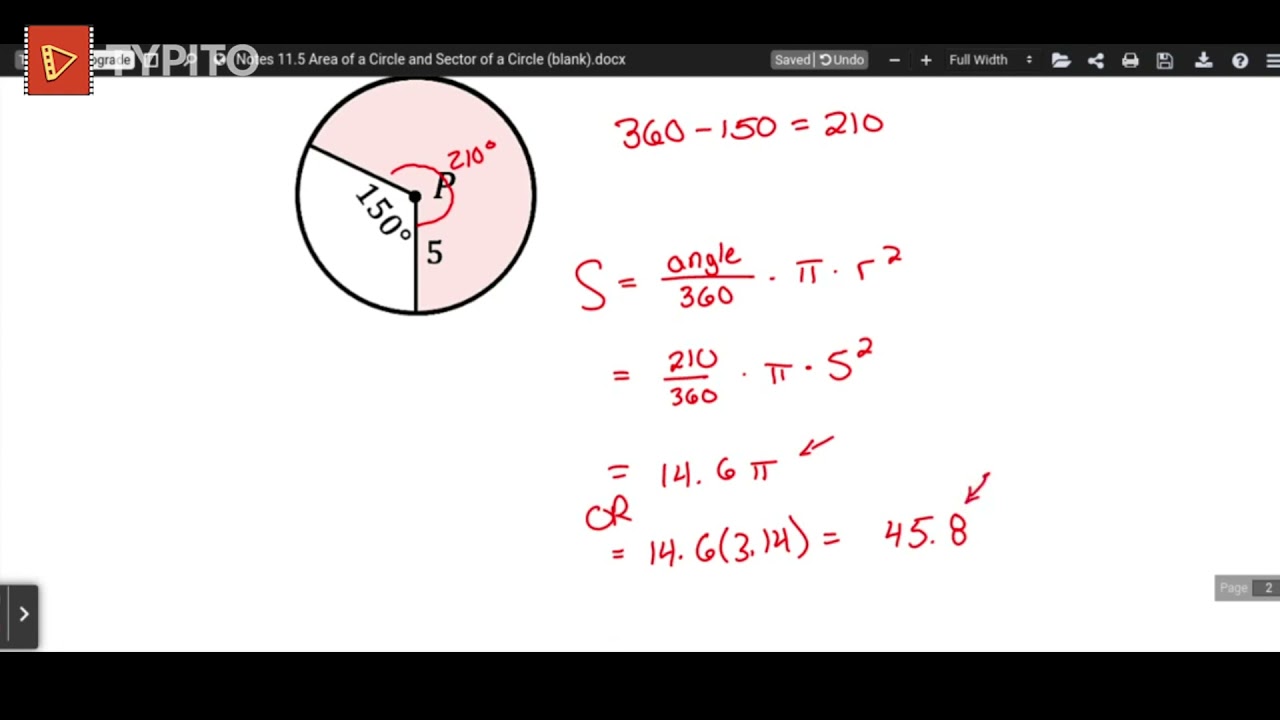
Notes 11.5 Area of a Circle and Sector of a Circle
matthewmills6952
251 views•2026-06-18

Notes 4.2 Isosceles and Equilateral Triangles
matthewmills6952
444 views•2026-06-18
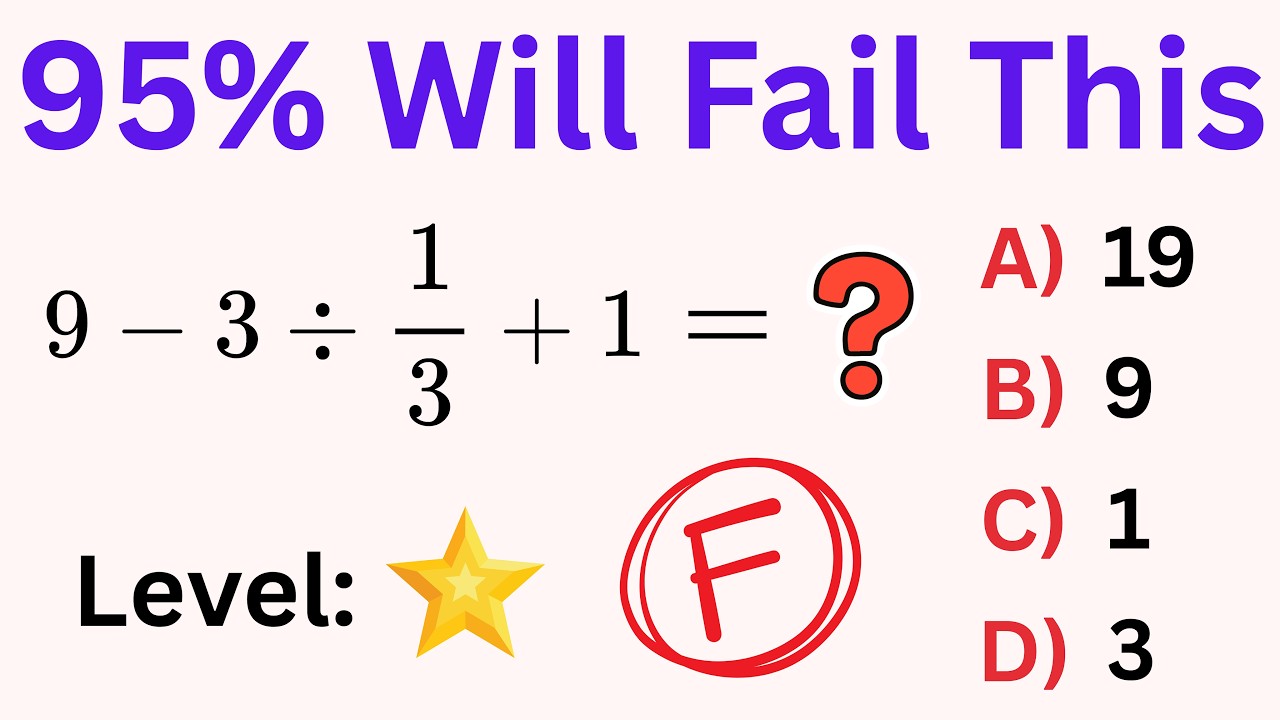
Can You Solve This?
brain_station_videos
1K views•2026-06-15



