The Federal Reserve's decision to leave interest rates unchanged after the May CPI report showing inflation at 4% (the highest in 3 years) demonstrates how monetary policy responds to inflation; with nine Fed officials now expecting a rate hike this year (a shift from earlier rate cut expectations), the Fed is signaling that higher borrowing costs will persist until inflation subsides, affecting mortgages, credit cards, and car loans.
Install our extension to search inside any video instantly.
Stocks close slightly lower on Wall Street after Fed holds rates steady
Added:Stocks closing lower on Wall Street after the Federal Reserve announced it will leave interest rates unchanged. The decision comes less than a week after the government posted its May CPI report showing inflation topped 4% for the first time in 3 years. For more on this, I'm joined by our Elizabeth Schulze who is at the Federal Reserve right now. And Elizabeth, this was the first major Fed decision under new Chairman Kevin Warsh, right? What stood out to you about all of this?
>> Yeah.
Yeah, Stephanie, the first news conference by Kevin Warsh as Fed chair.
And it was a little bit different than some of the previous kind of communications we've had from the chair of the Central Bank here in the past.
What Kevin Warsh said is he wants to get rid of what the Fed calls forward guidance. Basically, the idea that the Fed is going to kind of communicate in advance what its plans are when it comes to interest rates. And that is a really big change for the markets and in some ways for households, for people watching or at least paying attention to those borrowing costs at home. Remember, this affects everything from your mortgage to your credit card rate to your car loan rate. And what Kevin Warsh is saying is that the Fed is going to be looking at the data as it comes in as it always does, but might not be as kind of he might not be broadcasting that as much about what the future plans are. He also talked about some task forces that the Fed's going to make when it comes to its policy going forward. So, a little bit of a change here, at least from the communication of the Fed under the new chair Kevin Warsh.
>> And Elizabeth, would this mean anything for the Fed rates policy in the second half of this year?
>> Really the key question when it comes to where those borrowing costs are for the typical household or for businesses comes down right now, Stephanie, to inflation. And as you mentioned, inflation is at a 3-year high. It's above 4%. Typically, when inflation is going up, the Fed would not cut rates.
It might raise them. And what we're seeing now in the Fed's forecast is nine officials here are now expecting there could be an interest rate hike this year. And that's a change from just at the start of the year, we were talking about maybe even multiple rate cuts, which would mean lower borrowing costs, all because of this inflation shock. The question is, how long does it stick around? Is it longer than a year? Does it start to fade as we see that energy price shock fade?
>> All right, we will be watching.
Elizabeth, thank you.
>> Mhm.
Related Videos

'WORK CUT OUT FOR HIM': Fed's new chair faces major challenge
FoxBusinessClips
742 views•2026-06-16
Best Bank Bonuses — June 2026 (One Pays 81% APY!)
NathanielBooth
174 views•2026-06-16
Jeffrey Christian: Gold, Silver, PGMs — My Summer Price Outlook
InvestingNews
911 views•2026-06-16

06/15/26 Metropolitan Council Committee: Budget & Finance
MetroNashvilleNetwork
160 views•2026-06-16
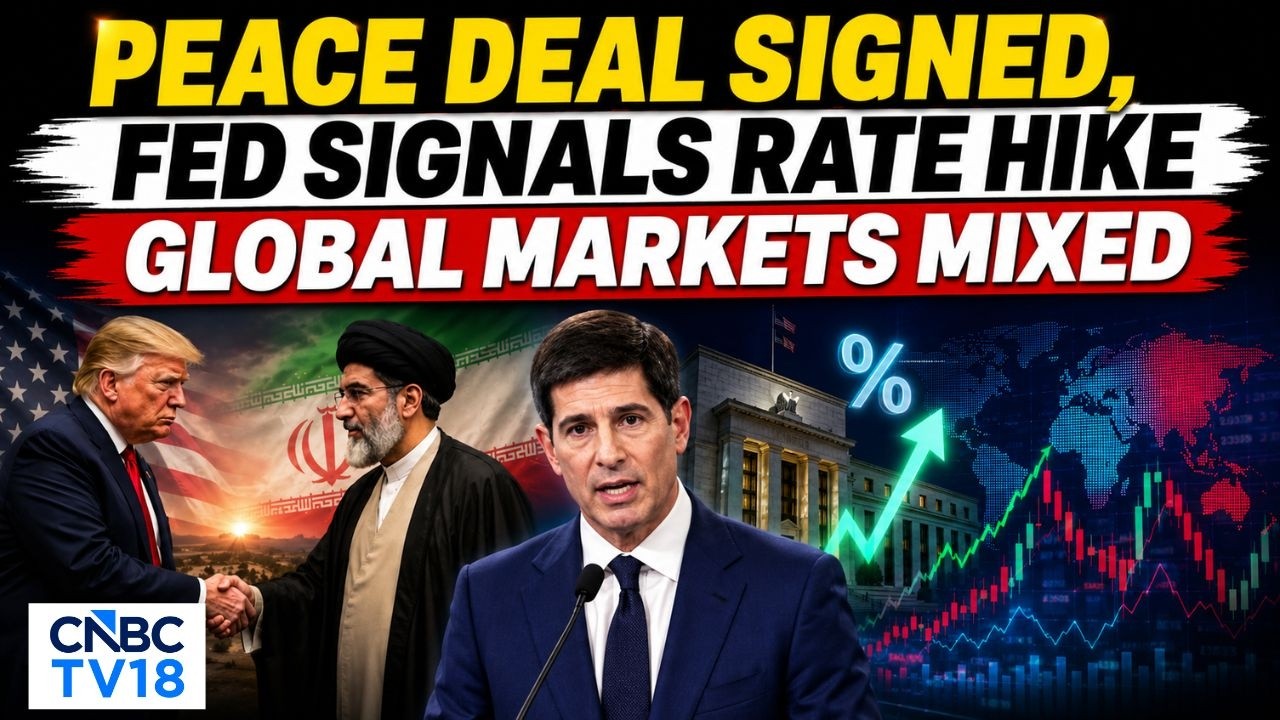
Asian Markets Trade Higher Despite A Weak Close On Wall Street; Flat Start On D-Street Today?
CNBC-TV18
573 views•2026-06-18
Mass Exit: Why Americans Are Turning Their Backs on These 13 States
DiscoverTheCities2025
2K views•2026-06-14

മഴ വെച്ച് പണം ഉണ്ടാക്കാം! ️| Trade Rain Futures on NCDEX
ShariqueSamsudheen
53K views•2026-06-17

US Gasoline Prices Below $4 a Gallon for First Time Since April
ntdtv
206 views•2026-06-16



