Angela wisely reframes reading as a practice of discernment rather than a marathon of completion. True intellectual growth comes from the quality of your engagement, not the number of finished spines on your shelf.
Install our extension to search inside any video instantly.
Not every book is worth finishing (here’s how I decide)Added:
There's a moment in reading that I don't think we talk about enough. And it's that moment that we've all experienced where you're reading a book and it's just not quite working, but you keep reading anyway. You tell yourself it might get better, you're not reading it properly, you've already come this far, you may as well keep going. And sometimes that is true, but sometimes the book is just not the right book for you at that moment. And that learning the difference between a book that is difficult and a book that is not for you, and trusting that, is a big part of building your reading life. One reason I think that stopping a book after you've started it feels difficult is because we've attached a meaning to the process of finishing. Finishing is synonymous with success, like we've done reading properly. But there's also guilt associated with it, which I think is one reason why we do gloss over it and not focus too much on those books that we haven't finished, especially if it's a book that you've bought with your hard-earned money, that someone has gifted you, a book that everyone else has loved, but you're not quite getting it. It can often feel like it's you that is failing the book and not the other way around. And then there's that quieter pressure, the one that is telling you if you stop reading now, you may miss something important. The book might open up later and you won't be there for it. And I do think that is a big part of why many of us, and I know I do it, finish books that I'm not enjoying. But over the years I've started to realize something, and that is that finishing is not the goal of reading a book. It's really about paying attention to your experience while reading and having that trust in your own instincts. Because reading a book isn't something that you just complete, it's reading a book is something you're in conversation with. And sometimes, unfortunately, that conversation just isn't there. So over time I've started to notice a few things that influence me in making my decision on whether I should stop a book that is just not clicking. The first is most definitely the prose, not whether it is good in a technical sense, but whether it is doing anything for me. Really good writing interrupts my momentum as a reader. It makes me slow down in a way that is meaningful. But sometimes the opposite happens and I am slowing down to reread passages because I just don't understand what's going on. So there's a different kind of friction and I've started to learn to pay attention to it. The second thing is whether I care. Do I care about the characters, about the plot and where it's going, about the atmosphere? If I close a book and over time I feel there is nothing drawing me back to it, that tells me something. I notice whether I am thinking about the book when I'm not reading it. Not in a forced way, but in that quiet way that good books tend to linger with you over time. And maybe most importantly, whether I am being rewarded for my attention. Because I am very happy to work as a reader and put in the time and effort, but I don't want to feel like I'm working for nothing.
And there have definitely been books that I have stopped, not because they were bad in any sense, but because I wasn't getting anything out of it.
Sometimes the prose feels flat even if the plot is interesting, or there are characters that I'm struggling to empathize with, and I've learned to take that seriously. If you've been here for a while, you know that I read Beartown by Fredrik Backman and that book was struggle town for me. I knew early on that it I was not clicking with it, but I kept reading it because I thought I was missing something. Everyone else seemed to love it, but I just didn't trust my instincts enough at that point to stop the book. But then, on the other hand, there are books that I have pushed through where something is there, even if it's very slow and quiet, where I can feel that the book is asking something of me. And that feels very different to something like Beartown. I feel this actually happened when I read Double Indemnity by James M. Cain over the summer. It's a very small book and I was a quarter of the way through it when I felt like the story had happened.
Everything that was going to be interesting had probably happened by that point and I was really wondering, is it worth finishing? But I kept going and I was very happy I did because the ending did surprise me. And those are very different experiences. One feels like resistance and the other feels like effort with a return.
>> [clears throat] >> The point where I would stop a book that was not enjoyable for me was always quite abstract. It was just, am I feeling it or not? Do I want to keep reading or not? And recently I've tried to be more intentional with it. Not in the least because life is too short to read books that just are not working for you. There was a principle from a librarian, I think in America, named Nancy Pearl, who she gave a really good indicator on when you should stop reading a book. And I have found that helpful and generally that is you minus your age from 100 and that is the amount of pages you should dedicate before you decide whether to continue or stop. It's very simple and the number isn't the point. I think it's the point that you've got a line in the sand where you have to make a decision whether to continue or to stop. It really is a moment where you get to that point and you have to trust your taste as a reader and stand by it. In the past when I stopped a book midway through, it really felt like I was losing something. But now I feel it's changed and it feels like I am choosing instead. Because every time I stop reading a book that is not working, I am making room for another book that might. Sometimes that means letting the book go, donating it, giving it away. Because every book that I choose to read is also a choice to not read something else. And that's something that I continue to try and remember when I get to that point. To pay more attention to what actually matters in my reading. You know my goal isn't just to finish more books, it's to really read in a way that feels alive.
And sometimes that's books that really give you entertainment and other times it is books that form your morals and values. And sometimes that means stopping when it's not working. Not every book is meant to be finished. And the ones that are tend to make it very clear. Thank you so much for joining me today. I hope you enjoyed this conversation and at the very least, I hope it's given you a a bit of a thought process around how you might decide whether or not you continue reading a book or let it go to welcome in something else that may click a little bit more. Have a wonderful week of reading ahead and I'll speak with you soon. Bye.
Related Videos
I Loved the Duke in Silence for Years. My Final Act? Choosing His Rival. 🤫💔 | DramaBox
DramaBox-PrimeDramaShorts
228 views•2026-05-31
⚡Harry Potter Book 4 [CH 23]⚡(CEFR A2+) Audiobook with Full Text
InglêsEssencial
880 views•2026-05-31
She Saved a Dying Prince Everyone Feared. Now the Empire Hunts Them Both.
NovelFilmz
462 views•2026-05-28

অর্জুনের প্রতিজ্ঞা: জয়দ্রথের পতন |#shorts #mohavarat
ChildhoodTea
129 views•2026-05-31

10 Books I Wish I Would Have Read Sooner!
BrianBell7
204 views•2026-05-29
How The Boys Fumbled The Most Iconic Villain of The Past Decade...
TeddySlump
5K views•2026-05-30

the legend of wayland the smith — a story of cruelty and revenge #norsemythology #mythsandlegends
tinyrainboot
1K views•2026-06-01
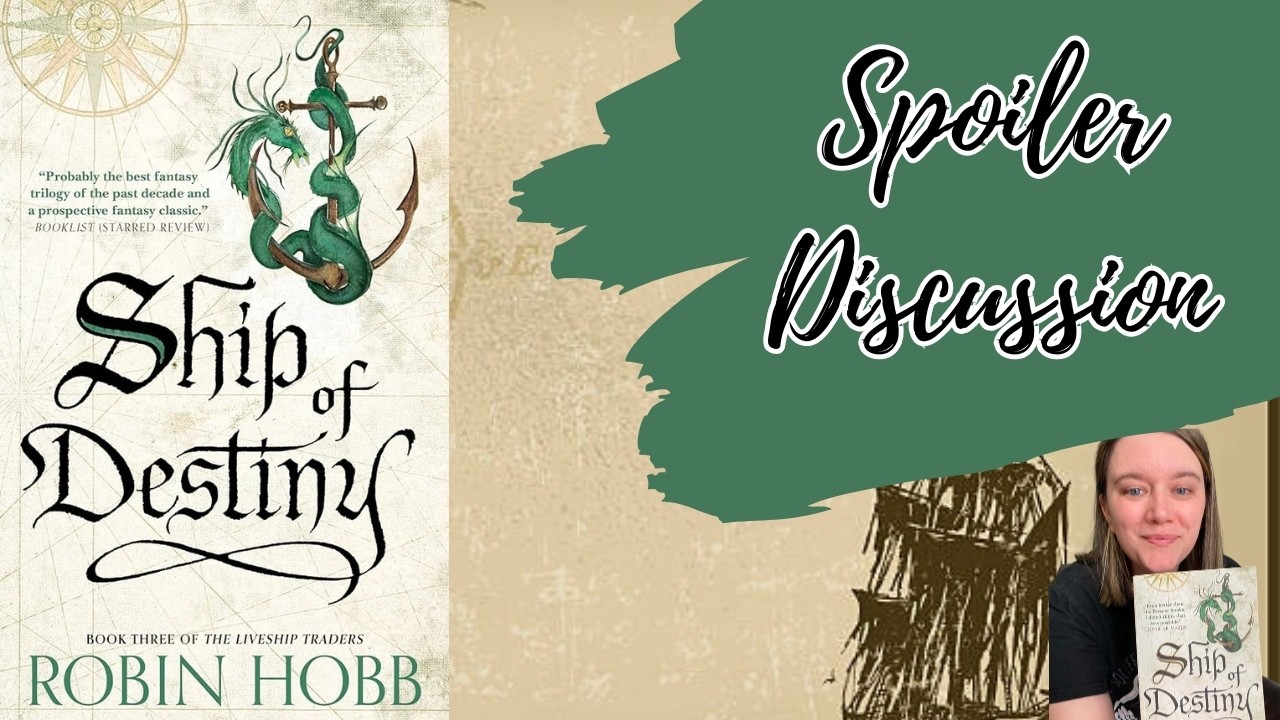
Ship of Destiny: Spoiler Discussion!
TheBookCure
105 views•2026-05-28



