This documentary examines Christa Pike's 2026 execution case, revealing how her 30 years on Tennessee's death row have transformed her from a 20-year-old woman with confirmed prenatal brain damage, undiagnosed bipolar disorder, and severe childhood trauma into a Buddhist practitioner who takes full responsibility for her 1995 murder of Colleen Slemmer. The case highlights critical legal tensions: Pike's 4-month age difference from the Roper v. Simmons constitutional protection threshold, her 27 years in de facto solitary confinement (settled in 2024), and four active legal challenges including her thrombocytosis condition and religious objections to execution protocols. The documentary forces viewers to confront whether Pike's documented transformation and mitigating circumstances should influence the execution decision, while Colleen Slemmer's mother continues fighting for her daughter's complete burial rights.
JUST IN: CHRISTA PIKE'S EXECUTION SET FOR SEPTEMBER 30 — What Happens in the Next 107 Days (2026)
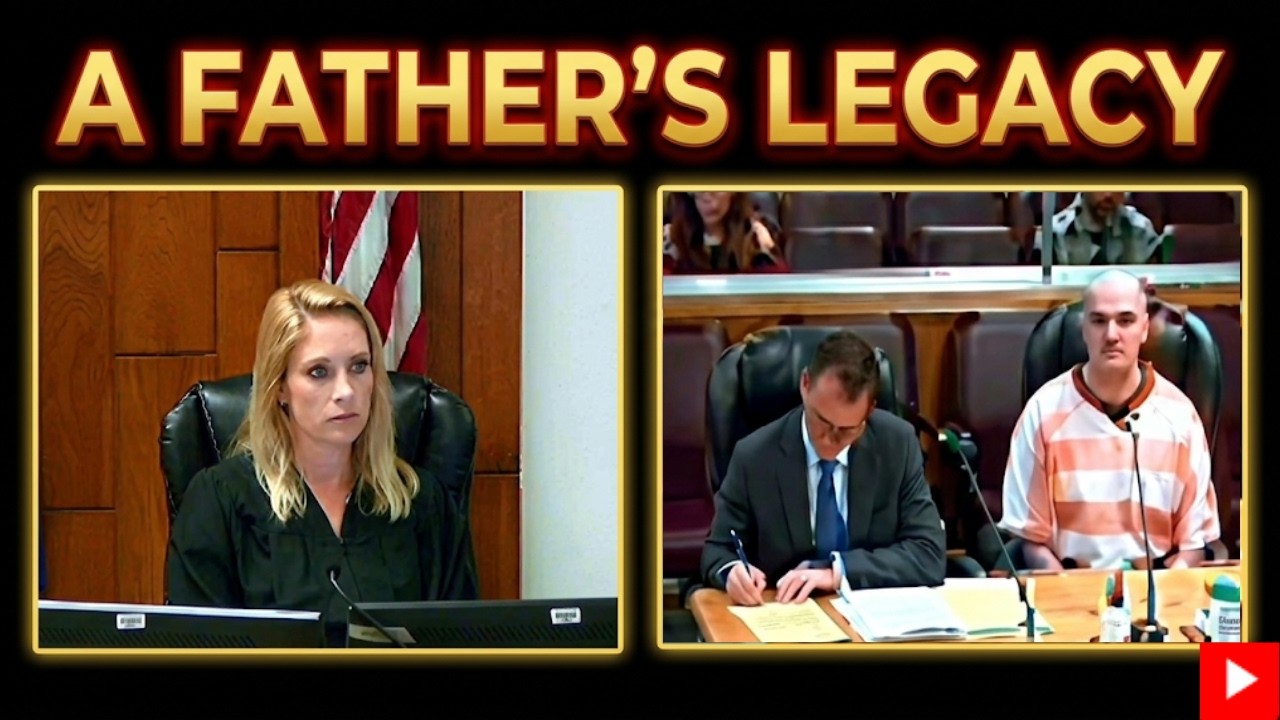
Added:It is therefore ordered that you shall be put to death by electrocution [laughter] in the manner prescribed by law.
That you shall be transferred to custody of the warden of the Tennessee Prison for Women.
And further, on the 12th day of January, 1997, the body shall be subjected to shock by sufficient current of electricity.
May God have mercy on you.
Ms. Bates, please hold Ms. Pike in the dark.
>> Can I please hold my mom AND MY BROTHER BEFORE >> MS. BATES, PLEASE hold Ms. PIKE IN THE DARK.
>> PLEASE LET ME HOLD MY MOM AND MY >> PLEASE HOLD MS. PIKE.
>> I LOVE YOU.
I JUST WANT TO SAY I LOVE YOU.
>> SEPTEMBER 30TH, 2026.
That is the date the Tennessee Supreme Court has officially set to execute Christa Gail Pike at Riverbend Maximum Security Institution in Nashville by lethal injection. Today is June 15th, 2026.
107 days remain. As of 2006, Christa Pike is 50 years old. She has spent 30 of those years on death row.
If this execution proceeds, she becomes the first woman executed in Tennessee in over 200 years. The 19th woman executed in modern American history, and the only person put to death in Tennessee for a crime committed at age 18 in the modern era.
But here is what most people watching this do not know. There's a legal war being fought right now in real time.
In the next 25 minutes, we walk through all of it. Before we get to the countdown, you need to understand who this woman actually is because the version the public knows and the version the jury heard are not the same story, not even close.
Her name is Christa Gail Pike.
Born prematurely on March 10th, 1976 in Beckley, West Virginia. Parents, Carissa Hanson and Imel Glenn Pike. A couple who married, divorced, and remarried in a cycle of instability that never resolved. She is today the youngest woman sentenced to death in the modern American era.
That distinction has followed her for 30 years.
To understand how she arrived here, you have to start at the very beginning.
And the beginning is not comfortable.
Court records and medical experts document that her mother consumed alcohol heavily during pregnancy.
The result confirmed congenital brain damage, a malformation of the frontal lobe, the part of the brain responsible for impulse control, decision-making, and emotional regulation.
She was born with damage to the very system that tells a human being to stop.
A family member later testified that as an infant, Christa's was left crawling through animal waste in the home while her parents were otherwise occupied.
She suffered severe seizures as a toddler. Her mother was aware.
The drinking continued. Court filings document a childhood marked by persistent physical mistreatment at the hands of at least seven different family members, including her father and maternal grandmother.
One of her mother's boyfriends was criminally charged for physically striking Christa in the face.
Court records also confirm she experienced documented sexual trauma involving at least three individuals with filings noting this began as early as age two.
She changed schools 12 times before earning her GED in 1993.
No consistency, no safety, no one holds the world steady for her except one person, her paternal grandmother. Christa later described her grandmother as the only person who had ever truly loved her.
In 1988, that died.
Krista was 12. Court filings document a serious mental health crisis around this period, her first attempt to end her own life.
There was no meaningful professional follow-up despite documented concern.
She processed that grief entirely alone.
Then at 17, court records confirm she was violently assaulted by a stranger near a roadside. Police made no arrest.
No support was provided.
So, by the time Krista Pike enrolled at the Job Corps Center in Knoxville, Tennessee in late 1994, hoping to become a nursing assistant, hoping to build something from nothing, she was operating, as her long-term therapist later documented, in a near constant fight-or-flight mode, driven by undiagnosed post-traumatic stress disorder.
Unmedicated, untreated, and about to make a decision that would define every remaining day of her life.
Here is what should genuinely make you pause.
At trial, the jury heard almost none of this. Defense psychologist Dr. Eric Engunn told them Pike had borderline personality disorder, no brain damage.
A key expert, Dr. Diana McCoy, hired specifically to testify about diminished capacity, was pulled from the witness list at the last minute with no explanation given.
Post-conviction neurologist Dr. Jonathan Pincus later confirmed organic brain damage from prenatal alcohol exposure.
Trauma specialist Dr. Bethany Brand concluded Krista had experienced more severe adverse events than 99% of the US population.
The jury heard none of it, not one word.
Drop your location and time. I want to know where in the world this case is reaching.
Now you know who Krista Pike was before January 12th, 1995.
Next, you need to know who Colleen Slemmer was, because in every headline about this case, her name appears, but her story almost never does.
Colleen Slemmer was 19 years old. She came from Jacksonville, Florida and arrived at the Knoxville Job Corps Center to study computer technology. A young woman trying to build a future far from home doing exactly what those programs were designed to support. By every account from people who knew her, she was warm, enthusiastic, and uncomplicated in the best possible way.
She was simply trying to do something meaningful with her life.
Krista Pike convinced herself that Colleen was pursuing her boyfriend, Tadaryl Ship.
Every person who knew Colleen denied this completely.
Friends testified she had no romantic interest in Ship whatsoever.
She was not a rival, not a threat.
She was a 19-year-old at a job training program who crossed paths with the wrong person at the wrong time.
Then there is the dimension of this case almost nobody talks about publicly. What Colleen's mother, May Martinez, has carried for 30 years.
She has fought for this execution since the day the verdict came in.
Alongside that fight, she has held one consistent, heartbreaking request for three decades. The return of physical evidence recovered from Pike's jacket at the time of arrest held as state evidence ever since.
Authorities have confirmed they will not release it until Pike is executed and the case formally closes. That means Colleen Slemmer, a 19-year-old who came to Tennessee for a fresh start, cannot yet receive a complete burial. In 2021, May Martinez said, "My heart breaks every single day.
There's not a day goes by that I don't think about Colleen or how she died. I just want Krista down so I can end it, so she can finally be resting."
That is what 30 years looks like for a mother.
What happened to Colleen on the night of January 12th, 1995 is the reason September 30th, 2026 exists on a calendar at all.
January 11th, 1995, one full day before.
Krista Pike told her friend Kim LaToylo she intended to kill Colleen Slemmer.
The reason she gave, she had just felt mean that day.
That sentence, spoken casually the evening before, would be read back to the jury at trial and land like a verdict of its own.
The following evening, January 12th, 1995, Pike and Tadaryl Shipp alongside their friend Shonda Peterson lured Slemmer away from the Job Corps campus under the pretense of smoking marijuana.
The destination was an isolated area near the University of Tennessee Agricultural Campus.
Peterson's role was to stand watch.
Court records document what followed as a sustained premeditated attack lasting approximately 30 minutes. Slemmer attempted to flee at one point. She was pursued and brought back.
When it was over, court documents record that a symbol was found marked on the victim, something that dominated media coverage for years. What most coverage never clarified, Tadaryl Shipp later admitted under oath that he was responsible for that, not Krista Pike.
Now, here's the detail that ended this case before it barely began.
Pike returned to campus that same night and went directly to Kim LaToylo's room.
She told LaToylo she had killed Slemmer.
Said she had brought back a piece of the victim's skull as a souvenir.
Showed it to her. Witnesses later testified Pike was animated and celebratory as she described what had happened.
The next morning, detectives found that same piece of evidence in the inside pocket of Pike's own jacket during questioning.
The evidence assembled itself rapidly.
The Job Corps dormitory logbook showed four residents had signed out together.
Only three returned.
Pike gave a tape-recorded confession spanning 46 pages.
Iloilo's testimony confirmed the conversation from the night before.
Pike's defense argued they had only met to frighten Swimmer and things had spiraled.
The prosecution's response was simple.
She had told Iloilo the day before she intended to kill her. This case has reached people far beyond Tennessee.
Stay with me because what happened in that courtroom in 1996 and what the jury was never told is the part that still drives debate today.
March 1996, Knox County Criminal Court, Judge Mary Beth Leibowitz presiding. The prosecution arrived fully assembled. A 46-page tape recorded confession, physical evidence recovered from Pike's own jacket, an eyewitness who had heard Pike announce her intention the night before, and a dormitory logbook that told its own story.
The jury deliberated for only a few hours.
On March 22nd, 1996, guilty on both counts. First-degree premeditated murder and conspiracy to commit first-degree murder.
Then came the penalty phase. The jury found two statutory aggravating circumstances, that the offense was especially heinous, atrocious, and cruel involving serious physical abuse beyond what was necessary, and that it was committed to avoid a lawful arrest.
Both findings were unanimous.
Recommendation, death.
On March 30th, 1996, Judge Leibowitz imposed that sentence. Execution by electrocution alongside a consecutive 25-year term for the conspiracy conviction.
Pike was 20 years old. She sobbed uncontrollably in the courtroom and called out for her mother. She became that day the youngest woman sentenced to death in the United States since the reinstatement of capital punishment in 1976.
Now, here's where it gets complicated.
The defense's mitigation case lasted only a few hours. Dr. Diana McCoy, hired specifically to testify about diminished capacity, never took the stand. Pulled at the last minute, no explanation given. That decision became the centerpiece of Pike's later ineffective assistance of counsel claims.
Dr. Engum had told the jury Pike had borderline personality disorder, but no brain damage. A conclusion directly contradicted by multiple post-conviction experts.
The jury heard nothing about confirmed organic brain damage, undiagnosed bipolar disorder, PTSD, or the court-documented history of childhood trauma. None of it. Now, consider the co-defendants. Tatro Ship, 17, 1 year younger, received life with the possibility of parole. Shadola Peterson, 18, who served as lookout, received 6 years of probation after cooperating with the state. Ship's parole was denied in October 2025.
His next review, 2031.
Christa Pike was 20 years old when she entered that prison. What happened inside those walls over the next 30 years?
The incidents, the escape plot, the decades of isolation, and the woman she eventually became, is something most people following this case have never fully heard. On March 30th, 1996, Christa Pike entered what was then known as the Tennessee Prison for Women, now the Debra K. Johnson Rehabilitation Center. She was the only woman on Tennessee's death row, and that single administrative fact would quietly shape the next three decades of her life in ways nobody adequately anticipated.
Well, the early years did not go quietly.
In 2001, court records document that Pike was involved in a serious incident with a fellow inmate named Patricia Jones.
She was convicted of attempted first-degree murder in June 2004, adding 25 years to her existing sentence.
Then came something genuinely unexpected.
In June 2001, and again in June 2002, Pike, against the explicit advice of her legal team, asked the courts to drop her appeals and carry out her execution by electrocution.
Judge Mary Beth Leibowitz granted the request. An execution date of August 19th, 2002 was formally set. Then, on July 8th, 2002, Pike changed her mind.
Defense lawyers filed a motion to reinstate the appeals process. The motion was initially denied.
But on August 2nd, 2002, a three-judge appeals court panel stepped in and ruled the proceedings should continue. The execution did not take place.
Next, 2012.
And this is the portion of Christa Pike's prison history that most people following this case have never encountered. A man named Donald Kohut, a personal trainer from Flemington, New Jersey, began writing letters to Pike in early 2011.
By July of that year, he was regularly traveling from New Jersey to Tennessee to visit her in person. During one of those visits, he met Justin Heflin, a 23-year-old corrections officer at the facility.
Kohut pulled Heflin into a plan, later described in court documents as involving a traced and duplicated prison key, to break Pike out of custody. On January 27th, 2012, the Tennessee Department of Correction received intelligence about the plot and requested assistance from the Tennessee Bureau of Investigation.
By March, both men had been arrested.
TBI spokeswoman Kristen Helm confirmed at the time there was a plan in the works and money changing hands.
TBI Director Mark Gwyn added, "The last thing law enforcement wants is a dangerous fugitive on the streets."
Now, separately, and this is the part that ought to generate genuine discomfort regardless of where you stand on this case.
Pike spent 27 years in what her attorney successfully argued was de facto solitary confinement.
Not as punishment for any specific behavior.
Purely because she was the only woman sentenced to death in Tennessee and the system had no adequate provision for her. A 70 square foot cell, roughly the size of a parking space.
1 hour outside a per day. No meaningful human interaction. No educational programming. No religious programming.
Her cell sat adjacent to the section housing the most severely mentally ill and behaviorally dangerous women in the prison. In 2022, Pike filed a lawsuit against the Tennessee Department of Correction arguing those conditions were unconstitutional.
In September 2024, she won a settlement.
For the first time in nearly three decades, she was permitted to spend more time outside her cell, hold a prison job, and share meals with a small group of women.
Attorney Angela Birdman said, "For the last nearly 30 years, Ms. Pike has been subjected to solitary confinement in a cell the size of a parking space. This settlement will be life-changing for Christa Pike."
Also across those 30 years, Pike converted from occult-adjacent beliefs present at the time of the crime to a sincere Buddhist faith practice.
She has a Buddhist spiritual adviser.
She creates paintings. She is currently medicated with four psychiatric drugs: Topamax, Wellbutrin, Abilify, and Vistaril for bipolar disorder and PTSD.
Both confirmed years into her incarceration, neither presented to the jury in 1996.
30 years. That is how long Christa Pike has been inside that prison. And now with 107 days left on the clock, the legal machinery is moving faster than it ever has. What is actually happening right now in June 2026, and what still has to happen before September 30th, this is what everything has been building toward.
Do not go anywhere.
The Tennessee Supreme Court set four executions for 2026.
Tony Carruthers, May 21st. Anthony Hines, August 13th. Christa Pike, September 30th. Gary Wayne Sutton, December 3rd. Tennessee is moving at a pace not seen in years. Then something happened on May 21st that immediately changed the landscape of Pike's case.
Tennessee attempted to execute Tony Carruthers. The execution team failed to establish an intravenous line after more than 1 hour of attempts. The procedure could not proceed.
Governor Bill Lee granted a 1-year reprieve, not clemency, not compassion.
The execution simply failed. 3 days later on June 12th, 2026, Pike's attorneys filed an emergency motion to the Tennessee Supreme Court.
Attorney Luke Einnen wrote, "The state of Tennessee is not able to constitutionally carry out executions.
TDOC lacks the qualified and trained medical personnel required to ensure prisoners do not face unnecessary pain and suffering.
Tennessee must confront this harsh reality, or we will face another torturous execution."
That emergency motion sits on top of four active legal battles running simultaneously.
Battle one. In January 2026, Pike filed a lawsuit in Davidson County Chancery Court challenging Tennessee's revised lethal injection protocol on constitutional and religious grounds.
The state responded March 19th. The case remains unresolved. Pike's team seeks a permanent injunction.
Battle two. Pike suffers from thrombocytosis, a rare blood disorder involving dangerously elevated platelet levels.
Her attorneys argue the state's single drug pentobarbital protocol poses a serious medical risk given this condition combined with small veins, the same physical factor that contributed to Caruthers failure.
Attorney Stephen Ferrell stated, "Pike's unique condition would cause a bloody froth in her lungs that would amount to drowning. Her proposed alternatives include a small butterfly needle, central line, or hanging." Battle three.
Pike's Buddhist beliefs prevent her from selecting an alternative execution method. Doing so would require her to participate in a process leading to her own death, directly conflicting with her faith.
Her Buddhist spiritual advisor is currently excluded from the execution chamber.
Three men executed in 2025, Oscar Smith, Byron Black, and Harold Nichols, each received religious exemptions from the 12-hour spiritual blackout period before execution.
Pike has not.
Battle four. Tennessee's revised protocol mandates 14 days of isolation before execution and a 12-hour communication blackout in the final hours. Clinical psychologist Dr. Bethany Brand stated, "The deliberate withdrawal of human connection in her final hours is not neutral. It replicates with harsh precision the abandonment she has known her entire life."
A key procedural deadline approaches.
By August 28th, 2026, the prison warden must formally notify Pike of the execution method. The last major procedural step before the countdown becomes effectively irreversible without court intervention.
If every legal challenge fails, one door remains.
Governor Bill Lee.
Tennessee's clemency process requires a formal application to the Board of Parole, an investigation, a non-binding recommendation, and a final governor's decision.
Lee denied clemency for Harold Wayne Nichols in December 2025.
He granted Caruthers a reprieve only because the procedure failed. He has made no public statement on Christa Pike.
Now, the detail that quietly reframes this entire case. If Christa Pike had been 4 months younger on January 12th, 1995, the United States Supreme Court's ruling in Roper v. Simmons would have constitutionally protected her from execution.
Roper prohibits the execution of anyone who is under 18 at the time of their crime.
Toderel Ship, 1 year younger, was never eligible for death.
In 2019, 6th Circuit Judge Jane Stranch wrote that because Pike was 18 at the time of the offense, her death sentence likely violated the 8th Amendment, but that current law prevented her from granting relief on those grounds. She concurred reluctantly. 4 months. The entire margin between death row and constitutional protection. 107 days.
Four legal battles. A governor who has said nothing. And a woman in a Nashville cell who has spent 30 years becoming someone the jury in 1996 never had the chance to meet.
Christa Pike is 50 years old.
She entered that prison at 19 and has spent more than half her entire life behind those walls.
The girl who stood sobbing in Knox County Criminal Court in 1996 is not the woman in that cell today.
The people who have worked with her for decades say so clearly, and the documented record supports it. With treatment she could never access as a teenager, she has rebuilt something. The bipolar disorder and PTSD that court filings confirm were present and undiagnosed at the time of the crime are now managed. She practices Buddhism, she creates paintings, she works, she shares meals, small things. But for a woman who spent 27 years in effective isolation, they represent an interior life carefully reconstructed from almost nothing.
Her own words carry the clearest picture.
In a WE tv documentary filmed from her cell, she said, "I know I don't deserve to be out walking around with everybody else in normal society. I did something horrible that is unacceptable and I realize that."
In a written statement, she added, "I take full responsibility for my actions and regret everything that happened that night. If I could take it all back, I would.
I'm not even close to being the same person I was over 25 years ago."
And in a 2023 letter to The Tennessean, "It sickens me now to think that someone as loving and compassionate as myself had the ability to commit such a crime."
In 2026, the state's attorneys responded to her legal filings with one line that cuts through everything. "We wish Pike's commitment to the sanctity of life had arrived in time to save Colleen Slemmer."
That line lands differently depending on where you stand. Two realities sit permanently alongside each other in this case. A woman who has documented change across three decades and a mother in Florida who still cannot fully bury her daughter.
107 days connects all of it.
So, here's where everything stands. A 50-year-old woman in a Nashville cell, four active legal battles, an execution date, a mother in Florida waiting, a governor who has said nothing, 107 days, and that is ultimately what this case forces onto the table. Does what the jury never heard, the confirmed brain damage, the undiagnosed bipolar disorder, and the childhood that court filings described as a clinical catastrophe from the the first day.
Does any of that shift the calculation, or does what happened to Colleen Slemmer on January 12th, 1995, close that conversation for you entirely?
Tell me where you are watching this from, country, city, and time of day.
Drop it in the comments, then tell me where you stand.
Should Tennessee proceed on September 30th, or does what the jury never heard change the answer?
Subscribe, like, and share to Criminals Profile for more deep dives into female offenders and the criminal justice system. Your support keeps this channel going.
Related Videos

JAMIA BA LLB 2026 Offline Mock Interview | Final Interview Round Preparation
MLSLAWACADEMY
104 views•2026-06-16

6/15/26 Lively v. Wayfarer - Full Settlement Agreement is now public
littlegirlattorney
11K views•2026-06-15

HOA Demolished My Yacht for “Unauthorized Docking” — Too Bad I Own the Entire Marina!
Pro-RevengeStories
423 views•2026-06-15

JACKSON KIHARA'S SECRET DEAL: The Deal That Brought Out Jackson Kihara From Jail | LifeLens TV
LifeLens254
5K views•2026-06-14

Guelph's New Renoviction By-Law Explained.
CallCodyRE
807 views•2026-06-14

SCOTUS Rules 9-0 on Gun Rights for Marijuana Users
TheReloadSite
164 views•2026-06-18
A Family Tradition of Federal Time
LoneWolfUsul
603 views•2026-06-14

YouTuber Alexander Zabel Jr arrested again near Nancy Guthrie’s home amid investigation disruption
StarBuzzHD
136 views•2026-06-15



