Femicide is the targeted killing of women, where violence serves as the ultimate means to control another human being, and in the United States, it remains a 'silent epidemic' because these crimes are not classified as femicide but as general homicide, murder, or manslaughter, making them difficult to track and address; cultural assumptions that women are property and that violence is a 'family matter' rather than a crime, combined with gun culture and the normalization of misogynistic messages in media, contribute to this problem, while solutions require uncomfortable conversations about respect and challenging cultural attitudes that perpetuate gender-based violence.
Install our extension to search inside any video instantly.
Are we fueling violence against women?
Added:Support for this NPR podcast and the following message come from Carvana.
Selling your car? Carvana has offers so good they're almost inexplicable. Sell your car 100% online in minutes. Visit carvana.com today. Just a warning, today we'll be talking about intimate partner violence and homicide. [music] In this episode, I want to talk about two people that I haven't stopped thinking about since hearing their stories. Nancy Mateer Bowen and Serena Fairfax. [music] Nancy Mateer Bowen was an environmental scientist and politician in South Florida. After serving as city commissioner and later the vice mayor [music] of Coral Springs, Florida, she was getting ready to announce a run for Congress. Then in April of this year, Mate Bowen was found dead [music] in her home by police. Her husband has been charged with first-degree murder in connection with her death. 2 weeks after the killing of Matte Bowen, we learned about Dr. Serena Fairfax. [music] She was a practicing dentist and served as the second lady of Virginia from 2018 to 2022, [music] having been married to former Lieutenant Governor Justin Fairfax since 2006.
Also, in April of this year, a little under a year after the couple separated, Justin killed Serena [music] and then himself. These are just two of several high-profile stories of black women and girls being [music] murdered. In April of this year alone, at least a half a dozen black women were allegedly killed by their partners. [music] These crimes made national headlines and then the news cycle moved on. This specific kind of crime builds up [music] to a phenomenon, femicide. It's an umbrella term that includes intimate partner [music] violence and according to the United Nations, it happens every 10 minutes. While some countries like Italy and Mexico have femicide or intimate partner homicide in their penal code, most countries do not. [music] In the United States, for example, these types of crimes are charged with general homicide, murder, or manslaughter.
There's no official way to track or classify femicide in this country, turning it into what researchers call a silent epidemic. So today I'm here with Aan Clayton, reporter for the Guardian, and Cheryl Neely, sociology professor at Oakland Community College in Royal Oak, Michigan to understand why femicide happens and how our culture responds [music] to it.
Hello. Hello. I'm Britney Loose and you're listening to It's Been a Minute from NPR, [music] a show about what's going on in culture and why it doesn't happen by accident.
[music] What is femicide and what is unique about the ways that it occurs in the United States? Uh Cheryl, we'll start with you. Well, femicide is the targeted killing of women. And what it boils down to is violence being the ultimate means to control another human being. So often times men use violence especially in relationships uh to control a partner especially if she wants to terminate said relationship. Femicide can also include the murder of girls but it is the killing of females in a society in in essence. And >> and how do you see that showing up in the United States uniquely?
>> Well it shows up in the murders that we've been seeing. It shows up in women being killed by an intimate partner. It shows up in the rapes and murders of young women. What we've been seeing oftent times is a decrease overall in the murder rate. But what has remained consistent is the number of women being killed by male partners. That has not declined. If anything, it's it's went up.
>> Oh wow.
>> Especially as women's economic status continues to improve and thus they become a threat to male power.
>> Wow. Wow. Wow. Wow. Um, Aban, I'd love to hear what you have to add on this.
What do you see that's unique about the ways that femicide occurs in the United States? I'm thinking specifically about your background as somebody who reports a lot about guns and gun culture in America that many other similarly rich Western nations don't have.
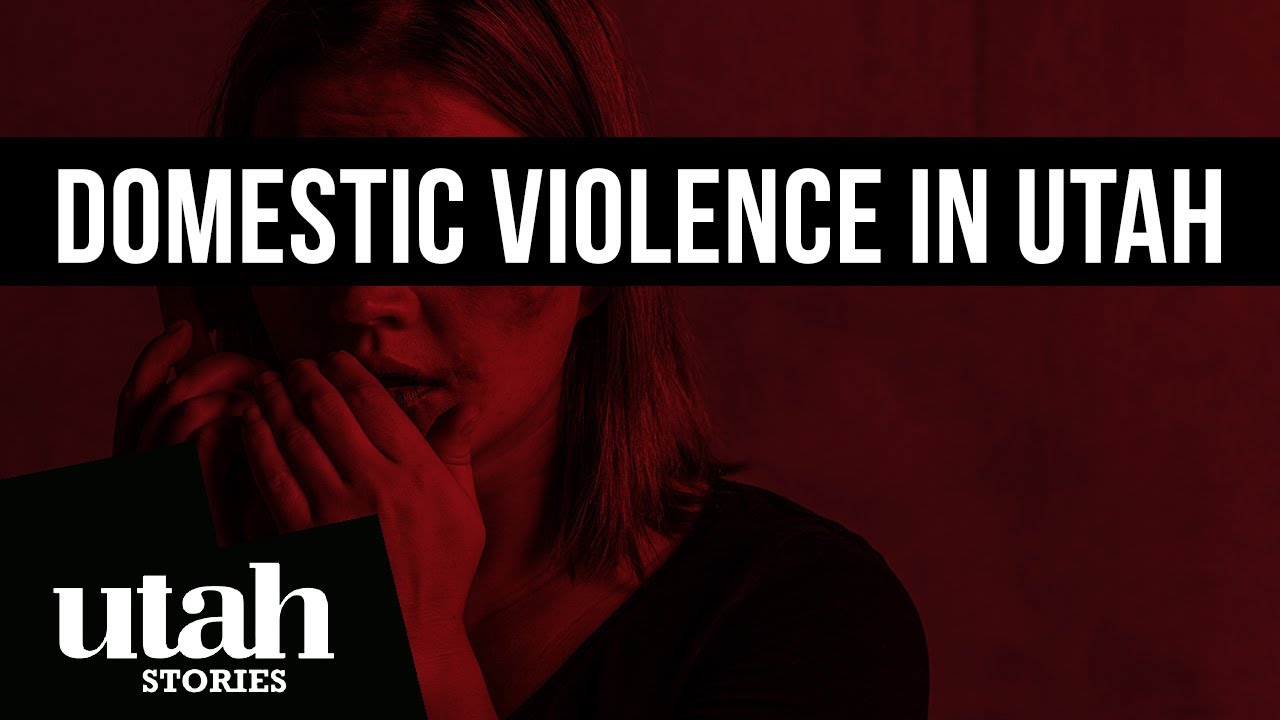
>> Yeah. I mean, one thing that I always find unique about the US is so often people think of guns, especially those who are kind of like second amendment fundamentalists who see them as extensions of their masculinity and their way to protect themselves and their families. I don't think they factor for how much terror can be brought into a home by introducing a gun, especially if the relationship is rocky. I know so many women I've interviewed women who were in these relationships where the minute they tried to leave. The thing that their husband said was to protect them and their children was literally weaponized against him, right? They were threatened with firearms and told that if you leave, it's one to the head. And so I do think that's extremely unique. And another thing is just like our response to these killings. When we're talking about intimate partner violence, femicide, it still is seen as like a family matter, right? Like this is an in the home issue. This is a family structure, dysfunctionality problem versus crime. And as a small example, I did a story not too long ago where it was discovered in Utah that the homicides in this place that's known as like safe, familyfriendly, most of the homicides, intimate partner violence.
>> Yes. In that piece, you noted how reporters at the Fox 13 station in Salt Lake City found that more than a third of the 137 homicides between July 2023 and January 2025, that's about a year and a half, more than a third of those homicides were the result of intimate partner or familial violence, making it the single largest category of lethal violence in Utah.
>> But that's a place that you're not going to associate with crime.
>> Brilliant point.
>> I mean, we're talking about a really huge problem here. There's so many statistics that you both have already shared that are illuminating and I think probably for a lot of listeners they might feel very familiar either matching some of their own experiences or from the people that they know and love. But >> I also learned as we were preparing for this conversation that femicide can also sometimes be difficult to track or quantify. Why is that?
Well, it's probably hard to track and quantify because as Abanet pointed out, it is not seen as a particularly unique phenomenon.
>> One of the things, you know, Abanet had said that, you know, almost jumped out my seat on is the fact that they can describe a community as safe even though women are dying at the hands of intimate partners.
>> So, if it's happening in the home, the rest of us are safe. It's interesting that when these kinds of murders happen, they say there's no threat to the public. How is there no threat to the public? For every one of these women murdered by a male partner, it reinforces this idea that women are ultimately the property of the men they're in relationships with. So, I see the death of a woman at the hands of an intimate partner is a threat to all women, but it's not treated that way.
>> And in terms of the statistics, in general, crime statistics in the US are tracked poorly, are released with a serious lag. Some police departments aren't caught up with the technology. So that's already difficult and like I mentioned when you add on layers of it being about women or about people of color it's just going to get so much worse and I think that's a bit of what we're seeing which makes it difficult to track.
>> I just wanted to touch on something that Aban said that's that's really true. The way crime statistics are reported to the Department of Justice through the FBI uniform crime reports is that um 18,000 precincts or 14,000 precincts across the country voluntarily report this information. Oh, voluntarily. It's not required. It's not mandated. So, it's mandatory that they keep those statistics in house, but what they report out to the FBI is voluntary. And if they do not see these victims deaths as a public threat or whatever the case may be, we may not even get the full numbers. I mean, there are women dying every day, but not every story makes the news. Not every story is published in a newspaper. There are women dying right as we speak at the hands of intimate partners. My niece uh back in 2020 during the pandemic was shot and killed four months after she gave birth to her baby by the baby's father. And Courtney's death didn't even make the news.
>> Devastated our [clears throat] family.
Left the baby orphaned, which her older sister adopted. And we love that baby to death. But he killed her, Courtney. And then he killed himself. and not one news uh station covered it. It wasn't even in the newspaper.
>> I think a lot of us can think of examples, unfortunately, as as sad as that is, a lot of us can think of examples from our own lives where something like that happen.
Gosh, a partner or the father of your child or ex does something directly to harm a woman, to kill her, to set her up. It seems very clear to me from our conversation that gender is like the scaffolding for the power imbalance within relationships that makes femicide possible. Right? I wonder like what are the cultural assumptions that Americans have about women and girls that lead us to not recognize femicide as its own distinct category of crime?
that they're property.
That they're property. We still have this idea that it is a romantic gesture for a father to walk his daughter down the aisle and the minister to say, "Who giveth this woman to this man?"
>> Giveth, we give away property. We're still giving our daughters that we own to her next owner, her husband.
>> I think that women are still seen as property in this country. And I think that's why we don't necessarily do what we need to do or take the resources necessary to protect them and uh prevent femicide from occurring uh at the rate that it does today.
Something I also see as a throughine, and this is particularly coming from just like my work in like black feminist circles and talking to girls about violence. And a lot of it is also really prevalent in like the conversations around sex trafficking that I'm having with some of these young girls in these hoods around this idea that punishment for you being loud, right? punishment for you having an opinion, for you saying no is violence, right? How many stories have we heard where a woman rejects someone? Or how many times has it been that you get cat called, you say no, and the next thing you know, you're, you know, you're a b word, you're this, you're that, there's someone following you in a car. You know what I'm saying?
And those things may seem unfortunately like a really horrible right of passage.
It's like, yeah, this is something that's going to happen to you. But if you look farther up that iceberg, the tip of it is femicide. Like at any moment, anyone can do anything to you.
Coming up [music] after the break. But you know, it's interesting that you pointed out that women were laughing and that women support these messages because they do. They make up the majority of the electorate, but yet they [music] put men in power that are constantly eroding women's rights. Stick around. [music] This message comes from Midi Health, a virtual care platform for women in parameopause and menopause. CEO Joanna Strober shares the mission behind working with women in midlife.
>> It's not just about hormones. It's not just about weight loss medications. We are very much a holistic care platform and our job is to figure out whatever medications are appropriate for you and offer you those medications. Midi Health committed to helping women in midlife with parameopause and menopause care accessible via teleaalth visits at joinmi.com.
>> Support for this NPR podcast and the following message come from Carvana.
Selling your car. Carvana has offers so good they're almost inexplicable. Sell your car 100% online in minutes. Visit carvana.com today.
Support for this podcast and the following message come from strawberry.me.
Be honest. Are you happy with your job?
Are you stuck in a job you've outgrown or never wanted in the first place? Are your reasons for staying really just excuses for not leaving? Let a career coach from strawberry.me help you get unstuck. Discover the benefits of having a dedicated career coach in your corner and get 50% off your first coaching session at strawberry.me/npr. me/npr.
>> This message comes from Wise, the smart way to manage your money around the world. With Wise, you can send, spend, and receive money in over 40 currencies at the mid-market rate. Learn more at wise.com. T's and C's apply.
[music] These messages don't come from nowhere, right? [music] Like the way that we think about these things, they don't come from nowhere. Obviously, many of them are passed down through our families. Some of them are passed down through our culture. Some of these are passed down through our religious backgrounds, places of worship, worship leaders. Not all, but this is something that can be passed down that way. These attitudes, but I also know that these things can also be passed down and reinforced through pop culture. you know, Abony, Cheryl, like what are some of the pop cultural messages we are getting or have gotten that might be coloring how our society perceives femicide and this type of of of violence? Abony, I'd love to start with you on this one. I will say my personal least favorite representation. You take a show like Baddies and people decide like, oh, that's how all black women are. And I think these ideas that the most sort of bombastic exaggerated representations of what black womanhood looks like is the entirety of us, which if you think for even a millisecond longer, you know, that's just not the case, you know, but that doesn't stop people from um taking in those messages and letting them color the entire ways they see um black women, whether or not they were extremely accomplished like Dr. Serena and like Nancy, you know, if they were um and to use another example um of both like femicide and and you know, family annihilation, the story of those eight babies and their mothers in Shreveport, right?
>> My gosh. There's also this idea, and you hear a lot about it with incelss again with like high-profile mass shooters, that like men and boys were sold this idea of a future that no longer exists, that you will out earn women, that this gender pay gap is something that is like bestowed upon you by your patriarchal male ancestors. And that's just not the case, right? Very the sisters are doing it for themselves vibes, which you would think is a mark of progress, but unfortunately has been met with misogynistic violence. And I think there are so many pop culture examples that reinforce those things, but when people think about it going all the way to femicide, I think that's just too much and too dark for a lot of people to think about when we already live in a tragic enough world and people just want to take their mind off things for a little bit, you know?
Well, even beyond that, right? I think about like um I remember spending some time maybe around the holidays or something like that and somebody decided to break out the old Tyler Perry classic from 2008, the family that prays and in this movie Salan plays like the >> Oh, yeah. Of course.
>> All about her business, you know, bougie auntie sister wife who I think she's cheating or something like that. She's not spreading her money around the family. She's stingy and rich and stuck up. And at some point in the film, she gets slapped.
>> Mhm.
>> Slapped across a diner counter.
>> All that money you stole from me was given to me by William.
>> Why would he give you so much money?
>> Cuz he's my man, Chris.
[screaming] >> You've been making ME FEEL LIKE THE WHOLE TIME THAT THIS IS MY FAULT. NOW I'M THE ONE THAT'S CRAZY AND YOU'VE BEEN DOING THIS A WHOLE WHILE.
>> YOU KNOW WHAT? KEEP THAT MONEY.
>> People in the theater, I just remember cheered. It was a thrill. When I was with my ex-boyfriend's family, they all cheered when that happened.
>> Mhm.
>> I didn't think anything was going to happen to me in that relationship, and nothing did. But I remember thinking, "Oh, okay." Like, if something were to happen, it might be funny to you all.
And these were all women, by the way. I don't know. Like you know the people talk a lot now memewise about the saxophones getting louder. That was a moment where I was like oh I don't think that anybody would have laughed at my family if we had been watching the same film. But you know it's interesting that you pointed out that women were laughing and that women support these messages because they do. They make up the majority of the electorate but yet they put men in power that are constantly eroding women's rights. We have a roll back a full roll back on abortion rights, reproductive rights of women. We had two elections where women could have become president of the United States.
White women didn't want that. So when we talk about this type of inequality, we also have to look at the fact that women are not voting in a way that is for their best security. I mean this is also something that too I think that shows up like culturally like you mentioned women are roughly 50% of the population and because of sexism and misogyny very often do the overwhelming bulk of childbearing and raising children and passing down culture and different kinds of lessons and for the record I do not think that is fair and I don't want to necessarily place >> all the responsibility for how society is on the shoulders of like the the women of the world. That's as we have discussed that is not fair. But I I bring that up because there are so many points of touch and connection where these sorts of values are learned by a lot of women, right, as a perhaps a way to survive and move through the world with more ease. Um, it can be easier to just go along with something, easier to laugh about something, easier to not want to rock the boat, whether that's in your household, in your church, in your family, um, whatever may be the case. Sometimes thinking a little bit too hard about why violence is showing up in the world in a certain way, it might make a few memories hit or a few life lessons hit, and maybe you don't want to feel that. Yeah. speaking on something as a woman that goes completely against your best interest.
And if anything, it really makes me sad because like Cheryl said, it doesn't have to be this way in any way. And I think that the conversations that we have with women who sort of fall into this trap of kind of knee-jerk defending or wanting to protect a man or emphasizing like we heard in the cases of Serena and Nancy that like they just couldn't take it anymore. You know, a man if he doesn't have this, if he doesn't have that, what else are we going to do? And there's a part of me that's saddened because it's like, dang, you really think that's going to keep you safe? Like, you really think that that may give you an I'm not like the other girls arc and make your person not treat you in a way that you've seen someone else who may be in a similar circumstance as you or who you may share these identifying factors with. And so, you're going to say, "I'm going to do everything that's opposite. I'm gonna be the opposite of that woman. I'm not going to be loud. I'm going to fall in line with who my husband votes for. I'm going to do these things. And you truly believe in your heart that that will protect you. And we see time and time again that those aren't the factors that lead to death. Right? You believing that a woman's place is in the home and in the kitchen is not going to stop unfortunately your husband potentially from harming you one day because that's their choice. Right? We don't have abuse victims without abusers. And I hate that so much of the onus is on women to the point where so many of us fall into those traps. Like it is a true bummer that I hope we can all find freedom from.
We have discussed today all the ways in which we kind of fail to talk about femicide and to think about it in a way that's that's really um critical and vital. I wonder how can we change how we discuss femicide so that we can prevent or even end it. I tend to be pessimistic about these things. When we talk about solutions, I'm almost reminded like James Baldwin said, you know, my my job isn't to tell you how to fix it. My job is to bear witness to it, to hold up a mirror and show you who you are as a nation. So, when it comes to solutions, uh to me, it's almost like it's platitudinous because there are a lot of problems in our country that we don't do anything about because we don't want to examine it. Why? because a certain group benefits from it. Men benefit from femicide. Men benefit from women feeling threatened and unsafe and feeling like there is safety in relationships with men while at the same time not understanding that men are the biggest threat to a woman's life and often times men in relationships to them. A lot of times the men that are responsible for protecting us like police officers and judges and prosecutors are the very people that are perpetrating the same violence. How invested do you think they are in coming up with solutions against it? So I I think I'm stumped there. I I don't think I really have an answer for it because I don't believe anything really material is going to be done about it.
>> Yeah. I think that there's some value in being willing to have uncomfortable conversations with the people directly around you. Like you got a teen nephew or something, you got a little teen cousin, son, etc., and you hear them even jokingly saying, "I'll slap her or I'll do this or talking about a girl as property, calling them projoratives."
Feel and get comfortable with checking that and being like, "No, that's not nope. That's not cool. That's not how we get down. not what we do. That's not what manhood looks like. Right?
Questioning what respect looks like.
There are so many um shootings whether it's intimate partner or not where like I've talked to people who have like shot other folks as a part of my job and this idea of respect is so salient and I'm always wondering if your only um concept of what respect is is what you get and not what you give. We may have some misogynistic issues here, right? So being able to have these conversations that may make you seem like you're a huge bummer or like you're taking things too seriously, people across the gender spectrum, I think, need to start um getting comfortable with realizing that like, hey, these things while they may feel like little cultural sayings or or little bit things that you hear from your favorite rapper, streamer, etc., Like there is a trickle down effect and they're connected to a level of misogyny that leads to feicside and we all need to take it seriously and like I said get comfortable getting uncomfortable.
[music] >> Abanet Cheryl thank you both so much.
This was a really important conversation.
>> Thank you so much. Thank you for having me. Thank you for having me Britney.
>> That was Aan Clayton. She's the lead reporter for the Guns and Lies in America series for the Guardian and Cheryl Neely, sociology professor at Oakland Community College in Royal Oak, Michigan.
This episode of It's Been a Minute was produced by >> Corey Antonio Rose.
>> This episode was edited by >> Nina [music] Puk.
>> Our supervising producer is >> Sher Vincent.
>> Our executive producer is [music] >> Barton Gerwood.
>> Our VP of programming is Yolanda Sanguini. All right, that's all for this episode of It's [music] been a minute from NPR. I'm Britney Loose. Talk soon.
This message comes from Instacart.
Instacart makes grocery shopping easier.
And just because you're not doing the shopping yourself doesn't mean you don't care how it's done. With Instacart Shopper Notes, you can add details about what you want right in the app, like extra crispy rotisserie chicken or lettuce you'd pick yourself. Just leave a note so your shopper can get it right without having to ask. Download the Instacart app and shop today.
>> This message comes from Kachava. It can be tough to stick to your wellness routine, especially when you're on the go. Kachava's new travel packs make it easier. Just one packet provides nutrition ready for wherever life takes you with protein, fiber, grains, probiotics, electrolytes, and more. Take your daily ritual with you. Go to kachava.com and use code NPR. New customers get 15% off their first order.
That's kacava.com code NPR.
Related Videos

2:26
Sociology
Children found neglected, malnourished in Nashville homeless camp
Fox17Nashville
1K views•2025-03-19
37:29
Sociology
Race Still Matters | Santiba Campbell
ElonTLT
104 views•2019-03-01
31:06
Sociology
Opening session | Disability—Social Protection—Inclusion: Dialogue for Change
socialprotectionorg
155 views•2022-04-15
24:29
Sociology
Domestic Violence in Utah
UtahStories
113 views•2023-08-18

4:12
Sociology
What is disability at work?
fnegemedias8982
104 views•2025-10-23

0:44
Sociology
Povertys Impact On Childhood Choices
ItsMoreThanJustPovertyPodcast
902 views•2026-04-25

1:40
Sociology
Islamofobia meningkat di Australia sejak 7 Oktober 2023
astroawani
258 views•2025-09-12

1:00:00
Sociology
Millennials, Parents and Grandparents: Family Transmission of Religion (and Non-Religion)
oregonstatehealth
520 views•2015-05-27
Trending
32:49
Engineering
we're almost finished the house (ep.125)
JennaPhipps
347K views•2026-07-22

21:29
Astronomy
We Finally Know Where Saturn’s Rings Came From
astrumspace
79K views•2026-07-22
12:13
Business
BIG BET: Cathie Wood goes ALL IN on Elon Musk
FoxBusiness
89K views•2026-07-22

13:55
History
MIC DROP: Smithsonian Director Called Out For Woke Propaganda
TheAmalaEkpunobi
37K views•2026-07-23