This lesson offers a surgical deconstruction of linguistic shifts, providing students with a precise roadmap for mastering the mechanics of reported speech. It successfully distills complex grammatical transformations into a highly efficient, exam-oriented framework.
Install our extension to search inside any video instantly.
Reported Speech Part 3 | Communication English Freshman Course | Final Exam RevisionAdded:
Wow.
So question in reported speech.
system. So the following changes are necessary.
So this should be changed. as in statement.
Affirmative for which means positive statement.
The question mark is omitted. So question.
So say is changed into verb of inquiry.
Ask, wonder, wanted to know.
He says, "So he said he said, "Where is the station? foreign.
So, so he said he asked where the station is station. He asked where the station was.
He asked you where the station was.
Okay.
Ask can be followed by the person addressed. Asking he asked What have you got in the bag? So he asked me what I had got in my bag. So by.
[snorts] Okay.
But wonder in the want to know cannot take into an indirect object. So if we wish to report the question where the person address is mentioned, we must use ask. Wonder if he wanted to know.
He said Mary when he when is the next train?
Clinton asked asked David he asked Mary when the next time next train was.
If the question begins with the question wording when where it is reported in indirect question. So he said, "Why did you put on the on the brake?"
He asked it here. Okay. He asked why.
He asked here. Why? Why not? Why she had put on the brake?
She said, "What do you want?" So she asked them what they wanted. So If there is no question word, so we use if or whether so is anyone there? He asked it. He asked is there anyone there? So he asked if or whether anyone was there.
Indirect speech. Okay.
Yes. No question are expressed in indirect speech by subject plus appropriate auxiliary verb. So subjective appropriate.
He said, "Can you swim?"
So he said, "Can you swim?"
And I said, "No."
He asked me if I could is swim and I said I could didn't.
Why we use couldn't in here and we used could in here past form of Okay.
He said, "Will you have time to do it?"
I said, "Yes." So, so he asked if I would have time to time to do it and I said would. So, offer suggestion in indirect speech.
Okay.
Shall I bring you some tea?
So this is a direct speech. So we change this direct speech into this sentence.
He offered to bring he offer to bring me some tea. So shall we meet as a theater?
So he suggested me to he suggested.
He suggested me that indirect speech, could Okay.
However, models like would, could, made, should, out to are not changed in indirect speech.
Alex said, "I can swim."
Alex said that he could swim.
He said it may rain today. He said that it Okay.
She said I must run fast. She said that she had to run fast.
Wow.
So practice he said it should cost me more money.
Adirect speech.
Okay.
me. Uh the following can be used.
Advice, ask, pick, command, order, remain, tell one plus object plus to or not to plus infinitive form.
Alex said, "Please come here."
So, Alex request to come here.
He said, "Get your coat, Tom." So he told Tom, to get his quotes. So to get infinity for Mark said to his student do not take this exercise easy. So Mark so advised the student not to take that exercise.
Don't swim out too far, boys.
I said I said don't swim. So out too far.
I warned the boys not to swim out too far.
Wow.
Exclamation in indirect speech.
Exclamation usually becomes statements in indirect speech. The exclamation mark disappears.
So exclamation mark exclamation begins with what? How can be reported by exclaim. Say that he said exclaim.
Say that.
He said what a wonderful idea or how wonderful.
So he exclaimed that it was a dreadful idea or a uh sorry dreadful wonderful dreadful. Uh he said that he exclaimed that it was a dreadful idea or was dreadful.
Other types of exclamation such as good, marvelous, splendid, heavens, or can be reported as good, he exclaimed.
He so he gave an exclamation of pleasure satisfaction. So she exclaimed the program off with an exclamation of disgust. She turned the program off.
So, Ed direct indirect speech. for indirect.
He said thank you.
So he thanked me.
He said good lucky. So he wished me lucky.
He said happy Christmas. He wished me a happy Christmas.
He said congratulation.
He congratulated me.
[snorts] He said, he called me le. He said dam dam. He swore. He notic said welcome to WS. He noticed welcome visitors to wealth.
Relative closing report, that who types of relative closauses final exam.
So, bye-bye.
Related Videos

Trump’s Reflecting LAKE update
concussiontalks_slp
15K views•2026-05-28

WIL in Afrikaans is not WILL in English? | Ek leer Afrikaans | Part 6
afrikaanswithannelize
229 views•2026-05-28

How Brits Say British Pronunciation
MrBranicus
1K views•2026-05-30

🎵 A to Z Kids Song | Cute ABC Animation for Children
ABC_Little_Heros
10K views•2026-05-30

basque influence uniquely different spanish
Davantsi
761 views•2026-05-31

10 German Grammar Rules That Unlock the German Language | A1-B1 | Learn German
LearnGermanOriginal
357 views•2026-05-29

How To Express Disappointment In English #english #speakenglish #languagelearning #airlearn #viral
english_w_remi
6K views•2026-05-29
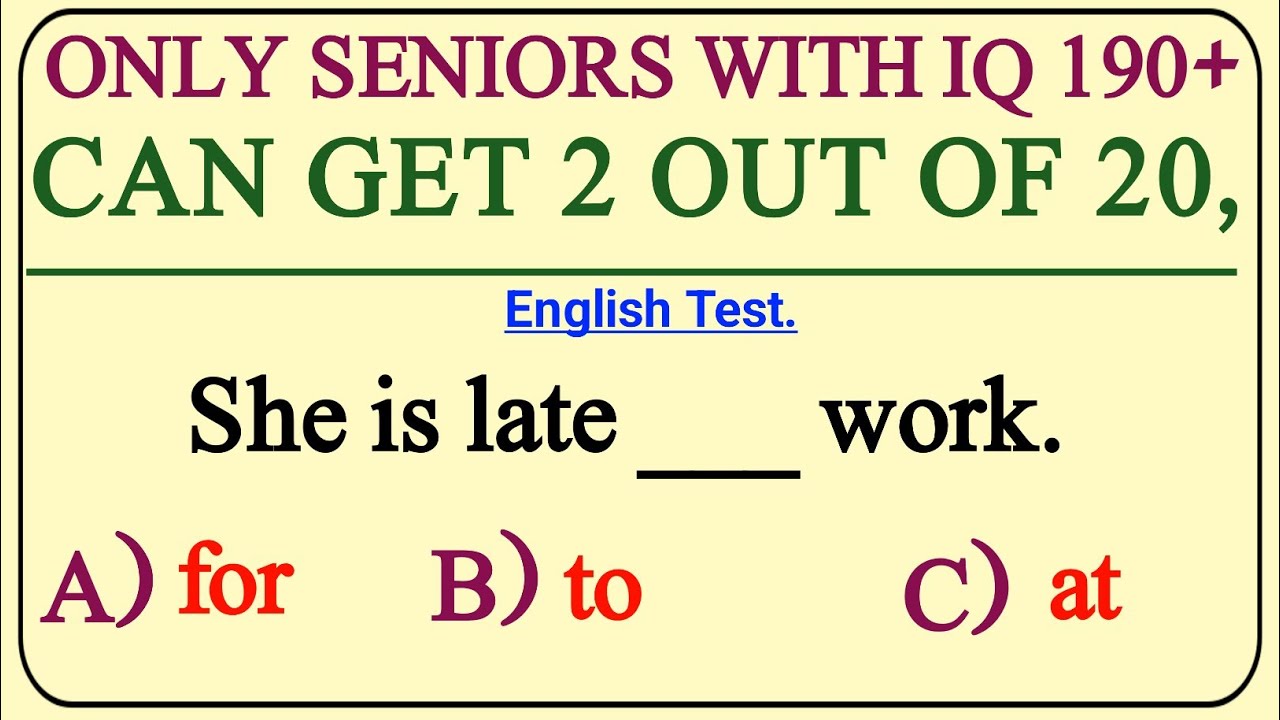
ONLY SENIORS WITH IQ 190+ CAN GET 2 OUT OF 20, | English grammar skills
EforEnglish161
582 views•2026-05-29



