Boreing’s strategy reveals the inevitable shift from personality-driven influence to a corporate machine where even the most "indispensable" voices are treated as replaceable assets. It is a pragmatic blueprint for survival that ultimately prioritizes institutional stability over individual authenticity.
Install our extension to search inside any video instantly.
Inside Daily Wire: Jeremy Boreing Breaks Silence on Ben, Candace & Tucker | PBD
Added:I told people even as early as 2018 said Tucker Carlson's the most dangerous person in American politics.
>> What do you think are the main issues between Ben and Tucker?
>> Ben Shapiro, >> former Fox News host Tucker Carlson.
>> They disagree about America the most.
>> Has it always been like this or is this the most fractured it's been going into 2028?
>> It's never in my lifetime been like this. Tucker is essentially at war with the Trump administration now. He's making some of the worst accusations about the president that anyone out there is making.
>> Would you trust a JD for 2028?
>> No, not today.
>> The top three big partners are you, Ben, and Caleb, right? So, Caleb took over, but then Caleb recently stepped down and was it intentional for Caleb to only go for 12 months?
>> You know, was the goal to sell to Fox News with Daily Wire? What was the goal?
Daily Wire used to hate Fox and that was their enemy and now they want to be able to sell to Fox.
>> Obviously, you keep score in business by making profit.
>> Candace Owens, who's now left Daily Wire.
>> We terminated Candace Owens.
>> 10 out of 10 times you would have fired her again.
>> Candace has more it than any other personality I've ever encountered. 10 out of 10 times I would have fired her again. Nine out of 10 times I would have fired her two months earlier.
>> Do you think that brought unnecessary pressure on the company? You know, the year that I fired Candace Owens, we ended that year better than we started it.
>> After Candace left, you grew in subscribership and revenue.
>> Is conservative media company The Daily Wire going under?
>> I think a lot of people are kind of dancing on Daily Wire's grave. And I told them at that meeting, within 90 days, Tucker Carlson is going to say America was the bad guy in World War II.
And every single one of the executives in my company looked at me like I was crazy.
Jeremy Borne, great to have you on.
>> Very nice to be here. Thank you.
>> Yes. Last time was what about a couple years ago?
>> Yeah, 20 23 I believe.
>> 23. So, question for you. Uh, do you miss being the CEO of Daily Wire versus being a content creator today? I know you're still running a business. You're a business guy, but do you miss being an operator?
>> Absolutely. Yeah.
>> What do you miss about it? Well, you know, my ambition has never been to be a podcast host. At one time, I uh owned and operated one of the 10 largest podcast companies in the country. It would have been very easy to launch a podcast during those days when you, you know, on this side of the Daily Wire, it's actually challenging. It's >> so You never did you never had a podcast?
>> No, I hosted our backstage show, which was we all got together once a month.
Every now and then if there was some like thing that we felt like the CEO of the Daily Wire needs to weigh in, I would do a little oneoff uh speak to the audience or a town hall or something.
But no, I've never never tried to be in the hosting grind the way I am now.
>> How do you like it now?
>> You know, it's an act of creation, so I love that. I like having a voice back after spending a year kind of in the wilderness after leaving Daily Wire. Um I like having my team back together and and being in motion again. But, you know, there's nothing like the thrill uh of running a business of of running a business at scale. We had, you know, 275 plus employees when I left and you know, a couple hundred million dollars of annual revenue. You know, that's a that's an enormous amount of pressure that always forces you to be your very best. Um, and you know, it's addictive that kind of you know better than anyone that's an addictive lifestyle.
>> Yeah. So, do do you think like sometimes because sometimes when when there's a there's a guy like you and I wonder how you're going to answer this. Sometimes when there's a guy like you, when you're working with a guy like you, it's annoying. Okay? But when the guy leaves, you also say, "Shit, he did a lot of stuff we didn't even think about." You know, it's kind of like, well, that that guy was doing this and he was doing this. Yes, he was annoying. Yes, he was kicking our ass. Yes, he was difficult.
Yes, he was, you know, thought very highly of himself and all this stuff, but my god, it's tough to replace this guy. Do you think something like that happened after you left?
>> You like to think so. Um, I know that I wasn't an easy guy to work for. or I used to we used to have we'd start our day every day with what we called the 10:30 meeting where we would get kind an assortment of people together from the top executives in the company to a lot of the management of the company and we would just make sure that everyone was sort of chasing the same set of priorities especially in a news business you know it's very dynamic things change every day that require an immediate pivot some story break some opportunity for one of the hosts appears those aren't things that you plan weeks or even days in advance you have to be very responsive And I would often say in the 10:30 meeting, you know, I know that I'm a difficult person to work for. I know that if you're looking for work life balance, this probably isn't the company for you. I don't really believe in the concept of work life balance. Um we're we're building a rocket ship while it's in flight. And that's one of the hardest things you can ever do, but that's that's what we have to do to pursue the mission to pursue the mission of the company. And so in that way uh you know I'm certainly aware that I was a a tough boss and but it also I'm also aware that I really drove the company you know the the style of leadership at the time was very hands-on uh and I was uh very in the weeds with my team and and every day choosing a direction um ordering the priorities of of the company and keeping everyone on mission which you know this is I think it's probably true in every business, but it's particularly true in an ideological first, an ideology first business that you both have business objectives and missional objectives. And keeping resolving the tension between those two things was also a huge part of what I was engaged in in leadership. And listen, I'm not the only person on earth who can do it, but I I suspect that there's some pain points in the transition.
>> Yeah. How do you find cuz I think who who replaced you? Caleb the other third one >> who's the top three big partners are you, Ben, and Caleb, right?
>> So Caleb took over, but then Caleb recently stepped down in the third week of May or fourth week of May. And then the new guy is the Jeopardy guy or the wheel of fortune guy.
>> Yeah. Mike Richards is his name.
>> Uh so was it intentional for Caleb to only go for 12 months or you know, however long it was and then to bring somebody else in? Was that an intentional part of strategy? Yeah, you know, I can't really speak to that. I >> So, that wasn't your decision. That was post. No, >> my my breakup with the company is a true breakup. You know, I I left in 2025 in March. And other than, you know, the kind of contractual commitment, you know, a breakup of this nature obviously comes with a lot of lingering commitments and lingering restrictive covenants. and I own a very tiny um piece of the company now that's probably primarily a part of the enforcement mechanism behind restrictive covenants as much as anything but I'm not a part of the company. I haven't spoken to anyone at the company uh you know in any sort of official capacity in I guess almost 18 months now. So I I can't really speak to what happened with Caleb in the last few weeks.
>> Got it.
>> Yeah.
>> Are you still in touch with them? Are you still in touch with Caleb and Ben?
Do you guys still communicate?
>> No. No communication?
>> No. I I've said publicly before, Ben reached out to me the day that Charlie was assassinated. Obviously, we met Charlie on the same day when Charlie was only a teenager. And uh in some ways, I feel like TPUSA, the Daily Wire, and Prageru all kind of came up at the same time and to varying degrees came up together. You know, there were times where we saw each other as as rivals. I'm sure you know it's a competitive space but for the most part we were we were friends and we were building our businesses at the same time and in the same space and so you know that was a as it was for for everyone it was a very painful moment and it was nice to hear from Ben in that in that moment but you know we're not we're not in a place in our relationships right now where we where we're in communication.
>> Got it. And so >> weddings and funerals part of the relationship.
>> It's tough. It's emotional. You know, it's very tough. You know, it's kind of like uh It's okay, Connor. Just bring it to me. It's kind of like uh you know, I don't know if you're an NBA guy or not, but uh when you see Magic sitting across and talking to Isaiah Thomas and Isaiah's like, you know, they're kind of sharing their frustration with each other. When you're looking at >> uh uh you know, uh which one was the other clip that happened? I think it was Kobe and Shaq.
>> Yeah. And and there's a part about uh Shaq asks him a question. Shaq says, "Uh, did you intentionally want to win fifth to have one more than me?" And Kobe's like, "Fuck yeah. Yeah, of course I want to have one more than you really." And he starts laughing. I knew you wanted to beat him. So, of course, I wanted to beat you. You know, it was an interesting conversation together.
>> But know when I when I look at you guys and what you guys build, you guys you took it as the CEO of the company from zero to a billion. It's not easy to do.
and in the media space uh when now looking back you know for for others that are going into the space uh how do you process because if we look at the history I've read the book they call me Ted how Ted Turner OG built CNN and what happened but he wasn't talent and even in the book at the end he says the news must be the talent not the you know what do they call it not the reporter but uh what do they call it on TV uh the anchor the anchor not the anchor the anchor is not the talent talent. That's the story. The story. So the anchor needs to talk very much like a Walter Kronhite. Today at 6:00 p.m.
John Doe walked through the building and he was shot and all of a sudden instead of I cannot believe, you know, it's more of an animator. So is it really worth build building a media company with a podcasting model knowing like if I look at everybody at Daily Wire, okay, and let's take Daily Wire as the, you know, the largest conservative, you know, digital media company, whatever we want to put it out there, right? You guys are not on TV. It's not like you're on, you know, you have like your own channel like Fox News, Newsmax.
That's not the business model. But when you get the talent that comes in, they're on YouTube. Yeah. You do some products, CTA, all this stuff. Michael Nolles, phenomenal job. Matt Walsh, incredible talent. You know, Jordan Peterson, you got all these different people that you have now looking back, do you think it's a model that works?
Because say you sign up for three years, these are people that can leave you and go create content on their own.
>> You know, like uh what's her name?
Cooper.
>> Brett Cooper. Brett Cooper went nice channel. I think she's at two million subscribers. Candace went she's at you know whatever six seven million subscribers versus on TV some of them can't translate to digital >> you know there's I won't say a lot of the names a lot of the TV guys 90% of them I don't think they can go build a podcast on Excel. So do you think it's worth building a media company with podcasting digitally? Yeah, I mean, well, we had a great run, right? Um, 10 years at the Daily Wire, our revenue grew every single year, year-over-year.
We um went far beyond anything that we could have imagined when we first started the company. Um, but we were always aware of that of the challenge that you're talking about. You know, we when we started, we really started with two shows. We started with Ben Shapiro and Andrew Claven, and then we had our editorial department, a bunch of writers covering the news. Uh, and in those early years, Ben took off like a rocket ship. And now that was by design. I mean, Ben and I had been working together on Ben's brand for many years before Daily Wire ever started. We had a sort of proto Daily Wire company that we had built within a conservative nonprofit called the David Horowitz Freedom Center. It was called Truth Revolt. And I had I had sort of early on seen uh in Ben what I thought was generational talent. And that instinct obviously bore out. But I think Ben's the most important political commentator of his generation, but not many people saw it at the time that I saw it. And they didn't see it mostly because it was old guard linear media guys. You know, Ben didn't have an obvious voice for radio. He didn't have an obvious face for television. He talked too damn fast.
>> Um, and I was running a organization called Friends of Abe, which is like a kind of Hollywood secret society, basically. Alcoholics Anonymous for >> Yep.
>> for >> very familiar with those guys. And so I had access to all of this Hollywood talent and and I would do things for people. You I'd help this writer get a job on this show every now and then or that that sort of thing. And I I started seeing I thought there was an opportunity for Ben to become the successor to David Horowitz. High intellect, Jewish uh fighter by by nature. Um and so David was getting older. His foundation, you know, needed a needed an heir.
>> David Sun is the guy that's worth four billion honors.
>> Yeah. The same. He wrote the book called the uh the hard things about hard things. I think he wrote I don't know if you know about that book or not. It's a phenomenal book. So that's his son.
>> That's his son.
>> Okay. Got it. I had him on one time I think 10 years ago. David.
>> David. Yeah. And David wrote one of the most important books of of the second half of the 20th century for conservatives called Radical Son about his journey from not just the left but the radical left. I'm talking about uh you know be being involved almost in in criminal race type stuff and you know real communist type type uh subversions and then becoming this champion of conser of the conservative movement. So from my position in friends of AA I was able to kind of influence the board a little bit and get them to think differently about Ben. And then I worked with Ben. I you know I sent someone over like Queer Eye for the Straight Guy. I sent a Hollywood stylist over to clear out Ben's closet and, you know, help him learn how to to dress for camera and uh and and we would strategize together every single day about ways for him to to break out in in media. Uh, and we wanted to prove the old guard wrong. We knew that there's this new opportunity that Ben's skills really lent themselves to what new media could be. There's a there's a great moment early in Daily Wire, first year. Ben was hosting six hours of talk radio at that time. He had a three-hour show in Seattle and a three-hour show in LA. And I went to Salem, who uh for whom he did the LA show, and said, "You, we want this show to be nationally. We want Ben to have a nationally syndicated show." And Daily Wire, >> what year is this at the time?
>> 20 16.
>> Oh, okay. So, 10 years ago.
>> 10 years ago.
>> Yeah.
>> 2015, 2016. And I I said, "You, we will pay for the show to be syndicated, but we'd like you guys to syndicate it." and the the head of programming at Salem said, "Ben Shapiro is not national talent."
You know, guy goes on to be the biggest uh podcast in in the conservative movement for almost a decade and and we earn and deploy a billion dollars worth of revenue. You know, wasn't national talent. But I say all that only to say that we we knew by 2018 that we had a bit of a problem on our hands, which is that Ben was breaking away from the business. The Ben Shapiro brand was becoming much bigger than the Daily Wire brand. It wasn't lost on Ben and I, for example, that because Ben and I to some degree owned the owned Ben show at that time, separate from the company. It kind of complicated business relationship between all the pieces at that time that we could go take the show away from the Daily Wire. Daily Wire knew that that that would be the end of the company. We resolved all those problems through negotiation and and ways that we structured the business to to be mutually beneficial. But then we realize, well, now the problem is we we're owners of Daily Wire itself in a way that we hadn't previously been.
So, it's bad for us. What if Ben gets hit by a a bus and he's incapacitated for 6 months? The company can't can't survive that. And so, we started very methodically trying to build the Daily Wire brand to be able to lose any one of its hosts up to an including bin, which obviously would have been a catastrophic uh loss to endure. But if you're going to be a steward of this brand, the Daily Wire, it has to be able to endure even the loss of its core talent. And that's when we started, we brought Michael Nolles on and developed a show around him. We we launched um we brought Candace on over, you know, as the years went on. We brought Jordan Peterson on.
We launched Morning Wire. We moved into entertainment. We started making movies.
We moved into children's entertainment.
All of that was a way of making sure that the Daily Wire brand itself was robust enough that it could survive. And that bore out. Um, when we launched our first movie, we doubled the size of our, you know, we we were five years in at that point. The first movie added as many subscribers just on itself as we had added in five years of just being a podcast company by by the time >> How many did it add, by the way? What would the number be?
>> You know, >> 50,000 100,000 like that kind of number.
>> Just sub 100,000 the first year and then >> from the movie.
>> Well, yeah. The first five years we added about sub 100,000. Got it. And then the movie added another 80,000 or whatever it was, right? Like basically doubled.
>> By the time I left, you know, we had more than 10x subscriptions based on the entertainment play. Now, the entertainment play includes the movies and it includes Matt Walsh's documentaries, right? Which were >> a woman >> hu huge.
>> How much did that add? What what was because I've heard some numbers with that one like a few hundred thousand.
>> We did very well on what is a woman and amracist. I can't I probably can't disclose now that I'm not the CEO exactly what those >> but somewhere between 100 to a half a million.
>> We we did very well on the >> We did very well on most of our entertainment properties. You know, the the Terror on the Prairie, the Gina Corano film um paid for itself within three days of announcing that we were doing it. You know, the Lady Ballers, the last time I was here, I think it was to promote Lady Ballers. You know, Lady Ballers added more subscribers than we had had in the first five years of the company. The movies were very lucrative.
So, Lady Ballers brought 100,000 subscribers >> and it was all based on this idea. We can't be I mean the Ted Turner idea, how do we deal with the fact that talent can go independent or even if they don't go independent, terrible things can happen.
You know, people get hurt, people >> uh uh fall off, what do we do? And in that in 2024, it all came to uh um sort of fruition because Candace Owens, who was one of our largest hosts, you know, we we parted ways with her and we grew. You know, the year that I fired Candace Owens, we ended that year better than we started it. Why? Because the brand Because the brand was >> subscribership or revenue?
>> Yes, >> both.
>> Yes.
>> After Candace left, you grew in subscribership and revenue.
>> Of course.
>> Wow. 2024 is the best year of subscriptions and the best year of the of revenue in the history of the company.
>> I don't know that.
>> Yeah.
>> Why do you think?
>> Well, because the plan worked. The plan was to build a company that was robust enough to absorb those kinds of losses and we succeeded at it.
>> Okay. So then how about when Brett Cooper left? Was there an impact there or no?
>> No.
>> So Ca Candace and Brett are distinct.
Candace was primarily a YouTube sensation. incredibly talented um but but appealing to sort of a new audience for Daily Wire, mostly a YouTube audience, wasn't really yet an integral part of like subscriptions or an integral part of revenue. Um very successful show. I think it would have gone on to do enormous business for us over time. And obviously she's borne out that she's a real talent and can be independent and and has done >> very well on her own. But Brett wasn't a you I sometimes hear people primarily young people and primarily on YouTube say Brett Cooper was the biggest show at the Daily Wire. Of course that isn't true. Brett was a huge rapidly growing emerging talent but she wasn't in any way a central part of our subscription or revenue engine at that point.
>> Brett wasn't okay. So Candace of course was >> I I get that. So then that leads to the recent layoffs that happened. Stories came out I think the last 12 months they had two sets of layoffs. one layup that comes in, then the last one that comes in. And then, hey, it's not as many as you guys say it is. It's not 100 people, it's not 80 people. It's really only 40 people, 50 people. And as a guy that operates, it's very hard to run a business. So, you're going to go through your season. So, I know what it is to be on the inside and how difficult this is.
So, it's coming from a guy that's on the inside. So, if if that's the case and it's grown after Kansas, after Brett, why are the layoffs happening? Well, I I can probably speak more to the first round of layoffs because they came very rapidly on the heels of my departure.
The second round of layoffs happened more than a year after I leave and I, as I say, I don't have trans, >> you know, I don't have a view into the >> I have more of a view than most because I still know a lot of people there and I know how things have historically worked so I can make certain inferences, but I don't have visibility into the company that you might expect me to have. The first round of layoffs are consistent with me leaving the company. It was a huge change in the structure, the fundamental structure of the company, the fundamental um business model of the company, the fundamental um relationships that sort of undergarded the company. And so, you know, some projects became orphans. And so it makes perfect sense that when your when the founding CEO of the company, the founder and CEO of the company, the guy who sort of conceived of the thing and has led it for a decade leaves, there's going to be other turnover that happens as a result of that. You know, as you as the new, you know, as my business partners and their consultants pursued their new strategy, that new strategy is going to leave some orphan situations. And so, you know, my top two lieutenants left within a week of me leaving. They both they both left. Not weren't fired, but >> So, they were loyal to you, meaning they liked working for you >> because that typically what happens co leaves the the leadership team that reports and that has a closer relationship, they leave.
>> Yeah. I think that they uh obviously had loyalty to me and they work for me now in my new venture. I think also they had loyalty to the strategy that we had been unfolding for the last 5 years. uh and to the extent that that strategy was changing, you know, they they didn't see that as a they didn't see the new strategy as being one that they u wanted to invest in.
Um so they leave, but then of course those people who were in some of those other departments like the the children's department was one of the things that was largely shut down in the days after me leaving. So of course there were you know quite a few employees just of that department who no longer had value that they could add to the company because the company was no longer pursuing that strategy. So I think that initial round of layoffs that happened is was mostly about a pivot into a new strategy which you know as you say uh that's just part of business.
You you have to be able to adapt, you have to be able to pivot, you have to be able to change. Um, obviously I disagree with the new strategy or I would still be there running the old strategy. That doesn't mean that the new strategy can't be effective. Doesn't mean doesn't mean that the new strategy can't succeed. But in pursuing that new strategy, they they had to make a lot of sort of foundational changes to the company and and some people lost their jobs as a result of that. The new round of layoffs, I can only speak to what's been said publicly. You know, Ben says that they've that they've seen challenges over the last year. Some of them are uh very obvious like Jordan Peterson being sidelined. You know, to lose Jordan Peterson is a huge blow, I think, to the entire conservative movement to lose his voice. But it's a you know, he's a major part of the economics of how the company was working before he before he took ill. So, you're going to see challenges there. And then I just also suspect that any you know I think a lot of conservative media companies have seen some attrition during uh the second Trump administration just because conservatives tend not to do great with victory. You know we're a great opposition party. We're a great opposition movement. Then you win and everybody kind of uh breathes out exhales for a minute and they don't pay as much attention to conservative media for a for a season. And then I suspect that there's just the realities of a transition. If you're implementing a new business strategy for the company, you're implementing new government uh governance strategy for the company, a new leadership team for the company, you know, new executives at almost every department of the company over the last year.
Even if that strategy all bears out to be successful, there's just going to be some rough patches in the transition.
So, I suspect that that's all you're seeing. I think a lot of people are kind of dancing on Daily Wire's grave because Daily Wire has been ascendant for over a decade and nobody, you know, America loves underdogs. We don't really love number one. Um, so I think there's a lot of people who are kind of eagerly dancing on Daily Wire's grave. I I just think that that's unfounded. You know, Daily Wire still has nine figures of revenue.
Daily Wire still has some of the most talented people in the movement working for them.
I suspect that uh I suspect that all the people who are sort of cheering their demise are going to be disappointed by the fact that their demise is not at hand. They're just going through the difficulties that businesses go through.
>> I got 50 questions to follow up. So I don't know what direction I'm going to go with it next. I guess we'll go to the first one is uh uh was the vision to sell to Fox because I would get calls people saying Daily Wire is about to sell to Fox. Daily Wire is trying to sell to Fox. Daily Wire used to hate Fox and that was their enemy and now they want to be able to sell to Fox. If you notice, Ben Shapiro hasn't been on Fox for a long time because Daily Wire and the Fox aren't enemies because behind closed doors. Was the goal to sell to Fox News with Daily Wire? What was the goal?
>> No.
>> Was there ever the conversation about a sale with Fox?
>> Yeah, we had a conversations, but we were never looking to sell the Daily Wire. That was not that was never really part of our strategy. We were, you know, we wanted to have maximal missional impact.
Obviously, you keep score in business by making profit, by generating revenue.
Uh, we wanted to grow, we wanted to grow revenue, we wanted to grow profitability, we wanted to grow influence and impact. Uh, we wanted to deeply impact culture. We wanted to make more content. Uh, we wanted a stronger editorial team. One of the things that Daily Wire has been very successful at since I left, I think, is building out their editorial team, which is, you know, now they've got a White House correspond. We before that happened before I left that we sent Mary Margaret Bolahan to be um our White House correspondent, but you see the amazing work she's done over the last year and a half. You see the hires that they've made even in the last uh three or four months in their editorial teams. They've been dominant. I mean, they brought in some amazing editorial talent. That was that's what we thought about. Were there moments where, you know, you're in a rough patch and you start thinking, "Damn, I'd like some liquidity out of this thing. What if it all falls apart tomorrow?"
>> Yeah. That's called being in business.
>> Yep.
>> Totally get it. Was it ever close where you guys almost sold?
>> No.
>> Like if it's, you know, home base, it's home run. Were you ever at third base?
>> No, we were never at third base.
>> First base.
>> Yeah. Yeah. We get to third base. Kevin, >> there were times where we were emotionally we had already rounded the basis twice, you know.
>> Do you do you ever look back and say, "Man, maybe we should have sold." Does that thought ever cross your mind?
>> Yeah. Well, for me, if I if I could have foreseen um how things ended up for me at the company, then it would have been better for me if I if we had sold the company.
>> Yeah.
>> But no, I never look back and wish that we had sold.
>> Yes. Yes. I can say of course it would have ended better for me if we had sold in 2023 or 2024 >> financially.
>> Financially.
>> Yep.
>> But I look at what we did in 2023. We made the pin dragon cycle. I look at what we did in 2024 like so many companies but like the biggest of so many companies. We impacted uh a pivotal election for the country. We uh finished and released Am I Racist? Uh which became the biggest theatrical release of a documentary in in a decade. Um, we terminated Candace Owens, which I feel like was a moral of moral morally important thing to do and important for um, the health of the conservative movement more broadly.
>> 10 out of 10 times you would have fired her again. Or is there a part of you like we could have we could have >> 10 out of 10 times I would have fired her again. Nine out of 10 times I would have fired her two months earlier.
>> How about not a minute of not a minute of regret?
>> One out of 10 times would you have signed her?
>> Yeah.
>> Oh yeah.
>> So the signing was good.
>> Yeah. Yeah, I mean it's easy. I've said that I look back and signing her was the biggest mistake of my life. That's not actually of my professional life. That's not actually fair or true. Uh not firing her earlier is a bigger mistake, more of a bigger moral mistake. I had misgivings about Candace when we hired her. But on the whole, I believe that she would be that she was and would continue to be a force for good. I believed that we could um successfully help her trend in a positive direction. I believed I believed and still believe that she's the she has the most star power of any person I've ever met. That's after 20 years in Hollywood. I mean, I've met giant movie stars. Candace has more it than any other personality I've ever encountered. Whinsome, charming, um hugely talented. So, in retrospect, is it a mistake that I hired her? Sure.
Because of the way it played out, but I wouldn't say one out of 10 I would have hired her. You know, seven out of 10 doovers I still would have hired her.
>> Reason why I'm asking this question is the following. Look, I look at I look at everybody as a talent, right? I look at Candace as a talent. I look a lot of these guys as talent. You know, Jordan Peterson, all these guys.
>> Yeah. I >> Is it worth doing it? Because you I don't think anybody's going to be able to control uh uh Candace. I don't think anybody's going to be able to control even a Tucker. I don't think anybody's going to be able to control some of these uh you know the talent. So it is it like even now you're not there anymore. Would you go back into the model ever? Let's just say you raise $100 million. Would you go back to signing talent again or how would you do it differently? Would you go after the best the current Jordan Peterson, the next Michael Noles, the next Matt Walsh?
Would you make that investment?
>> Yes. Um, breaking talent is very difficult. You know, seeing talent in someone who doesn't already have an established audience is very very difficult.
Obviously, at the time that we that I started working with Ben, you know, he had been the youngest syndicated columnist in the country. So, he was obviously a talented guy. Uh, he had made some sort of cable news appearances. Obviously a talented guy, had a had a sort of small one one market radio show. Was developing himself in that regard. Um, but he wasn't obvious.
It was not obvious that he was going to be Ben Shapiro to most people. You know, I I'm not the only one who saw it. Ben's family knew it. Ben believed in himself.
>> Who else knew outside of family? Cuz family's going to believe and and you believe, but who else saw it? Anybody else?
>> Ben's family believes in him uniquely, not just the way that all Ben's family wasn't just supportive. They really believed, you know. Uh, >> but no, not not many people saw what Ben was going to be. Um, Michael Nolles, you know, Michael I saw Michael as huge talent. Um, but Michael hadn't done anything like this. He was an actor and I could tell that he was he was gifted as an actor, but he hadn't done anything like this. Brett Cooper, >> I seen some pictures of old school pictures of Michael Nolles, >> you know.
This is good-looking young stud Michaels. I I had no just the other day guy they were telling me this guy looks like an actor. Yeah, >> he looks like an actor that's, you know, maybe right there. Like that picture looks like he was on General Hospital, you know, he was like on the, you know, some of the >> If that guy had gotten one single hit on General Hospital, you'd have never seen him. Michael wanted to be an actor. He had it so bad. Uh Michael had it so bad that when he started working for us, he came to work for us as uh he had been doing Andrew Claven's personal social media. And so we hired him to be our social media director.
>> How old is he at this time?
>> Oh, none. He's 9 years old, you know, I don't know, 22.
>> Okay. So, he's a baby.
>> He's a baby and 23 maybe. So, Michael comes over and I was like, man, this guy, he's so freaking charming and winsome and he's so smart. The audience, if you ever put a camera on him, even for a little social media video, everybody loves him. And so I started working on him, you know, and I remember I remember very clearly taking him to breakfast one day at my favorite breakfast spot in LA called Jinkies in Sherman Oaks.
And I just told him I said, "Michael, you got to walk away from the acting.
Like it's a it's a waste of you. Um, and you're going to spend your entire life chasing the thing that you don't have when I'm telling you that there's a thing that you can have right now." And the acting thing Acting is a thing you can just do in success.
Like it's not a thing that you, you know, the only time that acting is impossible is right now, but come do the thing that's possible for you. Come use your gifts, you know. And uh but even at that, we we had this idea one day that we were going to make this movie that Andrew Claven and I had worked on a script together about Samson from the Bible.
And it was >> You ever read Samson Syndrome, the book?
>> No.
>> Okay. Thought maybe that was a book.
Please continue. Samson, you and you and Claven.
>> Yeah. And Michael gets it in his head that we're going to catch. This movie isn't baked. This the script was good.
Drew did a great job. But I mean, this this movie never got past first base.
Michael Nolles started gaining weight so that he could look like a Jewish warrior. He was like, "You guys are going to put me in, right?" I was like, "Michael, I don't think we're even going to make this movie, and there's no way I'm going to put you in it." He starts having pizzas delivered to work. He gets on a on a regime where I think he gained 30 pounds. No, >> he can't gain a >> He blew up like a big red balloon.
>> Wow.
>> Cuz he thought it was going to give it That's how bad this guy had it to be >> to be an actor, you know.
>> But >> look what he actually is. Look what he's accomplished in the time that Michael's been doing a show. He's >> educated himself. I mean, he went to Yale. He was no He wasn't a slob.
>> No, no, no, no. Michael, but he's educated himself.
>> Michael is honestly one of the most >> I don't know. I may put him as number one most likable out of all the conservative talent in the world. I don't know if I put anybody ahead of him >> and incredibly intelligent. And the same with Brett Cooper. Brett Cooper was a Hollywood actress. She she was a season reg or a series regular on a show called Heathers. Um but she had never succeeded in commentary. She had never succeeded as an online host. My team had created this show called The Comment Section. We had cast a girl to be in it and it had not worked out with the the first gal that we cast. So they went back to square one looking for someone. They they' created this format. They thought the format would work, but they needed a good host. They found Brett. They brought her to me and it was just obvious this gal had enormous talent. Um but at that time it was completely unrecognized talent. Now hiring a Jordan Peterson at the height of his career that costs a lot of money.
>> Um but it's kind of a no-brainer.
>> You guys didn't make money on that one.
>> Of course you want Jordan Peterson on your brain. Did you make money off of Peterson?
>> You know, we made a little bit of money off, but not that much.
>> But what Peterson But what Peterson did is he helped secure the brand. He helped to elevate the brand.
>> And I remember the announcement. Massive announcement. The whole what was it? The lobster thing you guys put on the website. It was, >> you know, all this stuff that So, so going back, maybe this is the better question to ask. I >> Is the model a model of getting household names or building?
>> Well, it's both. You secure the brand with some household names, but the the economic model is in breaking new talent.
>> Got it.
>> And of course, it's the case as you see with Brett. You can build talent. You can't make someone talented. We're not responsible for Brett being talented.
That's Brett.
>> But we're responsible for helping come alongside that talent, cultivating it, building a brand around it.
>> The day comes when she wants to leave.
Well, she can take that. An audience is going to follow her online. Audience, we have parasocial relationships with audience. They're going to follow us to some degree. Um, and she's really been able to build on that. And I think particularly today in the post second Trump win, you experienced it here, I'm sure, the huge change in how the platforms treated us after Trump won again in 2024. You know, suddenly you're not being demonetized. Suddenly you're not being shadowbanned. Suddenly you're not being boxed out. Right now is a great moment for independent talent to have independent success.
This is this is just a phase like every other phase. It's a cycle. You know, the Democrats are going to take power again at some point in the future. The platforms are going to turn on us again at some point in the future. And networks are going to be more valuable to talent again in the future because they provide >> networks are going to be more valuable to talent in the future. What do you mean by that?
>> Yeah. Well, I think networks were very tal were very um helpful to talent in the Biden years because we helped talent instead of >> being an independent go with somebody.
>> Go with somebody.
>> So during the conservative, go by yourself during a liberal team up with somebody.
>> I think that right now that certainly seems to be the case.
>> Interesting perspective. So okay, so Crowder, would you have done anything differently with Crowder?
>> I would have uh called him from California instead of in Nashville. So, it was a one party consent state. No, >> no, I wouldn't.
>> It's a technical statement that only few people will understand.
>> No, I wouldn't have done anything. I'm I stand by the offer that we put in front of Crowder. Okay.
>> It was a good faith offer. It was a lot of money. It was a very respectful offer.
>> I think Crowder showed >> sort of like personal disloyalty and disrespect. And I think it kind of shows some of what's wrong with our business that what Crowder ultimately did was he needed a controversy to launch himself as an independent talent. And a great controversy is to uh get into a fight with the big guys, you know.
>> And by the way, Candace defended you guys hardcore against Crowder. I don't know if you remember that. Candace went hardcore after Crowder.
>> Yeah, I was very appreciative of her.
>> Yeah, I remember that. I remember because to me, I'm in the middle, right?
like I don't know if you know what level of to me I'm more in the place where I'm thinking is it worth going in and building long-term or do I have to deal with every four to eight years depending on who the president is that the talent's going to go and be independent and say we don't need you we can do it do we do it do we not do it >> well but you say I I understand that Clayven Michael Nolles Ben Shapiro Matt Walsh Jordan Peterson these talent never never >> left >> left I meanord has left as a result of I don't know if he's I don't know if he's left. He's sidelined. Yeah.
>> No, no, no. This he's he's fine. He's just sidelined. I don't worry.
>> He's just sidelined.
>> Um Candace we fired and Brett left.
We've had one talent really leave in the way that you would be concerned about talent just leaving you. No, you have to you have to continually help talent to become more successful. If if the network is helping talent get more views, more money in their pocket, more opportunity for growth, then they're going to be incentivized to stay with you. And if you if you fail at that, you're going to lose them. Sometimes you might lose them for other reasons because human relationships are complicated, business is complicated.
But for the most part, uh for the most part, talent is going to go where they see opportunity. So, you just have to be the opportunity.
>> What do you what do you look for? So for talent, you know, uh uh I build in an insurance agency, you know, national 60,000 agents. So I had to look and see what this guy has, what that guy has.
And what I used to value of somebody being a broker eventually opening up an office wasn't that valuable versus I realized, no, that was sexy, not important. These are the three qualities that are important. What is it on the talent side? Like when you saw Ben or Brett Cooper or Nolles, what are you looking for?
>> Yeah. Well, in the early days, what I was looking for was ideological alignment meets raw talent uh meets um what I would consider to be like a strong ethical foundation.
>> So, I knew with Ben that I had talent. I knew that I had ideological alignment.
And I knew that if Ben if the going got tough politically, Ben wouldn't say something that he didn't believe just to make money, which to me was incredibly important. I didn't want someone who would go grift. You know, I didn't want someone who would let the let the audience um wield them as opposed to trying to both represent and lead the audience. I call it lowercase R republicanism. You have to lead and you have to represent. There's tension there, but you have to that's your job.
Your job is to navigate that tension.
Not to become a populist who lets the mob because the mob is often wrong.
Populist answers to the mob. Don't answer to the mob. But not an elitist who says the people are wrong and only the smartest guy in the room is right.
Lowercase our republicanism says you have to you have to live somewhere between those two things. You have to be mindful of both of those impulses and navigate them. So, you know, Andrew Claven, I knew Andrew Claven's never going to say one freaking word he doesn't believe. I'm not going to have a situation where he gets so too big for his britches or afraid of the audience or whatever it is, right? Michael, same kind of thing. Matt, same kind of thing.
Um, I think that as time went on, I also looked for things like, can they speak to a demographic that we have not been successful at speaking? You know, I took on more business considerations by that by those later days. And in some cases I made bad judgment calls because I you know you have you always have these competing priorities not just in business but in your life right how do I be a good father how do I be a good uh CEO just those two you know people call work life balance that's like a total that's nonsense but there is tension between those two roles and you it's not a question of which one do you do well you have an obligation to do both of them very well you have to obligation to succeed in both of those areas that requires constantly assessing how you've ordered your priorities. And so in business, it's the same. At the Daily Wire, the number one priority had to be the mission. We're an ideological operation. We exist for for an ide ideological purpose.
The the math has to be a priority. If if you go into negative cash flow, the whole the the gear stops spinning right away. So, you've got to make money. you have to reach people or none of this will or or you'll be doing this for like self- congratulatory reasons as opposed to actually making an impact and making a difference.
And at various times you get misaligned.
You at various times the biggest problem you have is that the company's not making enough money and you're going to run out of cash in 90 days. And so you hard pivot toward addressing that problem. But if you if you stay in a position where making money is the number one priority, then definitionally all of your other priorities become subordinate to that one, which means the ideology, the mission becomes subordinate to money, which means character becomes subordinate to money, which means um honesty and integrity become subordinate to to money. So you're constantly fighting that. And I think that, you know, in the case of of some of, you know, particularly say with Candace, I I probably had mis misaligned my priorities a bit there. I thought she can speak to a whole range of people who were not great at speaking to, women in particular.
Um, she's a much more aggressive fighter than any of the rest of us are. I mean, we're all fighters. Deaware was always fighting, but we sort of fought from a kind of um intellectual Candace will she'll knife you, you know, and I thought we need that. That's a color that we need in the in the sort of tapestry. Um and I think that I probably didn't prioritize rightly whether or not I really believe that Candace would always tell say what she believes is true. Did I really believe that Candace would behave ethically? Yeah, she was famous.
She was a huge opportunity. She had these she represented opportunities in areas we didn't have. And I I kind of let myself make a decision from probably the wrong place >> with her with Candace.
>> With with Candace. Yeah.
>> Got it. Okay. And of course other decisions along the way, but specific to talent.
>> No, that makes sense.
>> Specific to >> that makes sense. So to to close this topic up and move to the next one. So do have a couple names as pillars, but you have to be good at building because building is probably the more profitable and stable strategy long term of what to do. That makes sense. That makes sense.
Okay. Uh in regards to the movie that you did, what was the name of the movie that you did? The big one.
>> The Pin Dragon cycle.
>> The Pen Dragon Cycle.
>> Were you going for like was that your strategy to say, you know what, screw it, I'm going to go for all the marbles because if we nail this, this could be our house of cards. This could be our, you know, this could be our show that's going to bring us from whatever 2 million subscribers to 10 million subscribers. We could be a household in Was that kind of your strategy?
>> Absolutely. Yeah. You know, if you look at the history of the films that we did during my tenure at the Daily Wire, they get bigger and bigger as we go. You take bigger and bigger risks because you can't you can't run the same play twice.
You know, the first play was to acquire a movie that we didn't make. Dallas Sonier's Runhide Fight written and directed by Kyle Rankin. It's a fabulous film. We're very lucky to get it and we got it because uh Dallas kind of got cancelled in Hollywood after having made this film and it didn't have a home and you know it was Ben who actually saw the opportunity. Ben uh had interacted with Dallas in the past and he spoke to Dallas and heard about the challenges Dallas that Dallas was dealing with with Runhyde fight and he called and said, "Hey, you need to talk to this Dallas guy. I think there's, you know, this could be a movie that we could pick up and and it had always been part of our strategy to move into making culture, not just criticizing culture.
And then immediately after that, I tried to acquire another film and it didn't move the needle for us at all. Kind of same budget range, also an acquisition, a licensing deal. Didn't move the needle for us. So now we need to now we have to actually go into production on something. And we made an overall deal with Dallas and we produced Terror on the Prairie with Gina Chrono. Um, they did very well for us. Uh, but I sort of learned by then, well, you've got to you've got to continue to I sort of learned this from Elon Musk, and it's that in in a certain kind of company, this isn't true for every company, like you couldn't do this if you had an accounting firm, but in certain kinds of companies, part of what you're selling to the audience is a vision for what the future can be. The Daily Wire was saying to our audience, there is a future where where conservatives aren't losing. There's a cons there's a future where uh we have political power and cultural power and you know if if you look at Jeremy's razors and some of the things we did in consumer goods where where we're also represented in in the consumer goods space where every single company isn't against you all the time and as you sell that vision to the audience the vision has to be ahead of where you are because it has to inspire.
Elon's great at this. Elon's, you know, I'm sure you've got a deposit in on a Roadster or whatever. The Tesla Roadster. I've got a deposit on. Yeah.
When are we going to get it? I don't know. Do you think he's going to give it to you? Yeah. Because that's the other thing you have to do. You have to deliver on those promises. So, you're always making a promise that's a little further ahead than where you are. And you can keep that going as long as you come up come along behind it and deliver. So, we sold the Gina Corano movie before we made it.
And then we made it and it was good. Uh we sold um the kids platform Binky before we made it >> and then we released >> our model is if you want us to do this come help us support this or what what is the >> we never use support because we didn't think of it as we don't want people to think of it as donations.
>> It's a for-profit business but it is like come alongside us and help us build the future.
>> You know your your subscription gets you everything that we are now but your subscription is also going to get you the things that we will be as a result of your subscription.
>> Got it.
>> And so same with Pin Dragon. We told the audience about Pin Dragon, you know, when we first got acquired the rights.
We took them along on the journey with us as we made it. And yeah, it was it was um it was bigger than anything we had ever made. It's bigger than anything any conservative media company has made in my lifetime.
>> How successful was it?
>> I was gone when they I've been gone for a year when they >> post.
>> Yeah, >> it's post you.
>> Yeah.
>> Okay. Were you in it at all or just so you know, I know nothing about the story. Are you in the movie? Are you not? No. I directed um two of the episodes and I was the what you call the showrunner.
>> Okay.
>> So I oversaw the writing room. I oversaw the set. You know I didn't oversee the set from the point of view of like Dallas who's running the crew, >> but I was the I was the lead creative on set. So I was in Eastern Europe for I was in not I was in Hungary and Italy and Romania for six months and substantially made the show, you know, with with the team made the show.
But the show was released a year after I left.
>> Um, >> Got it.
>> Do I think it was as successful as we had hoped it would be? No, I don't think it was successful the way that we hoped it would be. I think it was orphaned in the same way so many other projects were orphaned. You know, when you when the CEO and founder of the company, who was also the creator and showrunner of the project, leaves, of course, that project's going to be orphaned to a large degree. The the company changed even the strategy that it was pursuing.
But Pin Dragon made perfect sense uh as the next step in the strategy that we had been running for the last five years. It was the next big step. Um we had released content that had made the kind of money that Pin Dragon would have had to have made to pay for itself. So it's not as though we got so far ahead of ourselves that we would have to achieve a success unlike any other uh just to break even. No, we would have to replicate past successes in order to break even on the show. But it was certainly a bigger bet than any that we had taken up until that time.
>> Do you think that brought unnecessary pressure on the company or with you being gone 6 months, Romania, all of that where you're not doing the day-to-day operation at the headquarters? When we set out to create a shoe that blends comfort, function, and luxury. We had the choice to make it fast. We had the choice to make it cheap. We chose neither. Instead, we chose Tuscan Italy. We chose true Italian craftsmanship. Each pair touched by 50 skilled hands. We chose patience, spending two years perfecting every detail. And we chose the finest quality at every step. Introducing the future looks bright collection. Not rushed, not disposable, not ordinary, rather intentional, luxurious, timeless.
>> Yes. Yeah. Yeah. Yeah.
>> What would you have done differently?
>> I don't know. You know, a lot of there are certainly there were mistakes there.
>> I'm not even talking about mistakes. To me, it's more about >> Well, it's learning mistakes.
>> No, what I'm what I'm I'm not trying to that's not where I'm going. What I'm trying to find out is purely strategically like was it better for you to be at the home office operating and hiring somebody else to run that show?
>> That's what I mean.
>> What I would have done differently is I would have taken my executive team with me. It's not that I would have stayed behind. Because both things are true.
The company was engaged in the largest, most consequential project it had ever been engaged in. It needed all of our best talent to shepherd it. And we still had a company to run and it needed me to be there shephering it. So what's the answer to that? Well, the answer to that is >> I should have >> we should have treated it as though not that I went to Hungary with Dallas Sonier to make a movie, but the Daily Wire >> uh went to Hungary to engage in the next huge project that we were going to engage to. And you might say, well, that's not scalable over time, >> but I'm not talking about over time. I'm talking about the first time.
>> I have a very different opinion. To me it was you were you were trying to hit a grand slam and if it goes you're you're a Reed Hastings Jr. You're a >> you know you guys could have gone from two to 20 million. If you're at 20 million now everybody's coming to you saying hey what are we doing in the $50 million auto movie the$100 million movie. And I think you have to take a risk like that to see if it's going to land or not. I'm telling you I remember uh we're about to go to Tuscananya Italy. I'm taking my 20 best guys. I'm renting this, you know, 17bedroom property on the top of the hills and 20 guys, 10 couples. Let's go live. Hire a chef. We're going to have a good time.
And before going there, a guy named Carl Deos and one of the guy, they tell me, "Go watch House of Cards." I said, "House of Cards? Yeah, go watch House of Cards on what?" On Netflix. What's Netflix? I literally wasn't on Netflix.
So, I go download Netflix and I'm like, I can't just watch one episode. I stayed up all night watching every one of the episodes in season one and then I get on the flight in the morning. I have no sleep. What did House of Cards do to Netflix? Take House of Cards out. House of Cards took Netflix.
>> House of Cards is probably the most successful show of all time because if you say, "How much money did House of Cards made?"
>> 200 billion.
>> Billions. That's right. Made 200 billion.
>> Yeah. Yeah. That's right. That's right.
So that kicked it off. So, you know, from an operator to an operator, I respect that you had the balls to take that kind of a risk. It's not easy to do. You got to do it. But also, if it doesn't hit, you got to take the, you know, heat with it as well. And that's kind of how this thing works. You're either going to go or you're not going to go. Today, everybody's talking about SpaceX, the biggest, you know, he's a trillionaire now. 4,400 people are millionaires. You know, 33 33 people that are non-executives, non-directors, nonVPs, non-managers. Their stock today is worth2 to400 million. Think about that, right? Two to$400 million. Yeah.
>> These are not leaders. These are not people that you know, right? one guy was like, you know, just a regular job that they had, but go back and look at the first three falcon, you know, the the failures that they had back to back to back. And so, does the business model become so if I'm going and doing a $50 million project, let's just say three projects, I'm doing 50 million. Do I have to have on the back end $200 million ready? So, if two of them fail, I need the next one and the next one and the next one. So, how much of this is fundraising? Because you got to have the you need a lot of money.
>> You need a lot of money. Uh, you know, the Daily Wire grew completely out of cash flow for a decade. We we took on $4.7 million of investment the day we started and we grew to $200 million plus revenue engine over the course of a decade completely out of cash. Now, by the time we got to Pin Dragon, we knew that if we were going to make these larger entertainment plays, that's not going to continue to work because the business model up until that point was most of our content, not all, most of our content, we made it, put it through post-prouction, released it, and started monetizing it in the same day. Well, you can't do that with a movie. You know, a movie is a multi in some cases, in the case of Pindra, it's a multi-year project. And in every case, it's a year-long project or an 18-monthl long project. So, your capital's getting tied up for a lot longer. Now, the subscriptions can bring you in a lot of revenue really fast once you release it, but you've tied up that capital. So, we'd never really been in a business before where we were tying up capital.
And that's part of what was going on in the last couple of years at the Daily Wire was thinking differently about the structure of the business to make it possible to bring on capital in ways that we had never >> sought to bring on capital before. And one of the advantages of never having brought on capital in all these years >> is that we had freedom of action, freedom of decision.
>> We were able to be nimble. We're able to move very, very quickly.
>> Um, one of the benefits of being able to bring on capital is the founders can get a little liquidity. Uh, and you can make things that tie up capital that you, you know, you can make Pin Dragon. You can make whatever was going to come after Pinragon. You know, I know the Daily Wire has made at least two movies since I left. They're not out yet, but it's not as though they've pivoted out of entertainment. They've pivoted away from my sort of strategy around some of that, but they haven't pivoted out of entertainment. And all of that requires thinking differently about capital, which requires changing how some governance works and requires changing how some structure works. That's that's uh a natural consequence of some of those changes.
>> Yeah, very interesting. You know, it'll be interesting to see who else comes in, does it? how especially with now with AI are we going to start seeing guys making cartoons takes off subscribership on the conservative side I don't know but uh you know to me I do think the model of being decentralized of smaller creators not needing to be part of a big company um may disrupt the one big gigantic conservative company we built maybe I'm wrong we'll see what happened there can I push back on that for >> do so I'd love to yeah >> because I don't think you're wrong obviously we live in the moment of the independent content creator. My my argument is that's just a moment like every other moment. Um but look what you do here. This isn't an independent content creator operation.
This is a business. I mean you've built a massive business around your brand extending out from the business that you had already been very successful with before you started this. But ultimately, Patrick Bet David is the you're not um you're not Joe Rogan making a show with one guy at your house that happens to be the you know the biggest show in the world. You're still right now sit here as a businessman who has ambition way beyond the content that you create every day. And a lot of the guys who move into this space have those kinds of aspirations. But you and I both know how hard it is to do what you do. We both know how hard it is to actually build and scale. how much risk you actually have to be willing to take. How many losses you how many mistakes and failures and losses you have to make and then recover from even just the emotional ability to recover from major losses. You know, there are people who are way better than you and me uh who didn't succeed because they couldn't overcome just the emotional reality of the losses that they had to take. And you and I are kind of stupid. We slam our finger in the drawer and we go, "Well, I'm going to learn not to put my finger in the drawer." And then three days later, you slammed a whole different finger in a whole different drawer, you know? And so I do think that we live in the moment of the independent content creator, but >> but in the end business is hard.
>> Let me ask then let me ask a crazy question. Okay, so let me flip it on you complete opposite side. Say I go raise a few billion dollars. Okay, is it worth I buy Daily Wire Blaze five of them and bring it all together. Is that worth it?
Certainly, I think that there's an opportunity for someone to roll up some of the online right and create a sort of digital uh super company on the right.
Uh you know, the most likely entity to do it is Fox, >> right?
>> Right. Why why do I say they're the most likely? In some ways, they're the least likely. They don't understand the online space yet.
>> Sure.
>> You see them make moves in it. They don't make them very well.
>> Sign 10 guys that they did, but yeah, >> but they don't really know what to do yet.
>> Sure. If they bought the Daily Wire, they'd know a lot more what to do. If they bought the Blades, they'd know because because we're digital first companies. We've existed in this space.
>> But I still say Fox is the most likely to do it because they've got billions of dollars.
>> It needs compet. The market needs competition though. To me, >> to me it's >> But the competition often comes from the little guy.
>> No, no, but that's what I'm saying. What I'm saying to you is it's, you know, if a market like I remember we were having a conversation, you know, a few years ago, hey, what if we started a media company? I'm talking to a bunch of these guys. We're having meeting after meeting after meeting every other week at my house. Vik there a couple other people are big names. These were very big names that we're having a conversation with and this is pre the Israel you know it's kind of Israel October 7th's happened but it's not yet like at this level where everybody's openly there's massive division Republican that hasn't happened yet. So, we're in this meeting and a guy comes up to us and they say, "Hey, we're 22 billion auto fund, big company, and we want to know if you're interested in being a CEO. If we were to go do a rollup and we buy boom, boom, boom, boom, boom. Would you have any interest?" Interesting. What would it look like? Well, it would look like this, this, this. I just sit there. I'm like, "Okay, so why would Ben continue?
Why would this person continue? Why would that person continue? you know what would be there. So then would we do a 5050 and put the backend equity on it?
So we're all flying to go build a $400 billion company. So the real exit's going to be, hey guys, we freaking 50x and collectively let's go, even though we disagree, let's show the world that conservatives can unite and let's go give a message. I flirted with the idea of what that would look like because, you know, it was >> it was interesting, but uh but I I think the the opposite side may also happen.
Fox at any point can go knock on anyone's door, buy up anybody. Fox has done this with Wall Street Journal, with New York Post, with god knows how many of them. There's so many companies that people don't even know Fox owns that the only reason you don't know is because it's not public. They own a lot of News Corp is like, >> oh yeah, >> it's it's a massive company out there.
Okay, so let's let's let's go to the conservative side. So on the conservative Republican side, c >> can I say one crazy thing, please? I've never gotten to tell this story and I love it so much.
>> Go for it.
>> Ben and I had a meeting with Lachlan Murdoch early this not too early. It was probably 2019 or 2020 even.
So we were the Daily Wire was a thing.
>> Precoid >> must have been pre-COVID.
>> Time becomes a little flat to me, but I'm almost certain we still lived in LA, which would mean pre-COVID.
Um and and we were in Lachland's office having a a great conversation with him.
He has a large office and so we were sitting on this sofa and then there's a kind of an unusually large space and then a desk and he's at he's at the desk and there's a door that's sort of in the center of the room and we're talking we're in in a having a really nice conversation. It wasn't about acquisitions. It wasn't about anything like that. It was more like a meet and greet talent kind of meeting, right?
And this little old man comes in that door in the middle of the room to see Lachlan. And because of the way the room's oriented, he doesn't even see us.
He kind of comes in at this angle to us.
And he says, "When are we going to have lunch? You know, what what are you thinking about lunch?"
And Lachland says, "Dad, you know, I'm I want you to meet Ben Shapiro and Jeremy Boring." And this little old man who's wearing little old man jeans and little old man white tennis shoes and literally shuffling kind of moving around like this turns, sees us, realizes he's not alone. And it was exactly like the moment in Richard Donner's Superman 1978 when Clark decides he's going to tell Lois who he is and she turns around to go find her her purse or something and he takes off the Clark Kent glasses and his shoulders come back and he becomes three inches taller and he is Superman lock. Uh, Rupert Murdoch turns around, realizes he isn't alone, sees us, his shoulders come back, he gets at least three inches taller, his eyes harden, he reaches out and gives you the most masculine handshake you've ever had in your life.
And and he was Superman again. He was the guy who's made almost a hundred billion dollars in his life by basically force of his own tenacity and his own will. And it was such an amazing thing to see it happen in real life. like he is old and he is he is uh diminished, but you know what's still in there? The freaking guy who could do all of that.
It's a pretty >> Did you watch his documentary?
>> Pretty amazing. I haven't gotten to watch it. No.
>> Oh, so you got to watch it because uh it it So the documentary This is You're going to flip out. You You'll watch it.
You'll enjoy it. I will.
>> It's based on the show's succession. So the family watches the family watches the show succession like, "Guys, I think this is about us. We got to get our [ __ ] together." And then the documentary is based on them reacting to the show. It's it's un this is it. The dynasty, the Murdoch's, it's truly worth watching because all the family, all the kids, everybody's involved >> and the history of it, you know, it's it's it's a it's a great uh again, you watch Rubert in his 30s and his 40s and his 50s. It's a very a guy like you won't be able to stop watching the whole thing. It's fascinating.
>> But what a great story of of having that. So, was that when you guys were almost at second base that wasn't the case?
>> We weren't even at first base.
>> Okay, I got it. You haven't felt her up yet. You haven't done anything yet. That hasn't happened yet. Not at all. All right. So, let's talk about the current Republican uh >> conservative side. Okay.
>> Were Were Tucker Carlson and Ben Shapiro ever friends?
>> No.
>> Oh, so they've always had a feud.
>> No, but they just weren't friends. You know, Tucker um >> Why though?
>> Why were they not friends?
>> Yeah. purely competitive?
>> No. Tucker came to uh LA and appeared on Ben's show 201 18 2019 20 2018 I believe.
And first he was, you know, Tucker's very affable. He's he's sort of generous with his attention and with his time. He was sort of flabbergasted because this was all a lot newer back then. you know the uh so he hadn't really seen how small the footprint can be. He was coming out of he was still at Fox. I mean he had one of the biggest shows at the time already. One of the biggest shows on Fox at the time went on to be the biggest. Uh so I think that he was sort of inspired maybe too strong a word but he was like oh this is possible. It really, you could tell he was really sort of blown away by it and he was generous and attentive and and and kind to us. But he sat in he sat in my office and said something to me and then he went on Ben show and said the same some version of the same thing which was essentially that he would be willing to lie for power and it it really shocked me. It was >> Did you say lie for power?
>> Yeah, >> but he's joking.
>> No, >> but Taco jokes a lot. So >> this was not a joke. It was not a joke.
He said, "You know, if I had the opportunity to outlaw autonom, if I were the president of the United States, I would use an executive order and I would outlaw autonomous vehicles." Why? Because self-driving trucks will put truck drivers out of work. Truck driving is the number one employer in 50 out of 50 states in this country. I won't allow that kind of social disruption to happen. And so, 100% not on my watch going to let that kind of social disruption happen. I would use government to uh to stop autonomous vehicles. Now, this again, you got to go back. I'm sure you've got a Tesla. I've got a Tesla. They drive us now. They didn't drive us back then. This was like looking ahead. And I said, but Tucker, the on what basis would you do such a thing?
Uh, you know, the president doesn't just have fiat power. He can't just do whatever he wants. And he said, "Safety, easy safety." I said, 'Yeah, but kind of the whole thing about autonomous vehicles is that if Elon cracks it, if we actually ever get to a place where the car can drive you, it will be a much safer driver than you are." And he said, "Well, you didn't ask me what was true. You asked me how what on what I would base my authority to outlaw it." And man, it blew my ears back. And then he went on Ben's show and and basically some version of the same conversation plays out. And you can go find it. The episode still exists.
And it it deeply concerned me and Ben about Tucker. Not because he would lie for power. Anybody might lie for power.
Anybody might lie for money. Anybody might lie uh for sex. These are things that human beings do because of the fallen nature of man, the frailty of man. Um that doesn't recommend them. You you might cheat on your wife. You don't think you should cheat on your wife. I might say, "Do you think you would ever cheat on your wife?" And your answer might be, well, listen, all of sin and fall short of the glory of God, but I do everything in my power. I don't put myself in compromising situations. I don't drink around uh uh women or maybe even around men. I don't stay out late.
You know, I I understand the sanctity of marriage. I >> That's the interview.
>> It must be. Yeah.
>> What year is it?
>> 1819. Yeah, you're right. Exactly. That time >> they said you you'd say I believe in the sanctity of marriage. I might I might fail.
But what Tucker was saying wasn't I can imagine lying for power in the right circumstance in the He's just saying no to effectuate my policy objectives I would just say it was safety even though it isn't safety and it really turned me off to Tucker and it really turned Ben off to Tucker. I told people even as early as well the week of this interview November 2018 I said Tucker Carlson's the most dangerous person in American politics. Like he has the fastest growing show. He has one of the largest and and what went on to be the largest audience on the largest network and and the guy is just willing to lie to effectuate his policy is that deeply concerns me. Now there was a thawing so so I was very Tucker skeptical after that. I think Ben was Tucker skeptical after that. There was a thawing because there was a period of time while Tucker was at Fox when he was incredibly generous with us. He was particularly generous with Matt Walsh. You know, there were times where Fox as a network had started to treat Daily Wire like competition. They weren't letting our hosts come on and Tucker would just override them. He would have our guys on even when we were being told by >> What year is this?
>> This is probably 20.
>> Oh, so he's like having you guys on regularly?
>> I wouldn't say regularly. Maybe Matt was on regularly, but he would he would he would buck against Fox saying we couldn't be on and he would have our guys on him.
>> Including Ben. including Ben, to a lesser degree than Michael, to a lesser degree than even me. I went on a show to talk about the Razer Company and was grateful for the opportunity.
And I started during that time to think maybe I'd been wrong in my assessment of Tucker. Um, then I judged him too harshly. We all, you know, we talk for a living. We all say some dumb crap. And I think what he said was kind of rotten, but maybe it was just a, you know, he had a little uh vinegar in him that day and he said something rotten. Now, I've come to believe that my assessment was right. I mean, I've come to believe from his behavior more recently that Tucker is a is a mal actor. But I suspect, I can't speak for Ben, but I suspect that his kind of journey and his relationship with Tucker was similar to mine. That he saw that first interaction with Tucker kind of concerned both of us. We sort of viewed that maybe we'd been wrong about Tucker as he was because he is in I mean, you know, you know him far better than I. He's very aphable, very generous. So, we started to to perceive that maybe we had been wrong. But there was a day in 2024. It was I know I can tell you the day. It was uh 4 January 2024.
I took my entire exact I had just come back from Europe. I'd only been back in the country for a week and I took my executives to uh >> Maine.
>> No, I took my executives to the Four Seasons for an offsite to sort of bring >> bring me Yeah. bring me up to speed.
Where are we as a company? because I've been on this sleeve making Pen Dragon.
And I told them at that meeting, within 90 days, Tucker Carlson is going to say, "America was the bad guy in World War II." And every single one of the executives in my company looked at me like I was crazy. I said, "You're out of your mind. Why do you think this?" I said, "Because I've just been listening to him. The the things that he is currently saying only trend in one direction. They only trend in the direction of saying America was the villain of World War II." he has to erase America's virtue in the 20th century in order to continue being ideologically consistent on this path that he's on now. And sure enough, within 90 or 100 days, he said his first, you know, no country that used an atomic bomb on civilians per se, you know, you're per se, not the good guys or whatever that first comment was, you know, and then subsequently, of course, has taken the journey that he's taken. I I I look back in time and think that I I was kind of like the voice crying in the wilderness about Tucker back in 2018, but certainly certainly was very clear to me by the end of 2023 what direction Tucker was going to break. And within a few months he did break, which I I count as one of the great I count as a greater loss for the conservative movement than Candace because I think Tucker is trying to effectuate a political program in the country. I don't think Candace cares one way or another about the politics of the country. Candace wants to be famous and rich. I think Tucker has a vision for the country. I just think it's a very very bad one.
>> Such as presidential vision like running.
>> I don't know that he'll run for president. Maybe he will, maybe he won't. But I think that he believes that the future of the country is to create a new political majority that's largely premised on left-wing economic populism, socialism, and largely premised on right-wing social populism. you know, oppos opposition to global homo, as he might as he might use the term. It's not a fundamentally conservative project.
It's very left-wing in its both in its epistemology and in its um economics, but it's very right-wing in the sense that he opposes abortion, he opposes gay marriage, he opposes, you know, he believes in the family. In that way, it's a it's sort of like a European mid 20th century European right-wing socialist movement. I think that I think that's become a very pronounced political program for Tucker and not only for Tucker, for some others, Steve Bannon, probably Nick Fentes. Uh not that I think they're part of one movement, but I think that they're all trending in the direction of that political project. Candace doesn't give a crap about any of that, you know. So, whatever.
>> Is he the is he the is he the head of the um is he the top? Because you notice whoever gets close to Tucker, they flip, >> right? And they kind of like Megan Kelly spent a lot of time. Boom. So Megan is friends with Tucker. You got Candace got close. Um >> do you thinks that Tucker is the head or is somebody above Tucker that's influencing Tucker?
>> Yeah. Well, and this is a very complicated question.
First, I don't think Candace became Candace because she spent time with Tucker. Candace's uh Candace chased clicks and money into her anti-mitism.
You know, when Candace first started flirting with anti-semitism, she wasn't an anti-semite. She was an opportunist.
Now, I think she's an anti-semite today because uh because when you try to wield evil, evil wields you. I think Candace made a very cynical narcissistic determination that she could wield this sort of it was popular. Well, she used to say the YouTube boys. That's how she referred to like the Groper type movement. And she would say, "I'm not going to I'm not going to side against the YouTube boys." And that's where she started to dabble in some of this anti-semitic rhetoric. Um, but man, when you cynically wield evil, you don't come out ahead. Evil wields you. So Candace now uh engages in like full boore anti-semitism. Um, you know, when Candace says things like she hopes that Russia and uh Iran sort of rid us of the state of Israel. She didn't say the exact words to state of Israel, but that's the implication. You know, you're in you're off the reservation. She's still doing it for clicks and money, though. That's what motivates Candace.
Megan, I can't speak to why Megan's made the change. Certainly, her proximity to Tucker influenced that. I think that um Megan obviously puts a high premium on friendship. I think that she feels that some of her friends in the movement mistreated her for not um doing what they wanted her to in regard to Tucker and Candace. And I think during that same time, I suspect Tucker was very generous with her. And I I wouldn't say that she sold her um I'm certainly not saying that she sold her vote for a little friendship. Um but we are human creatures and I suspect that feeling mistreated by one group of people and feeling well treated by another group of people has some impact on what you on how you perceive issues.
>> Well, Megan Megan kind of also got upset when she was interviewing Ben and then Ben went up on stage if I'm not mistaken at TPUSA and blasted Megan.
I something like you can correct me on this if I'm off with uh >> I think >> some of the dates. Yeah, something like that happened. So then Megan's like, "What are you doing?" And then she said, "F you." And I think from there was kind of a >> I mean I think that timeline is right.
Were there other things happening? Sure.
I'm sure she was like everyone reacting to Charlie's death and >> because you know sometimes we're kind of like screw you. I'm going to do this in spite of you and then she goes more on the other side versus maybe a week before she was like in the middle. Yeah, I don't know that that's the entirety of the story with Megan, but I do suspect that that's a big part of the story with Megan. Is there somebody above Tucker?
So, is Tucker very influential? Of course, he's very influential, both both professionally and personally. Is he the top? Well, no one's the top of evil ideologies. You know, the amount of foreign influence money that gets spent in this country right now, uh, I I suspect is one of the great only only we're just now beginning to understand stories of the first part of the 21st century that the nature of social media, the nature of anonymity on social media allows foreign governments to create the illusion of social proof. You know, if the first 20 people who respond to some post that you put up, I put up some post saying something nice about Ben, the first 20 post call me a Jew and ask me about the USS Liberty. I don't even know if any of those 20 posts are from humans.
Anonymity on the internet has made it impossible to know what's real and what isn't. But what I do know is that social proof is one of the most powerful forces that exists on the planet. If the first 20 comments are uh calling me a filthy Jew, it's funny. I interviewed someone yesterday who just assumed I was Jewish.
I said, "On what basis would you have arrived at the idea that I'm Jewish?"
And they said, "Well, just everybody on the internet says you're Jewish." Well, sure, but who is everybody on the internet? Half of its money being spent by China, half of its money being spent by Russia, the Iranians, and the North Koreans spend a ton of money influencing uh Americans. Well, listen. The second half of the 20th century, the amount of things that Americans think today that were planted in our national conversation by the KGB is enormous.
The KGB laundered all kinds of their ideas into America because they understood that within the free speech system that exists in this country is an immune system weakness. You know, free speech brings a lot of robustness to a civiliza to a society. It's free speech is great but there is a weakness and the weakness is that there's very little natural immunity against um bad ideas.
You know, if you if you the Soviets understood this well because in the First World War, the Germans smuggled Yeah. the Germans smuggled linen on a train into Russia because they understood this guy's got an idea and that idea can burn across Russia and weaken them fundamentally in a way that gives us advantages in the war. It was information warfare to to unleash linen uh on Russia and it worked. So that's part of the founding mythology of the Soviet Union. And they understood you've got this open society where college professors can just say whatever they want to kids and they can't even be fired. Where Hollywood can say things in movies and essentially no one cares as long as the movie is entertaining. We have Ronald Reagan essentially because of the SAG wars uh against literal Soviet an attempted Soviet takeover essentially of Hollywood during the SAG wars and Ronald Reagan opposed it and became the president of SAG and then became the governor of California and then became the president. So the idea of foreign governments exploiting free speech in America is nothing new. What's new is the ubiquity of social media, the addictivity of social media, and the anonymity of social media. And now 50% of the internet is bots. So it's never >> You know what's crazy? You know, I just you just made me think about something.
You know who probably knows who's full of [ __ ] and not more than anybody else?
Elon. Yeah.
>> You know why?
>> Because he can tell what's real and what's not.
>> All he has to do is tell his guy, "Hey, this guy's getting all these retweets on all these things. Can you check to see how many of the retweets are bots?"
>> Yeah.
>> I would, if I'm Elon, I would probably be running reports on the top 250 political influencers, left, right, center, whatever. Far right, woke right, left, right, whatever you want to call it. Take all of them. 250 with a million plus followers. Half a million plus followers. These are guys that have carrying weight. And then I would say track to see how many the retweet percentages bot to real. And then I would create a leaders bulletin from the highest being bots to the lowest being real percentage- wise.
>> Yeah.
>> And I would measure it with the likes.
And then you know what else I would do?
I would also measure to see what percentage of the retweets are from America versus other countries. And then based on that data get how likely is you think you think Yolan has done something like this before to kind of know where the country is at?
>> Yeah, I suspect he has a really good sense of >> I think he does.
>> The problem is there's misaligned incentives because why are the social media companies allowing all of these foreign influence operations to exist?
Why do they allow bots to post on the platforms?
>> No, that's a different question though.
That's profit. That's a different question. That's optics. That's hey, you know, mine is bigger than yours. That that's that's a different story. But that's part of what's being exploited.
>> Yeah. Yeah. But to me to me if if he were to >> guy's a trillionaire now. Maybe he can afford to do it.
>> Well, no, he can afford to do it. But to me, I also think I also think Twitter's going to be it won't even be in the top three most uh valuable companies that he owns cuz, you know, it's not like you imagine like you got three stocks and one of the stock you put so much attention to, but it's not the one that's making you wealthy. It's just kind of a lot of noise and you have to call your stock broker and go through your adviser.
>> It it'd be a very interesting exercise to do to see what happens. So, okay. So, so now what what uh when you look at Ben and you look at Tucker, what what do you think are the main issues, go-to issues?
Israel is one of them. What other issues, specific issues differ between Ben and Tucker?
>> Well, I don't even think Israel is like in the top three.
>> What do you think it is? Israel is the divisive issue. Israel is the wedge issue. Israel is the emotional issue. Of course, Ben and Tucker don't agree about Israel. And Ben very uh personally as the most famous religious Jew maybe on the planet uh objects to Tucker's characterization of >> he may be the most religious Jew on the planet.
>> The most famous religious Jew on the planet.
>> You put him out of Adam Sandler. I mean that's like you know you >> Adam Sandler is not an orthodox religious Jew or Yeah. Adam Sandler is a very famous Jew.
>> I'm giving you a hard time. I'm giving you a hard time with this.
>> I had to give a shout out to Adam Sandler, but >> I love Adam.
>> By the way, you ever watch the movies he does? It's always the >> Zohan. It's the Palestinian, you know, he always messes with people. It's phenomenal the way he does it.
>> I I suspect Adam Sandler has really good politics. Uh >> I do as well. He can't touch it. I don't think he can touch it. No.
>> But keep wearing, Sabbath observing, kosherkeeping Jews. Who's more famous than Ben in the world? Uh so of course he cares about Follow the Jewish leaders bulletin for fame. Let's just say it's Ben Shab.
>> Can you name another one? Can you name one other one?
>> What I'm saying to you is fine. I'm with you.
>> So, let's just say he is.
>> Yeah. So, of course he cares about Israel, but Israel isn't even like Tucker's a socialist.
>> You think Tucker's a socialist?
>> Tucker says he's a socialist. Watch enough interviews with him and people will ask him and he'll say, "Yeah, yeah, yeah, kind of." They'll ask him, "Who do you think are the best people in Congress?" And he'll say, "Yeah, but you know, Thomas Massie." But then he'll also say, "Yeah, Elizabeth Warren and Bernie Sanders." Tucker is advancing a left-wing economic vision for the future of this country. Tucker, here's one that's here's a huge point of disagreement. America Tucker doesn't believe that America is a force for good. Tucker thinks that what's good about America is that his parents are buried across the street from his house.
He thinks that what's bad about America is literally every good thing America has ever done. He plays around with the idea that 9/11 was an inside job. He plays around with the idea that uh demons gave us the bombs that allowed us to win the Second World War. He uh laers the idea by way of his guest that Churchill was the chief uh villain of the Second World War. That's no different than toppling than Antifa tearing down statues of Christopher Columbus. It's just rhetorically tearing down the statues on which this country is built. The the narrative on which this country is built. If every bad thing that's ever been done to us was an inside job. He flirts with 9/11 being 911 being an inside job, the moonlanding being an inside job, our greatest achievements were fake, the greatest attacks against us uh were fake. all the things that we did that were good were actually bad. That's not someone who loves America as it is. The America that Tucker believes in is a hypothetical America. It's America that doesn't that doesn't exist. The America that exists fought the Second World War, defeated uh European fascists in Germany, defeated Imperial uh Japan. Uh the country as is landed men on the moon and returned them safely to Earth. The country as it is uh has led the economic order that has lifted a billion people out of poverty in this world. Uh the country as it is is the country that was attacked on on 911 by al-Qaeda and uh and jihadist Islam out of the Middle East. Uh the country that is the actual America. So you know this sort of blood and soil America is just the people and the government has always been evil. Well, that's not fair. It's a government of the people. The idea that America is great, but the corporations are evil.
Well, that's not fair. Corporations are uh are assembled bodies of people uh working toward common interest. So, you can't make an argument that America is great except for all the things that are America, which is essentially what Tucker is doing. So, yeah, I think what do Ben and Tucker Carlson disagree about the most? They disagree about America the most. And yeah, they also disagree about Israel, but Israel is just Israel is just a tool for the dissident right to try to to break the Republican party's relationship with or evangelical Christians uh relationship with the Republican party so they can use the Republican party to effectuate this new political order that they want, which is largely left-wing economics and largely right-wing social policy. That's all Israel is. A as a American political issue on the right. That's all that Israel is.
And yeah, Ben disagrees with Tucker about that issue pretty profoundly.
>> I'm wondering how much of an impact this is going to have going forward, midterms, 2028, >> will it have any impact? Will it not have any impact? You know, Charlie was the guy that was a unifier.
>> Everybody else, they're fairly direct competitors. Like when I think about Daily Wire, Tucker, you know, I don't know where Beck plays a role. Beck has got a lot of credibility. There's some people that really trust the way Beck Breck breaks things down. He's a very good teacher. I like him a lot >> for sure.
>> And you got you got a lot of other names out there. You know, we don't have Prager today. Peterson's kind of out of it today. You know, there's Crowder's got his own name because Crowder's also got an audience. You got the Nick side, the young, the uh the streamer side, Fuentes side that you're dealing with.
Has it always been like this or is this the most fractured it's been going into 2028?
>> It's been fractured. It's never in my lifetime been like this. Um, and there's never been a force operating at scale on the American right in my lifetime. Uh, that's as anti-American uh and anti-American conservatism as this dissident right-wing movement that we're dealing with right now. you know, if you look back to the, you know, John Burch Society days and and all of that, that's before my time. I I'm aware that it existed, of course. I know the history of it a bit, but in my lifetime, it's never been like this.
>> Is it going to bear ill fruit in the midterms? Of course. I mean, Nick Quentes is saying that he won't vote for Republicans in uh in the midterms. Um Candace Owens is saying she won't vote for Republicans in the midterms.
Tucker is essentially at war with the Trump administration now by name. Like he stopped he's stopped even paying lip service to the idea that he supports Trump. He's making some of the worst accusations about the president that anyone out there is making. They these guys have huge audiences. Tucker has a huge audience. Candace has an even bigger audience. Nick has uh a large audience, probably not as large as as um uh as people assume it is. um and not necessarily a audience that's likely to vote in the primaries, but an ascending audience, an audience that every day becomes more politically powerful. So, yeah, if if all of them are um working against Republican prospects in 2026, that's going to be a huge hurdle to try to to try to overcome. But here's but here's the thing about politics. Sometimes you have to lose in politics in order to win. Uh now, you only win by winning. Losing is not a good business model. Um, losing comes with enormous, very real consequences. I'm not one who would say, uh, we need to lose the midterms and we need to lose the presidential so that we will root out all these bad actors on the right and so that we No, no, no. The stakes are too high. You have to try to win.
But while you're trying to win, you are sometimes going to lose. And it is just a fact of the cycle of politics that sometimes losing does have a purifying effect on on political movement. So you go to the White House and and Trump, Vance, Rubio. Yeah. Right. Tucker's son works for Vance.
>> Did >> did Tulsi, Vance, and Kent had a friendship, had a relationship, right?
Sometimes they'll say that's the group right there. Rubio is kind of like, look guys, I don't even want to run in 2020.
He keeps avoiding it. Look, I don't want to run. I don't want to run. I don't want to run. You know, he's going to run. Okay. And JD, I don't know. You know, we're going to be thinking about maybe I got to spend time with the kids.
Everyone's bullshitting, saying all this stuff. They have to run. There's no way these guys are not running.
>> You got to run.
>> You got to run.
>> You reach for the ring.
>> So, let me ask uh you, you know, is it fair to say that you and Ben are 90% on the same page politically, ideology wise?
>> Yeah. There's probably no one in public life with whom I agree more on politics than Ben.
>> Okay, perfect. So, let's let's leave it at that. So, I if that's the case, would you trust a JD for 2028?
>> No, not today. Um, I I'm not saying that I can't support JD in 28. JD plays his politics incredibly close. Um, JD is a very peculiar figure in our in our politics in that we don't really know exactly what he thinks about some of the most important issues happening, not just like abstract ideological issues, but what he actually thinks about real world things that are happening in real time right now. And what does JD really think about the president's actions in Iran? Just as one example, I don't know.
I can make a case both ways and I can point you to some evidence both ways. Uh I think JD uh is has played it too close and lost the trust of a lot of people who he will need in order to win. Not too late to recover that. You're going to have to give people some visibility into what you think and it's going to have to be the things that they need it to be. I think that JD is too online. I think he's so perpetually on X that he sometimes misreads where the movement actually is uh as so many people did say in the Massie primary.
Um now it may very well be that online is a is a leading indicator. I don't take from Massiey's loss that Twitter isn't real life. I more take from Massiey's loss that Twitter isn't real life yet. And obviously influence takes time to actually materialize. But I think the vice president is too perpetually online. I think he's played his politics too close and lost people whom he needs and I think his relationship with Tucker is a massive problem for him. I don't begrudge him not turning on a friend.
Friendship's a incredibly important thing. Um I think that uh JD owes a lot of his political career to uh Tucker making early investments in him. I think he probably likes Tucker on a personal level. I think it's a good thing not to lightly turn on your friends, but Tucker's at war with your actual administration at this point. If you if you're still uh advocating for Tucker instead of oppos, you know, instead of defending the administration against the charges of someone like Tucker, um then you're sort of misreading the job in my opinion. So, can JD win? I don't think JD can win today. Can But the election isn't today. Will JD be able to win by 2028? Yeah, he can. It's a lot of time in politics for course correction and showing us who he It's. It's going to come down to JD has to show us who he really is and who he really is has to be able to keep together the Trump coalition or build a a different coalition that's capable of victory.
Right now, I don't think he's on a track to do that. I think Marco is far more likely to keep the Trump coalition together.
>> How will they attack Marco? So, think like the let's be the devil's advocate.
Y how do you attack Marco?
>> What you're going to say of Marco is that he's a liberal. What you're going to say of Marco is that he's squishy.
What you're going to say about Mar And you're going to say that because you want to set JD up as the real true voice of dissident right-wing conservatism. I don't think it sticks though because uh Rubio's tenure as Secretary of State has been so masculine, has been so strong.
Um uh also some things just come down to like you like you know just like you own part of a the most storied baseball franchise in the country. So you know that uh at the at the end of the day there's like a um man I lost that thought. Baseball and Rubio was a pretty good thought. anytime you're talking about a Cuban guy.
>> No, you said liberal. You were going liberal. They're going to say he's a liberal. Then you're going to say last 10 years. He had an incredible record.
He did so well last 10 years.
>> Yeah. Well, as with baseball, the actual history of the sport can tell us a lot.
In the last 120 years, no sitting vice president has sought his party's nomination to be president to well to be the party's nom nominee for president with the endorsement of the sitting president and failed to gain it.
But twice we've had a sitting vice president seek his party's nomination without the endorsement of the sitting president of his own party and failed to to get it. So a lot of Marco's prospects are going to come down to does Trump endorse JD Vance to be his successor. If Trump sits it out, it's going to be a I think it's going to be a true open primary.
>> I just understood what you just said. So So got it. So who were the ones that didn't endorse the VP?
>> Oh man.
>> I know Pence is not one. So it's not like because you he went directly against them, but I'm wondering who that is. Who the other uh >> man, >> what were the VPs? Cuz >> we'd have to look this up.
>> Reagan supported Bush. Okay.
>> No, ear it's earlier than than you and I.
>> Okay. So these are names that maybe is not our time for us to be thinking about. Okay.
>> It'll be interesting.
>> And who remembers the VPs that didn't become president? You don't.
>> Nobody does.
>> Yeah.
>> Nobody does. You know, Hunter Biden, the others said, I'll be a VP. You be the president. VP is a more relaxed job. You have more fun as a VP. What do you what do you think this Epstein story is going to do? This book is coming out called the regime change >> where, you know, the the Maggie Haberman and Jonathan Swan, you know, wrote that story is going viral inside the White House freak out over Epstein files and, you know, a conversation between Susie Wilds and Banino's in here where it's like, "Hey, why are you leaking information to the news?" And Banino's like, "What are you talking about? I I would bet $100,000. Let's go get the reporter online right now to say that I did this. I didn't do this. And then they talk about a conversation that happened with Charlie Kirk and the president. The president says, "What the hell is going on with you guys doing this? Leave this one alone." And then today, Turning Point USA responded and say they remember that call. It was a 30 minute to a 60-minute call. And Charlie came and he seemed like he was a little bit uh, you know, uncomfortable, but he says, "We're good now. Moving forward. I trust my friends at the White House on the way they're going to handle Epste. I will no longer be talking about Epstein." So they wrote this and a lot of this stuff is like no one on the Republican side has refuted it. No one's come out and say, "Well, you don't understand. This is full of [ __ ] This is this, this is that." So how do how do you think this role of Epstein is going to play?
>> You know, if you talk to college-aged Americans, uh, Epste is one of the biggest issues for them.
You know, if you talk to the dissident right, they use this term the Epstein pedophile class. Massie uses the term the Epstein pedophile class as a way of sort of impuging the character of everyone in leadership of the country and in particular in a way of impuging, I think, the Jews, which is part of all the Epstein conspiracies.
So, I can't say that it doesn't have political legs. This story doesn't have political legs. I think it does. But I don't take from the story of the White House being in a kind of um crisis management situation or kind of a panic about the story to mean anything particular about the about the facts of the story. You know, politics isn't always about what happened. It's about how are people reacting to um to what they know. So the Habberman report to me, listen, this could all be proven wrong. I don't know.
I' I've never read the Epstein files.
I've never met Jeffrey Epstein. you know, the story is is um you know, I don't have any special insight into this story, but based on what we do know, I think it's not surprising that the White House is in was in crisis management about it because major elements of the base and the influencer class were very insensed by the White House's handling of the Epstein files once they came into power. So that's a major political crisis for any president, no matter what's actually in the documents. That's a major political crisis.
My instinct about it as someone who follows politics is that there's not much there there probably with the Epstein story. Uh that transparency would have gone a long way because I don't actually think there is much of an Epstein story. I think that Epste's a bad guy. Full stop. OB should be obvious to anyone. But anyone who's famous, uh, anyone who's been around famous people, anyone who's wealthy, anybody who's been around wealthy people, you encounter these characters like Epstein, and what they are is the guys who give you permission to be bad.
Every guy who gets drafted into the NBA, you know, it's almost like in the 70s you had um, uh, groupies for the rock stars. And if you watch like the movie Almost Famous, the the great Cameron Crow movie, you know, they're trading groupies in poker games, you know, like, so this this group of girls is with this band. Now it's time for this band to go back home to their wives. So what happens to this group of girls? Oh, we traded them off to the Eagles for a case of beer or whatever happens in the movie. You know, if you get drafted into the NBA, there's just a handful of these guys and they make their living by kind of coming alongside you. They have a little bit of credibility because they were friends with the last the last crop and those guys are are famous and successful now in your mind. Um, so these guys come to you with some credibility and they kind of can get you into the parties that you've never been invited to before and they kind of can introduce you to the girls. You're, you know, you just got out of college, you're still nervous talking to the girls. You don't know yet that you're an NBA guy and the girls are just going to and they kind of, no, come here, buddy.
You know, and eventually they give you a little access to some drugs. And as you move up in fame, wealth, and power in the world, you kind of inherit the next crop of that group of guys. When I saw a bunch of my buddies in Hollywood start to become famous in our 20s, some of these guys came around.
And when I watched some of my friends get more famous, they kind of they kind of inherited the next level of those guys. You know, the first guys were guys who could get you into the B-list TV star parties. Then there's the group of guys who can get you into the A-list TV star parties. Then there's the guys who can get you into the B-list movie star parties. Then there's the guys who can get you to be able to play mafia with DiCaprio at the Sky Bar or whatever is going on, right? And at every turn, you get introduced to that next level of of the the dark side of success by these kind of groupy type people. And they always they never seem to have real jobs.
>> They're always there.
>> But they're always there.
>> Yeah.
>> And I kind of suspect that that's what Epstein was. Epstein was like the final boss of that hangeron celebrity enabling group. He's the guy when you get to be a head of state.
Yeah.
>> Or a hundred billionaire. He's the guy who I'm not going to get you to play mafia with the Caprio. We're going to go to an island. We're going to fly on the private jets and go, you know, to whatever foreign country. Oh, the girls here, you know, they don't even get your phone number. You never have to worry about them calling your wife. You never have to worry about them getting pregnant. Oh, the drugs here are designed by some autistic guy in Silicon Valley and you don't even get a hangover. Whatever. Right. I I don't know. I'm not 100 billionaire ahead of state, but I can only imagine that that that kind of enabler exists at every other stage that I've ever witnessed. I think that's what Epste was. Is he a criminal? 100%. Is he a scumbag? 100%.
Does he deserve to be in jail? Yeah, and he was. That's where he died. Does his uh accomplice a >> lot of weird things with that scene?
Does his accomplice grizzlane Maxwell deserve to be in prison? Obviously, I'm glad that she is in prison.
>> This is a very very weird topic that makes a lot of people in the administration uncomfortable. And Pam Bondi, you know, this entire article like I I made it I made a sheet of paper. I don't know if I have it here on the other side is who in this article looks good, neutral, bad, horrible.
>> Well, but of course it makes the administration uncomfortable. Donald Trump is one of the people who is being enabled at various times by Jeffrey Epstein. I mean, one of the amazing things about the Epstein scandal is there's a Israeli prime minister who's implicated Brock. Yeah.
>> There's a uh a royal prince of the United Kingdom who's uh implicated.
There's a Democrat president, Bill Clinton, who's implicated. There's a Republican president in Donald Trump who's implicated. There's people for whom we have huge conspiracies, hundred billionaires. Bill Gates is implicated.
Um now, what did any one of them do? I'm not making any allegation about what any one of these humans actually did with Epstein, but the fact that Epste got to move in that class of people makes him ripe for the of course for the biggest conspiracies in the world. Who has access not just to an Israeli prime minister but two presidents and a British royal and hundred billionaires and movie stars and and and and and I mean you're that that is an enormous political scandal for this White House and they should have been more transparent about it.
>> Yeah. I I wonder if this will be um front and center and I don't think it's going away. I think Iran kind of uh uh hid the whole thing u where people kind of got over Iran, got over Epstein, but it's back up again and they timed it well. June 23rd the book comes out and uh it it looks like it's going to be one of these hit pieces type of books that's going to create a lot of noise for a couple months. Last but not least before we wrap up, has nothing to do with any of the stuff we're talking about.
>> Have you seen Obsession or Back Rooms?
Have you seen these two horror movies? I >> haven't seen either of these movies. You got to go watch.
>> Well, I am 100%.
>> Well, so my son is crazy about horror movies. Like nobody in our family likes horror movies except this guy. He sits and watch Exorcist by himself. He'll watch Nightmare and Elmstream by himself. He'll watch us. So we went and watch Obsession. We watch Obsession on Sunday. Was it Sunday, Hberto? What day was Sunday? And we watch backrooms on Saturday is what we watch. So Obsessions, the guy took $750,000 turned into $150 million. Crazy. Back rooms takes $10 million and turns it into $150 million. Same. Mandalorian takes $300 million and turns into $240 million.
This guy's name is uh uh what is it?
Caleb uh >> uh Barker or something like that. Curry Barker. I'm I'm probably saying it wrong. Comedian.
Is it Caleb Barker? Okay. Caleb Barker.
And the other guy's name is something Parsons. Kane Parsons. Kane Parsons. So, do do you think the disruption of Hollywood of independent YouTubers, Tik Tockers making movies is here?
>> You know, I don't really know the backroom story uh as well. Crazy.
>> I think I think that he had more Hollywood support for making his film if I'm not mistaken.
>> Definitely more than obsession. He got 10 million bucks. Yes.
>> Yeah. Um, what I do think is it's very encouraging to see people who are used to making vertical videos in short form be able to turn the camera to its proper orientation to landscape orientation and make actual art. You know, horror movies aren't always my thing, but in a way, horror movies are the definitive genre of film because film is about creating emotion in an audience who knows that nothing that they're seeing is real. And horror movies more than any other film create an actual emotional reaction in real time, a heightened emotional state.
So to make a successful horror film is actually quite challenging. We always think of it as like the lowest common denominator movie, but it's actually one of the most challenging films to get right. So for these guys to have done it and have done it at this level of success, huge. I couldn't be I couldn't be more excited about it. I'm going to watch both of these films this week. Um, it's encouraging too because I believe that the ubiquity of the internet is the most destructive and the ubiquity of social media in particular and particularly as it's become more and listen the biggest untold the biggest uh untalked about story of 2026 is the changing algorithm.
You know this is something that I've started talking about a lot in the last few weeks. The X algorithm is open source so you can go look at it.
The X algorithm isn't unique. They're they're doing what the industry does. So seeing X's algorithm gives you an insight into what all of the platforms are doing. And what the platforms are doing in 2026 that's distinct from what they've ever done before is that they're they're not taking into consideration whether or not you follow an account.
So, if you look at X's current algorithm, let's say you follow me and you don't follow Tom, doesn't matter. If you engage more with Tom's content when it's in your feed, and engagement could just be slowing down the scroll, doesn't even mean clicking on it, then you're going to start seeing all of his stuff. You're not going to see my stuff.
>> The algorithm is now being built to maximize the addictiveness of content. But think about what that means as a Christian.
There's a battle in in every man between the flesh and the spirit.
The flesh is our baser instincts. The spirit requires formation. The spirit requires structure. The the spirit requires governance.
Up until today, the so your social media feed may have included good things and bad things, things that are edifying for your soul and things that are destructive for your soul.
>> But you got to impact the part of you that governs you got to have a say in what content you're fed.
>> Today, that is not true anymore. Today, if you're if you're scrolling the news and there's a girl in a bikini, almost every man, the pope in Rome slows down on that bikini picture.
>> You think the pope in Rome slows down?
>> Yeah. Because all of sin and falls short of the glory of God. But there's But you're not just your lizard brain.
You're not just your meat. You're the part of you that governs against being ruled by your flesh. And you go, "Ah, no, no, I'm not going to do that." And then you start curating your feed. You go, seeing too many bikini girls in my freaking feed. I'm going to go through and make sure that I'm following Patrick BD David. I'm going to go through and make sure I'm following Ben Shapiro. I'm going to go through.
>> And now the algorithm starts feeding you not all good stuff, but better and better stuff. Today, for the first time ever, >> the algorithm is only going to serve you what you slowed down on, not what you chose to follow. You don't get a say in what you get fed.
If you add to that anonymity, as we've discussed this whole this whole time, if you add to that foreign influence, addictivity, uh man, I just think that the the damage that's being done, not just to kids, the damage that's being done to all of us by the ubiquity of social media right now is potentially civilization destroying.
And the fact that these kids are starting in the worst place, pure engagement fodder, pure addictive clickbait, and they're moving their audience away from that to long form narrative storytelling, which is how you edify the soul, how you grow people's perspectives, how you feed them better things over time. The fact that Gen Z is going to the movies in greater numbers than millennials or Gen X or boomers. We were told that Gen Z because of Tik Tok would never go to a movie. They're going to the movies more than anyone. The the fact that there's a movement away.
>> By the way, May was a record-breaking month in movies attendance. AMC AMC had record-breaking attendance coming in because of these guys that are making the movies. It was a It was a >> We should be so grateful and encouraged by this. It's one of the best things happening right now in the country.
>> It's great. It's great. I I did I'm trying to see if if with the intel you're trying to give that every other tweet put a picture of a big booty to get more reaction on your Twitter. Was that what you were saying >> on my Twitter? My Twitter is mostly My Twitter is mostly Bible verses and pictures of cats, man.
>> Oh my god. So guys, do not slow down when the big booty shows up is his advice. Life-changing advice is what he's given you. How can uh people find you? Where can people find you? Yeah, you know the show, we launched the show 10 weeks ago. We're in all the places where shows are. The Jeremy Boring Show on YouTube. We'll be launching a website in the next few weeks doing amazing things with AI. There's so much opportunity in the world right now. Um there's so much is wrong and it's easy when we get together to talk about the things that are wrong. But the the amount of opportunity that exists right now in the world, um the amount of uh the amount of hopefulness that I have when I see these kids making movies, when I see people engaging with AI constructively, when I see people building things, I I just think that we we have so much agency if we just remember that we have it. And that's that's kind of the message of my podcast. I just want to encourage people to do I want to encourage people to not live in despair and fear, but get off your butt and go do some stuff. I love it. Can we put the link to all the podcasts, every show that we have in the description, folks? Go support, go subscribe.
>> The one and only Jeremy Boring. Great talking to you, man. Really enjoyed it.
Thank you. Take care. When we set out to create a shoe that blends comfort, function, and luxury, we had the choice to make it fast. We had the choice to make it cheap. We chose neither.
Instead, we chose Tuscanto. We chose true Italian craftsmanship. Each pair touched by 50 skilled hands. We chose patience, spending two years perfecting every detail. And we chose the finest quality at every step. Introducing the future looks bright collection. Not rushed, not disposable, not ordinary, rather intentional, luxurious, timeless.
Related Videos

Best SpaceX Partner To Buy Now | These Could Skyrocket 10x
wisetInvestor
141 views•2026-06-18

How To Make Your Trading Losses Smaller
AxiaFutures
115 views•2026-06-18

W.I.N.N.E.R....DEAL or NO DEAL....CASHWORD BONUS....GRID OF FORTUNE SCRATCHCARDS
georgegrimwood1305
627 views•2026-06-18

50+ Items I Bought Online To Sell On Vinted & Ebay As A Six Figure Reseller
Sellingwithsully
719 views•2026-06-18
5 Reasons why i'll BUY family bank shares
goodjoseph220
5K views•2026-06-18

The Easiest Way to Understand Bullish vs Bearish
TradeCraftInvesting
316 views•2026-06-14
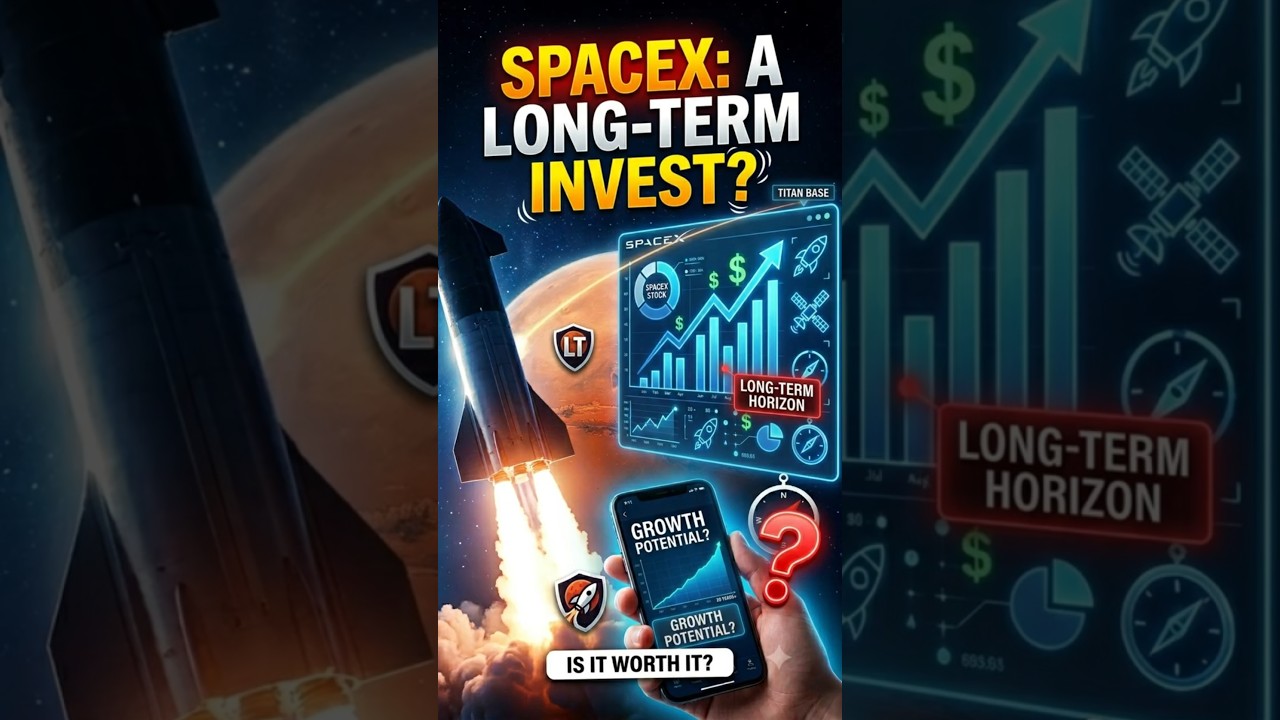
SpaceX a long-term investment?
nordicbull-trader
738 views•2026-06-13
Most People Will Miss This Again. SCHD Investors Won't. (2026 Warning)
InvestEdYT
241 views•2026-06-14



