The brain continuously rewrites itself through neuroplasticity, updating predictions and forming new neural connections based on experience, attention, and repetition, which means that transformation begins before conscious decision-making and that perception itself is constructed by neural pathways rather than directly reflecting external reality.
Install our extension to search inside any video instantly.
STOP EVERYTHING! Your Brain Has Already Started Rewriting Reality (The Point of No Return)Added:
Stop scrolling for just a moment.
What if I told you that the version of yourself you've been operating as for years is already changing, and the process started before you even clicked on this video?
Right now, your brain is updating predictions, weakening old patterns, and forming new connections.
The strange part is that most people never notice it happening. They keep living by an outdated mental blueprint while their mind is quietly building a new one underneath.
If you've been feeling different lately, questioning old beliefs, seeing life from a new angle, or sensing that something inside is shifting, this video may explain why.
If this resonates with you, hit like so more people can discover it.
Subscribe for more videos on consciousness, psychology, perception, and personal transformation. And most importantly, leave a comment below. What country or region are you watching from?
I'd love to see how far this message has traveled and which corner of Earth is receiving it right now.
Stop for a moment. Not because I told you to.
Not because this video is special, but because something has already happened before you consciously decided to continue.
Your brain has already begun changing.
Long before you reached this sentence, long before you formed an opinion about these words, billions of neurons inside your nervous system were already responding to new information.
Electrical signals were firing.
Chemical messengers were being released.
Predictions were being updated.
Tiny adjustments were occurring beneath conscious awareness.
And that is the first realization that most people never fully understand transformation does not begin when you decide to change.
Transformation begins when your brain encounters information that it can no longer completely fit into its existing model of reality.
The conscious mind likes to believe it is in charge, that it carefully evaluates evidence and then chooses a new direction.
But neuroscience paints a different picture.
Much of what becomes a conscious decision starts as unconscious processing. The brain is constantly updating itself, revising assumptions, strengthening some pathways, weakening others, adapting to experience even when you are not actively trying to change.
In that sense, your brain is not waiting for permission to rewrite itself.
It has already started.
Right now, hidden beneath the surface of awareness, your nervous system is performing one of the most extraordinary processes in the known universe.
It is taking experience and converting it into structure.
Every thought you repeat strengthens certain neural connections. Every emotion you revisit reinforces specific patterns.
Every belief you return to becomes easier to access the next time.
This process is known as neuroplasticity, and it is one of the reasons human beings are capable of learning, adapting, recovering, and transforming throughout their lives.
Yet most people unknowingly use this ability in reverse. They repeatedly think the same thoughts, revisit the same fears, replay the same stories, and strengthen the same limitations.
The brain becomes efficient at whatever it practices, regardless of whether those patterns lead to growth or stagnation. It does not judge the content. It simply adapts.
If you spend years rehearsing self-doubt, the neural pathways of self-doubt become faster and more automatic.
If you spend years expecting disappointment, the brain becomes highly skilled at anticipating disappointment.
The nervous system learns through repetition, not truth.
And that means many of the patterns people call personality are simply well-practiced habits of perception.
This is why transformation often feels strange at first.
The moment a new idea enters the system, it competes with established neural architecture. Existing pathways have momentum. They have history. They have efficiency. They are familiar. A new perspective, no matter how useful, initially feels weak compared to decades of reinforcement.
This is one reason people can understand something intellectually yet struggle to embody it.
Knowledge alone does not instantly restructure the nervous system.
Repetition, attention, emotion, and experience are what gradually build new pathways.
Every major change begins as a fragile signal surrounded by stronger, older patterns. The old self feels stable because it has been practiced thousands of times.
The emerging self feels uncertain because it is still under construction.
Now, consider something even more fascinating. Your experience of reality itself is shaped by these neural structures.
Most people assume they observe the world directly, but that is not what happens.
The brain receives sensory information, compares it against existing predictions, fills in gaps, filters data, and presents a simplified model to consciousness.
What you call reality is not raw reality. It is reality interpreted through billions of neural calculations occurring beyond awareness.
The brain is not simply recording the world. It is actively constructing your experience of it. This means that when neural pathways change, perception changes.
And when perception changes, reality feels different even if the external environment remains the same.
Think about that carefully. If perception changes, relationships change, opportunities change, emotions change, possibilities change.
The world begins to look different because the lens through which it is viewed has changed. This is why profound personal transformations often seem mysterious from the outside. Two people can stand in the same environment and experience entirely different realities because their nervous systems are organizing information differently.
One notices limitations.
Another notices possibilities. One sees threats.
Another sees opportunities. One feels trapped.
Another feels capable. The environment may be identical, yet the internal model creates dramatically different experiences. Many people describe these moments as shifts in frequency. While frequency language is often used metaphorically, there is a practical reality behind it.
Your brain operates through oscillatory activity. Neural networks communicate through rhythmic patterns.
Different states of attention, emotion, and awareness are associated with different patterns of brain activity.
When your internal state changes, your attention changes.
When your attention changes, what you notice changes.
And when what you notice changes, your experience of reality changes.
This does not require mystical explanations. It is a consequence of how perception works.
The brain can only consciously process a tiny fraction of available information.
What enters awareness depends heavily on what the system has learned to prioritize.
Imagine turning a radio dial.
Hundreds of signals may exist in the environment at the same time, yet you only hear the station your receiver is tuned to.
Human attention functions in a similar way. Countless details exist around you every moment, but your nervous system selects only a small portion for conscious awareness.
Most of reality never reaches your attention. It is filtered out because it is considered irrelevant to the current model.
When that model changes, new information becomes visible.
Suddenly, you notice patterns that were always present but previously ignored.
You meet people who seem different.
Opportunities appear where none existed before.
Insights emerge unexpectedly.
It can feel as though reality itself has shifted, but often what has shifted is the filter. This is one reason periods of transformation are frequently accompanied by confusion.
The old model no longer explains experiences effectively as it once did, yet the new model has not fully stabilized. You exist between frameworks.
The familiar way of interpreting reality begins losing credibility, while the emerging perspective remains incomplete.
During this phase, many people feel disoriented. They may question long-held beliefs, reassess goals, reconsider relationships, or feel unexpectedly drawn toward introspection.
What is happening is not failure. It is restructuring.
The brain is revising its internal map.
Unfortunately, this is also the stage where many people retreat. The human nervous system values predictability.
Familiar discomfort often feels safer than unfamiliar possibility. The brain evolved primarily to help organisms survive, not to maximize growth.
Stability is rewarded. Uncertainty triggers caution.
Therefore, when old patterns begin dissolving, the system often interprets the process as danger. Resistance appears. Doubt appears. Rationalizations appear.
The mind generates reasons to return to familiar territory. It says nothing is changing. It says transformation is unrealistic. It says the old way was safer.
Yet beneath those thoughts, the rewriting continues.
Every significant transformation involves a period of neurological negotiation. Competing patterns coexist.
The old self attempts to maintain dominance while the emerging self gains strength through repetition and experience.
This is why consistent attention matters so much. Whatever receives attention receives reinforcement.
Whatever receives reinforcement becomes easier to access. Whatever becomes easier to access gradually shapes identity.
In practical terms, the person you become is heavily influenced by what you repeatedly attend to.
Attention is not just observation.
Attention is construction.
And perhaps the most important realization is this, you do not need to force every aspect of transformation.
The brain is already adapting.
The nervous system is already learning.
Every experience leaves traces. Every insight alters potential future pathways. Every moment of awareness creates opportunities for different responses. The question is not whether your brain is changing. It is The question is whether the changes occurring are aligned with the direction you want to move.
Because neuroplasticity is always active.
The rewrite is always happening.
The only uncertainty is what is being written. Somewhere inside your nervous system, pathways that once seemed permanent are becoming less dominant.
Connections that supported old habits are weakening through lack of use.
New patterns are being explored. New associations are being formed. New possibilities are emerging. Most of this occurs silently. You do not hear neurons adjusting. You do not feel synapses reorganizing. Yet, the effects accumulate day after day, thought after thought, choice after choice, until eventually the structure of perception itself begins shifting and when that shift reaches a certain threshold, life starts feeling different in ways that are difficult to explain.
Not because the world suddenly transformed overnight, but because the system experiencing the world transformed.
The radio dial moved. The signal changed.
The old interpretation lost some of its authority and for the first time you begin hearing possibilities that were always present but never fully received. The rewrite has already started.
The process is already underway. The question is whether you will recognize it before the next chapter of your life is written by default rather than by awareness.
The moment the rewrite begins, something unexpected happens.
It is not dramatic at first. There are no flashing lights, no grand announcements from the universe, no sudden transformation that everyone around you can see.
Instead, it starts quietly.
A thought that used to feel convincing suddenly feels incomplete. A fear that once controlled your decisions begins losing some of its authority.
A habit that seemed automatic starts revealing itself as a pattern rather than a necessity.
Most people expect transformation to arrive like a storm, but more often it arrives like a signal slowly emerging through static. At first, you can barely hear it. Then the signal becomes stronger. Then eventually it becomes impossible to ignore. This is the stage where the internal radio dial begins to shift.
For years, maybe decades, your nervous system has been tuned to a particular frequency of interpretation. Every experience has reinforced certain expectations about yourself and the world.
The brain loves efficiency.
It creates shortcuts. It builds predictive models. It learns what to to and then continuously searches for evidence to confirm those expectations.
This process is useful because it allows you to navigate reality without analyzing every detail from scratch.
But there is a hidden cost.
The more efficient a model becomes, the more resistant it becomes to change. The brain starts filtering reality through assumptions that have been repeated so many times they feel like facts.
You stop seeing possibilities because the system has learned not to look for them. You stop questioning limitations because they feel normal.
You stop noticing alternative interpretations because the existing model appears complete. Then something interrupts the cycle. Sometimes it is a conversation. Sometimes it is a loss.
Sometimes it is a realization. Sometimes it is a moment of deep reflection that exposes a gap between what you believe and what you actually experience.
Whatever the trigger may be, the result is the same.
The old model starts receiving contradictory information.
And when enough contradictory information accumulates, the brain can no longer maintain the previous framework without modification. This is where the rewrite accelerates. New neural pathways begin competing with established ones.
New possibilities enter awareness.
The signal becomes clearer.
But here is something most people are never told. As you begin changing internally, the people around you often react to that change before you fully understand it yourself.
Human beings are social creatures.
We do not exist in isolation. Every relationship develops patterns, expectations, and roles.
Friends, family members, co-workers, and communities become accustomed to interacting with a particular version of you. They build predictions about your behavior just as your brain builds predictions about reality.
When you start changing, those predictions are challenged.
Even if the changes are positive, they create uncertainty in the social environment.
This is one reason transformation can feel surprisingly lonely.
Not because people want you to fail, but because stability feels safer than unpredictability. The version of you that others have known becomes part of their understanding of the world.
When that version begins evolving, it disrupts expectations.
Some people will support the process.
Others will question it. Some will encourage growth.
Others will attempt to pull you back toward familiar patterns, often without realizing they are doing it.
They may remind you of who you used to be.
They may dismiss new perspectives. They may subtly reinforce old identities.
Not because they are malicious, but because the human mind seeks consistency.
Think about it this way.
If someone has always known you as cautious, your confidence may feel strange to them.
If someone has always known you as uncertain, your clarity may challenge their assumptions.
If someone has always interacted with you through a specific dynamic, any change in that dynamic requires adaptation.
And adaptation is uncomfortable.
The brain prefers familiar scripts. When those scripts stop working, resistance appears.
This resistance is not limited to other people. It also emerges within your own mind. The old self has momentum. It has years of reinforcement behind it.
The moment a new pattern starts gaining strength, the previous pattern often pushes back. Doubt becomes louder. Old fears resurface.
Familiar narratives return.
Many people interpret this as evidence that they are moving in the wrong direction.
In reality, it It often evidence that the system is reorganizing itself. The appearance of resistance does not mean transformation is failing.
It means competing patterns are active at the same time.
Now consider the role of attention in this process. Attention is one of the most powerful forces shaping human experience. Whatever consistently receives attention becomes neurologically significant. Pathways strengthen.
Associations deepen. Perception adjusts.
This is why two people exposed to the same environment can develop entirely different realities.
One focuses on obstacles. The other focuses on opportunities.
One notices reasons to remain stuck. The other notices possibilities for movement.
The external world may be similar, but the internal spotlight is directed differently. This brings us to the idea often described as the observer effect.
Not in the exaggerated sense sometimes presented online, but in a practical psychological sense. What you repeatedly observe influences what becomes meaningful.
What becomes meaningful influences behavior.
And behavior influences outcomes.
The observer is never completely separate from the experience being observed. Attention participates in reality by shaping perception and action.
Everyday your brain is deciding what deserves focus.
And those decisions accumulate. They become habits of awareness. They become tendencies of interpretation.
They become the architecture of experience.
One of the simplest and most underestimated tools for influencing this architecture is breath. Most people think breathing is automatic and therefore unimportant.
But breathing occupies a unique position between conscious and unconscious systems.
You can allow it to happen automatically, or you can consciously influence it.
This creates a bridge between voluntary awareness and involuntary physiology.
Slow, controlled breathing affects heart rate, nervous system activity, emotional regulation, and attention. It communicates safety to the body.
It reduces unnecessary activation.
It creates conditions in which the brain can process information differently.
When the nervous system is constantly operating in survival mode, perception narrows, threat detection dominates attention, the world appears more dangerous, more urgent, and more restrictive. When the nervous system becomes regulated, attention broadens.
Creativity increases. Reflection becomes easier.
New perspectives become accessible. This is one reason periods of deep personal growth often involve learning how to work with the body rather than against it.
Transformation is not purely mental. It is embodied. The brain and body function as an integrated system.
Yet, perhaps the most emotionally challenging part of the rewrite is something few people anticipate, grief.
Not grief for another person, but grief for previous versions of yourself. Every major transformation involves endings.
Old identities fade. Old beliefs lose relevance. Old ambitions may no longer fit. Familiar patterns dissolve. Even when these changes are beneficial, they can still produce a sense of loss.
The human mind becomes attached to continuity.
It wants to believe that the self remains stable and consistent across time. But growth often requires releasing aspects of identity that no longer serve the future.
This can feel confusing because you may simultaneously feel excited about what is emerging and sad about what is disappearing. Both emotions can exist together.
You do not need to hate the old self in order to outgrow it.
In fact, some of the healthiest transformations occur when people learn to honor previous versions of themselves.
The habits, beliefs, and coping mechanisms that once existed often developed for understandable reasons.
They were attempts to navigate reality using the information available at the time.
Growth is not about declaring war on the past.
It is about recognizing that the past does not need to dictate the future.
Imagine standing on a bridge between two landscapes.
Behind you is the familiar territory you have known for years.
Ahead of you is a landscape that is still taking shape.
The bridge itself represents transition.
Many people become frustrated because they want to instantly arrive at the destination, but transformation rarely works that way.
There is usually a period of uncertainty where the old world is no longer fully convincing and the new world is not yet fully established.
The bridge can feel unstable, yet it is also where some of the most important growth occurs.
As the rewrite continues, something remarkable begins to happen.
The range of possibilities you can perceive expands. You start noticing options that previously felt invisible.
You become less trapped by automatic interpretations.
You gain the ability to observe thoughts without immediately believing them. You become more aware of emotional patterns without being completely controlled by them.
Life does not become perfect, but it becomes larger.
More dimensions of experience become available.
More signals enter awareness. The spectrum widens.
And this widening is what many people describe metaphorically as stepping into a fuller expression of themselves.
Not because they have become someone entirely different, but because fewer aspects of experience are being filtered out by outdated assumptions.
The nervous system becomes more flexible.
A Attention becomes more intentional.
Awareness becomes more active.
The rewrite continues not as a single event, but as an ongoing process of adaptation and discovery.
So, before we move forward, take a moment to consider your own journey.
How far has your internal radio dial shifted? What old patterns are losing strength?
What new signals are beginning to emerge?
And perhaps most importantly, where in the world is this message reaching you right now?
Leave a comment and let us know which country, region, city, or corner of Earth are you watching from.
It is always fascinating to see how one message can travel across continents, cultures, and time zones, and arrive in the awareness of someone exactly where they are.
Related Videos

Why can’t Trump take sleep meds?
concussiontalks_slp
14K views•2026-05-29

Recovery pronouns. Neuroplasticity & practical neuroscience tips to help recover from pain & fatigue
Fantasticneuroplastic
907 views•2026-05-31

I Saw the Thing Crash. Then I Lost Hours | Beyond Black Budget
BeyondBlackBudget
148 views•2026-05-30
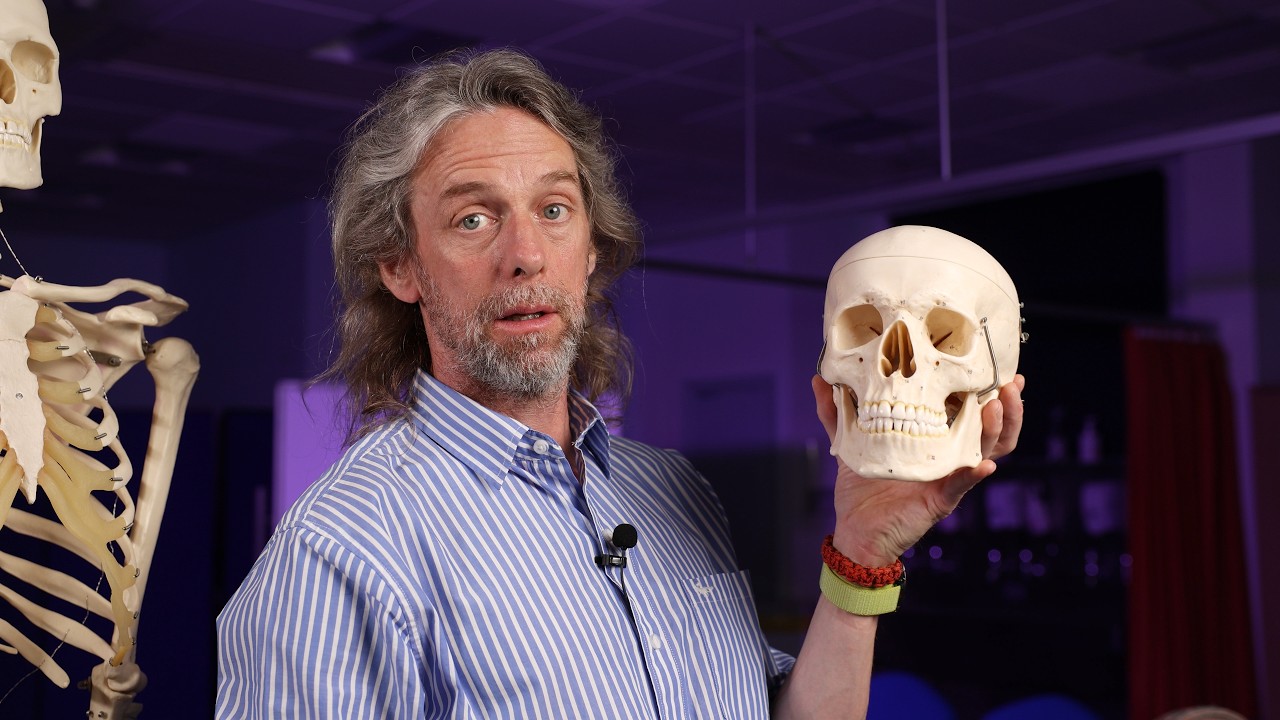
Neuroanatomy of smell (olfaction)
SamWebster
644 views•2026-05-28

women never forget when you upset them
healsick
745 views•2026-06-01

Your Brain Is Actively Deleting Your Childhood Memories! 🧠🗑️ #Shorts #Anatomy #DidYouKnow
voiceless2345
225 views•2026-06-01

What are you looking at
SuperStaticPro
1K views•2026-05-31

Why Trauma Doesn’t Just 'Go Away'
historyofsimplethings
1K views•2026-05-28



