Smith masterfully exposes the irony of survival, where the very artifact meant to preserve life becomes the ultimate vector of a glittering, cosmic extinction. It is a bleak reminder that in a dying world, sanctuary is often just a more elaborate stage for the inevitable end.
Install our extension to search inside any video instantly.
The Isle of the Torturers | Clark Ashton Smith's Zothique CycleAdded:
You fool. Warren is dead.
Welcome to Horabel.
The aisle of the torturers is a Zothik cycle story by Clark Ashton Smith, first published in the March 1933 edition of Weird Tales.
A powerful story of terrific torments and the strange sudden onslaught of the silver death.
As always, I hope you enjoy this one, and I'd love to hear your thoughts on the story. Share them in the comments below.
The Isisle of the Torturers by Clark Ashton Smith.
Between the son's departure and return, the silver death had fallen upon Urus.
Its advent, however, had been foretold in many prophecies, both immemorial and recent. Astrologers had said that this mysterious malady here to for unknown on earth would descend from the great star Aenar which presided balefully over all the lands of the southern continent of Zothik and having sealed the flesh of a myriad men with its bright metallic pal.
The plague would still go on in time and space born by the dim currents of ether to other worlds. Dire was the silver death, and none knew the secret of its contagion or the cure. Swift as the desert wind, it came into Yurus from the devastated realm of Tassoon, overtaking the very messengers who ran by night to give warning of its nearness. Those who were smitten felt an icy freezing cold, an instant rigger, as if the outermost gulf had breathed upon them. Their faces and bodies whitened strangely, gleaming with a worn luster, and became stiff as long deadad corpses, all in an interim of minutes. In the streets of Silone and Salure, and in Farad, the capital of Euros, the plague passed like an eerie glittering light from countenance to countenance under the golden lamps, and the victims fell where they were stricken, and the deathly brightness remained upon them. The loud, tumultuous public carnivals were stilled by its passing, and the merry makers were frozen in frolic attitudes. In proud mansions, the wine flushed revelers grew pale amid their garish feasts, and reclined in their opulent chairs, still holding the half emptied caps with rigid fingers. Merchants lay in their counting houses on the heaped coins they had begun to reckon, and thieves, entering later, were unable to depart with their booty. Diggers died in the half-completed graves they had dug for others, but no one came to dispute their possession. There was no time to flee from the strange, inevitable scourge.
Dreadfully and quickly, beneath the clear stars, it breathed upon Euros, and few were they who awakened from slumber at dawn. Falra, the young king of Yurus, who had but newly succeeded to the throne, was virtually a ruler without a people. Falra had spent the night of the plague's advent on a high tower of his palace above Farad, an observatory tower equipped with astronomical appliances. A great heaviness had lain on his heart, and his thoughts were dulled with an opiate despair, but sleep was remote from his eyelids. He knew the many predictions that foretold the silver death, and moreover, he had read its imminent coming in the stars, with the aid of the old astrologer and sorcerer, Vees. This latter knowledge he and Vdes had not cared to promulgate, knowing full well that the doom of Yurus was a thing decreed from all time by infinite destiny, and that no man could evade the doom, unless it were written that he should die in another way than this. Now Vmdes had cast the horoscope of Fulbr, and though he found therein certain ambiguities that his science could not resolve, it was nevertheless written plainly that the king would not die in Yuros, where he would die, and in what manner were alike doubtful. But Vdes, who had served Oldath, the father of Falra, and was no less devoted to the new ruler, had wrought by means of his magical art an enchanted ring that would protect Falra from the silver death in all times and places. The ring was made of a strange red metal darker than ruddy gold or copper and was set with a black and oblong gem not known to terrestrial lepidaries that gave forth eternally a strong aromatic perfume. The sorcerer told Fulbra never to remove the ring from the middle finger on which he wore it, not even in lands of far from Yuros, and in days after the passing of the silver death. For if once the plague had breathed upon Fulbra, he would bear its subtle contagion always in his flesh, and the contagion would assume its wanted virolence with the ring's removal. But Vdes did not tell the origin of the red metal and the dark gem, nor the price at which the protective magic had been purchased.
With a sad heart, Falra had accepted the ring and had worn it. And so it was that the silver death blew over him in the night and harmed him not. But waiting anxiously on the high tower, and watching the golden lights of Farad rather than the white implacable stars, he felt a light passing chillness that belonged not to the summer air. And even as it passed, the gay noises of the city ceased, and the moaning loots faltered strangely, and expired. A stillness crept on the carnival, and some of the lamps went out, and were not relits silence, and he heard no more the laughter of his courtiers and chamberlains. And Vdes came not, as was his custom, to join Falra on the tower at midnight. So Falbran knew himself for a realmless king, and the grief that he still felt for the noble was swollen by a great sorrow for his perished people.
Hour by hour he sat motionless, too sorrowful for tears. The stars changed above him, and Achenar glared down perpetually like the bright cruel eye of a mocking demon, and the heavy balsom of the blackjeweled ring arose to his nostrils, and seemed to stifle him. And once the thought occurred to Fulbr away, and die as his people had died. But his despair was too heavy upon him even for this.
So at length the dawn came slowly in heavens pale as the silver death and found him still on the tower.
In the dawn king Falra rose and descended the coiled stairs of Pfrey into his palace and midway on the stairs he saw the fallen corpse of the old sorcerer Mdes who had died even as he climbed to join his master. The wrinkled face of Vdes was like polished metal and was whiter than his beard and hair, and his open eyes, which had been dark as sapphires, were frosted with the plague.
Then grieving greatly for the death of Vdes, whom he had loved as a foster father, the king went slowly on, and in the suits and halls below, he found the bodies of his courtiers and servants and guardsmen, and none remained alive, excepting three slaves who warded the green, brazen portals of the lower vaults far beneath the palace. Now Falra be thought him of the council of Vdes who had urged him to flee from Yurus and to seek shelter in the southern isle of Cintum which paid tribute to the kings of Yurus. And though he had no heart for this nor for any course of action, Falrabbade the three remaining slaves to gather food and such other supplies as were necessary for a voyage of some length and to carry them aboard a royal barge of Ebony that was morowed at the palace porticos on the river Voom. Then embarking with the slaves, he took the helm of the barge and directed the slaves to unfill the broad amber sail, and pass the stately city of Farad, whose streets were thronged with the silvery dead, they sailed on the widening jasperesty of the Voom, and into the amaranth colored gulf of the Indasian Sea. A favorable wind was behind them, blowing from the north over desolate Tassoon and Yuros, even as the silver death had blown in the night, and idly beside them on the voom there floated sea many vessels whose crews and captains had all died of the plague. and Farad was still as a necropolis of old time, and nothing stood on the estie shores, excepting the plumey, fan-shaped palms that swayed southward in the freshening wind. And soon the green strand of Yurus receded, gathering to itself the blessess and the dreams of distance, screaming with a whiny foam, full of strange murmurous voices and vague tales of exotic things. The Hian Sea was about the voyages now beneath the high liifting summer sun. But the sea's enchanted voices, and its long, langorous, immeasurable cradling could not soothe the sorrow of Falra, and in his heart a despair abided, black as the gem that was set in the red ring of Femdes. How be it, he held the great helm of the Eban barge, and steered as straightly as he could by the sun toward Woodward Syndrome. The amber sail was taught with the favoring wind, and the barge sped onward all that day, cleaving the amaranth waters with its dark prow that reared in the caraven form of an ebony goddess. And when the night came with familiar ostral stars, Falra was able to correct such errors as he had made in reckoning the course.
For many days they flew southward, and the sun lowered a little in its circling behind them, and new stars climbed and clustered at evening about the black goddess of the prow. And Falra, who had once sailed to the aisle of Centrum in boyhood days with his father, Old Tath, thought to see heirloom the lifting of its shores of camper and sandalwood from the whiny deep. But in his heart there was no gladness, and often now he was blinded by wild tears, remembering that other voyage with Ult. Then suddenly, and at high noon, there fell an airless calm, and the waters became as purple glass about the barge. The sky changed to a dome of beaten copper, arching close and low, and as if by some evil wizardry, the dome darkened with untimely night, and a tempest rose like the gathered breath of mighty devils, and shaped the sea into vast ridges and abysmal valleys. The mast of Ebony snapped like a reed in the wind, and the sail was torn aunder, and the helpless vessel pitched headlong in the dark troughs, and was hurled upward through veils of blinding foam to the giddy summits of the billows.
Falra clung to the useless helm, and the slaves at his command took shelter in the forward cabin. For countless hours they were born onward at the will of the mad hurricane, and Falra could see not in the lure and gloom, except the pale crests of the beetling waves, and he could tell no longer the direction of their course. Then, in that lurid dusk he beheld at intervals another vessel that rode the stormdriven sea, not far from the barge. He thought that the vessel was a galley such as might be used by merchants that voyaged among the southern Isles, trading for incense and plumes and vermillion, but its oars were mostly broken, and the toppled mast and sail hung forward on the prow. For a time the ships drove on together, till Falra saw, in a rifting of the gloom, the sharp and somber crags of an unknown shore, with sharper towers that lifted paly above them. He could not turn the helm, and the barge and its companion vessel were carried toward the looming rocks, till Falra thought that they would crash thereon. But as if by some enchantment, even as it had risen, the sea fell abruptly in a windless calm, and quiet sunlight poured from a clearing sky, and the barge was left on a broad cresant of ochre yellow sand between the crags and the lulling waters, with the galley beside it. Dazed and marveling, Falra leaped on the helm, while his slaves crept timidly forth from the cabin, and men began to appear on the decks of the galley. And the king was about to hail these men, some of whom were dressed as humble sailors, and others in the fashion of rich merchants, but he heard a laughter of strange voices, high and shrill, and somehow evil, that seemed to fall from above.
and looking up he saw that many people were descending a sort of stairway in the cliffs that enclosed the beach. The people drew near, thronging about the barge in the galley. They wore fantastic turbons of blood red and were clad in closely fitting robes of vulturine black. Their faces and hands were yellow as saffron. Their small and slatey eyes were set obliquely beneath lashless lids, and their thin lips, which smiled eternally, were crooked as the blades of scimitars.
They bore sinister and wickedlooking weapons in the form of sawtooththed swords and double-headed spears. Some of them bowed low before Falra, and addressed him obsely, staring upon him all the while with an unblinking gaze that he could not fathom. Their speech was no less alien than their aspect. It was full of sharp and hissing sounds, and neither the king nor his slaves could comprehend it. But Falrabby spoke the people courteously in the mild and mellow flowing tongue of Yuros, and inquired the name of this land whereon the barge had been cast by the tempest.
Certain of the people seemed to understand him, for a light came in their slatey eyes at his question, and one of them answered brokenly in the language of Yurus, saying that the land was the aisle of Ukro.
Then, with something of covert evil in his smile, this person added that all shipwrecked mariners and seafarers would receive a goodly welcome from Ilddch, the king of the aisle. At this the heart of Fulbr sank within him, for he had heard numerous tales of Ukarstrog in bygon years, and the tales were not such as would reassure a stranded traveler.
Ukra, which lay far to the east of Centrum, was commonly known as the aisle of the torturers, and men said that all who landed upon it unaware or were cast thither by the seas were imprisoned by the inhabitants and were subjected later to unending curious tortures, whose infliction formed the chief delight of these cruel beings. No man, it was rumored, had ever escaped from Ukarstroke, but many had lingered for years in its dungeons and hellish tortured chambers, kept alive for the pleasure of King Ildrech and his followers. Also, it was believed that the torturers were great magicians who could raise mighty storms with their enchantments, and could cause vessels to be carried far from the maritime routts, and then fling them ashore upon Ukarstroke.
Seeing that the yellow people were all about the barge, and that no escape was possible, Falbor asked them to take him at once before King Ildrech. To Illrek, he would announce his name and royal rank, and it seemed to him, in his simplicity, that one king, even though cruelhearted, would scarcely torture another or keep him captive. Also, it might be that the inhabitants of Hukustrog had been somewhat maligned by the tales of travelers.
So Falber and his slaves were surrounded by certain of the throng and were led toward the palace of Ildrach whose high sharp towers crown the cracks beyond the beach rising above those clustered abodess in which the island people dwelt. And while they were climbing the hune steps in the cliff, Falra heard a loud outcry below and a clashing of steel against steel. And looking back, he saw that the crew of the stranded galley had drawn their swords and were fighting the islanders. But being outnumbered greatly, their resistance was borne down by the swarming torturers, and most of them were taken alive, and Falra's heart misgave him sorely at this sight, and more and more did he mistrust the yellow people.
Soon he came into the presence of Illra, who sat on a lofty, brazen chair, and a vast hall of the palace. Ildrach was taller by half a head than any of his followers, and his features were like a mask of evil wrought from some pale gilded metal, and he was clad in vestments of a strange hue, like sea purple, brightened with fresh flowing blood. About him were many guardsmen armed with terrible scithelike weapons, and the salin slanted girls of the palace and skirts of vermillion and breast cups of lazuli went to and fro among huge basultic columns. About the hole stood numerous engineeries of wood and stone and metal, such as Falra had never beheld, and having a formidable aspect with their heavy chains, their beds of iron teeth, and their cords and pulleys of fish skin. The young king of Yuros went forward with a royal and fearless bearing, and addressed Ildrech, who sat motionless, and eyed him with a level, unwinking gaze. And Falbr told Ilddch his name and station and the calamity that had caused him to flee from Yuros, and he mentioned also his urgent desire to reach the aisle of Centrum. "It is a long voyage to Synram," said Ildrech with a subtle smile. "Also, it is not our custom to permit guests to depart without having fully tasted the hospitality of the aisle of Ukro. Therefore, King Fulbr, I must beg you to curb your impatience.
We have much to show you here and many diversions to offer. My chamberlins will now conduct you to a room befitting your royal rank. But first, I must ask you to leave with me the sword that you carry at your side. For swords are often sharp, and I do not wish my guests to suffer injury by their own hands.
So Falbrra's sword was taken from him by one of the palace guardsmen, and a small ruby hilted dagger that he carried was also removed. Then several of the guards, he hamming him in with their sthed weapons, led him from the hall, and by many corridors and downward flights of stairs into the solid rock beneath the palace. and he knew not whether his three slaves were taken, or what disposition was made of the captured crew of the galley. And soon he passed from the daylight into cavernous holes aloomed by sulfur colored flames in copper cresets. And all around him in hidden chambers he heard the sound of dismal moans and loud maniacal howlings that seemed to beat and die upon adamantine doors. In one of these holes, Falra and his guardsman met a young girl, fairer and less salon of aspect than the others, and Falra thought that the girl smiled upon him compassionately as he went by, and it seemed that she murmured faintly in the language of Yurus. Take heart, King Fulbr, for there is one who would help you." and her words apparently were not heeded or understood by the guards who knew only the harsh and hissing tongue of Ukrog.
After descending many stairs, they came to a ponderous door of bronze, and the door was unlocked by one of the guards, and Falra was compelled to enter, and the door clanged dollarly behind him.
The chamber into which he had been thrust was walled on three sides with the dark stone of the island and was walled on the fourth with heavy unbreakable glass. Beyond the glass he saw the blue green glimmering waters of the undersea lit by the hanging cresets of the chamber. And in the waters were great devilfish whose tentacles writhed along the wall, and huge pythonomorphs with fabulous golden coils receding in the gloom, and the floating corpses of men that stared in upon him with eyeballs from which the lids had been excised.
There was a couch in one corner of the dungeon, close to the wall of glass, and food and drink had been supplied for Fulbrin, vessels of wood. The king laid himself down, weary and hopeless, without tasting the food. Then, lying with close shut eyes, while the dead men and the sea monsters peered in upon him by the glare of the cresets, he strove to forget his griefs and the dollar doom that impended. And through his clouding terror and sorrow, he seemed to see the comely face of the girl who had smiled upon him compassionately, and who, alone, of all that he had met in Ukarstrog had spoken to him with words of kindness. The face returned ever and none with a soft haunting, a gentle sorcery, and Falra felt for the first time in many sons the dim stirring of his buried youth and the vague obscure desire of life. So after a while he slept, and the face of the girl came still before him in his dreams.
The cresets burned above him with unddeminished flames when he awakened, and the sea beyond the wall of glass was thronged with the same monsters as before, or with others of like kind. But amid the floating corpses, he now beheld the flayed bodies of his own slaves, who, after being tortured by the island people, had been cast forth into the submarine cavern that had joined his dungeon, so that he might see them on awakening. He sickened with new horror at the sight, but even as he stared at the dead faces, the door of bronze swung open with a sullen grinding, and his guards entered. Seeing that he had not consumed the food and water provided for him, they forced him to eat and drink a little, menacing him with their brood, crooked blades, till he complied. And then they led him from the dungeon and took him before King Ildrech and the great hall of torches.
Falra saw by the level golden light through the palace windows and the long shadows of the columns and machines of torment that the time was early dawn.
The hall was crowded with the torturers and their women, and many seemed to look on while others of both sexes busied themselves with ominous preparations.
And Falra saw that a tall, brazen statue with cruel and demonian visage like some implacable god of the underworld was now standing at the right hand Vilddrach where he sat aloft on his brazen chair.
Falra was thrust forward by his guards, and Ildrach greeted him briefly with a wily smile that preceded the woods and lingered after them. And when Ilddra had spoken, the brazen image also began to speak, addressing Falber in the language of Yuros with strident and metallic tones, and telling him with full and minute circumstance the various infernal tortures to which he was to be subjected on that day. When the statue had done speaking, Falra heard a soft whisper in his ear and saw beside him the fair girl whom he had previously met in the nether corridors. And the girl, seemingly unheeded by the torturers, said to him, "Be courageous and endure bravely all that is inflicted, for I shall affect your release before another day, if this is possible." Falra was cheered by the girl's assurance, and it seemed to him that she was fairer to look upon than before, and he thought that her eyes regarded him tenderly, and the twin desires of love and life were strangely resurrected in his heart, to fortify him against the tortures of Ildrech.
of that which was done to Fulbrra for the wicked pleasure of King Gildra and his people. It were not well to speak fully, for the islanders of Ukarstrog had designed innumerable torments, curious and subtle, wherewith to harry and excruciate the five senses, and they could harry the brain itself, driving it to extremes more terrible than madness, and could take away the dearest treasures of memory, and leave unutterable foulness in their place. On that day, however, they did not torture Falra to the uttermost. But they racked his ears with cacophinous sounds, with evil flutes that chilled the blood and curdled it upon his heart, with deep drums that seemed to wake in all his tissues, and thin tabers that wrenched his very bones. Then they compelled him to breathe the mounting fumes of brazers, wherein the dried gaul of dragons, and the adiposere of dead cannibals were burned together with a feted wood. Then, when the fire had died down, they freshened it with the oil of vampire bats and Fulbrous wound, unable to bear the fetter any longer. Later, they stripped away his kingly vestments and fastened about his body a silken girdle that had been freshly dipped in an acid corrosive only to human flesh.
And the acid ate slowly, fretting his skin with infinite fiery pangs.
Then after removing the girdle lest it slay him, the torturers brought in certain creatures that had the shape of elong serpents, but were covered from head to tail with sable hairs like those of a caterpillar. And these creatures twine themselves tightly about the arms and legs of fulra. And though he fought wildly in his revulsion, he could not loosen them with his hands, and the hairs that covered their constant coils began to pierce his limbs like a million tiny needles, till he screamed with the agony. And when his breath failed him, and he could scream no longer, the hairy serpents were induced to relinquish their hold by a langorous piping of which the islanders knew the secret.
They dropped away and left him, but the mark of their coils was imprinted readily about his limbs, and around his body there burned the raw branding of the girdle. King Gildrackch and his people looked on with a dreadful gloating, for in such things they took their joy, and strove to pacify an implacable, obscure desire. But seeing now that Falra could endure no more, and wishing to wreak their will upon him for many future days, they took him back to his dungeon.
Lying sick with remembered horror, feverish with pain, he longed not for the clemency of death, but hoped for the coming of the girl to release him, as she had promised. The long hours passed with a half delirious tedium, and the cresets, whose flames had been changed to crimson, appeared to fill his eyes with flowing blood, and the dead men and the sea monsters swam as if in blood beyond the wall of glass, and the girl came not, and Falra had begun to despair. Then at last he heard the door open gently, and not with the harsh clanganger that had proclaimed the entrance of his guards. Turning, he saw the girl, who stole swiftly to his couch with a lifted fingertip, enjoining silence. She told him with soft whispers that her plan had failed. But surely on the following night she would be able to drug the guards and obtain the keys of the outer gates, and Fulra could escape from the palace to a hidden cove in which a boat with water and provisions lay ready for his use. She prayed him to endure for another day the torments of Ilddch. And to this perforce he consented, and he thought that the girl loved him, for tenderly she caressed his feverous brow, and rubbed his torture burning limbs with a soothing ointment.
He deemed that her eyes were soft with a compassion that was more than pity. So Falra believed the girl and trusted her, and took heart against the horror of the coming day. Her name, it seemed, was Ilva, and her mother was a woman of Yuros, who had married one of the evil islanders, choosing this repugnant union as an alternative to the flaying knives of Ilddch. Too soon the girl went away, pleading the great danger of discovery, and closed the door softly upon Thra, and after a while the king slept, and Ilver returned to him amid the delirious abominations of his dreams, and sustained him against the terror of strange hells.
At dawn the guards came with their hooked weapons and led him again before Idrech and again the brazen demoniac statue in a strident voice announced the fearful orals that he was to undergo.
And this time he saw that other captives including the crew and merchants of the galley were also awaiting the malefic ministrations of the torturers in the vast hall.
Once more in the throng of watchers, the girl Ilver pressed close to him, unrepreed by his guards, and murmured words of comfort, so that Falra was enhearted against the enormities foretold by the brazen image, and indeed a bold and hopeful heart was required to endure the orals of that day. Among other things less goodly to be mentioned, the torturers held before Falra a mirror of strange wizardry, wherein his own face was reflected as if seen after death. The rigid features, as he gazed upon them, became marked with the green and bluish marbling of corruption, and the withering flesh fell in on the sharp bones, and displayed the visible ftting of the worm. Hearing meanwhile the dollarous groans and agonizing cries of his fellow captives all about the hall, he beheld other faces, dead, swollen, lidless, and flayed that seemed to approach from behind and to throng about his own face in the mirror. Their looks were dank and dripping like the hair of corpses recovered from the sea, and seaweed was mingled with the locks. Then turning at a cold and clammy touch, he found that these faces were no illusion, but the actual reflection of cadaavvers from the undersea by a malign sorcery that had entered the whole of Ilddch like living men and were peering over his shoulder.
His own slaves, with flesh that the seaings had gnawed even to the bone, were among them. And the slaves came toward him with glaring eyes that saw only the voidness of death. And beneath the sorceress control of Ildrech, their evily animated corpses began to assail Fulbring at his face and raignment with halfeaten fingers. And Falra, faint with loathing, struggled against his dead slaves, who knew not the voice of their master, and were deaf as the wheels and wrecks of torment used by Illrek.
And on the drowned and dripping corpses went away, and Falra was stripped by the torturers, and was laid supine on the palace floor with iron rings that bound him closely to the flags at knee and wrist, at elbow and ankle. Then they brought in the disinterred body of a woman, nearly eaten, in which a myriad maggots swarmed on the uncovered bones and tatters of dark corruption.
And this body they placed on the right hand of Fulbrra, and also they fetched the carrying of a black goat that was newly touched with beginning decay, and they laid it down beside him on the left hand. Then across Falra, from right to left, the hungry maggots crawled in a long and undulant wave. After the consumation of this torture, there came many others that were equally ingenious and atrocious and were welld designigned for the delectation of King Ildrech and his people. And Falber endured the tortures valiantly, upheld by the thought of Ilva. Vainly, however, on the night that followed this day, he waited in his dungeon for the girl. The cresets burned with a bloodier crimson, and new corpses were among the flade and floating dead in the sea cavern, and strange double-bodied serpents of the nether deeper rose with an endless squirming, and their horned heads appeared to bloat immeasurably against the crystal wall. Yet the girl Ilva came not to free him as she had promised, and the night passed. But though despair resumed its old dominion in the heart of Fulbr, and Terra came with talon steeped in fresh venom, he refused to doubt Ilver, telling himself that she had been delayed or prevented by some unforeseen mishap.
At dawn of the third day, he was again taken before Ild. The brazen image announcing the orals of the day told him that he was to be bound on a wheel of adamant and lying on the wheel was to drink a drugged wine that would steal away his royal memories forever and would conduct his naked soul on a long pilgrimage through monstrous and infamous hells before bringing it back to the hall of Ildrech and the broken body on the wheel. Then certain women of the torturers, laughing obscenely, came forward and bound King Falra to the Adamantine wheel with thongs of dragon gut. And after they had done this, the girl Ilva, smiling with the shameless exaltation of open cruelty, appeared before Falra, and stood close beside him, holding a golden cap that contained the drugged wine. She mocked him for his folly and credul and trusting her promises. And the other women and the male torturers, even to Ildrech on his brazen seat, laughed loudly and evilly at Fulbr and praised Ilva for the perity she had practiced upon him. So Falra's heart grew sick with a darker despair than any he had yet known. The brief, pitious love that had been born amid sorrow and agony, perished within him, leaving but ashes steeped in gaul. Yet gazing at Ilver with sad eyes, he uttered no word of reproach, he wished to live no longer, and yearning for swift death, he bethought him of the wizard ring of Vees, and of that which Vdes had said would follow its removal from his finger. He still wore the ring which the torturers had deemed a bble of small value, but his hands were bound tightly to the wheel, and he could not remove it. So, with a bitter cunning, knowing full well that the islanders would not take away the ring if he should offer it to them, he feigned a sudden madness, and cried wildly, "Seal my memories, if you will, with yoursed wine, and send me through a thousand hells, and bring me back again to Ukra.
Take not the ring that I wear on my middle finger, for it is more precious to me than many kingdoms or the pale breasts of love.
Hearing this, King Gildrech rose from his brazen seat, and bidding Ilver to delay the administration of the wine, he came forward and inspected curiously the ring of Vdes, which gleamed darkly, set with its railless gem on Falbrra's finger, and all the while Fulbr cried out against him in a frenzy, as if fearing that he would take the ring. So Ildrach, deeming that he could plague the prisoner thereby and could heighten his suffering a little, did the very thing for which Falra had planned, and the ring came easily from the shrunken finger, and Ildrach, wishing to mock the royal captive, placed it on his own middle digit. Then, while Ilddra regarded the captive with a more deeply graven smile of evil on the pale gilded mask of his face, there came to King Falra of Yuros the dreadful and longed for thing. The silver death that had slept so long in his body beneath the magical obeyance of the ring of Vdes was made manifest even as he hung on the adamantine wheel. His limbs stiffened with another rigor than that of agony, and his face shone brightly with the coming of the death. And so he died.
Then to Ilva, and to many of the torturers who stood wandering about the wheel, the chill and instant contagion of the silver death was communicated.
They fell even where they had stood, and the pestilence remained like a glittering light on the faces and hands of the men, and shone forth from the nude bodies of the women. And the plague passed along the immense hole, and the other captives of King Gildrackch were released thereby from their various torments, and the torturers found Cersei from the dire longing that they could assuage only through the pain of their fellow men. And through all the palace and throughout the aisle of Ukrog, the death flew swiftly, visible in those upon whom it had breathed, but otherwise unseen and impalpable.
But Ildrech, wearing the ring of vedes, was immune, and guessing not the reason of his immunity, he beheld with constonnation the doom that had overtaken his followers, and watched in stuper affection the freezing of his victims. Then, fearful of some enimic sorcery, he rushed from the hall, and standing in the early sun on a palace terrace above the sea, he tore the ring of Vdes from his finger, and hurled it to the foamy billows far below, deeming in his terror that the ring was perhaps the source or agent of the unknown hostile magic.
So Ildrach, in his turn, when all the others had fallen, was smitten by the silver death, and its peace descended upon him where he lay in his robes of blood brightened purple, with features shining paly to the unclouded sun. And oblivion claimed the aisle of Ukarstroke, and the torturers were one with the tortured.
If If you enjoyed listening today, be sure to subscribe to the channel by hitting the red subscribe button below.
After doing so, click the bell icon next to the subscribe button to receive new content notifications.
If you'd like to support our work and receive exclusive perks, consider becoming a channel member by clicking the join button below. To support us in other ways, see the video description for links to our Band Camp and Patreon pages and further information relating to our releases on Audible, iTunes, and Spotify.
And until next time,
Related Videos

I Loved the Duke in Silence for Years. My Final Act? Choosing His Rival. 🤫💔 | DramaBox
DramaBox-PrimeDramaShorts
228 views•2026-05-31

⚡Harry Potter Book 4 [CH 23]⚡(CEFR A2+) Audiobook with Full Text
InglêsEssencial
880 views•2026-05-31

She Saved a Dying Prince Everyone Feared. Now the Empire Hunts Them Both.
NovelFilmz
462 views•2026-05-28

অর্জুনের প্রতিজ্ঞা: জয়দ্রথের পতন |#shorts #mohavarat
ChildhoodTea
129 views•2026-05-31

10 Books I Wish I Would Have Read Sooner!
BrianBell7
204 views•2026-05-29

How The Boys Fumbled The Most Iconic Villain of The Past Decade...
TeddySlump
5K views•2026-05-30
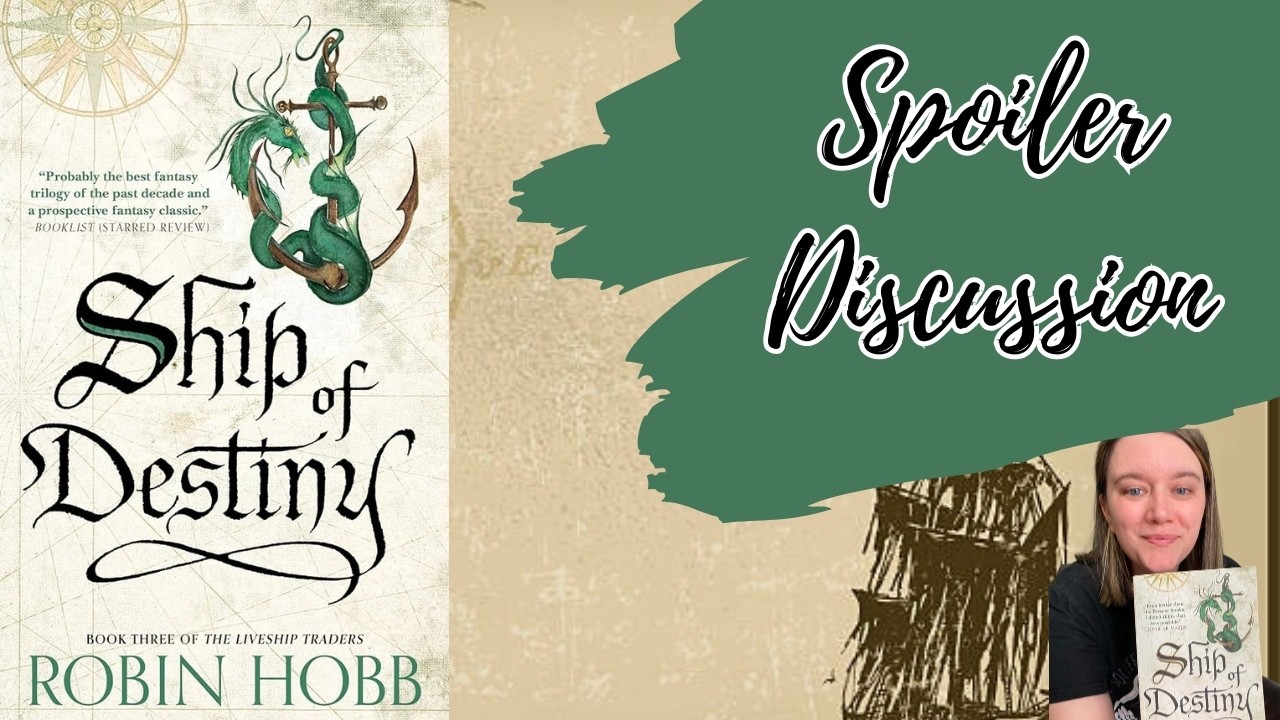
Ship of Destiny: Spoiler Discussion!
TheBookCure
105 views•2026-05-28

the legend of wayland the smith — a story of cruelty and revenge #norsemythology #mythsandlegends
tinyrainboot
1K views•2026-06-01



