Ants are attracted to sugar because it provides a fast and efficient source of energy that powers their daily activities such as carrying food, digging tunnels, and defending their colony; when a worker ant discovers sugar, it uses pheromone trails to communicate with the entire colony, allowing hundreds of ants to arrive within minutes to share the energy-rich food source.
Install our extension to search inside any video instantly.
Why do ants like sugar?
Added:Why do ants love sugar? Was a wacky D The sweet secret of ants.
Have you ever wondered why do ants find sugar so quickly? [music] Why does a single drop of honey on a table attract hundreds of ants within just a few hours? And the most surprising part is, among the billions of ants on Earth, almost every species is attracted to sweet [music] foods in one way or another. But why? Is sugar really their favorite food? Or is there a much bigger secret hidden behind this behavior?
Today, we're going to enter the fascinating world of ants.
A world where a single grain of sugar can be as valuable as a giant warehouse full of food is for humans. The morning sun slowly shines across the ground.
[music] Near an old wall, thousands of ants are busy working. From a distance, it may seem like they are simply wandering around.
>> [music] >> But if you look closer, you will notice that every ant has a specific job. Some are searching for food. Some are carrying food. Some are guarding the colony. And others are building new pathways. Suddenly, a worker ant discovers a tiny grain of sugar. It pauses for a few seconds. [music] It touches the sugar with its antennae.
Then, without eating it, the ant immediately turns around and rushes back toward the colony. Why? Because it did not come alone to eat. It came to find food for the entire colony.
>> [music] >> And this is where the ants' incredible communication system begins. Ants cannot speak. They do not have mobile phones.
They do not have radios. [music] Yet, somehow, they can inform thousands of colony members within minutes. How?
They use something [music] called pheromones. Pheromones are special chemical signals. As an ant walks, it leaves a pheromone trail on the ground.
When other ants discover that trail, they follow it directly to the food source. Once a single ant finds food, hundreds of ants can arrive there within minutes. [music] It seems as if the entire colony has received the news. And in a way, that's exactly what happens.
But the big question remains, what is so special about sugar?
The answer is simple. Energy.
Ants may be tiny, but they perform an incredible amount of work every day.
They carry food, they dig tunnels, [music] they defend their colony. They explore new territories. All of these activities require energy, and sugar is one of the fastest and easiest sources of energy available. When an ant eats sugar, [music] its body quickly converts it into glucose. That glucose becomes fuel for movement and work. [music] Just as humans eat food when they need energy.
Ants search for sweet foods to power their busy lives. [music] But the story does not end there. Not all ants eat only sugar.
>> [music] >> Many species also need protein. This becomes especially important when the colony is raising baby ants, known as larvae.
Protein [music] helps the young ants grow and develop properly. That is why you may sometimes see ants rushing toward sugar on one side, while other ants are carrying dead insects or pieces of meat on the other side. Their diet is actually much more complex than [music] most people realize. And this is where ant intelligence becomes truly amazing.
A colony somehow knows when it needs more sugar, when it needs more protein, and when it must [music] search for new food sources.
The entire colony behaves almost like a giant living brain. Millions of tiny individuals working together as one. But the most astonishing fact is still ahead. Some ants actually farm other insects. Yes, it sounds unbelievable, [music] but it is true. There's a small insect called an aphid. Aphids produce [music] a sweet liquid known as honeydew.
Ants protect these aphids from predators.
>> [music] >> They guard them and keep them safe. And in return, the ants collect the sweet honeydew [music] that the aphids produce. Many scientists refer to this behavior as ant farming. Think about it.
Humans [music] raise cows for milk. Ants raise aphids for sweet honeydew. Isn't that incredible? A tiny insect performing something that resembles agriculture. [music] And that's when we realize something important. Ants do not simply love sugar. They search for it.
They communicate [music] to find it.
They plan for it. And in some cases, they even create their own farms to secure a constant supply of sweet food.
The next time you see a line of ants marching toward a tiny grain of sugar, remember you are not just looking at insects.
Why do ants love sugar so much? The hidden world of ant colonies.
Have you ever wondered how can hundreds of ants suddenly appear around a tiny grain of sugar within just a few hours?
Who tells them where the food is? How do they find it so quickly?
And the most surprising part is among the billions of ants on Earth, nearly every species is attracted to sweet foods in one way or another. But why? Today, we're going [music] even deeper into that mystery.
And believe it or not, the more you learn about ants, the more you'll realize they are far more intelligent than most people [music] imagine. Last time, we saw how a worker ant discovered a grain of sugar and alerted its entire colony. But today, the question is different. [music] Why do ants search for sweet foods in the first place? The answer lies in one simple word, energy. Sugar is packed with energy. Just as humans need food to power their bodies, ants also need energy to survive and work. Now, think about an ant colony. Not hundreds, not even thousands. [music] Sometimes a colony can contain hundreds of thousands of ants living together.
Running such a massive society requires an enormous amount of energy. That's why worker ants spend every day searching for energy-rich foods.
>> [music] >> And one of the best sources of that energy is sweet food. But the story doesn't end there, because sugar isn't found only in table sugar. It [music] exists in flower nectar, fruit juice, tree sap, and even in the bodies of certain insects.
And this is where one of nature's strangest [music] partnerships begins.
Have you ever heard of a tiny insect called an aphid?
Aphids survive by feeding on plant sap.
After processing that sap, they produce a sweet liquid called honeydew, [music] and ants absolutely love it. Yes, it's true. Many ant species actively protect aphids. They guard them from [music] predators. They defend them from dangerous insects. And in return, the aphids provide sweet [music] honeydew.
It's almost like a miniature farming system. Think about it. Humans raise cows for milk. Some ants raise aphids for honeydew.
>> [music] >> One of the most fascinating partnerships in the insect world happens right before our eyes. But loving sweets [music] doesn't always make life easy for ants cuz sweet food attracts competition.
When a ripe fruit falls from a tree, ants aren't the only visitors. Flies arrive. Beetles arrive. Wasps arrive.
Sometimes even rival ant colonies show up. And that's when a food war begins.
Imagine a small piece of watermelon.
[music] To humans, it's just a snack. But in the insect world, it's a giant buffet.
Within minutes, hundreds of insects may gather around [music] it. And usually, the most organized colony wins control of the food. This is where teamwork becomes the [music] ants' greatest weapon. A single ant cannot accomplish much alone, but thousands working together can transform an entire ecosystem.
They can carry large food items back to the colony. They can cut food into smaller pieces. Some species can even use their own bodies to build living bridges. [music] Scientists have studied ants for decades, and they have noticed something remarkable. An ant colony behaves a lot like a human city. Some ants collect food. [music] Some care for the young.
Some act as security guards. Others explore and expand new territory.
>> [music] >> Every ant has a role. And here's the most amazing part.
There is no boss [music] ant giving orders. No leader standing with a microphone. Yet the colony operates with incredible efficiency. Why? Because ants follow simple rules and rely on collective intelligence. An individual ant has a very small brain. But when thousands of ants work together, their combined behavior becomes astonishingly complex. In fact, scientists are still trying to fully understand how ant colonies make decisions. Now, here's another question. If ants love sugar so much, do they survive on sweets alone?
The answer is no. Worker ants need sugar for quick energy, but baby ants, called larvae, need protein to grow. That's why ants also collect dead insects, worms, small animals, and even pieces of meat.
Their diet is surprisingly balanced.
Sugar provides immediate energy. Protein [music] supports growth and development.
Together, these nutrients keep the colony healthy and strong. That's also why you may sometimes see an ant trail leading toward a piece of meat instead of [music] something sweet. The colony doesn't just need energy, it needs growth as well. Still, when worker ants need fast fuel, they often rush toward sweet foods [music] because sugar is nature's instant energy source, and that's exactly why a drop of honey, a grain of sugar, >> [music] >> or a sweet piece of fruit can become covered with ants in just a few hours.
But perhaps the most surprising fact of all is this.
>> [music] >> When we see a single ant, we usually think we're looking at one tiny insect.
In reality, that ant may be a representative of a vast hidden society.
Behind it could be thousands of colony members, underground tunnels, food storage chambers, [music] nurseries, a queen's chamber, and an entire underground civilization. So, the next time
Related Videos
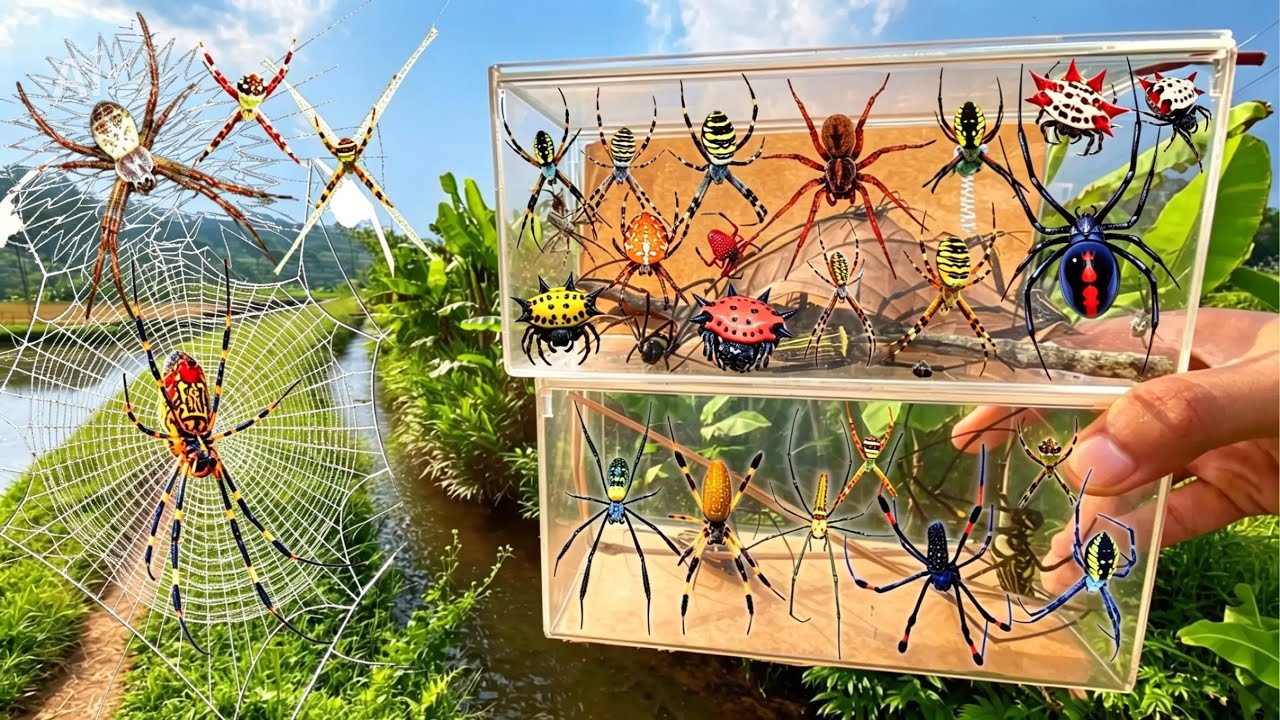
I Found 7 Golden Orb Spider In The River !! Spiny Spider, Weaver orb Spider
insect_geography
1K views•2026-06-16

Your nose is more than a breathing tube...
HealthInSeconds_1
2K views•2026-06-16
Why do marmots always look so dramatic
CodeFauna
3K views•2026-06-16

Your Axolotl Is a Salamander That Never Grew Up
dailywildreports
661 views•2026-06-17

King Vulture: The Colorful King of the Rainforest Skies!
NatureChirps-05
185 views•2026-06-18
The Biggest Lies In The Animal Kingdom!
InfiniteFactssofficial
1144K views•2026-06-15

This Tiny Puppy Was Born Different — And Everyone Thought She Would Die
GuardianSoulsStories-m7p
10K views•2026-06-19
Humpback Whale, Whale Shark, Great White Shark and Mako Shark Giant Ocean Adventure for Kids
EvieWildTales
5K views•2026-06-18



