Communities that form under shared external threats (such as poverty, violence, and systemic abandonment) are held together by specific human relationships and key figures rather than ideology or abstract identity; when these key figures are removed through death, incarceration, or exile, the internal tensions that were previously managed become impossible to contain, causing allied communities to turn against each other. This structural reality explains why O'Block and Front Street, two historically allied Black Disciples sets on Chicago's Southside, transformed from fighting the same enemies into killing each other after the deaths of Fredo Santana (2018) and King Vaughn (2020) removed the connective tissue that had maintained their alliance.
LIVE: The Untold Story of O’Block vs FrontstreetAdded:
part that gets completely lost when people discuss Chicago Street politics from the outside. When they reduce everything to simple enemy and ally categories without understanding the layers underneath. Oblock and Front Street, two of the most historically significant black disciple sets on Chicago's Southside, were not enemies.
They were allies. Same gang, same flag, same side of the GD versus BD war that has been consuming this city for decades. And yet here we are. Oblak killed Front Street members. Front Street losing people to Oblak. Two communities that grew up fighting the same enemies now turning on each other in ways that would have been unthinkable when OD Perry was alive. When Chief Keef and Fredo Santana and King Vaughn were all moving through the same streets together. This is the story that the blogs never fully told. The story that gets buried underneath the music and the federal cases and the social media beef.
The untold story of how two allied communities became something else entirely and why Chicago is still paying for it in blood. Stay locked in. This one changes everything. Now, let us go all the way back to the beginning.
[music] Because before Oblak and Front Street were at odds, before the internal Chicago politics that nobody fully discusses publicly reached the point that they have reached now, these two communities shared something fundamental. Something that should have made the idea of conflict between them impossible. They shared a flag. They shared an identity. They shared the specific history of being black disciples sets on Chicago's southside during one of the most violent periods in the city's recent history. And understanding that shared foundation is the only way to understand how devastating the breakdown between them actually is. Because this is not a story about two random Chicago blocks that happen to develop a beef. This is a story about allied communities.
Communities that fought the same enemies, buried the same kinds of losses, produced the same kind of music that changed the world, turning against each other in ways that the people who built those communities could never have anticipated. Let us start with Oblak because the origin of Oblak is not where most people think it is. Parkway Gardens, officially known as Parkway Garden Homes, was built from 1950 to 1955. It was actually the first cooperativelyowned black housing development in the United States. Early residents included former first lady Michelle Obama as well as rappers Chief Keef, King Vaughn, and Fredo Santana.
That detail, Michelle Obama growing up in the same complex that would eventually become one of the most notorious blocks in Chicago, is the kind of context that gets completely erased when a block gets reduced to a gang location in a rap lyric. This was a community, a real one, with history and pride and residents who were trying to build something in a city that had consistently failed to invest in the southside. [music] In the early 2010s, gang activity skyrocketed and Parkway became the center of one of Chicago's most violent neighborhoods. The 6,400 block of South King Drive was known locally as WIC city, but began to be referred to as Oblak following the 2011 murder of resident and Black Disciples member OD. Perry. And that name [music] Oblak carries the weight of everything that followed. every shooting, every loss, every song that documented the specific reality of growing up in that place during that period. The O is for OD and OD's death. A 20-year-old gang member gunned down on a summer's night in 2011 by a female gang assassin, according to police sources, who was herself later shot to death not far from there. That death set off a chain of events that shaped everything that came after. Perry was one of 19 people shot on a block between June 2011 and June 2014, [music] making it the most dangerous block in Chicago in terms of shootings in that 3-year period. According to a Chicago Sun Times analysis, two of the victims were killed. [music] None of the shootings resulted in criminal charges, and none of the weapons were recovered. Read those numbers again. 19 people were shot in 3 years on one block. No charges. No weapons recovered. That is not a crime statistic. That is a community being destroyed in slow motion while the systems that were supposed to protect it looked the other way. And it was out of that specific environment, that specific combination of poverty, violence, abandonment, and a particular kind of resilience that develops when a community has nothing to rely on but itself, that Oblak produced King Vaughn, produced Chief Keef, produced the music that eventually made the whole world pay attention to Chicago's Southside. Now, let us talk about Front Street because Front Street story runs parallel to Oblak S in ways that most people who follow Chicago rap have never fully explored. Front Street is a set of black disciples located around the area of 61st and Indiana. Their turf ranges from 61st to 63rd, Michigan to Prairie. Front Street has been around since at least the early 2000s and is known for being one of the most prominent BD sets, full of real shooters, trappers, big homies, and scammers. And the connection between Front Street and Oblak goes all the way to the top of Chicago Drill's origin story. Front Street is prominent in the music scene, boasting a packed roster of rappers featuring the likes of Chief Keef, Tato, and Fredo Santana. Chief Keef, the man who literally invented the drill sound that changed rap forever, had connections to both communities. He grew up in Parkway Gardens, Oblak, [music] but his front street ties were equally real. Fredo Santana, his cousin, his closest collaborator, the man who was there from the very beginning of the GB movement was Front Street. So the two communities were not just allied in a political sense. They were connected through the actual human beings who built Chicago drill into what it became.
And the alliance made complete structural sense. Front Street is mainly allied with neighboring BD sets like 600 Brick City, 300 Lamron, Oblak Wic City, Niko Gang, and Blackgate and mainly beef with GD sets like Mob and Jerro City. So the entire framework of Chicago street politics during the drill era had a block in front street on the same side of a much larger conflict. The GD versus BD war, the foundational tension that has defined Chicago's southside for decades, put these two communities shoulderto-shoulder against shared enemies. Mob JRO City, the GD sets that bordered their territory and represented everything that was on the other side of the line. [music] And that shared enemy, that common threat that required Oblock and Front Street to move together, is what made the eventual breakdown between them so much more devastating. Because when your alliance with somebody is forged in the specific context of fighting the same external threat, the moment that external pressure is removed or reduced, the moment the internal dynamics of each community start to take precedence over the unity that the external conflict required, the cracks that were always there become impossible to ignore. And in Chicago, in the specific environment that Oblak and Front Street both existed in, those cracks did not stay small for long. They expanded quickly in ways that produced consequences that both communities are still living with right now. Oblak and Front Street were simultaneously losing members during a deadly period in Chicago that left both communities reeling. Two allied BD sets absorbing losses at the same time while the broader Chicago landscape was being reshaped by federal prosecutions, [music] murder convictions, and the deaths of key figures on both sides. And then Vaughn died and Durk got locked up and six Oblak members were convicted for FBG Duck's murder. And Manaduk, [music] one of Vaughn's closest people, was killed in May 2025. And the community that was supposed to be unified, that was supposed to be holding together in the face of everything that was coming at it from the outside. That community started to fracture from the inside in ways that Trap Lur Ross documented, that Big Mike has spoken about, and that Chicago is still trying to fully process. And at the center of that fracture, at the specific fault line where the breakdown between Oblak and Front Street became impossible to paper over, is a story that goes back further than most people realize. Because the geography of Chicago's Southside is not just a map. It is a political document.
Every block, every street corner, every housing project and apartment complex and stretch of pavement carries with it a history of who controlled it, who died for it, who was born into it without ever choosing it, and what obligations the birth placed on the people who came up inside it. And when you understand Chicago's geography in those terms, when you understand that Oblak and Front Street existed in close physical proximity to each other while also existing in relation to the broader GD versus [music] BD conflict that defined the entire southside, you start to understand why the alliance between them was always more fragile than it appeared from the outside. Because proximity in Chicago is complicated, being close to somebody does not always mean being safe with them. Being on the same side of a larger conflict does not mean that the smaller conflicts, the block level tensions, the personal [music] grievances, the specific incidents that happen when two communities share space over years and decades disappear just because the external threat requires unity. Those smaller tensions accumulate. They build. They create pressure that has nowhere to go as long as the external conflict requires everybody to stay focused on the common enemy.
>> [music] >> And then the moment that external pressure shifts, the moment the common enemy becomes less immediately threatening than the internal grievances that have been building, everything that was being held together by necessity starts to come apart. Now let us talk about what the GD versus BD war actually was. Because this is the foundational conflict that everything else in this story exists inside of. The feud between gangster disciples and black disciples has left a deep mark on Chicago through drill music with artists like Chief Keef, FBG Duck, and King Vaughn becoming global icons. The GDBD war is not just a gang conflict. It is a decadesl long territorial and ideological struggle between two organizations that both trace their roots to the same original Chicago gang. The Black Disciples and the Gangster Disciples both descending from the Black Pea Stones and the Disciples that split apart and became mortal enemies in a way that reshaped the entire landscape of Chicago's south side and Oblock was firmly on the BD side of that conflict as was Front Street as was 600 block as was Lamron 300. The entire ecosystem of communities that produced Chicago drill music was unified by their BD affiliation in opposition to the GD sets that surrounded them. Front Street mainly beefs with GD sets like Mob and Jerro City. And that shared opposition, that common identification of Mob and Jerro City and the broader GD network as the enemy is what kept Oblak and Front Street aligned through the early years of Drill Music's rise. And JRO City specifically is worth examining because Jerro City, the GD set that appears repeatedly in the conversations around Chicago rap beef, represents exactly the kind of opponent that required Oblak and Front Street to stay unified. Jerro City is a GD set, [music] one of Front Street and Oblak s main ops. And the specific tensions between Oblak and Gerro City, between BD sets and GD sets in that part of Chicago Southside, are tensions that produced real violence, real losses, and real music that documented those losses in ways that millions of people around the world eventually consumed as entertainment without fully understanding what they were actually listening to. Now, here is where the story of Oblak versus Front Street gets specific. And this is the part that nobody has fully laid out in one place because the breakdown between these two allied communities did not happen overnight. It was not one incident. It was not one beef that started with a single moment and escalated from there.
[music] It was a gradual process accelerated by the deaths of key figures who had served as connective tissue between the two communities, by the federal prosecutions that removed influential people from the streets, and by the internal power dynamics that shifted when those people were gone.
Fredo Santana's death in January 2018 was one of the first major ruptures in the connective tissue. Because Fredo, Chief Keef's cousin, Front Street's most prominent rapper, was the kind of figure whose presence created bridges, [music] whose relationships spanned communities, whose death left a specific kind of vacuum that no single person could fill.
And when Fredo died from kidney and liver failure caused by years of lean and drug use, Front Street lost its most visible connection to the broader Chicago drill world that a block was also part of. And then Chief Keef went into his extended period of exile from Chicago. living in Los Angeles, building his career from a distance. The man who had physical and historical connections to both Front Street and Oblak, the man who brought both communities onto the stage with him at 16, was no longer physically present in Chicago in a way that maintained those connections through proximity and regular human contact. And then King Vaughn was killed in November 2020. And the Oblak world lost its most important active voice.
The person who was not just making music about Oblak, but who was Oblak, whose entire public identity was inseparable from that community, whose presence gave Oblak a current, living, breathing representative in the culture, was suddenly gone. And what follows the loss of that kind of central figure is always the same. A scramble for position, a reorganization of the power dynamics that the central figure had kept stable simply by being there. And in communities where that reorganization happens against a backdrop of ongoing street [music] conflict, the scramble for position does not stay clean. Oblak s internal civil war documented in April 2024 showed how Vaughn's goons were now beefing with each other and how everything had fallen apart inside the community that Vaughn had represented.
This is the part that breaks your heart when you sit with it. Because these are not strangers who stumbled into conflict. These are people who grew up together, [music] who mourned Vaughn together, who stood at the same funeral, and who then in the aftermath of that shared grief, found themselves on opposite sides of internal conflicts that Vaughn's presence had kept from fully igniting. And the losses kept coming. Two upand cominging Oblak rappers, Mana Duk and Yungan, were shot and killed in Chicago. [music] Mana Duke leaves behind a child. Durk and Yung were good friends and associated with the late Vaughn. more names, more funerals, [music] more gaps in the community fabric that nobody knows how to repair. And with each loss, the internal tensions, the unresolved conflicts, the questions about loyalty and accountability, and who is doing what and why, those tensions got harder to contain. And Front Street, which had its own losses, its own internal challenges, its own people being taken by the same cycle of violence that was consuming Oblak, was navigating all of this simultaneously. two communities that were supposed to be on the same side absorbing losses from the outside while also beginning to direct some of that energy toward each other. And the question of why, the specific question of what happened between Oblak and Front Street to make allies into something more complicated is the question that trap Lor Ross' documentation and Big Mike's interviews have been circling around without anyone ever putting the complete answer together in one place until now. Because the answer to that question, the real explanation for why Oblock and Front Street went from allied communities to something that nobody who loved either of them ever wanted to see, goes all the way back to the foundational question of what holds any community together when the external threat that required its unity is no longer the most immediate danger. And what happens when the answer to that question is nothing? Because nothing held it together. And that is the answer that nobody wants to say out loud because saying it out loud means acknowledging something painful about the nature of the community itself. That community, [music] real community, the kind that forms in places like Oblock and Front Street under the specific pressures of poverty and violence and systemic abandonment. The community is not held together by ideology or principle or some abstract sense of shared identity. It is held together by people, specific people, [music] real human beings whose relationships and whose presence and whose influence create the connective tissue that keeps everything from flying apart. And when those people are gone, when they are killed or incarcerated or exiled or simply no longer present in the way that their community needs them to be, the connective tissue disappears with them.
And what is left is a collection of individuals and smaller groups who still share a geography and a history but who no longer have the human infrastructure that translated that shared geography and history into actual unity. King Vaughn was connective tissue. Fredo Santana was connective tissue. The relationships between key figures in Oblak and Front Street that had been maintained through years of shared struggle and shared music and shared loss. All of that was connective tissue.
and the period between 2018 and 2022, Fredo's death, Vaughn's death, Durk's arrest, the federal convictions, the ongoing street losses, that period systematically removed the connective tissue from both communities simultaneously, left them exposed, left them without the human infrastructure that had kept the Alliance functional.
And into that vacuum, into the space left by all of those losses, came the internal conflicts that had always been there, but that the presence of those key figures had kept from fully surfacing. Because here is something that Big Mike's interviews have made clear across multiple conversations about Chicago Street politics. The unity that existed between Oblak and its allied sets was never the kind of unity that did not have tensions underneath it. There were always disagreements, always grievances, always moments where the specific interests of one community or one group within a community bumped up against the interests of another.
What the key figures did, what Vaughn did, what the relationships between Oblak and Front Street leadership did was manage those tensions, keep them from becoming something that destroyed the alliance from the inside. And without those figures managing those tensions, the tensions managed themselves, which in Chicago means they expressed themselves the way everything expresses itself in that environment through conflict, through the specific language of the streets that both communities had been fluent in their entire lives. And suddenly, the sets that had been pointed at the same external enemies were redirecting some of that energy internally. Trap Lur Ross documented specifically why Oblock is killing Front Street members. an explosive examination of the internal Chicago politics between these two BD sets that were once allied. [music] And what makes that documentation so significant? What makes it the kind of content that the Chicago community cannot simply dismiss or ignore is that it is not speculation. It is not somebody from the outside making assumptions about what is happening inside communities they do not understand. It is a detailed examination of the specific incidents and the specific dynamics that turned two allied communities into something nobody who grew up in either of them ever wanted them to become. And the losses on both sides tell the story with a specificity that no amount of analysis can fully capture. Oblak lost Mana Duke and Young in the same period. Two men who were connected to Vaughn, connected to [music] Durk, connected to the Oblak legacy that was supposed to represent something larger than any individual conflict. and Front Street was absorbing its own losses simultaneously. Both Oblak and Front Street were losing members during the same deadly period.
Two communities that were supposed to be on the same side, burying their own people at the same time, and the federal prosecutions added another layer of devastation that compounded everything else. Six Oblak members were convicted for the murder of FBG Duck, facing mandatory life sentences that permanently removed six people from the community. FBG Duck's mother said at the verdict, "They're done." The whole crew oblak and everything of it is done. Six [music] people gone forever. Six sets of relationships, six sets of community connections, six human beings who had been part of the fabric of Oblak removed in one federal verdict. [music] And the community was supposed to absorb that loss while simultaneously managing its internal tensions with Front Street while simultaneously grieving Vaughn while simultaneously watching Durk navigate a federal case that could take him away for decades. That is too much.
Too many simultaneous catastrophes hitting a community that was already operating with depleted resources and depleted human infrastructure. And the result, the predictable, tragic, heartbreaking result [music] is exactly what Lor Ross document and what big Mike talking and what Chicago has been living with. Communities that were supposed to be on the same side destroying each other because they have run out of the human infrastructure that kept them pointed in the same direction. and G.
Herbo, who grew up in this same ecosystem, who has watched this entire period unfold from a specific vantage point of somebody who came from these streets and built a career that took him beyond them without ever fully leaving them behind. G Herbo understands something about the situation that most of the outside commentary misses. He understands that what happened between Oblock and Front Street [music] is not a story about bad people making bad choices. It is a story about what happens to communities when every system that was supposed to support them fails simultaneously. when poverty and violence and federal prosecution and the loss of key figures all hit at the same time and there is nothing left to absorb the impact. From 2018 to 2020, 63% of Chicago's homicides hit 15 African-American and Hispanic neighborhoods, highlighting a safety gap tied to disinvestment. That number, 63% of a city's murders concentrated in 15 neighborhoods, is not a gang problem. It is a structural problem. It is what happens when communities are systematically denied the resources, the investment, the economic opportunity and the institutional support that would give the people living inside them alternatives to the only economy and the only power structure that is available to them. [music] And Oblak and Front Street exist inside that structural reality they always have. And understanding the breakdown between them, understanding why two allied communities turned against each other requires understanding that structural reality first. Because the breakdown did not happen because the people in these communities are uniquely violent or uniquely self-destructive. It happened because they were put in an impossible situation and given no tools to navigate it except the ones that the situation itself had already corrupted. That is the untold story of Oblak versus Front Street. Not the beef, not the specific incidents, but the system that created the conditions for two allied communities to destroy each other while the city that produced them watched from a comfortable distance. And nobody is going to fix that by posting about it on social media. But understanding it, really understanding it is the first step toward anything better. And that is why this story needs to be told completely, honestly, without the simplification that turns real human tragedy into content. And that is the complete picture that nobody else assembled for you today. We went from the origin of Oblak, named after OD.
Harry, who was murdered in 2011 to Parkway Gardens being the most dangerous block in Chicago between 2011 and 2014.
We covered Front Street's history as one of Chicago's most prominent BD sets allied with a block against the GD sets like Mob and Jerro City. We covered how Fredo Santana's death removed critical connective tissue between these communities. We covered how Van's murder, Durk's arrest, the 60 block federal convictions for FBG Duck's murder, and the ongoing street losses created conditions that turned allied communities against each other. And we covered the structural reality. [music] 63% of Chicago's murders hitting 15 neighborhoods. That explains why this breakdown happened without excusing the consequences. This is not just a rap story. This is a story about what happens to communities when every system fails simultaneously. about what loyalty means when there is nothing left to hold it together and about the real human cost of a situation that the world consumes as entertainment while the people living inside it pay for it with their lives. Drop everything in the comments right now. This is the kind of conversation that Chicago needs to have and that the rest of the world needs to understand before it forms opinions about communities it has never lived inside. We want your real thoughts, not the performative ones, the actual ones.
If this video gave you something that no other channel gave you, hit that like button immediately.
They were supposed to be on the same side. That is the part that nobody talks about. That is the part that gets completely lost when people discuss Chicago Street politics from the outside when they reduce everything to simple enemy and ally categories without understanding the layers underneath.
Oblak and Front Street, [music] two of the most historically significant black disciple sets on Chicago Southside, were not enemies. They were allies. Same gang, same flag, same side of the GD versus BD war that has been consuming this city for decades. [music] And yet here we are. Oblak killed Front Street members. Front Street losing people [music] to Oblak. Two communities that grew up fighting the same enemies, now turning on each other in ways that would have been unthinkable when OD Perry was alive. When Chief Keef and Fredo Santana and King Vaughn were all moving through the same streets together. This is the story that the blogs never fully told.
The story that gets buried underneath the music and the federal cases and the social media beef. The untold story of how two allied communities became something else entirely [music] and why Chicago is still paying for it in blood.
Stay locked in. This one changes everything. Now, let us go all the way back to the beginning. [music] Because before Oblak and Front Street were at odds, before the internal Chicago politics that nobody fully discusses publicly reached the point that they have reached now, these two communities shared something fundamental, something that should have made the idea of conflict between them impossible. They shared a flag. They shared an identity. They share the specific history of being black disciples sets on Chicago's southside during one of the most violent periods in the city's recent history. And understanding that shared foundation is the only way to understand how devastating the breakdown between them actually is. Because this is not a story about two random Chicago blocks that happen to develop a beef. This is a story about allied communities.
Communities that fought the same enemies, buried the same kinds of losses, produced the same kind of music that changed the world, turning against each other in ways that the people who built those communities could never have anticipated. Let us start with Oblak because the origin of Oblak is not where most people think it is. Parkway Gardens, officially known as Parkway Garden Homes, was built from 1950 to 1955. It was actually the first cooperativelyowned black housing development in the United States. Early residents included former first lady Michelle Obama as well as rappers Chief Keef, King Vaughn, and Fredo Santana.
That detail, Michelle Obama growing up in the same complex that would eventually become one of the most notorious blocks in Chicago, is the kind of context that gets completely erased when a block gets reduced to a gang location in a rap lyric. This was a community, a real one, with history and pride and residents who were trying to build something in a city that had consistently failed to invest in the southside.
>> [music] >> In the early 2010s, gang activity skyrocketed and Parkway became the center of one of Chicago's most violent neighborhoods. The 6,400 block of South King Drive was known locally as WIC city, but began to be referred to as Oblak following the 2011 murder of resident and Black Disciples member OD Perry. And that name Oblak [music] carries the weight of everything that followed. every shooting, every loss, every song that documented the specific reality of growing up in that place during that period. The O is for OD and OD's death. A 20-year-old gang member gunned down on a summer's night in 2011 by a female gang assassin. According to police sources, who was herself later shot to death not far from there. That death set off a chain of events that shaped everything that came after. Perry was one of 19 people shot on a block between June 2011 and June 2014, making it the most dangerous block in Chicago in terms of shootings in that three-year period. According to a Chicago Sun Times analysis, two of the victims were killed. None of the shootings resulted in criminal charges, and none of the weapons were recovered.
[music] Read those numbers again. 19 people were shot in 3 years on one block. [music] No charges. No weapons recovered. That is not a crime statistic. That is a community being destroyed in slow motion while the systems that were supposed to protect it looked the other way. And it was out of that specific environment, that specific combination of poverty, violence, abandonment, and a particular kind of resilience that develops when a community has nothing to rely on but itself, that Oblak produced King Vaughn, produced Chief Keef, produced the music that eventually made the whole world pay attention to Chicago's Southside. Now, let us talk about Front Street because Front Street story runs parallel to Oblock S in ways that most people who follow Chicago rap have never fully explored. Front Street is a set of black disciples located around the area of 61st and Indiana. Their turf ranges from 61st to 63rd, Michigan to Prairie. Front Street has been around since at least the early 2000s and is known for being one of the most prominent BD sets, full of real shooters, trappers, big homies, and scammers. And the connection between Front Street and Oblak goes all the way to the top of Chicago Drill's origin story. Front Street is prominent in the music scene, boasting a packed roster of rappers featuring the likes of Chief Keef, Tato, and Fredo Santana. Chief Keef, the man who literally invented the drill sound that changed rap forever, had connections to both communities. He grew up in Parkway Gardens, [music] Oblak, but his front street ties were equally real. Fredo Santana, his cousin, his closest collaborator, the man who was there from the very beginning of the GB movement, was front street. So the two communities were not just allied in a political sense. [music] They were connected through the actual human beings who built Chicago drill into what it became. And the alliance made complete structural sense. Front Street is mainly allied with neighboring BD sets like 600 Brick City, 300 Lamron, Oblak Wic City, Niko Gang, and Blackgate and mainly beef with GD sets like Mob and Gerro City. So the entire framework of Chicago street politics during the drill era had a block and Front Street on the same side of a much larger conflict. The GD versus BD war, the foundational tension that has defined Chicago's southside for decades, put these two communities shoulderto-shoulder against shared enemies. Mob Jerro City, the GD sets that bordered their territory and represented everything that was on the other side of the line. [music] And that shared enemy, that common threat that required Oblak and Front Street to move together [music] is what made the eventual breakdown between them so much more devastating. Because when your alliance with somebody is forged in the specific context of fighting the same external threat, the moment that external pressure is removed or reduced, [music] the moment the internal dynamics of each community start to take precedence over the unity that the external conflict required, the cracks that were always there become impossible to ignore. [music] And in Chicago, in the specific environment that Oblak and Front Street both existed in, those cracks did not stay small for long. They expanded quickly in ways that produced consequences that both communities are still living with right now. Oblak and Front Street were simultaneously losing members during a deadly period in Chicago that left both communities reeling. Two allied BD sets absorbing losses at the same time while the broader Chicago landscape was being reshaped by federal prosecutions, murder convictions, [music] and the deaths of key figures on both sides. And then Vaughn died and Durk got locked up and six Oblak members were convicted for FBG Duck's murder. And Manaduk, [music] one of Vaughn's closest people, was killed in May 2025. And the community that was supposed to be unified, that was supposed to be holding together in the face of everything that was coming at it from the outside. That community started to fracture from the inside in ways that Trap Lur Ross documented, that Big Mike has spoken about, and that Chicago is still trying to fully process. And at the center of that fracture, at the specific fault line where the breakdown between Oblock and Front Street became impossible to paper over, is a story that goes back further than most people realize. Because the geography of Chicago's Southside is not [music] just a map. It is a political document. Every block, every street corner, every housing project and apartment complex and stretch of pavement carries with it a history of who controlled it, who died for it, who was born into it without ever choosing it, and what obligations the birth placed on the people who came up inside it. And when you understand Chicago's geography in those terms, when you understand that Oblak and Front Street existed in close physical proximity to each other while also existing in relation to the broader GD versus BD conflict that defined the entire southside, you start to understand why the alliance between them was always more fragile than it appeared from the outside. [music] Because proximity in Chicago is complicated, being close to somebody does not always mean being safe with them. Being on the same side of a larger conflict does not mean that the smaller conflicts, the block level tensions, the personal grievances, the specific incidents that happen when two communities share space over years and decades disappear just because the external threat requires unity. Those smaller tensions accumulate, they build, they create pressure that has nowhere to go as long as the external conflict requires everybody to stay focused on the common enemy. And then the moment that external pressure shifts, the moment the common enemy becomes less immediately threatening than the internal grievances that have been building, everything that was being held together by necessity starts to come apart. Now let us talk about what the GD versus BD war actually was. Because this is the foundational conflict that everything else in this story exists inside of. The feud between gangster disciples and black disciples has left a deep mark on Chicago through drill music with artists like Chief Keef, FBG Duck, and King Vaughn becoming global icons. The GDBD war is not just a gang conflict.
>> [music] >> It is a decadesl long territorial and ideological struggle between two organizations that both trace their roots to the same original Chicago gang.
The black disciples and the gangster disciples both descending from the black peace stones and the disciples that split apart and became mortal enemies in a way that reshaped the entire landscape of Chicago's southside and Oblock was firmly on the BD side of that conflict as was front street as was 600 block as was Lamron 300. [music] The entire ecosystem of communities that produced Chicago drill music was unified by their BD affiliation in opposition to the GD sets that surrounded them. Front Street mainly beefs with GD sets like Mob and Jerro City. And that shared opposition, that common identification of Mob and Gerro City and the broader GD network as the enemy is what kept Oblak and Front Street aligned through the early years of Drill Music's rise.
[music] And Jerro City specifically is worth examining because Jerro City, the GD set that appears repeatedly in the conversations around Chicago rap beef, represents exactly the kind of opponent that required Oblak and Front Street to stay unified. Jerro City is a GD set, one of Front Street and Oblak s main ops. [music] And the specific tensions between Oblak and Jerro City, between BD sets and GD sets in that part of Chicago's Southside, [music] are tensions that produced real violence, real losses, and real music that documented those losses in ways that millions of people around the world eventually consumed as entertainment without fully understanding what they were actually listening to. Now, here is where the story of Oblak versus Front Street gets specific. And this is the part that nobody has fully laid out in one place because the breakdown between these two allied communities did not happen overnight. It was not one incident. It was not one beef that started with a single moment and escalated from there. It was a gradual process accelerated by the deaths of key figures who had served as connective tissue between the two communities, by the federal prosecutions that removed influential people from the streets, and by the internal power dynamics that shifted when those people were gone.
Fredo Santana's death in January 2018 was one of the first major ruptures in the connective tissue. Because Fredo, Chief Keef's cousin, Front Street's most prominent rapper, was the kind of figure whose presence created bridges, [music] whose relationships spanned communities, whose death left a specific kind of vacuum that no single person could fill.
And when Fredo died from kidney and liver failure caused by years of lean and drug use, Front Street lost its most visible connection to the broader Chicago drill world. that Oblak was also part of. And then Chief Keefe went into his extended period of exile from Chicago, living in Los Angeles, building his career from a distance. [music] The man who had physical and historical connections to both Front Street and Oblak, the man who brought both communities onto the stage with him at 16, was no longer physically present in Chicago in a way that maintained those connections through proximity and regular human contact. And then King Vaughn was killed in November 2020 and the Oblak world lost its most important active voice. [music] The person who was not just making music about Oblak, but who was Oblak, whose entire public identity was inseparable from that community whose presence gave Oblak a current living breathing representative in the culture was suddenly gone. And what follows the loss of that kind of central figure is always the same. a scramble for position, a reorganization of the power dynamics that the central figure had kept stable simply by being there. And in communities where that reorganization happens against a backdrop of ongoing street conflict, the scramble for position does not stay clean. [music] Oblak s internal civil war documented in April 2024 showed how Vaughn's goons were now beefing with each other and how everything had fallen apart inside the community that Vaughn had represented. This is the part that breaks your heart when you sit with it because these are not strangers who stumbled into conflict. These are people who grew up together, [music] who mourned Vaughn together, who stood at the same funeral, and who then in the aftermath of that shared grief, found themselves on opposite sides of internal conflicts that Vaughn's presence had kept from fully igniting. And the losses kept coming. Two upand cominging Oblak rappers, Mana Duke and Yungan, were shot and killed in Chicago. Manaduke leaves behind a child. Durk and Yungan were good friends and associated with the late Vaughn. More names, more funerals, more gaps in the community fabric that nobody knows how to repair. And with each loss, the internal tensions, the unresolved conflicts, the questions about loyalty and accountability and who is doing what and why. Those tensions got harder to contain. And Front Street, which had its own losses, its own internal challenges, its own people being taken by the same cycle of violence that was consuming Oblock, was navigating all of this simultaneously.
Two communities that were supposed to be on the same side, absorbing losses from the outside while also beginning to direct some of that energy toward each other. And the question of why, the specific question of what happened between Oblak and Front Street to make Allies into something more complicated, is the question that trap Lur Ross' documentation and Big Mike's interviews have been circling around without anyone ever putting the complete answer together in one place until now. Because the answer to that question, the real explanation for why Oblock and Front Street went from allied communities to something that nobody who loved either of them ever wanted to see, goes all the way back to the foundational question of what holds any community together when the external threat that required its unity is no longer the most immediate danger. And what happens when the answer to that question is nothing? Because nothing held it together. And that is the answer that nobody wants to say out loud because saying it out loud means acknowledging something painful about the nature of the community itself.
[music] That community, real community, the kind that forms in places like Oblak and Front Street under the specific pressures of poverty and violence and systemic abandonment. The community is not held together by ideology or principle or some abstract sense of shared identity. It is held together by people, specific people, real human beings whose relationships and whose presence and whose influence create the connective tissue that keeps everything from flying apart. And when those people are gone, when they are killed or incarcerated or exiled or simply no longer present in the way that their community needs them to be, the connective tissue disappears with them.
And what is left is a collection of individuals and smaller groups who still share a geography and a history but who no longer have the human infrastructure that translated that shared geography and history into actual unity. King Vaughn was connective tissue. Fredo Santana was connective tissue. The relationships between key figures in Oblak and Front Street that had been maintained through years of shared struggle and shared music and shared loss. All of that was connective tissue.
and the period between 2018 and 2022, Fredo's death, Vaughn's death, Durk's [music] arrest, the federal convictions, the ongoing street losses, that period systematically removed the connective tissue from both communities simultaneously, left them exposed, left them without the human infrastructure that had kept the Alliance functional.
And into that vacuum, into the space left by all of those losses, came the internal conflicts that had always been there, but that the presence of those key figures had kept from fully surfacing. [music] Because here is something that Big Mike's interviews have made clear across multiple conversations about Chicago Street politics. The unity that existed between Oblak and its allied sets was never the kind of unity that did not have tensions underneath it. There were always disagreements, always grievances, always moments where the specific interests of one community or one group within a community bumped up against the interests of another. What the key figures did, what Vaughn did, what the relationships between Oblak and Front Street leadership did was manage those tensions. Keep them from becoming something that destroyed the alliance from the inside. And without those figures managing those tensions, the tensions managed themselves, which in Chicago means they expressed themselves the way everything expresses itself in that environment through conflict, through the specific language of the streets that both communities had been fluent in their entire lives. And suddenly, the sets that had been pointed at the same external enemies were redirecting some of that energy internally. Trap Lur Ross documented specifically why Oblock is killing Front Street members. an explosive examination of the internal Chicago politics between these two BD sets that were once allied.
And what makes that documentation so significant? What makes it the kind of content that the Chicago community cannot simply dismiss or ignore is that it is not speculation. It is not somebody from the outside making assumptions about what is happening inside communities they do not understand. It is a detailed examination of the specific incidents and the specific dynamics that turned two allied communities into something nobody who grew up in either of them ever wanted them to become. And the losses on both sides tell the story with a specificity that no amount of analysis can fully capture. Oblak lost Mana Duke and Yin in the same period. Two men who were connected to Vaughn, connected to Durk, connected to the Oblak legacy that was supposed to represent something larger than any individual conflict. and Front Street was absorbing its own losses simultaneously. Both Oblak and Front Street were losing members during the same deadly period. Two communities that were supposed to be on the same side, burying their own people at the same time, and the federal prosecutions added another layer of devastation that compounded everything else. Six [snorts] Oblak members were convicted for the murder of FBG Duck, facing mandatory life sentences that permanently removed six people from the community. FBG Duck's mother said at the verdict, "They're done." The whole crew oblak and everything of it is done. Six people gone forever. Six sets of relationships, six sets of community connections, six human beings who had been part of the fabric of Oblak removed in one federal verdict. [music] And the community was supposed to absorb that loss while simultaneously managing its internal tensions with Front Street while simultaneously grieving Vaughn while simultaneously watching Durk navigate a federal case that could take him away for decades. That is too much. too many simultaneous catastrophes hitting a community that was already operating with depleted resources and depleted human infrastructure. And the result, the predictable, tragic, heartbreaking result is exactly what trap Lur Ross documented and what Big Mike has been talking about and what Chicago has been living with. Communities that were supposed to be on the same side destroying each other because they have run out of the human infrastructure that kept them pointed in the same direction.
and G. Herbo, who grew up in this same ecosystem, who has watched this entire period unfold from a specific vantage point of somebody who came from these streets and built a career that took him beyond them without ever fully leaving them behind. G Herbo understands something about the situation that most of the outside commentary misses. He understands that what happened between Oblock and Front Street is not a story about bad people making bad choices. It is a story about what happens to communities when every system that was supposed to support them fails simultaneously. when poverty and violence and federal prosecution and the loss of key figures all hit at the same time and there is nothing left to absorb the impact. From 2018 to 2020, 63% of Chicago's homicides hit 15 African-American and Hispanic neighborhoods, highlighting a safety gap tied to disinvestment. That number, 63% of a city's murders concentrated in 15 neighborhoods, is not a gang problem. It is a structural problem. It is what happens when communities are systematically denied the resources, the investment, the economic opportunity and the institutional support that would give the people living inside them alternatives to the only economy and the only power structure that is available to them. And Oblak and Front Street exist inside that structural reality they always have. And understanding the breakdown between them, understanding why two allied communities turned against each other requires understanding that structural reality first. Because the breakdown did not happen because the people in these communities are uniquely violent or uniquely self-destructive. It happened because they were put in an impossible situation and given no tools to navigate it except the ones that the situation itself had already corrupted. That is the untold story of Oblak versus Front Street. Not the beef, not the specific incidents, but the system that created the conditions for two allied communities to destroy each other while the city that produced them watched from a comfortable distance. And nobody is going to fix that by posting about it on social media. But understanding it, really understanding it is the first step toward anything better. And that is why this story needs to be told completely, honestly, without the simplification that turns real human tragedy into content. [music] And that is the complete picture that nobody else assembled for you today. We went from the origin of Oblak, named after OD Perry, who was murdered in 2011, to Parkway Gardens being the most dangerous block in Chicago between 2011 and 2014.
We covered Front Street's history as one of Chicago's most prominent BD sets, allied with a block against the GD sets like Mob and Jerro City. We covered how Fredo Santana's death removed critical connective tissue between these communities. We covered how Van's murder, Durk's arrest, the 60 block federal convictions for FBG Duck's murder, and the ongoing street losses created conditions that turned allied communities against each other. And we covered the structural reality. 63% of Chicago's murders hitting 15 neighborhoods. That explains why this breakdown happened without excusing the consequences. This is not just a rap story. This is a story about what happens to communities when every system fails simultaneously. about what loyalty means when there is nothing left to hold it together and about the real human cost of a situation that the world consumes as entertainment while the people living inside it pay for it with their lives. Drop everything in the comments right now. This is the kind of conversation that Chicago needs to have and that the rest of the world needs to understand before it forms opinions about communities it has never lived inside. We want your real thoughts, not the performative ones, the actual ones.
If this video gave you something that no other channel gave you, hit that like button immediately.
They were supposed to be on the same side. That is the part that nobody talks about. That is the part that gets completely lost when people discuss Chicago Street politics from the outside when they reduce everything to simple enemy and ally categories without understanding the layers underneath.
Oblak and Front Street, two of the most historically significant black disciple sets on Chicago Southside, were not enemies. They were allies. Same gang, same flag, same side of the GD versus BD war that has been consuming this city for decades. [music] And yet here we are. Oblak killed Front Street members.
Front Street losing people to Oblak.
[music] Two communities that grew up fighting the same enemies, now turning on each other in ways that would have been unthinkable when OD Perry was alive.
[music] When Chief Keef and Fredo Santana and King Vaughn were all moving through the same streets together. This is the story that the blogs never fully told. The story that gets buried underneath the music and the federal cases and the social media beef. The [snorts] untold story of how two allied communities became something else entirely [music] and why Chicago is still paying for it in blood. Stay locked in. This one changes everything.
Now, let us go all the way back to the beginning. Because before Oblak and Front Street were at odds, before the internal Chicago politics that nobody fully discusses publicly reached the point that they have reached now, these two communities shared something fundamental, something that should have made the idea of conflict between them impossible. They shared a flag. They shared an identity. They share the specific history of being black disciples sets on Chicago's southside during one of the most violent periods in the city's recent history. And understanding that shared foundation is the only way to understand how devastating the breakdown between them actually is. Because this is not a story about two random Chicago blocks that happen to develop a beef. This is a story about allied communities.
Communities that fought the same enemies, buried the same kinds of losses, produced the same kind of music that changed the world, turning against each other in ways that the people who built those communities could never have anticipated. Let us start with Oblak because the origin of Oblak is not where most people think it is. Parkway Gardens, officially known as Parkway Garden Homes, was built from 1950 to 1955. It was actually the first cooperativelyowned black housing development in the United States. Early residents included former first lady Michelle Obama as well as rappers Chief Keef, King Vaughn, and Fredo Santana.
That detail, Michelle Obama growing up in the same complex that would eventually become one of the most notorious blocks in Chicago, is the kind of context that gets completely erased when a block gets reduced to a gang location in a rap lyric. This was a community, a real one, with history and pride and residents who were trying to build something in a city that had consistently failed to invest in the southside.
>> [music] >> In the early 2010s, gang activity skyrocketed and Parkway became the center of one of Chicago's most violent neighborhoods. The 6,400 block of South King Drive was known locally as WIC city, but began to be referred to as Oblak following the 2011 murder of resident and Black Disciples member OD Perry. And that name [music] Oblak carries the weight of everything that followed. every shooting, every loss, every song that documented the specific reality of growing up in that place during that period. The O is for OD and OD's death. A 20-year-old gang member gunned down on a summer's night in 2011 by a female gang assassin, according to police sources, who was herself later shot to death not far from there. That death set off a chain of events that shaped everything that came after. Perry was one of 19 people shot on a block between June 2011 and June 2014, making [music] it the most dangerous block in Chicago in terms of shootings in that three-year period. According to a Chicago Sun Times analysis, two of the victims were killed. [music] None of the shootings resulted in criminal charges, and none of the weapons were recovered.
Read those numbers again. 19 people were shot in 3 years on one block. No charges. No weapons recovered. That is not a crime statistic. That is a community being destroyed in slow motion while the systems that were supposed to protect it looked the other way. And it was out of that specific environment, that specific combination of poverty, violence, abandonment, and a particular kind of resilience that develops when a community has nothing to rely on but itself, that Oblak produced King Vaughn, produced Chief Keef, produced the music that eventually made the whole world pay attention to Chicago's Southside. Now, let us talk about Front Street because Front Street story runs parallel to Oblock S in ways that most people who follow Chicago rap have never fully explored. Front Street is a set of black disciples located around the area of Indiana Ranges 63rd Front Street and is known for being one of the most prominent BD sets full of real shooters, trappers, big homies, and scammers. And the connection between Front Street and Oblak goes all the way to the top of Chicago Drill's origin story. Front Street is prominent in the music scene, boasting a packed roster of rappers featuring the likes of Chief Keef, Tato, and Fredo Santana. Chief Keefe, the man who literally invented the drill sound that changed rap forever, had connections to both communities. He grew up in Parkway Gardens, [music] Oblak, but his front street ties were equally real. Fredo Santana, his cousin, his closest collaborator, the man who was there from the very beginning of the GB movement was Front Street. So the two communities were not just allied in a political sense. They were connected through the actual human beings who built Chicago drill into what it became and the alliance made complete structural sense. [music] Front Street is mainly allied with neighboring BD sets like 600 Brick City, 300 Lamron, Oblak, WIC City, Niko Gang, and Blackgate and mainly beef with GD sets like Mob and Jerro City. So the entire framework of Chicago street politics during the drill era had a block and Front Street on the same side of a much larger conflict. The GD versus BD war, the foundational tension that has defined Chicago's southside for decades, [music] put these two communities shoulderto-shoulder against shared enemies. Mob JRO City, the GD sets that bordered their territory and represented everything that was on the other side of the line. [music] And that shared enemy, that common threat that required Oblock and Front Street to move together, is what made the eventual breakdown between them so much more devastating. Because when your alliance with somebody is forged in the specific context of fighting the same external threat, the moment that external pressure is removed or reduced, [music] the moment the internal dynamics of each community start to take precedence over the unity that the external conflict required, the cracks that were always there become impossible to ignore. [music] And in Chicago, in the specific environment that Oblak and Front Street both existed in, those cracks did not stay small for long. They expanded quickly [music] in ways that produced consequences that both communities are still living with right now. Oblak and Front Street were simultaneously losing members during a deadly period in Chicago that left both communities reeling. Two allied BD sets absorbing losses at the same time while the broader Chicago landscape was being reshaped by federal prosecutions, [music] murder convictions, and the deaths of key figures on both sides. And then Vaughan died and Durk got locked up [music] and six Oblak members were convicted for FBG Duck's murder. And Manaduk, [music] one of Vaughn's closest people, was killed in May 2025. And the community that was supposed to be unified, that was supposed to be holding together in the face of everything that was coming at it from the outside. That community started to fracture from the inside in ways that Trap Lur Ross documented, that Big Mike has spoken about, and that Chicago is still trying to fully process. And at the center of that fracture, at the specific fault line where the breakdown between Oblock and Front Street became impossible to paper over, is a story that goes back further than most people realize.
Because the geography of Chicago's southside is not [music] just a map. It is a political document. Every block, every street corner, every housing project and apartment complex and stretch of pavement carries with it a history of who controlled it, who died for it, who was born into it without ever choosing it, and what obligations the birth placed on the people who came up inside it. And when you understand Chicago's geography in those terms, when you understand that Oblak and Front Street existed in close physical proximity to each other while also existing in relation to the broader GD versus BD conflict that defined the entire southside, you start to understand why the alliance between them was always more fragile than it appeared from the outside. [music] Because proximity in Chicago is complicated, being close to somebody does not always mean being safe with them. Being on the same side of a larger conflict does not mean that the smaller conflicts, the block level tensions, the personal [music] grievances, the specific incidents that happen when two communities share space over years and decades disappear just because the external threat requires unity. Those smaller tensions accumulate, they build, they create pressure that has nowhere to go as long as the external conflict requires everybody to stay focused on the common enemy. And then the moment that external pressure shifts, the moment the common enemy becomes less immediately threatening than the internal grievances that have been building, everything that was being held together by necessity starts to come apart. Now let us talk about what the GD versus BD war actually was. Because this is the foundational conflict that everything else in this story exists inside of. The feud between gangster disciples and black disciples has left a deep mark on Chicago through drill music with artists like Chief Keef, FBG Duck, and King Vaughn becoming global icons.
The GDBD war is not just a gang conflict. It is a decadesl long territorial and ideological struggle between two organizations that both trace their roots to the same original Chicago gang. The black disciples and the gangster disciples both descending from the black peace stones and the disciples that split apart and became mortal enemies in a way that reshaped the entire landscape of Chicago's south side and Oblock was firmly on the BD side of that conflict as was front street as was 600 block as was Lamron 300. [music] The entire ecosystem of communities that produced Chicago drill music was unified by their BD affiliation in opposition to the GD sets that surrounded them. Front Street mainly beefs with GD sets like Mob and Jerro City. And that shared opposition, that common identification of Mob and Jerro City and the broader GD network as the enemy is what kept Oblak and Front Street aligned through the early years of Drill Music's rise.
[music] And JRO City specifically is worth examining because Jerro City, the GD set that appears repeatedly in the conversations around Chicago rap beef, represents exactly the kind of opponent that required Oblak and Front Street to stay unified. Jerro City is a GD set, [music] one of Front Street and Oblak s main ops. And the specific tensions between Oblak and Jerro City, between BD sets and GD sets in that part of Chicago's Southside, are tensions that produced real violence, real losses, and real music that documented those losses in ways that millions of people around the world eventually consumed as entertainment without fully understanding what they were actually listening to. Now, here is where the story of Oblak versus Front Street gets specific. And this is the part that nobody has fully laid out in one place because the breakdown between these two allied communities did not happen overnight. It was not one incident. It was not one beef that started with a single moment and escalated from there.
It was a gradual process accelerated by the deaths of key figures who had served as connective tissue between the two communities, by the federal prosecutions that removed influential people from the streets, and by the internal power dynamics that shifted when those people were gone. Fredo Santana's death in January 2018 was one of the first major ruptures in the connective tissue.
Because Fredo, Chief Keef's cousin, Front [music] Street's most prominent rapper, was the kind of figure whose presence created bridges, whose relationships spanned communities, whose death left a specific kind of vacuum that no single person could fill. And when Fredo died from kidney and liver failure caused by years of lean and drug use, Front Street lost its most visible connection to the broader Chicago drill world. that a block was also part of.
And then Chief Keef went into his extended period of exile from Chicago, living in Los Angeles, building his career from a distance. The man who had physical and historical connections to both Front Street and Oblak, the man who brought both communities onto the stage with him at 16, was no longer physically present in Chicago in a way that maintained those connections through proximity and regular human contact. And then King Vaughn was killed in November 2020 and the Oblak world lost its most important active voice. The person who was not just making music about Oblak but who was Oblak whose entire public identity was inseparable from that community whose presence gave Oblak a current living breathing representative in the culture was suddenly gone. And what follows the loss of that kind of central figure is always the same. A scramble for position. a reorganization of the power dynamics that the central figure had kept stable simply by being there. And in communities where that reorganization happens against a backdrop of ongoing street conflict, the scramble for position does not stay clean. [music] Oblak s internal civil war documented in April 2024 showed how Vaughn's goons were now beefing with each other and how everything had fallen apart inside the community that Vaughan had represented. This is the part that breaks your heart when you sit with it because these are not strangers who stumbled into conflict. These are people who grew up together, [music] who mourned Vaughn together, who stood at the same funeral, and who then in the aftermath of that shared grief found themselves on opposite sides of internal conflicts that Vaughn's presence had kept from fully igniting. And the losses kept coming. Two upand cominging Oblak rappers, Mana Duke and Yungan, were shot and killed in Chicago. [music] Mana Duke leaves behind a child. Durk and Yungan were good friends and associated with the late Vaughn. More names, more funerals, [music] more gaps in the community fabric that nobody knows how to repair. And with each loss, the internal tensions, the unresolved conflicts, the questions about loyalty and accountability and who is doing what and why. Those tensions got harder to contain. And Front Street, which had its own losses, its own internal challenges, its own people being taken by the same cycle of violence that was consuming Oblock, was navigating all of this simultaneously. [music] Two communities that were supposed to be on the same side, absorbing losses from the outside while also beginning to direct some of that energy toward each other. And the question of why, the specific question of what happened between Oblak and Front Street to make Allies into something more complicated, is the question that trap Lur Ross' documentation and Big Mike's interviews have been circling around without anyone ever putting the complete answer together in one place until now. Because the answer to that question, the real explanation for why Oblock and Front Street went from allied communities to something that nobody who loved either of them ever wanted to see, goes all the way back to the foundational question of what holds any community together when the external threat that required its unity is no longer the most immediate danger. And what happens when the answer to that question is nothing? Because nothing held it together. And that is the answer that nobody wants to say out loud because saying it out loud means acknowledging something painful about the nature of the community itself. That community, [music] real community, the kind that forms in places like Oblock and Front Street under the specific pressures of poverty and violence and systemic abandonment. The community is not held together by ideology or principle or some abstract sense of shared identity. It is held together by people, specific people, [music] real human beings whose relationships and whose presence and whose influence create the connective tissue that keeps everything from flying apart. And when those people are gone, when they are killed or incarcerated or exiled or simply no longer present in the way that their community needs them to be, the connective tissue disappears with them.
And what is left is a collection of individuals and smaller groups who still share a geography and a history but who no longer have the human infrastructure that translated that share geography and history into actual unity. King Vaughn was connective tissue. Fredo Santana was connective tissue. The relationships between key figures in Oblak and Front Street that had been maintained through years of shared struggle and shared music and shared loss. All of that was connective tissue. and the period between 2018 and 2022, Fredo's death, Vaughn's death, Durk's arrest, the federal convictions, the ongoing street losses, that period systematically removed the connective tissue from both communities simultaneously, left them exposed, left them without the human infrastructure that had kept the Alliance functional. And into that vacuum, into the space left by all of those losses, came the internal conflicts that had always been there, but that the presence of those key figures had kept from fully surfacing.
Because here is something that Big Mike's interviews have made clear across multiple conversations about Chicago Street politics. The unity that existed between Oblak and its allied sets was never the kind of unity that did not have tensions underneath it. There were always disagreements, always grievances, [music] always moments where the specific interests of one community or one group within a community bumped up against the interests of another. What the key figures did, what Vaughn did, what the relationships between Oblak and Front Street leadership did was manage those tensions, keep them from becoming something that destroyed the alliance from the inside. And without those figures managing those tensions, the tensions managed themselves, [music] which in Chicago means they expressed themselves the way everything expresses itself in that environment through conflict, [music] through the specific language of the streets that both communities had been fluent in their entire lives. And suddenly the sets that had been pointed at the same external enemies were redirecting some of that energy internally. Trap Lur Ross documented specifically why Oblock is killing Front Street [music] members. an explosive examination of the internal Chicago politics between these two BD sets that were once allied. [music] And what makes that documentation so significant? What makes it the kind of content that the Chicago community cannot simply dismiss or ignore is that it is not speculation. It is not somebody from the outside making assumptions about what is happening inside communities they do not understand. It is a detailed examination of the specific incidents and the specific dynamics that turned two allied communities into something nobody who grew up in either of them ever wanted them to become. And the losses on both sides tell the story with a specificity that no amount of analysis can fully capture. Oblak lost Mana Duke and Yungan in the same period. Two men who were connected to Vaughn, connected to Durk, connected to the Oblak legacy that was supposed to represent something larger than any individual conflict. and Front Street was absorbing its own losses simultaneously. Both Oblak and Front Street were losing members during the same deadly period. Two communities that were supposed to be on the same side, burying their own people at the same time. And the federal prosecutions added another layer of devastation that compounded everything else. [snorts] Six Oblak members were convicted for the murder of FBG Duck, facing mandatory life sentences that permanently removed six people from the community. FBG Duck's mother said at the verdict, "They're done. The whole crew oblak and everything of it is done. Six people gone forever. Six sets of relationships, six sets of community connections, six human beings who had been part of the fabric of Oblak, [music] removed in one federal verdict. And the community was supposed to absorb that loss while simultaneously managing its internal tensions with Front Street while simultaneously grieving Vaughn while simultaneously watching Durk navigate a federal case that could take him away for decades. That is too much. Too many simultaneous catastrophes hitting a community that was already operating with depleted resources and depleted human infrastructure. And the result, the predictable, tragic, heartbreaking result is exactly what Trap Lur Ross documented and what Big Mike has been talking about and what Chicago has been living with. Communities that were supposed to be on the same side destroying each other because they have run out of the human infrastructure that kept them pointed in the same direction.
And G Herbo, who grew up in the same ecosystem, who has watched this entire period unfold from a specific vantage point of somebody who came from these streets and built a career that took him beyond them without ever fully leaving them behind. G Herbo understands something about the situation that most of the outside commentary misses. He understands that what happened between Oblock and Front Street is not a story about bad people making bad choices. It is a story about what happens to communities when every system that was supposed to support them fails simultaneously. When poverty and violence and federal prosecution and the loss of key figures all hit at the same time and there is nothing left to absorb the impact. From 2018 to 2020, 63% of Chicago's homicides hit 15 African-American and Hispanic neighborhoods, highlighting a safety gap tied to disinvestment. That number, 63% of a city's murders concentrated in 15 neighborhoods, is not a gang problem. It is a structural problem. It is what happens when communities are systematically denied the resources, the investment, the economic opportunity and the institutional support that would give the people living inside them alternatives to the only economy and the only power structure that is available to them. And Oblock and Front Street exist inside that structural reality they always have. And understanding the breakdown between them, understanding why two allied communities turned against each other requires understanding that structural reality first. Because the breakdown did not happen because the people in these communities are uniquely violent or uniquely self-destructive. It happened because they were put in an impossible situation and given no tools to navigate it except the ones that the situation itself had already corrupted. That is the untold story of Oblak versus Front Street. Not the beef, not the specific incidents, but the system that created the conditions for two allied communities to destroy each other while the city that produced them watched from a comfortable distance. And nobody is going to fix that by posting about it on social media. But understanding it, really understanding it is the first step toward anything better. And that is why this story needs to be told completely, honestly, without the simplification that turns real human tragedy into content. [music] And that is the complete picture that nobody else assembled for you today. We went from the origin of Oblock, named after OD.
Perry, who was murdered in 2011 to Parkway Gardens being the most dangerous block in Chicago between 2011 and 2014.
We covered Front Street's history as one of Chicago's most prominent BD sets allied with a block against the GD sets like Mob and Gerro City. We covered how Fredo Santana's death removed critical connective tissue between these communities. We covered how Van's murder, Durk's [music] arrest, the 60 block federal convictions for FBG Duck's murder, and the ongoing street losses created conditions that turned allied communities against each other. And we covered the structural reality. 63% of Chicago's murders hitting 15 neighborhoods. That explains why this breakdown happened without excusing the consequences. This is not just a rap story. This is a story about what happens to communities when every system fails simultaneously. about what loyalty means when there is nothing left to hold it together and about the real human cost of a situation that the world consumes as entertainment [music] while the people living inside it pay for it with their lives. Drop everything in the comments right now. This is the kind of conversation that Chicago needs to have and that the rest of the world needs to understand before it forms opinions about communities it has never lived inside. We want your real thoughts, [music] not the performative ones, the actual ones. If this video gave you something that no other channel gave you, hit that like button immediately.
They were supposed to be on the same side. That is the part that nobody talks about. That is the part that gets completely lost when people discuss Chicago Street politics from the outside when they reduce everything to simple enemy and ally categories without understanding the layers underneath.
Oblak and Front Street, two of the most historically significant black disciple sets on Chicago Southside, were not enemies. They were allies. Same gang, same flag, same side of the GD versus BD war that has been consuming this city for decades. [music] And yet, here we are. Oblak killed Front Street members.
Front Street losing people to Oblak.
[music] Two communities that grew up fighting the same enemies now turning on each other in ways that would have been unthinkable when OD Perry was alive.
When Chief Keef and Fredo Santana and King Vaughn were all moving through the same streets together. This is the story that the blogs never fully told. The story that gets buried underneath the music and the federal cases and the social media beef. The untold story of how two allied communities became something else entirely [music] and why Chicago is still paying for it in blood.
Stay locked in. This one changes everything. Now, let us go all the way back to the beginning. [music] Because before Oblak and Front Street were at odds, before the internal Chicago politics that nobody fully discusses publicly reached the point that they have reached now, these two communities shared something fundamental, something that should have made the idea of conflict between them impossible. They shared a flag. They shared an identity. They share the specific history of being black disciples sets on Chicago's southside during one of the most violent periods in the city's recent history. And understanding that shared foundation is the only way to understand how devastating the breakdown between them actually is. Because this is not a story about two random Chicago blocks that happen to develop a beef. This is a story about allied communities.
Communities that fought the same enemies, buried the same kinds of losses, produced the same kind of music that changed the [music] world, turning against each other in ways that the people who built those communities could never have anticipated. Let us start with Oblak because the origin of Oblak is not where most people think it is.
Parkway Gardens, officially known as Parkway Garden Homes, was built from 1950 to 1955. It was actually the first cooperativelyowned black housing development in the United States. Early residents included former first lady Michelle Obama as well as rappers Chief Keef, King Vaughn, and Fredo Santana.
That detail, Michelle Obama growing up in the same complex that would eventually become one of the most notorious blocks in Chicago, is the kind of context that gets completely erased when a block gets reduced to a gang location in a rap lyric. This was a community, a real one, with history and pride and residents who were trying to build something in a city that had consistently failed to invest in the southside.
>> [music] >> In the early 2010s, gang activity skyrocketed and Parkway became the center of one of Chicago's most violent neighborhoods. The 6,400 block of South King Drive was known locally as WIC city, but began to be referred to as Oblak following the 2011 murder of resident and Black Disciples member OD Perry. And that [music] name Oblak carries the weight of everything that followed. Every shooting, every loss, every song that documented the specific reality of growing up in that place during that period. The O is for OD. And OD's death, a 20-year-old gang member gunned down on a summer's night in 2011 by a female gang assassin, according to police sources, who was herself later shot to death not far from there. That death set off a chain of events that shaped everything that came after. Perry was one of 19 people shot on a block between June 2011 and June 2014, making it the most dangerous block in Chicago in terms of shootings in that 3-year period. According to a Chicago Sun Times analysis, two of the victims were killed. [music] None of the shootings resulted in criminal charges, and none of the weapons were recovered. Read those numbers again. 19 people were shot in 3 years on one block. No charges. No weapons recovered. That is not a crime statistic. That is a community being destroyed in slow motion while the systems that were supposed to protect it looked the other way. [music] And it was out of that specific environment, that specific combination of poverty, violence, abandonment, and a particular kind of resilience that develops when a community has nothing to rely on but itself, that Oblak produced King Vaughn, produced Chief Keef, produced the music that eventually made the whole world pay attention to Chicago's Southside. Now, let us talk about Front Street because Front Street story runs parallel to Oblock S in ways that most people who follow Chicago rap have never fully explored. Front Street is a set of black disciples located around the area of 61st and Indiana. Their turf ranges from 61st to 63rd, Michigan to Prairie. Front Street has been around since at least the early 2000s and is known for being one of the most prominent BD sets, full of real shooters, trappers, big homies, and scammers. And the connection between Front Street and Oblak, goes all the way to the top of Chicago Drill's origin story. Front Street is prominent in the music scene, boasting a packed roster of rappers featuring the [music] likes of Chief Keef, Tato, and Fredo Santana.
Chief Keef, the man who literally invented the drill sound that changed rap forever, had connections to both communities. He grew up in Parkway Gardens, Oblak, [music] but his front street ties were equally real. Fredo Santana, his cousin, his closest collaborator, the man who was there from the very beginning of the GB movement was Front Street. So the two communities were not just allied in a political sense. They were connected through the actual human beings who built Chicago drill into what it became and the alliance made complete structural sense.
Front Street is mainly allied with neighboring BD sets like 600 Brick City, 300 Lamron, Oblak Wic City, Nicl Gang, and Blackgate and mainly beef with GD sets like Mob and Jerro City. So the entire framework of Chicago street politics during the drill era had a block and Front Street on the same side of a much larger conflict. The GD versus BD war, the foundational tension that has defined Chicago's southside for decades, put these two communities shoulderto-shoulder against shared enemies. Mob JRO City, the GD sets that bordered their territory and represented everything that was on the other side of the line. [music] And that shared enemy, that common threat that required Oblock and Front Street to move together, [music] is what made the eventual breakdown between them so much more devastating. Because when your alliance with somebody is forged in the specific context of fighting the same external threat, the moment that external pressure is removed or reduced, the moment the internal dynamics of each community start to take precedence over the unity that the external conflict required, the cracks that were always there become impossible to ignore. And in Chicago, in the specific environment that Oblak and Front Street both existed in, those cracks did not stay small for long. They expanded quickly in ways that produced consequences that both communities are still living with right now. Oblak and Front Street were simultaneously losing members during a deadly period in Chicago that left both communities reeling. Two allied BD sets absorbing losses at the same time while the broader Chicago landscape was being reshaped by federal prosecutions, murder convictions, and the deaths of key figures on both sides. And then Vaughn died and Durk got locked up [music] and six Oblak members were convicted for FBG Duck's murder. And Manaduk, one of Vaughn's closest people, was killed in May 2025. And the community that was supposed to be unified, that was supposed to be holding together in the face of everything that was coming at it from the outside. That community started to fracture from the inside in ways that Trap Lur Ross documented, that Big Mike has spoken about, and that Chicago is still trying to fully process. And at the center of that fracture, at the specific fault line where the breakdown between Oblak and Front Street became impossible to paper over, is a story that goes back further than most people realize. Because the geography of Chicago's southside is not just a map.
It is a political document. Every block, every street [music] corner, every housing project and apartment complex and stretch of pavement carries with it a history of who controlled it, who died for it, who was born into it without ever choosing it, and what obligations the birth placed on the people who came up inside it. And when you understand Chicago's geography in those terms, when you understand that Oblak and Front Street existed in close physical proximity to each other while also existing in relation to the broader GD versus BD conflict that defined the entire southside, you start to understand why the alliance between them was always more fragile than it appeared from the outside. [music] Because proximity in Chicago is complicated, being close to somebody does not always mean being safe with them. Being on the same side of a larger conflict does not mean that the smaller conflicts, the block level tensions, the personal grievances, the specific incidents that happen when two communities share space over years and decades disappear just because the external threat requires unity. Those smaller tensions accumulate, they build, they create pressure that has nowhere to go as long as the external conflict requires everybody to stay focused on the common enemy. And then the moment that external pressure shifts, the moment the common enemy becomes less immediately threatening than the internal grievances that have been building, everything that was being held together by necessity starts to come apart. Now let us talk about what the GD versus BD war actually was. Because this is the foundational conflict that everything else in this story exists inside of. [music] The feud between gangster disciples and black disciples has left a deep mark on Chicago through drill music with artists like Chief Keef, FBG Duck, and King Vaughn becoming global icons. The GDBD war is not just a gang conflict. [music] It is a decadesl long territorial and ideological struggle between two organizations that both trace their roots to the same original Chicago gang.
the Black Disciples and the Gangster Disciples both descending from the Black Pea Stones and the Disciples that split apart and became mortal enemies in a way that reshaped the entire landscape of Chicago's Southside and Oblak was firmly on the BD side of that conflict as was Front Street as was 600 block [music] as was Lamron 300. The entire ecosystem of communities that produced Chicago drill music was unified by their BD affiliation in opposition to the GD sets that surrounded them. Front Street mainly beefs with GD sets like Mob and Gerro City. And that shared opposition, that common identification of Mob and Jerro City and the broader GD network as the enemy is what kept Oblak and Front Street aligned through the early years of drill music's rise. And JRO City specifically is worth examining because Jerro City, the GD set that appears repeatedly in the conversations around Chicago rap beef, represents exactly the kind of opponent that required Oblak and Front Street to stay unified. Jerro City is a GD set, one of Front Street and Oblak S main ops. And the specific tensions between Oblak and Jerro City, between BD sets and GD sets in that part of Chicago Southside [music] are tensions that produced real violence, real losses, and real music that documented those losses in ways that millions of people around the world eventually consumed as entertainment without fully understanding what they were actually listening to.
>> [music] >> Now, here is where the story of Oblak versus Front Street gets specific. And this is the part that nobody has fully laid out in one place because the breakdown between these two allied communities did not happen overnight. It was not one incident. It was not one beef that started with a single moment and escalated from there. It was a gradual process accelerated by the deaths of key figures who had served as connective tissue between the two communities, by the federal prosecutions that removed influential people from the streets, and by the internal power dynamics that shifted when those people were gone. Fredo Santana's death in January 2018 was one of the first major ruptures in the connective tissue.
Because Fredo, Chief Keef's cousin, Front Street's most prominent rapper, was the kind of figure whose presence created bridges, whose relationships spanned communities, whose death left a specific kind of vacuum that no single person could fill. And when Fredo died from kidney and liver failure caused by years of lean and drug use, Front Street lost its most visible connection to the broader Chicago drill world that Oblak was also part of. And then Chief Keef went into his extended period of exile from Chicago, living in Los Angeles, building his career from a distance. The man who had physical and historical connections to both Front Street and Oblak, the man who brought both communities onto the stage with him at 16, was no longer physically present in Chicago in a way that maintained those connections through proximity and regular human contact. And then King Vaughn was killed in November 2020. And the Oblak world lost its most important active voice. [music] The person who was not just making music about Oblak, but who was Oblak, whose entire public identity was inseparable from that community, whose presence gave Oblak a current living breathing representative in the culture, was suddenly gone. And what follows the loss of that kind of central figure is always the same. A scramble for position. a reorganization of the power dynamics that the central figure had kept stable simply by being there. And in communities where that reorganization happens against a backdrop of ongoing street conflict, the scramble for position does not stay clean. Oblak s internal civil war documented in April 2024 showed how van's goons were now beefing with each other and how everything had fallen apart inside the community that Vaughn had represented. This is the part that breaks your heart when you sit with it because these are not strangers who stumbled into conflict. These are people who grew up together, [music] who mourned Vaughn together, who stood at the same funeral, and who then in the aftermath of that shared grief found themselves on opposite sides of internal conflicts that Vaughn's presence had kept from fully igniting. And the losses kept coming. Two upand cominging Oblak rappers, Mana Duke and Yungan, were shot and killed in Chicago. Mana Duke leaves behind a child. Durk and Yungan were [music] good friends and associated with the late Vaughn. More names, more funerals, more gaps in the community fabric that nobody knows how to repair.
And with each loss, the internal tensions, the unresolved conflicts, the questions about loyalty and accountability and who is doing what and why. Those tensions got harder to contain. And Front Street, which had its own losses, its own internal challenges, its own people being taken by the same cycle of violence that was consuming Oblock, was navigating all of this simultaneously. Two communities that were supposed to be on the same side, absorbing losses from the outside while also beginning to direct some of that energy toward each other. [music] And the question of why, the specific question of what happened between Oblak and Front Street to make Allies into something more complicated, is the question that trap Lur Ross' documentation and Big Mike's interviews have been circling around without anyone ever putting the complete answer together in one place until now. Because the answer to that question, the real explanation for why Oblock and Front Street went from allied communities to something that nobody who loved either of them ever wanted to see, goes all the way back to the foundational question of what holds any community together when the external threat that required its unity is no longer the most immediate danger. And what happens when the answer to that question is nothing? Because nothing held it together. And that is the answer that nobody wants to say out loud because saying it out loud means acknowledging something painful about the nature of the community itself. That community, real community, the kind that forms in places like Oblak and Front Street under the specific pressures of poverty and violence and systemic abandonment. The community is not held together by ideology or principle or some abstract sense of shared identity.
It is held together by people, specific people, [music] real human beings whose relationships and whose presence and whose influence create the connective tissue that keeps everything from flying apart. And when those people are gone, when they are killed or incarcerated or exiled or simply no longer present in the way that their community needs them to be, the connective tissue disappears with them. [music] And what is left is a collection of individuals and smaller groups who still share a geography and a history but who no longer have the human infrastructure that translated that shared geography and history into actual unity. King Vaughn was connective tissue. [music] Fredo Santana was connective tissue. The relationships between key figures in Oblak and Front Street that had been maintained through years of shared struggle and shared music and shared loss. All of that was connective tissue. and the period between 2018 and 2022, Fredo's death, Vaughn's death, Durk's arrest, the federal convictions, the ongoing street losses, that period systematically removed the connective tissue from both communities simultaneously, left them exposed, left them without the human infrastructure that had kept the Alliance functional. And into that vacuum, into the space left by all of those losses, came the internal conflicts that had always been there, but that the presence of those key figures had kept from fully surfacing.
Because here is something that Big Mike's interviews have made clear across multiple conversations about Chicago Street politics. The unity that existed between Oblak and its allied sets was never the kind of unity that did not have tensions underneath it. There were always disagreements, always grievances, always moments where the specific interests of one community or one group within a community bumped up against the interests of another. What the key figures did, what Vaughn did, what the relationships between Oblak and Front Street leadership did was manage those tensions. Keep them from becoming something that destroyed the alliance from the inside. And without those figures managing those tensions, the tensions managed themselves, [music] which in Chicago means they expressed themselves the way everything expresses itself in that environment through conflict, [music] through the specific language of the streets that both communities had been fluent in their entire lives. And suddenly, the sets that had been pointed at the same external enemies were redirecting some of that energy internally. Trap Lur Ross documented specifically why Oblock is killing [music] Front Street members. an explosive examination of the internal Chicago politics between these two BD sets that were once allied. And what makes that documentation so significant?
What makes it the kind of content that the Chicago community cannot simply dismiss or ignore is that it is not speculation. It is not somebody from the outside making assumptions about what is happening inside communities they do not understand. It is a detailed examination of the specific incidents and the specific dynamics that turned two allied communities into something nobody who grew up in either of them ever wanted them to become. And the losses on both sides tell the story with a specificity that no amount of analysis can fully capture. Oblak lost Mana Duke and Yin in the same period. Two men who were connected to Vaughn, connected to Durk, connected to the Oblak legacy that was supposed to represent something larger than any individual conflict. and Front Street was absorbing its own losses simultaneously. Both Oblak and Front Street were losing members during the same deadly period. Two communities that were supposed to be on the same side, burying their own people at the same time, and the federal prosecutions added another layer of devastation that compounded everything else. Six Oblak members were convicted for the murder of FBG Duck, facing mandatory life sentences that permanently removed six people from the community. FBG Duck's mother said at the verdict, "They're done. The whole crew oblak and everything of it is done. Six people gone forever. Six sets of relationships, six sets of community connections, six human beings who had been part of the fabric of Oblak removed in one federal verdict. [music] And the community was supposed to absorb that loss while simultaneously managing its internal tensions with Front Street while simultaneously grieving Vaughn while simultaneously watching Durk navigate a federal case that could take him away for decades. That is too much. too many simultaneous catastrophes hitting a community that was already operating with depleted resources and depleted human infrastructure. And the result, the predictable, tragic, heartbreaking result is exactly what trap Lur Ross documented and what Big Mike has been talking about and what Chicago has been living with. Communities that were supposed to be on the same side destroying each other because they have run out of the human infrastructure that kept them pointed in the same direction.
and G. Herbo, who [music] grew up in this same ecosystem, who has watched this entire period unfold from a specific vantage point of somebody who came from these streets and built a career that took him beyond them without ever fully leaving them behind. G Herbo understands something about the situation that most of the outside commentary misses. He understands that what happened between Oblock and Front Street is not a story about bad people making bad choices. It is a story about what happens to communities when every system that was supposed to support them fails simultaneously. when poverty and violence and federal prosecution and the loss of key figures all hit at the same time and there is nothing left to absorb the impact. From 2018 to 2020, 63% of Chicago's homicides hit 15 African-American and Hispanic neighborhoods, highlighting a safety gap tied to disinvestment. That number, 63% of a city's murders concentrated in 15 neighborhoods, is not a gang problem. It is a structural problem. It is what happens when communities are systematically denied the resources, the investment, the economic opportunity and the institutional support that would give the people living inside them alternatives to the only economy and the only power structure that is available to them. [music] And Oblak and Front Street exist inside that structural reality they always have. And understanding the breakdown between them, understanding why two allied communities turned against each other requires understanding that structural reality first. Because the breakdown did not happen because the people in these communities are uniquely violent or uniquely self-destructive. It happened because they were put in an impossible situation and given no tools to navigate it except the ones that the situation itself had already corrupted. [music] That is the untold story of Oblak versus Front Street. Not the beef, not the specific incidents, but the system that created the conditions for two allied communities to destroy each other while the city that produced them watched from a comfortable distance. And nobody is going to fix that by posting about it on social media. But understanding it, really understanding it is the first step toward anything better. And that is why this story needs to be told completely, honestly, without the simplification that turns real human tragedy into content. [music] And that is the complete picture that nobody else assembled for you today. We went from the origin of Oblak, named after OD Perry, who was murdered in 2011, to Parkway Gardens being the most dangerous block in Chicago between 2011 and 2014.
We covered Front Street's history as one of Chicago's most prominent BD sets allied with Oblock against the GD sets like Mob and Jerro City. We covered how Fredo Santana's death removed critical connective tissue between these communities. We covered how Van's murder, Durk's arrest, the 60 block federal convictions for FBG Duck's murder, [music] and the ongoing street losses created conditions that turned allied communities against each other.
And we covered the structural reality.
63% of Chicago's murders hitting 15 neighborhoods. That explains why this breakdown happened without excusing the consequences. This is not just a rap story. This is a story about what happens to communities when every system fails simultaneously. about what loyalty means when there is nothing left to hold it together and about the real human cost of a situation that the world consumes as entertainment while the people living inside it pay for it with their lives. Drop everything in the comments right now. This is the kind of conversation that Chicago needs to have and that the rest of the world needs to understand before it forms opinions about communities it has never lived inside. We want your real thoughts, not the performative ones, the actual ones.
If this video gave you something that no other channel gave you, hit that like button immediately.
They were supposed to be on the same side. That is the part that nobody talks about. That is the part that gets completely lost when people discuss Chicago Street politics from the outside when they reduce everything to simple enemy and ally categories without understanding the layers underneath.
Oblak and Front Street, two of the most historically significant black disciple sets on Chicago's Southside, were not enemies. They were allies. Same gang, same flag, same side of the GD versus BD war that has been consuming this city for decades. And yet here we are.
[music] Oblak killed Front Street members. Front Street losing people to Oblak. Two communities that grew up fighting the same enemies, now turning on each other in ways that would have been unthinkable when OD Perry was alive. When Chief Keef and Fredo Santana and King Vaughn were all moving through the same streets together. [music] This is the story that the blogs never fully told. The story that gets buried underneath the music and the federal cases and the social media beef. The untold story of how two allied communities became something else entirely and why Chicago is still paying for it in blood. Stay locked in. This one changes everything. Now, let us go all the way back to the beginning.
Because before Oblak and Front Street were at odds, before the internal Chicago politics that nobody fully discusses publicly reached the point that they have reached now, these two communities shared something fundamental, something that should have made the idea of conflict between them impossible. They shared a flag. They shared an identity. They share the specific history of being black disciples sets on Chicago's southside during one of the most violent periods in the city's recent history. And understanding that shared foundation is the only way to understand how devastating the breakdown between them actually is. Because this is not a story about two random Chicago blocks that happen to develop a beef. This is a story about allied communities.
Communities that fought the same enemies, buried the same kinds of losses, produced the same kind of music that changed the [music] world, turning against each other in ways that the people who built those communities could never have anticipated. [music] Let us start with Oblak because the origin of Oblak is not where most people think it is. [music] Parkway Gardens, officially known as Parkway Garden Homes, was built from 1950 to 1955. It was actually the first cooperativelyowned black housing development in the United States. Early residents included former first lady Michelle Obama as well as rappers Chief Keef, King Vaughn, [music] and Fredo Santana. That detail, Michelle Obama growing up in the same complex that would eventually become one of the most notorious blocks in Chicago, is the kind of context that gets completely erased when a block gets reduced to a gang location in a rap lyric. [music] This was a community, a real one, with history and pride and residents who were trying to build something in a city that had consistently failed to invest in the southside. [music] In the early 2010s, gang activity skyrocketed and Parkway became the center of one of Chicago's most violent neighborhoods. The 6,400 block of South King Drive was known locally as WIC city, but began to be referred to as Oblak following the 2011 murder of resident and Black Disciples member OD Perry. And that name Oblak [music] carries the weight of everything that followed. every shooting, every loss, every song that documented the specific reality of growing up in that place during that period. The O is for OD and OD's death. A 20-year-old gang member gunned down on a summer's night in 2011 by a female gang assassin, according to police sources, who was herself later shot to death not far from there. That death set off a chain of events that shaped everything that came after. Perry was one of 19 people shot on a block between June 2011 and June 2014, making it the most dangerous block in Chicago in terms of shootings in that three-year period. According to a Chicago Sun Times analysis, two of the victims were killed. None of the shootings resulted in criminal charges, and none of the weapons were recovered.
Read those numbers again. 19 people were shot in 3 years on one block. No charges. No weapons recovered. That is not a crime statistic. That is a community being destroyed in slow motion while the systems that were supposed to protect it looked the other way. [music] And it was out of that specific environment, that specific combination of poverty, violence, abandonment, and a particular kind of resilience that develops when a community has nothing to rely on but itself, that Oblak produced King Vaughn, produced Chief Keef, produced the music that eventually made the whole world pay attention to Chicago's Southside. Now, let us talk about Front Street because Front Street story runs parallel to Oblock S in ways that most people who follow Chicago rap have never fully explored. Front Street is a set of black disciples located around the area of 61st and Indiana.
Their turf ranges from 61st to 63rd, Michigan to Prairie. Front Street has been around since at least the early 2000s and is known for being one of the most prominent BD sets, full of real shooters, trappers, big homies, and scammers. And the connection between Front Street and Oblak goes all the way to the top of Chicago Drill's origin story. Front Street is prominent in the music scene, boasting a packed roster of rappers featuring the likes of Chief Keef, Tato, and Fredo Santana. Chief Keefe, the man who literally invented the drill sound that changed rap forever, had connections to both communities. He grew up in Parkway Gardens, Oblak, [music] but his front street ties were equally real. Fredo Santana, his cousin, his closest collaborator, the man who was there from the very beginning of the GB movement was Front Street. So the two communities were not just allied in a political sense. [music] They were connected through the actual human beings who built Chicago drill into what it became and the alliance made complete structural sense. Front Street is mainly allied with neighboring BD sets like 600 Brick City, 300 Lamron, Oblak, WIC City, Niko Gang, and Blackgate and mainly beef with GD sets like Mob and Gerro City. So the entire framework of Chicago street politics during the drill era had a block and Front Street on the same side of a much larger conflict. The GD versus BD [music] war, the foundational tension that has defined Chicago's southside for decades, put these two communities shoulderto-shoulder against shared enemies. Mob Jerro City, the GD sets that bordered their territory and represented everything that was on the other side of the line. And that shared enemy, that common threat that required Oblock and Front Street to move together is what made the eventual breakdown between them so much more devastating.
Because when your alliance with somebody is forged in the specific context of fighting the same external threat, the moment that external pressure is removed or reduced, the moment the internal dynamics of each community start to take precedence over the unity that the external conflict required, the cracks that were always there become impossible to ignore. And in Chicago, in the specific environment that Oblak and Front Street both existed in, those cracks did not stay small for long. They expanded quickly in ways that produced consequences that both communities are still living with right now. Oblak and Front Street were simultaneously losing members during a deadly period in Chicago that left both communities reeling. Two allied BD sets absorbing losses at the same time while the broader Chicago landscape was being reshaped by federal prosecutions, murder convictions, and the deaths of key figures on both sides. And then Vaughan died and Durk got locked up and six Oblak members were convicted for FBG Duck's murder. And Manaduk, one of Vaughn's closest people, was killed in May 2025. And the community that was supposed to be unified, that was supposed to be holding together in the face of everything that was coming at it from the outside. That community started to fracture from the inside in ways that Trap Lur Ross documented, that Big Mike has spoken about, and that Chicago is still trying to fully process. And at the center of that fracture, at the specific fault line where the breakdown between Oblock and Front Street became impossible to paper over, is a story that goes back further than most people realize. Because the geography of Chicago's Southside is not just a map.
It is a political document. Every block, every street [music] corner, every housing project and apartment complex and stretch of pavement carries with it a history of who controlled it, who died for it, who was born into it without ever choosing it, [music] and what obligations the birth placed on the people who came up inside it. And when you understand Chicago's geography in those terms, when you understand that Oblak and Front Street existed in close physical proximity to each other while also existing in relation to the broader GD versus BD conflict that defined the entire southside, you start to understand why the alliance between them was always more fragile than it appeared from the outside. [music] Because proximity in Chicago is complicated, being close to somebody does not always mean being safe with them. Being on the same side of a larger conflict does not mean that the smaller conflicts, the block level tensions, the personal grievances, the specific incidents that happen when two communities share space over years and decades disappear just because the external threat requires unity. Those smaller tensions accumulate, they build, they create pressure that has nowhere to go as long as the external conflict requires everybody to stay focused on the common enemy. And then the moment that external pressure shifts, the moment the common enemy becomes less immediately threatening than the internal grievances that have been building, everything that was being held together by necessity starts to come apart. Now let us talk about what the GD versus BD war actually was. Because this is the foundational conflict that everything else in this story exists inside [music] of. The feud between gangster disciples and black disciples has left a deep mark on Chicago through drill music with artists like Chief Keef, FBG Duck, and King Vaughn becoming global icons. The GDBD war is not just a gang conflict. [music] It is a decadesl long territorial and ideological struggle between two organizations that both trace their roots to the same original Chicago gang.
The black disciples and the gangster disciples both descending from the black peace stones and the disciples that split apart and became mortal enemies in a way that reshaped the entire landscape of Chicago's south side and Oblock was firmly on the BD side of that conflict as was front street as was 600 block [music] as was Lamron 300. The entire ecosystem of communities that produced Chicago drill music was unified by their BD affiliation in opposition to the GD sets that surrounded them. Front Street mainly beefs with GD sets like Mob and Jerro City. And that shared opposition, that common identification of Mob and Jerro City and the broader GD network as the enemy is what kept Oblak and Front Street aligned through the early years of Drill Music's rise. And Jerro City specifically is worth examining because Jerro City, the GD set that appears repeatedly in the conversations around Chicago rap beef, represents exactly the kind of opponent that required Oblak and Front Street to stay unified. Jerro City is a GD set, one of Front Street and Oblak s main ops. And the specific tensions between Oblak and Jerro City, between BD sets and GD sets in that part of Chicago's Southside, are tensions that produced real violence, real losses, [music] and real music that documented those losses in ways that millions of people around the world eventually consumed as entertainment without fully understanding what they were actually listening to. [music] Now, here is where the story of Oblak versus Front Street gets specific. And this is the part that nobody has fully laid out in one place because the breakdown between these two allied communities did not happen overnight. It was not one incident. It was not one beef that started with a single moment and escalated from there. It was a gradual process accelerated by the deaths of key figures who had served as connective tissue between the two communities, by the federal prosecutions that removed influential people from the streets, [music] and by the internal power dynamics that shifted when those people were gone. Fredo Santana's death in January 2018 was one of the first major ruptures in the connective tissue.
Because Fredo, Chief Keef's cousin, Front Street's most prominent rapper, [music] was the kind of figure whose presence created bridges, whose relationships spanned communities, whose death left a specific kind of vacuum that no single person could fill. And when Fredo died from kidney and liver failure caused by years of lean and drug use, Front Street lost its most visible connection to the broader Chicago drill world. that Oblak was also part of. And then Chief Keefe went into his extended period of exile from Chicago, living in Los Angeles, building his career from a distance. The man who had physical and historical connections to both Front Street and Oblak, the man who brought both communities onto the stage with him at 16, was no longer physically present in Chicago in a way that maintained those connections through proximity and regular human contact. And then King Vaughn was killed in November 2020 and the Oblak world lost its most important active voice. The person who was not just making music about Oblak, but who was Oblak, whose entire public identity was inseparable from that community, whose presence gave Oblak a current living breathing representative in the culture was suddenly gone. And what follows the loss of that kind of central figure is always the same. a scramble for position, a reorganization of the power dynamics that the central figure had kept stable simply by being there.
And in communities where that reorganization happens against a backdrop of ongoing street conflict, the scramble for position does not stay clean. Oblak s internal civil war documented in April 2024 showed how Vaughn's goons were now beefing with each other and how everything had fallen apart inside the community that Vaughn had represented. This is the part that breaks your heart when you sit with it because these are not strangers who stumbled into conflict. These are people who grew up together, who mourned Vaughn together, who stood at the same funeral, [music] and who then, in the aftermath of that shared grief, found themselves on opposite sides of internal conflicts that Vaughn's presence had kept from fully igniting. And the losses kept coming. Two upand cominging Oblak rappers, Mana Duke and Yung, were shot and killed in Chicago. Mana Duke leaves behind a child. Durk and Yungan were good friends and associated with the late Vaughn. More names, more funerals, more gaps in the community fabric that nobody knows how to repair. And with each loss, the internal tensions, the unresolved conflicts, the questions about loyalty and accountability and who is doing what and why. Those tensions got harder to contain. And Front Street, which had its own losses, its own internal challenges, its own people being taken by the same cycle of violence that was consuming Oblock, was navigating all of this simultaneously.
Two communities that were supposed to be on the same side, absorbing losses from the outside while also beginning to direct some of that energy toward each other. And the question of why, the specific question of what happened between Oblak and Front Street to make Allies into something more complicated, is the question that trap Lur Ross' documentation and Big Mike's interviews have been circling around without anyone ever putting the complete answer together in one place until now. Because the answer to that question, the real explanation for why Oblock and Front Street went from allied communities to something that nobody who loved either of them ever wanted to see, goes all the way back to the foundational question of what holds any community together when the external threat that required its unity is no longer the most immediate danger. And what happens when the answer to that question is nothing? Because nothing held it together. And that is the answer that nobody wants to say out loud because saying it out loud means acknowledging something painful about the nature of the community itself. That community, real community, the kind that forms in places like a block and front street under the specific pressures of poverty and violence and systemic abandonment. The community is not held together by ideology or principle or some abstract sense of shared identity.
It is held together by people, specific people, [music] real human beings whose relationships and whose presence and whose influence create the connective tissue that keeps everything from flying apart. And when those people are gone, when they are killed or incarcerated or exiled or simply no longer present in the way that their community needs them to be, the connective tissue disappears with them. And what is left is a collection of individuals and smaller groups who still share a geography and a history but who no longer have the human infrastructure that translated that shared geography and history into actual unity. King Vaughn was connective tissue. [music] Fredo Santana was connective tissue. The relationships between key figures in Oblak and Front Street that had been maintained through years of shared struggle and shared music and shared loss. All of that was connective tissue. and the period between 2018 and 2022, Fredo's death, Vaughn's death, Durk's arrest, the federal convictions, the ongoing street losses, that period systematically removed the connective tissue from both communities simultaneously, left [music] them exposed, left them without the human infrastructure that had kept the Alliance functional. And into that vacuum, into the space left by all of those losses, came the internal conflicts that had always been there, but that the presence of those key figures had kept from fully surfacing.
Because here is something that Big Mike's interviews have made clear across multiple conversations about Chicago Street politics. The unity that existed between Oblak and its allied sets was never the kind of unity that did not have tensions underneath it. There were always disagreements, always grievances, always moments where the specific interests of one community or one group within a community bumped up against the interests of another. What the key figures did, what Vaughn did, what the relationships between Oblak and Front Street leadership did was manage those tensions. Keep them from becoming something that destroyed the alliance from the inside. And without those figures managing those tensions, the tensions managed themselves, [music] which in Chicago means they expressed themselves the way everything expresses itself in that environment through conflict, through the specific language of the streets that both communities had been fluent in their entire lives. And suddenly the sets that had been pointed at the same external enemies were redirecting some of that energy internally. Trap Lur Ross documented specifically why Oblock is killing Front Street members. an explosive examination of the internal Chicago politics between these two BD sets that were once allied.
And what makes that documentation so significant? What makes it the kind of content that the Chicago community cannot simply dismiss or ignore is that it is not speculation. It is not somebody from the outside making assumptions about what is happening inside communities they do not understand.
>> [music] >> It is a detailed examination of the specific incidents and the specific dynamics that turned two allied communities into something nobody who grew up in either of them ever wanted them to become. And the losses on both sides tell the story with a specificity that no amount of analysis can fully capture. Oblak lost Mana Duke and Yungan in the same period. Two men who were connected to Vaughn, connected to Durk, connected to the Oblak legacy that was supposed to represent something larger than any individual conflict. and Front Street was absorbing its own losses simultaneously. Both Oblak and Front Street were losing members during the same deadly period. Two communities that were supposed to be on the same side burying their own people at the same time. And the federal prosecutions added another layer of devastation that compounded everything else. Six Oblak members were convicted for the murder of FBG Duck, facing mandatory life sentences that permanently removed six people from the community. FBG Duck's mother said at the verdict, "They're done. The whole crew oblak and everything of it is done. Six people gone forever. Six sets of relationships, six sets of community connections, six human beings who had been part of the fabric of Oblak, removed in one federal verdict. And the community was supposed to absorb that loss while simultaneously managing its internal tensions with Front Street, while simultaneously grieving Vaughn, while simultaneously watching Durk navigate a federal case that could take him away for decades.
That is too much. Too many simultaneous catastrophes hitting a community that was already operating with depleted resources and depleted human infrastructure. And the result, the predictable, tragic, heartbreaking result is exactly what trap Laura Ross documented and what Big Mike has been talking about and what Chicago has been living with. Communities that were supposed to be on the same side destroying each other because they have run out of the human infrastructure that kept them pointed in the same direction.
[music] And G Herbo, who grew up in the same ecosystem, who has watched this entire period unfold from a specific vantage point of somebody who came from these streets and built a career that took him beyond them without ever fully leaving them behind. G Herbo understands something about the situation that most of the outside commentary misses. He understands that what happened between Oblock and Front Street is not a story about bad people making bad choices. It is a story about what happens to communities when every system that was supposed to support them fails simultaneously. [music] When poverty and violence and federal prosecution and the loss of key figures all hit at the same time and there is nothing left to absorb the impact. From 2018 to 2020, 63% of Chicago's homicides hit 15 African-American and Hispanic neighborhoods, highlighting a safety gap tied to disinvestment. [music] That number, 63% of a city's murders concentrated in 15 neighborhoods, is not a gang problem. [music] It is a structural problem. It is what happens when communities are systematically denied the resources, the investment, the economic opportunity and the institutional support that would give the people living inside them alternatives to the only economy and the only power structure that is available to them. [music] And Oblock and Front Street exist inside that structural reality they always have. and understanding the breakdown between them. Understanding why two allied communities turned against each other requires understanding that structural reality first because the breakdown did not happen because the people in these communities are uniquely violent or uniquely self-destructive. It happened because they were put in an impossible situation and given no tools to navigate it except the ones that the situation itself had already corrupted. That is the untold story of Oblak versus Front Street. Not the beef, not the specific incidents, but the system that created the conditions for two allied communities to destroy each other while the city that produced them watched from a comfortable distance. And nobody is going to fix that by posting about it on social media. [music] But understanding it, really understanding it, is the first step toward anything better. And that is why this story needs to be told completely honestly without the simplification that turns real human tragedy into content. And that is the complete picture that nobody else assembled for you today. We went from the origin of Oblak named after OD Perry who was murdered in 2011 to Parkway Gardens being the most dangerous block in Chicago between 2011 and 2014. We covered Front Street's history as one of Chicago's most prominent BD sets [music] allied with Oblock against the GD sets like Mob and Gerro City. We covered how Fredo Santana's death removed critical connective tissue between these communities. We covered how Van's murder, Durk's arrest, the 60 block federal convictions for FBG Duck's murder, [music] and the ongoing street losses created conditions that turned allied communities against each other.
And we covered the structural reality.
63% of Chicago's murders hitting 15 neighborhoods that explains why this breakdown happened without excusing the consequences. This is not just a rap story. This is a story about what happens to communities when every system fails simultaneously. About what loyalty means when there is nothing left to hold it together and about the real human cost of a situation that the world consumes as entertainment while the people living inside it pay for it with their lives. Drop everything in the comments right now. This is the kind of conversation that Chicago needs to have and that the rest of the world needs to understand before it forms opinions about communities it has never lived inside. [music] We want your real thoughts, not the performative ones, the actual ones. If this video gave you something that no other channel gave you, hit that like button immediately.
[music] They were supposed to be on the same side. That is the part that nobody talks about. That is the part that gets completely lost when people discuss Chicago Street politics from the outside. When they reduce everything to simple enemy and ally categories without understanding the layers underneath.
[music] Oblak and Front Street, two of the most historically significant black disciple sets on Chicago's Southside, were not enemies. They were allies. Same gang, same flag, same side of the GD versus BD war that has been consuming this city for decades. And yet here we are. [music] Oblak killed Front Street members. Front Street losing people to Oblak. Two communities that grew up fighting the same enemies now turning on each other in ways that would have been unthinkable when OD Perry was alive.
[music] When Chief Keef and Fredo Santana and King Vaughn were all moving through the same streets together. This is the story that the blogs never fully told. The story that gets buried underneath the music and the federal cases and the social media beef. The untold story of how two allied communities became something else entirely and why Chicago is still paying for it in blood. Stay locked in. This one changes everything. [music] Now, let us go all the way back to the beginning.
Because before Oblak and Front Street were at odds, before the internal Chicago politics that nobody fully discusses publicly reached the point that they have reached now, these two communities shared something fundamental. Something that should have made the idea of conflict between them impossible. They shared a flag. They shared an identity. They shared the specific history of being black disciples sets on Chicago's southside during one of the most violent periods in the city's recent history. And understanding that shared foundation is the only way to understand how devastating the breakdown between them actually is. Because this is not a story about two random Chicago blocks that happened to develop a beef. This is a story about allied communities.
Communities that fought the same enemies, buried the same kinds of losses, produced the same kind of music that changed the world, turning against each other in ways that the people who built those communities could never have anticipated. Let us start with Oblak because the origin of Oblak is not where most people think it is. [music] Parkway Gardens, officially known as Parkway Garden Homes, was built from 1950 to 1955. It was actually the first cooperativelyowned black housing development in the United States. Early residents included former first lady Michelle Obama as well as rappers Chief Keef, King Vaughn, [music] and Fredo Santana. That detail, Michelle Obama growing up in the same complex that would eventually become one of the most notorious blocks in Chicago, is the kind of context that gets completely erased when a block gets reduced to a gang location in a rap lyric. This was a community, [music] a real one, with history and pride and residents who were trying to build something in a city that had consistently failed to invest in the southside. [music] In the early 2010s, gang activity skyrocketed and Parkway became the center of one of Chicago's most violent neighborhoods. The 6,400 block of South King Drive was known locally as WIC city, but began to be referred to as Oblak following the 2011 murder of resident and Black Disciples member OD. Perry. And that name Oblak carries the weight of everything that followed. every shooting, every loss, every song that documented the specific reality of growing up in that place during that period. The O is for OD and OD's death. A 20-year-old gang member gunned down on a summer's night in 2011 by a female gang assassin, according to police sources, who was herself later shot to death not far from there. That death set off a chain of events that shaped everything that came after. Perry was one of 19 people shot on a block between June 2011 and June 2014, making it the most dangerous block in Chicago in terms of shootings in that 3-year period. According to a Chicago Sun Times analysis, two of the victims were killed. None of the shootings resulted in criminal charges, and none of the weapons were recovered. Read those numbers again. 19 people were shot in 3 years on one block. No charges. No weapons recovered. That is not a crime statistic. That is a community being destroyed in slow motion while the systems that were supposed to protect it looked the other way. [music] And it was out of that specific environment, that specific combination of poverty, violence, abandonment, [music] and a particular kind of resilience that develops when a community has nothing to rely on but itself, [music] that Oblak produced King Vaughn, produced Chief Keef, produced the music that eventually made the whole world pay attention to Chicago's Southside. Now, let us talk about Front Street because Front Street story runs parallel to Oblak S in ways that most people who follow Chicago rap have never fully explored. Front Street is a set of black disciples located around the area of 61st and Indiana.
Their turf ranges from 61st to 63rd, Michigan to Prairie. Front Street has been around since at least the early 2000s and is known for being one of the most prominent BD sets, full of real shooters, trappers, big homies, and scammers. And the connection between Front Street and Oblak goes all the way to the top of Chicago Drill's origin story. Front Street is prominent in the music scene, boasting a packed roster of rappers featuring the likes of Chief Keef, Tato, and Fredo Santana. Chief Keef, the man who literally invented the drill sound that changed rap forever, had connections to both communities. He grew up in Parkway Gardens, Oblak, but his front street ties were equally real.
Fredo Santana, his cousin, his closest collaborator, the man who was there from the very beginning of the GB movement was Front Street. So the two communities were not just allied in a political sense. They were connected through the actual human beings who built Chicago drill into what it became and the alliance made complete structural sense.
Front Street is mainly allied with neighboring BD sets like 600 Brick City, 300 Lamron, [music] Oblak Wic City, Nicl Gang, and Blackgate and mainly beef with GD sets like Mob and Jerro City. So the entire framework of Chicago street politics during the drill era had a block in front street on the same side of a much larger conflict. The GD versus BD war, the foundational tension that has defined Chicago's southside for decades, put these two communities shoulderto-shoulder against shared enemies. Mob JRO City, the GD sets that bordered their territory and represented everything that was on the other side of the line. And that shared enemy, that common threat that required Oblock and Front Street to move together, is what made the eventual breakdown between them so much more devastating. Because when your alliance with somebody is forged in the specific context of fighting the same external threat, the moment that external pressure is removed or reduced, the moment the internal dynamics of each community start to take precedence over the unity that the external conflict required, the cracks that were always there become impossible to ignore. And in Chicago, in the specific environment that Oblak and Front Street both existed in, those cracks did not stay small for long. They expanded [music] quickly in ways that produced consequences that both communities are still living with right now. Oblak and Front Street were simultaneously losing members during a deadly period in Chicago that left both communities reeling. Two allied BD sets absorbing losses at the same time while the broader Chicago landscape was being reshaped by federal prosecutions, murder convictions, and the deaths of key figures on both sides. And then Vaughn died and Durk got locked up and six Oblak members were convicted for FBG Duck's murder. And Manaaduk, one of Vaughn's closest people, was killed in May 2025. And the community that was supposed to be unified, that was supposed to be holding together in the face of everything that was coming at it from the outside. That community started to fracture from the inside in ways that Trap Lur Ross documented, that Big Mike has spoken about, and that Chicago is still trying to fully process. And at the center of that fracture, at the specific fault line where the breakdown between Oblak and Front Street became impossible to paper over, is a story that goes back further than most people realize. Because the geography of Chicago's Southside is not just a map.
It is a political document. Every block, every street corner, every housing project and apartment complex and stretch of pavement carries with it a history of who controlled it, who died for it, who was born into it without ever choosing it, and what obligations the birth placed on the people who came up inside it. And when you understand Chicago's geography in those terms, [music] when you understand that Oblak and Front Street existed in close physical proximity to each other while also existing in relation to the broader GD versus BD conflict that defined the entire southside, you start to understand why the alliance between them was always more fragile than it appeared from the outside. [music] Because proximity in Chicago is complicated, being close to somebody does not always mean being safe with them. Being on the same side of a larger conflict does not mean that the smaller conflicts, [music] the block level tensions, the personal grievances, the specific incidents that happen when two communities share space over years and decades disappear just because the external threat requires unity. Those smaller tensions accumulate. They build. They [music] create pressure that has nowhere to go as long as the external conflict requires everybody to stay focused on the common enemy. And then the moment that external pressure shifts, the moment the common enemy becomes less immediately threatening than the internal grievances that have been building everything
Related Videos

DeenTheGreat Is Absolutely DISGUSTING
challzbrown
681 views•2026-05-29

Flotilla activist on 'racist' response to Ben Gvir's video of her
MiddleEastEye
13K views•2026-05-29
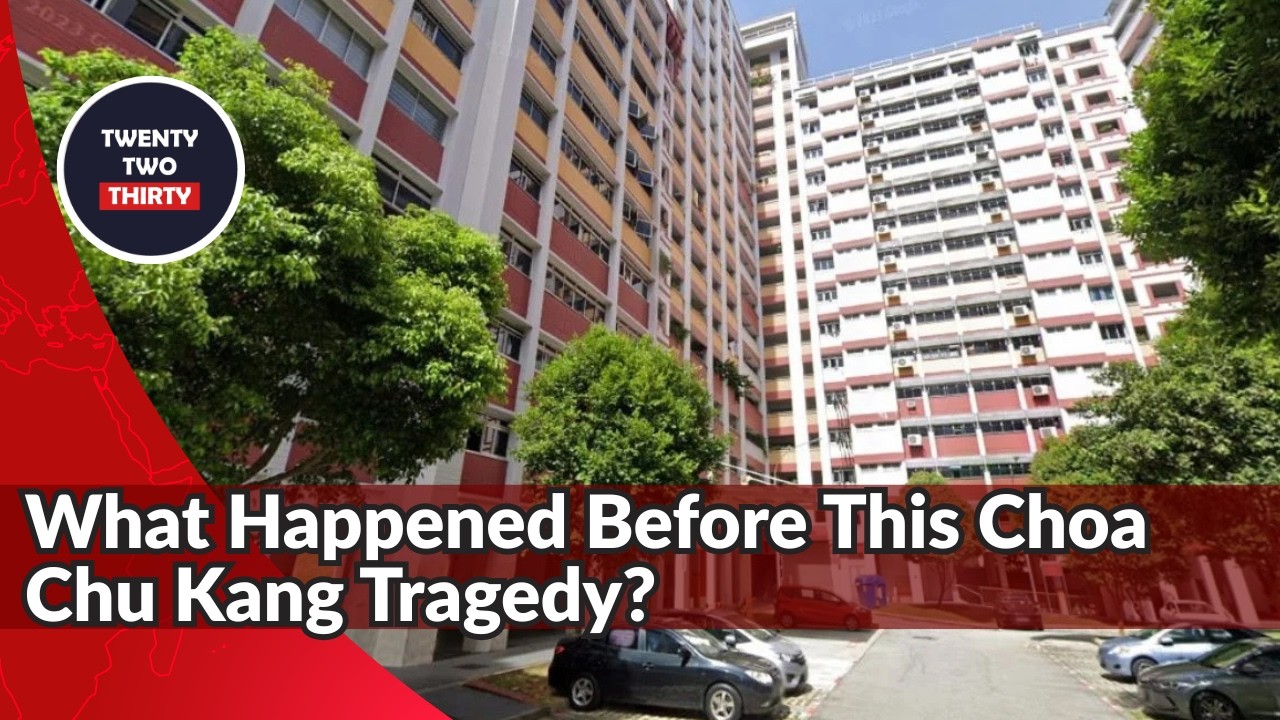
Choa Chu Kang Tragedy Raises Questions About Warning Signs and Relationship Violence
TwentyTwoThirty
872 views•2026-05-29

Why Is It ALWAYS About The Pregnant One? 😂
alikicomedy
9K views•2026-05-30

10 French Cities That Could Collapse First as the Homeless Crisis Worsens
InsideEuropeToday
359 views•2026-05-29

White People RECOUNTS How Great Black People Are Becoming So Fast Now They Can't Take It
mrsan_20
939 views•2026-05-30

Foreign-Owned Shops Targeted as Anti-Migrant Tensions Rise in South Africa
aljazeeraenglish
25K views•2026-05-30
Elections Are Rigged! Only Those In Government Can Tell How ~ Diana Ngao & Mark Ouko
RadioGenKe
696 views•2026-06-02



