Louis Gaskin, known as Florida's 'Ninja Killer,' was executed by lethal injection on April 12, 2023, after spending 33 years on death row for the 1989 murders of Robert and Georgette Sturmfels. Despite a split jury recommendation (8-4 for death) and one surviving victim opposing his execution, the state of Florida proceeded with the execution, demonstrating that legal processes can continue even when there is significant disagreement about the appropriate outcome.
Install our extension to search inside any video instantly.
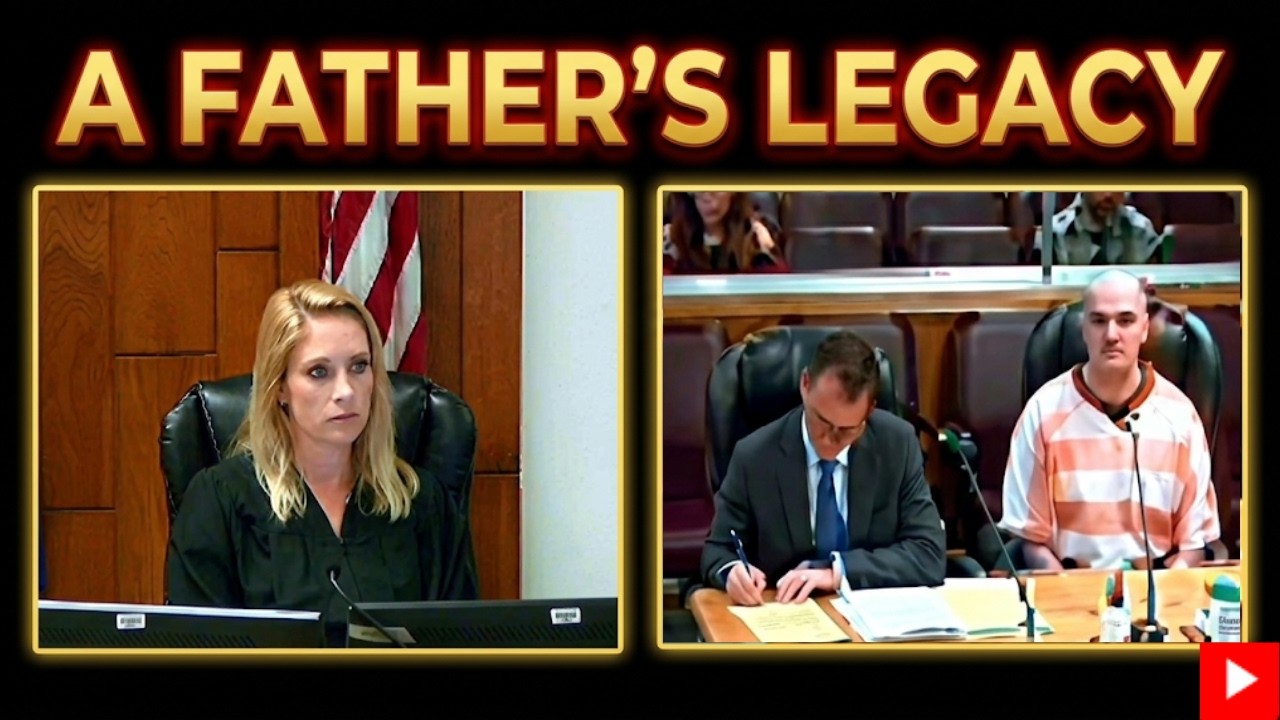
JUST IN: Florida Executes Louis Gaskin "Ninja Killer" After 33 Years on Death Row
Added:On April 12th, 2023, Louis Gaskin was executed by lethal injection at Florida State Prison in Raiford, Florida. He was pronounced dead at 6:15 in the evening.
In this video, we're going to find out what his last meal was and what his final words were before he died. But to understand why it took 33 years to get to that room, we have to go back to a quiet street in Palm Coast, Florida on a December night in 1989 and to a man who dressed head to toe in black like a ninja to kill two people in their own living room. It was December 20th, 1989.
Robert Sturmfields was 56 years old. His wife, Georgette, was 55. They were originally from New Jersey, but 3 years earlier they bought a house on Ripley Place in Palm Coast, a quiet unincorporated stretch of Flagler County. And they spent their winters there. That night, Robert was sitting in a recliner. Georgette was on the sofa.
Outside, a 22-year-old man named Louis Gaskin parked his car in a wooded area nearby and walked toward their home. He was dressed entirely in black, the kind of outfit that earned him a nickname the press would use for the rest of his life, the ninja killer. He carried a.22 caliber rifle. He moved around to the back window of the house where he could see both of them through the glass. He shot Robert first, twice through the window. Georgette tried to get up and leave the room. He shot her, too. Then he shot Robert again. Georgette made it out of sight into the hallway. Gaskin didn't stop. He moved around the outside of the house to the other doors that opened onto that hallway, found her again, and shot her for time. Then he went inside. He shot them both again in the head. When it was over, Gaskin took a clock, two lamps, and a video cassette recorder from the house. Investigators later found those items at his home. He told police he'd planned to give them to his girlfriend as Christmas presents.
That alone would be the crime most true crime channels stop on. Gaskin didn't stop either. He left the Sturmfels house and walked to another home nearby on Ricker Place. Inside were Joseph Rector and his wife, Noreen. Gaskin had already cut the phone line to their house before he got there. He threw wood and rocks onto the roof, apparently trying to lure Joseph outside. When Joseph didn't come out, Gaskin shot him through a window.
Joseph and Noreen managed to get into their car and drive away while Gaskin fired at them. Joseph was critically wounded. Both of them survived. Here's something most coverage of this case leaves out. Robert and Georgette Sturmfels weren't Gaskin's first murder victim. Three years earlier, in 1986, Gaskin killed a man named Charles Martin Miller. He later told investigators he did it to rob him. Gaskin believed Miller had several hundred dollars on him. He was convicted of first-degree murder and armed burglary in November 1986 and received a life sentence. So, by the time he killed Robert and Georgette Sturmfels in December 1989, Lewis Gaskin already had a homicide conviction on his record. He was free enough, or the system was slow enough, that it didn't stop what happened next.
Gaskin was arrested on December 30th, 1989, 10 days after the Sturmfels murders. The Flagler County Sheriff's Office led the investigation. Detectives took his confession, including the chilling detail about Georgette Sturmfels trying to crawl away after the first shots, only for him to track her down through another door. One of the detectives on that case, Mark Gorman, was a young investigator at the time. He would go on to spend his entire career in Flagler County law enforcement. 33 years later, he stood in the witness room at Florida State Prison and watched Gaskin die.
Gaskin went to trial in 1990. He was convicted on three counts of first-degree murder, three counts of attempted first-degree murder, aggravated assault, three counts of armed robbery, three counts of armed burglary, two counts of burglary, and possession of a firearm by a convicted felon. A psychologist who evaluated him before trial said Gaskin understood exactly what he was doing. Gaskin himself reportedly told the psychologist the guilt was always there. On June 19th, 1990, Gaskin was sentenced to death. The jury's recommendation wasn't unanimous. They voted eight to four in favor of death. Four jurors voted for a life sentence instead. The judge accepted the majority recommendation anyway. There's another detail buried in the record from this stage of the case.
The trial judge himself found that Gaskin had been under the influence of extreme emotional disturbance at the time of the murders. That finding didn't change the outcome. He was sentenced to death regardless. For more than three decades, Gaskin's case moved through appeal after appeal. His attorneys argued that the jury never heard evidence of his mental illness and a traumatic childhood before recommending death. They said that information might have changed the outcome. The Florida Supreme Court disagreed. In a 21-page ruling, the court said that argument had already been raised and rejected in earlier proceedings and couldn't be brought up again. His attorneys took it to the US Supreme Court. That court declined to step in. Separately, Gaskins legal team argued that more than 30 years on death row and the conditions he lived under during that time amounted to cruel and unusual punishment on their own. Courts rejected that argument, too.
There's one more piece of this case that doesn't fit the usual script. Noreen Rector, one of the two surviving victims from that second house, publicly opposed Gaskins execution. She said the death warrant wasn't doing her any favors. She said it had only stirred up painful memories and made her a victim all over again. Gaskins death warrant was signed in March 2023 in the middle of a Florida legislative push to lower the threshold needed to sentence someone to death from a unanimous jury vote down to eight to four. The same split that had sent Gaskin to death row in 1990. On the evening of April 12th, 2023, Louis Gaskin was brought into the execution chamber at Florida State Prison. At 6:00 p.m., the curtain separating him from the witness room was raised. He was strapped down with leather restraints at each wrist, a white sheet covering his body. The lethal injection began around 6:02 p.m. At 6:05, the warden checked whether Gaskin was still conscious. He didn't respond. His breathing appeared to stop 2 minutes later. At 6:07 a doctor entered the chamber at 6:14 to examine him and declared him dead at 6:15 p.m. The Department of Corrections said the execution proceeded without incident. Outside, across the road from the prison, about 50 people gathered in protest. Some had traveled more than 100 miles to be there. At 6:00 p.m. as the curtain went up inside, they took turns ringing a bell. Something they'd been told that condemned and exonerated inmates have said they can sometimes hear from inside. At 9:45 that morning, hours before he died, Lewis Gaskin had his last meal. He requested barbecue pork ribs, pork and turkey neck, buffalo wings, shrimp fried rice, french fries with honey barbecue sauce, and water.
His sister visited him before the execution. He did not meet with a spiritual adviser. When asked if he had any final words, Gaskin spoke. The witnesses said it was difficult to make out everything he said. What they did understand was this, "Justice is not about the crime. It's not about the criminal. It's about the law."
Then he referenced his own decades of failed appeals and said, "Look at my case." Those were his last words. Mark Carmen, the detective who had helped to arrest him in 1989, was one of the witnesses in the room. Afterward, he said it was surreal. He said Gaskin seemed to be at peace with what was happening, even though, like the others present, he couldn't fully understand what Gaskin had said. Lewis Gaskin spent 33 years on death row for a crime where four jurors didn't think he deserved to die. One of his surviving victims didn't think he deserved to die either. And yet the state of Florida executed him anyway, just as it had sentenced him on a split decision. So here's the question. When a jury isn't unanimous and even one of the people he tried to kill asks the state to show mercy, should that be enough to stop an execution? Or does the law need to follow through regardless of who's left asking for something different? Let me know what you think in the comments.
Related Videos

JAMIA BA LLB 2026 Offline Mock Interview | Final Interview Round Preparation
MLSLAWACADEMY
104 views•2026-06-16

6/15/26 Lively v. Wayfarer - Full Settlement Agreement is now public
littlegirlattorney
11K views•2026-06-15

HOA Demolished My Yacht for “Unauthorized Docking” — Too Bad I Own the Entire Marina!
Pro-RevengeStories
423 views•2026-06-15

JACKSON KIHARA'S SECRET DEAL: The Deal That Brought Out Jackson Kihara From Jail | LifeLens TV
LifeLens254
5K views•2026-06-14

Guelph's New Renoviction By-Law Explained.
CallCodyRE
807 views•2026-06-14

SCOTUS Rules 9-0 on Gun Rights for Marijuana Users
TheReloadSite
164 views•2026-06-18
A Family Tradition of Federal Time
LoneWolfUsul
603 views•2026-06-14

YouTuber Alexander Zabel Jr arrested again near Nancy Guthrie’s home amid investigation disruption
StarBuzzHD
136 views•2026-06-15



