This narrative masterfully collapses the scale between the infinite cosmos and the individual, turning the periodic table into a poetic autobiography of our existence. It successfully balances rigorous astrophysics with genuine existential awe.
安装我们的扩展,即时搜索任意视频内容
Your Body Is a Chemical Autobiography of the Galaxy本站添加:
So, come back to that phrase, you are made of stardust. Now, make it precise.
The hydrogen, accounting for 63% of your atoms, primordial, untouched by any star, born in the first few minutes after the Big Bang. The carbon and oxygen forming the backbone of your biochemistry, products of the triple alpha process, contingent on the Hoyle resonance, a nuclear energy level sitting within fractions of a percent of the value needed. The iron carrying oxygen through your bloodstream right now, built during silicon burning in a massive star's final day, ejected in the supernova that ended it.
The calcium in your skeleton, forged during oxygen and silicon burning in similar explosions.
The roughly 0.2 mg of gold in your tissues, minted in a neutron star collision somewhere in this galaxy, billions of years before Earth. Not stardust, a chemical autobiography of the Milky Way. Every element a different chapter, authored by a different catastrophe at a different moment in cosmic history.
In 1957, four physicists published the paper that first assembled this complete picture, Margaret Burbidge, Geoffrey Burbidge, William Fowler, and Fred Hoyle, the B2FH paper, still one of the most cited works in the history of astrophysics.
Its argument is elegant and stark. The universe was born chemically barren, and every interesting entry in the periodic table was built afterward, inside stars, through fusion and explosion and collision. 13 billion years, three generations of stars at minimum, billions of individual stellar lifetimes, each ending in a death that enriched the cosmos slightly more than before. All producing eventually a periodic table complex enough to assemble a molecule that copies itself, and then a species that looks up and traces each of its own atoms back to the star that made it.
9 billion years of assembly.
The materials didn't know what they were becoming, and now they're asking where they came from. For a limited time only, we are giving out the first three chapters of our complete introduction to stargazing, completely free. Check our channel profile for the link.
相关推荐

The real reason your phone battery gets worse #LithiumIon #BatteryLife #shorts
EchoesOfTimeTV-1
440 views•2026-05-31

Lecture - 03 - Summer Batch (Demo) - OL/IG O/N '26 & M/J '27 Live Class Solids,Liquids & Gas KPT
carboxylchem
105 views•2026-06-01

AMINES🔥video coming soon #shorts #chemifysudarshangurav
sudarshangurav699
272 views•2026-06-03
Lakshya NEET in English 2027 Solutions 🧪 Class 12 Backlogs Class
PWNEETEnglish
1K views•2026-05-31

A splash of chemistry, a dance of electrons, and a beautiful color transformation. 🧪✨#redoxreaction
harshrani_5920
1K views•2026-05-31

Roadmap Explained! Inorganic Chemistry Part 1, 4e | Cengage JEE Advanced | Dr Balraju Karri
cengageindia
112 views•2026-06-04
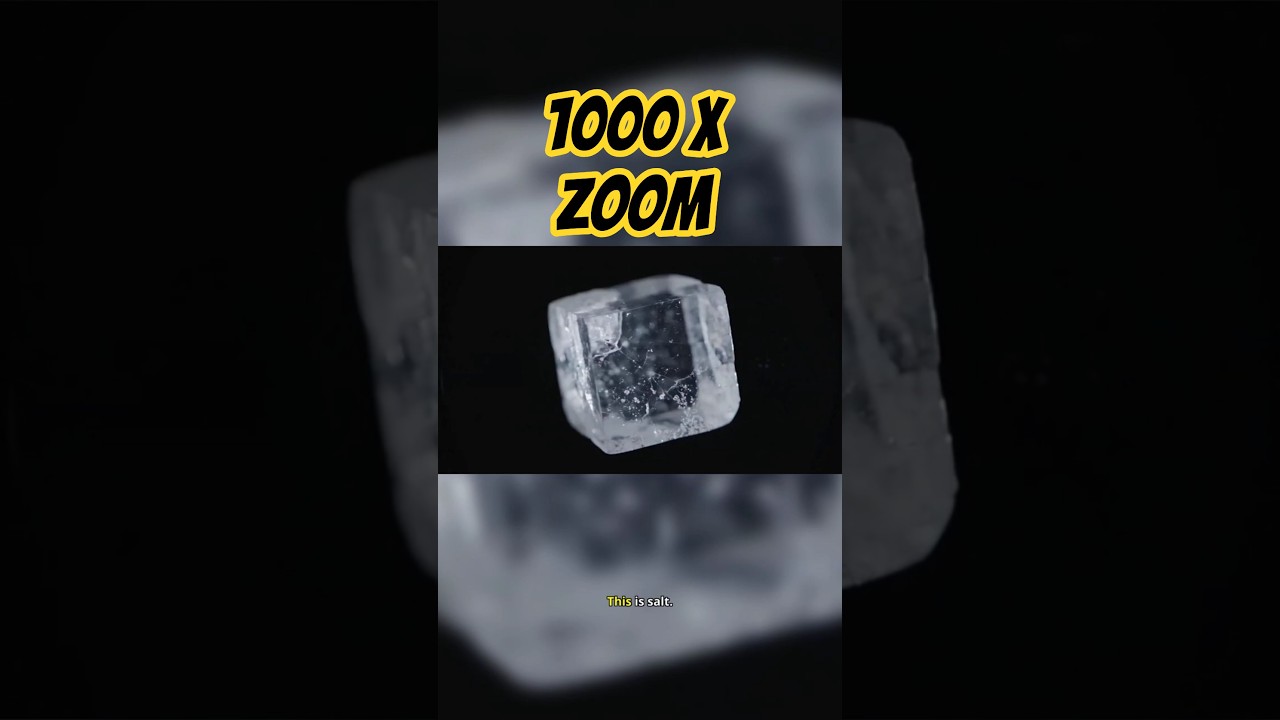
This Is Salt at 1000x Zoom
Mr.VelMash
112 views•2026-05-31
If Class 10 Chemistry Was a Marvel Movie... 💥 Acids, Bases, & Salts Chapter 2
SmartCBSEstudy
101 views•2026-05-31