Guitar harmony involves playing multiple notes of your home scale simultaneously, with one guitar playing a lower part and another playing a higher part; the most common interval for harmonizing guitars is thirds (three scale degrees apart), which creates the characteristic harmonious sound heard in bands like Iron Maiden and Avenged Sevenfold. To harmonize a guitar part, identify the notes within your key, then shift each note up or down by three scale degrees to create a lower or higher harmony part, while ensuring all notes remain diatonic to the key.
拡張機能をインストールして、あらゆる動画内を即座に検索しましょう
How To Harmonize Guitars Like IRON MAIDEN And A7X追加:
[music] [music] [music] [music] >> Hello guys and welcome back to Bradley Hall's Guitar School where today we shall be looking at how to harmonize guitars. Harmony on a deeper, more technical level is quite a rabbit hole as it's basically the sort of general phrase for the overarching musical content and structure of a piece of music. Basically, how the chords and the melody and the bass come together to create the overall harmony. So, that's the sort of traditional definition, but in rock and metal music uh it's a lot more sort of watered down and straightforward and the definition is a little bit different. In our type of music, harmony is really just talking about like harmonized guitars and how different contrasting guitar parts can work together in harmony. It's one of the oldest and greatest traditions and tropes, I guess, in rock and metal music.
>> [music] >> I guess some of the coolest and most obvious examples of harmonized guitars, bands like Boston, Iron Maiden, uh Avenged Sevenfold, Necrophagist even.
All of these bands have used dueling harmonized guitars as stuff like the linchpin of their sound. And even if you don't plan on using harmonized guitars in the sort of music that you play or want to play, I think it's still very important to study this concept and to spend some time in it just to make sure you understand because it's pretty interesting to me that everybody knows what harmonized guitars sound like, but hardly anyone sort of really understands why they sound like that and how you can implement this yourself to make your own harmonized sounds. So, that's exactly what we're going to be doing today. So, there are a couple of small prerequisites to this lesson. It's essential that you understand like what basic chords are, what basic scales are, and you understand the concept of playing in a key and what it means to play in a key. Because if you don't understand those basic concepts, then everything I talk about in this lesson is just going to be completely nonsense.
All right, so now we're all up to speed, let's go over exactly what it means to harmonize guitars. Right, so I guess the TLDR of harmonizing guitars is that you're essentially just playing multiple notes of your home scale at once. We're just going to say for now that it's going to be two notes at the same time cuz that's what it is, you know, the vast majority of the time. One guitar is playing a lower part and one guitar is playing a higher part. But what does that mean, lower part, higher part? When it comes to harmonize guitars, there will always be a lower part and a higher part, okay? It's just like the, you know, the pure logical nature of it.
Because if that wasn't the case, if there wasn't a higher guitar and a lower guitar, that would mean your like both guitars are playing exactly the same thing. So, that's not really harmonized.
So, let's listen to a really basic example of a two-part guitar harmony so you can hopefully hear how a lower part and a higher part work together to create this beautiful harmonious sound.
>> [music] >> Right, so hopefully you could hear that there were two guitar parts happening there. A lower part and a higher part.
Both playing what sounded like pretty much the same thing, but in a slightly different manner. So, the lower part was playing this.
Yeah, so 13 12 10 12 on the high E string, okay? Just this very simple repeating pattern. And the higher guitar, the second guitar part, was playing this.
>> [music] >> Exactly the same rhythm and pattern, but it was slightly higher up. We were playing it up here, 17 15 13 15. So, as you can hear, they have exactly the same rhythm and exactly the same pattern, but the notes are slightly different. It almost sounds like they're like a mirror of each other. Notice how one sounded like very sad and minor.
And the other one sounded like pretty happy and major.
And when you put them together, So, to understand why this works exactly, we need to start looking into the world of keys and scales. So, this little lick was in the key of D minor.
Thus, our home scale is also D minor, okay?
Hopefully, you're well acquainted with the minor scale and what I just played there wasn't, you know, too alien to you. And now, let's go back to our lick.
Uh and more specifically, the first guitar part, okay?
>> [music] >> This thing. So, if we look at these notes, we can see that we have the first, the second, and the third degrees of the D minor scale, okay? We've got D, E, and F. Uh the lick is just starting on F and going back. So, F E D E F. And now, if we sort of bring this back to our D minor scale that we just played, we can put it down here.
Okay? So, you can see that these three notes fit well within our D minor scale.
And now, if we do the same thing, but to our second guitar part, yeah, the one that sounded a bit more sort of like happy and major-y, we can also imprint these notes onto our D minor scale. So, the notes of this part are A G F G A G F G. And now, let's find those on here. We can see that they are here. A, G, F, G.
>> [music] >> So, as you can see, all we're essentially doing is playing three notes up and down of the D minor scale at the same time.
>> [music] >> So, on deeper inspection, we can see that these notes, these two patterns, are actually a very specific set of intervals apart, more specifically a third. This is a very crucial number to remember. So, if we take the starting note of our first guitar part, F, and the starting note of our second guitar part, A, we can see that they are in fact a third apart, which means like three scale degrees. So, if we count up from F, F, G, A, 1 2 3. 1 2 3. [music] And the same goes for the second note, uh from E, 1 2 3, up to G. And for our third note, D, D, E, F, 1 2 3. So, all of these three notes are three scale intervals apart, or a third. And that is the key to making this work, okay? And the fact that they were specifically a third apart is what made it sound so beautiful, like a harmony. Because you can do the same thing with other intervals, too, uh but it may not sound as beautiful.
>> [music] >> So, that was an example of harmonizing with minor seconds, which is essentially just harmonizing with the parts only one fret apart from each other. What's cool about harmony is that technically you can harmonize with like any interval distance, uh and they all have their own sort of unique sounds, but when we talk about guitar harmony, 95% of the time, I would say it's in thirds. Like guitarists are talking about harmonizing in thirds. That's sort of like the go-to interval distance to harmonize with on guitar. Either minor thirds or major thirds, it depends on like you know like what key you're in, but it's nearly always going to be thirds. So you should use that as your default bearing. You can get some very cool sounds with other intervals too, but they're a lot more sort of like niche and situational. Just to demonstrate this quickly, I've made this little example to show you what each interval distance kind of sounds like and what kind of like vibe and context you can use each one for.
>> [music] [music] [music] [music] [music] [music] [music] >> As you can hear, some of them sound actually pretty sick and have their own uses. Uh but by far thirds sounds like the prettiest and most like what we think of as harmonized guitars. I think the most common mistake that people make once they get this far is to assume that you always just play whatever it is you want to play but three frets apart. For example, if your guitar part goes like this, um I'll use this example again.
And then to harmonize it all you have to do just move it three frets. One, two, three.
This can work sometimes, if you're lucky, uh but generally not. So, it's not just as simple, unfortunately, as moving something up or down three frets.
You still have to stay within the I guess the framework of the scale or the key that you're in. So, let's use this good old example again.
>> [music] >> Yep. So, we have this lick, and we know that we're in the key of D minor. So, let's just map out the D minor scale quickly on this one string. D E F G A B flat C D.
So, those we know are our notes of the D minor scale, and we know our lick that we want to harmonize is this.
>> [music] >> So, now we can work it out. So, if we want to harmonize with a lower part, we just go down three scale degrees starting from uh our guide notes. One, two, three, and play the same thing.
>> [music] >> Yep.
And now, if we want to harmonize with a higher guitar part, again, we just go up the scale three degrees starting from our starting point. One, two, three, and then we get to this.
>> [music] >> And if you wanted to, you can make a three-part harmony out of that. If you played all of those things together, >> [music] >> you would be fully harmonizing in full thirds.
Something super important here that I just really cannot stress enough is not just about knowing how to apply this stuff to your guitar, like, you know, like the more sort of practical technical aspect, but also just the listening aspect. It's so crucial that you get your ears used to hearing what harmonies sound like. Just try harmonizing stuff yourself over and over again whenever you can, and just really get used to, you know, how that sounds.
For example, because I'm super nerdy, like, when I go out uh and I hear a song on the radio in public or like in an Uber and I hear a vocal melody of the song and I just sort of start thinking in my head about like what the harmony would be and sort of like doing internal practice. And like if I hear a guitar lick out in the wild like >> [music] >> and I'm like oh the harmonies of that would be You know eventually your ears will just sort of get attuned to that and start understanding what harmonies sound like.
So now you should be equipped with all the knowledge you need to be able to make some very basic harmonies of your own. So let's put it to the test. I've put together a very small little example here with a basic melody in D minor and I want you to work out what the harmony in thirds would be for both a lower part and a higher part. So I'm going to help you out by putting a tab of the lick on screen as well as the notes of the D minor scale so you can hopefully work out how to harmonize this in both a lower and a higher part. Let's do this.
>> [music] [music] [music] >> One very important thing to keep in mind is that this method only works if what you're playing over is completely diatonic which means that you're just strictly within the confines of a specific key. When you start trying to harmonize something over a non-diatonic chord progression for example something that is in a key but has like borrowed chords from outside the key or if it's modulating a lot then it becomes a little less straightforward. Okay the last little section I want to go over is how to harmonize arpeggios. So thankfully this is very simple though I would recommend that you go through my arpeggio masterclass before you go any further with this because it's just just going to make way more sense. So like I talk about in many of my lessons arpeggios basically just have like three core shapes. You know, if you're familiar with the cage system, then you'll probably recognize like this sort of concept. So, in a minor key, you basically just have this shape, have this shape, >> [music] >> and this shape.
So, essentially, when you harmonize arpeggios, all you do is just take the same shape, but shift it up an inversion, okay? So, if you want to harmonize like a basic D minor shape, all you do is just literally shift it up an inversion to the next one, and there you go. So, hopefully, you know that an arpeggio consists of a root, a third, and a fifth. And to harmonize that, all you literally do is just keep cycling through the root, third, and fifth in order. So, if you're going up, root becomes third, third becomes fifth, fifth becomes root. And if you're going down, root becomes fifth, fifth becomes third, and third becomes root. All right, so here's another little exercise, this time focusing on just arpeggios, and I want you to figure out the harmony for both the higher parts and the lower parts, okay? So, use everything I just told you about just shifting everything in the arpeggios that you're playing either up or down a position, and you will be good.
>> [music] [music] >> All righty, guys. So, that does conclude our master class on harmonizing guitars.
There are some other more advanced ways you can harmonize guitars, such as counterpoint harmonies, or harmonizing with different intervals, a bit like how we looked at earlier. But, that's all stuff that's for another lesson, and quite out the scope of what we're doing here, because I feel like we've already covered quite a bit today. Good luck.
Let me know how you get on either here, down below on the post, or over on my Discord server. I would love to hear.
And even better yet, take everything you've learned today, and have a go at making your own lines and harmonizing them. Cheers guys, happy shredding and I'll see you later.
関連おすすめ

HOW to VISUALIZE the FRETBOARD like a PRO/LEGEND
NassorTafari
273 views•2026-05-31
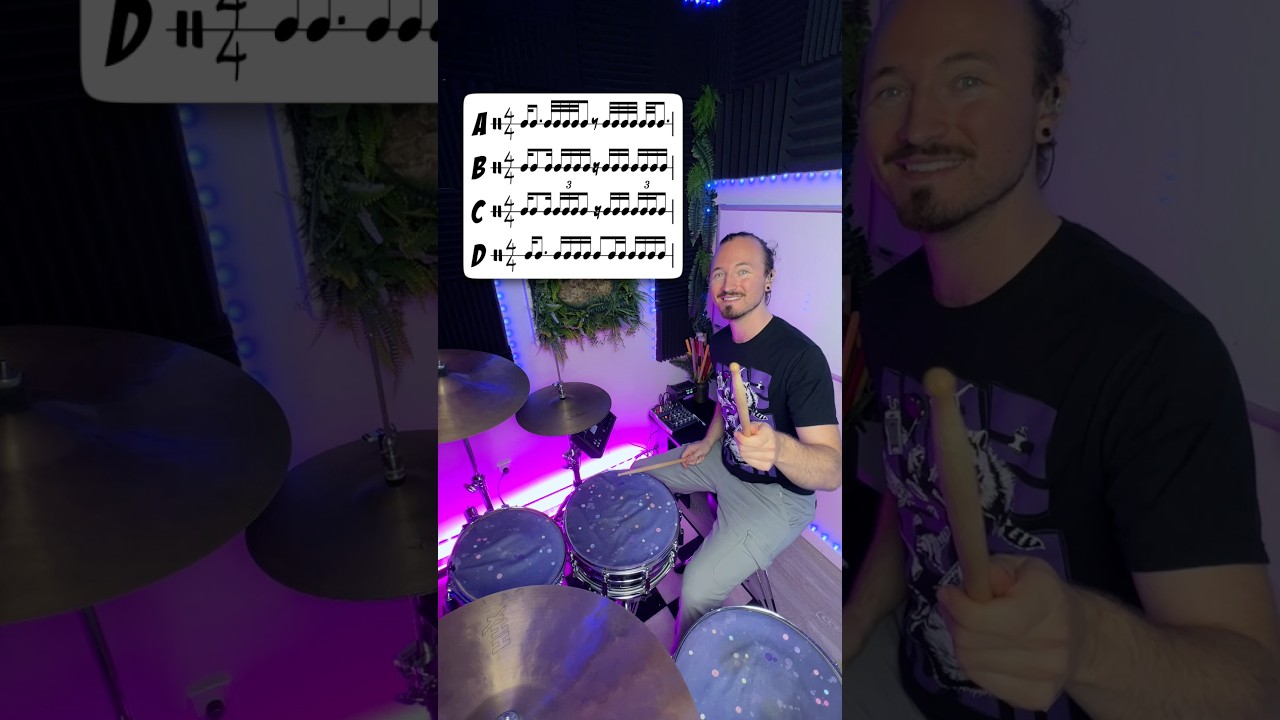
Guess the Rhythm! 🎵💥
sheldondeithdrums
34K views•2026-06-01
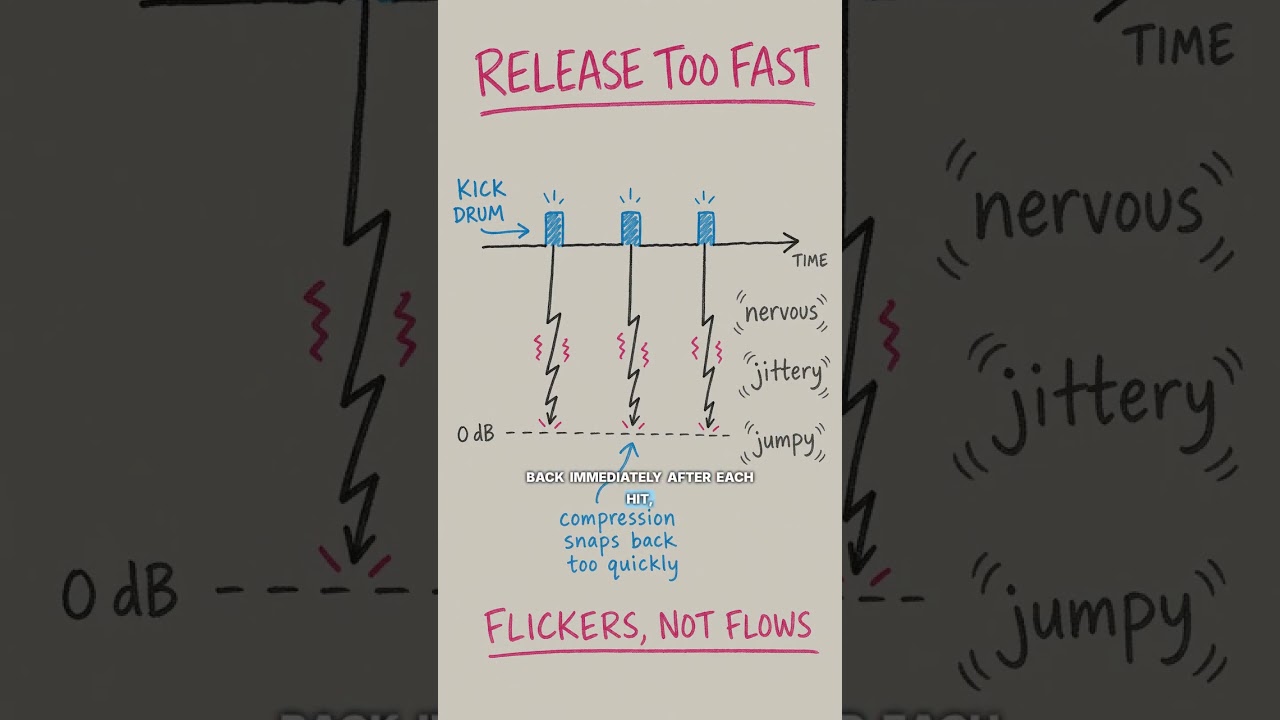
Your Release Time Is a Tempo Decision, Not a Feel Decision #musicproducer #musicproduction #typebeat
abletonppr
995 views•2026-06-01

Music Teacher reacts - Beauty and the Beast - Gabriel Henrique, Jade Salles
jennifersmusicpage
178 views•2026-06-03

Don’t be the fool
ijadamademusic
2K views•2026-05-31

An Evening with the UCSB Middle East Ensemble
ucsantabarbaradepartmentof5290
134 views•2026-05-31

SpaZm - Cake
TheSpaZmMusic
313 views•2026-06-06

REMRUATKIMA - 13 ( Mizo Ngaihnawm ) By Mawitei Bawihtlung
Rp_Huapzau_Channel
9K views•2026-06-02