This analysis provides a rigorous linguistic breakdown that elevates a foundational creed from simple recitation to a sophisticated study of classical syntax. It masterfully demonstrates how subtle grammatical shifts define the precise theological boundaries of monotheism.
拡張機能をインストールして、あらゆる動画内を即座に検索しましょう
What’s the I‘rab of La Ilaha Illa Allah?追加:
amlaykum.
Okay. So, how do you doahill?
First of all, is a small sentence. There's only four words in it. And generally, we don't do of sentences that are this small. When just knowing the meanings of the words is sufficient in order to translate and understand the sentence, then doesn't really play a role. Arab is used for sentences that are complex and sentences that are long and involve a great deal of nesting. So if I were to give you the ofahillah, it would not belong to the high impact grammar that I teach to beginners. It would be more of a technical thing that an advanced student would want to know.
It would be more of a curiosity thing if you know what I mean. Like how do you deal with it?
So in this book theatu book which is the best book in the world for grammar he has a section on the the must and um and you may know that is used in order to exclude. So you should have a group. So the classic examples are the tribe came to me except and if you do negative it would be you have a choice in the negative you could say and you could also say in the negative there's a there's an abbreviation where you remove the word and you say like that. So if you remove the word whatever grammatical positioning the word would have had in the case of it being present that then shifts to the word afterl. So it becomes because required a subject needed a subject no one came to me. So if you remove the word and you say then it needs to be and then so now they tell us in the books that the word is sometimes also used for excluding the word it's used for excluding so I could say and it will be synonymous and interchangeable with so right. So, so we have two words here that are incredibly important and they're relevant for the as we'll see. So, continue paying attention. He says in the book know that the word is primarily coined in order to describe in order to introduce an adjective or to negate an adjective to negate an attribute. That's what he means. So, so you have a person who's religious and you have a person who's irreligious.
You have a person who's and you have one who is so we have we have what does is it serves as a prefix in order to negate an adjective and this is the primary meaning of the word in the Arabic language. So it's used for cifa that's what he means. So cifa doesn't mean like it could be in a predicate environment or it could be in a two words connecting together and functioning as a single unit environment and that would be true either way.
Okay. Okay. So he says so the word is primarily coined in order to negatively describe that's what he means ne negatively describe either in a predicate environment or in a environment and sometimes it's used in order to exclude.
Now the flip of that can happen. He says And the word is primarily coined in order to exclude and sometimes it's used for negative describing as is the case in the saying of Allah subhana wa ta'ala.
So had there been within the heavens and the earth gods other than Allah the two would have been ruined. In other words they would have collapsed. We would have no heavens. We would have no earth.
Nothing would ever have a chance to exist if there were multiple deities. If there were multiple gods.
So if they ask you why is it the word why is the word in the state of because this is being used in the meaning of now whatever the word would have had in the case of it being there which would be because in that then shifts to the word Allah because so is the phrase functioning as a single unit and that becomes the is The sentence is over. The first half of the sentence hypothetical and the is the would be the heavens and the earth would be ruined. The point here is not to teach you the evidence and the proof for why there can't be multiple gods. And the grammar actually did not even play a role in that. So the grammar was in order to understand the sentence, not in order to teach. And that's important. And then he says and similar to that is you're saying so the author here in the he's claiming that the inahill is actually being used in the meaning of so how does the sentence divide the sentence is made up of followed by the of which is the word one word on its own followed by the which which is substituted for. So this is being used in the meaning of so therefore we don't pull out any omitted word like or anything along those lines and try to extract from it a pronoun and create an exclusion. That's all wrong. Okay. So what we do is we say on its own is the and then it divides into an being used in the meaning of followed by the word which is because that's the that would have had it been there reformatted into and that concludes the so what's the translation the translation is that there's absolutely no entity that is rightfully woripped other than Allah.
I'll say it again. There is absolutely no entity that is rightfully worshiped.
In other words, there are idols obviously, but those idols are not rightfully worshiped. They're wrongfully worshiped. So, this is negating rightful worship. So, rightful worship doesn't occur anywhere except in the case of Allah. When Allah is worshiped, he's worshiped rightfully. So, the word means by necessity. The word means and is not something that we're introducing into the sentence through grammatical analysis. So the did not give us the bak. It's the vocabulary plus rational honesty. I mean you have to use your mind right? So we see the Buddhists are worshiping the Christians are worshiping everybody's worshiping entities other than Allah. So in order for illallah to be true, which it is true, then cannot mean one that's worshiped, must mean one that's rightfully worshiped. So there's no entity rightfully worshiped except Allah. So over there, what I did is I used the word except or I can say other than Allah. Either way, the meaning is clear. And with that, I conclude this video and inshallah, I'll see you in the next one. cinematic lab.
関連おすすめ

WIL in Afrikaans is not WILL in English? | Ek leer Afrikaans | Part 6
afrikaanswithannelize
229 views•2026-05-28

How Brits Say British Pronunciation
MrBranicus
1K views•2026-05-30

🎵 A to Z Kids Song | Cute ABC Animation for Children
ABC_Little_Heros
10K views•2026-05-30

basque influence uniquely different spanish
Davantsi
761 views•2026-05-31

10 German Grammar Rules That Unlock the German Language | A1-B1 | Learn German
LearnGermanOriginal
357 views•2026-05-29

How To Express Disappointment In English #english #speakenglish #languagelearning #airlearn #viral
english_w_remi
6K views•2026-05-29
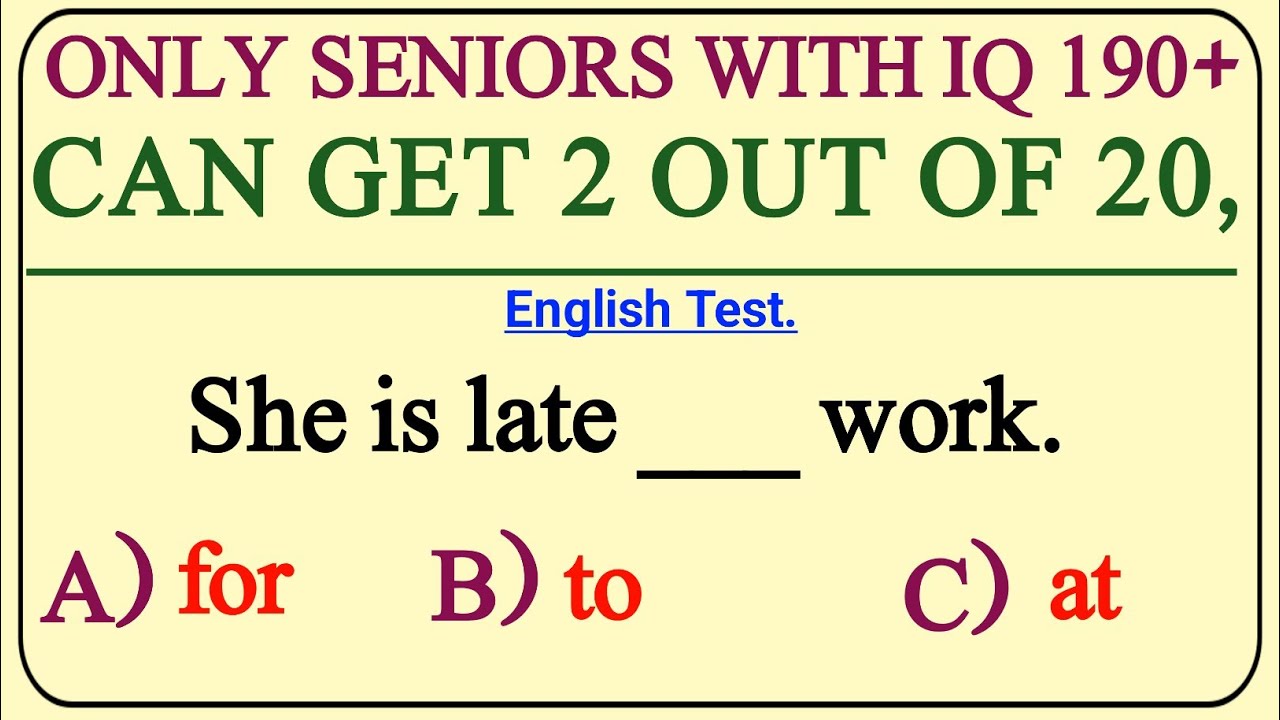
ONLY SENIORS WITH IQ 190+ CAN GET 2 OUT OF 20, | English grammar skills
EforEnglish161
582 views•2026-05-29

Why Japanese Has No Future Tense – Learn Japanese
FixBrokenJapanese
779 views•2026-06-02



