The Statue of Liberty, widely known as a symbol of immigration, was originally designed by French abolitionist Edouard de Laboulaye in 1865 to celebrate the end of slavery and black emancipation, featuring broken chains in her left hand; however, American financiers and politicians removed the chains from her hands and moved them to her feet, where they remain hidden from most tourists, effectively sanitizing the monument's original message about black freedom.
Install our extension to search inside any video instantly.
Black Americans EXPOSED Black Hidden Symbols Inside Washington’s Oldest Monuments
Added:What if the monuments that we walk past every day are telling a story we were never fully taught to read? Because behind the marbles, the statues, and the dome of the nation's capital, there are symbols, histories, and interpretations that people still argue about to this day. And once we start looking at them differently, you may never see them the same way. Today, we're diving into one of the most debated conversation around Americans monuments and symbol. What they represent, who they honor, and the stories that may have been overlooked or left out of the mainstream narrative.
>> I knew something about the Statue of Liberty.
And it concerned me that no one else knew.
So, part of what I knew came from when I was in France and I saw the original drawing from the sculptor.
And the original drawing showed she had broken chains in her left hand.
>> Mhm.
>> She had broken chains in her left hand.
It was commissioned in 1865, important, right?
>> Mhm.
>> And it's a war against slavery. Pretty important.
>> She's a statue of what?
>> Liberty.
>> Yes. So, the chains represent the broken chains, the shackles. Are is was the end of slave enslavement. That's what the liberty we're talking about. So, she's no longer holding chains. Matter of fact, she's just holding a rectangular object with a Roman numeral on it.
Because the United States insisted that those chains be removed.
>> Mhm.
>> But the sculptor insisted, too.
He said, "This, no. You had the chains must remain."
And the United States said, "No."
Who won?
>> Mhm.
We did not.
>> We did win.
>> I mean, sorry, we did win. Wait, we got them off.
>> We got No, no, we got the chains.
The chains are there.
>> Are they there? Okay, take me to the >> at her feet.
>> Her feet.
>> Where it is impossible to see them >> Yeah.
>> under any circumstances. So, this is truth hidden in plain sight.
So, I feel some kind of way about that, right?
So, I'm thinking, you know, Floyd just got the job.
He said, "No, go on and bring it." So, I brought it to his supervisor. I said, "You know, there's nothing in this entire exhibit." This was in 2007. That shows the change. You show You show us more than we ever want to know about that statue.
You show us how thick it is. You tell us why it turned green, cuz it was copper and oxidized. You told us who got involved, who was involved Eiffel guy.
You tell us everything.
You show us every part, but you never show her feet. Because you see, once you show those chains and these broken shackles, you have to then explain them.
And America said no to that.
So, I said, "I would like to myself pay for a picture.
I'd pay someone to come in and photograph that and put it on exhibit like everything else." And his boss said, "No."
I said, "You know, I'm sure that we could probably find a sculptor, a black sculptor right across this water. Black sculptor that could sculpt just that part."
He said, "No."
I said, "Okay."
Then I'm going to tell on you. So, I travel all over the world telling all of them about the chains. And I get a call from the Department of Interior.
And they ask me to come.
They fly me in. They apologize. They say, "We have been negligent and we want to fix this and we would like to hire you, Dr. De Groot, to you know, just maybe train all of our rangers." Which I did.
And then, of course, I and I came a second time and they had indeed had picture up there and everything was great. And I said, "Okay." Then I came a third time on the cover.
>> Oh, okay.
>> Third time I went undercover because I wanted to see if someone was going to tell me about the chains. And I asked.
Right? So, on the on the tour, you get you get assigned some arbitrary, you know, ranger.
So, the ranger, you know, he's talked about the chains. He said, "This is my history, your history, it's American history, a white man." Yeah.
And I'm proud to tell the story.
So, I'm thinking, job well done. Put a period on that. That was like 2013.
>> Yeah.
>> 2019, Washington Post writes a story.
The Statue of Liberty was created to celebrate the end of slavery and not immigrants, its new museum now recounts.
Stay with me.
Lady Liberty was created at basically for the exact reasons that it's standing there doing what it's doing and they're changing there and that is to celebrate freedom.
>> Right.
>> And specifically the freedom of enslaved people.
Now, here's the question.
They have a new museum, it wasn't there when I was there, but do you think they didn't always know that?
>> Mhm.
>> Right.
>> Arguably the most recognized symbol in the world.
And they lied about it.
They lied about it. The whole attachment to immigrants came years later.
That was the original intention. Now, here's let's let's just roll it back.
People go to Statue Liberty, Ellis Island and you got always those people that go, "You know, my great-great and my great-great, they came through, you know." And black people look at Statue Liberty and feel no no connection.
How much prouder would our young people be?
How much taller would they stand knowing that she is standing on the chains that their ancestors had on them in the belly of ships cuz they didn't come through Ellis Island.
How much prouder would they be about those who paid for them to be here?
So, when you erase the chains, you see, you erase me.
You erase us. You erase the truth.
And what the reality is, which to me is more much more phenomenal, and that is we can walk there and say, "No, this statue >> Right.
>> is mine."
>> Yeah.
>> Lit- literally, and be right.
>> Look closely at her feet. Most people never see it. They look at the torch, they look at the crown, but they miss the most important detail, the broken chains.
We've been told for a century that the Statue of Liberty was a gift to welcome immigrants, but that is a lie, a beautiful, well-crafted lie. Today, I'm taking you back to 1865 to show you the original face of Liberty and why the version you see today was sanitized to hide the truth about black freedom. The statue was conceived by Edouard de Laboulaye, a French abolitionist. [music] It wasn't about Ellis Island.
It was about the end of the Civil War.
Laboulaye was a massive supporter of the Union and a friend to the [music] newly freed black men and women in America.
The original model, it wasn't holding a [music] tablet with a date. In the first designs, Liberty was holding broken shackles and chains in her left hand to celebrate the end of slavery.
She was a monument [music] to black emancipation, but when the project was presented to America, financiers and politicians got [music] scared. They said it was too controversial. They didn't want a monument that reminded [music] the world of the chains they had just taken off. So, they made a deal.
The chains were moved from her hands to her [music] feet, tucked away under her robes where most tourists would never notice them.
The tablet was added to replace the [music] message of freedom from bondage with a message of law. But here is the part they really don't [music] want you to know.
Some historians and oral traditions suggest the original face was modeled after an African woman, but to make [music] it acceptable for 19th century America, the features were altered to look more Roman.
They took a monument for black [music] liberation and rebranded it as a lighthouse for European immigrants.
For years, black newspapers [music] in the 1880s called out the hypocrisy.
They asked, "How can you stand a statue [music] of liberty in the harbor while black people are being lynched and denied the right to vote in the streets?"
She isn't just a statue, she is a witness.
>> [music] >> A witness to a promise made in 1865 that is still being fought for today. Those chains at her feet aren't just a decoration, they are a reminder of whose blood and sacrifice actually paid for the freedom this country boasts about.
Next time you see Lady Liberty, don't look at the torch. Look at the feet.
Remember Peter, Ben, and Daniel and all the nameless heroes who broke those chains. If this shocked you, you need to share this. We are reclaiming the narrative.
>> So, I was walking from Howard to the U Street subway station. It was hotter than Hades. It was like 90°, 70% humidity. I look over and I see this black man dressed in a full-on Union soldier uniform, the wool deal, out in this damn heat. You know I had to go over and ask, "What is going on?"
>> My name is Marquette Milton. I'm from the African American Civil War Museum as the head historical interpreter. And after work, I give walking tours around the U Street Shaw neighborhood. My company's called U Street Time Travel.
When you walk with me, you're traveling in time.
>> These are the kinds of tours and hidden gems that we are putting on Seppi.
>> This was a jazz district. You're looking at the neighborhood of Duke Ellington.
>> His tour covers from the 1860s all the way up to present day. I had no idea there was an African American Civil War Memorial. I also didn't know there was an African American Civil War Museum. As a kid who grew up loving the Civil War, I can't wait to go to that museum and visit Marquette. For more tours like this as you travel around the country >> So, I went to DC over the weekend and while I was there, I visited the Native American Museum and when I tell you the tears I cried, let's let's get into it. First of all, I have this really deep connection and protective feeling over Native Americans. And a lot of people will say like, oh, there's Native American There's some Native Americans that don't like black people. I don't care.
Maybe I'm stupid, maybe I'm dumb, I don't care. But the I I don't I don't know if it's like once I really learned the history cuz you know the propaganda they teach us in school. I learned about the history of Native Americans on my own when I was very young. And since then I've had this like I've written papers about it. I've talked to indigenous people about it. I've I feel strongly about these feelings and I don't care what your personal like beliefs are.
This is how I feel. I say all that to say my spiritual journey is incredibly And you know what? Now that I think about it, I definitely have an ancestor that's native because I have a great grandfather who refuses to talk about his native side because one of [clears throat] his parents was native. And that was because way back when black people and Native Americans were not supposed to intermingle at all. And [snorts] so he refuses to talk about that side, which is quite sad, but I know that there's an ancestor. Like and I can feel Listen, this is where it gets woo-woo.
Click off at this time. But I could feel that ancestor being like, you need to learn about this. You need to cry. You need to feel these feelings because this is this is how I felt. This is how I feel. And I mean, I could go into like the actual facts of Native American history and why it's so important to not erase what they went through and go along with what black people went through because I feel like they definitely go hand in hand. A lot more There There's a lot more parallels than people realize.
>> There's a lot that people believe has been hidden. There's a lot of that. When you hear the real story, the deeper story, you can't help but wonder why certain narrative feel whitewashed or underrepresented in mainstream history.
And for many black Americans today, this isn't just about history on page. It's identity. It's about looking at monuments, statues, and symbols in places like Washington, D.C. and asking whether the full story of contribution and struggle has truly been told.
Because when people begin to revisit the symbols, they often start to see deeper meaning into it. Not just stones or metal, but representation, memory, and history tied to freedom. Take the Statue of Liberty, for example. Some view it strictly as a symbol of freedom and immigration. Others argue that over time, different interpretation, discussion, and debate have surrounded what it fully represents and how it should be understood today. And that's where the conversation becomes bigger.
And debate have surrounded what it fully represents and how it should be understood today. And that's where the conversation becomes bigger than just one statue. Because if Liberty represents freedom, then it represents a journey from being born in struggles to the ideas of release and independence.
And that meaning can be interpreted differently depending on the history, perspective, and lived experience.
That's why these discussions are growing because many black Americans feel that when they look at these monuments, they are also looking at part of their own historical story. Stories of struggle, survival, and contribution that deserve recognition. Now, this is not one-sided conversation. Some people see history through the lens of migration, shared nation building, and multiple groups contributing to the foundation of America. Others emphasize the specific experiences that they feel have not always been highlighted equally. And that's what makes history complex because there isn't just one single layer. There are many. Different people, different timeline, different experience, all shaping the same stories in different ways. So, the real question becomes, when we look at these monuments and symbols today, are we seeing the full story or just one version of it? If this made you think, drop your thoughts in the comment section below. I really want to hear your perspective on this.
And don't forget to hit that like button, share, subscribe, turn on your notification bell so you don't miss the next conversation. See you in my next episode.
Related Videos

Historic Mansions For Sale Under $300,000 | Architectural Historian Zillow React
ThisHouse
265 views•2026-06-27
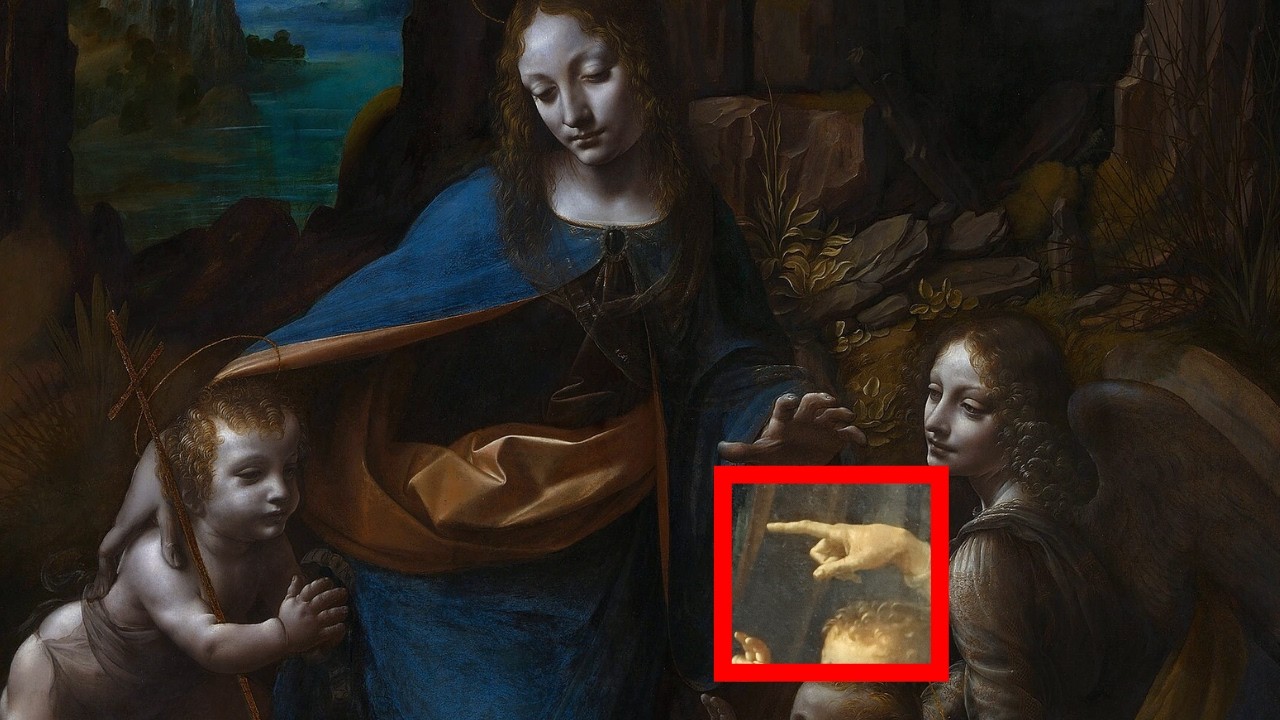
How Art Restoration Revealed a 400-Year-Old Secret
Erinnerart
254 views•2026-06-26

Will Julio Le Parc Blow Your Mind at Tate Modern?
artgalleryexplorer
129 views•2026-06-25
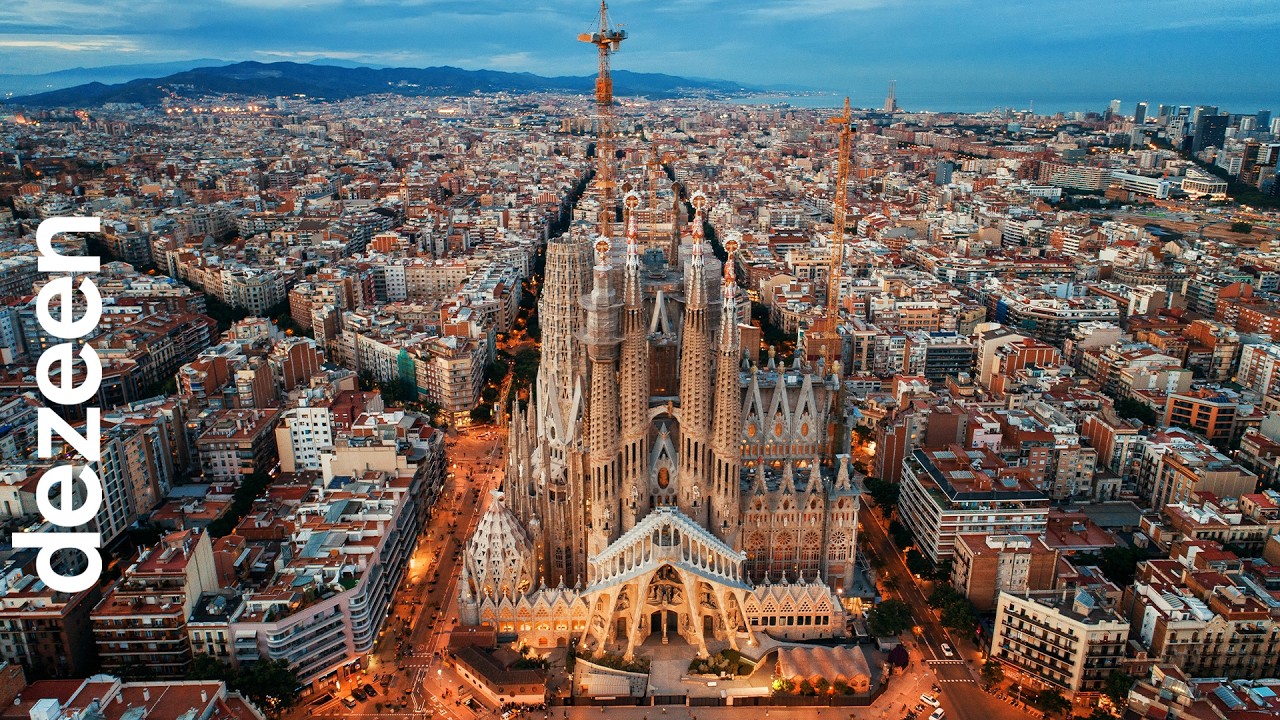
What makes Gaudí's style so unique?
dezeen
301 views•2026-06-23

Can you spot what Leonardo da Vinci hid here
Erinnerart
385 views•2026-06-23

Freaky Little Shoes Weird Girl Footwear | dominiquebirdxo
dominiquebirdxo
251 views•2026-06-26
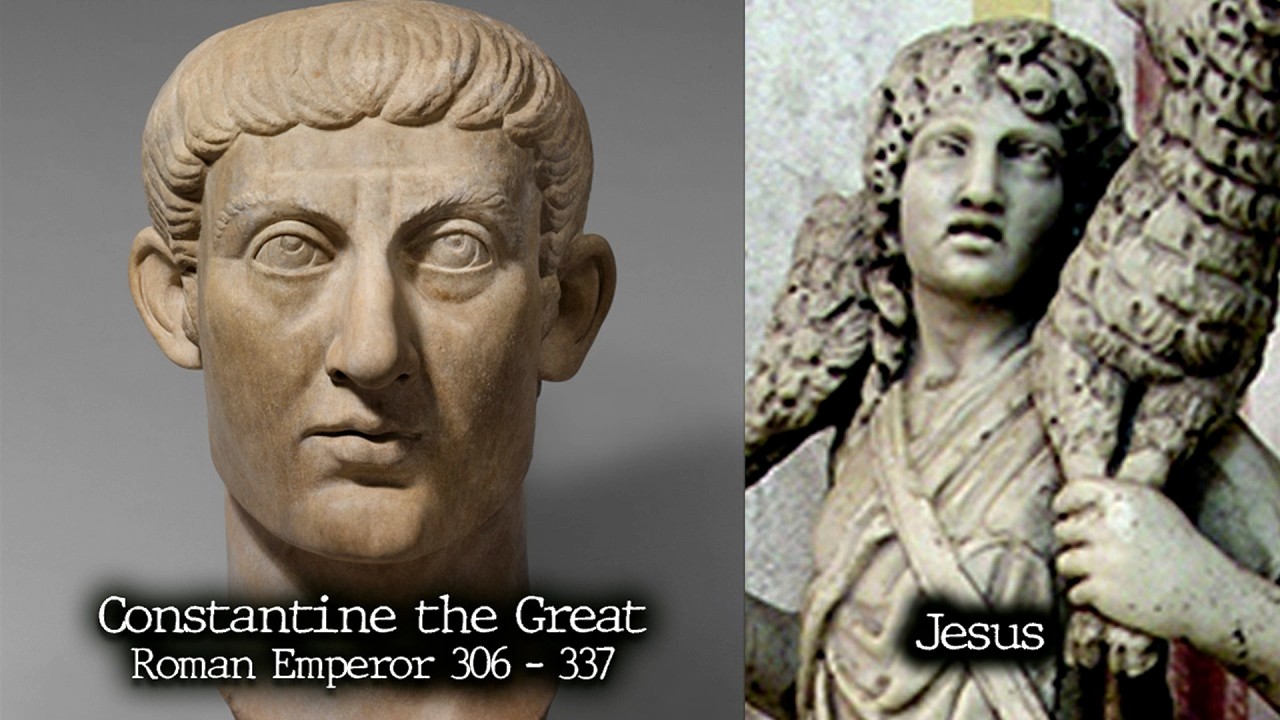
Why Does Jesus Look Like Caesar?
TheThinkingAtheist
2K views•2026-06-25

L'Arte Ellittica nel tempo degli Equilibri Instabili Globalizzazione, IA
casadellaculturaviaborgogn7675
129 views•2026-06-23