Most artificial sweeteners were discovered by accident when chemists tasted lab residues or contaminated substances, and nearly all faced regulatory bans or threats due to scientific studies or procedural issues rather than conclusive evidence of harm, with the artificial sweetener industry being approximately 150 years old.
Install our extension to search inside any video instantly.
Every Sweetener In Your Food Was Found By AccidentAdded:
Saccharine. Saccharine was discovered in 1879 by Constantin Falberg, a chemist working in Ira Remson's lab at John's Hopkins. After a day studying coltar derivatives, he went home, sat down for dinner, and noticed his bread tasted unnaturally sweet. He traced the sweetness back to lab residue still on his hands. The compound was somewhere between 300 and 500 times sweeter than sugar. What Fberg did next earned him a reputation. He published the discovery jointly with Remson in 1879, then in 1884 without telling his mentor, filed patents in Germany and the United States and started industrial production near Magnabberg. Remson, the man who actually owned the lab, got nothing. He later wrote that hearing his name mentioned alongside Falberg's nauseated him.
Saccharine became a wartime hero. Sugar was the first thing the US rationed in World War II, and Saccharine filled the gap. By the 1970s, it was everywhere.
Then in 1977, FDA studies found bladder tumors and rats, and the agency moved to ban it under the Delaney clause. Public outrage was loud enough that Congress stepped in within months, forcing an 18-month mortoriium with a warning label instead. That label, may be hazardous to your health, sat on every diet drink in America for the next 23 years. In 2000, scientists worked out that the rat tumor mechanism didn't actually occur in humans. The label came off in 2001.
Saccharine had outlasted every cancer scare ever attached to it and it's still in your pink sweet and low packet today.
Cyclamate. Cyclamate has the worst origin story on this list. Michael Spedo was a graduate student at the University of Illinois in 1937 working on anti-fever drug synthesis. He set his cigarette down on the lab bench, picked it up again, and noticed it tasted sweet. That was cyclamate. A graduate student found a billion dollar industry by smoking through a contaminated cigarette. It was approved in the US in 1958 and was running about a billion dollars a year in sales by 1969. Then a study that year fed rats a 10 to1 cyclate saccharine mixture and found bladder tumors in eight out of 60 animals. The dose was equivalent to drinking around 350 cans of diet cola every day. The Delaney clause forced a ban for any animal carcinogenicity at any dose. So cyclate was pulled in 1970.
Later studies failed to replicate the result. Cyclomate is currently legal in over 55 countries including Canada, the UK, the EU, and Mexico. The US is the hold out. Abbott petitioned to lift the ban in 1973 and was denied. Tried again in 1982 and that petition has been sitting in regulatory limbo ever since.
Sucralose. Sucralose exists because of a single mispronounced word. In 1976, Indian doctoral student Shashikan Fadnus was working at Queen Elizabeth College in London on a project for Tate and Lyall. His colleague Riyaz Khan called and asked him to test a chlorinated sugar compound. Fadness heard taste. He put it on his tongue and found it intensely sweet. His supervisor's reaction when he heard about it was, "Are you crazy? How can you taste compounds without knowing anything about their toxicity?" The compound was 600 times sweeter than sugar. Tate and Lyall patented it that same year. Got FDA approval in 1998 under the name Splenda, and by 2007, it held 60% of the US tabletop sweetener market. The slogan made from sugar so it tastes like sugar became one of the most litigated lines in food advertising. The makers of equal sued and the sugar association sued. The chemistry involves reacting cane sugar with chlorine replacing three hydroxal groups with chlorine atoms which creates a compound your body can't metabolize like sugar at all. Whether that counts as made from sugar went to courts in three countries. The US case settled the same day the jury reached its verdict.
Nobody ever found out what they decided.
One more detail. The chlorinated sugars Fadness had been working with were originally being developed as insecticides. Sucralose is a failed pesticide. Ace K asof potassium was discovered in 1967 by German chemist Carl Klouse at hoax. He'd wiped his finger across his sweater, licked it to turn a page, and noticed sweetness. The same accidental finger-licking story as saccharine and aspartame, just with a different chemist and a different sweater. Ace K is about 200 times sweeter than sugar. It got FDA approval in 1988 and is now in over 90 countries.
You've almost certainly consumed it without knowing because it's rarely the headline sweetener on anything. It's the workhorse, the synergist. Ace K gets blended with aspartame in Coca-Cola Zero Sugar with sucralose in Pepsi Max and shows up in sugar-free gums, yogurts, and pediatric medications. Its job is to mask the aftertaste of the other sweeteners and amplify the overall sweetness of the blend. Nobody markets AceK. It's just there.
TL ariththrl was discovered in 1848 by Scottish chemist John Stenhouse who isolated it from lychans. The same stenhouse later figured out how to nitrate it into an explosive in 1849.
Then in 1854 invented one of the first practical respirators. Range of interests on that guy. It's a sugar alcohol about 60 to 70% as sweet as sucrose with effectively zero calories because the body absorbs it and then excretes it unchanged in urine. It got US approval in 2001 and quietly became the bulking agent that built the entire modern keto industry. A diabetic baked good can be 50% ithrl by dry weight.
It's in truvia in lacanto in basically every natural zero sugar product on the shelf. Then in February 2023, Stanley Hayen's team at the Cleveland Clinic published a study in Nature Medicine they hadn't planned to write. They'd been hunting for unknown predictors of cardiovascular risk using unargeted metabolomics and arythr came up uninvited. Patients with the highest blood levels had roughly twice the rate of heart attacks, strokes, and cardiovascular death over 3 years compared to those with the lowest. Hazen told CNN the risk was on par with the strongest of cardiac risk factors like diabetes. Follow-up work showed arythril enhanced platelet clotting in healthy volunteers within hours of drinking a sweetened beverage. The sweetener marketed as the safest natural alternative may turn out to be most dangerous to the exact people it was sold to, namely diabetics, the obese, and anyone with metabolic syndrome.
Aspartame. Aspartame was discovered in December 1965 by James Schlatter, a chemist at GD Surl in Illinois, who was trying to synthesize an ulcer drug. He got some powder on his finger, licked his finger to turn a page in a book, and noticed it was about 200 times sweeter than sugar. That was aspartame. What followed was 16 years of one of the messiest regulatory fights in FDA history. Sirill filed for approval in 1973, got initial approval in 1974. Then in 1975, the FDA placed a stay on it after finding serious deficiencies in SURL's operations and practices. The 1977 Breastler report documented dead rats listed as alive in studies, tumors removed without records, and 98 of 196 infant mice dead in one trial. A grand jury investigation opened the same year.
Then the US attorney running it got recruited by a law firm that worked for SURL. The case stalled and the statute of limitations on the investigation quietly ran out in December 1977. That same year, Donald Rumsfeld became CEO of SURURL. According to a former SURL salesperson, Rumsfeld told staff he'd call in his markers to get Aspartame approved. He joined Reagan's transition team in 1980. In April 1981, Reagan appointed Arthur Hall Hayes as the new FDA commissioner. In July 1981, Hayes approved aspartame, overruling the public board of inquiry that had recommended against approval and overruling FDA's own internal scientists, who'd advised against it just 2 months earlier. When the original five-person review commission was trending 3 to2 in favor of upholding the ban, Hayes added a sixth member to create a 3-3 deadlock, then broke the tie himself to push the approval through. Hayes left the FDA in November 1983 and took a senior advisory job at Buren Marstellar. Buren Marstellar was Sorl's PR firm. Carter era FDA commissioner Donald Kennedy in emails later released by Wikileaks reportedly wrote that Rumsfeld has a lot to answer for in his next life. In July 2023, the WHO's International Agency for Research on Cancer reclassified aspartame as possibly carcinogenic to humans. The FDA rejected the classification. The argument that started in 1974 is still going. Neotame. Neotame is what Neutrieet built when they realized aspartame's patent was about to expire.
Same company, same chemistry family, just with an extra three three dimethylbutal group bolted onto the aspartame molecule. The result is somewhere between 30 and 60 times sweeter than aspartame and roughly 7,000 to 13,000 times sweeter than sugar.
Neutrieet ran two parallel research teams to find aspartame successor, one in Illinois and one in France under chemists Claude Nofra and John Marie Tenti at Claude Bernard University in Lion. The American team turned up around 500 candidate sweeteners. The French team turned up about 2,000. The whole project cost roughly $80 million.
Neotame got FDA approval in 2002 under the brand name. Almost nobody buys newame. The market had already moved on to sucralose, then stevia, then monk fruit. Global production sits around 500 tons a year, mostly used as a flavor enhancer in the background of other products. Olaloose. Olaloose is technically a sugar. It just happens to be a rare one. It's an epimeir of fructose, about 70% as sweet as sucrossse, except the body absorbs it and then excretes most of it unchanged.
It became commercially viable in 1994 when Ken Isamorei at Kagawa University in Japan discovered the enzyme that converts fructose to oolaloo at industrial scale. The interesting thing about oluse is regulatory. In 2019, the FDA decided all doesn't have to be listed under total sugars or added sugars on nutrition facts labels despite being a sugar. Tagos, another rare sugar with a similar metabolic profile, asked for the same exemption in 2022 and was denied. Bonamos's CEO called the decision contradictory and illogical.
And in September 2024, a federal judge agreed and vacated the FDA's denial. The keto food industry is currently sitting on top of a labeling privilege that may not survive the next round of rulings.
Stevia. Stevia reodana is a small herb native to a corner of northeastern Paraguay and northern Brazil. The Guarani people, specifically the Pavit Terra and Quawa, had been using it for centuries to sweeten Yerba Mate and as a folk diabetes remedy. They called it kahe, which means sweet herb. Its active compounds, the stevial glycosides, are between 250 and 300 times sweeter than sugar. Japan started using stevia commercially in 1971, and by the 1980s, it held over 40% of the Japanese non-sugar sweetener market. The US banned the importation of stevia for food use in 1991. The trigger was an anonymous trade complaint. The FDA has never released who filed it. Andrew While and others pointed out that the timing was suspicious given that aspartame was at peak market share and Neutrieet was a Monsanto subsidiary at the time with very strong commercial reasons to keep Stevia off the shelves.
Then in December 2008, Coca-Cola and Cargill submitted Truvia for FDA review and PepsiCo submitted Purvia. Both were approved within weeks. Stevia, which had been too dangerous for American food in 1991, was suddenly perfectly fine for American food in 2008 because the right companies wanted it. The Guarani get nothing. The global stevia market is worth over a billion dollars. None of that money goes to the people who knew about the plant first. Monk fruit. Monk fruit is named after the Buddhist monks who cultivated it. The plant is seria grovanori, a vine in the gourd family, and the earliest written records of its sweet use come from 13th century Chinese monasteries in Guangshi province near Guin. The active compounds are mgroids, which make up about 1% of the fresh fruit and are around 250 times sweeter than sugar. For most of its 800year history, monk fruit stayed local because it was nearly impossible to grow anywhere else. It needs a specific altitude, humidity, and temperature range that the Guin Mountains happen to provide. It also spoils fast when fresh, so almost everything sold today is dried or extracted. Proctor and Gamble figured out how to massproduce a clean monk fruit sweetener in 1995, and the FDA granted grass status in 2010. It's now in Lacanto, Splenda Naturals, and Starbucks Double Shot Coffee. China banned the export of monk fruit seeds and genetic material in 2004, which means China owns the global supply chain. An 800-year-old herbal remedy from a Buddhist mountain is now a strategic asset. Miraculin. Miraculin is the strangest thing on this list because it isn't sweet. It's a glyoprotein from a West African berry called sensipalum dulceificum, the miracle berry. When you eat the berry, the protein binds to the sweet taste receptors on your tongue and stays there for somewhere between 30 minutes and 2 hours. While it's bound, sour foods activate the sweet receptor.
Lemons taste like lemonade. Vinegar tastes like apple juice. Hot sauce becomes confusingly fruity. The protein itself has no flavor. It just rewires your tongue. In the early 1970s, a biomedical student named Robert Harvey founded a company called Mirilin to commercialize Miraculin as a sugar substitute, especially for diabetics. By 1974, he had Reynolds, Barklay, and Credential as investors and a Finnish toxicology study showing no negative effects in rats. According to Harvey and his vice president, Don Emory, in the months before launch, they were followed home from work, photographed by people in cars parked outside their offices, and walked in on a burglary one evening where the FDA file had been left open on the floor. Then the FDA classified Miraculin as a food additive instead of grass, requiring expensive new testing that Mirin couldn't afford. The company collapsed before launch. Aspartame was approved 7 years later. Same regulator, opposite outcome. Miraculin is now legal in the US as a fresh berry or a freeze-dried tablet, but not as a food additive. It mostly survives as a party trick where people eat the berry and then drink lemon juice for fun. A small 2026 clinical study is examining whether miracle fruit can help cancer patients with chemotherapy induced taste alterations, and about half the participants reported their sense of taste improved. The artificial sweetener business is roughly 150 years old at this point. Almost every major sweetener was discovered by accident, often by a chemist who tasted something he had no business tasting. Almost everyone was banned or threatened with banning at some point. And almost every ban came down for procedural rather than scientific reasons. The one that wasn't synthetic and the one that was just a berry from a tree is the one that never made it out of the lab.
Related Videos

The real reason your phone battery gets worse #LithiumIon #BatteryLife #shorts
EchoesOfTimeTV-1
440 views•2026-05-31

Lecture - 03 - Summer Batch (Demo) - OL/IG O/N '26 & M/J '27 Live Class Solids,Liquids & Gas KPT
carboxylchem
105 views•2026-06-01

AMINES🔥video coming soon #shorts #chemifysudarshangurav
sudarshangurav699
272 views•2026-06-03
Lakshya NEET in English 2027 Solutions 🧪 Class 12 Backlogs Class
PWNEETEnglish
1K views•2026-05-31

A splash of chemistry, a dance of electrons, and a beautiful color transformation. 🧪✨#redoxreaction
harshrani_5920
1K views•2026-05-31

Roadmap Explained! Inorganic Chemistry Part 1, 4e | Cengage JEE Advanced | Dr Balraju Karri
cengageindia
112 views•2026-06-04
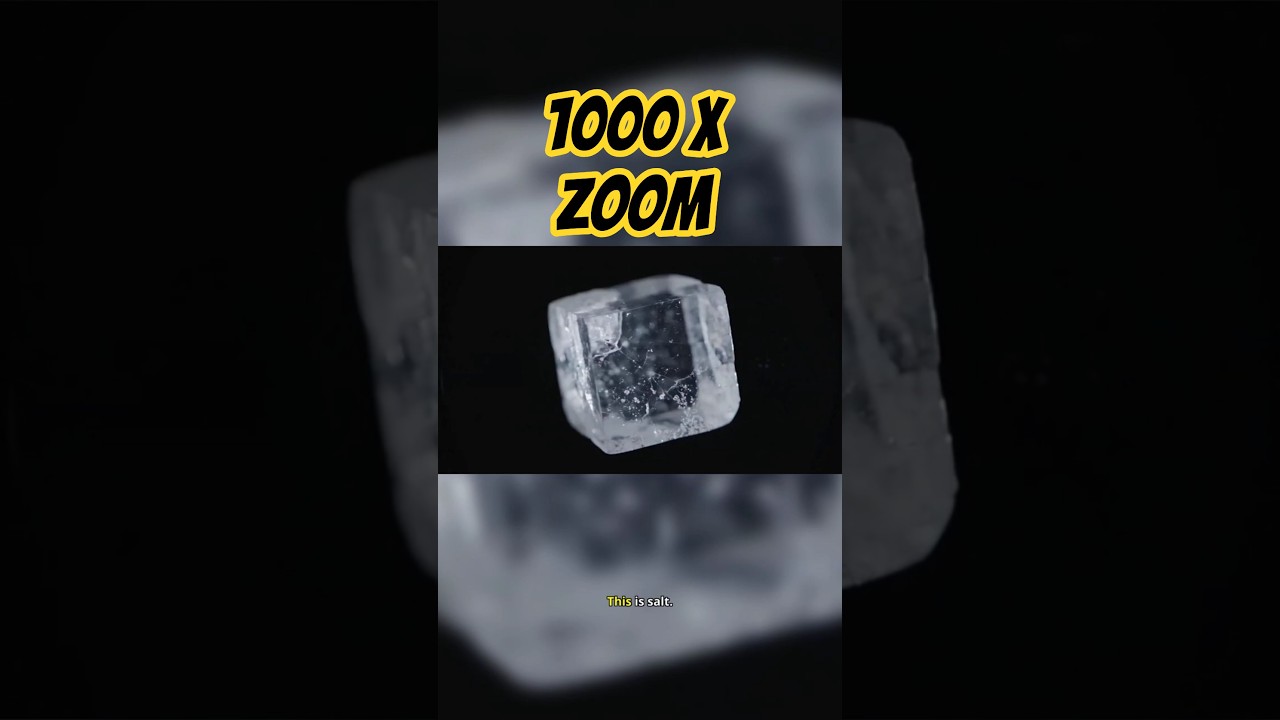
This Is Salt at 1000x Zoom
Mr.VelMash
112 views•2026-05-31

If Class 10 Chemistry Was a Marvel Movie... 💥 Acids, Bases, & Salts Chapter 2
SmartCBSEstudy
101 views•2026-05-31