In criminal sentencing, judges must balance rehabilitation efforts against public safety concerns, and a long history of repeat offenses may outweigh demonstrated recovery efforts when determining appropriate punishment.
Install our extension to search inside any video instantly.
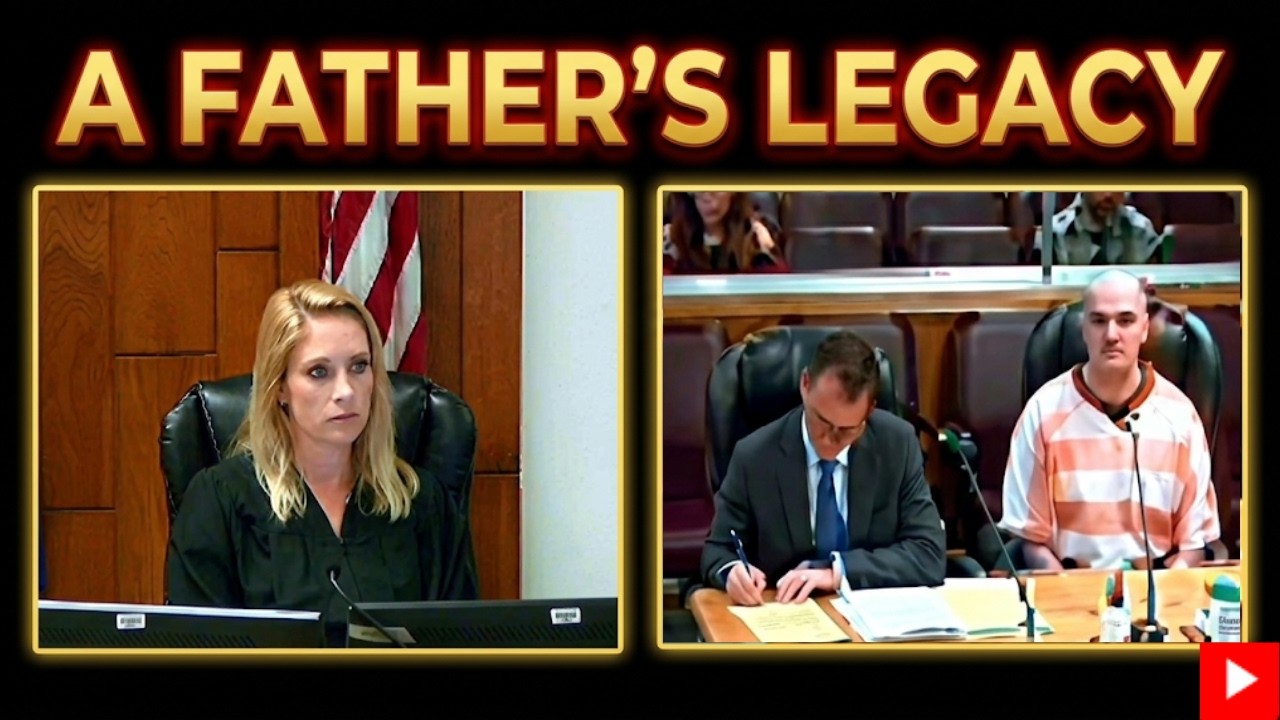
10th DWI – Judge West Says ENOUGH | 18-Year Sentence Explained
Added:All right, this is cause number 24 DCCR0122 and State of Texas versus Katherine Welch. Ma'am, are you Katherine Welch?
And Ms. Welch is here with her attorney Mr. Gertz. State's attorney is present.
Ms. Welch was previously in court entered a plea of guilty to driving while intoxicated third or more as well as a prior offense which made it a second-degree felony offense. There was no agreement with regard to punishment. I have received the pre-sentence report and has everyone had an opportunity to review that report.
>> Got it.
>> Are there any additions or corrections to that report?
>> Nothing from State other than I want to acknowledge I have received Mr. Gertz's sentencing memorandum this year.
>> I'm I'm going to get to that too just a second. Any additions or corrections?
>> Aside from a little comment that I make in the sentencing memorandum about a comment that she made about rehabilitation, I think it's more of a clarification so I'm happy to touch on that but other than that, uh we don't have any additions or corrections.
>> Okay. And Ms. Muffino has already stated as well as I have received the sentencing memorandum memorandum at 5:47 p.m. yesterday.
Going to point that out for the record.
>> But here's how the judge got her sentencing memorandum at midnight.
>> Well, it was reviewed quite early this morning but I did review it. Ms. Muffino, you've had time to review it as well.
>> Same here, your honor.
>> Okay.
Um other than that, I think you all should have a couple there's only a few but there were some jail incident reports that should have been provided to counsel. Did you both receive those as well?
Okay. Is everyone ready to proceed with sentencing then?
>> Yes, judge.
>> Yes.
>> All right. Mr. Gertz, do you have witnesses?
>> I'm I'm not going to call any live witnesses unless the court requires it.
And then we we have a a person present from the Dream Center if the court wants to inquire about that. I've essentially let her come up and and talk if you wanted to have that conversation, but I I think we know our focus here is going to be on the topics that we talked about in or write about in the sentencing memo.
Um, and you know, just sort of allowing if the court decides to do what we're asking you to do. We we are open and low to whatever the court requires of us to do in order to successfully complete. We just wanted you to have that option on the table as well that is an an option that doesn't cost the court anything.
>> Right.
And for the record, I'm aware of the Dream Center and their their program and what they do. And so if I have any specific questions if we get to something where I would need that, then I appreciate them being here and I'll ask those questions.
Miss Malfino, does the state have any witnesses?
>> No.
>> All right. Then, argument.
>> Judge, I want to um I recognize this is a unique case and a unique ask that we're making here. This is not something small that we're asking Uh, I have um sort of personally taken Catherine on over last three plus years, I guess almost four years, uh, as a project for me if that makes any sense.
And what I mean by that is I I really wanted to put to the test could this person do everything that I asked her to do to at least get her an opportunity to be here for the new asking what we're asking for.
Um she exceeded my expectations by doing the 90-day inpatient rehabilitation.
Um, and while she was there, she she started to explore with her counselors and her therapist there some of the underlying issues that went beyond just physical addiction, but actually had to do with her mental health and some of the things that she's experienced in her life. I'm not going to detail them on the record. The court is aware of what those things are.
Incredibly traumatic events that I think she had repressed and had never really addressed and explored. And so those counselors recommended not just aftercare, but a specific outpatient program to address some of the trauma issues that she's had. She went and checked into that program, stayed for a basically a year, and again did everything we asked her to do.
When you know, I told her to go get her own drug patch, I told her to go get her own interlock device, she did all of that.
Those records should be attached to the memo. She was successful, has been following the rules, doing everything we've asked her to do. Had been going to AA got the counselor actually reached out and then befriended the director of the Dream Center to try to figure out what she can do next to sort of commit herself to her sobriety and to fixing the mental health issues that I think stem from the challenges that she faced as a young a young person.
She uh Sometimes it's easy to look at one side of the ledger the the rap sheet or the or the criminal history and think that that defines this person.
What I have been fortunate enough to do is to really dig down and get to understand her as a as a human and see that all the progress she's made, all the effort she's made, and see what she's done well and all of the problems that she's been addressing well.
She's obviously very anxious about this day, but we've been looking forward to this day as well. Be able to to present that.
Um And and I want to go down and on the bottom of page two it addressed what I was talking about the CSI so this I mean he's not saying that this wasn't the words came out of her mouth, but when she was asked by one of the examiners in the probation report uh if she felt she needed treatment, she said she didn't feel like she needed treatment. She wasn't opposed either.
When clarifying what we mean by that and I say this here, but what she would say I think is she did 90 days of detox, rehab, related treatment.
Um has continued aftercare, has continued mental health care.
Um but in terms of going to a program that is specifically targeted at people who are currently using or currently intoxicated, I think she thought that was wasn't the direction that that would be ideal. She will do whatever you want her to do. But I wanted to explain what that comment means.
Um and so there's a lot of times as you know judge private rehabilitation programs will just reject you if you've been clean for three plus years as she has. Um and so they they just won't even accept you at all. So I think that was just a misunderstanding or a miscommunication between the probation officer and and Catherine. But but nonetheless >> [clears throat] >> she's willing to do whatever the court uh chooses here. Um additionally um you know her we've been in contact with her current parole officer. Um they are willing to keep her on parole instead of revoking her. Um depending on what the court does here. Um and uh so that was encouraging as well. I think they we've had the same kinds of conversations with them about her recovery and about her efforts. And and so I think that was an encouraging sign from them.
And then finally, Judge you see we we didn't want to focus too much on support from the community. Just again, this isn't just a run-of-the-mill case. This is a different different focus, but you know, she is married, she has a family, she has recognizes the impact that all of this has on her family and her relationships, the strain it has put on her husband both financially and also emotionally.
And she accepts responsibility for that and is asking the court to >> [clears throat] >> to to consider this extremely rare position that we're asking the court to take here.
And obviously, she if the court if you the court would like her to address the court, she is just happy to do that.
Not sure how you answer or she will.
>> Okay, thank you.
May I call Miss Muffineau?
>> Sworn.
>> Judge, I don't envy the position that the court is in.
It's worrying.
I do take very seriously the comments of Mr. Burns. I take him at his word for that and I hope that all of those things are true.
It's difficult for me as a representative of Kemper County and the state and the citizens that were on the roads every day to stand up and say I don't agree with probation that I don't disagree with the things that Mr. Burns has said and the information that is in his sentencing memo.
To play the other side of the coin, does it suggest that she received the benefit of the doubt already by me waving the habitual status that she could have been facing based on her number of priors?
Does it seem in good conscience that I can say I ignore all of those priors? Absolutely not, but obviously we have seen that her multiple trips to the minute century have resulted in no change of behavior. And so hopefully now in the in these last three years and I do I do sympathize with with Ms. Wells as an individual.
Again, it's hard for me as as a district attorney assistant district attorney to say that I concur with the punishment being probation that I don't again disagree with the comments that Mr. Gertz has. We've had multiple conversations about this case. I know these words very well as that may add it. I don't really know judge and that's why it's before you that putting her in prison for 20 years and her getting out and to versus a extensive probation period where she can continue to recover she's been doing is a is a better option. But again, I don't uh I don't I don't know what is in the best interest of public safety.
Unfortunately, none of us do. So I I would defer to the court with you think is appropriate based on the law.
>> All right, thank you.
Anything else?
>> If you'd like to say something, go ahead.
>> Um >> [clears throat] >> Your Honor, I just want to say that um the past um >> [clears throat] >> was fueled by drugs and alcohol. Like I take complete responsibility for that.
Um I did not know uh from very young when things happened in my life that um it >> [clears throat] >> it could have been some other could have been treated and stopped earlier if I had gotten um help for my mental health.
Uh that after I received the CWI um that helped me get myself to a place that I could go into a treatment program and deal with some of those past traumas.
In the past I didn't I medicated and drank to just forget about the pain. Uh just numb myself out. I didn't know how else to deal with that. And then when I got on my mental health meds and and I had my follow up PTSD and um my life back then was very chaotic. As we say after I had my mental health meds uh I was able to go through uh treatment at Santa Maria in Houston and that place uh it's called the same place.
I did extensive 90-day treatments uh with trauma counselors. It was a trauma informed uh community there.
Um and [clears throat] also I completed that I worked uh in outpatient program but I still lived on that facility. I went to the uh sex trafficking and recovery program >> [snorts] >> and I was in that for about 8 months.
Uh where I got uh the state paid for the counseling for trauma still and um I just worked really hard in that. I got a job while I was in there.
Um and then once that program was over I moved to a sober living facility uh in Oxford House in Spring and I worked there um and so I felt like um I was strong enough to come and do what I needed to do. And um, I'm I was in the the complete program for a variety year.
And uh, I'm sorry. I'm very nervous today. And I know that uh, my my past record is uh, by far I'm satisfactory.
Um, but um, you know, the things that I had to deal with within myself from when I was a little girl, those are things that you don't go to prison. Even in their programs there that you don't talk about. It's just you just don't.
And um, I'm asking you please do not send me um, back to prison.
I want to move forward. I have moved forward in my life.
And this year that I spent in jail uh, has given me uh, more time to think and to know uh, that I am definitely headed in the right direction. I have a sponsor. I attend AA at and at home. I have moved on with my life as far as I feel it was my sobriety. I mean, I knew the shark was out there.
Uh, and I think I have I made some good really good choices with my AA county AA friends. Uh, they've helped me a lot.
And um, I am uh, open to anything. Um, I will abide by all the rules.
Um, and uh, do anything that's asked of me. And I think you know, I know now that I'm responsible and capable and taking care of my business and my life.
>> Thank you.
So, Ms. Welch, this Ms. Alfano probably said it yet best and I get this often and they don't envy my position and this is the worst part of my job and but I worked hard to get here and it's my job. Um part of my job um it's several things and it's it's to to look at, you know, obviously defendants and given chances and things like that, but it also is about making our community safe.
And I have to look back. This is your 10th DWI.
It's not your fifth.
It's not your eighth. It's the 10th.
And while I understand the trauma that you went through, you you you've been in a safe key three times.
Um you've been given [clears throat] opportunities on probation where they were revoked.
You've had opportunities while you were on parole to do what you have done now.
[clears throat] And while I appreciate what you've done and I think that's great and I my my goal isn't to you know, to stop any improvement, but I I don't I can't, in my opinion, in good faith, [clears throat] go home tonight, look myself in the mirror and say I gave somebody on their 10th DWI that your last sentence was for 15 years in prison. The one before that was for 10. The one before that, you've gone to another 10 year back in '09. I mean, this goes back to the '90s. You got a 50 a 10-year sentence in a 2011.
While you're on parole for that one, you get another one, so they give you 15 years.
And you get out and you're on parole and you do it again.
The fact is, we're just lucky that you haven't killed someone in our community nine and 10 times over.
Being given opportunities. I just can't do it. Um I'm going to find that you entered your plea of guilty freely and voluntarily.
I'm going to find uh and your plea of true to the the prior offense. I'm going to find uh sufficient evidence to find you guilty and at this time find you guilty of driving while intoxicated. Going to sentence you to a term of 18 years in the Institutional Division of the Texas Department of Corrections. You will receive credit on that sentence for any time that you've been in custody that the law gives you the right to receive.
You're going to be handed a trial court certification shows this was not Well, I guess there was an agreement because the waiver of the enhancement which could have been a 25 to life as Mr. Gertz said. So, I'm going to hand you the certification that shows this was an agreement. You've waived your right to appeal. I'm also handing you a written admonishment regarding your ineligibility to possess a firearm or ammunition. Possession uh because of the judgment entered against you, you're ineligible under Texas law to possess a firearm or ammunition. Possession of a firearm or ammunition could lead to charges against you. You should read the written admonishment I provide you. Uh if you have any questions about that, you can talk to Mr. Gertz. And Mr. Ms. Welch, I take no pleasure in this. This is extremely difficult for me. Um I understand uh to some extent addiction and I I understand that you are on a better path. However, uh there have been plenty of opportunities in the past where you were on a better path and you got back out and you got back on our roads again. And so, good luck to you, ma'am. Thank you, Mr. Gertz and Ms. Malfino. Court will be adjourned.
>> This courtroom sentencing case highlights the difficult balance between rehabilitation and public safety.
Katherine Welch appeared before a Texas judge after pleading guilty to her 10th DWI offense. Her attorney presented an extraordinary argument for probation instead of prison, emphasizing the remarkable transformation she had made over the past 3 years. According to the defense, Welch completed a 90-day inpatient rehabilitation program, spent nearly a year in trauma-focused treatment, maintained sobriety for more than 3 years, attended Alcoholics Anonymous meetings, received mental health treatment, and worked hard to address deep-rooted trauma from her past. Her attorney described her recovery journey as something that exceeded all expectations. Even the prosecutor acknowledged the significant progress Welch had made. While she stopped short of recommending probation, she admitted that lengthy prison sentences in the past had failed to change Welch's behavior and questioned whether another prison term would truly serve public safety better than continued supervision and treatment.
When given the opportunity to speak, Welch delivered an emotional statement.
She accepted responsibility for her actions, spoke openly about her struggles with addiction, PTSD, and bipolar disorder, and explained how untreated trauma had fueled years of substance abuse. She pleaded with the court not to send her back to prison and promised to continue her recovery. But ultimately, the judge focused on one overwhelming fact: This was Welch's 10th DWI conviction. He noted that she had received multiple chances over decades, including probation, parole, and several lengthy prison sentences. While he praised her recent progress and expressed sympathy for her situation, he said he could not ignore the risk she posed to the community. The judge concluded that despite her rehabilitation efforts, public safety had to come first. He sentenced Welds to 18 years in prison, stating that the community had been fortunate that no one had been killed as a result of her repeated drunk driving offenses. The case serves as a powerful example of the difficult decisions judges face when weighing genuine personal reform against a long history of dangerous criminal behavior.
Related Videos

JAMIA BA LLB 2026 Offline Mock Interview | Final Interview Round Preparation
MLSLAWACADEMY
104 views•2026-06-16

6/15/26 Lively v. Wayfarer - Full Settlement Agreement is now public
littlegirlattorney
11K views•2026-06-15

HOA Demolished My Yacht for “Unauthorized Docking” — Too Bad I Own the Entire Marina!
Pro-RevengeStories
423 views•2026-06-15

JACKSON KIHARA'S SECRET DEAL: The Deal That Brought Out Jackson Kihara From Jail | LifeLens TV
LifeLens254
5K views•2026-06-14

Guelph's New Renoviction By-Law Explained.
CallCodyRE
807 views•2026-06-14

SCOTUS Rules 9-0 on Gun Rights for Marijuana Users
TheReloadSite
164 views•2026-06-18
A Family Tradition of Federal Time
LoneWolfUsul
603 views•2026-06-14

YouTuber Alexander Zabel Jr arrested again near Nancy Guthrie’s home amid investigation disruption
StarBuzzHD
136 views•2026-06-15



