The video uses sophisticated jargon to dress up speculative "hopium" as rigorous institutional math. It’s a classic example of using complex formulas to justify astronomical price targets that remain fundamentally detached from market reality.
Installez notre extension pour rechercher instantanément dans n'importe quelle vidéo
XRP's REAL Price Target According To Institutional Math…The Honest Math!Ajouté :
The monetary architecture model that institutional analysts use to price settlement assets produces an XRP number that most retail investors have never seen assembled clearly in one place. Not because the model is secret. Because the model requires holding simultaneously in your head the size of the global foreign exchange market, the velocity at which a settlement asset turns over an institutional operations, the effective supply constraint that 3 years of accumulation has produced, and the specific market share assumptions that the documented institutional adoption evidence supports. When you do hold all of those things simultaneously and you run the arithmetic honestly, the numbers that come out of the model are not the chart-based price targets that most XRP content discusses. They are the monetary architecture targets that explain why Goldman Sachs built a $154 million position, why Bank of America has been filing Ripple patents for a decade, and why the institutional behavior of every major actor in the XRP ecosystem is calibrated for an endpoint that is dramatically higher than Standard Chartered's already significant $28 published target. Tonight, I am going to walk you through the monetary architecture model step by step. I am going to show you every input, challenge every assumption, explain where the numbers come from, and let you evaluate the arithmetic for yourself. I am going to connect each model input to the documented real world evidence that supports it. And I am going to show you why the recent US government developments, the Clarity Acts advancement, the Federal Reserve's door opening, the Treasury's crossber payment strategy update, and the institutional positioning cascade are moving the probability weights on each scenario input in the direction that produces the higher end of the model's output range.
Every number I use is traceable. Every assumption is challengeable. The goal tonight is not to convince you that a specific price is guaranteed. The goal is to show you the analytical framework that the smartest institutional money is using so that you can evaluate it with the same rigor they do. Before I continue, this is not financial advice.
I am sharing publicly available information for educational purposes only. Always do your own research and consult a qualified financial professional before making any investment decisions. Let me start by explaining what the monetary architecture model is and why it produces different numbers than the price models most retail XRP analysis uses. Most retail XRP price models are adoption curve models. They take the current price, identify a comparable assets adoption trajectory as the baseline, apply a multiple to the comparables appreciation, and produce a target that is essentially a multiple of the current price dressed up as fundamental analysis. These models are not wrong in direction. They tend to produce targets in the right general range, but they are imprecise in the specific number they produce because the multiple they apply is chosen after the fact to produce a number that feels reasonable rather than derived from the fundamental supply demand mechanics of the specific asset being modeled. The monetary architecture model is different. It starts with the function that the asset performs in the financial system. It quantifies the total value of transactions that function is required to settle at various adoption scenarios.
It applies the velocity at which the asset turns over in performing that settlement function to determine the aggregate market cap the asset must have at each scenario and it divides that market cap by the effective supply available at each adoption stage to produce the per token price. The model is mechanistic rather than multiplebased. It produces a price that is the output of arithmetic rather than the output of intuition dressed as arithmetic. The monetary architecture model has been applied to gold to explain its price trajectory from the abandonment of Bretonwoods through its current role as a reserve asset. It has been applied to Bitcoin to explain the gap between its speculative early price and the institutional adoption price that Black Rockck's ETF validated. and it is being applied to XRP by the institutional analysts whose behavior reveals that their price targets are in the hundreds of dollars range rather than in the tens of dollars range that standard chartered's crossber payment adoption model produces. Now, let me walk through each model input for XRP specifically because the inputs are where the analytical work is done and where the institutional analyst's assumptions differ from the assumptions that most retail analysis uses. The first input is the settlement function.
The question the model asks is what is XRP being used to settle and how large is that settlement market. The conservative assumption which is the assumption that Standard Chartered's published research uses is that XRP captures a meaningful share of the crossber retail and commercial payment market. The specific corridors where Ripple's ondemand liquidity is currently deployed, Southeast Asia, South Asia, the Middle East, and Latin America, represent approximately $2.5 trillion in annual crossber payment volume. Standard Chartered's $28 target reflects XRP capturing a meaningful fraction of that $2.5 trillion in annual volume on a 3 to four-year adoption timeline. The monetary architecture model extends the settlement function beyond the crossber retail and commercial payment market to the wholesale institutional settlement market. The wholesale institutional settlement market is the market that the Federal Reserves Fedwire system the correspondent banking network's interbank settlement function and the foreign exchange settlement infrastructure serve. The bank for international settlements publishes data on this market annually. The daily foreign exchange settlement volume globally is approximately $7.5 trillion.
The annual figure is approximately $2.7 quadrillion. The interbank settlement volume that the Fed wire system processes is approximately $4 trillion daily or approximately $1.5 quadrillion annually. The monetary architecture model does not assume XRP captures all of this volume or even a large fraction, but it does model what happens to XRP's price at different capture rates of the wholesale settlement market. At 0.1% of annual global FX settlement volume, the capture is $2.7 trillion annually. At 0.5% 13.5 trillion, at 1% 27 trillion. These are not the capture rates that the near-term or medium-term adoption scenarios assume. They are the capture rates that the long-term monetary architecture scenario assumes when XRP's role in the Federal Reserve supervised payment infrastructure has been established through the Clarity Acts framework and when the central bank CBDC bridge adoption has expanded the settlement function beyond the retail ODL market. The second input is velocity. Velocity is how many times per year each unit of XRP turns over in performing the settlement function. In a retail crossber payment corridor, a unit of XRP that settles a transaction is available for the next transaction in approximately 3 to 5 seconds. The theoretical maximum velocity and ODL operations is therefore extremely high.
But institutions do not run their operational reserves at theoretical maximum utilization. They maintain buffer reserves that sit idle to ensure settlement availability during peak demand periods. The realistic velocity assumption for institutional ODL operations is between 20 and 50 turnovers per year per unit of XRP in operational reserve. For wholesale institutional settlement where the transaction sizes are larger and the liquidity buffer requirements are more conservative, the velocity is lower. The institutional wholesale settlement velocity assumption that the monetary architecture model uses is between 10 and 30 turnovers per year. At lower velocity, more XRP must be held in reserve to support a given volume of settlement. The lower the velocity, the higher the market cap required to support any given settlement volume and the higher the per token price at any given effective supply. The third input is effective supply. This is the input that most retail analysis gets most wrong and that produces the largest discrepancy between retail price models and institutional price models. The headline circulating supply of 61.3 billion tokens is not the supply that is available to perform the settlement function or to be purchased on the open market. The effective supply is the headline supply minus the escrow holdings minus the long-term dormant holdings minus the institutional custody positions minus the ODL operational reserves minus the sovereign wealth fund accumulations that are managed on multi-deade horizons. As I documented in the supply exhaustion analysis, the effective liquid float is approximately 6 to9 billion tokens. But the effective supply for the monetary architecture model is not even the liquid trading float. It is the supply that is available to perform the settlement function at steady state which is the liquid float minus the operational reserves that the settlement institutions maintain at full institutional adoption. The operational reserves that JP Morgan Bank of America Mastercard, Fidelity's ETF custodians, and the sovereign wealth fund accumulators collectively maintain could reduce the effective available supply to 3 to 5% of the headline number. At 3% effective supply, the available supply for settlement operations is approximately 1.8 billion tokens. The per token market cap calculation at various settlement volumes and velocities changes dramatically at that effective supply level compared to the headline supply level. Now, let me run the arithmetic at each scenario level because this is where the model produces its outputs. At the conservative scenario, which is the standard chartered crossber retail and commercial payment adoption scenario, XRP captures a meaningful fraction of the 2.5 trillion annual crossber payment volume at a velocity of 35 and a capture rate that standard charter's model implies.
The required aggregate XRP market cap for the settlement function is approximately 50 to 100 billion at 61.3 billion tokens of headline supply. That market cap produces a price between 80 and $163 per token. This is consistent with current prices and validates the model's mechanics for the conservative scenario. But the conservative scenario uses the headline supply rather than the effective supply. At 6 billion tokens of effective supply, the same 50 to 100 billion market cap requirement produces a price between $8 and $16 per token.
This is the range that standard chartered's $28 target sits above reflecting their adoption timeline and the supply absorption that will occur before the adoption volume is achieved.
At the intermediate scenario where XRP captures 0.1% of annual global FX settlement volume in addition to the crossber retail payment market the settlement volume requiring support is approximately 2.7 trillion annually at a velocity of 25 for institutional wholesale settlement and 6 billion tokens of effective supply. The required market cap is approximately $18 billion.
The per token price is approximately $18. This is in the range of Standard Chartered's $28 target, which reflects a more aggressive effective supply reduction assumption than the 6 billion token base case. At the advanced institutional scenario, where XRP captures 0.5% of annual global FX settlement volume and the effective supply has been reduced to 3 billion tokens through sovereign wealth fund accumulation and institutional ODL reserves. The settlement volume is approximately 13.5 trillion annually at a velocity of 15 for institutional wholesale settlement. The required market cap is approximately $900 billion. At 3 billion tokens of effective supply, the per token price is approximately $300. At the monetary architecture scenario, where XRP captures 1% of annual global FX settlement volume and the effective supply has been reduced to 1.8 8 billion tokens through full institutional adoption. The settlement volume is approximately 27 trillion annually. At a velocity of 12, the required market cap is approximately $2.25 trillion. At 1.8 billion tokens of effective supply, the per token price is approximately $1,250.
The $18,000 figure that the most aggressive monetary architecture models produce requires a specific combination of inputs. It requires a settlement volume capture that includes not just FX but a meaningful fraction of the interbank settlement market. It requires an effective supply reduction to below 1 billion tokens through sovereign reserve accumulation and institutional custody.
And it requires a velocity assumption below 10 reflecting the extremely conservative liquidity buffers that central bank reserve management requires. These are not near-term assumptions. They are the long-term terminal scenario assumptions that the institutional analysts who are building multi-deade positions are using as their endpoint. The $18,000 number is real in the sense that it is the honest arithmetic output of the monetary architecture models aggressive inputs.
It requires assumptions that are not near-term probabilities, but it requires assumptions that are not impossible. The institutional behavior of the actors who are building decadel long positions in XRP related technology reflects an end point that is in the territory the aggressive monetary architecture inputs produce. Goldman does not build $154 million positions for $12 returns. The end point they are positioning for is in the hundreds of dollars range specific to the $18,000 number that requires the specific conditions I described. But it is the honest output of the model at those conditions, not a fabricated target. Now, let me connect the recent US government developments to the model's inputs because the government developments are changing the probability weights on the scenario assumptions in specific and documented ways. The clarity acts advancement directly affects the effective supply input. When the Clarity Act passes and the operational guidance is published, the institutional adoption that the compliance reauthorization wave produces begins reducing the effective supply through ODL operational reserves and institutional custody. Every institution that deploys following the guidance publication removes supply from the effective trading float. The Clarity Act is the trigger that begins converting the model supply assumption from the conservative 6 billion token level toward the lower levels that the advanced institutional and monetary architecture scenarios require. The Federal Reserve's door opening directly affects the velocity input. When Ripple's ODL operates within the Federal Reserve supervised payment infrastructure, the institutional wholesale settlement use case becomes accessible. The institutional wholesale settlement velocity assumption, which is lower than the retail ODL velocity assumption, applies to the settlement volume that moves to XRP ledger settlement through the Federal Reserve framework. The lower velocity increases the market cap requirement for any given settlement volume, pushing the per token price higher at any given effective supply level. The ADIA sovereign wealth fund disclosure directly affects the effective supply input in the long-term direction. Sovereign wealth fund accumulation is the supply removal mechanism that has the most permanent effect on the effective supply because sovereign funds manage on multi-deade horizons. ADIA's material disclosure initiates the cascade that over the years sovereign adoption timeline moves the effective supply toward the lower levels that the advanced institutional and monetary architecture scenarios require. The IMF's economic collapse warning directly affects the settlement volume capture input. The fragmentation of the correspondent banking system that the IMF is warning about increases the addressable market for XRPbased settlement by reducing the swift-based alternatives coverage. Every crossber payment corridor that loses its correspondent banking coverage becomes a potential ODL corridor. The fragmentation that the IMF warns about grows the total addressable market for Ripple's technology in ways that increase the settlement volume capture in every scenario. Let me give you the investment calculator because the monetary architecture model produces prices that need to be expressed in portfolio terms at every holding level.
At $142, $1,000 buys you approximately 704 XRP. At the conservative scenario output of $8 to $16, those 704 tokens are worth 5,632 to $11,264.
At Standard Chartered's $28 published target, they are worth $19,718.
At the intermediate scenario output of approximately $100, they are worth $70,400.
At the advanced institutional scenario output of approximately $300, they are worth $211,200.
At the monetary architecture terminal scenario ranges that the aggressive inputs produce, the per token prices and corresponding portfolio values become the numbers that explain the institutional behavior of every actor in this ecosystem. At $5,000 invested, multiply every number by five. At 10,000, multiply by 10. At 25,000 multiply by 25, the structural floor at a$127 puts maximum downside at approximately 10%. The monetary architecture model's intermediate scenario produces approximately 6,900% upside from current prices. That is the asymmetry that the institutional money is positioned for. Not because they know the exact end point, because they have run the monetary architecture model, evaluated each input honestly and concluded that even the conservative assumptions produce returns that justify significant institutional positioning.
Now, let me lay out the catalyst sequence that moves the model's inputs from the conservative scenario toward the advanced institutional scenario because understanding the input movement is understanding the price trajectory.
The Clarity Act's passage moves the effective supply input from 6 to 9 billion tokens toward the lower levels by activating the compliance reauthorization waves institutional custody absorption. It also moves the settlement volume capture from the retail ODL market toward the wholesale institutional market by enabling the Federal Reserve framework integration that the capital buffer release mechanism provides. The Clarity Acts passage moves two inputs simultaneously in the direction that produces higher model outputs. The Black Rockck ETF filing moves the effective supply input further by activating the permission capital's conversion to active ETF share demand which requires XRP purchases from the effective float. It also moves the institutional adoption credibility input by providing the market legitimization that every subsequent institutional allocation decision depends on. The Black Rockck filing moves one input directly and multiple inputs indirectly.
The central bank CBDC bridge adoption moves the settlement volume capture input from the retail and institutional commercial payment market to the sovereign monetary infrastructure market. Central Bank CBDC bridge adoption is the input movement that crosses the boundary between the intermediate scenario and the monetary architecture scenario. It is the longest timeline input movement, but it is the one that the BIS project Nexus work, the New York Feds project Cedar Research and the sovereign wealth fund accumulation cascade are all building toward. The monetary architecture model is the framework that produces the numbers the institutional money is positioning for.
The inputs are documented. The arithmetic is transparent. The scenario assumptions are challengeable. And the recent US government developments are moving every input in the direction that produces higher model outputs. The conservative scenario is already producing prices significantly above the current level. The advanced institutional and monetary architecture scenarios produce prices that explain the scale of the institutional positioning that Goldman, Bank of America, Morgan Stanley, and Black Rockck have been building. The model is real. The arithmetic is honest. The institutional behavior is confirmed. The government developments are moving the inputs. And the price at $142 is where the model is available to you before the inputs have moved far enough to be visible in the price. Macrostorms pass, infrastructure lasts. Smash that like button. Drop which scenario of the monetary architecture model you believe is the realistic endpoint in the comments. Conservative, intermediate, advanced, institutional, or terminal.
Let's see where this community's analysis sits. Subscribe and hit the bell. When the Clarity Act passes, when the Federal Reserve Framework integration begins moving the velocity input, and when the sovereign accumulation cascade begins moving the effective supply input, my monetary architecture model update is live within hours. The model is real. You were here when the community understood the arithmetic. See you on the other side.
Vidéos Similaires

Are our DeFi tools becoming too easy to exploit?
saidotfun
228 views•2026-05-30

Solana Unchained ($UCHN) Explained: Solana’s Next Big Utility Project?
CryptoVlogOfficial
339 views•2026-05-30

⚠️ALGO Has a Very Bright Future! ✅ One #Crypto Everyone Should Own!
MetaShackle
184 views•2026-05-30

BingX EventX: Trade Sports, Crypto & Global Events With One Click
AidenCryptox
311 views•2026-05-31
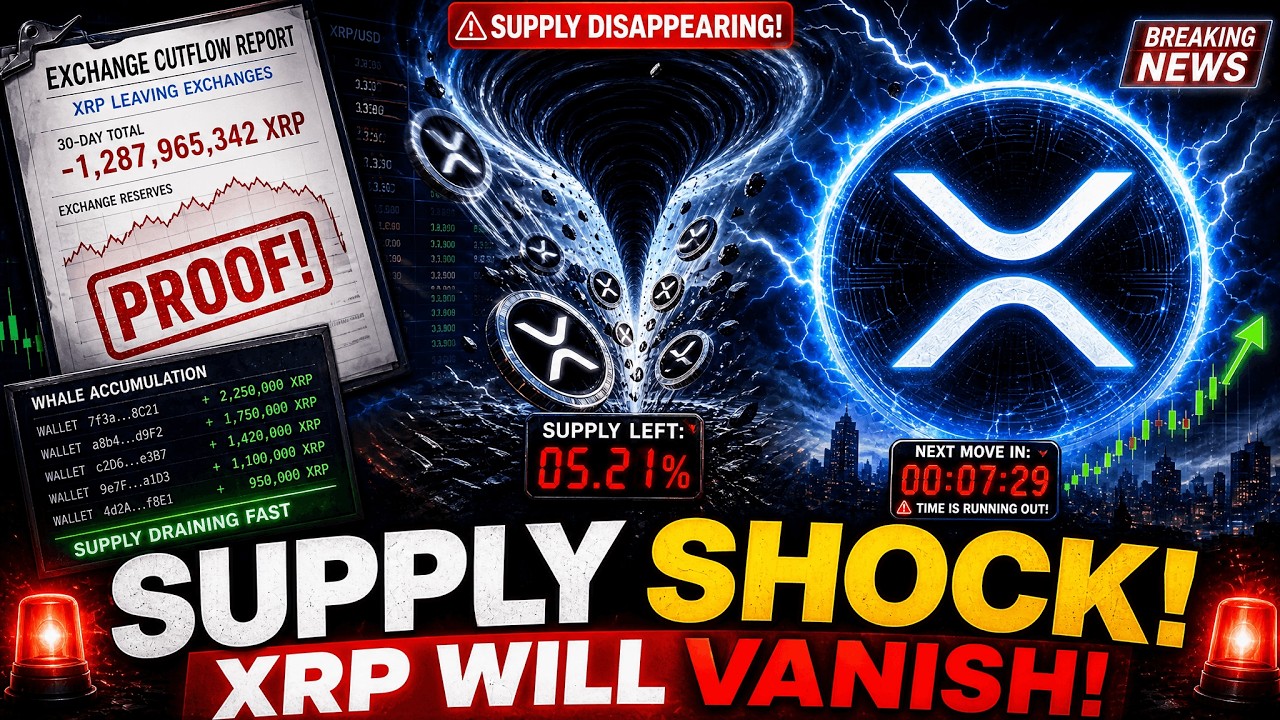
XRP IS GOING TO VANISH! A SUPPLY SHOCK IS INEVITABLE! (THIS IS THE PROOF!)
NCash
2K views•2026-05-31

AI Predicts What XRP Looks Like If Ripple Gets A Fed Master Account
CryptoBlazon
422 views•2026-05-30

Max hit $120,000!!!!
ArajoRarities
168 views•2026-05-31
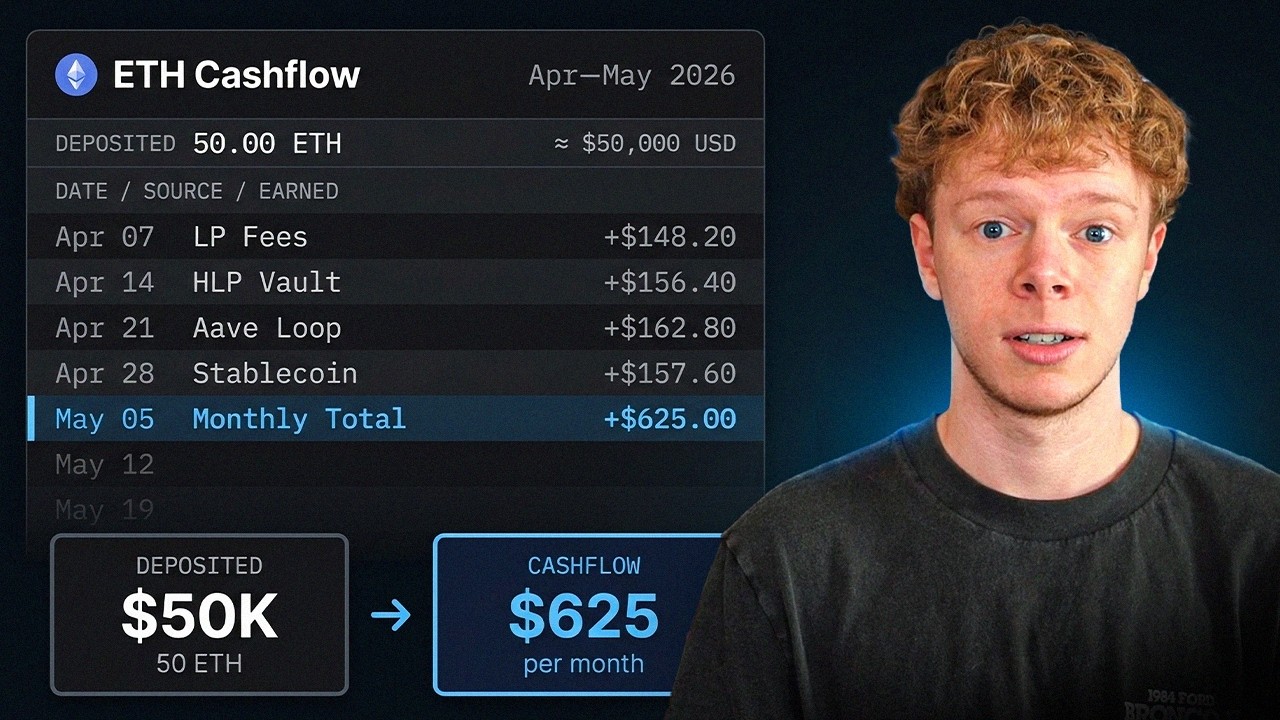
How I Turned $50,000 of ETH Into $625 / Month of Cashflow (DeFi Passive Income)
jakeacall
528 views•2026-05-29


