This video explores how American visitors notice fundamental cultural differences when entering Australian Woolworths supermarkets on Friday afternoons, revealing that the Australian supermarket experience reflects broader societal values including trust, community, social safety nets, and work-life balance. Key observations include: the absence of trolley deposits (reflecting cultural trust), relaxed checkout conversations (human connection over transactional efficiency), affordable pharmacy prices (Medicare and PBS system), unhurried family shopping (work-life balance), and the absence of visible poverty (social safety net). The video argues that these differences stem from Australia's social infrastructure that prioritizes community well-being over commercial efficiency, creating a shopping environment where people feel comfortable, trusted, and genuinely connected rather than performing or stressed.
What American Visitors Notice First Inside a Woolies on Friday AfternoonAdded:
There's an American bloke standing in the deli aisle at the Woolworths in Coffs Harbour holding a piece of barramundi and he's not moving. Not because there's a queue, not because he can't decide what to buy, because the woman behind the counter just asked him how his afternoon was going and meant it and he doesn't know what to do with that. That's the first thing.
Before the prices.
Before the trolleys. Before the meat pies in the warmer near the front. The first thing an American notices at an Aussie Woolies on a Friday afternoon is that a stranger talked to them like a person and then walked away without trying to sell them anything. I'm going to walk you through 11 things American visitors notice the first time they step inside a Woolies on a Friday around 4:00.
Some of them are funny. Some of them you'll recognize the second I say them and one of them, and I'm not exaggerating here, is the one that made my American mate stop in the middle of an aisle and ask me, quote, "How do you people live like this and not talk about it?" But the one that actually broke him wasn't until number two. You'll see why I keep coming back to it.
Right, let's go. Number 11. The trolley doesn't trap you for a dollar.
This one sounds small. It's not. In most American supermarkets, you have to put a quarter in the trolley to release it from the bay. It's not a lot of money.
It's the principle. It's the vibe. The country starts you off before you've even walked through the door with a small transaction designed to make sure you bring the trolley back. In Australia, you grab the trolley, you walk inside, you do your shop, you wheel it to your car, you take your time, you bring it back when you're done.
No coin. No lock.
No reminder. The system assumes you're going to do the right thing and here's the bit that gets them. My mate Mike, first time we walked into a Woolies together, he asked me, "Where do I put the dollar?" I said, "Nowhere, mate.
Just take it." And he stood there for about 4 seconds. Then he said, "That's the most trusting thing I've seen in this country and I've been here 3 days."
3 days. He hadn't even hit the bottle-o yet. This is what cultural trust looks like.
It's a missing dollar slot on a trolley.
Number 10, the afternoon trolley silence.
You know that thing where you walk into Woolies at 4:00 p.m. on a Friday and there's just this gentle hum, trolleys squeaking, someone laughing two aisles over, a kid asking for tiny teddies, the bakery announcement about hot cross buns.
That's it. That's the whole soundscape.
Americans walk into that and their nervous system doesn't know what to do because at the average American supermarket, Walmart, Kroger, Safeway, there's a constant background tension.
Security at the door checking receipts, loud overhead music designed to make you spend more, the buzz of the self-checkout calling for assistance every 30 seconds, people moving fast because they have to. Tannoy announcements about price overrides, the whole place is on edge. Woolies on a Friday afternoon feels like a small country town that decided to bring everyone inside one building.
That's not an accident. That's a country that decided shopping shouldn't be a stress event.
My American mate said it best. He said like nobody here has anywhere they urgently need to be. Mate, welcome to Friday.
Number nine, the deli lady knows what cheese you want. Walk into any Woolies in the country. Doesn't matter which town. Walk up to the deli. The woman behind the counter, and it's almost always a woman, usually 50s or 60s, sometimes the same one who's been there for 20 years. She'll ask you what you want and then she'll look at you while you answer.
Look at you.
Not at the screen.
Not at her phone.
Not at the customer behind you. At you.
She'll ask if you want it sliced thick or thin.
She'll throw an extra slice in to test.
She'll ask if you've tried the new Wagyu pastrami because it's actually really good, love. And she'll wrap it up neatly, hand it across, and say no worries without thinking about it. In America, that woman is on a timer.
There's a metric. There's a manager.
There's a queue management system. She's processing units per minute. In Australia, she's a person doing a job that means something to her in a community she's lived in for 30 years and she remembers your dog's name.
I'm not romanticizing it. I'm describing it. Go to a country Woolies on a Friday and tell me I'm wrong.
Number eight.
The Friday afternoon old bloke who is just there.
Every Woolies in Australia has at least one.
You know who I mean.
He's in his 70s. He's wearing a polo shirt tucked into shorts. He's got a small basket with two things in it, a loaf of white bread and a jar of Vegemite and he's not in any hurry. He's chatting to the bloke stacking the milk fridge.
He's asking about the footy. He's been there for 40 minutes.
Americans notice this within 5 minutes of being in the store. They notice him because he doesn't exist in their country.
In America, a 70-year-old man in a supermarket on a Friday afternoon is doing one of two things. He's there because his pension can't keep up with his groceries and he's stretching the trip or he's not there at all because he's still working at Home Depot to afford his insulin. In Australia, that bloke is having a yarn because he's retired, his pension is covered, his health is covered, his medication is $6.70 under the PBS and his afternoon is his own. He's at Woolies because he wants to be, not because he has to be.
That's not a small detail. That's the whole country in one bloke. Number seven. The prices are written like they're not trying to trick you.
Here's something Americans don't expect.
You walk up to the avocados. There's a sign. It says avocados $1.50 each.
That's it.
In America, that same sign would say $1.49 with the cents in small font and underneath, in even smaller font, it would say with Kroger card, multiples of three, weekly limit, valid Tuesday through Thursday, see register for details.
And then at the checkouts, somehow, it would ring up as $2.79.
I'm not joking. Anyone who's lived in America is nodding right now. Aussies don't trick you on price.
The supermarkets don't lie to you on price. If it says $4.50, it's $4.50.
The system isn't built around extracting micro pennies through fine print. The system is built around an honest exchange. And here's the thing, when Americans first encounter that, they don't believe it.
They wait for the catch.
They scan the receipt. They check three times. There is no catch. My mate Mike spent his first three weeks in Australia convinced he was being undercharged. He kept saying, "Are you sure that's the total?" And the checkout girl kept saying, "Yeah, mate, no worries." He's a grown man. It took him a month to relax.
Number six, the chemist is in there.
Wait. The pharmacy is inside the supermarket? Yeah. Yeah, it is. You can do your weekly shop, pick up your blood pressure medication for less than $7, grab a hot chook on the way to the car, and be home in time for the news. One trip, one building, one country that decided this was sensible. In America, the pharmacy is a separate company. CVS, Walgreens, Rite Aid.
Each one a corporation, each one negotiating with insurance, each one charging you what they can get away with. The same medication that costs an Aussie $7 at the Woolies pharmacy costs an American $400 at Walgreens, minimum, before insurance. My mate Mike's wife is on a blood thinner. In Houston, she paid $87 a month with insurance.
At the Woolies in Lismore, she paid $6.70.
She cried in the car. That's not a metaphor. She actually cried, and he just sat there in the passenger seat going, "We've been paying this for 12 years. 12 years." Number five, the hot chook, the roast chicken in the warmer near the front of the store.
12 bucks.
Maybe 14. Massive. Already cooked.
Smells like a Sunday lunch. In America, that's a $30 chicken at Whole Foods that they call rotisserie style, sold in a plastic clamshell with a side of guilt.
In Australia, it's a Tuesday dinner or a Wednesday lunch.
Or, and this is the bit Americans never get, it's a thing you grab on the way home from work to feed three people because you're tired and you've earned it. You know what an Aussie hot chook actually is? It's a country saying, "We know you've had a long week. Here's $12 of dinner. Off you go." That's a country with its priorities sorted.
Number four, the checkout chat.
Americans freeze at the checkout every time.
Because the checkout person, usually a teenager, sometimes a uni student, sometimes a woman who's been there since Howard was PM, will scan your items. And while she's doing it, she'll just talk to you. "Big weekend planned? Footy on tonight? Working tomorrow or you've got it off?" In America, that's a violation of the unspoken contract. The checkout transaction is supposed to be silent, efficient, transactional. You hand over money, they hand over food. Nobody acknowledges that you're two humans in the same building. In Australia, the transaction includes a short, real conversation about your week, about your kids, about the weather, about nothing in particular.
And then she says, "Have a good one, love." And means it. My mate Mike got asked at the Toormina Woolies whether he was going up the coast for the weekend.
He didn't know what to say. He stood there. Eventually, he said, "Maybe." She said, "Lovely, enjoy." He walked out and said to me, "I think she was being nice to me. I don't know why."
Mate, because she was a person.
And so are you.
That's it. Number three, nobody is begging at the entrance.
This one hits Americans hardest, and they don't even know it's hitting them until they get back home.
You walk into Woolies, there's nobody outside asking for change, there's nobody sleeping in the car park, there's There's security guard staring at every face. There's no woman with three kids asking if you've got a spare $2 for nappies. The car park is just a car park. In America, walk into any urban Walmart, any Target, any Safeway, and there will be at least one person outside who has fallen through the system.
Sometimes five.
Sometimes a tent city. The richest country on Earth has decided that's acceptable.
Australia decided it wasn't. Centrelink, public housing, Medicare, the disability pension, the carer's payment, the jobseeker allowance, the whole stack.
Imperfect, sometimes brutal, but it catches people before they end up sleeping in a Woolies car park.
Americans walk into an Aussie supermarket and feel their shoulders drop. They don't know why. I'll tell you why. It's because the absence of visible suffering is itself a form of wealth, and they've forgotten what it feels like.
Number two, the Friday afternoon family run. This is the one. This is the one that broke my mate.
Around 4:00 to 5:00 p.m. on a Friday, in every Woolies across the country, there's a wave.
It's the after-school, before-the-weekend shop. Mums and dads picking up something for dinner. Kids in school uniforms still on. A baby in the trolley seat.
A grandparent tagging along.
Sometimes two families running into each other in the bread aisle and stopping for 10 minutes to talk. What Americans notice, and this is exact, this is a real quote from Mike standing in the Woolies in Sawtell, is that the parents look unhurried. That's the word he used.
Unhurried.
In America, the Friday afternoon supermarket run is a war crime. Parents racing through the aisles. Kids melting down. Dads on the phone trying to finish work emails. Mums calculating whether they can afford the brand name milk this week.
Tension thick enough to slice. In Australia, the parents are talking to their kids. They're picking up the kid and showing them the grapes. They're letting the kid choose the yogurt.
They're stopping to chat with another parent they bumped into. They're laughing. And Mike, who's a hedge fund analyst from Connecticut, married, two kids, six-figure salary, world-class health care plan. Mike stood in that aisle and said the sentence that ended his American life. He said, "I have never been this relaxed buying food in my entire life." He moved his family to the mid-north coast 8 months later. He's not going back.
His kids walk to school now. His wife works 3 days a week instead of five.
They shop at Woolies on Friday afternoons. And every time I see him in the bread aisle, he still looks slightly stunned. Like he can't believe it's allowed. Now, before I get to number one, I know what some of you are thinking. You're thinking, "Yeah, but Yianni, Woolies isn't perfect. The prices are going up.
The Coles-Woolies duopoly is a joke. The CEO got paid $18 million last year. The big shop costs more than it used to."
You're right.
I'm not telling you Woolies is heaven.
I'm telling you what Americans see when they walk into one for the first time compared to what they walked into for the last 40 years of their lives in America.
That comparison is the story. And the comparison is brutal. Australians watching this, tell me if I got it wrong because from where I'm standing as an outsider who's done the weekly shop in both countries, you lot don't even know what you've built. You think a Friday afternoon at Woolies is a chore.
Americans think it's a miracle. I know this is going to split the comments. I want it to.
Tell me about your Woolies. Tell me what you take for granted that I should have included.
Tell me what Mike noticed that I didn't catch.
But first, let me tell you about number one because this is the one that doesn't make it into any tourism ad, any cost of living article, any expat blog. This is the one that lives underneath all of it.
And it's the one that takes Americans the longest to see because it's not a thing. It's a feeling.
Number one, nobody is performing.
That's it.
That's the whole thing. Nobody in the Woolies is performing wealth.
Nobody is performing poverty. Nobody is performing success. Nobody is performing struggle. The bloke in the Bonds singlet buying a six-pack of VB and a frozen lasagne is not pretending to be anything other than a bloke buying a six-pack and a frozen lasagne. The woman in the corporate jacket on her way home from court is not pretending she's better than him. The pensioner with the half-empty trolley is not pretending he's not on a budget. The mum with three kids is not pretending the kids are perfect.
Everyone is just themselves.
In America, the supermarket is a stage.
Whole Foods is performing health.
Woolworths is performing affordability.
Trader Joe's is performing whimsy. The customers are performing, too.
Performing wealth, performing wokeness, performing thrift, performing whatever class they wish they belong to.
The whole thing is theater. In Australia, the Woolies on a Friday afternoon is the closest thing this country has to a public square. A place where the doctor and the tradie and the retired teacher and the single mum and the bloke who just got off the boat all push trolleys past each other and nod.
And nobody is pretending. That's the country. That's what Mike couldn't put into words for eight months. That's what made his wife cry in the car park.
That's what an American visitor notices first, even if it takes them a year to figure out what they noticed. And here's the part that should make every Australian watching this sit up a bit straighter.
You built that. Not the politicians, not the supermarkets, not the economists.
You did. By being the kind of country that doesn't perform itself. By being the kind of country where a Friday afternoon at the supermarket is just a Friday afternoon at the supermarket.
Don't lose it. If you've got a Friday Woolies story, the deli lady who remembers your order, the old bloke who's always there, the mum who's been doing the same shop for 30 years, drop it in the comments.
I read everyone. And if you've got a brother or a mate overseas who's forgotten what this feels like, send this to him. He might remember why he misses home. And if you want to see the moment my mate's wife actually cried in the Lismore car park over a blood thinner script, I covered the full Australian pharmacy versus American pharmacy story in another video on the channel. It's the most American breakdown I've ever filmed. Worth watching after this one.
I used to think Friday afternoon at the supermarket was the most boring part of the week. Now, I think it might be the most Australian part.
Related Videos

DeenTheGreat Is Absolutely DISGUSTING
challzbrown
681 views•2026-05-29

Flotilla activist on 'racist' response to Ben Gvir's video of her
MiddleEastEye
13K views•2026-05-29

Why Is It ALWAYS About The Pregnant One? 😂
alikicomedy
9K views•2026-05-30

Choa Chu Kang Tragedy Raises Questions About Warning Signs and Relationship Violence
TwentyTwoThirty
872 views•2026-05-29

10 French Cities That Could Collapse First as the Homeless Crisis Worsens
InsideEuropeToday
359 views•2026-05-29

White People RECOUNTS How Great Black People Are Becoming So Fast Now They Can't Take It
mrsan_20
939 views•2026-05-30

Foreign-Owned Shops Targeted as Anti-Migrant Tensions Rise in South Africa
aljazeeraenglish
25K views•2026-05-30
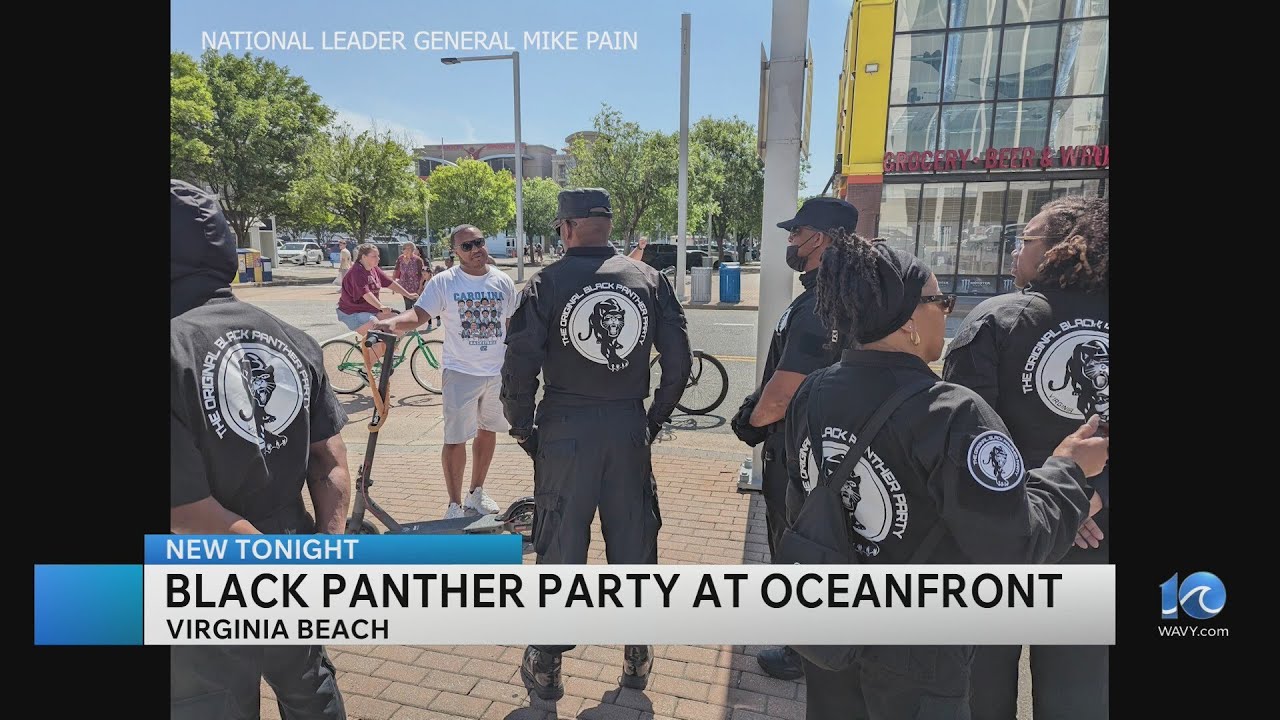
The Original Black Panther Party patrol the Virginia Beach Oceanfront
wavy
3K views•2026-06-01



