This video provides step-by-step solutions to the June 2022 CSEC Unit 1 Pure Mathematics Paper 1 multiple-choice questions, covering topics including algebraic simplification (rationalizing denominators, solving quadratic equations), logical reasoning (truth tables, propositions), functions (inverse functions, domain/range), trigonometry (identities, compound angles), vectors (magnitude, unit vectors), and calculus (differentiation, integration, limits). The instructor demonstrates problem-solving strategies such as process of elimination, substitution, and using calculators for complex computations.
Install our extension to search inside any video instantly.
Unit 1 Pure Math June 2022 Paper 1 22.5.2026Added:
Heat. Heat.
Right.
Good afternoon and welcome back. So, we're going to start with the multiple choice papers. Of course, you know, I don't have anything beyond uh well, anything from 2023 and up. Um I did find a YouTube video on the 2023 papers. So I hope you all will go through that so at least you can see you know the first paper for you know the new syllabus. Um so what I'll do today is uh 2022 as I have those. All right.
So, let's go straight to the whiteboard.
Right. So, I mean, of course, you're not going to write down the questions. Um, if you had it printed, I mean, you could write down the working, but I'm going to write on the paper itself. So, at the end of the class, the notes itself will be the past paper with the solutions on it. All right? So I guess you could just take it in um if you want to write down the working no problem like the working and the answers but you'll get this um afterwards right with the solutions. So let's uh start.
So we have the first one here. Um of course you see we have um you know ss and they want to maybe expressed as so you know we do some sort of rationalization here. Uh so you look at the solutions um all of the solution you can rationalize the numerator or the denominator right but all of the um solutions the denominator has no square root in it. The thing about it if you rationalize the denominator you get rid of the square root in the denominator.
If you rationalize the numerator you get rid of the square root in the numerator.
So except for this well these two have no square roots at all. So it's not going to be well it shouldn't be any of these right cuz the square root I have to go somewhere. So I would go rationaliz in the denominator and let's see what we get. All right. So let's see start it here. Make bigger so I get enough space to write.
Of course you know you're allowed to use calculators but you know calculator wouldn't help you on this one. All right. So square root of y over.
And you're going to multiply this by the conjugate of the denominator which will be this.
So what we realize here is here will be difference of two squares and here will be a perfect square. So I could write the answer one time but you know for sake of working let's write back this like this. So twice perfect square and the difference of two squares. So let's get rootx squar which is um that's x but right as root x squ take away root y squar. All right so we use our perfect square expansion here. So a squ if I square root x I just get x. So I a 2 take away 2 * a + b ^ 2. So I square and the root y get um this y over and this will just give you x take away y. Um so far that's the most I can break that down. So let's see if we have anything looking like that.
Um I have x + y cuz all of them I seen x take away y here. So it wouldn't be this one. x + y take away 2 * roo<unk>x roo<unk> y. So that's that's that's the same as this. Okay. x take i. So the answer is a.
Okay. So that's the first one.
Let's come down here and write it like that.
You know, for the future when people looking at it.
Okay.
So you know taking the work in once you understand the working a thumbs up and I'll move forward to the next one.
All right. Nice.
All right. So we have a logic question. Now the thing is P P or Q this is the when I taught logic I went through like special cases like P O P or P and P you know what the result would be. But this um we'll have to actually do the truth table for this and see what we get. Right? Um cuz I've seen converse contradiction contra process of elimination. Yeah. Um I know this is nothing special to say that you're going to get only Q or only P from this. So therefore by process it can't be the converse contradiction or contraositive. All right. So it has to be a tutology by default by processor elimination.
Um but I'll still work it out. Um but you know in the exam if you know what these things are you know it's not this.
All right.
So we have P and Q. So I'll do a truth table P and Q. So true true false false.
Then run a true false true false. I would run the P and P or Q. So P or Q you know is true once one is true. So here will be true. Here will be true.
Here will be true. And here will be false. Once one is true, the or is true.
And then we got to do the implication.
So P imply P or Q. All right. Now this one, um, we're looking at P. Let me show you the columns you're looking at. So we're looking at this column together with this column. All right.
That working out here. So the truth imply the truth. Yeah, that's true. Uh the truth implied the truth again. So that's true. The false imply the truth. Um a false how you put a false hypothesis given a true conclusion. The statement will still be true cuz the conclusion is true. All right. And here a false imply the false.
Well, that that's true as well. So what you have here is all the values are truth values. So this is a tautology.
All right? Because all the values are true.
Maybe I could just you know for those who not here just do that and put you know that's a toology.
So as I say a process of elimination it could only be this one.
Okay, let's do something on my tablet here.
Let's lower the brightness, right?
Nice. Okay, moving on.
Uh, okay. Logic again.
All right, so we have um P is the statement it is raining. All right, so that's all propositions. Uh Q is the sun is shining and R is there is a rainbow.
We want the expression it is raining. So it is raining is P. I just going to write the answer here. P.
All right. So P that's it is raining and so I put my that's a or is like this right? And the sun is shining. So the sun is shining is Q.
All right. Yeah.
Or the latest sample choice.
Okay. Okay. Well, nice. Nice.
Yeah.
Well, I guess next week we could work on that. All right. How you start this one?
It's not like this one bad, you know.
Same questions repeated. All right.
All right. So, um, Right. So, it is raining and the sun is shining.
But, now, if you think about it, but would not be a or statement. All right.
So, but would be like a conjunction as well. So, our next and. All right.
But there is no rainbow. So R is there is a rainbow.
Okay. I saw my Google Meet desk just went out.
Hold on. I don't know about my tablet there.
Give me my tablet.
Keep in trouble.
Yeah. any metabol for some reason.
Don't know if Google meet updating and just throw them out.
All right. Um, I seem to be back up there, but some can't get to be on the messages, so I should be still be able to see a thumbs up. All right.
All right. So, yeah, back to here. All right. So, um I say but could be a conjunction, right? So, put this in brackets. So, first statement here in brackets but. So, I run an X and and we saying there's no rainbow. So, R is there is a rainbow. So, if you say no, that'll be not R and not R will be, you know, the symbol with the R. Okay. So let's see if we have anything like that down here now.
All right. So we seen that there P and Q and not. Okay. So that'll be C I don't if I have any good video work.
Can you let me know? Right.
All right. So that's three. Okay. Come across here for four.
All right. So SS again I get my calculator for this. Um although I should need my calculator cuz we seen everything. There's root five. All right. So my calculator you know just looking at the answers I seen root five root five root five. So I want to write all these in some five um five by something right? So uh 20 is 5 by 4. So we have uh three roots we put five by I put four by five. So I five last all right four by five uh take away 45 you can write as 9 by 5 uh plus 8 I think that's 16 by 5. Let's double check on the calculator. All right. Uh 16 by 5 is 8. Yeah. Okay.
So square<unk> of 16 by 5.
So we get 3 <unk>4<unk> 5 take away roo<unk> 9. I mean I can write the answers one time but you know put the work in there so that people could follow.
And we'll have 3 by 2<unk> 5 take away um 3<unk> 5 and square root of 16 is 4<unk> 5 this 32 will give six.
All right. So everything is root five there. So you know 6 take away 3 is 3 and 3 + 4 is 7. So we just get 7<unk> 5 which is C.
Okay. Nice.
Okay. Question five.
All right. We have given that X is less than Y. So that's important. X is less than Y. All right, X and Y are real numbers. So that mean you can both negative and positive fractions as well.
Which of the following expressions is true? So I mean a question like this, you can kind of go through them and see you know which could be true and which could be false. All right. Uh if you put negativex is greater than remember the modulus means that this the answer would never be negative for the modulus right modulus of y. So y is a real number. Y could be negative but the modulus of y will always be positive.
Now if x was a positive number and I put negativex then it becomes negative. So negative number would um be less than a positive because this could only be positive. All right.
So a negative number will always be less than a positive number. So this is false. You're saying a negative number is greater than a positive number. Okay.
So a is false.
um both of these would be positive but you're saying that x is less than y so positive x whoever x is the number is positive and y it must always be less than which of the following expressions is true actually b could be true because the modulus of x would be less than once x is less than I but I No, no, no. I could have I could have like -5 is less than 2. So for B, you see how you think here? All right. So for B, I could have um you know if X is uh -5 and I put here.
So -5 is less than two. So it it looked like would that be but 5 is less than two but if I put modulus of five would that be less than the modulus of two because the result from this going to be five and it's going to be positive2 and you see this is false all right so this is false so this is this is pertaining to B so that's false all right it looked like it would be true but false um so we keep moving on process elimination um x take y is less than zero. Um this this would be false off the bat without trying to check and see what going on going on in here because the modulus will always return a positive value and a positive value is always more than zero. So C is out process elimination so it only leaves D. If you think about it, the modulus returns a positive value and a positive value. No matter what you get inside here, whether it be a positive number or negative number, the modulus will always return a positive number and a positive number is always greater than zero. So therefore, D is the answer.
Yeah, shade D.
Okay, nice.
All right. So question six, we have um a cubic all right is divided by x takeway t the remainder. So this is remainder term. So remember you take your um divisor put it equal to zero. So x get back the black x takeway t is equal to 0. You solve for x. So x is equal to t. And you substitute this into your um dividend.
All right? To get a remainder. So I just going to put f of t all right is equal to t * t cub + t * t ^ 2 all right + t cub * t + t ^ 4. So where the x is replaceable with t. All right. Uh cuz that will give us the remainder. So this going to give us t^ 4. This will give us t to the power of this was t^2 and x squ. So t ^2 all so t^ 4 again uh the same thing t^ 4 and this is t to the power 4. So 1 2 3 4 4 t to the power 4. So that's c.
Okay. Nice. All right. So seven we have if log of a all right log to bc yes log of a log bc of 16 is equal to 5 then log base 2 of a is equal to now you see let's try some options here. So you know I say index gives all right but already seen that would not give the answer right because if I say you know I have to write this yeah if I say you know you know log base a of 16 is equal to 5 and I say you know index gives all right I a to the^ 5 is equal to 16.
I don't have any answer.
Could then um a be the um the fifth root of 16.
I I wonder but anyway, we're not trying to find a anyway. We're trying to find log base 2 of a. All right. So this this not leading us anywhere to get log base 2 or a. So they come with something else. All right. So then I'm thinking, well, the base is a here and I want I want the base to be two. So use the change of base formula. So I'm going to use the change of base formula.
All right. So I have log base a of 16 is equal to I remember how I told you all you change the base. So both numerator and denominator we're going to change it to base two.
All right. And the base will remain at the base. So this a will come down here.
So 16 on top. All right. So 16 on top and a down here. So you see we have the log base 2 of a which is what we want.
Uh we just need to work out what this is on top here. So uh 16 is 4^ squ. Actually have to do that side. So I keep writing over the same thing all the time. Right. So log to base 2 of 16 is equal to log base 2 of 4^ 2.
Actually I see I seen um that's you know I want here to be two and here to be two. So I get one. All right. and asking that that is possible cuz 2 to the^ 4 is 16. All right. So instead of going 4^ squ I'll go 2 to the^ 4. So you see how are your options and I choose the right one you know go down a part it might work out.
All right. So 2 to the^ four. So I'm seeing that so that you know once these two are the same you get one right.
So you get four in front here log base 2 or two and I said this will get one. So four by one which is four. Okay. So this will just give us four.
So 4 over log base 2 a. And remember it's saying that this is equal to 5. So therefore this is equal to five. All right. So this going to imply that 4 over log base 2 of a is equal to 5. And I'm not going to cross multiply. So let's put five over one one time. Okay.
And you know I cross multiply you know this by five is five log base 2 of a and 4 by 1 is 4 and I carry across the five.
So log base 2 a is equal to 4 over 5.
And that's what we wanted. What this is equal to 4 over 5. And the answer is a.
And I'll probably rub off this cuz we didn't need to use it.
Now we're going to be confused about this.
Okay, nice.
>> Okay, and that's it for this page.
So, go on to question eight here.
All right. So, question eight, uh, we have a looking like a quadratic there.
So p of x is equal to this and p of alpha is equal to zero. What are the values of h in terms of alpha. So this is a function p of x and you replace the x with alpha.
So p of alpha is equal to you just replace the x with alpha. Alpha squared take away h by alpha take 12. and well that that 8 squ so that remain okay so the x get replaced with alpha and you say p of alpha is equal to zero so that implies that alpha^ 2 take away h * alpha take 12 h ^ 2 is equal to zero all right and we want to solve for h all right now I'm seeing um the h squ here h and no h so I'm thinking quadratic cuz h squ h no h right so this could be like the constant so let's already rearrange this in terms of that so we have 12 h 2 then the h alpha or alpha h yeah yeah right alpha h since we solving for h right and then plus alpha squ is equal to zero all right so uh you just have to factoriize Is this I am guessing. So I'll run my product sum factor method. You use whatever method you know to use. All right. So I'm just going to use my product sum factor method to um factoriize it. Okay. I just want to bring this here. Scale space and this was uh H 2 H alpha or alpha squ. All right. So PSF I multiply the first term by the last term to get the product.
So this is going to give me -12 h 2 alpha^ 2. That's my product. The sum is the middle term.
All right. So sum is the middle term.
Uh so that's negative alpha h. So if you're using the ABC method, this is your A * C and this is your B. All right. So I want factors that will give my alpha well negative alpha H and when I multiply it I get -12 H^2 alpha squ.
All right.
So if I have to get a alpha squared then the two factors need to have a alpha and it's alpha by alpha give me alpha squ.
And if both of them have a alpha then I could just you know add them up like terms right.
So, and it's the number is 12 and the the number in front of here is -1. All right. So, I'll just show you our thinking. So, -1 and the number there is 12. So, I'm looking at factors of 12. That'll give me a one. All right.
So, I know 12 x one card do that 6x2 card do that 3x4. And you know when I look here, I mean a dead giveaway. I need threes and fours, right? All right.
So, three and four. So, I will use the three and the four. I need to get negative one. So, I need the um the three first, then the four. So, I'm going to set this up like this. Um let me write this in green. Yeah. So, three first. All right. Take away four.
So, I know I'm going to get -1 with this. Now, remember when I add them up, I'll get um actually not alpha, h remember h come like the variable, right? So, alpha is the constant. So, it's just um is just negative alpha. Y. So I know if I put a alpha on it like this right I'm bring the for closer now okay so I know if I alpha like that this will give me negative alpha and if I multiply it okay I will get the alpha squared so I'll take out the h from here because again you know h is the um variable okay so 12 alpha square that'll be the coefficient of you know h well h 2 oh wait -12 is the coefficient of h squ right this come like a constant okay so constant the alpha squ* the -12 those will be like two constants so that's why I have this here so yeah looking good there all right um it lines up so let's factoriize by grouping so I put the h squ I put the two factors the ne um positive 3 alpha take 4 alpha.
All right. Uh plus alpha^ 2 equ= z. Um I factoriize, you know, two two terms at a time. Let's highlight these two. The only thing common here is uh -3 and no alpha. So that's -3. I will get positive 4 h.
Oh, these missing a hut. Okay, keep forgetting that um we had to part H on it because H is the variable. I'll get back negative alpha H. Okay, so I need to put H on these.
I mean already do it. So in the working I know we not custom factorizing like this neither. I not custom factorizing like this either.
Yeah, alpha H. So that this will give negative alpha H. So that this will give negative alpha H here. All right. So yeah, so -3 and H will be common.
Okay. So pos4 H -3 into positive 3 is 1. negative sign and the h cancel h and get alpha.
All right, then you come here. Sign is negative. So let's highlight this next two here factorizing negative sign. Uh there's nothing common except alpha.
Okay, so you get the 4 h positive 4 h.
So lines up 4 h here 4 h here. Okay, remember two brackets must be the same and negative alpha into positive alpha squar will be negative alpha. So I do get my two brackets the same. So I know I am correct, right? I didn't make any mistakes.
And then we bring it to -3 h takeway alpha time 4 h take away alpha is equal to zero.
And I just have to solve you know both of them for h. Kind of out of space. I could probably write it on the side here.
All right. you know your ether and -3h take away alpha is equal to zero. Let's just do this one first. Um he's solving for h. Okay. What h in terms of alpha right? So -3 h is equal to positive alpha and car across the tree. So alpha over -3 and for and this next one here 4 h take away alpha is equal to zero. So 4 h is equal to alpha and h is equal to alpha over 4. So those are my two values for um h either or. And let's see if we have anything lining up like that. Um so the negative with the three. So that's this one. And the alpha over four. So that's a. All right.
as he so let's give him two seconds I come back all right so we have the if the range of f ofx is equal to okay this is the function f ofx uh we have you know this is the range so these are the y values all right put that here so these are the y values and the domain is so they want the x values. So all I really have to do is uh transpose for x. All right, and put in the y values and we'll get the x.
Okay.
So we have y is = 2x + 1.
I want to transpose for x. I carry across the one. y take away 1 is equal to 2 /x.
And I could cross multiply. If I put this over one.
Okay. and I'll have 2x1 x by that. So x by y take 1 is equal to 2. I want to transpose for x. So x is = 2 / y take 1. So all I have to do now is plug these y values in and see what x values I get. So my first y values are 2/3 and I mean I could just do that on the calculator. So I'll just put the first one. So when y is equal to I say 2 * 3 /2 x is equal to 2 over 3 / 2 takeway 1. Remember we are used to the calculator here right. So I'll move the calculator uh okay I'll move it by me here. All right so I set up on the calculator you know two over uh okay I'll put three over two. I put open brackets 3 over 2 then I'll close them brackets and then put take away one.
All right, press equal and I get four.
So my first answer is four. So I come I'll put x is equal to four. I come here to see like a process of elimination. Uh which one starts with well which one has a four in it. And let's see this has no four. This has a four. This has no four.
And this has no four.
So therefore my plus it should be C. All right. But I still check the others. But uh this is the only one have four in it.
Okay. So the next X um sorry next Y value is two. So see that I already had the calculator set up like that. All I had to do is come and replace that 3 over two with a two. All right. Press equal and I get two.
All right. So, so far we have four and we have two. All right. So, let me write that. So, when uh y is equal to two, x is equal to two. And so, so far this one see going good, right? Let's check the other one. Three.
Let's put in there.
All right. uh leave a two and put in a three and we get one. All right. So the answer going to be C cuz you see when um y is three we get x is one. All right.
When y = 3 we get x being equal 1. So I don't go any further. All right. The answer is C.
Okay. Nice.
All right. So, uh question 10.
All right. we have you know given that f ofx is equal to 3 ^x f inverse is now I'm looking at the answers the way it's given all right because the normal way to work this out I'll probably do it on the side here is to say okay um you know f of x is y right so y is equal to 3x 3 ^ x sorry you're interchange change x and y.
All right. So you get um x = 3 power y like that and then transpose y and if you write think about it um you could you could use the index gives where you say you know um the base is three. So you're going to have log to base three. um this is the index is going to be equal to y I going to give x so index 3 ^ y gives x but I'm not seeing the answer here okay so I have to do something else so I'm going to try again so same thing you know let y equal to f ofx that's your first step so y is equal to 3 ^ x you interchange x and y.
So x is equal to 3 to the power y and then you transpose a y and seeing that um you know I have log dividing by two logs. All right I'll take logs on both sides. So log of x is equal to log 3 ^ y.
Use the logs here. So you get y log of three. Here's log of x and we transpose to the y. Right? So bring this across.
So you get log x / log 3. All right. And this is the inverse function. So therefore f inverse x is equal to log x / log 3.
Okay.
And I guess um here can I use the change a base formula and change this to well we don't know we don't know um what the bass is that I want this to be. So let's assume that this is base 10. All right.
So let's see if I use the change of base formula here.
All right. Um I'll change it to base 10.
So log base 3x is equal to just put log over log. Right. See that base 10. Uh you put the x on top and the tree below which is the same thing as this. Okay.
Therefore f inverse x.
So we get the answer x on top three below that's uh a okay question 10. All right.
Okay. Make this smaller for 11.
So which of the following graphs represents the function y is equal well the modulus uh three now 3x I know this is this is the graph for 1 /x okay so I would say h is this on the syllabus did you all have to learn the 1 /x grab I don't think so you know But the modulus you had to know. So what I would tell you is that um if that give you all for one like this first syllabus they probably had to get the original graph first. So why let me put this first. Um so the original graph will be like this.
Exactly at this one here B.
All right. So this will be y is equal to 3x. 3x is the same as the 1 /x graph.
But when you put the modulus right, you'll have to um remember modulus means you can't have any negative val. This cannot output any negative values.
Therefore y would never be negative. So all the negative values of y will be reflected and becomes positive.
So what you end up with is this part will remain the same but this gets reflected and becomes like this.
Okay.
So this would be y is equal to the modulus of 3/x.
So let's go through the options and see which one looks like this.
And it will be the last one. D.
So I just come back down as to where I explain how to do it. So the answer is D.
Okay. Nice. All right. So I believe that's it for this page. Yeah.
I pressed the wrong thing. Could I undo that?
that page question 12. Let's make sure go back.
This was 11 12.
All right. So for 12 we have a quadratic and they say the range of f ofx is. So the range will be the y values and we know a quadratic is a parabola and it will either be a maximum or a minimum curve. So the range could either be less than the maximum y value or more than the minimum y value. So I need to find that y value the turning point basically. So you could complete you could use your formula you know b over 2 a get the answer and substitute it back into the original function. Uh you could do that or we could quickly complete the square and get the turning point.
So I complete the square. I think that'll be faster. Okay. Um you know I put f ofx is equal to you put your perfect square brackets. x pull back the negative sign. Half of five is 5 / 2. uh pull back the you take away the I mean you can pull back the six positive 6 if you want but you're always going to take away uh this number squared so take away 5 / 2^ squar so we're going to get x take away the x value don't really matter for the range okay so I can leave that as 5 / 2 which is 2 and 1/2 but what I really need to calculate is this here all right so I'll do that in calculator so I'll do it quickly All right, that didn't come out good.
Try again. All right, so I'll have six take away open brackets uh 5 over 2 and I'm going to close the brackets and we're going to square that.
So we get a quarter.
So that means my turning point is you know you change the sign on this one. So pos5 /2 and negative a4 and since the coefficient of x squ is positive this is a minimum.
Okay so our range if you think about it you know we're going down like that. Anyway, let's draw it like that. So the minimum value here is 5 / 2 a4.
So the range cannot go below this. It cannot go less than a quarter on the y ais, right? It has to be more than or equal to a quarter. So the range has to go up.
Y is more than or equal to a quarter.
All right. So that will be oh this one here E.
Okay. Nice. All right. So that's 12 13.
We have two roots of the cubic equation.
Now I tell you see this one I would just go and type that into the calculator you know and and see what the third route is honestly. Okay I'll let the CIO the CIO could do it. So just put the equation in solve it on the calculator and see what the third answer is and you'll be good to go there. Um but what I really want you to do here is you know um let's call it third roots beta. Right? So, so let's I'll put let the third root be beta.
Third root equal to beta. So, what we're going to have is x = -1, x = -2, and x is equal to beta. All right, as I said, we got to do this fast. Just use the calculator and you get your three answers for the cubic.
All right. And then you put x carry it across positive 1.
Oh, I put equal to zero first. You know, reverse the process. X + 2 and X takeway beta = Z. And then we have X + 1, X + 2, and X take away beta equals Z. And then we would expand this. See how long it's going to take? We'd expand this and then compare the coefficients and you know see work out what beta is is. That's the way they set this up to be done. But nobody seen you working in multiple choice.
So I would just use the calculator. All right.
So I just use the calculator and see the answers cuz it's going to take long, right? So I going to expand you get a cubic and then you equate coefficients and solve for beta. All right. All right. So, that's the way it's set up to do. All right. So, let's see.
You know, I I is not um an expert on the Casio, so I don't know if you could do it and see what the answer is, but I'll fight up here for now. Let me see. Set up.
Equation is five. I want cubic, which is four. All right. So, A is 2. Press equal. B is positive 3. Press equal. C would be the five.
Press equal. And D would be -6.
Press equal. So my first Okay, that is -6 there. Let's see what the answers are. X is 3 over2. I'm not seeing that there.
So the answer going to be 3 over2. But if I press again, you see I get negative 1, which they have there. One of the one of the roots is neg one. See the -2. All right.
So 3 over2 is the missing one. Okay. So I said from the from the start, you know, we could have just do that once you had the Casio calculator. All right.
Other than that, so let me show you the answer one time, right? Three over two. But other than that, you know, this is expansion. You know I get um x^2 + 2x then 1x is 1 x and 1x 2 is 2 by x take away beta equals zero. This will be see space to work this here 3x + 2 x take away beta.
All right. And then we expand here now.
So x^2 by x is x cub. Then you get x^2 by beta. So I put beta x^2.
Then we have 3 x. So 3x^2.
Then we have 3 by beta. 3x beta. So that's 3 -3 beta x -3 beta x right and then the 2x is positive 2x and the 2x beta is -2 beta okay we would simplify it um so the x cube by itself here um the x squ these are two terms of x squ factor ize for the x squ. So I put the negative um x^2 here.
Okay. Although I'm seeing um positive x squ. So instead of factoring all the negative sign uh let's do to the positive sign so it will line up with this. All right. So when I say x squ into this we get back negative beta x squ into that we get positive 3.
We could factor out the x here and let's see negative. So I factor out the negative sign one time with the x we get a positive 3 beta and here you get pos no -2 and then this will be a constant c -2 beta and I could I could use this right here because this will line up with the um the six. Okay. And you get your answer there one time. So you have your um put your x cub plus uh 3x^2 uh what you take away 5x and then you have the what the take away 6 take away six. So these two line up I see I can get the answer right here.
This lines up with -6. So what I do I just you know explain the working without the calculator. All right.
Yeah. I put um -2 beta is equal to -6. So beta would have been -6 over -2. So beta would have been uh posit3 over.
Oh, how did that work out?
-2 = 6.
Am I missing a constant 2 by and 2 by beta?
I am I this by that no constant.
This by that not a constant. This by that not a constant.
Oh. Oh my bad. My bad.
I see I see what went wrong. Okay, let me um erase this part here.
This is a two two in front um this one.
So if I want this to line up with this, I need to get rid of the two. Okay, so the original question I would divide everything by two. Okay. So, I'll put um you know x cub. Let me write this in red.
So, I divide this by two. I'll get 3 over 2 x^2. Divide this by 2. Take away 5 / 2x and divide this by 2 take away um 6 over2 which is 3 is equal to 0 / 2.
All right. So, I divided 6 over.
Just making sure everybody understand the working when they're looking at it.
So I divide everything by two. Okay. So then that would have given me x cub.
Okay. 3 over 2 x^2. So these two this would align up with that. And then take away 5 / 2x and then you know 6 over 2 is 3. So take away 3. Okay.
So yeah the -3 would align up with the -2 beta.
So -2 beta would have been -3. So beta would have been -3 over 2 -2. So beta would have been 3 over2. Okay.
So that's that's the working as you see it took some time. All right.
Okay, come out of this smooth in the calculator.
>> Right. So, let's move forward here now.
Um so we have um logs here base 2 base 2.
So the base is the same express as a single logarithm in its simplest form.
All right. So I'll start using lower logs one time like this three could be the power. So I'll get log base 2 2 q and I put the power three one time. All right. Take away I'm going to take this two and put it as the power one time. So log base 2 uh this is 3q.
So I put the power two one time. And you see this one I mean some of the answers are the plus one. So I don't know at this point whether to leave that plus one or convert it to log um of two to base two. So you see we just choose a path. Um I'll convert it. If it don't work out well then I'll leave it as the one. All right. So plus the one will be log base 2 of two cuz this will get one.
Right? So plus one there. So basically I have all the logs to the same base. So I could apply my law logs. Subtraction is what? Division. Addition is what?
Multiplication. All right. So what I'm going to get is log base 2. I'm going to have to divide these two 2 q to the power. All right. So, let's put this to the power 3.
You know, before I do that, let them um sort out our powers first. All right.
So, 2 ^ 3 is 8 q cub take away log base 2 3 ^ 2 is 9 q ^ 2 + log base 2. All right. So, let's do it now.
So I'll have this subtract. So we divide by 9 q squared and then the plus this. So I multiply by two.
Okay. Uh these two are q's so they'll cancel out. So I just get um 8 over 9 q by 2.
So 8 Q over 9. All right. Because these these two cancel red line it cancel it.
So canceling a Q canceling A1. All right.
And then you had to multiply by two. Uh the two would cancel with 9. So 2 by 8 is 16.
So 16 Q over 9. And let's look to see if you have anything like that.
And yeah, we have that as E. Yeah, E.
Okay. Nice. All right. So, moving forward here, we have Okay, that's there. 14 15.
All right. So we have which of the following intervals is in the domain. Okay. So domain would be the x values. Right?
So we have some options here. So first I mean we look at the options we see -3 0 to 3 -2 to 3. All right. And then we have these here.
When I look at a rational function well one first thing I'm seeing is square root. So this is where um like you know nobody could tell you how to start a question like this. You just have to know your work. So like when you see certain things um you know how to respond to it. Cuz when you see a square root you think um well I can't get the square root of a negative number right. So because I square root of x then x cannot be negative cuz then that imaginary number.
So one maybe I could write this as a little note here. So because of the square root of x um x must be a positive number.
x must be greater than zero. That that that's what the square root of x tells me. All right. That x so all my options with a negative answer like like one that'll be out because we can't have x being negative. Okay. So two possibility I mean I mean look let's look at that processor elimination I I work out anything else yet three definitely no because we have we have negative numbers in three and we have negative numbers in one and x can't be negative because I square root so the only option there really is two all right so where did they get the tree from all right um well you know when when you have a rational function if we divide by zero it goes towards infinity or you say that's undefined so if you put the den denominator equal to 0. We know x um let's work out the x^2 takeway 9= 0.
Whatever value x we get to make this denominator equal to z that cannot be in the domain. All right, those x values cannot be part of the domain. So when you work this out, you see that this is a difference of two squares, but you can work it out as uh carrying across the nine and saying x is plus or minus<unk> 9. So x is plus or minus 3. So x cannot be equal to -3 and x cannot be equal to positive 3. Okay, it doesn't mean x goes up to three.
Yeah, it cannot be three and it cannot be negative three. But then x cannot be a negative number. So this part don't matter. So x cannot be equal to three.
And that's why they have x is greater than or equal to zero. All right? cuz it could it could be equal to zero. I'm put equal here. All right. You could get square root of 0 0. All right. But you see x is less than three. They didn't put equal on the tree because x cannot be equal to three. But x could be like four and five and they ask which of the following intervals is in the domain. So this is not this is not the whole domain. This is just an interval of numbers that's in the domain. All right.
A subset of the domain. So the only answer there is two. All right. So that'll be B.
Okay. So moving on to 16.
Now this is the way the paper is structured. Um you would get it's 45 questions, right? So you get 15 questions from module one, 15 from well it should be all right 15 from module 2 and 15 from module 3. So as we cross the 15 questions mark there you know we move from module one now into module two. So here we seen the um trigs coming in here now from question 16. All right trigs the vectors the you know equation and circle and stuff will come in here from 16 to all right.
All right. So we have what value of theta satisfies the equation. So we have a equation with cos um I'm just you know you see this pattern is a quadratic. So I could go and put let y be equal to but I going to put is a multiple choice right? So I going to put you know y is equal to cos theta.
So we're going to get 2 y^2 + 3 y take 2 = 0. Um and we can go on your calculator and solve that. uh because I'm multiple choice you go through no product factor but you know I go through working uh calculator work out here uh factors are three that will give you four 3 and 1 and we want to get uh -4 when we multiply and positive3 when we okay yeah positive three. So 3 and one 4 and one sorry four and one is the factors four and one. All right. So yeah I'll have positive 4 y take away 1 y that will give me a positive 3 and when I multiply this I will get -4. All right uh factoriize by grouping.
So we have 2 y. So we have y + 2.
Take next group here negative sign 1 y + 2.
So we have 2 y takeway 1 and y + 2. And we can see the answers here one time. Y is equal to pos1 /2 and y is = -2. All right. So we do our replacement here now. Um so cos theta is equal to a half or cos theta is equal to -2. Now the thing is um you can't cos theta will never take a value less than -1. So this is a no solution right here.
So we only have to deal with a half. And if we remember that um a half is um 60° which is um pi over 3. Okay. But and the Casio will do it for you. The answer is pi over 3. But if you forget. All right.
So cos inverse of a half is equal to theio should give us the pi over 3. Okay. Just type it in. Make sure. Okay. In radians. Okay, I'll work with that. Um, shift cost of a half.5.
I see wanted to pi. So, pi over 3.
So, we at C.
Okay.
Right. So more trigs here. All right. So you know that just looking at power 4 power 4 I'm already thinking you know cos^ squ. All right.
So I want to write this as I mean I should look at the answers to kind of tell me what to do but you know I look at the answers here and I still they giving me no direction. All right.
So let's let's keep moving and see see what how things turn out. All right. And as we move we'll get direction from the answers. I'll write this one time as co square as se.
All right. So essentially this is difference of two squares. All right.
So I'll have 1 + and I'll have cos^ squ a take away um sin^ squ as one bracket and then I have cos^ 2 a + sin^ 2 a. All right. Now we know cos well you're supposed to have your formula sheet on I forget to pull it up but you know cos square plus sin squ is one. All right so that that get taken out. So 1 + cos² a take away sin^ 2 a. I'll put the one * 1.
So we down to this um you know this is equal to cos 2 a.
All right but I'm not seeing 1 + cos I've seen cos 2 a here. It's tempting but I not seen one plus cost 2 a so this is not the answer. All right. So I'm thinking h what could I do? Um I could convert that cos 2 a to we have 1 take away 2 sin^ 2 a or 2 cos^ 2 a takeway 1. We can replace it with that. Um would that help?
I don't know. Let me see.
This would give us 2 A. All right. And I need to choose a direction here.
So, I'm deciding whether to sign or C first. I mean, if if you're not sure, just try both and see how things turn out. I just trying not to make um do unnecessary writing. So we know C is not the answer. D has a cost, B has a cost and this has both sign and cos. Now if I replace this with this the option with sign, I wouldn't have any cost in the answer. It would just be sign alone.
So by process of elimination A is out.
So A and C is out. So it's either B or D and both of these have costs. Therefore I would choose the option with costs. So I put this replace this with two times I mean this on your formula sheet so you got to remember it right just look on your formula sheet for double angle formula you see 2 cos all right so 1 + 2 cos^ squ a and it will be takeway 1 all right and of course this one take away one is zero let's put the um lines and cancel it out right this will get zero so you just remain with you 2.
Do I have that? Yeah, I have that as D.
Okay, nice. I could probably um, you know, just for shading, I could shade this and show you that this is what I replace it with. All right.
So yeah, that's 17.
All right. So a minimum value question.
We know that is the um the r cos theta take away alpha type formula. Um but I am seeing sign first. So I will go with um r sine.
We we going to use the compound angle here. So it's take away. So I use um theta take away alpha as the format.
All right.
Okay. Let's let's do the expansion. So you get a sin theta cos alpha take away cos theta sin alpha compound angle formula.
Right? This on the formula sheet as well. So you don't remember it. Just make sure and look at your formula sheet for your compound angle formula. All right. And you know we expand the R. So we get R. See that we want to um have I put the sin theta the thetas first.
Right? So I put the cos alpha then the sin theta and same thing here. R I put the sin alpha first then the cos theta.
So when I do the comparison the 8 sin theta take away 5 cos theta I could see that you know that r cos alpha is equal to 8 and r sorry r sin alpha yeah r cos alpha and r sin alpha is equal to 5.
Okay, that would allow me what I really what I really need is um yeah, I need both R. Actually, I just need R. All right, but yeah, because I don't necessarily need to go and find alpha. So, hear out.
Yeah, we got to cut down the working, right? I don't need to go and find I could go and do um you know put this over um sign over cos the rs cancel and get tan alpha is equal to 58 and we could get alpha but it's not necessary for this question because the minimum value the minimum value sign could take is -1. So it's r * -1 is the minimum value. Let me write that. So the minimum value the min value is is r * -1.
Okay. So essentially I just need to know what is r cuz s the max value is 1 and the minimum value of any sign of any angle. All right the max value of sign of any angle is one and the minimum value of sign of any angle is ne1. So it doesn't matter what theta and alpha is.
All right, the minimum value for s is going to be one. So I just need to find r. Okay, so I'll just go about doing that instead. Okay, so we set this up where you know you're going to um have you sin square + cos square is 1, right?
So r cos alpha squared + r sin alpha squared will be 8 2 + 5 2. All right. Um so here you get r 2 cos alpha cos^ 2 r 2 sin^ square alpha is equal to I could work out this on the calculator and see what answer that is.
Okay blocking and move it.
All right. So 8 squar + 5 squar.
All right. That's 89 you know and watch watch it going to be square root of 89. So I think the the answer will be b.
All right. But let you go.
So if I factor out the r² I get r 2 you know cos² alpha + sin^ 2 alpha is equal to 89 and you know cos square + sin square is 1. So basically you're going to get r 2 r 2 by 1 is equal to 89. So r 2 is equal to 89. So r and r could only be positive right? Can't be negative. So we ain't going to do plus or minus. So square root of 89.
So the answer is D.
Actually no the answer is not D.
Remember it's R by1 is the minimum value. Right? So the min value is R by -1.
So that's roo<unk> 89 by1.
So it's negative root 89.
Okay. So the answer is C.
All right. So that's it for this page.
Okay, 19 here. So we have given that this is our function.
I guess it's the same same same thing that we just did here. This time is um cost first then sign. So now we don't have to find the um the alpha cuz you see act on a tree. So they're leaving it as tan inverse. All right. So that's okay. So we just really need to find you know what is alpha and what is r.
Um so I'll write this as f of theta is equal to r. cos first. So write cos and because a plus sign if you know the compound angle for cos you know when it's negative you get a plus here. So you put um alpha sorry theta take away alpha.
Okay. Um we could do the expansion.
See that I just did it just now. We could um move fast. You know here'll be cos theta cos alpha. So r cos I'll put cos alpha first then the cos theta.
Oh I do a space. Let me see if I going.
I'll do it on the other side. All right. So f of theta is equal to r cos theta take away alpha.
So that'll be r cos I'll write the alpha first then the cos theta compound angle formula for cos because here's negative plus and we have um r by sine. I would use the alpha first then the theta.
Okay. So when you do a comparison you have 1 cos theta plus 3 sin theta. Okay. So that would imply that r cos alpha is equal to 1 and r sin alpha is equal to 3.
Um so if you put r sin alpha over r cos alpha we get uh 3 over 1. Okay. And s over cos the rs will cancel out and s over cos tan. So tan alpha is three. So alpha is the tan inverse of three. And this is what you call arc a r c arct tan of three. Okay. So all these I seen act on a tree remember is um take away alpha. So take away act on a tree. So let's see a process of elimination. It's not going to be c is not going to be d cuz them are one over three. Okay. So it's going to be either a or b. And the only one with a takeaway arc and a tree is a. So I didn't even work out what is r.
All right.
But just by process of elimination, I already know it's a because this is the only one with negative act on a tree which is the alpha. See alpha theta take away alpha. Okay. Um but I'll still work out r um as you saw before r was just equal to these two numbers squared. R squ sorry would have been equal to the 1 2 + the 3 2.
the explanation in the other question, right? I was moving fast here. So, r 2 would have been um 1 + 9 which is 10.
So, r would have been the square root of 10. Okay. So, that's how you get 10 in front here.
That's going to put above this one r cos theta take away alpha.
I found the R and I found the alpha.
Okay. Lines up with A.
Okay.
Okay. Enter. Okay. I'll trigger identity here. Um, as you know, this one is cost two.
Now I want to put cost 2x. Um but I look at the options and I ain't seeing anything with a cost 2x down there. So I want to hold off on doing that. Um I mean you could you see you could go down that road there by looking at the options that they give me and cuz sin squar take away cos squ is co double angle formula for co cost co cost co cost co cost co costs 2x but I'm not seeing any double angle here and therefore I'll refrain from using the double angle here for now all right because I'm not seeing it here um you may get tempted with this you know let me pull the formula sheet up um that's a trick is 1 + tan^ 2 is equal to x^ 2. So that tan square x take 1 meant to tie up. All right. To make it think that that is equal to sex squ. And you see they have answer to sex squ below. See d. Yeah.
That's that's to trick you. All right.
So let me get my formula sheet up.
And I'll take out the formula that I'm going to use.
All right. So, I just take out the line on the formula sheet, right? Um I don't know where I'll put that one real big.
Let's see if I can make it smaller.
Guess when I zoom in so much things, you know, you know, funny.
All right, the smallest I could get. I probably put it on top here. All right, so if you look at the formula sheet, these are all your Pythagorean um identities, right? And you seen is 1 + tan^ 2 is sex 2. Um so you can't it's tempting but um it's not this. Okay, it's not this. So I can't use this.
So you're wondering what to do, what to So I say I'm not going to touch this for now because I not seen any double angle.
This is not sex. You see it's 1 + tan square is sex. So what else could I do?
Well, I could work on the denominator cuz tan is um sign over cos. Let's see what we get here. All right, let me take I'll take this down.
All right, so tan^ 2 x takeway 1 will be sin^ 2 x over cos^ 2 x take away well 1 / 1 but seeing anyway seeing that the uh denominator is cos^ squ I can write cos^² over cos square as the one all right matter of fact I'll use the lcm 1 / one okay so the lcm will be cos^ squ cos square into that is 1 1x sin square sin square and 1 into cos square is cos square cos square by 1 is cos square what I observe is that this entire denominator transformed into this and this sin^ square take away cos square is the same as sin square take away cos square so let's let's let's let's roll with that so we have um sin^ 2 x takeway cos^ 2 x over 1 this line is divide divided by the denominator which is this.
So we have sin^ 2 x takeway cos^ squ over cos squ.
So if I change the divide to multiply this comes on top and this comes below.
and they will cancel out each other.
So all I remain with um all remain cost squid.
So the answer is B.
Okay.
All right. 21. Okay. So, we're going to have to um we out of the trigs and into vectors here now.
All right. So, we have given the position vectors P. So, position vectors means it's coming from the origin. So, when I get P and Q, that's OP and OQ.
So, this is OP and this is OQ cuz it's a position vectors. So remember position and your displacement. All right, position come starts at the origin.
So essentially I have OP is this vector and OQ is this vector.
All right. So if I want the vector PQ, remember to keep the same letters together given that watching the answers here.
Given that the length, so we want the magnitude of PQ. All right, the magnitude of PQ. So I'll find PQ first.
All right, so it be P O plus OQ, right? Keep the same letters together. And P just be the negative of OP. So let's change the signs on OP. So, -2, positive 1 and8 plus OQ which is -1 4.
All right. This will give us -3.
1 + 4 is 5 and this is basically8 + 4 that's -4.
And I just need to find the magnitude of this vector. So the magnitude of PQ will be square<unk> of -3 squared. I can go in the calculator that fast. All right. Plus -4 squared.
So pulling out the calculator.
Okay. Can remain there for now. All right. Um I have the square root of matter of fact before I put square root of let us work out what those things are. So -3 square is same as 3 squared right. So 3 2 + 5 2 uh + 4 2 because4 square is same as 4 squ and we have 50.
So we have root 50. I'm not seeing root 50 as the answer but you know 25 by two so that's uh 5 <unk>2 okay 5 <unk>2 I mean if I were to find the square root of 50 on the calc the casio it will give me the third one time I get the 5 <unk>2 one time okay so this is the square root of 50 was not there So I write this as the square<unk> of 25 by square root of two and I get the five <unk>2. Okay.
And that's B.
Okay.
>> All right. 22 All right. So, we have a curve.
Um, we have, you know, this here.
Well, these two are curves in. All right. So, these two are curves. They intersect at three points.
The y-coordinates of these points. Ah.
All right. So, this is the ycoordinate of the points. The answers for y. All right. So, we have solved them simultaneously. Anytime you want to find um points of intersection with any curve or line, you have to solve them simultaneously. All right. So this is equation one and this is equation two. I think it'll be easy to um use equation two and transpose for y or x. Anyone will do.
But since they want to get the y values, I would transpose for x. Why am I transposing for x? So I'll get um everything in terms of y. So I'll be able to solve for y. Okay. So I'll get the y coordinates.
So I'm going to use using two.
All right. and our transpose of x x is = 6 / y and I 6 over y all right I call this equation three and I'm going to sub I mean I writing this like if you know you've been working all right into one all right so we are y^2 is equal to x and x get replaced with 6 over y all right I can multiply I by y.
So this will give me y cubed.
The y's will cancel here and I just get six and plus 7 y. So this is a cubic. Um if I have y cub take away 7 y bring the six across take away 6 is equal to zero.
I am not going to do any remainder theorem and try and figure that out. I just going to use the calculator. Right.
So the the the squared is missing. So let's let's just put this in proper order.
So yeah, y cub I just put + 0 y^ 2.
All right. Then take away 7 y then take away 6 is equal to zero. So that's my a b c d for the calculator. All right.
So setup equation is five. I want cubic equation which is four. All right. So my A is 1.
My B is zero.
My C is -7 and my D is -6. All right. So let's see first value is three.
Let's write here um is that a or b. So y is equal to 3.
Press equal again. Then our negative 1.
y is equal to -1.
So that looking like a all right get value press equal again I'll get -2 and y is equal to so comma y is equal to -2.
So those are my three y values and that lines up with a Okay.
Um here we have a curve to me this question out of place because um questions 16 to 30 is supposed to be module two and probably the this is differentiation which is module three. Anyway, hey there. So if I find dydx Oh, I have x and y.
Um, yeah, this is not for your um partial derivatives not on your source.
That the x and the x and y here. All right.
Yeah, it's that's not that's not for yours. So I'll skip 23. I mean I could do it um find dy dx the curve has equation that so I put the um find the equation of the tangent to the curve at the point 0 -3.
Yeah I got to take the derivative of both sides. I mean derative of zero is zero. So you know constant but that XY would um allow to teach you something new which which not in the syllabus. So that's why I wouldn't do it. But you know, I just got p something still, right? Uh you put DDX dx I differentiate both sides. Uh this is a constant so you get zero. Um so you differentiate here. Write out ddx of x cub uh take away dx of actually this could be a product all right i and v. So actually the product rule here. All right. When you differentiate y with respect to x, you'll get the dy dx from this portion here. But you got to run the product rule here. So yeah, definitely I ain't going to go through that. All right?
Because you know, you didn't have to do that for your syllabus. Okay? So that's going to put not on not on 2023 syllabus.
Okay, but it not hard product rule when you differentiate y get dy dx and you differentiate. So u is 4 4x and v is y when you differentiate y with respect to x you get dy dx and that you're going to get dy dx from. Okay and as you know you're putting your um your x value into dy dx and you get um gradient at that point gradient of the tangent at that point and then you can go and find the equation of the straight line the tangent after.
All right. But not on the west.
All right. So we want to vectors here now. Well, back to vectors. All right. So the vector u has a magnitude of 4<unk> 5 units. So that's magnitude of u and is parallel to the vector v.
Okay. Okay. So U and V are parallel.
A a vector parallel to U. Now V is parallel to U. Right? A unit vector parallel to U is.
Now this 4<unk> 5 have nothing to do with the question because if I want a vector parallel to U that'll be V. And if I want a unit vector parallel to U, I'll find the unit vector parallel to V which will also be parallel to U. Okay?
So you are going to put units vector parallel to V is the vector V over the magnitude of V.
See I put V and not U because V and U parallel. So this will automatically be parallel to U. All right. So I need to work out the magnitude of V. All right.
So v is the vector this is 1 and -2 right. So the J form and the magnitude of V square root X^2 + Y^2 I J K I just making sure cuz you know it's I J K all right so the K is zero so we don't need to put it in all right so square root of 1 2 + -2 2 All right so we have<unk> 5 is the magnitude of v So when it comes to working out this part here, we would just have um so unit enough space there. So my unit vector would be 1 / the magnitude of V multiply by V. So that's 1 /<unk> 5. If you're dividing by magnitude of V is 1 / magnitude multiply by V right same formula and V is I 1 I take away 2J and that's D. If it's parallel to V, it's also parallel to U. All right.
So that's D.
Okay, see we run out of time and we going to reach question 24. All right.
I guess size do more working than necessary cuz they're not trying to explain at the same time.
All right. So here we have a circle is defined as we could get the center and radius from this.
All right.
They want the gradient of the normal circle at this point. So what I will do, I'll write this as x + 2^ 2 + y uh about plus zero squar is = 2.
All right.
And remember the format is I believe it's take away y take away k = r 2. All right. And the center is each on k. All right.
So my center would be -2 because if this is positive then remember it's negative h. So negative -2 right to get positive. So -2 and yeah let's get zero here. Y is zero.
Okay. Um do I need anything else? Center.
Yeah. So if you think about it, I circle on the side so they understand what going on.
I mean I can draw free hand circular.
So we at the center as -2 0 and we have a point on the circle which is the origin.
Let's put it here 0 0. So once you have those two points, we could find the gradients, you know, change in y changing x. All right. So when you put the 0 0, you know, you put your x1, y1, x2, y2.
All right? And you get the gradient of the normal. Okay? So gradient of because this this line is the normal to tangent. All right? So gradient on the normal try to write small is equal to y2 takeway y1 over x2 take away x1.
All right. So that's 0 take away 0.
Oh the gradient is zero.
The denominator don't matter. Once you get zero on top here the gradient is zero. All right. And x2 is 0 take away -2.
All right. So gradient is zero. And that tells me it's a horizontal line. Okay.
So maybe I could give a more visual picture by probably putting it like this. Let's see. -20.
I mean that should be obvious here given the coordinates. I guess my brain wasn't thinking.
All right. the y component on both of them is zero. So you know it's going to be horizontal and therefore um the gradient of the normal to the circle at well is zero right a horizontal line zero All right. So 26.
All right. So we have the circle with equation cuts uh this one into two distinct places.
Find the equation of the common chord.
Now when you have to solve two circles uh we subtract both equations and when we subtract both equations we get a straight line equation. Okay. And that is the chord is the straight line that we're talking about here. So we just have to subtract the two equations.
Okay. So let's just looking at space more space on this side. Right.
So what I want to do is equation one equation two right on top here.
So that's equation one. Just solving it simultaneously.
And equation two down here x2 + y^2 takeway 8x take 8 y + 31 is equal to zero as equation 2. And when we subtract both equations, okay, let's want to line this up.
This plus one with the 31 + one take away. All right. So you get zero here. All right. So 0 0. So real work start here. Right. Um this is a positive sign. So -2 + 8 -2 + 8 is pos 6 x.
Okay. I'm not seeing six here. So there we go. Um this is positive. So -6 + 8 -6 + 8 is pos2 and this is 1 take away 31. So this is negative um to 1 take away 31. Yeah equals z. So this is nowhere to be found here but I'm seeing everything is divisible by two. So I'm going divide by 2 and I get 3x + y take away 15 = z. Then I come do I have 3x positive y take away 15 yet I see Okay.
All right. So we have the vector equation of a line which passes through points A and is parallel to the vector.
So this would be my direction vector here come across here and this is my point. So I'm going to have R is equal to this is the point.
So 2 0 -6 plus lambda and here's my direction vector and I take in the ig form. So 4 -5 7. All right. Now the answers is in the jk form. Okay. So I just convert this.
So 2 i z k. So this um take away six sorry zero j. So take away 6K.
Uh the only one with a -2 I take away.
Well, all of them are watch. So the only one -2 I put -2 or the plus.
Well, the only one that line up is this.
What? I don't know why they put negative. Okay, let me see. positive2 I take away 6K. Look at down here. All right. As as I get catch here. All right. I thought this was the only one.
All right. But it's not negative. I don't know why I put negative4. All right. So, the answer is D. Without going any further only one line up, but I write out cuz 0 mg. All right.
Plus lambda times and this will just be what? 4 I take away 5 J + 7 K. That's your vector equation of the line. 4 I 5 J + 7 K. Yeah. So D I remember this is your point on the line. This is your direction and I would get here the point and it's a parallel to so this is the direction. So direction come here.
Okay. I try and finish up to T. So next class we just do the last 15 and start the new paper, right?
Or we could push it. We'll see. A little tired, but we'll see. We'll see. All right. Um, we have the set of values of K for which the straight line y= kx take 4 intersect this curve.
So anytime there point intersection um you know you solve simultaneously.
Okay. So we have the two equations here.
Y is = kx take 4 as equation 1 and we have y is equal to x^2 takeway 2x as equation 2. The you're going to get two answers. So you say intersect at two points and both of them is equal to y. So this imply that you know kx take away 4 is equal to I mean probably better I put the um the x squ first cuz it's going to be a quadratic. It doesn't matter which one I prefer. Let's you know going be a quadratic. I already see that happening.
So I'm going to put the x² first. All right.
And then put the kx take away four. All right. I bring across the kx. So, -2x to - kx and bring across the four and positive 4 equals zero. I'll factoriize for the x.
I could factor out the negative sign.
So, I get um pos2 + k + 4 = z.
I write it the other way around. No problem.
All right. So we need to solve this.
Now they say set of values for which the straight line this intersects the curve that at two distinct points.
Now the key the key word here has two distinct points. So you know I watching the equation I think I go and solve it right. Um but the discriminants must be greater than zero if we had to get two real values two real roots. Okay cuz that would be two distinct point mean two real roots. Okay. So for two real roots now for A is equal to 1. Um B is equal to 2 + well negative in brackets right 2 + K and C is equal to 4. Let me see any more questions below this. Right. Got it. Right. So the discriminant for two real roots b ^ 2 take away 4 a c must be greater than zero.
All right. So, we just run with that um b ^2. So, that's negative brackets 2 + k whole thing um like that squared take away 4 * a which is 1 * c which is 4 must be greater than zero. And basically this working out if I square the negative I'll get positive. So, I already square this part here. All right. So I can run perfect square um a 2. So that's 4 + 2 a b uh 2x2 is 4. So 4 * k + b ^2 + k ^ 2 and this is 4x 4 is 16 greater than zero.
I could combine the four and the 16.
So I have um k^ 2 uh 4 k and -16 + 4 is -12 is greater than zero and and basically that's the quadratic I'll solve there now okay to get the value of k values of k um a simple one I put k here k here uh factors are 12 that will give four we have 6 and 2 and I want to get positive 4 so that's positive 6 takeway 2 I would stop here right so here you know you have to do the critical values and stuff like that remember that so this can get real big I could do a table or a graph whichever one you want I know I prefer the table so I would put for critical values Let's see if I can bring this down here.
We will solve K ^ 2 + 4 * K take away 12.
I don't know why I did not write in there.
See, I have a little glitch.
Okay, white board given I don't know what going on there. All right, so we take away 12 equals zero but somehow a car right here. All right.
Um, so that's how we get here.
So K is equal to -6 or K is equal to 2.
And let's see a process at elimination if you know we don't do any table or anything like that but both of them have -6 and two here -6 all of them have well not all a and b out all right because it's -6 and two so it's either c or d is either and or or so I think a quick graph could work out here um I'll just do a U-shaped graph this is a minimum curve all Right.
I know you attempt to do a table, but I think the graph is the faster thing here. All right. -6 and two. It's a minimum curve.
Uh -6 here. So here, and I enjoy um and y is greater than zero. So we're going up.
All right. Cuz this part here is greater than zero, right? So we're going up.
Okay. y is greater than zero and therefore we're going up we're pushing out. Okay.
So we're going out like this. So that's less than six. So x not x but k.
All right. So k is less than -6. And if you go in this way k is more than 2 and that'll be or all right. So k is less than -6 or k is more than 2. And the symbol for all is this union.
All right. Please set brackets. Union is all. All right. K is less than two. So that's C.
Okay, that's the 29.
We have a the vector A is given as that.
So surprised they only given two dimensional vectors not three.
Right? Only I and J a unit vector parallel to A. I mean we kind of work out that in a previous question. All right. So you need the magnitude of A. All right.
So magnitude of A let's write a is equal to 512.
Magnitude of A.
The square root of 5 2 + 12 2.
I mean I going to work out that one time on the calculator 5^ 2. Oh come out of this.
All right. So 5 squar + 12 squar and we get 169. So the square root of that is 13. All right. Square root of 169.
Yeah that's 13. So the unit vector right remember it will be vector a over the magnitude of a which is 1 over the magnitude of a by a so 1 / 13 by a and a is 5 i + 12 g.
Okay.
Surprised I asked the same same type of question twice. All right. Kind of redundant.
So we do something like this test now.
All right. So let's see which one. One over 13. There's only one who's only one over 13. Okay. 5 I + 12 G. So B.
Right? And this should be last question on module two.
>> You see we start with differentiation here.
All right. So we have the angle between the vectors u and v is well this is um a good piece of work in here to do because we work out the magnitude of u and magnitude of v.
Remember the formula. So it will be um that's going to write the formula straight one time right cos theta is going to be u do v over the magnitude of u by the magnitude of v that's what we need to work out. So we work out the dot product we work out the magnitudes and therefore theta will be the cos inverse of this.
All right.
So, I mean, we know the formulas for saving space.
I would just put um u dov. I'll just look at it. Three and four. Remember, we have multiply them, right? 3 fours are 12. You know, I'll write three and four.
All right. + 6 by -5 plus the key is now -1 with positive 1.
Okay, so we at 12 take away 65 answers take away one.
All right, my brain a little tired so I use my calculator.
All right, so 12 take away two take away one and we have 19. So that's the dot product there. Um I could run fast with the magnitudes as well. Um magnitude of v let's go magnitude of u would be the square root of and let's here 4^ 2 + 5 squ. I could just write positive 5 squ. I could do the same thing + 1 2 and I'll just work that out on the calculator.
uh 4 squar plus let's put 5 squ + 1 squar is 1 let's put one all right 42 remember let's keep this together so that's square root of 42 and I work out the magnitude of v which will just be square root of v here 3^ 2 + 6 2 uh plus - 1 2 which will just be I put the answer right here.
So 3 squared + 6 2 + one.
All right. That's 46 square root of 46 I should say.
So magnitude I u plus theta is equal to the dot product which worked out to be -19 over this is root where are you root 42 by<unk> 46 okay I mean I can Leave it like that and just put the whole thing on the calculator. So theta is the cos inverse of -19 over<unk> 42 by<unk> 46.
So theta is equal to we are in degrees here. Okay. So I'll keep that degrees on the calculator. Convert my calculator to degrees. Uh I have radians here. So I have to go in setup. No.
Uh, let's see. Mode, I guess. Right.
Degrees is three, right? Degrees, right? So, cost inverse.
All right. We want -19 over.
And I will put the root.
What do we have there? 42.
All right. All right, let's see your kid right by root nice 46. I just press a little space to separate to get um to although I could have put root 42 by by by 46 one time in you know because the whole route of the whole thing anyone could have work.
All right and let's see what we get.
115.6. Have we seen that there? Yeah.
115.61. as E positive 115.61 and our answer is E.
All right.
All right 31 we have given that y is equal to you know we have a little chain rule there they want d2y dx^2 all right so we get dy dx first we run the chain rule so dy dx multiply by the power subtract one from the power differentiate the inside and get two multiply by it so 4 by 2 is Now d2y dx^2 remember 8 is a constant right? Um so I'll multiply by the power I could write the 24 3 by 8. Okay or I could put 8 by three. Any anyone will do. and we subtract one from the power.
All right. Questioning the answer is root y.
Oh, the square root of this would be um 2x take away 1^ 2. So yeah, I see how the root y coming in. Okay.
So I multiply subtract one I differentiate the inside and get two again.
Now 83's are 24 and 24 by 2 is 48. So you have 48 2x take away 1^ 2. Now note um square<unk> of 2x takeway 1 in brackets the power 4 is 2x take 1 squar is power half half a half a four is two all right so this is y^ 2 which is your square root of y okay so So that's how you get a 48 square root of y and that's d All right. So, I'm guessing you you forget this. All right.
So, let me do it from scratch. Okay. So, y is equal to sin 5x over cos 5x. This is your u. This is your v.
So du dx is you know you differentiate sign you going and get cost. So you get cos 5x.
I differentiate 5x and get five. All right.
I should put um you here. make things easier. All right.
Sin 5x.
All right. So, v is cos I using the um quotient rule, right? So, cos 5x.
So, dv dx. When I differentiate cost, you get negative sign. So, ne and the five. So, I write it one time. Five sin 5x. All right. Differentiate cost you get negative sign 5x. And then differentiate 5x and get five. All right.
So, we're going to have to put dydx is equal to v du take away u dv over v ^ 2. All right.
So, v du that is right here. And you see cost by cost that's um cos square 5x that's your vdu here. So 5 cos^ 2 5x all right take away our udv all right so udv and we seeing sign by sign sin squ and this negative sign and this negative sign we got plus sign so one time I'll change this to a plus sign all right and we'll get um five All right. Sin^ 2 5x.
Okay. All over v ^2 and v is cos^ 2 5 x.
Okay. Um, if I pull the five out, sin^ square + cos square is 1. So, I believe you could see that if I pull the five out, we'd have sin square + cos squ, which is 1.
All right. So, just end up with five on top.
Okay.
Maybe I should let me space.
Okay. I'll write it out. All right.
You're probably saying, "What? So tired with all this?"
All right.
I pull out the five. Sin square + cos square is one. So, yeah. With five over this. And remember 1 / cos is sec. So, 1 / cos square is sec 2. And this will just be um five times 5 * 1 / cos^ 2 5x which is 5 * 6^ 2 5x and do we have that? Yep. B. So I did from scratch. If you memorize it, no problem. But I did it from scratch.
Taking into consideration you didn't memorize it.
Okay.
As it page 323 Yeah. We should bring a function into good right now.
All right, let me see.
All right, here we want um a second derivative. Um this straightforward. Okay. Well, I hope so. Let's go the first and see. I'll do the first on this side. All right. So, we have y is actually I don't need to write out y. I go d y dx one time.
All right, differentiate 4 x cub. 4 3es are 12. Take away one from the power. 12 x^2.
Um, pull back the negative. Um, let's differentiate sign and get cos. So, we'll get cos I saving the tree cos 6x.
And when I differentiate the 6x, I will get six and I'll multiply by 3. And 6 3's are 18.
Okay.
And now the second derivative we differentiate this. So 2x 12 is 24.
And same thing again when I differentiate this I going to get sin 6x.
When I differentiate six I going to get six and 6 by 18.
Okay I put 6 by 18. I on my calculator.
So take away 18 by six.
All right. So I have to look here one time. Anything with 24 alone. These two uh these two signs going to get a positive sign. So it go be D. All right.
These two signs going to get a positive sign. Uh let's confirm. 16 by 8. 18 saying 16 by 8. All right. 16 by I say 16. 18 by 6. 18. All right. 18 by 6. 108. All right.
108 sin 66x. All right. So that's only D.
Yeah. All right. 34.
Um, we have h prime is the first derivative. Um, again a chain rule.
Okay. So we can work this out right here.
H prime.
Matter of fact, anyway, I put H prime. H prime.
Um, multiply by power.
Subtract one from the power.
Well, all of these are squares. All right. uh differentiate the inside and you will get uh 4 x ^ 3 this could be zero I multiply by 4 x ^ 3 so I'm multiply by the power subtract one from the power so I get this differentiate this inside and I get three sorry 4 x ^ 3 cuz you know differentiate here again and this is zero multiply these two I get 12 So 12 x cub x ^ 4 + 2^ 2 12 x cub x ^ 4 + 2 2. So that's c Okay. 35 limits. Um the only time we have to do something special is if we go and get zero over zero. So just substitute four in and see what we get. Only if we get 0 over Z going do something special. All right. So for now I'll just put you know -4^ squar take away 2 by -4 take away 24 before I do the denominator I would just see if that going to work out to zero. All right to know if I do something. All right.
So,44 square is same as 4 squ.
Um, then take away two open brackets. We have -4.
Close the brackets. Take away 24 and we get zero.
And I'm guessing we're going to get um zero here as well. Okay. I just try it and see. Um -4 squ is 4^ 2 take away 5 by -4 take away 36.
Yeah. So this is z over zero direct substitution. All right.
So what I will try to do factoriize. All right. Right? So you know it's factoriize or rationalize as only divide by highest power x when it's going to infinity right and again infinity over infinity. So um these are quadratics so I factoriize um do on the side here.
All right. So symbol is x uh factors of 24 that get two uh 6 fours are 24 I get -2 so I'm going to put pos4 first then the -6 I multiply -4 -2 all right then we have x^2 takeway 5 x take away 36 right brackets variable factors of 36 that I get five. We have 9 by 4. 9 fours are 36. All right. I get5.
So I want -9 first and then pos4.
That will give me -59 by pos46.
I see x + both of them are x + 4 in common. All right. So first one is x + 4 over x takeway 6. Second one is x takeway 9 by x + 4.
We cancel it out.
U cancel with U and we end up with X takeway 6 over X take 9. And now we can do our direct substitution -4 takeway 6 over -4 takeway 9. And this give us -10 over3.
So 10 over 13 and that answer would be B.
Okay. Uh 35 or 36.
Okay. So volume generated by So we have the volume of a solid generated when the area enclosed by the curve y= x^2 the yaxis and the line y.
Okay. So this is a y problem is rotated 360° about the y ais. All right. So we need y limits. So we have the yaxis the line y = 4.
Let's draw something and see what we know here.
The area enclosed by the curve the yaxis.
Okay. So we just want the and y= 4.
Okay.
All right. So, we're just taking this portion here.
All right. Cuz you know the graph is count parabola y= x like that. But that's this part here.
And we're going to enclose it with the line y= 4.
Probably should line a different color.
Okay. Um, well, just going to touch down here at the origin. We should know that from a y= x² graph. All right. So, between 0 and four on the y axis.
Okay.
So those are those are our limits.
So volume is equal to pi time the 0 to 4 limit of x^2 d y.
Okay. So x^2 is equal to y. You're seen that here. x² is equal to y.
So we just had to integrate um y with respect to y.
Okay.
So we add one to the power and divide by that. Yeah. My brain is slowing down a little bit here. All right. So I put 1 + 1 over 1 + 1 04.
So that's pi y^2 / 2 04. I can pull the two out. So you get pi / 2 and we just have y square inside of here.
All right. So we just work out that and let's substitute limits in uh we have pi / 2 * 4^ 2 take away 0^ 2 and 4 square is 16.
So you get 16 there and the 2 and 16 cancel and I get eight. So we just get 8 pi and the answer is a.
Okay. All right.
So that's 36 um 37.
All right. So we have a curve given by parametric equations 4 sin theta um 3 cos theta um the cartisian equation of c is well we can use sin square + cos squ is 1. All right so x2 is = 4 cosine actually let me transpose for the sin theta first. All right that's the way we do it.
All right. So x is equal to 4 sin theta.
So x / 4 is equal to sin theta.
So we square that. So x^2 / 4 is 16 is equal to sin square. I square it one time. All right. And here we have y is = 3 cos theta. So we have y / 3 cos theta. Square everything. So y^2 / 9 is equal to cos^ 2 theta. All right.
So we know sin^ 2 theta + cos^ 2 theta is equal to 1. My sin^ square theta is equal to x^2 / 16 + cos^² which is y^2 over 9 is = 1. I don't have that there. So, but I'm seeing watch I'm seeing 144 is equal to all of them, right? So, if I want this to be 144, I'll multiply by 144, right? So, I'll just multiply by 144. I do have space to do it there. But I would just put multiply by 144.
Multiply by 144.
So I'm just going to put 144 by x^2 / 16 + y^2 / 9 is equal to 144 by 1. All right. So basically 144 / 16 144id 9. Just go on the calculator and see answers we get. Okay.
144 / 16 I get 9.
So I have um 9 x^2 and then we have 144 / 9 we get 16 and that's obvious. All right. So, + 16 y^2 = 144. And do we have that?
Yeah. Let's see.
All right. So, 38 All right. So we have um y is equal to cut 2x + one dy dx is equal to well boy I really don't want to do this one from scratch. You know cut is 1 / tan which is cos over s.
I would I know I give all that table to memorize but I know you're probably here memorize it.
Um I just thinking the amount of work in all right I would have to do um cost over sign which is an uh quotient rule. Okay and that could be pretty long. Let's I don't want to go and look in the textbook. Let's go and go on the internet and get the derivative of cut.
All right.
I don't want to do that. I too tired to do that. Okay. Now, not going to give me a Okay. co cosec^2 x. Now let's make sure that is negative cose^2 x. Yes. Negative cose 2 x. All right.
So let's go and go shortcut here. Right.
So if I put a note in the corner here.
If y equ= cot x dy dx is equal to negative cosec.
All right.
So we'll apply the chain rule here. All right. So it's not just cut alone. It's the 2x take away one. Sorry + one. So you know what we're going to get here is you differentiate the cut you get negative cosec so negative cosec and the 2x + one okay and then differentiate the inside and you get two and multiply by that two so that will take the negative sign let's push it all forward and I'll have a two in front so -2 and that's it okay Do we have -2?
Well, this right cosec here, right? So, -2 cos x^ 2x + 1. So, the answer is a.
All right.
Okay. 39. Um this may be expressed as so this is a product rule. Okay. So u is x cubed.
So du dx is 3x^2.
v is sin x. So dv dx is cos x.
Uh so dy dx or ddx. I'll come with dy dx. All right. Is equal to u dv plus v du.
All right. So our u dv is here.
So that's x cub cos x and our v du is here which is our + 3x^2 sin x.
Okay. I'm not seeing the answer there.
So we have to do some little factorization and x is common x squ is common to both terms. So x squ factor out and you get x cos x and 3 sin x. Do we see anything like that?
x cos x + 3 sin x. Yeah, that's D.
Right.
So for which of the following values of x is the function discontinuous?
All right. So we just want you know a hole in the graph. All right. So we look for you know where it's undefined. So just put the denominator equal to zero.
And that easy because we just put the x + 5 * the x + 3 = 0.
And you can already tell that that is um x= to -5 or x = -3. And you know we just look to find here 5 and -3. And that's it.
All right.
They'll be undefined at those points. So that is your discontinuous discontinuity.
All right. For five more to go.
>> Okay. So we have our natural log graph.
the gradient of the normal to the curve of y= natural log x at okay this is not the syllabus cuz we don't have to differentiate natural log x in the syllabus okay cuz you had to work out dy dx here okay I mean the answer is 1 /x but it's not the syllabus but simple enough I could do it still in 1 /x at 2 Okay.
>> Yeah, I could do that.
>> Dy dx is 1 /x half and the gradient of the normal you flip that. Okay, I'll I'll do it. I'll do it. I'll just put on top here.
Note y is equal to natural log of x dy dx is 1 /x. Okay. So I mean I mean we're using exactly that.
So y= lawn x dy dx which is the gradient of a tangent. Okay is 1 /x at x = dy dx is equal to 1 /2.
This is the gradient of tangent.
So the gradient of normal would be to flip and change the sign. Right? So gradient of normal just be -2. All right. So that would be a flip and change the sign.
But no, you don't have to learn natural log for your solos to differentiate it.
I mean it's simple but you didn't have to learn that but you know let's do the question and say see the how to do it if was a function that you could have differentiate.
Okay.
All right. Uh 42.
All right. All right. The curve is defined by the equation this.
Given that x increases at a rate of one unit per second when x is one, what is the corresponding rate of change of y?
All right, let's see if you can figure out this. All right, x increases at a rate of one unit per second. So I would write come across here dx dt increases at one unit per second. All right. So dxdt is one. Um okay. when x = 1, what is the corresponding rate of change of y dydt?
So basically find dy dt. All right.
Now here here we're going to be able to get dy dx. All right.
So I know I didn't find dy dx yet, but that's going to set things up. Um, if you want dy dt and you add dy dx, I need dy on top something multiply by dt down here. So if I had dy dx and then dx here, you're seeing how the dxs will cancel. I get dy dt. So I need dy dx by dx dt. I have the dx dt. I just need to find dy dx which I'll get from here. All right. So y is = -5 1 takeway 2x in bracket squar dy dx is equal to you multiply by the power um -10 1 take away 2x subtract one from the power you get one differentiate the inside and you get -2 this will give you positive 20 1 take away 2x all right just remember x is equal to 1 so when x is = 1, dy dx is = 20, 1 takeway 2 * 1.
So this is just 1 take away 2, which is -1.
So that'll just be -20.
Okay, so that's wrong. I'm just going to come here and put um dy dt is equal to dy dx by dx dt. So that's -20 by 1 which is -20.
Make sure 1 take away 2 is -1 20. Yeah.
So we good here with B.
All right.
All right. We have the portion of a curve y = 2x y= 2x is a straight line between x = a and x= v is rotated 2 pi.
Okay. About the x-axis, the volume of the solid generated is best represented as Okay. Okay. Okay.
So the volume will be pi * the integral and it tell the x limits a and b all right of x2.
All right.
actually is y^2 dx and the y is 2x. So if I do the last one correctly did I anyway I'll go back and check it.
All right. Um so the 2x comes here squar dx and this will give us uh 4 x^2.
I can pull the four out.
Okay, I see all of them to put the pi inside. So the four on the outside, the pi on the inside, the put pie in front of x 2 dx pi x^2 dx pix 2 dx 4. So that's d.
I'll check back one of the questions with the rotation on the y axis to make sure I did it correct, but I'll do that when I'm done. All right.
Bring us laps in. All right. So that's 43.
All right. 44.
All right. Given that f ofx is equal to this, we want frimex.
All right. So that's um a big big big chain rule here.
Um I'll put it on top here. Frime X we you delete power first. So multiply by the power subtract one from the power.
All right. Then you do the trig function. So cos the angle you'll get um negative sign the angle.
Okay. And then the inside and this will just give us uh 3 2's are 6 6x.
So this negative sign will come out here. The 3x 6 is 18. So again -8 x + 2 3x^2 takeway 1 by let's write it as go across here. So by sine 3x^2 takeway 1. All right.
So let's see if you have that uh -8 cos^² 3x^2 takeway 1 sin 3x^ 2 takeway 1. So D.
Okay. And last one. I I'll go back and check one. And the next last volume question I do. All right. So the gradient of the normal to the curve.
They're easy question. All right. So dy dx they'll give gradient tangent right. So 2x3 6x uh this g -2 this g zero uh when x = 1 dy dx is = 6 by 1 takeway 2. So that's 6 takeway 2 which is four. Now this is the gradient tangent. So gradient of normal.
Flip and change the sign. So you get negative a quarter.
That's B.
All right. So go back. Zoom out these and see which one it is.
Okay. I I did it correct. All right. I get frightened that I did it wrong, but it's correct.
All right. I put x² d y and replace the x² with y. All right. So, we're good.
We're good. It's correct. So, um we did a whole paper. I'll post it up on Google Classroom. Okay. As you see, it's only like two questions was off the syllabus. All right. Only two questions and I'll work out one of them. All right.
So, you'll send um if you say you get the latest papers, you send it and you know, you'll do it next week. Do one next week.
Okay.
I know you're tired, but you know, I just wanted to, you know, at least get a whole paper done. All right. So, I push it.
You still with me?
All right. Good night, Erin. And I'll see you next week.
All right. So those on YouTube, this is the end of analong long long live, you know, cape unit one maths doing a multiple choice. Just push to finish the entire paper. All right. So next week I will try to do another one. Of course, this was a 2022 paper. Uh the syllabus, there's a new syllabus. I started in 2023. So they took some things off the syllabus. So that's why some that's about two of the questions in this paper was off the syllabus actually. Yeah.
So I'll try to get um you know more recent papers. I don't have it as yet but trying to get all right. So I can work that out next week. You know 20 23 24 and 25. All right. So if you like what you see, if you're doing Cape unit one and you know you need help with the multiple choice or let's practice, you get tune in next Friday and you know we go through our next multiple choice paper. So until then I see you all.
Related Videos

A Brutal Radical Expression Made Easy! The Shortcut Changes Everything.
tamoshop
112 views•2026-06-02

V : jee main /advance class 11 mathematics : Binomial Theorem class-1 ( 29 may 2026 )
dcamclassesiitjeemainsadva9953
125 views•2026-05-29

Is This Pentomino Tileable?
3cycle
241 views•2026-05-30

This Sudoku Has Many Lines!!
CrackingTheCryptic
2K views•2026-05-29

Olympiad Mathematics | Indian Can You Solve This One?
PhilCoolMath
268 views•2026-06-02
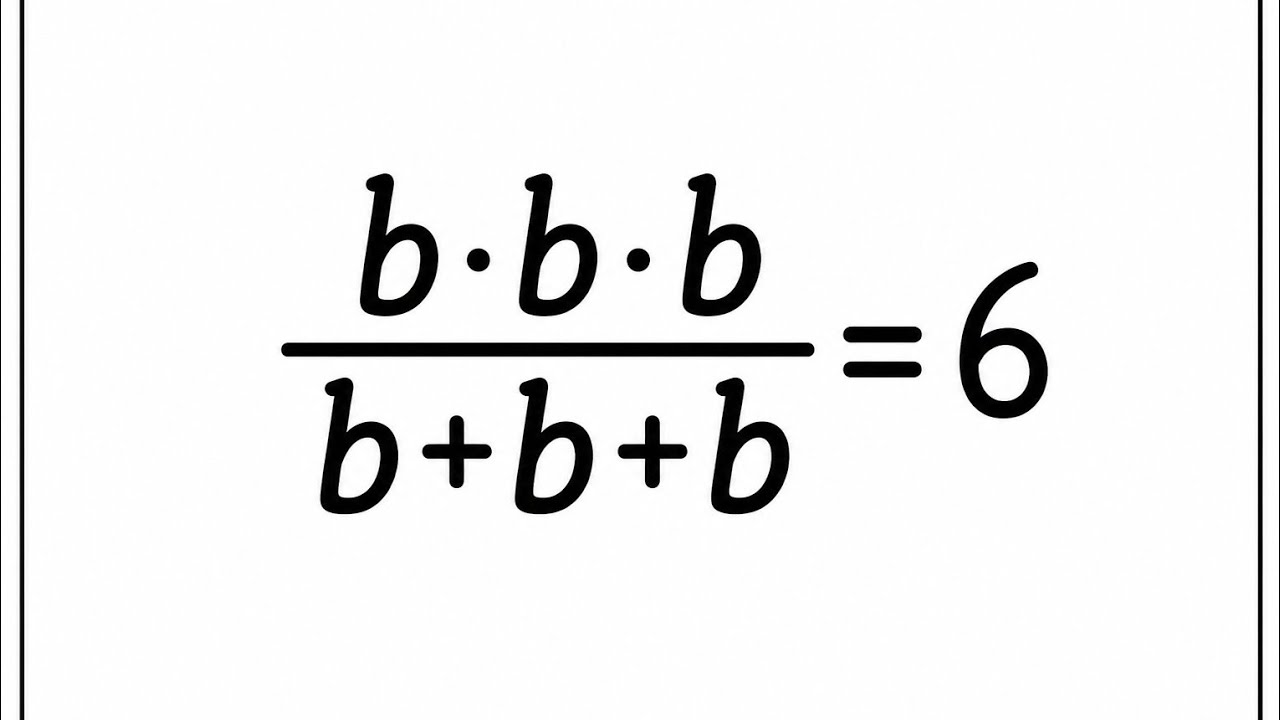
Olympiad Mathematics | Indian | Can You Solve This?
PhilCoolMath
669 views•2026-06-02

Can you get the Correct answer for this Math Quiz?
Fendora01
24K views•2026-05-29

NUMBERBLOCKS COUNT THE TOTAL SUM OF TEN NUMBERS | ADD SMALL TO BIGGEST NUMBER | hello george
hellogeorge2294
5K views•2026-05-28



