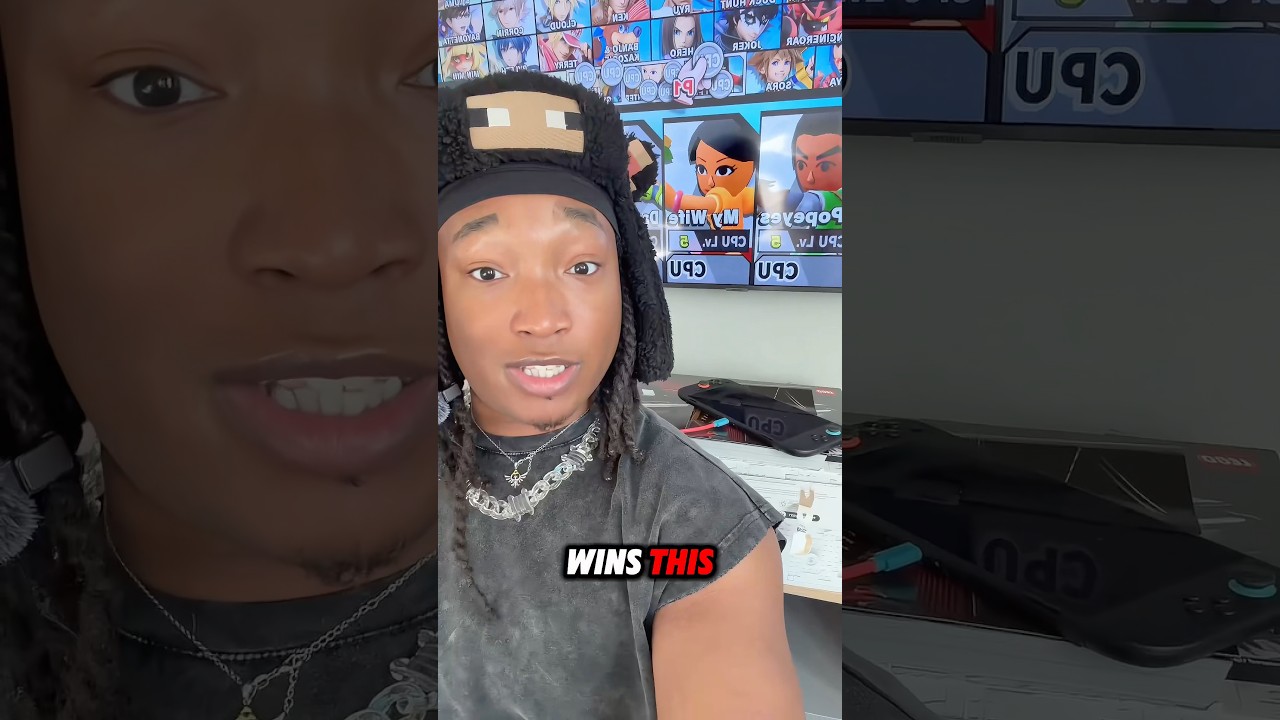
Oppressed peoples develop longer, more detailed, and more vivid memories than oppressors, which creates a latent revolutionary potential that remains 'an inch below the surface' until conditions trigger its emergence; this explains why the Civil Rights Movement of the 1950s-60s came as a surprise to white America despite decades of accumulated grievances, cultural expressions of resistance (blues, jazz, poetry), and historical injustices like the Scottsboro Boys case that revealed systemic oppression.
Installez notre extension pour rechercher instantanément dans n'importe quelle vidéo
Part 72: Will It Explode?Ajouté :
Oppressed people have much longer, much more detailed, and much more vivid memories than the oppressed. It's a fact in a macro and a micro example. That's why parents never expect their children to hold such deep-seated resentment for them. That's why for husbands, the divorce always came out of nowhere.
Right? Like, the oppressed the oppressing class never really fully sees the oppressed class.
And so, that's why when there is a reckoning and the oppressed people are now advocating for fighting for their rights boldly, loudly, the oppressed are like, "What do you mean? Everything's been fine this whole time. And if you would just stop speaking up about it, things would go back to normal and we would be fine again." But of course, it's only fine on their end. If you've ever seen The Help, and I can't remember if this was in the book or in the movie because I did both. I read the book first in like 11th grade, and then I watched the movie when it came out later that year. But in The Help, there is this point where Skeeter's boyfriend is like, "Why do you keep trying to pull this civil rights [ __ ] Everything's fine. Stop being a liberal agitator, basically. Everything's fine if you would just leave it alone and things would just go back to normal."
Right? But the oppressed people in the situation are like, "Actually, nothing's ever been [ __ ] fine for me and I'm about to see you about that shit." And it always takes the oppressed people off oppressing people off guard. They never know what to expect. And it's this sentiment that Howard Zinn opens with in chapter 17 of A People's History of the United States titled Or Will It Explode?
So, the chapter begins with him basically saying that the civil rights movement of the 1950s and '60s might have might have seemed like it exploded all at once. But what a lot of people nowadays don't understand is that it really took white America off guard, that civil rights movement. But maybe it shouldn't have taken them off guard. And if they saw us the way we are forced to see them, they would have known that we were on their ass the whole time.
So, Howard Zinn opens with this. I'm just going to read the first page. All right, turn to chapter 17 in your textbooks.
The black revolt of the 1950s and '60s, north and south, because it wasn't just in the south. Did you know that? Did you know that?
The black revolt of the 1950s and 1960s, north and south, came as a surprise. But perhaps it should not have. The memory of oppressed people is one thing that cannot be taken away. And for such people And for such people, with such memories, revolt is always an inch below the surface.
For blacks in the United States, there was the memory of slavery, and after that of segregation, lynching, humiliation.
And it was not just a memory, but a living presence.
Part of the daily lives of blacks in generation after generation. In the 1930s, Langston Hughes wrote a poem, "Lenox Avenue Mural", which is where the title of this chapter came from. It says, "What happens to a dream deferred? Does it dry up like a raisin in the sun?" I'm sure you've heard the poem.
"Or does it fester like a sore and then run? Does it stink like rotten meat? Or crust and sugar over like a syrupy sweet? Maybe it just sags like a heavy load. Or does it explode?"
In a society of complex controls, both crude and refined, secret thoughts can often be found in the arts. And so it was in black society.
So much has been said about black Americans' propensity for culture. We've written this whole culture, right? And nobody's going to argue with me about that.
This whole culture is ours. The food, the music, the style, the dressing style, the hairstyles, the language that we use on TikTok. The language that Gen Z uses that they swear is not AAVE, but [ __ ] my auntie was talking like that in the '90s. Like, we wrote all this [ __ ] All of this [ __ ] is ours. Rock and roll came from us. Rap and hip hop obviously came from us. And all of these [ __ ] people around the world are trying to say that Americans don't have culture. Yes, they do. It's ours. But that black culture, that propensity to create beauty from ashes came from a really dark and desperate place, right?
Like, we had to make this music because that was the only way that we could express how we really felt without getting targeted by a literal lynch mob.
By literal fire bombers who would set our whole [ __ ] neighborhood on fire and kill everybody in it. No exaggeration.
No exaggeration, okay?
We had to step into this place of being cultural warriors because that was the only place that could be ours.
White people like like they say in sinners.
That's about to fall. Like they say in sinners, right? White people love the blues. They just don't like who sings it. So, we had to hide our anger and our frustration and our desperation and our fear in our music, right? And so Howard Zinn talks about that. He says, "Perhaps the blues, however pathetic, concealed anger. And the jazz, however joyful, portended rebel rebellion. And then the poetry, the thoughts no longer a secret." Um and so basically in the first half of this chapter, he's basically just enumerating all of the many ways that black people were already showing their dis- satisfaction with the type of society they were living in in the decades leading up to the civil rights movement. Painting the picture of what happened in the 50s and 60s should not have come as a surprise. White America should have been already hip to it if they were paying attention. But they did not see us. And you can see a parallel of this happening today.
Just by a show of hands, how many of us as Americans have been shocked to find out how the rest of the world really No, let me rephrase that.
By show of hands, how many Americans today, how many Americans watching this, have been shocked to find out that we're not the good guys in anybody's story?
I've been doing this I've been reading this book, A People's History of the United States, since September of last year. I'm almost coming up on a year of reading this thick-ass book and I've made a real dent in it. How many of you are shocked that all of the stories that you heard of us being the hero, of us liberating the Jewish people during World War II, of us being this like progressive beacon for the rest of the world? How many of you are shocked that all of that propaganda turned out to be just that, propaganda?
I can tell you who's not shocked. The Filipinos, the Iranians, the Colombians, the Mexicans, the blacks.
None of us are shocked. But there's a lot of people out there, mostly white Americans, but also others. There's a lot of people out there who are genuinely shocked that all of this stuff that's coming to light has been true all along. We were trying to tell you, but you were conditioned to not listen to us because we were beneath you.
So Howard Zinn is saying that as early as the 1920s we started to see the writing on the wall that a really, really big radical revolution was just around the corner. So in the 1920s Claude McKay, one of the figures of what came to be known as the Harlem Renaissance, wrote a poem that Henry Cabot Lodge put in the Congressional Record as an example of dangerous currents among young blacks.
So these people were the If if if the average white American citizen wasn't watching what was going on with black America in the 20th century, the government was.
The government knew.
And this poem they put in the Congressional Record as in we got to watch these [ __ ] cuz they're about to blow the [ __ ] up, okay? And here's the poem. If we must die, let it not be like hogs, hunted and penned in an inglorious spot. Like men will face the murderous cowardly pack, pressed to the wall, dying, but fighting back.
And this is in the 1920s.
So, it was already coming. It was always coming. And this is a poem that I read in a video that I did on Tik Tok. If you're watching this on Instagram or YouTube, um this is a poem that I read in a video last week because it really really touched me. Countee Cullen. I don't know if you guys know who Countee Cullen is. This is my first time hearing that name, but um he wrote a poem called Incident. And it evoked Zen's words. It evoked memories, all different, all the same, of every black American's childhood. And when I read the poem, I remember when it first happened to me.
And every black person can remember when it first happened to them.
Here's the poem.
Once riding in old Baltimore, heart-filled, head-filled with glee, I saw a Baltimorean keep looking straight at me.
Now, I was eight and very small, and he was no whit bigger.
And so I smiled, but he poked out his tongue and called me [ __ ] I saw the whole of Baltimore from May until December. Of all the things that happened there, that's all I remember.
And then the same poet, Countee Cullen, when the Scottsboro Boys incident happened, um and I believe, if I'm remembering correctly, that's the incident of the little boys who were like like um sentenced to prison in a very injust way. They blamed them for some white man doing something to a white woman, which is what white men always do. They blamed them and then they sent them to the prison and then they set the jail on fire and like killed all these little boys. I think that's what the Scottsboro incident was. Actually, let me fact-check that real quick. Real-time fact-checking.
Okay, I just looked it up and I was completely wrong. I think I combined two historical events.
So, what actually happened? And I got my handy-dandy notebook right here. What actually happened is that um on March 25th, 1931, a fight broke out between white and black youths um riding a freight train near Paint Rock, Alabama.
Following the altercation, two white women aboard the train accused the black teenagers of assault and rape to avoid being arrested themselves for vagrancy.
And the defendants, the black boys, Olen Montgomery, Clarence Norris, Haywood Patterson, Ozzie Powell, Willie Roberson, Charlie Weems, Eugene Williams, and Andy and Roy Wrights, they were brothers.
Say their names. Um and so basically, they rushed these trials through in a couple of days leading to rushed convictions and death sentences for eight of the nine youths by all white juries. And then the Supreme Court ruled in Powell versus Alabama and Norris versus Alabama um that the defendants have the right to effective counsel and solidified the unconstitutionality of excluding black citizens from serving on juries. And the outcome um was national protest, and one of the white women who accused the men or accused the boys retracted her statement. The state of Alabama dropped the charges against five of the men in 1937, and the remaining four served significant prison time before eventually being paroled or escaping.
That's the Scottsboro Boy incident. Just to put context into what I'm about to say. Now, when this incident happened, and again, there were national protests, this was like a George Floyd type of moment, but in the 1930s, right? When this happened, Countee Cullen, the same one who wrote incident, the Baltimore poem, he wrote a bitter poem noting that white poets had used their pens in protest uh for other cases of injustice, but now that black people were involved, most of the white poets of his time were silent. And the last stanza in that poem was, "Surely I said, now the poets will sing, but they have raised no cry. I wonder why." And we've talked about we talk about this all the time today. All of these [ __ ] white liberals who get so up in arms about certain things, I think a really good example of this is just to use a really timely example of the fights that are happening among the girls on TikTok right now. It's when white trans women want to speak up so much about trans rights, but they're completely dead silent about women's rights, and they want to come into women's spaces and dictate how we identify as ourselves as as women. They want to dictate the topics that we cover in conversation. They want to dictate all of that because they want to censor themselves in our lives, but we can't censor ourselves in theirs. And so he's basically talking about how these these people who come from historically oppressive groups act when they are allies, right? Like how they act like the type of the type of oppression that they get mad about says a lot about them because they can be mad about a certain type of oppression that's affecting them. Like for instance, these white poets can be mad about capitalism because it affects them, but when it comes to racism, crickets.
So that's what Cullen is talking about.
But, you know, Howard Zinn goes on and he's talking about even the subservient Uncle Tom type of Negroes that were that existed in the early 20th century. Even they were in a way rebelling. Even if it was silent, they were rebelling against this really brutal, really extreme white power structure that turned them into second-class citizens. He says, "Um even outward subservient Uncle Tom behavior in real situations, the comic or fawning Negro on the stage, the self-ridicule or precaution, concealed resentment, anger, energy. The black poet Paul Laurence Dunbar, that's what my middle school was named after, Dunbar Magnet School, clock it. In the era of the black minstrel around the turn of the century, wrote, 'We wear the mask.
We wear the mask that grins and lies. It hides our cheeks and shades our eyes. We sing, but oh, the clay is vile beneath our feet and the long mile. But let the world dream otherwise, we wear the mask.' Um and I think a really good example of this mask, right, that conceals this really, really deep, intense anger at all of this racial oppression, if y'all have ever seen the show Them on Amazon Prime, season 1, [ __ ] The way that that minstrel show character is depicted is [ __ ] brilliant because he's like shucking and jiving and doing all of this [ __ ] but deep down he's like, "You're going to let them talk to you like that? You're really going to let them talk to you like that? You stupid [ __ ] get the [ __ ] up." You know, it's like that energy.
I'm not It's like I actually I know I'm up here on stage joking and cap cackling hahaha heehee, but ain't [ __ ] funny.
So, that's basically the energy behind the minstrel show.
Okay.
Another poem that he details, and I mean, I know that you can read this stuff for yourself, but I just think it's really important to call these out because he's painting this picture of the fact that the black spirit never was dominated. It was just dormant for a while, okay? And I talked about this in the chapter about slavery. What chapter was that?
What chapter was that? I don't remember.
It was the chapter about emancipation without emancipation without freedom, subserve Y'all know what I'm talking about. Found it. It was chapter nine No, was that nine? Nine. Slavery without submission, emancipation without freedom, and I talked about that. Um, I talked about how the black spirit never was like We were We were always like an indomitable people, right? Like we weren't we weren't um what they wanted us to be, and that's why slavery was going to come to an end come hell or high water, and we were the hell or high water. Hello.
And so, that same spirit existed in the middle of the civil rights movement. And so, this poem, this prose poem titled For My People by Margaret Walker, I think it was really, really relevant back then. I think it might be even more relevant now with these fascist [ __ ] trying to take over with all of their AI bots and small dicks.
Listen to this.
Let a new earth rise. Let another world be born. Let a bloody peace be written in the sky. Let a second generation full of courage issue forth. Let a people loving freedom come to growth. Let a beauty full of healing and a strength of final clinching be the pulsing in our spirits and our blood. Let the martial songs be written. Let the dirges disappear. Let a race of men now rise and take control. And this is a poem that was written in the 40s.
So, the civil rights movement did not spawn out of thin air. These are kids who were growing up under Jim Crow. They were growing up being spat on. They were growing up being shoved, pushed aside, beaten, killed, given the lowest, dirtiest jobs, forced to live in the lowest, dirtiest neighborhoods, and this anger's been building, building, [ __ ] more and more and more and more until finally the momentum [ __ ] took off in the 1950s.
Especially in the 60s.
When I was in ninth grade, my um English teacher had us read Black Boy.
Um and it was the autobiography of Richard Wright written in the 1940s. And there's a there's a quote, like there's a there's a pull from Black Boy that expressed um the humiliation that that black people would face at the hands of white people. He writes, "But it also it expresses the humiliation that they would face, but he is also writing about how that humiliation never convinced him that [clears throat] he was a lower form of human."
If anything, it convinced him that they were.
The white South said that it knew [ __ ] and I was what the white South called a [ __ ] Well, the white South had never known me, never known what I thought, what I felt. The white South said that I had a place in life. Well, I had never felt my place. Or rather, my deepest instincts had always made me reject the place to which the white South had assigned me. It had never occurred to me that I was in any way an inferior being and no word that I had ever heard fall from the lips of Southern white men had ever made me really doubt the worth of my own humanity.
Right. And so from here Howard Zinn starts talking about how all of these black Americans north, south, east, west were trying to find a way. They didn't even know that there could be a different type of life for them until the Communist Party stepped in.
Now, I'm going to pause here and say this.
In America, there's this like underlying not really underlying overarching belief that communism bad. Like communism's bad. Communism's for the Soviets and the Chinese and in America we don't do that cuz we believe in democracy rah rah rah rah rah, right? Okay, that's [ __ ] That's [ __ ] Um just to say it, anti-communism is for white people.
And if you're black, you really can't afford to be anti-communist. And I want to say y'all need to stop adapting the colonizer's fears as your own. That's just a sign that they have managed to colonize your mind. Excuse me, I guess confirmation burps. I must be on to something.
Stop adapting the colonizer's fears as your own because typically what they fear is what we wish for. And vice versa, okay? So like if you are adopting white people's fears as your own, you're clutching your bag around black people. You're looking your nose down on communism which was one of the main forces helping drive the civil rights movement.
You got them white people in your mind.
Root it out.
So in the next part, we're going to talk about how communism played a role in setting the stage, setting the foundation for the civil rights movement.
Vidéos Similaires
Elections Are Rigged! Only Those In Government Can Tell How ~ Diana Ngao & Mark Ouko
RadioGenKe
696 views•2026-06-02
The Original Black Panther Party patrol the Virginia Beach Oceanfront
wavy
3K views•2026-06-01
NEMA demolishes over 100 homes in Busabala
ntvuganda
386 views•2026-06-04

Being Foreign-Born Does Not Disqualify Me From Understanding Anti-Blackness
JayJayLegal
297 views•2026-05-31

Protesters tear down World Cup statues in Mexico City
Reuters
13K views•2026-06-03

A Japanese Man Did Some Bad Stuff... And then, made it worse
TokyoLensMinis
7K views•2026-06-04

America's Fastest Growing City Is Also It's Worst (Charlotte, NC)
WiIIiampedia
129 views•2026-06-05

Communities on edge as faith-based hate crimes spike across the West
channelnewsasia
808 views•2026-06-02