This story illustrates that authentic love and meaningful relationships require the courage to be vulnerable and honest, even when it comes at a personal cost. The Duke of Carringford, Sebastian, chose to sacrifice his political power and social standing to uphold his conscience rather than compromise his integrity, demonstrating that true love is built on mutual respect, shared sacrifice, and the willingness to choose truth over convenience.
Install our extension to search inside any video instantly.
"PRETEND TO LOVE ME AT DINNER" THE DUKE ASKED… BY DESSERT HE WASN'T PRETENDING ANYMOREAdded:
An original story, narrated exclusively for Love Written in Silence.
Lady Eloen Heartmere had returned to society 3 months earlier after a year of mourning that felt both too long and not nearly long enough. The black crepe had been folded away, replaced by muted grays and lavenders that whispered respectability without drawing undue attention. She had learned in the year since her husband's death that a widow's position in late Regency England was as fragile as frost on glass. One misstep, one perceived impropriety, and the careful edifice of sympathy could shatter into scandal.
She moved through drawing rooms with the precision of a dancer, navigating a stage strewn with hidden traps. The other women smiled at her with practiced warmth, but beneath their pleasantries lay something sharper. Pity, yes, but also judgment.
They watched to see if she would weep too much or too little, if she would retreat into solitude or reach too eagerly for company. Every choice was scrutinized, every gesture interpreted.
Her late husband, Mr. Jonathan Heartmere, had been a gentleman of modest means and impeccable character.
He had died suddenly, a fever that took him in less than a week, leaving Eloen with a small income, a respectable name, and the suffocating weight of propriety.
She had loved him quietly, in the way one loves a companion who is kind and steady, but not incendiary. His death had left her bereft, but not destroyed.
She had grieved honestly, and then she had risen. But society did not reward honesty. It rewarded performance.
The invitation to Caringford House arrived on a Tuesday afternoon, delivered by a liveried servant whose bearing suggested the importance of the sender. The heavy paper was embossed with the ducal seal, the handwriting formal and precise. A dinner 2 weeks hence. Her presence was requested. Eloen held the card in her hands and felt the familiar knot of anxiety tighten in her chest. She could not refuse without giving offense. The Duke of Caringford was not a man one slighted lightly.
Yet, attending meant stepping back into the spotlight she had worked so hard to avoid. It meant being watched, assessed, and quite possibly judged wanting. She sat by the window of her modest townhouse, the invitation resting on her lap, and allowed herself a moment of bitter honesty. She did not want to go. She wanted to remain invisible, to move through the world like a shadow, noticed only enough to be deemed respectable, but never enough to invite scrutiny.
But, invisibility, she knew, was a luxury she could not afford.
A widow who withdrew too completely risked being forgotten, and forgotten women lost their few remaining protections. She needed to be seen, but only in the right light, only in the right company. She accepted the invitation with a brief, carefully worded note. Her hand did not tremble as she wrote it, though her heart felt heavy as stone.
The days leading up to the dinner passed with agonizing slowness. Elowen chose her gown with meticulous care, a dress of pale blue silk, elegant but not ostentatious, with a modest neckline and sleeves that covered her arms to the wrist.
She wore her late husband's ring on a chain beneath her bodice, a private talisman against the uncertainty that gnawed at her. On the evening of the dinner, as her maid fastened the last of the buttons and arranged her hair into a simple chignon, Elowen studied her reflection in the mirror. She looked composed, dignified, unremarkable. It would have to be enough.
Sebastian Wickliffe, Duke of Caringford, stood before the window of his study and watched the last light drain from the sky. The city beyond was a patchwork of rooftops and chimneys, the streets below beginning to glow with lamplight. He had always found a strange comfort in this view, in the vastness of London and the anonymity it offered. A man could be lost here, even a duke. But tonight, he could not afford to be lost.
Tonight, he needed to be seen and more than that, he needed to be believed. The dinner he had arranged was not a social courtesy. It was a calculated maneuver, a chess move in a game he had never wanted to play. For weeks now, Viscount Ashford had been circulating whispers about old financial irregularities, rumors that threatened to unravel alliances Sebastian had spent years building. The whispers were clever, just specific enough to sound credible, just vague enough to be impossible to refute directly. Sebastian had always prided himself on choosing conscience over convenience. He had refused bribes, declined favors that came with strings attached, and spoken plainly when others hid behind euphemism. It had earned him respect, but also enemies. Ashford was one of them.
The Viscount's latest gambit was particularly insidious. He had suggested, in the careful language of drawing-room gossip, that Sebastian's financial dealings were not as transparent as they appeared.
That there were debts hidden, obligations concealed, perhaps even funds misappropriated. None of it was true, but truth mattered less than perception.
If enough people believed the whispers, Sebastian's influence would crumble. He had considered his options carefully. A public denial would only draw more attention to the rumors. A private confrontation with Ashford would achieve nothing.
The man was too cunning to be cornered by words alone.
What Sebastian needed was a distraction, something that would shift the conversation, redirect the scrutiny. And so he had conceived of this dinner, this carefully orchestrated evening designed to suggest a romance where none existed. If society believed he was courting Lady Eloise Hartmere, the widow of a man whose reputation was beyond reproach, then perhaps the whispers about financial impropriety would lose their sting. A man in love was a man softened, humanized, less threatening. It was a cynical calculation, and Sebastian hated himself for it.
He had known the Hartmere family, though Eloise herself was unaware of the connection. Years ago, when Jonathan Hartmere had faced ruin over a minor financial scandal, Sebastian had quietly intervened. He had accepted blame for a clerical error that was not his own, absorbing the consequences to shield Hartmere's name. It had cost him nothing significant at the time, but it had saved Jonathan's reputation and, by extension, his marriage.
Sebastian had never told anyone. He believed that true loyalty required silence, that the best protection was the kind that went unacknowledged. But now, as he prepared to use Eloise as a shield, he felt the weight of that old decision pressing against his conscience. She deserved better than to be dragged into his political machinations.
Yet he could see no other way forward.
Ashford would not stop until Sebastian's position was destroyed. And if Sebastian fell, so too would the reforms he had fought for, the protections he had built for those without power or voice.
He turned from the window and picked up the guest list for the evening. Eloise's name was near the top, written in his own hand. He had invited her because she was respectable, because her presence would lend him credibility, and because he believed she was strong enough to endure the scrutiny that would follow. He hoped he was right.
The grand dining room of Caringford House was a study in restrained opulence.
Candelabras lined the length of the table, their flames casting warm gold across crystal goblets and silver cutlery. The walls were paneled in dark wood, the ceiling coffered and painted with pastoral scenes that seemed to float above the gathering like distant memories. The air smelled of beeswax and roasted meat, of wine and the faint perfume of hothouse flowers arranged in low vases along the table center. Elowen arrived precisely on time, neither early enough to seem eager nor late enough to draw attention. A footman took her cloak and gloves and she was ushered into the drawing room where the other guests had already begun to gather. She recognized several faces, Lord and Lady Pemberton, the aging Earl of Stratton, Mrs. Caldwell and her daughter, and others whose names she knew but whose company she had not kept.
And there, near the fireplace, stood Viscount Ashford. He was a man of middling height and sharp features, with pale eyes that seemed to catalog everything they touched. He smiled at her as she entered, a smile that did not reach those eyes, and Elowen felt a chill run through her despite the warmth of the room.
Sebastian appeared at her side almost immediately, his presence a quiet anchor in the sea of murmured conversation. He greeted her with perfect formality, his voice low and steady. Lady Hartmere, thank you for coming. Your Grace. She inclined her head, her hands folded neatly before her.
It is an honor to be invited. He studied her for a moment and she saw something flicker in his expression, something that might have been regret or perhaps simply weariness, but then it was gone, replaced by the calm mask of a man accustomed to command. Shall we go in to dinner?
The guests filed into the dining room with practiced ease, each taking their assigned seat. Elowen found herself placed to Sebastian's right, A position of prominence that made her acutely aware of the eyes upon her.
Across the table, Viscount Ashford watched with a faint smile, his fingers drumming lightly against the stem of his wine glass. The first course was served, a delicate consommé, clear and fragrant, accompanied by thin slices of toasted bread.
Conversation began in the careful, measured tones of people who knew they were performing for one another.
Politics were discussed obliquely, social engagements were counted with just enough detail to suggest intimacy without impropriety. Eloan ate in silence, responding when spoken to, but offering little of her own accord. She was aware of Sebastian beside her, the way he leaned back slightly in his chair, the way his gaze moved around the table with the precision of a general surveying a battlefield. The second course arrived, roasted quail with a reduction of wine and herbs, accompanied by root vegetables glazed with honey.
It was as the servants were clearing the plates and refilling the wine glasses that Sebastian leaned close to her, his voice dropping to a whisper that only she could hear. "Pretend to love me tonight."
The words struck her like a physical blow. She froze, her hands stilling on the edge of the table, her breath catching in her throat. She turned her head slightly, just enough to meet his gaze, and saw something there that she had not expected.
Vulnerability. He was not commanding her. He was asking.
Her mind raced.
Refusal would humiliate them both, would leave him exposed to whatever trap Ashford had laid. But agreement meant stepping into a performance she had not rehearsed, risking her own reputation for a man she barely knew. Yet even as she weighed the risks, she felt something shift inside her. She had spent the last year being careful, being invisible, protecting herself from judgement and scrutiny. Perhaps it was time to be brave instead. She nodded, the movement so slight it was almost imperceptible.
His eyes closed briefly, a flicker of relief crossing his face. Then he straightened and the performance began.
It started with small things, a glance held a moment too long, her hand drifting near his on the table, close enough that their fingers almost touched, his attention turning to her more often than protocol required.
His voice softening when he spoke to her, the room took notice. Conversations paused and resumed with new undertones.
Lady Pemberton's eyebrows rose. Mrs. Caldwell leaned toward her daughter and whispered something that made the girl's eyes widen. Across the table, Viscount Ashford's smile hardened into something colder.
Elowen felt the weight of their attention like a physical thing, pressing against her skin, but she did not falter. She met Sebastian's gaze with a warmth she did not entirely have to feign, allowed her lips to curve into a smile that suggested shared secrets. He responded in kind, his fingers brushing hers as he passed her a glass of wine. The touch was brief, but it sent a jolt through her that she had not anticipated.
By the time the third course was served, the room had accepted the narrative they were weaving. The Duke of Caringford, it seemed, had found affection in an unexpected place and Lady Heartmere, the respectable widow, had emerged from mourning into the light of his regard.
It was a triumph of performance and yet, as Elowen sat beside him, feeling the warmth of his presence and the weight of his attention, she realized with quiet alarm that she was no longer entirely certain where the performance ended and something else began. The courses continued, each more elaborate than the last. There was a fish course, delicate sole poached in butter and wine, followed by a sorbet to cleanse the palate. Then came the main course, a roast of beef, pink and tender, accompanied by potatoes turned in duck fat, and asparagus dressed with lemon.
Sebastian and Elowen maintained their charade with increasing ease. He spoke to her of small things, asking her opinion on the wine, commenting on the music that drifted faintly from another room. She responded with a grace that felt, to her own surprise, almost natural. But beneath the surface, something was shifting.
His gaze lingered, not because the guests were watching, but because he found himself unable to look away. The way she tilted her head when she listened, the way her eyes reflected the candlelight, the quiet strength in the set of her shoulders, all of it drew him in ways he had not anticipated. Elowen, too, felt the change.
She had expected to feel self-conscious, to be constantly aware of the performance. Instead, she found herself relaxing into the conversation, into the warmth of his attention.
He was not what she had expected.
There was a gentleness beneath his formality, a depth that intrigued her. By the time dessert arrived, delicate pastries dusted with sugar, accompanied by glasses of amber wine that glowed in the candlelight, the distance between pretense and reality had narrowed to almost nothing. Sebastian reached for his glass and found his hand trembling slightly.
He set it down again, turning to Elowen with an expression that was no longer guarded. "You have been very kind," he said quietly, his voice meant only for her. "Kinder than I deserve."
She met his gaze and felt her heart betray her composure. "Perhaps," she said softly, "you deserve more kindness than you believe." The words hung between them, simple and true.
Around them, the guests were beginning to rise, preparing to withdraw to the music room for the remainder of the evening. But for a moment, neither Sebastian nor Eloise moved. They sat in the glow of candlelight, surrounded by the remnants of the meal, and acknowledged silently what neither was yet ready to name. The performance had succeeded. The guests murmured approvingly as they filed from the room.
Viscount Ashford's expression was tight, his earlier confidence visibly shaken.
But as Eloise rose from her seat and allowed Sebastian to escort her from the dining room, she felt the weight of what they had set in motion. The evening had been a social triumph, yet she could not shake the feeling that they had opened a door neither of them knew how to close.
In the days that followed the dinner, rumors spread through London society with the speed and inevitability of frost creeping across a windowpane. Lady Eloise Hartmere, it was whispered, had captured the attention of the Duke of Caringford. Some said it was a love match born of mutual respect. Others suggested she had maneuvered her way from respectable widowhood into the arms of power with calculated precision.
Eloise heard the whispers in every drawing room she entered. They were never spoken directly to her, of course.
Society was far too well-bred for that.
But she saw them in the way conversations paused when she approached, in the way smiles became brittle, and eyes turned assessing.
Invitations that had once arrived with regularity began to slow. Not dramatically, not enough to constitute outright ostracism, but enough to make the shift unmistakable. She was no longer simply the respectable widow. She was now the woman who had dared to reach above her station, or who had allowed herself to be used, or who had compromised her dignity for the sake of ambition. The cruelty of it was that none of the whispers acknowledged the truth that she had agreed to the charade out of compassion, not calculation, that she had risked her reputation to protect a man who had asked for her help. But truth, she was learning, mattered far less than narrative.
She maintained her composure with the discipline of a soldier holding a line.
She attended the events to which she was still invited, smiled politely, spoke when spoken to, and offered no defense. To defend herself would be to acknowledge the rumors, and acknowledgement would only give them more power. But inside, the old fear returned. She was being watched, judged, reduced once again to a useful ornament in someone else's story. The autonomy she had fought so hard to claim after her husband's death was slipping away, replaced by a new kind of scrutiny that felt even more suffocating.
Sebastian continued to extend quiet courtesies. A note arrived one morning, brief and formal, thanking her for her grace at the dinner. A few days later, he called at her townhouse during the appropriate hours, staying only long enough to be seen by any neighbors who might be watching. He brought flowers once, a small bouquet of white roses that she placed in a vase by the window. She understood what he was doing.
He was protecting her through protocol, maintaining the appearance of courtship to shield her from the worst of the gossip. It was a kindness, and she was grateful for it. But it also complicated everything because the tenderness that had emerged at the dinner had not faded.
If anything, it had deepened. She found herself thinking of him at odd moments, remembering the way his voice had softened when he spoke to her, the way his eyes had held hers with something that felt like recognition. She began to trust him, and that trust frightened her more than the rumors ever could. Trust meant vulnerability.
It meant allowing someone to see her fully, not as a performance, but as a person. And she had learned, through years of careful survival, that vulnerability was dangerous.
One afternoon, as she sat in her drawing room with a book she could not concentrate on, her maid brought in the day's correspondence.
Among the letters was one from an old friend, a woman who had been kind to her during her mourning. The letter was warm and sympathetic, but it ended with a warning. Be careful, Elowen. Society is watching, and they are not always kind to women who step outside the lines. Elowen set the letter aside and stared out the window at the gray London sky. She had not stepped outside the lines. She had been asked to stand beside someone who needed her, and she had agreed. But the world did not care about intentions. It cared only about appearances. She thought of Sebastian, of the way he had looked at her across the dinner table, and felt a pang of something that might have been longing, or might have been regret. She did not know which, and she was not certain she wanted to find out. A second gathering was arranged at Caringford House 3 weeks later. It was smaller than the first, more intimate, with only a dozen guests invited.
Elowen received the invitation with a mixture of resignation and something she did not want to name as anticipation.
She dressed carefully, choosing a gown of deep plum silk that brought color to her cheeks without being ostentatious.
Her maid arranged her hair in a more elaborate style this time, soft curls framing her face, and Elowen studied her reflection with a critical eye. She looked composed, elegant, but beneath the surface, her heart was racing.
The evening began much as the first had, with polite conversation in the drawing room before dinner was announced.
Elowen found herself once again seated to Sebastian's right.
And once again, she felt the weight of eyes upon her. But this time, the scrutiny felt sharper, more pointed.
Viscount Ashford was present again, his pale eyes watchful, his smile a blade hidden beneath velvet. He engaged in conversation with the ease of a man who knew he held power.
And Elowen felt a chill each time his gaze drifted in her direction.
The meal progressed through its courses with the same careful choreography as before. But there was a tension in the air tonight.
A sense that something was building toward a point of no return. It came during the final course, as the last plates were being cleared and glasses refilled. Viscount Ashford rose from his seat, lifting his wine glass in a gesture that commanded attention. "A toast," he announced, his voice carrying easily across the table. "To our esteemed host, the Duke of Caringford, whose wisdom and flexibility have always been an example to us all." The words were carefully chosen, seemingly complimentary, but laced with implication. Sebastian's expression remained calm, but Elowen saw the tension in the set of his jaw. Ashford continued, his smile widening. "I propose we celebrate his support for the new parliamentary measure regarding estate management and financial transparency.
A measure that will benefit us all, I am certain, and which I know the Duke will endorse with his customary discernment."
The room went still.
Elowen did not fully understand the politics at play, but she understood enough. Ashford was laying a trap, publicly aligning Sebastian with a measure that, from the reactions of the other guests, was clearly controversial. All eyes turned to Sebastian. He could agree, preserving his political standing and appeasing Ashford, or he could refuse and pay the price. Elowen felt her breath catch.
Her hands tightened in her lap, hidden beneath the table. She wanted to reach for him, to offer some silent reassurance, but she did not dare.
Sebastian rose slowly, his movements deliberate and composed. He lifted his own glass, his gaze sweeping the table before settling on Ashford. "I thank the Viscount for his words," he said, his voice steady and clear, "and I appreciate his confidence in my judgment." He paused, and in that pause, Eloise felt the entire room hold its breath. However, Sebastian continued, "I must respectfully decline to endorse the measure in question. While I understand its appeal to some, I believe it compromises the financial integrity of estates whose stewardship has been beyond reproach. It would, in effect, punish those who have acted with honor in order to accommodate those who have not." The words fell like stones into still water. Ripples of shock spread across the table. Lady Pemberton's eyes widened.
Lord Stratton's expression turned grim.
Ashford's smile froze, then hardened into something cold and dangerous.
Sebastian continued, his voice calm but unyielding. "I have always believed that conscience must guide action, even when convenience suggests otherwise.
I will not support a measure that benefits the few at the expense of the many, no matter how diplomatically it is presented." He raised his glass. "To integrity," he said simply. "May we all have the courage to uphold it, even when the cost is high." He drank, and the room remained frozen for a long, agonizing moment. Then slowly, a few of the guests raised their own glasses and drank. Others did not. The division was stark and unmistakable.
Eloise watched Sebastian as he resumed his seat, and in that moment, she understood. He had known what this would cost him.
He had known that refusing Ashford publicly would invite retribution, would weaken his political position, would turn allies into adversaries, and he had done it anyway.
Not because he was reckless, but because he believed it was right. She looked at him, and he met her gaze. For a moment, everything else fell away. The guests, the politics, the performance, all of it dissolved, leaving only the truth between them. He had been protecting her, and not just tonight. He had been protecting her late husband's name, her reputation, her dignity, long before knew. His restraint had never been indifference. It had always been sacrifice.
Her heart turned over in her chest, and she felt something break open inside her. Not fear, not caution, something deeper and more dangerous. She was beginning to love him.
The cost of Sebastian's refusal arrived swiftly and without mercy. Within days, invitations to Eloise ceased entirely.
The few remaining social engagements she had been clinging to evaporated like morning mist. She was no longer a curiosity, or even a scandal. She was a complication, a woman whose name was now tied to a duke whose political star was falling.
She received no direct cuts. No one was so crude as to openly snub her, but the silence was damning.
Her drawing room, which had seen a modest but steady stream of visitors, became empty. Her correspondence dwindled to notes from tradesmen and a few loyal friends who lived too far from London to be caught in the web of gossip. Eloise withdrew, not out of shame, but out of a fierce protective instinct. She would not be anyone's shield, nor would she allow herself to become the weakness others exploited against Sebastian. If society wanted to cast her aside, she would go willingly. She had survived widowhood.
She would survive this.
When Sebastian called, she received him with perfect courtesy, but no warmth.
She offered tea, made polite conversation, and maintained a flawless formality that left no room for intimacy.
She would not give him cause to feel responsible for her, nor would she allow him to see how deeply his sacrifice had affected her.
Sebastian did not press. He respected her distance, though it pained him more than he would have admitted.
He understood what she was doing, and he could not fault her for it. She was protecting herself, and perhaps protecting him as well.
But the silence between them grew heavy, filled with all the things they could not say.
He wanted to tell her that he did not regret the toast, that he would make the same choice again. He wanted to tell her that her presence at that dinner had given him the courage to speak his conscience, that she had reminded him why integrity mattered. But he said none of it.
Instead, he left small tokens of his regard.
A book he thought she might enjoy, delivered without comment.
A note asking after her health, brief and formal.
He maintained the appearance of courtship because he hoped it might still offer her some protection, even as he knew it was likely futile.
His own position weakened daily. Allies who had once sought his counsel now avoided him. Political maneuvers he had spent years cultivating unraveled with shocking speed. Ashford moved through society with renewed confidence.
His whispers now carrying the weight of vindication. Sebastian accepted it all with the same calm he had shown at the dinner. He had made his choice, and he would bear the consequences. But at night, alone in his study, he allowed himself to feel the weight of what he had lost. Not the power or the influence, but the possibility of something he had only just begun to recognize. The possibility of love.
The season moved toward winter. The air grew colder, the days shorter. Leaves fell from the trees in the square outside Eloise's townhouse, carpeting the ground in shades of rust and gold. She watched them from her window and felt the ache of isolation settle into her bones. She had been alone before, but this loneliness was different. It was not the absence of company, but the absence of a specific presence.
She missed Sebastian in ways she had not anticipated. She missed the sound of his voice, the steadiness of his gaze, even in stillness. She had not realized, until it was gone, how much she had come to rely on the hope he represented. The hope that she could be seen, truly seen, and valued not for her usefulness, but for herself. The warmth of that first dinner felt like a memory from another life, distant and unreachable. And yet, she could not let it go.
Late one evening in early December, a message arrived at Eloise's residence.
It was delivered by a footman she recognized from Caringford House, and the seal on the envelope bore the ducal crest. She opened it with hands that trembled only slightly.
The note was brief, written in Sebastian's precise hand.
I have a question I need to ask. No guests, no performance, only honesty.
Will you come? She read it three times, searching for hidden meaning, for some clue as to what he intended. But the words were straightforward, almost stark in their simplicity.
She should refuse.
She should protect herself, maintain the distance she had so carefully constructed. But even as she thought it, she knew she would not. She sent a reply with the footman.
I will come.
The following evening, she arrived at Caringford House as the last light was fading from the sky. The house was quiet, the usual bustle of servants subdued. A single footman greeted her at the door and escorted her through the familiar halls. He led her to the dining room, where it had all begun. The same room, but emptied now of spectacle. The long table was bare except for two place settings at one end. Candles burned low in simple holders, casting soft, flickering light.
The chairs sat slightly askew as though the room had been recently used and then abandoned. Sebastian stood by the window, his back to her, his hands clasped behind him. He turned as she entered and she saw in his face a weariness that had not been there before. But beneath it there was something else, something raw and unguarded. "Thank you for coming." he said quietly. She nodded, her throat tight. "You said you had a question." He gestured to the table.
"Will you sit?" She did and he took the seat across from her. For a moment neither spoke. The silence stretched between them.
Not uncomfortable, but charged with all the things they had left unsaid.
Finally, Sebastian spoke. "I need to tell you something. Something I should have told you long ago." Eloen waited, her hands folded in her lap. "I knew your husband." Sebastian said. "Not well, but I knew him. Years ago he faced ruin over a financial matter, a clerical error that was not his fault but which would have destroyed his reputation nonetheless."
Eloen's breath caught. She had known about the scandal, though Jonathan had spoken of it only once and then only briefly. He had told her it had been resolved, that someone had intervened. But he had never said who.
"I took the blame." Sebastian continued.
"I claimed the error as my own and absorbed the consequences. It cost me little at the time.
I had position and resources enough to weather it. But for your husband it would have been catastrophic." "Why?"
Eloen's voice was barely a whisper. "Why would you do that?" "Because it was right." He met her gaze, his expression open and unguarded. "Because he was a good man and he deserved protection and because I believed that true loyalty requires silence. That the best way to help someone is to do so without expectation of recognition or gratitude. Eloin felt tears prick at her eyes. He never knew.
No, and I never intended for you to know either. Sebastian's voice softened. But I need you to understand why I asked you to pretend that night. It was not because I saw you as a convenient tool.
It was because I believed you were strong enough to endure what would follow and because I hoped that in protecting you, I might honor the memory of a man I once helped.
He paused, his hands gripping the edge of the table. But I have realized something in these weeks, something I did not anticipate. What? She asked, though she thought she already knew. I have feared love all my life, he said quietly. Not because I thought it was weakness, but because I feared it would make me unjust. That I would favor the one I loved above duty, above conscience, above the people who depend on my decisions. I believed that to love was to compromise, to choose one person's happiness over the greater good. He looked at her and she saw the vulnerability in his eyes, the fear he was finally allowing her to see. But you have taught me something different, he continued. You have shown me that love is only dangerous when it hides behind manipulation, when it is used as a weapon or a shield.
But love that chooses freely, that acts with conscience and courage, that kind of love does not corrupt, it redeems.
Eloin felt something break open inside her, something she had been holding tightly closed. She rose from her chair and moved around the table, closing the distance between them. You asked me to pretend, she said softly, standing before him.
But I stopped pretending weeks ago. He stood as well, his eyes searching hers.
As did I. She reached for his hand, taking it in hers with deliberate, unhesitating certainty. His fingers closed around hers, warm and strong. "I was afraid," she admitted. "Afraid of being used, of losing myself in someone else's story. But you have never asked me to be anything other than what I am.
You have never demanded. You have only offered. And you" He said, his voice rough with emotion, "have given me the courage to choose conscience over convenience, to speak truth even when it cost me everything." She stepped closer until there was almost no space between them. "It did not cost you everything," she said. "It brought you to this moment, to honesty, to us." He lifted his free hand and gently touched her cheek, his thumb brushing away a tear she had not realized had fallen. "I do not deserve you." "Perhaps," she said, a faint smile touching her lips, "but you have me nonetheless." He leaned down, and she rose to meet him.
And their lips touched in a kiss that was both gentle and certain. It was not the kiss of a performance or a charade.
It was the kiss of two people who had found each other through sacrifice and honesty, who had chosen each other freely. When they finally drew apart, the candles had burned lower, casting long shadows across the empty dining room. The door stood slightly ajar, and beyond it, the house was silent. What happened in that room afterward was not described in words or recorded in letters, but the stillness that followed was full and certain, and entirely theirs. Weeks passed, and the city moved through the rhythms of winter. Snow fell in soft, silent curtains, blanketing the streets and rooftops. The Thames froze at its edges, and the air smelled of woodsmoke and cold stone. The rumors did not vanish. Society, once it has decided on a narrative, is slow to release it. But the whispers lost their sharpness, their urgency. People found new scandals to discuss, new alliances to dissect.
Elowen and Sebastian became old news, a story already told. Sebastian's political position stabilized, though not in the way he had anticipated. The allies he had lost were not replaced by new ones seeking favor. Instead, he found respect from unexpected quarters.
Men and women who valued integrity over convenience began to seek his counsel.
His influence shifted, becoming less about power and more about principle.
Elowen reclaimed her place in the world, though not the place she had occupied before. She was no longer the invisible widow, nor the scandalous woman who had reached above her station. She was simply herself, a woman of intelligence and grace who had survived loss and emerged stronger. A small dinner was arranged at Caringford House in late January. It was an intimate gathering, only six guests, all of them people Sebastian and Elowen trusted. There were no rivals, no traps, no performances, only good food, warm conversation, and the quiet pleasure of companionship. As the evening wound to a close and the guests began to take their leave, Sebastian approached Elowen with something in his hand. She recognized it immediately, the pale silk glove she had worn on that first night, the night of whispered strategy and tentative trust.
He had kept it, not as a trophy, but as a reminder. He placed it beside her plate without ceremony. His expression unreadable. Elowen picked it up slowly, feeling the weight of all it represented, her dignity, her choice, her courage. She slipped it onto her hand, the silk smooth and familiar against her skin. Then she lifted her gaze to his, and in that moment, no words were needed. This time, nothing was performed. Everything was real. In the months that followed, Sebastian and Elowen did not seek society's approval.
They did not need it.
They had each other, and that was enough. Their love was quiet, mature, built not on passion alone, but on respect, shared sacrifice, and the knowledge that they had each chosen the other freely.
There were no grand declarations, no dramatic gestures, only the steady accumulation of small moments.
A hand reaching for another in the dark, a smile exchanged across a room, a conversation that stretched late into the night. Eloise reclaimed her sense of self, not as a widow defined by loss, nor as a Duchess defined by title, but as a woman who knew her own worth.
She involved herself in charitable work, using her position to advocate for widows and families left vulnerable by financial ruin. She discovered that she had a voice, and that people would listen when she chose to use it. Sebastian's political influence stabilized in a new form. He was no longer the man everyone courted for favors, but he was the man people trusted to speak truth. His endorsements carried weight because they were rare and honestly given. He found satisfaction in this new role, a satisfaction deeper than ambition had ever provided.
They walked together through the winter gardens of Caringford House on a cold afternoon in March. Frost still clung to the bare branches, and the air smelled of wood smoke and the faint promise of coming spring.
Their breath misted in the cold, and their footsteps crunched softly on the gravel path. They spoke of small things, the estate, the season, plans for the gardens when warmth returned. But beneath the ordinary words lay the extraordinary truth.
They had built something that could not be taken by rumor or time, something solid and real.
"I have been thinking," Sebastian said as they paused beside a frozen fountain, "about the nature of pretense." Eloise glanced at him, a faint smile touching her lips. "Have you?"
"Yes." He turned to face her, his expression thoughtful.
I asked you to pretend that night because I believed pretense was necessary. That truth was too dangerous, too vulnerable. And now? She asked. Now I know that pretense is the dangerous thing. Truth is what protects us.
Truth is what allows us to be seen and still be safe. She reached for his hand, lacing her fingers through his.
You were always truthful with me, she said. Even when you were afraid.
Even when you thought you were pretending. He smiled, a rare, genuine smile that softened the lines of his face.
As were you.
They stood together in the cold garden, surrounded by the sleeping earth and the promise of renewal. Above them, the sky was pale and clear. The sun a distant glow behind thin clouds. I love you, Eloise said simply. Not because you are a duke or because you protected my husband or because you gave me a place in society.
I love you because you chose conscience over convenience. Because you are brave enough to be vulnerable. Because you see me, truly see me and you do not turn away. Sebastian's grip on her hand tightened. And I love you, he said, his voice steady and sure, because you reminded me what it means to be honest. Because you did not allow me to hide behind duty or fear. Because you chose to trust me even when it cost you everything. She leaned into him and he wrapped his arms around her, holding her close against the cold. They stood like that for a long moment. Two people who had found each other through sacrifice and truth, who had built a love that needed no performance, no pretense.
It was not fate that had brought them together. It was choice. The choice to trust, to confess, to risk being seen.
And in the end, that choice was enough.
As they walked back toward the house, the first signs of spring were beginning to show.
Buds swelled on the branches and the earth beneath the frost was softening, preparing to wake. The world was changing as it always did, moving forward into new seasons and new possibilities. But some things they knew would remain constant. The love they had built, the truth they had chosen, the quiet courage it took to live honestly even when the world demanded otherwise. And that they both understood was more than enough. It was everything.
Related Videos

I Loved the Duke in Silence for Years. My Final Act? Choosing His Rival. 🤫💔 | DramaBox
DramaBox-PrimeDramaShorts
228 views•2026-05-31

⚡Harry Potter Book 4 [CH 23]⚡(CEFR A2+) Audiobook with Full Text
InglêsEssencial
880 views•2026-05-31

She Saved a Dying Prince Everyone Feared. Now the Empire Hunts Them Both.
NovelFilmz
462 views•2026-05-28

অর্জুনের প্রতিজ্ঞা: জয়দ্রথের পতন |#shorts #mohavarat
ChildhoodTea
129 views•2026-05-31

10 Books I Wish I Would Have Read Sooner!
BrianBell7
204 views•2026-05-29

How The Boys Fumbled The Most Iconic Villain of The Past Decade...
TeddySlump
5K views•2026-05-30

the legend of wayland the smith — a story of cruelty and revenge #norsemythology #mythsandlegends
tinyrainboot
1K views•2026-06-01
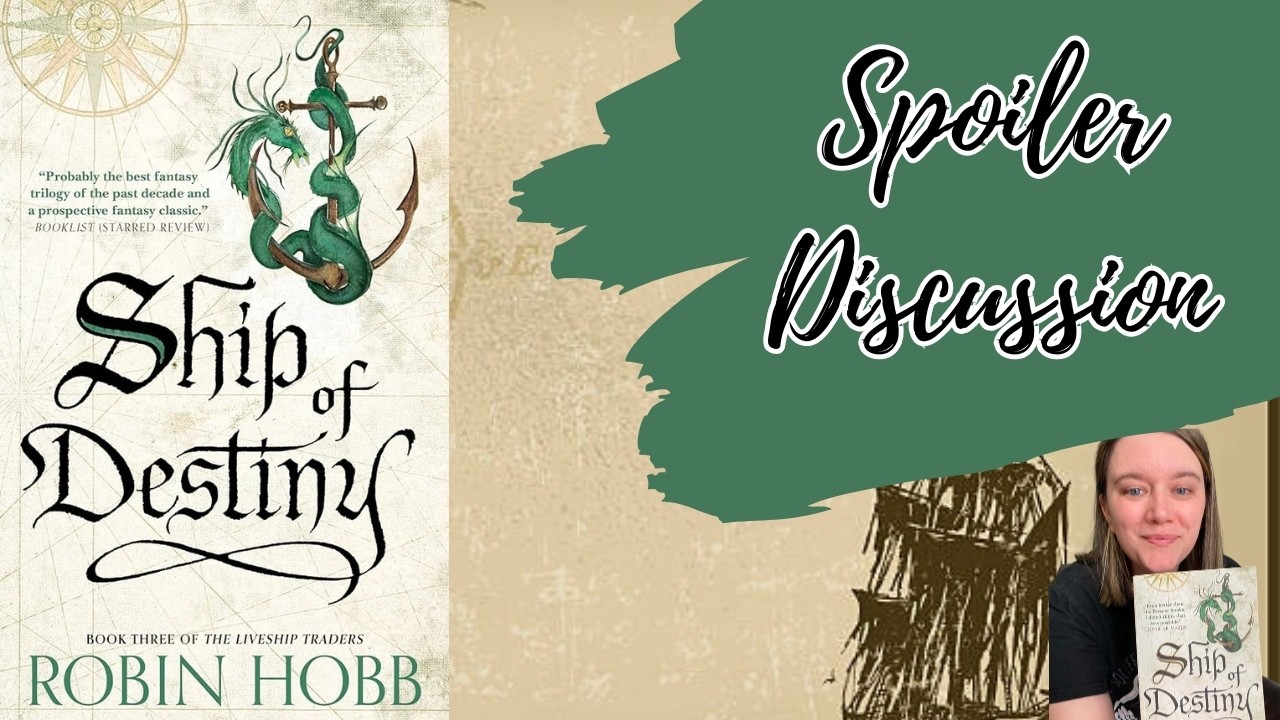
Ship of Destiny: Spoiler Discussion!
TheBookCure
105 views•2026-05-28



