XRP is evolving from a speculative cryptocurrency into critical global financial infrastructure, serving as a bridge asset that enables fast, low-cost international settlement and interoperability between different tokenized assets, currencies, and payment systems. This transformation is evidenced by major institutional partnerships including Russia's MOEX exchange integration, Ripple's collaborations with JP Morgan, Mastercard, and Ono Finance, and the DTCC's plans to bring over 100 trillion dollars of tokenized assets onchain. The XRP ledger's built-in decentralized exchange functionality allows assets to automatically interact without centralized intermediaries, positioning XRP similarly to how the US dollar traditionally serves as a bridge currency in global trade finance.
BREAKING: RUSSIA RECOGNIZES XRP!Añadido:
What if I told you that the global financial system is slowly being rebuilt right in front of our eyes and most people still have no idea what's happening? While the average investor is distracted by short-term price movements and daily market noise, some of the biggest institutions in the world are quietly building the infrastructure for a completely new financial era. And at the center of many of these conversations, partnerships, and integrations, one name continues showing up over and over again. XRP and the XRP ledger. Today we have massive developments involving Russia, BRICS Nations, JP Morgan, Mastercard, Ono Finance, Ripple, and even the DTCC, which processes quadrillions of dollars in financial activity. This is not just another crypto headline. This is the continued merging of blockchain technology with traditional global finance. Welcome back to We Are Cosmic, where we break down the biggest crypto and financial developments in simple English so everybody can understand what's really going on behind the scenes. If you enjoy staying ahead of the market and understanding where the financial world is moving before the mainstream catches on, make sure you subscribe and turn on notifications because things are accelerating faster than ever before. Now, let's start with one of the biggest headlines coming out right now. Russia has officially integrated XRP into the Moscow exchange infrastructure. That is a huge development, especially when you understand the bigger geopolitical picture. Beginning May 13th, the Moscow Exchange, also known as MOEX, will launch a real-time XRP index called the MOEX XRP index. This index will track XRP prices across major global exchanges, including Binance, Bybit, OKX, and BitGet. And the data will update every 15 seconds, including weekends. Think about what that means.
Russia's largest regulated stock exchange is now building official financial infrastructure around XRP.
This is not just random speculation on social media anymore. This is regulated market infrastructure being built around a digital asset. Now, obviously, Ripple itself cannot directly work with Russia because of international sanctions. And that's important to understand. But XRP as a decentralized digital asset can still be integrated into financial systems independently. That distinction matters because many people confuse Ripple the company with XRP the asset and the XRP ledger. What we are seeing now is governments, exchanges and financial institutions recognizing the utility and speed of blockchainbased settlement systems even outside of Ripple's direct involvement. This becomes even more interesting when you zoom out and look at the BRICS nations.
BRICS which includes Brazil, Russia, India, China, South Africa and now expanding partner nations has been actively searching for alternatives to the traditional western dominated financial system. Many of these countries are exploring digital assets, blockchain settlement, tokenization, and crossber payment systems that reduce reliance on older financial rails. XRP continues appearing in these conversations because the XRP ledger was specifically designed for fast, lowcost international settlement. Brazil, for example, has become one of Ripple's strongest international markets. Ripple has partnered with major banking and payment institutions there to support crossber transactions and tokenized assets. Some companies in Brazil are already tokenizing billions of dollars worth of assets directly on the XRP ledger. In India, reports suggest that Ripple technology has been explored in connection with the country's digital rupee initiatives. In China, Ripple's blockchain technology has been discussed for years in relation to crossber finance and supply chain infrastructure.
South Africa has also seen partnerships involving custody services and institutional digital asset solutions connected to Ripple's ecosystem. Then you look at the Middle East and the expansion becomes even more aggressive.
Ripple secured major licensing approval from the Dubai Financial Services Authority, becoming one of the first blockchain payment providers, fully licensed in the region. That is a massive achievement because the UAE is rapidly becoming one of the world's biggest hubs for fintech, tokenization, and digital asset innovation. Saudi Arabia is also exploring blockchain partnerships tied to payments and asset tokenization as part of its vision 2030 modernization strategy. When you connect all these dots together, a larger picture starts forming. This is no longer about whether blockchain technology will be used in global finance. That debate is basically over.
The real question now is which blockchains, which companies, and which digital assets will become part of the next generation financial system. And XRP continues positioning itself directly in the middle of that transformation. At the same time, another major development happened involving the DTCC. One of the most important financial infrastructure organizations in the world. The DTCC processes an unbelievable amount of financial activity globally, including security settlement, clearing, and asset custody. During a recent discussion, representatives talked about plans to bring over 100 trillion worth of tokenized assets onchain through new tokenization services. Just pause for a second and think about that number. We are not talking about millions or even billions anymore. We are talking about hundreds of trillions of dollars potentially moving into blockchainbased infrastructure over the coming years.
The DTCC also mentioned receiving regulatory clarity from the SEC through no action relief, allowing them to engage clients with tokenization services under a more secure legal framework. That is incredibly important because regulation has always been one of the biggest barriers preventing institutions from fully embracing crypto infrastructure. Once institutions feel legally protected and operationally safe, adoption tends to accelerate very quickly. What's fascinating is that Ripple is connected to many of these conversations surrounding tokenization and institutional blockchain infrastructure. We are beginning to see the old financial system and the new blockchain economy merge together instead of competing against each other.
Banks, exchanges, asset managers, governments, and fintech firms are now realizing that tokenization can dramatically improve efficiency, settlement speed, liquidity, and global accessibility. And this is only the beginning because once trillions of dollars begin moving onto blockchain rails, the demand for liquidity solutions, interoperability, and real-time settlement becomes absolutely critical. That is exactly the environment XRP was built for. What we are seeing is not just XRP being discussed as a cryptocurrency anymore.
We are watching XRP and the XRP ledger evolve into a serious piece of global financial infrastructure. And one of the clearest examples of that came from the recent pilot program involving Ripple, JP Morgan, Ono Finance, and Mastercard.
When you hear names like that working together in the same blockchain settlement experiment, you have to pay attention because these are not small companies testing random ideas. These are some of the largest financial institutions and payment networks in the world. Ripple officially described this pilot as a major step forward toward 247 global financial markets. The goal was to prove that tokenized assets can move across borders in real time while integrating directly with existing banking infrastructure. For years, critics argued that blockchain and traditional banking systems could never properly work together. But this pilot showed exactly the opposite. Instead of replacing banks completely, blockchain technology is now being connected directly into the existing financial system to improve speed, efficiency, and settlement capabilities. Here's what happened during the pilot. Ono Finance processed a redemption of tokenized US treasuries directly on the XRP ledger.
Mastercard's multi-token network routed the payment instructions and JP Morgan's Kex's platform handled settlement into Ripple's Singapore bank account. In simple terms, tokenized financial assets moved across a public blockchain while interacting directly with major banking rails and payment networks almost instantly. That is a huge moment for the digital asset industry because it proves something important. Blockchain technology is no longer isolated from traditional finance. The walls between crypto infrastructure and banking infrastructure are starting to disappear. And once that integration begins happening at scale, the growth potential becomes enormous. Think about how the current financial system works today. Crossber payments can take days to settle. Markets close on weekends.
Banks operate during limited hours.
Large international transfers move through multiple intermediaries, each taking fees and adding delays. But blockchainbased systems can operate 24 hours a day, 7 days a week with near instant settlement. That is the future these institutions are now actively building toward. One of the most important details here is the use of tokenized US treasuries. Tokenization means taking real world financial assets like bonds, stocks, real estate or money market funds and placing them onto blockchain networks in digital form.
This allows assets to move faster, settle instantly, and become far more efficient to trade globally. Many experts believe tokenization could become one of the largest financial trends of the next decade. And this is exactly why the DTCC's comments about bringing over a hundred trillion dollars of assets onchain matter so much.
Financial giants are preparing for a world where traditional assets exist digitally on blockchain infrastructure.
Once that happens, the need for liquidity, interoperability, and bridge assets becomes critical. XRP has always been positioned as a bridge asset capable of connecting different currencies, payment systems, and tokenized assets together. Now, something else happened after this pilot announcement that got the XRP community extremely excited. Ben Grossman, the vice president and head of marketing at Ono Finance, publicly acknowledged the XRP community online, even saying, "Good morning, XRP army." That may sound like a small thing, but in crypto markets, public interactions between major projects often generate speculation about future collaborations or deeper partnerships. People immediately began wondering whether Ando Finance could become even more deeply integrated into the XRP ecosystem. Some investors even started speculating about Ripple potentially acquiring Ono Finance entirely. Now, realistically, that would likely cost several billion dollars because Ono has grown significantly in valuation.
But the fact that people are even discussing these possibilities shows how seriously the market is beginning to take Ripple's institutional strategy.
Ripple has already shown willingness to make large acquisitions in the past. The company spent over a billion dollars acquiring Hidden Road and made other strategic purchases to strengthen its infrastructure and institutional services. So, while ano acquisition may still be unlikely, the speculation itself reveals growing confidence around Ripple's long-term ambitions. Another major takeaway from this partnership is that countries around the world are watching these developments very closely. Nations in the Middle East, Asia, and Africa are aggressively modernizing their financial systems.
Governments and financial institutions are studying how blockchain technology can improve remittances, trade finance, liquidity management, and crossber settlement. When they see companies like JP Morgan and Mastercard working alongside Ripple and the XRP ledger, it adds legitimacy to the entire ecosystem.
This is especially important for regions heavily dependent on international trade and dollar liquidity. Countries that process massive crossber payments every day need systems that are faster, cheaper, and more efficient. Oil producing nations, emerging markets, and sovereign wealth systems all benefit from faster settlement infrastructure.
That's why places like the UAE and Saudi Arabia are investing so aggressively into digital asset infrastructure and tokenization initiatives. At the same time, we are also seeing more discussion around the idea that blockchain is moving from speculation into utility.
For years, much of the crypto market was driven mainly by hype, memes, and short-term trading. But now, institutions are focusing on real world use cases. They care about settlement speed, liquidity, efficiency, operational costs, regulatory compliance, and asset tokenization.
Those are serious financial discussions, not social media trends. And this shift matters because utilitydriven adoption tends to be much more sustainable over the long term than hyped driven price speculation. Markets can rise and fall emotionally in the short term, but infrastructure development usually continues regardless of daily price swings. That's one reason why many XRP supporters remain focused on partnerships, institutional adoption, and regulatory clarity instead of only watching hourly price charts. One of the biggest misunderstandings in the crypto space right now is how people think about XRP itself. Many investors still look at XRP like it's just another coin that people buy, hold, and hope goes up in price. But the deeper you go into the XRP ledger ecosystem, the more you begin to understand that the real vision has always been much larger than simple speculation. XRP was designed to function as a bridge asset inside a multi-asset financial network. And that distinction is becoming more important as tokenization and institutional adoption continue accelerating. Recently there was uh a conversation online where people were debating why XRP matters if institutions are using tokenized assets, stable coins or other currencies on the XRP ledger instead of only using XRP directly. And honestly, this is where many people completely miss the bigger picture. The XRP ledger was never designed to support only one type of asset. It was built to allow many forms of value to move efficiently across the same network. Think about the real global economy for a second. The financial world does not operate using only one currency or one type of asset.
We have dollars, euros, yen, stocks, bonds, treasuries, stable coins, commodities, and now tokenized versions of real world assets. The challenge is making all these different systems communicate with each other quickly and efficiently. That's where XRP and the XRP ledger come into play. The XRP ledger has had a built-in decentralized exchange functionality since 2012. That means assets issued on the network can automatically interact with one another without relying entirely on centralized intermediaries. XRP can act as a bridge between assets whenever it creates the most efficient conversion path. This process is known as auto bridging. For example, imagine someone wants to exchange tokenized euros for Brazilian real or US dollars for another tokenized asset. Instead of needing direct trading pairs between every single currency and asset combination, the network can use XRP as a bridge in the middle to complete the transaction more efficiently. This improves liquidity and reduces friction across the system. That is why some XRP supporters compare XRP's potential role to the role the US dollar has traditionally played in global trade finance. The US dollar acts as a bridge currency between international markets.
XRP is attempting to serve a similar function digitally inside blockchainbased financial infrastructure. And when you actually see visual examples of how this system works, it starts making a lot more sense. There are now demonstrations showing XRP bridging between RLUSD, USDT, USDC, Eurobbacked assets, Brazilian realbacked assets, and many other tokenized currencies. The network can root value dynamically between different assets in real time depending on liquidity conditions and market efficiency. This is one reason why Ripple and the XRP ledger continue attracting institutional attention.
Institutions do not just want a cryptocurrency that goes up in price.
They want infrastructure that can solve operational problems. They want systems that can handle crossber settlement, liquidity management, compliance requirements, and tokenized asset transfers at scale. Now, at the same time, it's important to stay realistic and balanced. Crypto communities can sometimes become overly emotional whenever positive news appears. Recently XRP experienced a price pump and some people online immediately started shouting that we are so back and that XRP was about to explode. But when you actually look at the charts objectively, XRP was only up modestly over the week and month compared to some other cryptocurrencies that were experiencing even larger gains. This is something smart investors always need to remember.
Short-term price action can be exciting, but infrastructure adoption usually matters much more over the long run.
One-hour charts can create emotional reactions, but they don't necessarily reflect the full long-term picture.
Markets move in cycles, and crypto remains an extremely volatile industry.
At the same time, though, you can understand why excitement is growing again. XRP has spent years fighting through lawsuits, regulatory uncertainty, exchange delistings, and skepticism from large parts of the crypto community. Now, suddenly, many of the exact things XRP supporters talked about for years are starting to happen in reality. Governments are exploring blockchain settlement systems. Major institutions are tokenizing assets.
Banks are testing real-time crossber settlement. Financial infrastructure firms are discussing trillions of dollars moving onchain. Even the regulatory environment in the United States appears to be slowly improving.
Discussions around the clarity act and broader crypto legislation are giving investors hope that clearer rules may finally arrive. Regulation has always been one of the largest barriers holding institutional adoption back. Large financial institutions generally avoid uncertainty whenever possible. They need legal clarity before committing fully to new technologies. And this is where Ripple's global strategy becomes extremely interesting. While the United States spent years debating regulation and fighting legal battles, Ripple aggressively expanded internationally.
The company secured licenses in regions like Dubai, partnered with financial institutions across Asia, Latin America, the Middle East, and Africa, and continued building infrastructure outside the US regulatory environment.
That global expansion strategy may eventually prove extremely valuable because once regulations become clearer in major markets, Ripple could already have years of international partnerships and operational infrastructure in place ahead of competitors. At the same time, the broader crypto market is also beginning to recover. Bitcoin, Ethereum, Salana, Tron, XRP, and many other digital assets have shown renewed strength recently. Some altcoins have posted massive gains in short periods of time, reminding everyone just how quickly sentiment can shift in crypto markets. When liquidity returns and investor confidence improves, momentum can spread across the entire market very quickly. But beyond the daily price excitement, the deeper story remains the same. The financial system is changing.
Tokenization is growing. Blockchain infrastructure is becoming more integrated with banking systems. And institutions are no longer ignoring digital assets the way they once did.
The real question now is not whether blockchain technology will survive. The real question is which networks, assets, and ecosystems will become foundational pieces of the next generation financial system. And right now, XRP continues placing itself directly into some of the biggest institutional conversations happening anywhere in the crypto industry. Another important thing investors need to understand right now is that we are entering a completely different phase of the crypto market compared to what we saw in previous cycles. In the past, crypto was dominated mostly by retail traders chasing hype, meme coins, and short-term speculation. Prices would explode based on social media excitement, celebrity endorsements, or viral narratives. But now, the environment is changing. The biggest money in the world is no longer just watching crypto from the sidelines.
Institutions are actively building inside the space. And when institutional adoption begins accelerating, the entire conversation changes. Institutions care less about hype and much more about infrastructure, compliance, liquidity, scalability, and reliability. That's why the recent comments from the DTCC and the involvement of companies like JP Morgan, Mastercard, and Ripple matter so much. These organizations are not experimenting with blockchain because it's trendy. They are doing it because they see massive economic advantages in faster settlement systems and tokenized financial markets. The DTCC processing tokenized assets could become one of the most important developments in modern finance. Remember, this organization handles an enormous percentage of global security settlement activity. When they talk about bringing over 100 trillion dollars of assets onto blockchain infrastructure, they are talking about fundamentally modernizing how global markets operate. Right now, many traditional financial systems still rely on outdated settlement processes that can take days to finalize transactions.
Capital gets locked up waiting for settlement. Counterparty risks remain high. Crossber transactions involve multiple intermediaries and operational inefficiencies. Blockchain technology can dramatically reduce many of these problems by enabling near instant settlement and transparent asset movement. This is why tokenization is becoming such a powerful narrative.
Tokenized assets can move globally, trade continuously, and settle in real time. Instead of markets operating only during business hours, blockchainbased markets can function 24 hours a day, 7 days a week. Liquidity becomes more efficient, accessibility improves, and operational costs potentially decrease significantly. Now think about where XRP fits into that environment. If financial assets begin moving across multiple blockchain networks and currencies, interoperability becomes critical.
Different institutions will use different systems. Different countries will issue different digital assets.
Stable coins, tokenized treasuries, central bank digital currencies, and tokenized securities will all need ways to interact efficiently. XRP's role as a bridge asset becomes increasingly relevant in a fragmented multi-chain world. Even Salana was mentioned recently by DTCC representatives as one of the scalable blockchain infrastructures capable of supporting large-scale financial activity. And honestly, this is something many investors need to accept. The future will probably not belong to just one blockchain network. Multiple chains will likely coexist, each specializing in different areas. Some networks may dominate tokenization. Others may focus on smart contracts, payments, gaming, or settlement infrastructure. That's why it's important not to think about crypto as a winner takes all market anymore.
The financial system is too large and too complex for one network to handle everything alone. Instead, interoperability between networks may become one of the most valuable features in the industry. And again, interoperability has always been central to Ripple's broader vision. Now, let's talk about something else that's becoming very noticeable. The global race for financial modernization.
Countries around the world understand that whoever builds the best digital financial infrastructure could gain enormous economic advantages in the future. This is why governments and financial hubs like the UAE, Singapore, Hong Kong, and Saudi Arabia are moving aggressively into blockchain development and digital asset regulation. Dubai in particular has become extremely important in the digital asset world.
Ripple securing regulatory approval.
There was not just another headline. It signaled that major global financial hubs are becoming comfortable integrating blockchain payment providers into their economies. These regions want to attract innovation, investment, and next generation financial businesses.
Meanwhile, the United States has spent years moving slowly because of regulatory uncertainty. The SEC lawsuits and unclear legal frameworks created hesitation for many companies. But now there are increasing signs that regulatory clarity may finally be approaching. Discussions around legislation like the Clarity Act are giving investors renewed optimism that crypto rules in the US could become more structured and supportive over time. If that happens, the market could react very strongly. Institutions that were previously hesitant may become much more active once legal uncertainty decreases.
Large pools of capital often wait for regulatory clarity before entering emerging markets aggressively. That's why many crypto investors are paying close attention to political developments and upcoming legislation.
At the same time, market psychology is starting to shift again. After long periods of fear and uncertainty, optimism is slowly returning to crypto markets. Bitcoin has shown strength.
Ethereum continues expanding its ecosystem. Salana has regained momentum.
XRP is attracting renewed institutional attention. Even smaller altcoins are beginning to recover strongly. And this is how sentiment cycles usually begin.
At first, only a few people notice the shift. Then momentum builds slowly.
Institutional developments start making headlines. Prices stabilize and begin climbing. Retail investors regain confidence. Eventually, the broader public starts paying attention again.
But experienced investors know that emotional discipline remains critical during these phases. Markets will always move up and down. There will still be volatility, corrections, fear, and hype.
The smartest investors focus on long-term trends rather than reacting emotionally to every price candle. And right now, one of the biggest long-term trends is very clear. The integration between blockchain infrastructure and traditional finance is accelerating faster than ever before. Governments are exploring digital currencies. Banks are tokenizing assets. Payment companies are integrating blockchain settlement systems. Financial institutions are building aroundthe-clock markets. This is no longer just an experimental industry run by tech enthusiasts and retail traders. The foundations of a new financial system are actively being built. And XRP continues appearing in many of the most important conversations surrounding crossber payments, tokenization, interoperability, and institutional blockchain adoption. That doesn't guarantee success, and nothing in crypto is ever certain, but it does explain why so many investors continue watching Ripple and the XRP ledger so closely as this next phase of the digital asset industry begins unfolding.
As we look at everything happening right now, it becomes clear that the crypto market is entering one of the most important periods in its history. What started years ago as a niche technology experiment is now evolving into something much bigger. We are watching the early stages of a transformation in global finance where blockchain technology is no longer being treated as an outsider but instead as part of the future infrastructure of banking, payments, and asset management. And XRP sits directly in the middle of many of these developments. Whether it's Russia integrating XRP pricing infrastructure into the Moscow exchange, Ripple expanding partnerships across BRICS nations, or massive financial institutions experimenting with tokenized asset settlement on the XRP ledger, the overall direction is becoming harder to ignore. The world's financial system is changing and blockchain is becoming part of that evolution. Now, does this mean XRP instantly goes to the moon tomorrow? Of course not. The crypto market is still volatile, unpredictable, and heavily influenced by macroeconomic conditions, regulation, and investor psychology.
There will still be corrections, periods of fear, and times when momentum slows down. But what matters most is that the underlying infrastructure continues advancing regardless of short-term price movements. That's the key difference many investors are starting to recognize now. During earlier crypto cycles, price speculation often moved far ahead of real world utility. But this time, utility and institutional infrastructure are beginning to catch up. Financial giants are no longer simply talking about blockchain technology.
Theoretically they are testing it, integrating it, regulating it and building around it in real
Videos Relacionados

Are our DeFi tools becoming too easy to exploit?
saidotfun
228 views•2026-05-30

Solana Unchained ($UCHN) Explained: Solana’s Next Big Utility Project?
CryptoVlogOfficial
339 views•2026-05-30

⚠️ALGO Has a Very Bright Future! ✅ One #Crypto Everyone Should Own!
MetaShackle
184 views•2026-05-30

BingX EventX: Trade Sports, Crypto & Global Events With One Click
AidenCryptox
311 views•2026-05-31
XRP IS GOING TO VANISH! A SUPPLY SHOCK IS INEVITABLE! (THIS IS THE PROOF!)
NCash
2K views•2026-05-31

AI Predicts What XRP Looks Like If Ripple Gets A Fed Master Account
CryptoBlazon
422 views•2026-05-30

Max hit $120,000!!!!
ArajoRarities
168 views•2026-05-31
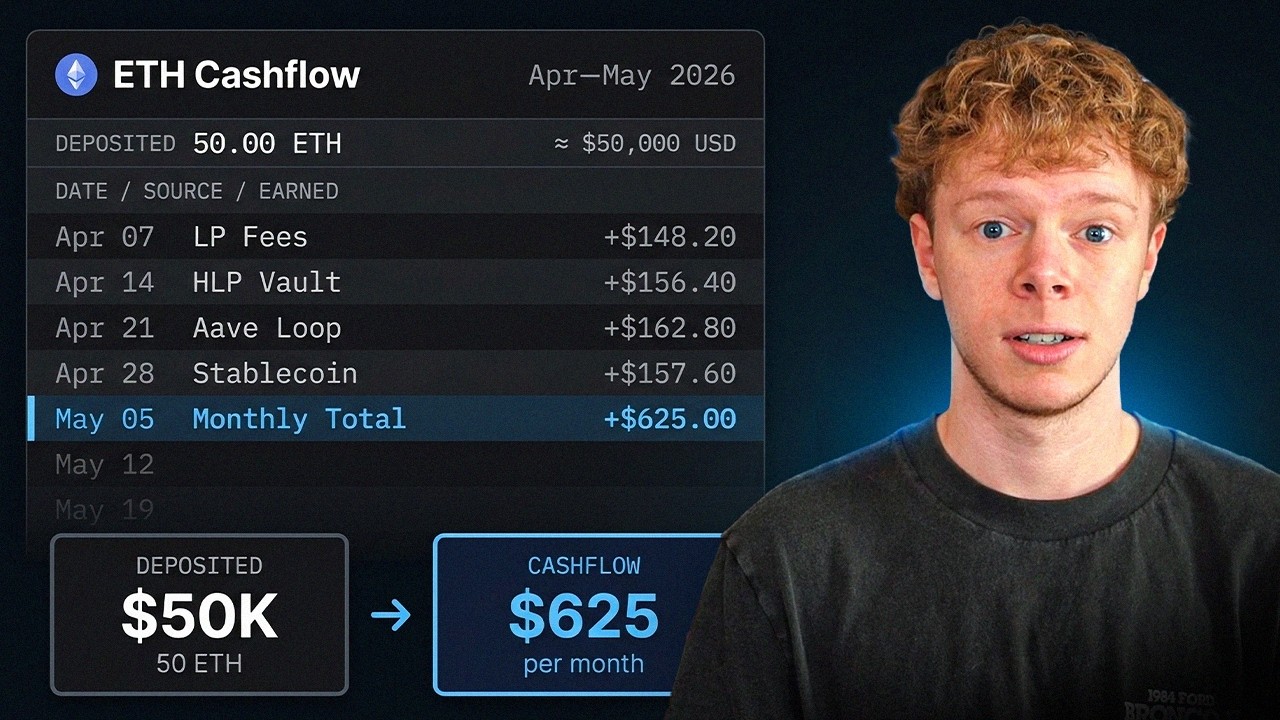
How I Turned $50,000 of ETH Into $625 / Month of Cashflow (DeFi Passive Income)
jakeacall
528 views•2026-05-29


