Agent Retrieval (Vector Search 2.0) enables smart semantic search by automatically generating vector embeddings for data, allowing applications to understand query intent and meaning rather than relying solely on exact keyword matches; it combines keyword search with vector-based semantic search through hybrid search, and supports SQL-like filtering for business logic, making it accessible for developers without machine learning expertise to build scalable semantic search capabilities.
Install our extension to search inside any video instantly.
Give your app search superpowers: Agent Retrieval (Vector Search 2.0)
Added:Let's say we have an online store [music] and we need smart semantic product search.
Or we have an archive of articles and we want users to search by topic instead of by keyword. How do we build that?
>> Okay, let me show you how.
>> [music] >> Welcome to the show, Kaz. What do you do here at Google?
>> Hi, Martin. I'm a developer advocate working on blogs and sample code for vector search in the Gemini Enterprise Agent platform. Before joining Google, I was a freelance server-side engineer building web applications.
>> Aha, very good. So, vector search, that's where you as a developer can set up semantic search for applications.
Now, I've heard that term semantic search a lot, but what does it actually do?
>> Okay, let me show you.
Here's a storefront with a simple keyword search. Let me search for men's outfit for a beach vacation.
I only got one result from the 900,000 items.
>> Oh my, why is that?
>> This was a regular keyword search and there was only one product that matches with men's outfit for a beach vacation.
>> You know, about 15 years ago, I was helping an an online shoe store that ran into exactly this problem. The customers didn't know the exact product names, which made it really hard for them to find the right shoes.
>> Right. Well, a lot has happened in 15 years. Now we have semantic search. Let me turn that on and run the same query again.
Now I got over 30 results.
These products may be good to bring on your beach vacation.
>> Okay, I want that. What does it take to make that work in my app?
>> Yeah, you you would have to generate vectors so-called embeddings for each product that captures the semantics of the product name. Then store them in storage, then build the search indexes, and then implement hybrid search.
>> Oh, and I don't know how to do any of that.
>> Fortunately, now you don't have to.
Google recently launched Vector Search 2.0, which can do it for you.
>> Nice. I'm a developer, so I want to see what code I need to write to make this work in my app.
>> Sure, let's look at the code.
There are three steps you need to know.
First, we need to create a collection with all embeddings.
A collection is like a database table with super powers. You define your data schema and tell Vector Search 2.0 which fields should be converted to the embeddings.
>> Okay, I see how that code defines the schema.
>> The second step is to load your records that uses the schema.
For an online store, this means loading your products.
>> Okay, but I see that the vectors element there is empty.
>> This is where all embeddings work their magic. You leave it empty when you load your data, and Vector Search will populate it for you so your products are searchable.
>> Got it. And where does the product data come from in your code example?
>> In this case, I imported the data from BigQuery, but I could also load it from text files on cloud storage.
>> Uh-huh, very good.
>> Finally, the third step is the payoff.
This is where we do a search. We can do an old-school keyword search, or we can do a semantics search, or we can include both, which gives us hybrid search.
Hybrid search delivers the best result for for most use cases.
>> So, with hybrid search, you're running two searches in parallel?
>> That's right. This code runs two searches in parallel. A semantic search that understands the query's intent through embeddings and a text search that finds keyword matches in product names.
The combined parameter merges the result into a single ranked list.
So, now I can search for men's shirt for beach. I get product title that includes those words and product title that matches with your search intent.
>> All right, that worked great. Uh what if I need custom filters like price?
>> You can also query your data using SQL-like filters.
This is useful for branding by category, filtering by price range, or any business logic that doesn't require semantic understanding.
Here's how to find affordable jeans under $75.
>> All right. Well, I learned a lot, Cass.
Uh what are the takeaways for us here?
>> Okay. You no longer need to be an infrastructure expert or machine learning engineer to build a high-quality Google-scale semantic search.
Vector search 2.0 does simplifying the hard parts of vector search and providing hybrid search out of the box and scaling up with massive data set and traffic.
>> Excellent. And how can viewers uh play with this powerful technology, get their hands dirty?
>> Yes, I published a blog post that has all the details. I also published a notebook that you can use to run and experiment with code.
>> Very good. I will include the links to your blog post and your notebook in in the video description below. Thank you for sharing this with us, Cass.
>> Thank you for having me, Martin.
>> And thank you, everyone, for watching.
If you have any questions for Cass or me, ask in the comments below.
Also, please let me know what you thought of this episode. I love hearing from you and I read every single comment.
Now, go make your data more searchable and useful with vector search 2.0. Until next time.
>> [music]
Related Videos

6:13
Computer Science
TOP 15 Data compression Interview Questions and Answers 2019 Part-2 | Data compression | Wisdom jobs
wisdomjobs
281 views•2019-06-28

27:51
Computer Science
CTS 158: 802.11w Management Frame Protection
ClearToSend
4K views•2019-02-04
23:21
Computer Science
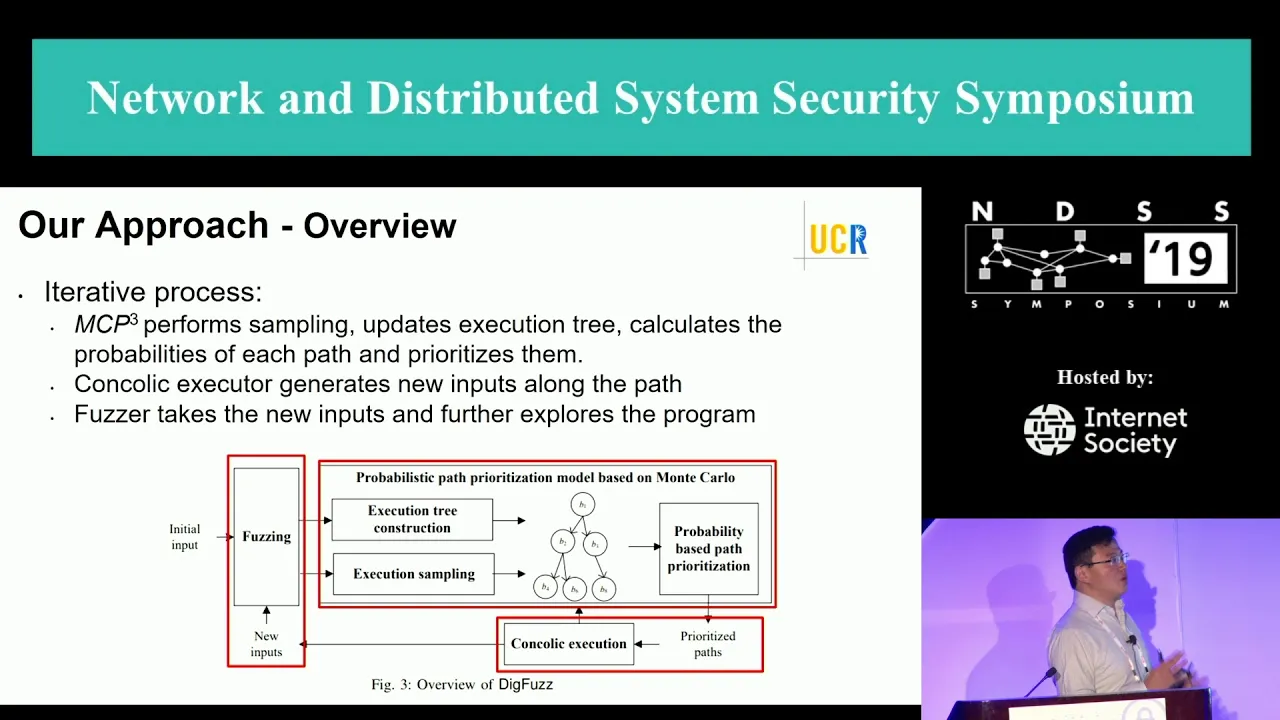
NDSS 2019 Send Hardest Problems My Way: Probabilistic Path Prioritization for Hybrid Fuzzing
NDSSSymposium
496 views•2019-04-02

12:48
Computer Science
How realistic is Cities: Skylines?
CityBeautiful
159K views•2019-02-14

46:39
Computer Science
GUIs & TUIs: Choosing a User Interface for Your Python Project | Real Python Podcast
realpython
2K views•2025-04-04

25:15
Computer Science
The OSI Model - Explained by Example
hnasr
225K views•2019-05-12

1:10:47
Computer Science
Cloud Computing - Introduction
elithecomputerguy
98K views•2019-10-07

2:24
Computer Science
From Traveler's Dilemma to Dynamic Routing | Demystifying Networking
IITBombayJuly
5K views•2019-08-04
Trending

13:38
Law
WOW! Judge TURNS THE TABLES on Trump in His OWN $10B LAWSUIT!!!
MeidasTouch
197K views•2026-07-23

13:25
Business
Playstation NO DISC/NO BUY Fight Is Over...
DavidJaffeGames
4K views•2026-07-23

22:40
Business
Steam and Xbox Just Dropped The Hammer On PlayStation
OhNoItsAlexx
9K views•2026-07-23

16:52
Anthropology
Americans Confused in Australia for 17 Minutes Straight
IWrocker
17K views•2026-07-23