The video insightfully reframes nomadic living as a vital neurological sanctuary rather than just a lifestyle choice. It effectively argues that for the highly sensitive, escaping urban sensory overload is a necessary act of psychological self-preservation.
Install our extension to search inside any video instantly.
Why So Many Nomads Are Highly Sensitive People
Added:you're forced into living in a van or you're for whatever reason you're living in a van, even if you chose it, your life gets so much better.
>> Yeah. One of the ways I see it with the nomadic community is I think we perceive predatory practices in the modern world.
>> Toughen up. Be a man.
>> If you have a high propensity to burn out relative to the rest of the population, you might have a highly sensitive nervous system. What I love about your story is >> Today we wanted to work together to talk to you about a subject that's pretty important to us. We both are HSPs.
What's that? [snorts] >> [laughter] >> Uh it's that stands for highly sensitive person. A lot of nomads we think are HSPs. And so we thought it would be very helpful if we talked about it. And of course, Autumn has spent many years uh as a counselor and uh with her master's degree. And so uh I thought we should talk about it with her because uh she's going to add so much. So, uh Autumn, tell us a little bit about HSP.
>> Sure. Well, I love this topic and it is a perfect topic for the nomadic life.
The highly sensitive person is known to be a trait. This comes from the researcher, psychologist, and author Elaine Aron. She really wanted to explore the trait of nervous system sensitivity. Now, this doesn't mean you're overly sensitive or overly emotional. It's not that at all. A hypersensitive nervous system means that every sensory apparatus that we have, so all our five senses plus our internal experience with thinking, with feeling, is going to be more intense.
It's funny because as a nomad, I'm currently learning about how to wire all of my own power stations and solar panels, and I'm learning about appropriate wire gauges. Well, some nervous systems come with different sort of gauges of wiring. That's like a a good analogy for what a hypersensitive nervous system is. And there are pros and cons of having a hypersensitive nervous system. We don't choose it. It's something that is does have a genetic link to it. And also I want to share this is not a diagnosis that is currently in the diagnostic and statistical manual. Yet as a counselor I used this all the time.
So folks, if you have ever thought you might be introverted, you may find this material helpful. They're slightly different, but there's some overlap. If you've ever wondered if you are on the autistic spectrum, there's actually even some debate in the site community about if there really is a difference between autism and HSP. So that's there's different opinions out there, but you may find this material very helpful if you wondered if you're autistic. You know, what I thought might be helpful is if I share just kind of some examples that you might experience in your life if you have this trait.
So one of them is any kind of sensory information you're going to absorb intensely. So lights that are too bright can literally even trigger a migraine or can just feel overwhelming and make it hard to think.
You're going to be hypersensitive to sounds. So what that means is that if there's really annoying sounds, a little tick, a neighbor having booming music or something like that, it's going to grate on your nervous system and you might get angry. And at the same time, you may absolutely gravitate and love a symphony or pleasant sounds or putting on instrumental music can actually really help calm you down significantly. You can be extra sensitive to things like violent graphic content on movies and television can really affect you because you are feeling so deeply. Those of you who identify as an empath, you have a highly sensitive nervous system. It's that your nervous system is actually mirroring and feeling what another person is going through.
>> of hard in our society to be a man and be an HSP. Because, you know, uh it's actually kind of an insult for men. Oh, you're so sensitive. But, why are you so sensitive?
>> Right.
>> You know, it's uh you know, toughen up.
>> Mhm.
>> Be a man. One of the things I discovered about myself as an HSP was I really tended towards empathy. So, I could feel what other people were feeling. And I soon found that that was completely overwhelming to me. And so, what I did, and is actually a really common thing among men in a society which does not want you to feel, and doesn't want you to express feelings, I stuffed my feelings. And and worked really hard at not feeling it. And when I started to live an examined life, uh I realized that I had stuffed all my feelings. And so, I had become the opposite of a hyper feeling. I was a no feeling person.
>> Yeah.
>> And I think that is actually very common with men. I just stuffed all my feelings, and then the person I became someone I was not. I was living a pretend life. And so, uh realizing that it was okay if I was sensitive, and that if I felt more deeply about others, that was okay. And that my job was to find a way to live that authentically, no matter how society treated me.
>> What you just shared is the freeze state of fight, flight, freeze. And that's that numb feeling is freeze, which is also part of what depression is. And I think that's one of the reasons that, you know, we want to share this because if your nervous system is very sensitive, well, then you're going to be in fight, flight, freeze a lot more, which means you're going to experience depression and anxiety at a higher rate. Now, you don't have to be stuck there.
In fact, Bob, maybe you can share this because this can be a superpower, I think, far more than it can be a detriment. It can be hard if you don't know what to do with it, but it can absolutely be a superpower.
And Bob, how did you sort of thaw out, so to speak, from that freeze, from that numbness? And how did that relate to the nomadic life?
>> Well, it really started with the nomadic life. So, I I ended up going through a divorce, and and my life was just this horrible disaster. And part of that was the financial of of the disaster of divorce, and I I was forced to move into a van.
And as soon as I moved into the van, I felt so much better. It's so weird that if you you you're forced into living in a van, or for whatever reason you're living in a van, even if you chose it, your life gets so much better.
>> Yeah.
>> And I believe it's because of to a great degree because of this HSP tendency. So, look where we are.
>> Right.
>> I mean, we're not we're not being overcrowded. I step out of the van, I don't see hardly any people. That's one of the things I'm looking for in a campsite.
Uh just a few people around that I know and I care about, and I want them in my life.
And so, I can get away, and I told myself that was because I was a an introvert, which I am. I'm a very extreme introvert. Uh but, I think it's the HSP. You know, by being out here, I am soothed. And that makes me think of another aspect of being HSP. People who go through some really severe trauma, uh especially service members, they came along with PTSD, and it became almost a cliche of the of the homeless vet living in the woods.
>> Right.
>> and it still remains so. I personally have known a number of vets who with PTSD and they're out here because they're in control of their environment and sounds and noise.
>> Whether it is trauma or it is high sensitivity, all of it is a nervous system that is prone to perceive more information from its environment. Now, if you went through trauma and you weren't an HSP before, well, your whole survival adaptation is going to be I'm going to be hyper-vigilant and notice everything. I need control of my space and environment to ensure safety, to ensure survival. And in some ways that is the great part of the HSP. In fact, the researcher Elaine Aron, she identified that the HSP gene is not just in humans, it's all across mammalian species. And I'll share how there's a real benefit to the entire herd of there being HSPs. If you have, say, like a herd of elk, there's a whole bunch of those out here. Well, 15 to 20% of those elk are going to be highly sensitive, meaning they are going to hear the predator before the rest of the elk do.
They're going to sense things different in their environment before the other elk do. So, they're going to take off running before the other elk and the herd is going to follow and that can save their herd. There is a tremendous, tremendous gift in being so perceptive to your environment that you are taking in information. One of the ways I see it with a nomadic community is I think we perceive predatory practices in the modern world and we're like, "Oh, uh-uh.
Nope, I'm going to go live this lifestyle that is a rebellion, even though that's not the reason I've done it, but I'm like, "Uh-uh, that's not right. I'm going away from that."
Whether it's a traumatized nervous system or highly sensitive nervous system, the lack of stimulation is going to soothe us. I literally think of each one of my little nomadic vessels that I've had, it's a sensory bubble. I get to choose which textures touch my skin and which don't. I get to elect the sound that is around me and if really disturbing sound comes in, I get to drive away. It there's just so many examples of how being a nomad can can be so beneficial when we have this nervous system that is overly perceptive.
>> I found becoming a nomad was really healing towards being a really extreme introvert and being a highly sensitive person. And so I think that's what a lot of us are doing out here. And you know, when we get together and we start meeting each other, there's this almost instant connection.
>> Right. My favorite people to be around are HSPs. They really are because they're so caring and compassionate and passionate. When they love something, they really love it and there's a general courtesy. What I love about your story is you did not become a nomad by choice initially. You stayed a nomad by choice.
>> Very much.
>> Yes. And I love that even in the midst of what can seem and was catastrophic loss, you found an environment that was such a right fit for your system that you literally have dedicated your life to it and teaching it and living it.
>> Absolutely.
>> Yes.
>> Because I know there's so many people out there just like me.
>> Right.
>> Uh there this and you know, I I can't tell you how many times people have come up to me and said, "You saved my life."
>> Right.
>> I didn't of course. I just selfishly told them about this wonderful thing I found that uh and really it's about coming out into nature, slowing down, getting in touch with yourself and finding out who you really are.
>> I watched your videos long before I knew you and I was drawn to your videos because I knew a nomadic life would be a good fit for my nervous system. I I knew that the more I learned about HSP, I learned that after living in big metropolises for almost nine years of my life I lived in massive huge cities and I was exhausted. If you have a high propensity to burn out relative to the rest of the population, you might have a highly sensitive nervous system.
>> So, it's it's understood by in evolutionary biology that if a trait is commonly available in most societies, that means it has an evolutionary advantage. There was a There was a reason that it stayed in the gene pool.
And in our case, it's because like you said with the elk.
>> Yeah.
>> You know, the one elk that listens more deeply and becomes more tuned in to their environment. Well, and the same thing with humans. So, when we were hunter-gatherers, there was one person in the tribe who thought deeper, who listened more, who took in more information and then processed it longer.
And that person usually became like the tracker. They could look at the tracks and the and the and the foliage. They just took in all this information. Uh this was a this was a a deer passed through here 2 hours ago. He bedded down there. He uh he pooped right there about an hour ago and he went that away.
And so, that tribe survived because this guy took all this in.
But there were other people in the tribe who then when they followed the deer, saw the deer instantly and reacted quickly, pulled the bow out, got the shot off, whatever whatever was going on. And so, that combination of these different personality traits is what made that sur- that tribe survive.
>> In even like a royal court, usually it's not the HSPs that are the king and queen, really. Typically, you're counsel to leaders.
>> Yeah.
>> And I think of it as like a superpower that can be celebrated. You're going to notice so many little things that's going to help you integrate really valuable information to make decisions.
The The shamans, the elders, the wise men and women, the the the council, the spiritual guides often are HSPs. So, a lot of HSPs connect to nature, love metaphysics, spirituality, religion, philosophies.
So, you see these shared common interests because these are deep ways of processing the world. So, I just want to share one other way that um comes to my mind as to why the nomadic life is such a good fit for HSPs, and it has to do with minimalism and simplicity.
When you're a nomad, you have to pare down on your stuff. And the less stuff there is in your environment, the less distraction, the less external stimulation and distraction there is, which means that you get to live in this incredibly rich inner world.
And that is for me, it's just such a wonderful, wonderful part of the nomadic life.
>> Yeah, absolutely.
>> I think it's pretty apparent that Bob and I are really interested in this topic because for me, learning this material was life-changing. I got to celebrate myself instead of feeling strange or different. And I also think that so many nomads I meet really fit this criteria, and it is possible to love your traits, love your differences, find your uniqueness, find a way to support what is hard about it, and celebrate what is amazing about it.
And that's what I hope for you guys as you watch this video, that learning more about this trait, if you have it, can really just help you strengthen your relationship with yourself. Um so, thank you so much for watching. If you guys got anything out of this video, definitely hit that thumbs up button, and we'll link a couple books that we both really like about this topic below.
We'll see you next time, folks.
>> Bye now.
Related Videos

0:39
Psychology
Inside Ronaldo’s Team Meeting
RonoSphereCR7
1K views•2026-04-17

7:25
Psychology
You Are Not So Smart: Chapter 4 Hindsight Bias, What is it?
TheBey8nD8
230 views•2019-09-15
49:35
Psychology
Sigmund Freud's Mind - Master Your Inner World (Your Unconcious Mind)
Ngaslife
1K views•2025-01-25
11:29
Psychology
What affects your mood?
RandyPaterson
602 views•2019-05-16
3:45
Psychology
Can you outsmart this logical fallacy? - Alex Gendler
TEDEd
2164K views•2019-11-25

1:02:21
Psychology
Understanding the Relationship between Fear of Falling and Mobility in Older Adults
fallpreventioncommunityofp3788
823 views•2019-04-08
54:04
Psychology
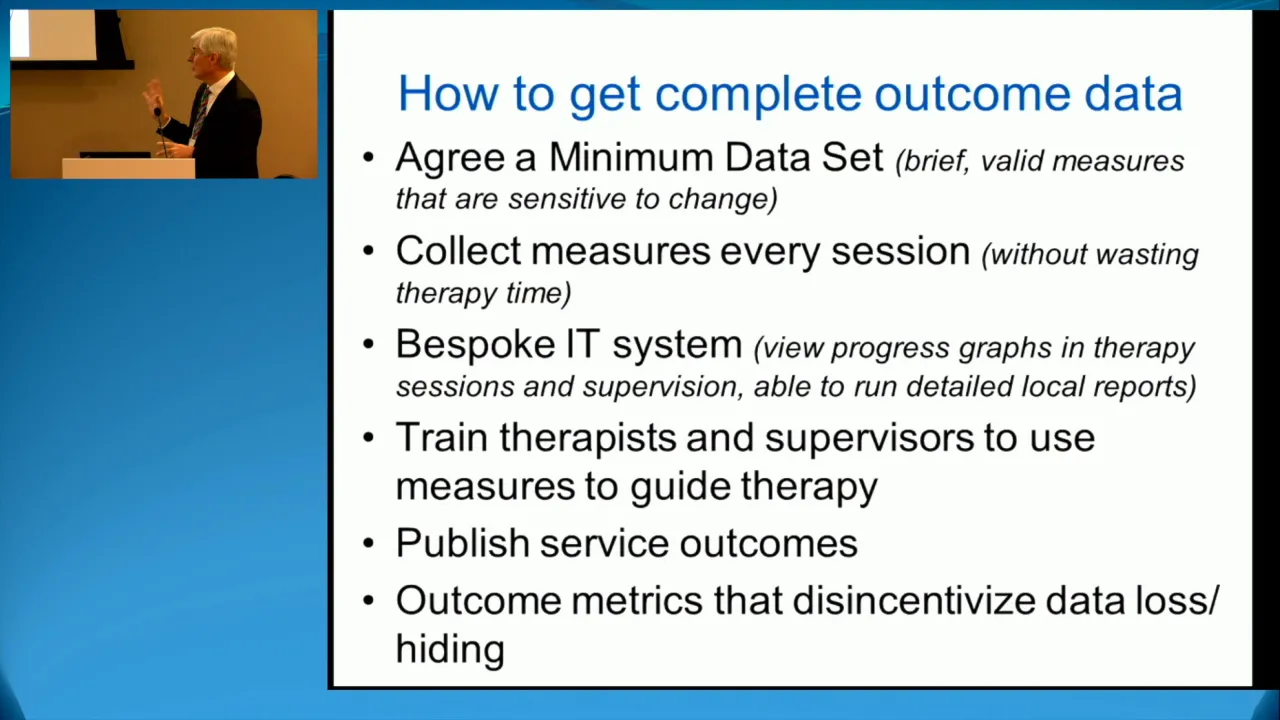
Measurement-based Care in Psychotherapy Workshop - Future of Psychotherapy Conference 2019
UofTPsych
243 views•2019-04-25
51:52
Psychology
Dr. Carol Tavris — Mistakes Were Made (But Not by Me)
skepticmagazine
14K views•2019-05-02
Trending

13:38
Law
WOW! Judge TURNS THE TABLES on Trump in His OWN $10B LAWSUIT!!!
MeidasTouch
197K views•2026-07-23

13:25
Business
Playstation NO DISC/NO BUY Fight Is Over...
DavidJaffeGames
4K views•2026-07-23

22:40
Business
Steam and Xbox Just Dropped The Hammer On PlayStation
OhNoItsAlexx
9K views•2026-07-23

16:52
Anthropology
Americans Confused in Australia for 17 Minutes Straight
IWrocker
17K views•2026-07-23