Research demonstrates that people who attend religious services at least once a month are 22% less likely to experience depression, and those with faith or spirituality show better outcomes across mental health domains including anxiety, substance use, and suicide. This connection exists because humans are bio-psycho-social-spiritual beings, where problems in one area often cascade into others. Faith improves mental health through multiple mechanisms: it provides a sense of belonging and connection to something larger than oneself, offers structured practices like prayer that calm the nervous system and reduce inflammatory responses, and creates supportive communities that provide practical and emotional support. The effectiveness of faith-based mental health approaches depends on whether the belief system aligns with reality and provides genuine meaning, as research shows that people who find a faith matching their needs experience greater stability and recovery.
Psychiatrist Explains Why Faith Matters
Added:- People who attended religious services at least once a month were 22% less likely to have depression as a psychiatrist.
What do you think about that?
- There's a lot of research to show that people who have a religion or spirituality have better mental health in particular, depression, anxiety, substance use, and suicide.
So there's less of all of those things.
And there's a biological reason as well 'cause we are bio-psychosocial spiritual creatures.
When you are feeling that you are not alone in the universe, you function physically better.
- So you've gone through this whole journey and now you're like, now I'm a Christian.
I believe in the whole Bible, everything.
And you're still a psychiatrist.
How does that change as a psychiatrist?
Being a Christian with me today is a psychiatrist who can testify to the research that shows that people with a faith have healthier brains.
Diane, you've been a doctor and a psychiatrist for a long time, practicing for over 40 years.
You deal with mental health all the time.
And you actually mentioned to me earlier that you actually went through your own faith journey looking at different religions as well.
So this research, I really want to hear your thoughts on it.
I found a statistic, I'm gonna read it out to you.
People who attended religious services at least once a month were 22% less likely to have depression as a psychiatrist. What do you think about that?
- Well, hi Michael.
Great to be here with you to talk about this topic, which is a, a pit topic of mine.
I suppose there's a lot of research to show that people who have a religion or spirituality have better mental health.
And lots of research has shown improved depression, anxiety, less suicide, less substance use.
And we can talk about that in bits and as you want to.
- Yeah. Well one way to start, I hear the word mental health a lot.
Yeah. It's a, it's a popular phrase and you know, I've people always talking about it.
What is mental health?
How do you define it as a psychiatrist?
- Okay, as a medical doctor, we learn about what's wrong with the body and then how to help that to heal or how to fix it.
The World Health Organization definition of mental health though is the opposite.
It's basically positive wellbeing so that a person knows who they are and what their abilities are.
That they're able to cope with the normal stresses of life and they're able to have some sort of productive work and they get on well with their community.
So it's more of a positive wellbeing thing.
And that doesn't necessarily include spiritual health, but they also define that as the spiritual side of things, which does exactly the same.
So to make it easier, we just look at what's psychosocial and spiritual.
And my training in medicine was mostly bio-psychosocial.
And as a psychiatrist, we look at all the factors in a person's life in those areas, which would actually be causing trouble.
'cause that's why they come to us with a problem.
But in order to help them with a problem, we have to help them understand what are the positives and the negatives in those domains.
And there's again, lots of research to show that if you also include the spiritual domain, it may make a huge difference to people's lives.
- I can see the relevance now to that statistic that, so you said, just to break it down.
Yep. Bio psycho, - Psycho, social, spiritual, and spiritual.
So biological is how your body works and everything to do with the physical world.
Psychological is what's going on in your mind and therefore how you interact with yourself and everything else and other people.
And social is more the support and the physical issues to do with interacting with other people.
And then spiritual is your relationship with the divine or the supernatural.
- Right. - So I use a little, little picture in my head.
So if you imagine a triangle, so tip up, base down, then you put another triangle inside that with the base up and the tip down.
Okay. So you An upside down triangle. Yeah.
Upside down triangle. So now you've got 1, 2, 3, 4 little triangles.
Yep. If you put yourself in that middle upside down triangle and you put the divine or the supernatural above you, that's where a good place.
Yeah. And to a one side you can put people, that's more the psychosocial.
And then to the other side, you've got the creation, the, the material world and your future.
Okay. So if you think about yourself there, you've got a connection with yourself.
Yep. And that sort of self-esteem and how you like yourself or don't.
And that's really important for how we think and how you connect with a divine.
If you think there is one, or whether you think there is a divine who doesn't like you, that's gonna make a lot of difference.
If there's a God who helps or a God who hinders, that makes a huge difference to how you function.
And then how you get on with other people is an important thing.
And also how you get on with the world and your future and all those things.
And obviously if you've got good relationships with all of those, you're gonna flourish.
- Right. And - If in fact, if there's anything goes wrong with any of those, there can be a sort of a flow onto what the other areas.
And what, what I tend to find is if I take a, a bio-psychosocial, spiritual attitude to the person, and I see a lot of people who have a, their sort of spiritual thing is atheism.
There isn't anything. And that's fine.
I don't have to tell them what I think.
And in fact, as a professional, we keep our own beliefs to ourself of course, Because I'm there to help the person with their problem and to achieve the goals that they want to achieve.
But I can look at a person and go, I now can see you as a one who has a connection with the divine who actually loves you.
And, and that will inform how I see a person.
And even if they don't think much about the divine.
And so what we try and do is we help a person to improve the areas which they would like to improve.
And quite often if someone's got a lot of traffic fines because they've had a a mental health issue and they couldn't do their, can't even think properly, can't organize themselves to think properly.
If I can write a letter to the government organization that does the fines and say, I attest that they've had some difficulty, now they're getting some help but fines, whereas a result of their mental health, can you please do a fines review?
And I had one chap, $35,000 worth of fines had accumulated when he'd been very unwell.
Wow. Yeah. Well that lifted a great depression and anxiety off his shoulders.
So I was dealing with the actual physical world at the, you know, legal and financial sense.
It had huge flow onto everything else as well - In the triangle.
- Yeah. - Is that so dealing with the fines and those things.
Yep. Is that, so you've got like the spiritual side Yeah.
Then you've got the social side. Yep. The fines.
Is that, that other side?
- Yeah, I would say so the, the, the psychological and other people, like, there's, there's no clear thing.
They're all interacting, you know, it's like a Rubik's cubit turns around a lot, pops them all.
Yeah. But if I'm trying to say, well here's the person in front of me, they have some problems.
What I wanna know is, and what domains and sort of problems do they have?
And often people come in with lots of problems.
Look, mostly if a person has one problem, they solve it. Yeah.
- And - Usually if they've got one problem that they can't solve, often more problems occur.
And by the time they come to see me, there's usually multiple staff and they're all, they usually come without hope hoping that there might be something to help them.
Mm. And they're all sort of feeling that they're in a pit and they're going, can you make sense of it?
And the first thing I do is say, Hey, you're a good human being.
I'm glad to see you.
What are you, how long has this been going on for?
How can we help you?
And let's, let's just sort of take an inventory.
We'll look around and say what's not working, what is working?
And then just divide it.
And it's a bit like the bookshelf behind you is one behind me.
Yep. There is great. Yeah. Yep.
So, so the bookshelf, so we say, okay, let's just say what are the good, what are the bad in all these different areas?
And then we have an inventory and we say, okay, what do we wanna achieve?
And what would be a plan for it going to achieve them?
So if I can demystify psychiatry, that might be helpful because I don't, people have some pretty weird ideas about what - We do.
Yeah, yeah. So it's you, you're untangling Yeah.
Them helping people to see that it's not quite the mess.
They think Yeah. Put things in their places. Yeah.
And then you can work on things Yeah. Bit by bit. Yeah.
- And generally if a person comes in, they're in overload.
It's, it's this sense of everything's all confused.
You go, look, let's just settle things down and we can, no, we can only do one thing at a time today.
So let's find out what's the best thing to do today.
- Yeah. - And once a person starts to have that sense of, oh, I can have some mastery over my problems.
A lot of things improve.
They often realize there's other things they did know how to do.
So quite a lot of the time I'm not actually teaching anybody new things.
I'm reminding them of old things that they knew, but they got a bit buried.
- Yeah. - Yeah. And then, you know, then people go, oh, I feel so much better.
And what did I learn? I don't know.
But I saw myself and my, my issues differently. Yeah.
And then they go on and there's a self-healing in, in humans anyway.
- Yeah. Yeah. That's really actually, I, I wanna move on to the face statistic.
Yeah. Yeah. But I just, before I do it made me think about, I mean, I had some physical health issues Yeah.
And pain. Like I had, I couldn't stand up 'cause my feet were too painful.
Ooh. And then my back got painful. Yeah.
Because I couldn't sit down. Yeah.
And then I was like, but then I need to stand up to rest my back.
Yeah. And I felt like, oh, it's all tangled up. Yep.
And then it was a matter of sitting out and going, okay, you've got all these different pains.
Yep. But let's work on one for a while. Yeah.
And then make some progress. And then we can work on the other.
Yeah. Like one at a time.
And that makes so much sense to me.
You're talking about the same with the brain?
Like you just, you've gotta work on, can't work on everything at the same time.
No, no. Just baby steps and one thing at a time. Yeah.
And yeah, that's, I've made that connection now. And - Taking the story you go, where were things good if they ever were, and when did things start to change?
And if someone's had lots of bad stuff, but they've come in because there's been, they, I wanna use jargon here.
Acute means less than three months.
Chronic means longer than three months. Okay.
So acute on chronic.
So you could have, it's been chronic and long term and then something happens and then you get a flare.
And that's why sometimes people come along, they can cope with lots of bad stuff.
Yeah. Humans can cope with.
And then something happens and it's sort of like the last straw tips them over and then they can't cope with anything.
And if you've had foot problems and you get back pain and then you can't work and then you're sitting at home, it affects everything.
Get bored and you might get stuck.
People start drinking or they can't sleep and then they start being frightened and then they get depressed and then they try.
And sometimes the things they've tried to help them improve those things might be partially helpful, but cause trouble as well.
And then they usually come in and they crash and then they come in and sometimes that crash is the best thing that happened.
Because often when we, we, we get to rock bottom and we go, oh, I can't go anywhere but up.
Yeah. So how about we try and work things out, pull 'em all all to pieces and decide what one thing can I work on?
Yeah. So it's very exciting working with people, you know, with mental health problems.
That's fantastic because a lot of them can, can get better or if not, they can get mastery over managing their thoughts and their feelings about it.
- We'll get back to the interview in just a second, but first I'd like to thank you for watching these videos.
And if you aren't subscribed, please subscribe and ring that notification bell as it helps us create more content like this.
Let's get back to the interview.
- Okay. So now to the, the faith sort of question we had at the start.
This is, it's really interesting research.
22% of people who what attended a religious service once a month, they, you know, they had, was it 22%?
- Yep. Less - Depression. It, it was an improvement.
We'll put it that way. I won't get back to the stat.
But that, does this just mean any faith?
Or does it have to be the Christian faith or - No, no, no.
There's, I mean there's lots of research has been done mostly on the major religions.
'cause you can find enough people to do some good research in.
- So you need data to - Yeah, yeah, yeah.
Because in Islam and Judaism and Buddhism, Hinduism, the, the, the main ones that you think of, if a person's going to a religious service on a regular basis, generally they have, they've made a commitment to that particular belief system.
And so they would be doing that because there's some positive in it for them.
And or they've born into the group of people and there's something positive that keeps them going.
'cause most people, if it's not positive, they don't go, they don't keep going.
So automatically they're the ones who've said in their mind, this religion or this practice or being involved in this community is a positive for me.
So I'll continue doing that.
And then the positives for mental health, if you have a faith, there's a couple of things.
One is that your whole life tends to improve because you've got a sense of, there's something more than me, I belong.
It tends to calm anxieties.
You've got something to do as well.
So apart from that sense of wellbeing, because you feel as if you are connected to something bigger.
I wanna use my hands here. Something bigger than yourself.
Yeah. There's also the, usually there's sort of religious and spiritual practices, what to do when you're anxious.
Yeah. You know, if you're anxious and you pray instead of being thinking about how bad it might be.
So if your feet are hurting and you've lost your job or you're worried about losing your job, worry will actually make you think of more negative things.
And then your alarm system starts to go.
And in fact, there's some really good research that shows that if you think negative thoughts, they can actually measure inflammatory markers.
- Yeah. - Called inflammatory cytokines.
Cyto means cell and kin is movement.
Like kinesis, they're the, the like the first responders.
You know, if something happens out in the, the community, someone blows a whistle and all the, the first responders come along.
If you think negative thoughts, your body's equivalent of that starts to rise.
Yeah. Yeah. I mean you'd expect it anyway.
If you see a snake, your alarm bells are gonna go and the That's right.
The adrenaline goes off.
But the immune system also gets prepared because if, you know, if there's a snake, you might get bitten, you might have to be running and you need to change your whole body chemistry to survive.
So the immune system's connected to the brain is connected to everything else as we know.
Yep. And so you go negative thoughts they can actually measure about six hours later rise in the inflammatory cytokines.
So that's pretty amazing. So I tell my patients that say, yeah, keep an eye on your thinking.
Keep it positive. 'cause once your inflammation starts to happen, it's the response while you're busily doing survival, you can't be doing thriving.
You can have war zone, but you can't have peace time at the same time.
Yep. And so people who have some sort of faith, they've got something to do.
When they get frightened, they go, well I will pray.
And there tends to calm things down so the inflammation reduces and their body can utilize their physical resources for thriving and growing rather than necessarily just being running and and being scared.
- Yeah. So, - So that's basically just that you've got a, a better baseline.
The other thing that they've noticed is that when something bad happens, people find that they can cope with it better.
Look, there's even research to show that religious therapy, it's called spiritually augmented whatever therapy you're doing.
I've trained in spiritually augmented CBT cognitive behavioral therapy.
Okay. Which is cognitions are thinking the thoughts, behavioral is what you do.
Yeah. And therapy is getting better. Okay. Okay.
So cognitive behavioral therapy is if my thinking has got me to the point where I'm not functioning particularly well, and if I change my thinking about that again to more positive, more long-term good, rather than, oh no, you know?
Yeah. Get them out of a alarm into thriving basically.
Right. Even in the face of the problem. Yeah.
And you can, you can't choose your circumstances. Yeah.
But you can choose how you think about it. Yes.
So you go, okay, I'm small, there's this big problem here and I can think to make myself feel smaller.
Well of course my alarm bells are gonna go the inflammatory cytokines and all the rest of the sort of stuff happens.
Or I'm small, there's this big thing here.
And I can think to feel bigger, it might be I have people around me and if you've got a faith community, there's usually a lot of acceptance.
And they're the resources you're gonna draw. And to - Be able - To feel bigger in the face of that thing.
And there's practical stuff.
We know the practicalities of a community, someone can help somewhere, even if it's just a shoulder to cry on or make a cup of tea.
And when you're all alone, you tend to sort of go into more of a mental pit.
And then the other thing is, they've found that people depressed people, if they have a faith, they get better faster.
And again, your depression is a biological illness as well as a reaction to things.
And often it's a bit of both.
And you can be having a biological illness and keep a positive attitude about that.
Or you can have depression from, You know, I'm overwhelmed because I've lost everything.
It's a normal human response to loss. Yeah.
And then with your depression, you know, I'm feeling overwhelmed, you know, so I was listening the other day to a podcaster, a pastor who lost a son.
He said the grief was awful.
But I had also, I was in a big pit, but I had a sense that there was a connection to something outside of the pit.
Yeah. It doesn't stop you from feeling awful, you know, you can't, I don't think you can think your way out of a mental illness.
So I don't want people to get that idea. Yeah.
But if you have a mental illness, a lot of them are biological there.
Yeah. But if you've got that and you do all the right things and it's hugely bio-psychosocial, spiritual, you know?
Yeah. And I, you know, say to Christian, people don't think it's, if it's just a spiritual thing, if somebody's hurting, it may be that they have to, they may be depressed because they've got diabetes or there may be another mental, a medical issue.
So it's, first of all, go see a gp. It's - Not just, not always just in their minds.
- And it's never sometimes just have something No.
But it's often physical as well. Yeah.
And they're not sleeping and they're not eating and they're drinking too much and you know, drinking too much coffee and sugar and they're not, you know, and again, people of faith of any sort of a faith, they often, they value the, the big picture.
They value each other and they value themselves.
And they often find that they have healthier lifestyles, so they're less likely to, you know, drink too much or smoke or have risky behaviors.
And they often have healthy diets.
And that all has a flow onto the way your mental health works.
So it's all connected - Now.
One, you mentioned the pastor and the story about the, the loss of their, was it their son or something?
Yeah. And yeah, that was interesting.
'cause I'm like, from a lot of what you're talking about, I'm thinking about the triangle.
Yeah, yeah. And like, you know, there's, there's the spiritual Yeah.
You know, God and whatever people believe in. Yeah.
And then there's the social and a lot of what you're talking about, like if I was an atheist, I'd be thinking, well, yeah, that's all just social.
You know, like the, the religious belief is really just a nice social atmosphere.
Yeah. And that's helping them. And there is no spiritual side to things.
Sure. Yeah. So I can, I can see that question coming up.
But then when you mentioned the pastor, sure they have the community around them, but you mentioned how that it was a, it wasn't just that, it was also what was helpful was that like they really believe that, that they're praying to God that can hear them.
- Yeah. - Is that, that sort of a distinguishing thing that you think with the research Yep.
That people with faith because they think, well, they believe that they're connecting with a higher power of something like that.
How, how do you see that - There's a lot of factors.
You were telling me about a weird religion to do with spaghetti. Tell me - About that again.
Yeah, so actually that's good example. Yeah. Okay.
So for example, like if you, if you believe in a religion which is, or a belief system that is evidentially untrue.
Yeah, yeah. Like the flying spaghetti monster.
I've heard that from Richard Dawkins. Yeah.
- Yeah. Yeah. - And so, so that's an example to show that Okay.
If you think about the triangle for the way people see the flying very monster.
They're like, okay, it's a belief system, but they're like, it's evidentially untrue.
But if people just believe it in any way - Sure.
- And they, and they think there's a, a god or a spaghetti monster.
- Yeah. - That helps 'em Anyway.
Do you think that's the case? Yeah. Okay.
Or do you think that's a, that's a good, you think it matters if what you believe in actually - Exists.
Right. To a certain extent.
If what you believe in doesn't, EA belief by definition is something which you cannot prove or disprove.
But you can use scientific evidence and, and research to mount a case that it's more likely to be one thing or another.
Okay. So the issue of where did the world come from?
- Yeah. - We can't test that.
Science is what's testable and observable and you can set up an experiment and falsify it and you can, if it's able to be falsified, you can say, well, we're gonna take that idea off the table.
And that's what we do in the now.
But anything to do with beliefs and origins and supernatural by definition can't be measured in the natural.
But you can measure, like, you can't see the wind, but you can see what happens with regard to the wind.
So we are, we are looking at evidence in the now and we're assuming something happened.
You can't repeat how the world started.
And there's lots of different ideas about that. Yeah.
So a belief is something that you've, you've constructed based on evidence.
You say, is there no evidence for the flying spaghetti monster?
Well, we know it was a, was a book that somebody wrote because it was really a parody on organized religion and Yeah.
And they were taken to town on the, some crazy stuff that happens with religions.
A lot of which I bel I I'd agree with them.
They're also very funny.
But the issue is if it's a, a belief that there's really good evidence in the now for there being some, Some - Like a higher power or - Yeah. Look, - Something else connecting with you. Yeah.
- So if you, if you just believe out of nowhere for no evidence whatsoever, that's more likely to be a delusion.
So the, the definition of a delusion is a fixed false belief.
Right? Yes. Fixed and false and held despite evidence to the contrary and out of context with your cultural background.
- Yeah. So there's - A lot of different beliefs that people have that if I went to another culture, they go, oh my goodness, whatever you believe is, you know, that's delusional.
Why should I be jumping up and down when that particular football team in a particular color does really well?
I think, you know, she's crazy. Right. Okay. Yep.
So again, you can't talk crazy by crazy, which is just the, the sort of the word on the street for the technical term psychosis, which is outta touch with reality.
Okay. Okay. So, but you, you look to determine if a person is out of touch with reality, you hear their Yeah.
And some people can have some really what I would call crazy ideas without being crazy.
- And does that lead to poor mental health?
- Yeah. Well it depends.
It, it's a really complex thing looking at belief, mental health.
Yeah. Evidence.
So back to the flying spaghetti monster idea, which was, let's just say you believed in something which was so absolutely crazy that either you were having a lend, which is, that's a joke.
The flying spaghetti monster. Okay.
Or I think I heard of a patient who was really unwell and they used to attend the meetings of the earth jam tin society Jam tin.
That the earth was a jam tin shaped like a jam tin. Okay.
And then this person was really unwell. Yeah. Yeah.
So you can be unwell, have some crazy ideas. Yeah.
You can be perfectly normal and put forward some crazy ideas 'cause you're a comedian or you're wanting to do it to satire, satire, satire or parody.
But if you really have a belief that they, that's real.
And then the question is, if you believe in something that has probably more evidence for that belief being more effective, are those people gonna get, get some benefit?
Well, yes. You get benefit from belonging to a tribe. Yeah.
You get benefit from doing something that your tribe values people who are busily doing nasty things in war.
Yeah. If they believe that this is gonna help their people, they do nasty things.
Yeah. And they will get benefit, they would get, their mental health would improve.
Now, maybe later on they'd look back and go, why did I do that?
- That's an interesting point though.
You're saying so later on it it so short while people are believing something.
Yep. Even if it is untrue. Yeah.
That they really do believe it and while they're believing it, they think there's a lot of evidence for it.
Yep. But then eventually if they do come across something and they go, oh, hang on, what I believe doesn't line up with reality.
- Yeah. - That whole phase I imagine is not gonna be much fun mental health wise.
It's, so if you do find the, a faith or religion and it, and it does line up with reality, you're gonna run into those Oh no, my world's falling apart 'cause it's not true. Absolutely.
- Totally. - Yep. Much less. Yep. So you'll be more stable.
Yep. So is that, so I guess finding the, the right faith or the a faith that actually matches reality, do you think that that will just have that much more improvement for mental health as well?
- I don't know the answer to that because everybody's so very different.
- Mm. - And the, the research we have is on larger populations.
- Yeah. - And the, you'd have to ask the individual person and say, has that made a difference to you?
- Yeah. Yeah.
- I was gonna say there's a name for what we call the process you're talking about is called stages of change.
Yeah. Yeah. And that's a really useful concept started by some people who were looking into cigarette smoking.
Yeah. And so in medicine, if you've got a broken leg, well the doctor can go or the surgeon can go and fix it.
So the, you've got a person who can fix the passive patient in some things like smoking and lots of chronic illnesses that the, the long-term illnesses, which are have a behavioral basis.
The thought was how do we get the person to do their own surgery on themselves, you know?
Yeah. Yeah. And then they said, oh, there seem to be lots of different things.
- The brain surgeon - Can't - Go in and go, the brain surgeon can't go in.
Yeah. Oh, I'm just gonna take away the smoking behavior from your brain.
Exactly. Yeah. And you're all good now and - You're all good now.
So they said, oh look, they looked at people and, and they said basically you've got the people who they called, they're in pre-contemplation.
Now that was basically denial.
But that's not a very nice thing.
That's a bit pre-contemplation is a nice word. Yeah.
Which is basically I'm before the, before contemplation.
Well contemplation is, I'm thinking I might have a problem, but I'm not quite sure and I don't really know what to do about it.
And that's not a very pleasant place to be.
This is this, my world's not fixed.
- What would people, like if someone was in that contemplation phase, what are some things you might hear them say?
- Well, they usually feel anxious and they usually come with a problem.
And often it's not the problem.
The problem they present with may be a consequence of there's something going wrong in their lives and they're sort of in a state of flux and going, I am not sure what I should do about this.
- Yeah. Okay. So something's wrong, but they, - Something's - Wrong may not be - And it's not a nice place to be.
Yeah. And then there's a, so what do we have precontemplation, which is basically, well, I'm gonna be smoking 40 cigarettes a a a day.
Yeah. And that's okay.
Whether I like it or not, I'm not even gonna don't wanna talk about it.
And usually there's some anxiety about that if you try and challenge them.
Because challenge puts them into the contemplation, which is, I have to think about that.
I have to think about the consequences of if I continue doing this, what's the cost long term or what might happen long term?
What might other people think? And all the rest.
So that's the contemplation. Then there's the, the determination stage, which is, yeah, I've got a problem and I realize that and I have to do something.
And there's like early determination where you're sort of thinking about it or preparing.
And then there's the, the, the stage of action, which is I'm working towards the goal that I want.
And then there's maintenance, which is I've got a new way of doing things.
And then there's relapse, which is, I've gone back to the old way. Yeah.
- So - When I teach this to people, I go, okay, imagine roads you're going 180 degrees in that direction, smoking 40 cigarettes a day.
And if you think contemplation, oh my goodness.
It's like being on a roundabout going, I don't know whether I go down the road of none or half or Yeah.
Changing to vaping or what it might be or more. Or more.
Yeah. Or, and then once they've decided on their pa on their goal, it's like roundabout is checking all the goals and that's uncomfortable.
You ever been in a roundabout and not know which road to go?
I exactly like that. You go, - You're stressing out.
Like, I can't turn forever.
- Okay. And then, and sometimes it's like, oh, I can't cope with this.
I'm going to the thing I know, even though I don't wanna be going there.
And then if you're in the, if you do go round the roundabout and what we do for people with contemplation, 'cause most people coming with a problem in any field.
Yeah. 'cause if they know where they're going, they usually just go do it.
Yeah. So if come to you with any sort of a problem, they're usually in contemplation.
Yeah. And so I teach people that and they go, I'm in contemplation about such and such.
Good. Now you can probably work out what you need to be doing here.
Contemplation is stay on the roundabout. Yep.
Manage your own anxiety about wanting to flee down one or do what people want you to do. Yep.
- You - Know, go down the path that you should go down of not smoking yet, you know that, but you don't want to.
'cause there's good reasons for that usually.
And then the people who wanna help, I used to say, let's imagine the arc de triumph in Paris.
You know, that's enormous roundabout with this great big archway.
Oh, I've seen that at tour of France 12. Yeah. Yeah.
And so I have show them a picture and go, okay, you've been up that road and then we are now on the roundabout.
And you know what, people don't necessarily know that until they've got there.
But at Paris there's a subway going in underneath and there's signs in English and other languages, subway.
But I have seen people from a different culture, clearly can't read English, trying to get across the 10 lanes and there's no, there's no lines on the road.
By the way, luck, these cars go round the roundabout and, and you've got people going across it.
I say, do you feel sometimes like you're in contemplation, you wanna change, you might be smoking a lot and you, you want to, it's too expensive and the prices have gone up.
Yeah. And you are sort of like this.
I'll say, tell you what, how about I help you stand? Yeah.
We'll get you here, we'll get you in the subway underneath.
And we've got a ticket of the top.
You can pay some money and you can go up the steps and you can stand at the top of the arc tree of, and you can look down the different places - Down the - Different roads.
And that's what you do with someone in contemplation.
You say, great, you don't have to move.
And you promise them, I won't push you down the road.
I want you to go down.
Even if you tell me you wanna go down that way, I won't go.
They say, I'd like to give up smoking. Good. How?
Here's how to do it. Here's the, here's the one to go down the, and here's how the how is just the road.
Yeah. The destination is where you wanna go. Okay.
Now if someone says, show me how to stop smoking, I won't go.
Yes. Clearly you want to go to that one.
The, the road of not smoking, you know? Yeah.
The, the hon going down to the louv is a really lovely road to go down.
Yeah. Oh good madam, I'll take you down that road there.
No, because if they can't get down that road themselves, they will go back.
- Yeah. - Yeah. So I say, my job is to take you up to the top of this thing so you're no longer going in the traffic.
I will manage my own anxiety, but I'd really like to see you do the thing.
Yeah. I will help you manage your anxiety about you'd really like to not be there, or you'd like to find a quick answer.
Now gimme a pill to stop my smoking.
Well that isn't necessarily gonna work very well unless you've got all the thinking going along as well.
Yeah. So we work with people in contemplation and we say it's good to be in contemplation.
Yeah. It's, there's anxiety, there's what we call cognitive dissonance.
So their thinking is not the, it's, it's not what they want to be thinking.
It's not the the routine. It's easy.
They're actually thinking almost manually with their whole brain.
And that's exhausting. Yeah. Yeah.
- Because - Once you're down the road, whatever road you go down that you're comfortable with, you don't have to do much thinking. You just do.
- Does that mean like, your thinking's not, it's not automatic, you're sort - Of, it's conscious like second nature.
Yeah. Yeah. It's, it, it's sort of in your subconscious.
And that's the brain's been, well I would say designed.
Yeah. Previously when I was an atheist, I would've said, oh, isn't evolution wonderful?
But the bottom line is to conserve resources.
If we had to think about absolutely everything we are doing.
Yeah. You would go, you would basically have a meltdown.
Yeah. So what you aim to do is put as much as you possibly can on automatic and then you can calm down.
Now if you've got a God who's there looking after you, you can give that god a whole lot of stuff.
If you're doing a religious practice, you don't have to think lots of different things like rosary beads and things that people use to be - Able - To just go on the flow.
If there's reciting a creed or a prayer, even singing a song, you just start at the beginning and then your brain will take you with the rest of it.
And you often feel better at the end. Yeah. Yeah.
And if people do a lot of those things, they're very calming.
So to answer the question, we are sort of platting here with lots of strands.
Yeah. Yeah. How do, how does faith improve your mental health?
One of them is religious practices because you're not wondering what do I do now?
- So you think it helps with the contemplation phase?
- Absolutely. Yeah. Meditation, contemplation, saying mantras, doing a gratitude list, singing a lot of different things.
A person just, it, it takes us out of ourselves.
It's the same sort of thing.
It's shouting at the football game when your team is winning.
Yeah. By the way, it's not a, it's not a sort of a spiritual divine thing.
But look, I'd say spirituality is your co is your relationship with whatever concept of divine supernatural you have.
Yeah. That spirituality, religion is in the bio-psychosocial.
Yeah. So if you want to somehow, if you have a sense of you've met God, you've had a religious experience, you want to say things, what words do you use?
Do you wave your hands? Do you clap your hands?
Do you get on the, on your knees?
Do you bow, you know, as humans in this, you know, stuck in the, the three dimensions and, and plus time we do things to express the non scene things.
So that's religion. Yeah. Yeah. And that's religion.
And it's really useful because religion, you can, you know, if you go to a particular meet with a particular community, if you're going to the same place and you're doing the same thing, people actually like to sit on the same seat.
- Yeah. - Same thing happens in a, a lecture theater.
Some people like to come to the same place.
And that's the whole business of being human and saying, if I don't have to think about that, I've got more bandwidth to think about all the other things.
- A bit like when you, so when COVID happened and everyone was working from home.
Oh yes. And then you're going, oh, I don't really feel like working here 'cause I don't work here very often.
No, no. And then when you go to the office, you're like, oh, I just know I can work here.
'cause I'm used to Yeah. Sitting in the office chair. Yes.
At the desk. It's like, this is where I work. I know.
- Yep. - That's, - Yeah.
It's called state dependent learning.
You know how you can only tell jokes at the pub?
You can't necessarily tell them to your grandmother.
It doesn't feel the same. Okay.
The state around you changes how you feel.
So again, if people go into any of the, the religious buildings immediately, a whole lot of stuff clicks in if you've been acclimatized to that. So - That's the religion, that's - Religion is physical and basically it's needed and it can be very helpful and it can also get in the way.
- Yeah. But then there's, you said you contrast that to spiritual.
- Yeah. And the research that's been done on mental health and physical health is usually looks at religious and spiritual.
'cause there's such a connection with them.
You can't really express your spiritual without some sort of religious practice of some sort.
Yeah, yeah. Whether it's an organized thing that everybody does or something that you've just decided you want to do.
Yeah. And usually, usually they're connected, but you know, obviously they can be disconnected.
Yeah. And yeah, so religious and spiritual, the research has been done on r slash s basically.
And there's a lot of work that's been done in that area.
- Yeah. - And the main thing I think as practitioners is basically when we do an, a history with a person who's find out, one of my main questions is, do you have any religious or spiritual beliefs or community?
And has that been a stumbling block or a stepping stone?
- Yeah. So it can be, we, we, in terms of when you mention, well we had the statistic that generally, like there's a certain percentage where spirituality or or religion Mm.
Helps people with getting over depression Yeah.
And things like that. But there's also, it's not like always that's the case.
Sometimes religions and, you know, there can be the opposite side of things too.
Like it can be damaging for mental health. Yep.
So do you see that as well?
- Yeah. The, in terms of looking at the research, they've mostly dealt with people who have had a positive spiritual or religious experience and therefore practicing they, they're along that particular the Sean along path, you know, if you're going monthly, you've decided you're gonna keep going.
So they're getting something out of it.
So it's saying people who are getting something out of their religion and spirituality, they have better mental health and physical health as well.
And they have often better communities.
Now then you say Yes. Can it be damaging? Absolutely.
If there's a disconnect between the person and what the group believes.
Well, groups often act just like humans under threat, you know?
Yeah. They, they can, you know, be nice and nasty.
And if they're, if a group is nasty, a group can be very nasty.
And so again, I see again, that's why you ask is has religion been a stumbling block?
And for a lot of people, they've got some ideas that they, they're supposed to fit in a particular, you know, go down that road.
And if, if they are people, everybody else says, no, you're not allowed to go down the road.
You go down, go down the other road.
The human being is actually stuck in the crossroads, you - Know, - The, the, the, the, the roundabout.
And that's usually where the issue is.
And sometimes we'd even work on that on spiritual problems.
Although if they had a spiritual issue, I'd often send them to a chaplain or a priest or - Someone - Of that faith in order to help unpick.
Because most, most people who've had a negative reaction in a particular faith, it's not the faith itself.
It was the people administering the rules, so to speak.
And if you, usually, if that person goes to the faith they've come from and they find a person who's in in leadership, generally, that will be helpful.
- Yeah. - You know, I've had a bad experience with this and with these people and this is what I do.
Or if they have flouted the rules of that particular religion and they go to a person who's in in authority in that religion, that person has dealt with people of those rules.
And there's a way that that religion will deal with it when you transgress the rules.
So there's ways through rather than, okay, let's change religions or something like that.
Yep. So again, you work with the person where they're at.
- Yeah. - I hope you're enjoying this interview so far.
Creating content like this takes a considerable amount of time, effort, and resources.
We are passionate about getting this message out and we wanna keep bringing you more videos like this one.
But here's the thing, we need your help to make this happen.
Your support, no matter how big or small, will help us cover our production costs and enable us to continue creating impactful content to support this project.
Just use the link in the description below, or the onscreen prompt.
We're so thankful for your support.
- One thing I wanna talk about as well is your story, because you looked at a bunch of different faiths Yeah.
And you've gone through some to, you know, like Sure.
Well you explain it's your story.
So I, how did you go through the contemplation of different faiths?
- Yeah, I've, yeah, I've been to a few roundabouts, haven't I?
Okay, alright.
Well I, I grew up in, for various reasons, we attended a church where there was a lot of religion.
They believed in theistic evolution, which is that there is a God, but he got things going and he left us alone.
And it was sort of a long, long time ago.
In the midst of time there was no real connection with any, any, there was no at the physical, you know, there wasn't a history of here you are and this is when God made you.
But there was a God who sort of did this stuff and, and it was actually told, unlike the blind watchmaker, he set the word going and, and left it.
And, but I, but there's all these rules and he's sort of like this stick sitting up there with a big stick and you mustn't transgress.
So it was more anxiety based rather than, you know, avoid pain.
It didn't seem to be a lot of pleasure, although I enjoyed the rituals and I could sing the songs and, you know, do the various things as well.
And, but there was really no, so it was Christian, but it was no connection.
God was here, Jesus was, I don't know what he was doing, floating in the sky somewhere.
Really didn't get it.
But what I saw was that people would do this as a religious thing on a Sunday.
And I enjoyed being part of all that stuff.
And then on the rest of the week, they were doing something entirely different, which we, you never talk about God, never talk about what it meant.
Yeah. Nobody's, I, I never met anybody who said I was changed by meeting God.
I didn't expect to meet God.
And you did it through, so the, the priest in any, any idea, the priest is the person who translates from the spiritual into the, to the people, - Connects - The people with the spiritual.
And there was a sense of you could become a priest.
And I was in fear of the priest.
I was like, this is this, you know, dangerous area, a no go zone.
That's all very well that's up there. They can touch that.
I'm sort of down here and I have to behave myself, you know?
Yeah. Yeah. So it's some really crazy ideas and I've, you know, got friends who still attend those type of churches and that is not the way they see the whole picture.
So what I picked up was what I picked up. Mm.
But that's not uncommon.
And I've certainly met people who get, you know, I felt judged or I didn't feel that my needs were met for Yeah.
Whatever it was. Or it, my questions weren't answered.
In fact, there weren't any questions. You weren't allowed.
Well there were, nobody said, Hey, it's okay to question this.
They said, this is what you learn and this is what we believe.
That's the way it's, that's very well and you know, you do with all sort of things.
So I did those. I went to a school in the same denomination.
And again, we would sing songs to the creator God at Assembly.
And I like singing those songs.
It's actually rather nice thinking there's somebody up there who, who is in charge.
Yeah. Yeah. It's really nice to know that.
But I better make sure I'm good because otherwise I'll be in trouble.
And then, then this God was put back in his box and we would go to the science class and they were good people.
Nobody ever mentioned Jesus.
There wasn't anything like that.
It was a sort of a, he's over there and we are here.
And then in science, we actually learned about evolution and how everything evolved from pons garments. You know, the - What - I love that one from the goo to the, to you.
There's another one about fish to philosophers or something like that.
There's a few, whatever. It's a few lovely little one liners.
And, and we learned that.
And nobody actually seemed to think that there was any cognitive dissonance about there's a God who loves you, who owns everything.
And you actually arrived with not from nothing.
And you know, yeah. They didn't push that we'd evolved from monkeys, but it was a sort of a, it was a sort of a given.
So they taught us this stuff again that was floating in the air.
And it was like, well is there a jigsaw that's gonna come down to be made into something I can hang onto when things are tough?
Yeah. And there wasn't, it was all sort of floating. And - So did you, did you continue to be a Christian or did you - Start to move away from C No, actually became an atheist.
I thought, this is ridiculous.
This hypocrisy, which is just a mask is the word, is a, is meaning the mask.
You know, the Greek people would've mask on and it was to do within the Greek theaters, you know, whoever wore the mask, you tell what their character was.
So hypocrisy is actually having a mask that doesn't match what's behind it.
- Yeah. Yeah. - And I think as teenagers we are looking to see the world and you wanna shake something and say, is this authentic?
- Yeah. - Is this real? Will this work for me?
How's it working for you?
And does this, this worldview fit with my needs?
And as sort of a concept of a God who, he's in charge, he owns everything.
He supposedly loves me, but he's not there when I need him.
And if I'm trying to talk to him, nothing happens.
- Yeah. - Yeah. It's very much a frustration.
And I think as teenagers, you know, we sort of wanna kick away from the things that we were taught previously.
But nobody ever answered any questions.
And nobody actually even told me that I could have questions, could ask - The questions, - Didn't realize they, everybody was sort of doing their thing.
I think that's ridiculous. I'm not gonna do that.
I can't see the point of that. That's religious practice.
Yeah, there you go. So decided to be, become an atheist, which was perfectly okay.
I mean, nobody asked, nobody knew.
Nobody said how you're going spiritually.
So in terms of that, I had a, a decent education, biop social education.
Yeah, yeah. There was a spiritual sort of, you know, sprinkling on top, which was really not connected.
Yeah. So if you draw my little triangle, then whatever the divine was was a way up here.
And I'm sort of down here with no way of connecting. Yeah.
And that was really frustrating. And I got a bit annoyed.
I'm thinking, you know, that's, that's abusive parenting.
You know, if someone says they're your dad and they're gonna look after you and you can't actually, you know, you ask, can you help me? And they don't, they're - Taught that the spirit there is a spiritual father.
Yeah. Yeah. And then when you are learning about it is, and seeing people in how they re you know, interact with the faith you're going like, that doesn't look father-like.
- No. Well there's absent father and that's really annoying.
Yeah. Yeah. So it's, so there's, you know, people rebel as well.
Anyway, so I was a very angry atheist looking back on it then.
Yeah. You know, it was like, why have I been told this stuff and this is a whole lot of rubbish.
And so then I went to university and it was absolutely pushed.
It's the main, main thing. Yeah. It is.
Like everybody's smoking honestly.
It's like, and nobody thinks not to.
- Yeah. - You know?
- What are some of the things that you learned from, I mean, even just from the science side of things?
Yeah. 'cause you obviously love science. Yeah, yeah.
With your background, what were some of the science things that you learned where you were like, oh, this evolution, it matches with atheism.
Like this is, this is where I wanna go. Oh, well, you know, - You're learning your ev well the whole so-called tree of Life, this thing became that thing.
Became that thing. Yeah.
And you know, we dissected snails and we looked at how snails are similar to other lesser, apparently lesser formed things.
And Yeah. You know, we, I did zoology and we did biology and I just love the cell.
And just some wonderful things about the human kidney, the countercurrent exchange thing.
Okay. What are the, I didn't know anything about the, the concept of irreducible complexity.
You know, the mouse trap, how you can have five components if you take away any one, you get down to four, it won't work.
And you look at the kidney and it's just the way it manages to concentrate water and get rid of it.
Hold salt if you need it, and hold the water.
And there's this thing which I now know engineers use for, I won't explain it.
You can probably explain it better than I can.
But I, I remember thinking, wow, that couldn't have arisen bit by bit by bit.
That had to have been designed all together.
'cause it all fits together so nicely.
And I, I literally thought, wow, isn't an evolution. Wonderful.
- I just, you just, you just thought instead of thinking it must be miraculous designer, well, - I've already just taught given, you know, were gonna happen.
Evolution. Yeah. We were told evolution made everything, and I could see natural selection.
You know, you've got so many genes and you can pull them out, you know, the, the, the colors of human skin, you know, and basically you go, okay.
Or dogs, you know, you've got all the main wild sort and they can be, you know, down into the different speci More or breeds UA breeds.
Yeah. The change in the breeds. So breeding, that's real.
It's science. You can test it, you can do experiments, you can say it's real.
And then that was told, taught as evolution.
And then they said, and because we are here and evolution, the breeding thing is real.
I didn't say it's culling information.
They go, and because of that, and because we are here and evolution is real, therefore evolution must have made us, we don't quite know.
It's all a bit fuzzy and whatever.
And we are looking into that. But it was millions of years ago.
So you sort of forget it all. Yeah, yeah.
And you just, just sit with that.
But I do remember thinking, I think it was, was it Darwin?
Oh, not Darwin. Dawkins said, you are just a moat in the universe.
You are a nothing floating in nothing, going nowhere with no reason and no purpose.
And that was terrifying. Yeah.
It's like, I remember when I was little, I think the first time I encountered death.
And most children sort of have an awareness of death.
Early, early primary school, sometimes earlier than that, depending on what happens to them.
Yeah. And there's this sense of Like, when death is real and you realize it's, it's just terrifying.
I had that same little idea with the moat in the universe.
It's like I'm all alone. I, yeah.
You know, I've got some lovely parents and family and people around me and they're all very nice, but they're gonna die too.
Yeah. And I need to make sure I look after me and there was this sense of, I'm really gonna work hard and make sure I've got a good job and I can, you know, because there's no one going to look after me.
I have to look after me. Yeah.
There was that, that, that sense of, and that's good.
I was, you know, blessed with a lot of talents and gifts and worked hard and whatever.
And so I was doing well.
So I think basically it was pretty much you climb the ladder, you think, well, I'll be okay, I'll look after me and I'm going along that particular path.
And then things went well.
I enjoyed medicine, I enjoyed, got married, did psychiatry, enjoy that.
It feels great. Really enjoy being with people.
And then I got to the stage of being able to see a little bit ahead.
And I reckon the people who are most likely to look for the divine are the very poor, who have nothing and realize they need help.
And they're very wealthy who've achieved what they want in the material world.
And they realize they haven't got happiness either. Yeah.
And they're looking for something. Yeah.
And so I certainly wasn't at the, the very wealthy stage, but I could see that I could be comfortable.
And as I was starting to, you know, you work, work, work and do six years of medicine and five years, I'm gonna read something amazing.
And you sort of imagine, okay.
And if I get there and assuming I get there, what's it all about?
Yeah. And we were with some people as well who asked some of these questions and it was like, one which I went looking, there must be something more, or what do I do next?
Or, you know, I've got my career settled and that's all.
Okay. Do I have kids or not?
Or what am I gonna do with my life?
And those sort of questions like, well, at the end of your life, looking back, what do you wanna have traded your time for?
Yeah. Because all you're given is time. Yeah.
And you trade that for something and there's this sort of, okay, well what is my life for?
And there was this question which was, other than your, your family and your health, what's really important to you?
Mm. And I was asked that question and that actually got me from the whatever road that was on, I was in the roundabout, - Back on the roundabout thinking I'm - Going, I do not know the answer to that. Yeah.
- And - I don't even know where to look.
- Yeah, - No, none at all.
It's like I one of those people trying to cross the little thing.
Yeah. Yeah. I don't even know where you start looking at that sort of thing.
So I went looking, I thought, okay, well okay, I'm the roundabout.
I climb up above and okay. Down that path.
And there's isms and there's Buddhism, there's Taoism and Sufism, and there's various things.
And there was Christianity back there. I was, no way.
I was going back there. I decided that was not - Me. Right. For me. So you gotta look at some of - Those other religions.
I was, well, yeah, I was looking, I, I think I was scared enough about the supernatural that I wasn't going to go into anything nasty.
I didn't go there, but I'm thinking, well, there must be something.
It was sort of a new agey sort of thing. Yeah.
I remember going to a, a meditation course, I think it was run at a TAFE with a friend.
And each night they would, each week they would do a different meditation on a different ism.
And there was some really interesting things.
And again, this is the religious practice. Mm.
Where you sort of go into a bit of a trance and you feel above yourself and it's something you, you have a nice feeling and that sort of thing.
And so I did those one night, we, he said, we're gonna do a Christian meditation.
And he says, and you just lie on the floor there and just meditate on the name Jesus.
And I'm thinking, I'm not gonna do that.
I've done that before. I, I, I don't think that's very nice.
I've got, got this barrier off of it.
All that sort of stuff, you know?
And something changed in me.
I felt something, I'm going, man, I didn't feel like that with any of the others.
But there was something.
And look, looking back when I'd been, you know, you go to Christmas services, the singing carols or weddings, you know, when you choke up and you know, you've connected with something, - Felt something, - Felt something, and you go, this is real.
And then you go, I'd like to know, I'd like to keep that.
You know, how did that happen?
It just hit me from somewhere.
And this was nice, more than nice.
It was like something deep and you want that and you dunno anything about it.
And this was this thing. So I was sort of hoping I would get that feeling or experience in some sort of other religious practice.
And then I'm thinking about Jesus and I get something and I'm going, I know that was real.
Well, I flushed it as people do. So if you go looking Yeah.
You know, if I'm on the top of the arc tri, I'm gonna look down that road.
Oh yeah. No. Oh. Yep. Yep.
So mostly when people are in this process, they have little looks along things.
Mm. And they, they come back and they keep going and they is absolutely normal.
Yeah. Because if you, if you imagine going along a particular road, there's always a cost.
You've gotta leave something behind and you've gotta go through the newness.
And mostly when people want to change, they try a little bit and they keep going and then they test and they test it out and they - Yeah.
I'm actually thinking of, I know electrical engineering, we did like cost algorithms.
Yeah. For like maze searches. Yeah. That same sort of, yeah.
You can't, if you just exhaustively search every single track.
Oh right. It's so inefficient. Yeah.
So it's like even computer science, it's like, that makes a lot of sense. So - Is there a word for the checking it out?
- Oh, there's one called Dykes for algorithm, which is, it's kind of, it, it's got a, yeah.
It's got a mix of that where you sort of explore a few things.
Right. I can't remember exactly. I should, I should learn it again.
But I did it in one of my algorithms. Yeah.
And it was very effective for doing, just checking a few things.
But then once you start to find a path that really works, you start to, you keep going. Yeah. But anyway.
- But - That's - What I thought.
What I was thinking about is the, it would be really interesting to, this is design.
Would it, what's the most efficient time or effort to put into anything?
If you are gonna check something out, you know, how do you know you've checked it out well enough and how do you know you haven't checked it out well enough?
You've probably got a mathematical, someone's got you an algorithm.
It's like, how do we expend the most efficient amount of energy?
And, and, and and Yeah. Resources on checking.
How many roads do we need to check?
I mean, I know some people who have to check a thousand roads.
Mm. And they never do.
That's called analysis paralysis by analysis. Yes. Yep.
And then there's other people who go, oh, I don't like this one. I'm gonna go the next one.
- Just dive in here. And the - Funny thing is, usually the quicker you make the decision and go along a road, the less likely you're gonna stay on it.
Yeah. So you've gotta do some preparation.
But the other thing that we know is important, and this is from helping people give up smoking, or I've worked in addictions and changing from one head, one worldview, like addiction is okay to, it isn't.
You've got to have people with you who've done the, the, the journey.
You've got to have seen people at the roundabout.
You've gotta see people who've arrived at the spot you want to get to and people to help you along the way.
And there's usually a process, you know, in, in addiction, the 12 step process, it's a process and it's a, it's a way of helping a person to change.
They say, I'd like to be there, but liking and actually changing your habits and your behaviors is a huge thing.
And a lot of that, a lot of the work I do in psychiatry is behavioral change.
Whether it is that you do take your medications that you need to keep your brain working.
Yeah. Or you do change your, your diet or you do get some sleep or the, the, the normal things that people have to do. So - You are, you're on the top of the roundabout.
Yeah. You, you've had a look at a few and you're going, and then you hear the name, you know, when the Jesus meditation Yeah.
Happens, you're going, oh, okay. There's something there.
Yeah. So I'll just keep looking a little bit. Yeah.
And then, but you mentioned the idea of seeing, seeing other people Yep.
And seeing how they go on tracks and things.
So what, what was the next thing that led you to, you're a Christian now, so something happened in - Between now.
How did that happen? All it is is a number of factors started to line up.
And it was, I was looking more and more at the Christian thing.
We had some friends who were Christian, they invited me to a church service.
- Yeah. And so - I, if on the stages of change it was, this was preparation I was looking.
Yep. And then there was action and I went, but I, you know what, I reckon it was God because I made a decision.
They was, I'd never been to their church service before.
And they said it was on. And I thought, I'm going to that.
I don't know where that came from.
It's like, I'm going to, that - Just found the action somehow. And my - Husband was not impressed 'cause we had something else to do that day.
- Yeah. So - It wasn't very pleasant.
And we had an argument about it. I went anyway. Yeah.
And they had this altar call, which is, do you wanna give your life to Jesus or do you Well I don't, Jesus was an issue for me.
I was okay with God.
I was like, okay, I'm coming back to God.
It was, God sort of gets people to the end of their tether when he says, well how's that working for you? Die? You know?
- Yeah. Yes. - Do you really like your life at the moment?
I'm going, oh, I don't know what I'm doing.
I just need some help here. And you, you're interested.
And there was, it was an invitation.
It was basically said, if you're interested in, in, I don't know, I can't remember, but it probably would've been, if you wanna give your life to the Lord and let him be in charge, join his team.
He's a coach asking if you wanna be a player on his team was the sort of concept I had come down the front.
So I went down the front really because I don't think I had anywhere else to go.
Yeah. It was like one of those, well, this seems to work.
And I do vaguely remember that God's supposed to be okay and I didn't.
Yeah. Yeah. So often people make decisions in a, in a time of emotional change.
But the thing is, often we don't make a decision unless there is emotional change.
Yeah. So this business of mental health is, it's not just that you're always coping really well.
Sometimes you need to have that change to shift you from the, you know, the one way which isn't so good to another, you know, the guy's been smoking is very happily loves his smoking.
People smoke 'cause they like it. That's very good.
But he's just had a heart attack. And he says, that's the thing which has given me cognitive dissonance.
He doesn't have to stand on the roundabout.
He's gonna give up smoking for the rest of his life.
So some people make a really quick decision and for me it was like, oh, this is too hard.
I'm going down that, that way.
And because people were, were there and then I think there was some follow up, they basically said, do you want, should we tell you about God?
Yeah. Yeah. And I'm going, really? Okay, fine.
Well I didn't think I needed to know about God.
'cause my concept of religion was go to the church on a Sunday and that was it.
I was having to do that, you know, and you did that.
You're like, oh, okay, I've done. Yeah.
But the guy, the Chappy wanted to come and, and and visit her house.
And he did. And I was not really paying any attention 'cause I didn't realize that it was a, I just thought you have a ticket, like, you know, you've got this ticket and you're gonna go to heaven one day.
- Hold on That. I - Had no idea. Really? Had no idea.
And my husband happened to be there and he listened and he became a Christian.
What's all that about? And he wasn't expecting to either.
He suddenly God hit him over the head and said, you know, so it's a supernatural intervention.
Something happens. You didn't expect to happen. Yeah.
And I think for Christians where they say God does the work, we might clear away some of the obstacles or be there with a person or not get in their way.
That's half the thing. I mean sometimes, you know.
Anyway, so we both became Christian within a eight days of each other, which was just rather nice because there weren't gonna be many arguments about whether I wanted to go something.
And that was convenient wasn't it? Did.
Well, it wasn't, well he didn't mind me going, he just thought, I think he said, oh was she's just looking at another ism again.
He didn't mind. He would've, and he actually came to a church service.
'cause our friend said, listen, ask him to come with you.
He would walk over broken coals for you.
But don't just say, hey, well I'm not going to that event that we've, I've promised to go to 'cause I'm going somewhere else.
That was the issue, what the argument was about.
But anyway, so he became a Christian, he's a scientist.
And he realized that people would thought, think he'd thrown his brains out the window if he said he was a Christian.
Yeah. So he went and met these scientific people at Creation Ministries.
Yeah. And he went to, he used to disappear to these meetings and come back with books like this one that you've had sitting on your desk.
Yeah, yeah, yeah. Christianity for skeptics.
But there was, anyway, and then there was a conference, there was a two day conference.
So he said, you really need to come along to this.
I went, yeah. And oh my goodness, I learned so much. Yeah.
I realized the questions that they should have told me at school.
Yeah. That I think I should have had the right to know.
There were questions, like at school, we, we were taught Well how did the giraffes evolve?
Long necks. I've heard about giraffes. Oh my goodness. Yeah.
Well that was in the textbook.
They evolved long necks because all the food was at the top.
Yeah. Nobody said two things.
Look at, maybe a child could say, well what did they eat when they were growing up to the, what were the little giraffes?
You know? What about the zebras?
Why didn't they evolve long necks? Oh my goodness.
There's no answer to that. What about, so these giraffes who evolved a long neck.
'cause they wanted to, I mean, wanting is really hard to translate wanting when you're starving particularly into, well, I mean, natural selection actually says the longer the neck, the more they were likely to survive.
So it was a culling of those with shorter necks.
But again, why didn't that happen to the zebra population?
Yeah. So why didn't there sort of longer neck zebras and the shorter ones died out.
So eventually the only population, it's culling of information.
That's what we observe. Anyway.
The other thing is, they didn't say anything about see these giraffe on through the long necks.
They've got the most amazing heart that pumps up, you know, the pressure to go up even higher to get to the brain.
You've gotta pump it up. A great pressure.
But you don't wanna blow the little brain cells out there.
So there's this venous plexus at the top.
It's a whole, it's like a little swamp. Yeah.
You know how, how the, if you haven't, if you've got a swamp, the the ocean isn't gonna rip everything off the land. You know, there's a - Sort of a - Slowing down. That's the same - Sort of thing.
- Okay. So you've got this so they can get blood to their brain, but because the pressure's so huge, they've got really thick skin, otherwise all their blood would ooze out of their skin.
- It's like I skin thinking some of the, like with fluid dynamics, that's, I think you've got a water tank and they always build the water tank really high up the hill.
Yeah. So that your water pressure with the hose Yes.
It, it gushes out. Yeah, exactly.
But if you've got a water tank that's like, you know, just sitting next to you, not - Such good.
- You're like, oh I need a pump. Yeah.
- Okay. - But so the giraffe, - You go pump, - You're going down for a drink.
Yeah. And they've got this water tank up high.
- Well yeah, that would be the same thing as well.
So what, so what do they do?
So they've got the huge pressure in their head and they go down to drink.
Well the answer is, well why doesn't all the blood just flow down in their necks for start with?
'cause it's such a long neck. Yeah.
They've actually got a whole lot of valves.
- Yeah. So - The issue is a giraffe happens to have a longer neck.
Well at what point did they put in the bigger heart?
'cause if you've got a heart, you've gotta have a bigger lung.
- Oh, to get to pump up - When they're up. Yeah.
Because you can't just do, I'm gonna do long necks without doing the, the putting the pressure up.
Yeah. And then at what point do they say, oh blood oozing outta my socks, I better have some thicker skin around the legs.
You know? Yeah. Yeah. And so the whole lot is ridiculous because that was designed the giraffe with a long neck can can think up the top and doesn't blow its little braids out when it goes down for a drink.
Yeah. That's all 1 1 4 apart. Absolutely all one package.
But nobody's, they said giraffes tall.
The taller ones survived and the little ones didn't.
And if when I was 15 someone had said, there are questions you're allowed to ask, I would've said, Hey, I wanna know about these things.
- Yeah. - And then, so I went along to this Creation Ministries conference and I learned all that stuff.
- Yeah. I go, - I was talk about cognitive dissonance.
I was ticked off. Yeah. Thinking why was I not told? Yeah.
And particularly in a church school where they were teaching God.
Yeah. Why didn't they not teach?
They taught God there and they taught evolution, which is the opposite.
You know, this is design and this is all random processes and nobody, and I was supposed to keep them in cognitive dissonance and basically go, I'm gonna live my life with the head on Sunday doing this thing to get a little bit of comfort and I'm gonna do the rest of my life.
Which is really what counted Yeah.
In this concept of I'm an atheist and I am a moat in the universe and nobody's there for me and there's no life after death and all that sort of stuff.
And I'm going, well which one would you ditch if both of those were true?
Yeah. You ditch the God stuff. Yes.
And this is where I see lots of people who've been, who've been bruised or they're annoyed by the church.
And anyway, so I did became a Christian, but it was the, but I would've gone back to theistic evolution and I don't think I would've lasted, it would've been I'm sick of doing this stuff and if something happens, you know, same idea of the distant God.
Same idea. Yeah. The distant God.
And I really, you know, didn't like distant God.
And as I say, what is it a, a person con convinced against their will is of the same opinion still.
And so if it had been okay, go down that track.
And if I'd, if I'd gone down, I'd come from the track of theistic evolution.
Yeah. I'd gone to evolution and then I'm, if I'd gone down back to theistic evolution to a church, I would've gone back to evolution.
I reckon, yeah. What happened was I saw all this evidence and I'm going, yeah, this is amazing.
- And you'd know this from your medical, - Like I know and I'm going, it's match him.
Yeah. And I'm going, the kidney there, there is a, there kidney's designed and I don't have to pretend it was some sort of magic dust up in the sky.
Literally evolution's like magic dust. Yeah.
Because isn't evolution wonderful? Something's wonderful.
- Yeah. Yeah.
- And then I met the one who is wonderful and I'm going, oh wow.
This is amazing. Yeah. So anyway, so I, I reckon people ought to be told, I reckon they do in schools.
Yeah. And it's interesting, it's funny, I love talking to a atheists.
'cause often they're more open than people who've made up their mind that they're going to have God, but they're gonna have the part of God that fits what they want. And - Theistic - Evolution, you know, we've been involved in different schools around Australia and there are some Christian schools, they teach theistic evolution.
And when we say, can we just teach creation alongside, just give the kids the opportunity to ask the question - Questions, give them a choice that you didn't have - When door slams shut.
- Yeah. - Very. And I was really surprised because I always go, oh, wouldn't you like to know more about God?
And, and have people more on fire.
Because often people when they, when they learn about origins and they feel as if they connected with the divine, you know, God made me and he made me at a particular time, and it wasn't such a long time ago.
And you read the Bibles and, and some of the churches that go, oh, we are just gonna deal with the New Testament.
And they go, okay, we'll have the gospel of Matthew. Yes.
There was a Jesus, I mean historically Jesus is absolutely accepted by his, by biblical and extra and biblical historians.
Jesus was alive. He did, was crucified by Roman Cross.
And also there was an empty tomb.
Now that's where people start to come up with different ideas of why.
But if you look at the evidence, it's pretty clear.
It's pretty clear. It's Christianity and mostly people just don't look at that evidence.
But I've totally lost my train of thought. So - You were comparing to the, like you had, you were saying, okay, a lot of people agree with the New Testament.
- Yeah. Oh, so the testament. Oh yeah.
Like, so it was a gospel of Matthew's, the one that goes back for the, Matthew has written for the Jews to show Jesus is the one you were expecting the Messiah.
'cause you fulfilled all those promises in the Old Testament.
And the predictions and his genealogy goes back to Abraham.
You're a son of Abraham, son of David, whatever. Okay, fine.
Messiah from the Jewish perspective.
But Luke, the doctor who was a Gentile, he was, he was a Greek.
He writes, he goes right back to through Abraham, then he goes to Noah, then he goes to Adam, son of God.
And you go, okay, if you wanna check out some of the check out the Old Testament, well what are you gonna do with that part of the new, you're gonna have to cut that out as well.
And look, honestly, if, if you're gonna believe in God, you gotta time there.
You may as well believe in a God who's all powerful. Yeah.
And got it. Right. And if he said, I made you for communication with me and with other people so that I, we can for good things to happen.
And I'd like to be with you forever. Yeah.
And one day I am gonna sort out this sin problem and it's gonna be sorted.
I would rather believe in a God who's powerful than one who's absent or who got it wrong and wrote in the beginning, God created, but he didn't really, 'cause it was either my thought is, look, how do we say nicely?
Just cut the rubbish.
- Yeah. You can see it clearly now. Yeah, - Yeah, yeah.
It's like, it's clear. Just believe it.
And that's what people did 300 years ago. Yeah.
All the big scientists who started in science, they were looking for order in the universe because they believed in God, who was of God, of order, and who wanted to communicate with us and was going to let us learn more about our universe.
So that was the beginning of modern science. Anyway.
So I'm just thinking it's, it's so simple.
Why don't you just believe in a God who, who does these things?
And if other people are gonna laugh at you, well just imagine.
You know, they're just on the roundabout. That's okay.
- There's always people who will laugh you, whatever you think about.
So he's always, yeah.
Well it's, it's amazing to see just like, you know, your journey and just how like excited you are about Christian.
Like I can tell how much you are Exactly.
You're very much, if I think about the stages, like you took the action.
Yeah. And then you are, now you're just like, that's, that's it.
I believe that now. Yeah.
And something I did wanna ask before we finish.
So you've gone through this whole journey and now you're like, now I'm a Christian.
I believe in the whole Bible, everything. Mm.
And I believe that God's close like the Bible says, and not distant.
Yeah. And you're still a psychiatrist.
- Yeah. - And you're still going to work. Ah, you're, I've - Got far more exciting - Now you're got that Christian perspective.
How does that change as a psychiatrist? Yeah. And being a Christian.
- Well, cognitive dissonance, I'd learned all about bio-psychosocial and then I learned this spiritual and I'm going, well that's right.
How do I marry the two together? Okay.
Well I say to some people ask Jesus. Yeah.
If you ask. And so I'm going, God, I'm stuck here.
It's like, you know, it's not like he's put me on a path and he's going to disappear.
If you've got a problem, you ask.
And half the time we just, what is it? We don't ask?
We don't get, 'cause we don't ask. You ask.
And a whole lot of things happen though.
You, you would call them the coincidences.
But I ended up in England doing Christian counseling and they did the bio-psychosocial thing and they said, you know, you've got a spirit in the middle.
And if you're a Christian that is born again, you've got your soul, which is your, your mind and your thoughts, your psych, your psyche.
And then you've got your biology, your, your, your physical.
And then you've got the rest of, you know, the world, your social and things like that.
If a person comes to you, this was for, for Christian counseling.
If a person comes to you and they're depressed, get them to see their GP because they may have a biological illness.
Yeah. And if they are, you know, sort that out and you, you sort things out in all the different domains.
And again, for, there's a lot of people in our community who are scared of God or they've had a bad experience or their atheist and they don't wanna be perturbed with anything in the divine would don't annoy them.
Yeah. Yeah. You know, I, I've done a lot of, had some really good times with working with people with addictions.
They are taking their addictive substances, which I know is not good for them, but there's no point in making that the focus of the thing.
Yeah. We deal with what they want at the time and they, once you can help them with one thing, they might need their fines revoked.
Yeah. And once their fines are revoked, they've got a bit of breathing to be able to go, now I'd like to deal with my addiction.
- Yeah. - So you don't say that's the one that, that may be the one that's killing them, but for them to get to the point where they're not killed by their addiction, you might have to deal with some other stuff.
So you basically just see them as a human being.
God sent me this person for the, for the reason.
It might be just to deal with a biological thing.
- Yes. You're not necessarily going around to every patient going, oh, you need to ask Jesus.
Even if you don't believe yet.
But, but when there is a Christian, well if there's a Christian, you know, you can, that's really - Effective.
Yeah. And they're often coming 'cause they, because we, they are able to utilize just then, not just their belief in God, but also God's power and the people around them as well too.
So that's great fun too. Yeah.
But I work mostly with people who are non-Christian.
And how did, how did becoming a Christian affect my life?
I'm going, it's so much easier. All the weight is not on me.
This person comes to me.
I sort of figure God sent me, I'll say pray, literally pray, keep kiss to me people I can make a difference to with a small toolkit I've got may my help help them with what they need today.
- Yeah. - If that happens, everybody's happy.
You know, I get job satisfaction.
They go away and, and I say to people, I'm aiming to connect with you long enough for you to better sort out your problems.
So you don't need me anymore. Yeah.
I'm not interested in creative dependence. Yes.
And you don't want that either. And they go, absolutely.
It's expensive. Yeah. Expensive. Yeah.
And so I basically just go, okay, God, if you've sent a person to me, give me some wisdom.
You know, if you're a Christian, you've got the Holy Spirit.
It's like having a mobile phone, you know, better than GR or, or or Google.
You go, God, what do I do here?
Now I don't get a thought of download from, but sometimes you just get a thought about something.
And the number of times someone's given me some new information one day and the next day there's a patient who I think that is the key.
That new bit.
It may not have been new to me, but I might have found something that fitted with what I know. And then someone comes - Along - And go, guess what?
Yesterday quite often.
And sometimes it was last week or I just went to a seminar on this new thing and that's the problem that I haven't known how to help you with.
And now we've got, and it might be diagnosis, you know, perimenopausal depression in women whose dopamine levels are very low.
Yeah. And you go, oh, estrogen makes dopamine.
Well that makes a lot of difference.
And then I start to, to ask people about their depression.
And in, after I've been to one seminar, you know, in the first couple of weeks I was identifying people I'd been sitting with for a long time and I was blind to that issue. And there - They - Are doing very well.
Thank you. Now that happens to the non-Christians.
That happens to a lot of people if you're looking.
And, but when I know that I'm, I'm okay and God's got me in the place he wants me to be.
If it works, it's great.
And if it doesn't, I go looking for something positive.
Yeah. Yeah. And we were talking earlier about, you know, do psychiatrists, people's minds.
Yeah, yeah. No, I usually say it's like your plumber.
If you're a plumber and you go to dinner with some friends, you don't look under the sink to check the pipes, you know?
Yeah. If there's a stench and their sewage isn't working, you can probably manage.
And they'll probably say, oh, what shall I do?
Say, well, I'll find another plumber for you.
I'm not gonna be wiring with your plumbing.
But I use poo a lot 'cause it's a really good analogy for problems.
Okay. So, you know, because it - Smells - Well a problem poo it's like a, a problem without a solution.
Smells. Yeah. That's what it's there for.
It's to tell you a smell is is or pain or anything to tell you there's something wrong.
Yeah. Okay. So you've got, so I say to people, if there's so much poo, there's gotta be a pony.
Let's go looking for the pony. Okay.
And the other one is, okay, if there's, if you've got a problem and it just feels like it's, you are overwhelmed by the stench, rather than training your subconscious to say, get rid of that.
Which is what we all do. Of course. Yeah.
Train your subconscious to go, oh, that's a bit wiffy. Okay.
Tell you what we'll do is we'll park that over here, we'll put a boundary around it and we'll see if we can find some roses that we can grow some roses.
'cause manure Yeah. Grows roses. Okay.
So if you are so the rose and the manure is the solution with the problem.
So some people call with problems and I say, you've gotta look at your problems differently. Yeah.
- If - You're looking for the rose, you'll probably find it, but you can't do it right now.
So let's park our little sort of piles over there and we'll do them one at a time.
But if you told yourself it is my problem, my stench and what I need is to go looking for an answer often, because they're now thinking for the answer, it comes.
And so again, I think as a Christian, I expect to find answers.
So I see a lot of roses.
- Yeah, yeah, - Yeah. Puddle in the poo.
And, and, and people come along with overwhelmed with stuff.
And when they can get to the stage where they can laugh about it, they can see, see a bigger picture.
And that's a really great thing to do.
- And I guess you, I mean when you talk about the roses thing, like as a Christian, when you believe how powerful God is that change people's lives, you have hope for anyone.
Yeah. Whereas like sometimes, like if you don't believe in a God who can change people's lives, right.
Like you might think, oh, they don't really have hope. No.
But God can change anyone. Yeah. Yeah.
So, but now I'm just thinking about that roundabout thing.
Yeah. And people who are listening to this, yeah.
There might be some people who are on the roundabout Sure.
And they're thinking, oh gee, I've heard all this testimony and this story, is this something that I should look into?
Yeah. And they're thinking maybe what's the action?
Or is there something they can do? Yeah.
What, what do you think's the next step you, - You check it - Out, - You get information, you go looking.
And sometimes it isn't just look at creation ministries, you need to look at the other places as well.
Yeah. You know, don't, don't invest too much and don't get too tied up in things if they, if they look as if they don't match for you and then back off.
But if I said to somebody, you know, if I said to a school, just teach creation. Yeah. I - Think - That's just as damaging because you wanna have a look at things.
If you have theistic evolution, evolution and creation against each other and you just look at the claims, it, it just drops out as obvious if you you're looking.
- Yeah. - And so I say go looking.
- Yeah. - Well so what should they do? Okay.
This book, you wanna tell 'em about this?
- Well that's what I was thinking.
I think think that'd really helpful for some peoples.
- Yeah. So it's called Christianity for Skeptics and it is, does God exist?
Is there a God if there's a God wide or bad things happen.
And that's a really important question to answer is atheism rational is Jesus, God is the Bible, God's word.
And what about other religions? So there's a, yeah. Yeah.
It's a really easy book to read and, and yes, we have this on our bookshelf.
It's a really great one. Yeah. And I think that's the sort of thing that it should be available so that people can go, if I have made a decision to go down that road, I know why I've taken that road and not the other roads.
- Yeah. Well we've actually got that book as an ebook for free - Is really, - Yeah. Yeah. Can I have find - Place?
- Yeah. Yeah. Well in the video description link, we'll have a link down and people can click on and I can access that.
Good. Yeah. And yeah, those questions. Yeah.
Like some of the questions you asked in your journey.
Oh, absolutely. Yeah. People who have got some answers there for people to, it's good to look at investigate.
So yeah, thanks so much for joining me today, Diane.
It's been, yeah, a real privilege.
- Thanks.
Related Videos

Inside Ronaldo’s Team Meeting
RonoSphereCR7
1K views•2026-04-17

You Are Not So Smart: Chapter 4 Hindsight Bias, What is it?
TheBey8nD8
230 views•2019-09-15
Sigmund Freud's Mind - Master Your Inner World (Your Unconcious Mind)
Ngaslife
1K views•2025-01-25
What affects your mood?
RandyPaterson
602 views•2019-05-16
Can you outsmart this logical fallacy? - Alex Gendler
TEDEd
2164K views•2019-11-25

Understanding the Relationship between Fear of Falling and Mobility in Older Adults
fallpreventioncommunityofp3788
823 views•2019-04-08
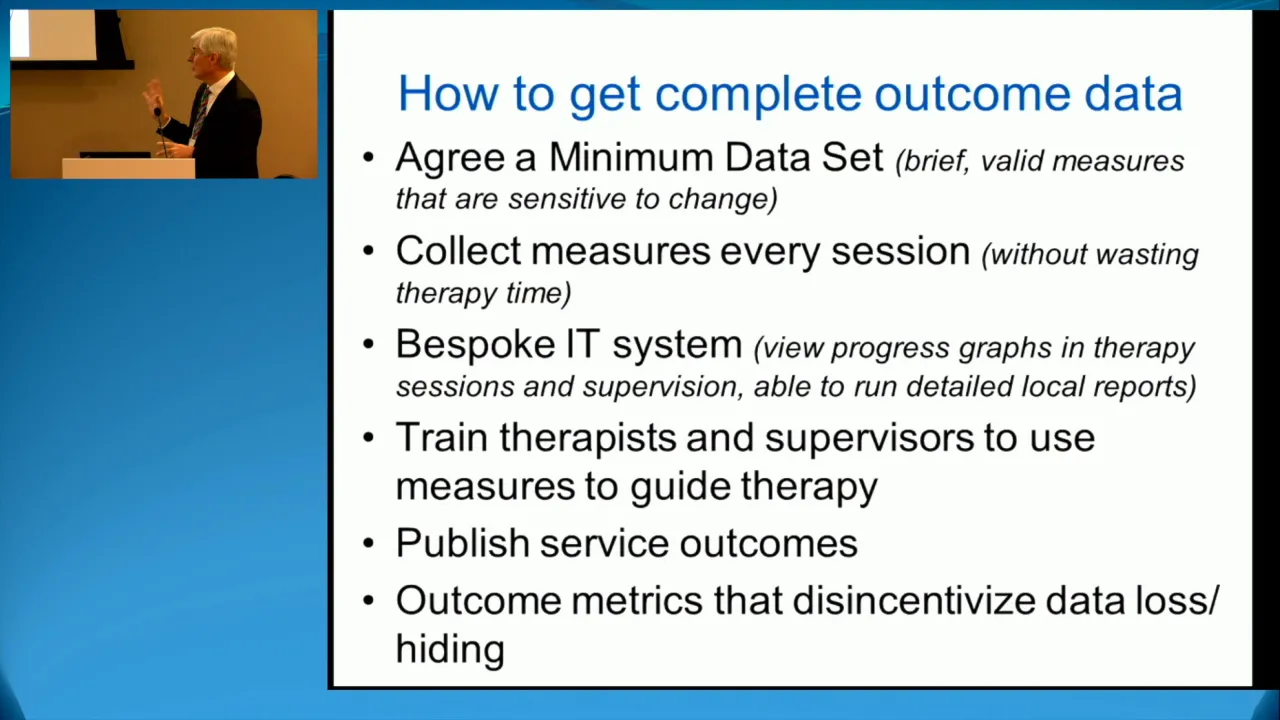
Measurement-based Care in Psychotherapy Workshop - Future of Psychotherapy Conference 2019
UofTPsych
243 views•2019-04-25
Dr. Carol Tavris — Mistakes Were Made (But Not by Me)
skepticmagazine
14K views•2019-05-02
Trending

MIC DROP: Smithsonian Director Called Out For Woke Propaganda
TheAmalaEkpunobi
37K views•2026-07-23

2.4 BILLION Records Got Leaked...
DeepHumor
15K views•2026-07-22

Americans Confused in Australia for 17 Minutes Straight
IWrocker
17K views•2026-07-23

The Cult of the Ultra-Wealthy with Ed Elson | Better Offline
BetterOfflinePod
16K views•2026-07-23