This argument attempts to solve a logical paradox by introducing a moral one, effectively justifying catastrophe as a divine tool. It is a regressive defense that prioritizes scriptural authority over a coherent response to the reality of human suffering.
Install our extension to search inside any video instantly.
“The Problem of Evil” - A Response to Neil deGrasse Tyson
Added:Today we're going to be taking a look at a video from Neil Degrasse Tyson and this is his explanation as to why he doesn't believe in God. We're going to take a look at his argument and then we're going to explain why it's not a very good argument and how this very common atheistic objection can be answered using scriptural passages and just common knowledge. So let's take a look.
>> Do you believe in God? Every description of God that I've heard holds God to be all powerful, very typical, and all good. And then I look around and I see a tsunami that killed a [music] quarter million people in Indonesia, an earthquake that killed a quarter million people in Haiti. And I see earthquakes and tornadoes and disease, childhood [music] leukemia. And I see all of this and I say, I do not see evidence of both of those being true [music] simultaneously.
If there is a god, the god is either not all powerful [music] or not all good.
>> Okay, so I'm sure we've all heard that objection to Christianity or theism in general at some point in our lives. Um, but a lot of Christians fail to actually articulate why this isn't a problem.
They know that there is some way to explain why bad things happen and why we can still have an allloving God, but they typically just end up saying something like, "Oh, well, God gave us free will, therefore bad things happen."
And at the end of the day, that's not a very good objection, especially when you take a look at scriptural passages such as this one. This is going to cause a lot of people some pause. This is Isaiah 45:7. I form the light and create darkness. I make peace and create evil.
I the Lord that do all these things. So the Bible actually teaches us that evil in some sense is created by God. And that's probably going to be the opposite of what you hear from a lot of Christian apologists. They say, "Oh, no. God God just uh you know, he he allows tsunamis to happen. He allows tornadoes to happen." And that can be true. But we also have to take the positive claim that certain natural disasters um certain catastrophes as this uh certain translations will have this word are caused and created by God directly. And again that's going to cause a lot of people pause and we we need to clarify first that moral evil as in the lack of justice or goodness that is not created by God. That is allowed by God. But when it comes to just bad things happening in your life, that is directly caused by God sometimes. Sometimes it can be the work of the devil and God just allows it. But other times it could be the work of God himself. And that's why I get so upset when I hear certain people saying, "Oh, you you you crashed your car and now you have to get a new one." That's obviously the work of Satan. You don't know that. That actually could have been God intervening in your life for some reason, for some purpose. So that's something we have to keep in mind here when we're answering this objection that there are some natural disasters that are caused by God. And there's actually a passage in the gospel that helps us understand this. Um and this is one that's very very often overlooked by people trying to answer this objection.
And this is the story of Lazarus.
Lazarus in the gospel accounts he is a friend of Jesus. And Jesus is informed that Lazarus has fallen sick. Right?
Lazarus, he has some illness that has come upon him. And now his friends are like, "Jesus, come come heal this guy.
He's sick." And Jesus says, "No, I'm not going to leave yet. I'm going to stay right where I am." And then Jesus gets word that Lazarus has died because of this illness. And all of his disciples are like, "Hey man, what the heck's going on? You had the power to heal Lazarus and you didn't and you let him die." And it says in the gospels that Jesus rejoices when he first hears this.
He's happy about the fact that Lazarus passed away. And then he goes on, he visits Lazarus. He travels to Lazarus.
He sees people weeping. And then it says that Jesus wept. And so it almost seems like a contradiction that Jesus is at first happy about the death of Lazarus.
And then when he gets there, he's upset.
And then Jesus heals Lazarus and he says, "This was done so that the glory of the Lord could be shown through you."
Or something along those lines. So that passage right there fully addresses the problem of evil. There is such a tragedy that occurs and we see both sides of God. We see the side of God that is rejoicing about this because he knows that there will be a greater good brought through it. But we also see the side of God that weeps alongside us as these horrible things happen.
Let's say you have a child and you need to treat that child. You need to to show them the truth and the dangers of a stove, a stove that is on. You tell the kid over and over again, "Hey, stop touching the stove." And then the kid keeps reaching. You have to pull the kid away because he's going to burn himself.
This happens a hundred times and the kid just still doesn't get it. and you're scared that if you're away, the kid is going to touch the stove eventually and he's going to do permanent damage to his hand. And that's not something you want.
So, one time under your supervision, you allow the kid to get close to the stove and burn himself just a little bit. Not in a way that's going to do permanent damage or cause him to go to the hospital, but you allow him to get a little bit hurt. You allow a bad thing to happen to bring about a greater good.
This can be one of the examples of how God can allow natural evils to happen.
Okay. Another example could be um punishing someone. God totally punishes people with natural disasters. It's something that we see um in the story of Sodom and Gomorrah. God wipes out an entire civilization because of their evil. They were practicing child sacrifice. Um they were practicing horrible, horrible um sexually immoral things. Um and they were intertwining those two. I don't need to go into the details of that, but I'm sure you can imagine um doing horrible things to children.
And so God in his infinite goodness and justice, he wipes out that civilization and that's a good thing to do. That civilization was harming people and they were committing evil and God allows a natural disaster. He causes even a natural disaster to take it out.
[snorts] Again, this doesn't mean that every natural disaster is the work of God, but it means that some of them are.
And so God can use um what we might call evil or catastrophe in most translations as a way to wipe that out. So when Neil deGrasse Tyson says, "Oh, I see certain kids in uh you know, China or whatever that they get wiped out by an earthquake." Yeah, that that could be for a million different reasons. And this kind of brings us back to this idea of why do we trust in God in the first place, right? I want you to imagine that you have a math teacher, a teacher who's way smarter than you in every regards, okay? And this teacher has taught you everything that you know about addition.
He taught you 2 plus 2 equals 4. 3 + 3 equals 6 and so on. And then one day your teacher does something crazy on the whiteboard that you've never seen before. Your teacher does four minus 2.
You've never even seen the symbol minus before. You're like, "What the heck is this?" Your teacher says, "It's called subtraction. You'll figure it out one day." Now you know that this teacher is way smarter than you. That everything you know about goodness and truth has come from this teacher or I guess in this situation about math. I kind of mixed up God and the teacher there.
Everything that you know about math has come from this teacher and you know that they know more about math than you and then you see something that doesn't make sense to you. Are you going to say, "Okay, now this this teacher is completely wrong and they're evil and therefore or are you just going to say maybe I just don't understand? Maybe I don't understand subtraction yet. But since I know that this teacher knows way more than me, I'm going to just trust in this. I'm going to know that their math is correct. And that's not blind faith as a lot of people call it. That is an educated guess based off of authority.
Now imagine that that authority is God.
Okay? You know that this authority is good by the definition. You can read St. Thomas on this. Suma Theologica uh pars prima questions 1 through 10. They make it very clear that this actus purest being is good, okay? And infinite and all these other things. So read read some of theologica read sumac contraentilas if you haven't already. Um but but again we see this all good being that we know to be all good based off of the metaphysical description of him and then we see bad things happen and it would be almost silly of us to assume oh wait no this this god actually isn't all good because we saw something we don't understand. Or do we just say we know that this being is is the fullness of the truth. We know this being is all good and therefore we just don't understand. And so what Neil deGrasse Tyson would have to do to actually show that there's a contradiction between an all- knowing, all powerful and allloving God. What would actually need to happen is Neil deGrasse Tyson wouldn't just have to show that it's confusing as to how these things could lead to a greater good, but rather Neil deGrasse Tyson would need to show that there is no possible situation in which these things could be done by an allloving God. All good. All good God. So we'll take childhood leukemia for for instance, which is a horrible thing. And like we said with the Lazarus story, God weeps alongside us.
However, Neil deGrasse Tyson would have to show that this childhood leukemia, we'll say there's a six-year-old boy named Timmy. He has leukemia.
Neil deGrasse Tyson would have to show that there is no redemptive goodness in that momentary catastrophe. Okay? Okay, cuz remember we're comparing temporal things to eternal things. So let's say Timmy, he suffers for three years and then he he gets healed. Okay? And through that suffering, he's able to understand um what suffering is um what bad things are and he's able to grow uh stronger in his trust in Christ. Then Timmy goes on and becomes a great Christian. There is redemptive suffering there. So that's one instance in which childhood leukemia could exist.
Let's say we'll take another instance.
Maybe maybe Timmy doesn't get better, which is horrible.
Timmy, we'll say for this first example that Timmy goes to heaven afterwards. Well, Timmy suffered and then he went to heaven. So, eternity in heaven is obviously going to outweigh the bad that was experienced in his childhood leukemia. But also, we can look at his family on earth and maybe through Timmy's suffering, they're able to trust in God more. They're able to understand suffering better and and to be more gentle with other people who are suffering. They're being more compassionate. They're able to, you know, understand Christ better. So, there's still redemptive suffering there. Even though Timmy died, even though there's this huge tragedy, they could be brought closer to Christ through sanctification because of this tragedy that occurred. Now, let's say something even crazier. Let's say Timmy goes to hell. Okay? And I know this is going to be a hard thing for a lot of people to wrap their minds around. Let's say Timmy has childhood leukemia. He dies and he goes to hell.
Well, if Timmy goes to hell, he is still going to be treated justly because this idea of an allloving, all powerful God is that he's never going to make a mistake in which he in the ways that he treats people. And remember, as Thomas, we also believe that there's there's varying levels of hell. There's the Pena Sensus and the Pena.
the we would we would probably say that if it there's no personal sin involved with Timmy, he would only experience the the loss of heaven and not the actual pains of hell in the sensible sense. Um, but there's there's a lot going into that. We don't need to dive into tomistic theology. But the the moral of the story is is that that God would still be just in his decision. And so if it would be injust for Timmy to go to hell, then Timmy won't go to hell. But if it would be a good thing for Timmy to go to hell, then he will go to hell. So this idea even if Timmy goes to hell, well it would be because it's a good thing. It would be a just thing to do and therefore there's no problem. It would be logically incoherent for Timmy to go to hell if he doesn't deserve it.
If it wouldn't be the just thing to do.
And that's why we have uh sort of as our baseline that this being is all good, that he is just. Okay? Because any decision that falls under that, we can rule it out. If it if it's not just, then we can rule that out as even a possibility. And so objections from people like Neil Degrass Tyson where they say, "Oh, bad things happen.
Therefore, God isn't good." They're really just lazy. They don't actually look into the toistic theology. They don't look into Christian theology as a whole. And so there's always some sort of redemption behind the suffering. It might not be immediate and you may never even see it in your own life, but redemptive suffering can go out in ways that you've never even experienced before. And we can take the words of Christ and trust in them. when he says that bad things happen sometimes like with Lazarus so that the glory of God can be shown remember God is eternal goodness so the glory of eternal goodness can be shown even through this suffering that we experience so that's that's a a quick way to explain the problem of uh evil or catastrophe in the world remember God does not cause moral evil that is due to the enemy alone but he can cause evil in the ways that there are catastrophe so hopefully that helps Um and God bless
Related Videos

0:33
Philosophy
Open Tab is a new interview series hosted by Substack co-founder Hamish McKenzie
Hypeflicksss
1K views•2026-05-21

27:53
Philosophy
Street Epistemology: Maritza (1) | Student Demands the Truth (Valuation)
magnabosco210
124K views•2019-06-27
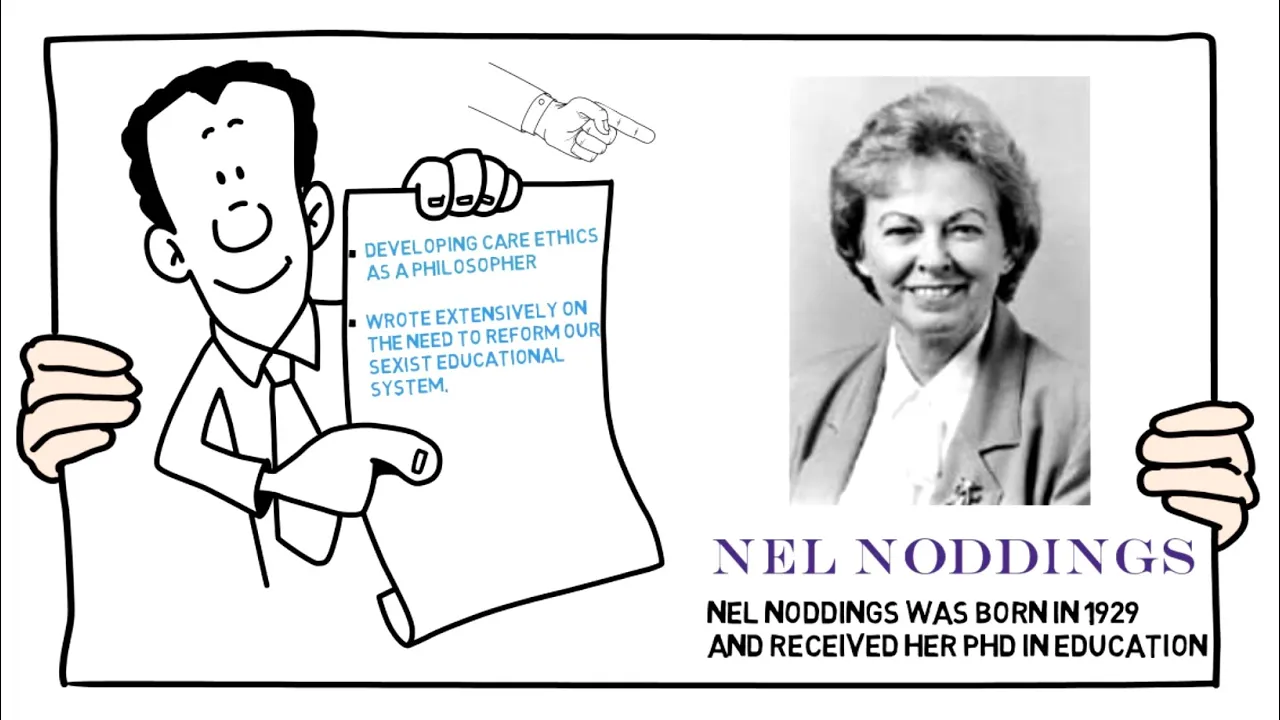
1:18
Philosophy
Nel Noddings | Feminist philosophy and education | Whiteboard Video
studioninety9110
3K views•2019-10-13

18:20
Philosophy
LEGAL METHOD CLASS: Law, Order, Justice & Freedom | Understanding the Concept of Law in Society
LAW-MADE-SIMPLE.c
371 views•2025-11-22

1:26:44
Philosophy
Does evolution DEBUNK morality?
MajestyofReason
7K views•2025-03-06

47:07
Philosophy
How the Gospels Pass the Historical Test | Tim and Lydia McGrew
TheAaronRennShow
713 views•2025-12-02

1:03:26
Philosophy
Pluriversal Design SIG Book Club 13: bell hooks' Theory as Liberatory Practice
pluriversaldesignsig2851
777 views•2022-05-24

1:37:10
Philosophy
NICK LAND MEETS THEORY UNDERGROUND (w/ Michael Downs and David McKerracher)
PhilosophyPortal
9K views•2023-10-23
Trending

13:25
Business
Playstation NO DISC/NO BUY Fight Is Over...
DavidJaffeGames
4K views•2026-07-23

22:40
Business
Steam and Xbox Just Dropped The Hammer On PlayStation
OhNoItsAlexx
9K views•2026-07-23

16:52
Anthropology
Americans Confused in Australia for 17 Minutes Straight
IWrocker
17K views•2026-07-23

20:36
Business
SuperBike Factory Has Gone... What's Next for the Motorcycle Industry?
thatbikersimon
11K views•2026-07-22