The James Webb Space Telescope has discovered that galaxies formed shortly after the Big Bang are far too massive and bright, challenging our understanding of cosmic evolution. For example, JADES-GS-Z14-0, existing only 300 million years after the Big Bang, contains roughly a billion times the mass of our sun—far more than current cosmological models predict should be possible. These ancient galaxies are forming stars at rates 10 times faster than our Milky Way today. This 'Cosmic Dawn Crisis' forces scientists to reconsider fundamental theories about dark matter, galaxy formation, and the early universe's behavior, with proposed explanations including direct gas cloud collapse into black holes, different early star formation conditions, or modified dark energy effects.
JWST Cosmic Dawn Crisis: Early Galaxies Defy ExpectationsAñadido:
What if the universe had a terrible secret hidden in its first moments? The James Webb Space Telescope has just uncovered something impossible. Galaxies that formed right after the Big Bang are far too massive and way too bright. They completely defy our deepest understanding of cosmic evolution, creating what scientists now call the cosmic dawn crisis. The early universe should be filled with small, dim, infant galaxies slowly building their stars.
Instead, we are finding cosmic giants that simply should not exist. When the James Webb Space Telescope peered back into the universe's earliest epochs, astronomers expected to see the tiny seeds of modern galaxies. Instead, it found colossal structures like JADES-GS-Z14-0, a galaxy existing barely 300 million years after the Big Bang. This ancient behemoth contains roughly a billion times the mass of our sun. According to current cosmological models, there simply was not enough time after the Big Bang for gravity to pull together enough matter and form such a massive galaxy.
The standard model predicts a slow, steady build-up of stars over billions of years. These newly discovered early galaxies are churning out stars at an absolutely staggering rate, some forming them 10 times faster than our own Milky Way does today. This forces scientists to confront a profound mystery. Are our models of dark matter completely wrong?
One theory suggests that in the early universe, gas clouds collapsed directly into massive black holes, skipping the slow star formation phase entirely.
Another possibility is that early stars formed under wildly different conditions, burning much hotter and brighter because they lacked heavy elements, making these galaxies appear deceptively massive. A third radical idea is that early dark energy accelerated cosmic expansion, changing how matter clumped together. The data is rewriting the history books right now.
What do you think is causing these ancient galaxies to grow so impossibly fast? Comment your theories down below.
The Cosmic Dawn Crisis challenges everything we thought we knew about how the universe built itself. These ancient cosmic giants prove that the early universe was far more chaotic and active than we ever imagined. As Webb peers deeper into the darkness, what other impossible secrets will we uncover?
Thanks for watching. Please subscribe to my YouTube channel for more interesting videos.
Videos Relacionados

Spiral Galaxy NGC 3370 from Hubble | NASA APOD 2025-11-05 #Shorts
galaxygallery
938 views•2026-05-30

SOMETHING inside the SUN is CHANGING
RaysAstrophotography
1K views•2026-06-03

🎬 Title: Milky Way & Andromeda Collision: The Future of Our Galaxy 🌌 #astroph #askap
SulaimanKhanSulaimani
429 views•2026-06-01

NOAA Warning! Massive Double Cannibal CME Impacting Earth: G4 Storm Watch!
worldnewsreporttoday
1K views•2026-06-04
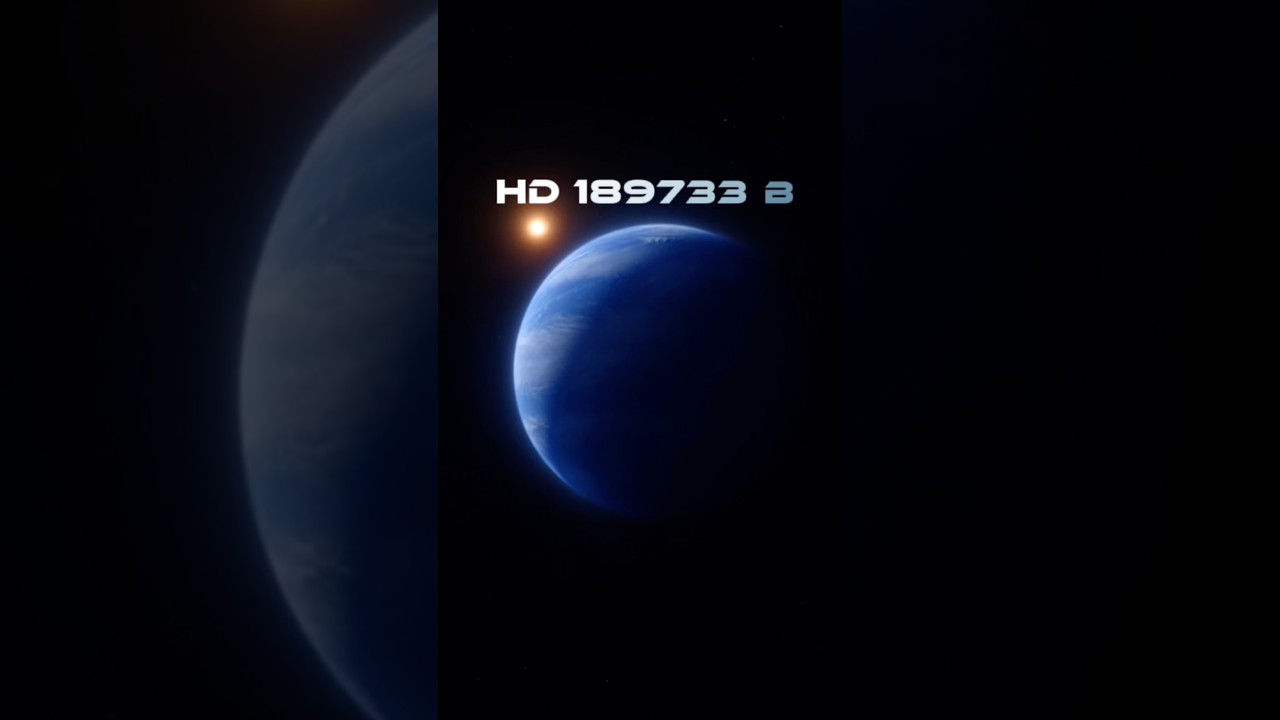
🌌 HD 189733 b | The Planet Where Glass Rains Sideways
EVENTHORIZONUK
3K views•2026-05-31

Captured the Blue Moon (with a twist) 🌙✨ #space #bluemoon #telescope
realAstroExplorer
674 views•2026-06-01

10 Planet Where a Black Hole Replaces the Sun
cosmicexplorer-EN
147 views•2026-06-02

Is this a copy of our galaxy? Discover Galaxy M81!
UniverseDocumentaries-cc4mb
995 views•2026-05-31