A limit describes the value a function approaches as the input variable gets closer to a specific point, regardless of the actual function value at that point. For example, when examining soil moisture readings approaching t=10 hours, the left-hand limit (from values less than 10) and right-hand limit (from values greater than 10) both approach 20, meaning the limit exists and equals 20. However, the actual function value at t=10 is 22, which differs from the limit. This illustrates that limits are determined by nearby values, not the value at the point itself. When the limit exists but differs from the function value, the function has a removable discontinuity, which can be resolved by redefining the function value at that point to match the limit.
Limit of Soil Moisture: A Question, Answer, and Discussion
Added:Imagine that you are standing at t = 10 hours and watching what the soil moisture readings do as time gets closer and closer to 10 from both sides.
The most important idea in limits is that we are not interested in the value exactly at the point first. Instead, we ask, what value are the readings approaching?
For times less than 10, the function is m t equals 20 + 2 t minus 10.
To find the left-hand limit, we let t move toward 10 from values such as 9.9, 9.99, and 9.999.
As t minus t 10 becomes very small and approaches zero, the expression t minus 10 also approaches zero. Therefore, the entire expression approaches 20. This tells us that the left-hand limit is 20.
Now look at times greater than 10. The function becomes m of t equals 20 + 3 t minus 10.
Again, let t move toward 10, but this time from values like 10.1, 10.01, and 10.001.
Since t 10 approaches zero, the term 3 at t 10 also approaches zero. As a result, this expression also approaches 20. Therefore, the right-hand limit is 20.
At this stage, both sides are giving us the same destination value.
Think of two roads coming from opposite directions and meeting at the same town.
One road may be steeper than the other, but if both roads end at the same place, then travelers from either side arrive at the same destination.
In exactly the same way, the left-hand and right-hand limits both arrive at 20.
Because the two one-sided limits are equal, the overall limit exists and is equal to 20.
Mathematically, limit t t t equals 20.
Now comes the part that often confuses students. The function also tells us that when t equals 10, the actual recorded value is m 10 equals 22. Many students mistakenly think this means the limit should be 22. It should not.
A limit is determined by nearby values, not by the value at the point itself.
Imagine driving toward a house whose address is 20.
Even if someone changes the sign on the door to 22 at the last moment, the road still leads you to the location corresponding to 20.
The destination approached has not changed.
This example beautifully illustrates the difference between a limit and a function value.
The limit asks, "Where are the values heading?"
The answer is 20.
The function value asks, "What value is assigned exactly at the point?"
The answer is 22.
Since the limit exists and equals 20, but the function value at that point is 22, the function is not continuous at t = 10.
There is a removable discontinuity because the graph f approaches 20 from both sides, but has its actual point placed at 22.
If we changed m10 from 22 to 20, the discontinuity would disappear and the function would become continuous at t = 10.
This is the key insight students should remember.
Related Videos

Solving a 'Harvard' University entrance exam question
AsadInternationalAcademy
125 views•2026-06-14
Algorithms for Generalized Signed Distance and Winding Numbers (PhD thesis)
NicoleZFeng
269 views•2026-06-15

Notes 6.3 Rectangle, Rhombus, Square
matthewmills6952
1K views•2026-06-18

Does the math actually hold up? Let's break down the logic.
rawXopinion
1K views•2026-06-15

NYT Hard Sudoku Walkthrough | June 17, 2026
Rangsk
2K views•2026-06-17
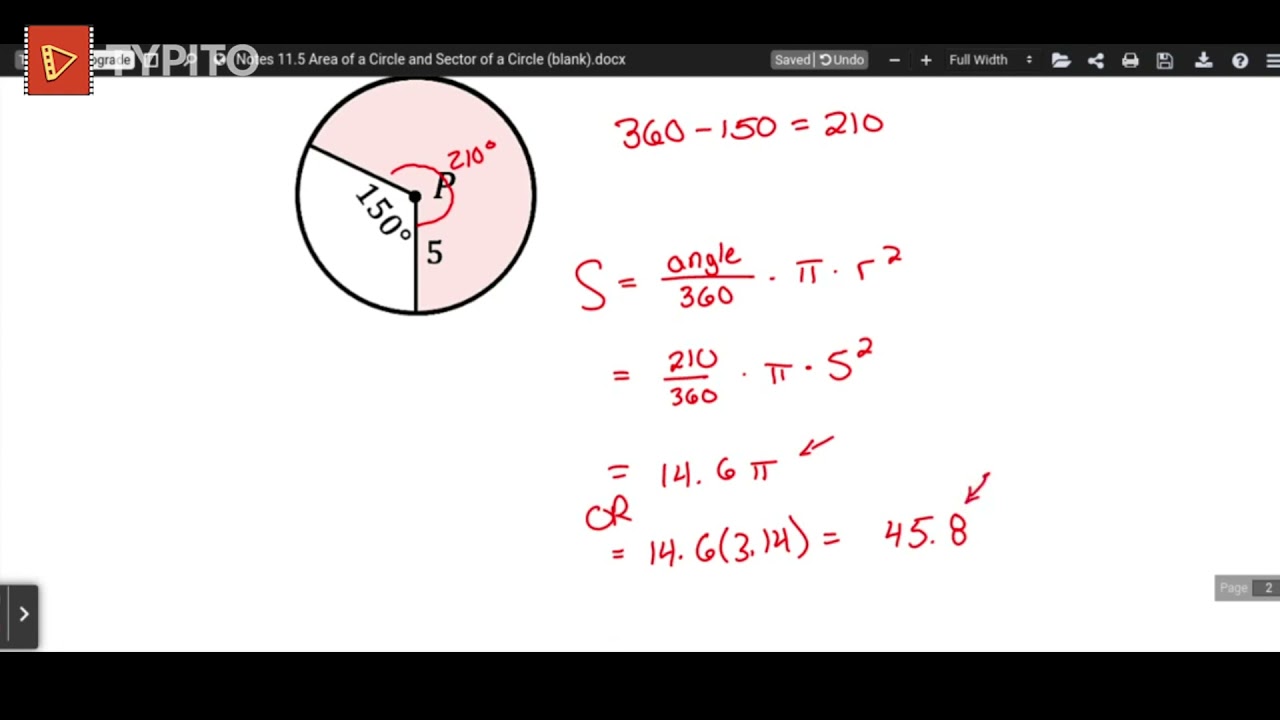
Notes 11.5 Area of a Circle and Sector of a Circle
matthewmills6952
251 views•2026-06-18

Notes 4.2 Isosceles and Equilateral Triangles
matthewmills6952
444 views•2026-06-18
Can You Solve This?
brain_station_videos
1K views•2026-06-15



