When your nervous system detects a threat, it automatically activates one of four protective patterns—fight (pushing back and defending), flight (avoiding and creating distance), freeze (becoming stuck or shutting down), or fawn (appeasing and pleasing)—before your thinking brain can respond, and recognizing these early body signals allows you to create space for more conscious responses.
Install our extension to search inside any video instantly.
Fight, Flight, Freeze, Fawn—Which One Is Your Pattern?
Added:Have you ever walked away from a conversation and thought, "That didn't feel like me?" You snapped when you meant to stay calm, you shut down when you wanted to speak up, you agreed when you desperately wanted to say no, or you left before you could explain yourself, and later, when you replay it, you think, "Why did I do that?" Those moments feel like failures of willpower or personality, but they're usually something else. In many cases, your nervous system has already moved into protection mode and selected a default before the thinking part of you ever got a chance to have a real say. I'm Dr. Tracy Marks, a psychiatrist, and I make mental health education videos. This is the fourth video in the high alert module of the Your Brain Under Pressure series. I'll have the series linked in the description in case you missed the others. In the last video, we talked about why your brain keeps predicting the worst and how the worst-case thinking can be a protective prediction when your brain is trying to keep you safe. Today, we're talking about the next step. Once your brain predicts threat, it doesn't just create feelings, it organizes action and uses protective defaults. Now, let's define the defaults. Fight, flight, freeze, and fawn are protective patterns. They're the body's preset ways of trying to keep you safe, and they switch on before your thinking self has full access to the situation. In some instances, the danger your brain detects may be physical, but in everyday life, it's often social or emotional, like a sharp email, a supervisor's tone, or a room where you feel evaluated. Your body may react as though something important is at stake, even when there's no physical danger.
And once the threat system is activated, your nervous system may reach for one of several protective patterns. Fight is the response that moves toward the threat. It mobilizes you to push back, defend, or regain control. Fight can look like snapping, arguing, correcting someone sharply, raising your voice, or becoming suddenly forceful. It can also look more subtle than that. You may become rigid in your point of view, interrupt more than usual, or feel an urgent need to prove that you're right.
Fight is not automatically aggression, it's mobilization. The nervous system is gathering energy to protect you through action. But when that protective energy comes out too strongly, it can hurt other people or escalate later that you wish you'd handled differently. Flight is the response that moves away from the threat. It creates distance. And this can look like leaving the room, ending the conversation quickly, avoiding the person, changing the subject, distracting yourself, or mentally planning your escape while the other person is still talking. Sometimes flight looks like productivity. You suddenly need to work, or clean, drive, scroll, reorganize, or do anything that gets you away from the feeling. Flight is not weakness, it's the nervous system trying to reduce danger by creating space. And sometimes distance is exactly what you need. Problem comes when leaving becomes automatic, even in situations where staying present would help you communicate better or make a more grounded decision. Then there's freeze. Freezing is often misunderstood as doing nothing, but it's actually a state of high internal arousal combined with physical lockdown. It's like your nervous system is pressing the gas pedal and the brake pedal to the floor at the same time. In older survival environments, becoming immobile was a way to reduce danger, or when fighting or escaping just wasn't even possible.
In modern life, the same pattern can show up when you're put on the spot, criticized, overwhelmed, or trapped in a conversation where no response feels safe. Then there's fawn. Fawn uses appeasement, pleasing, smoothing things over, making yourself smaller or less threatening, all as a way to bring down the danger. It tends to show up when you can't fight the threat and you can't get away from it. One caveat about fawn, it's a widely observed clinically relevant pattern, but it isn't fully settled as a fourth category the way that the other three are. And it's worth separating from ordinary kindness and healthy give and take. The difference is choice. Helping someone because you care is generosity. Erasing yourself automatically because a threat is in the room is different. One comes from choice and communication, the other comes from protection. Let's put the four responses in one situation. Imagine four people sitting in a meeting. A supervisor sharply criticizes a project in front of everyone. The criticism may be brief, but the room suddenly feels tense. One person feels the heat rise in their chest and immediately pushes back. Their voice gets sharper and they start defending themselves before they have time to think. That's fight. Another person feels the same pressure, but their body wants out. They stop contributing, keep their answers short, and spend the rest of the meeting waiting for it to be over. Afterwards, they avoid the supervisor and delay opening up follow-up emails. That's flight. A third person just goes blank.
They know the details of the project, but in the moment they can't access them. Their body feels stuck, their mind empties, and later in the car they think of everything that they could have said.
That's freeze. A fourth person quickly smooths things over. They apologize, agree with the criticism, and volunteer to take on extra work, even though part of them feels resentful afterwards.
That's fawn. Same situation, same general pressure, four different protective defaults. The point is not that one response is better or more mature than the others. Fight is not stronger than freeze. Fawn is not nicer than flight. These are just different ways the nervous system tries to protect you when something feels threatening.
And this is why regret often shows up after the fact. Once your nervous system settles and your thinking brain has more room to work, you may be able to see options that just weren't available to you at the moment. So, why does one person fight while another freezes or fawns? Part of the answer is learning.
Your nervous system tends to reuse what has protected you before. If pushing back helped you avoid being controlled, fight may show up quickly. If getting away helped you stay safe, flight may become your default. If staying still kept things from getting worse, freeze may become familiar. If pleasing someone reduced conflict or danger, fawn may become automatic. When these situations arise, the brain doesn't look at just what's happening right now. It also asks, "What happened before and what worked then?" This is why a response can feel bigger than the current situation calls for. Your nervous system may be responding to the present through an old protective pattern. It's using the same information it already has, even when that information doesn't fit the moment as well as it used to. So, what can you do with this? Here's the point first.
You can't step out of a pattern that you can't see coming. So, the work isn't to stop your response by force. The work is to recognize it earlier. I would suggest starting by finding your default, the one that tends to show up most when you feel cornered. For a lot of people, it's mostly one or two of the four. And once you know yours, you can start to recognize its early signature in your own body. For fight, the early sign may be heat in your chest, a tight jaw, or the urge to interrupt. For flight, it may be scanning for an exit, wanting to cancel, or feeling suddenly restless.
For freeze, it may be blankness, stillness, or losing access to words.
For fawn, it may be an automatic apology, a quick yes, or an intense focus on the other person's mood. These early signs matter because they give you a chance to notice the pattern sooner, and noticing sooner is how you can begin to create more choice. That early signature is the seam. It's the first moment the pattern is loading, and that's the point where you can eventually step in with a different response. Now, we have to remember these patterns usually developed for a reason.
At some point, they may have helped you get through something. The question is whether the same response is helping you now. If fight protects you from feeling powerless, but it damages trust, you may need a different way to set boundaries.
If flight protects you from overwhelm, but prevents repair, you may need a different way to take space. If freeze protects you from making the wrong move, but leaves you voiceless, you may need a way to buy time without disappearing.
And if fawn protects you from conflict, but disconnects you from your own needs, you may need to practice tolerating someone else's disappointment without rushing to fix it. That kind of change doesn't happen by yelling at yourself to respond differently. It happens by helping your brain update the threat reading. If your nervous system interprets stress as danger, it will keep reaching for defensive defaults.
That's where we're going in the next video. We'll talk about how to teach your brain the difference between stress and threat, because many everyday demands are uncomfortable, but they're not always dangerous. For today, remember this: fight, flight, freeze, and fawn are protective patterns your nervous system uses when it senses threat. Some of those patterns may have helped you before. Some may be costing you now, but once you can recognize your default, you're no longer just reacting inside the pattern. You're beginning to create the space where a different response can become possible. Thanks for watching today. See you next time.
Related Videos

0:39
Psychology
Inside Ronaldo’s Team Meeting
RonoSphereCR7
1K views•2026-04-17

7:25
Psychology
You Are Not So Smart: Chapter 4 Hindsight Bias, What is it?
TheBey8nD8
230 views•2019-09-15
49:35
Psychology
Sigmund Freud's Mind - Master Your Inner World (Your Unconcious Mind)
Ngaslife
1K views•2025-01-25
11:29
Psychology
What affects your mood?
RandyPaterson
602 views•2019-05-16
3:45
Psychology
Can you outsmart this logical fallacy? - Alex Gendler
TEDEd
2164K views•2019-11-25

1:02:21
Psychology
Understanding the Relationship between Fear of Falling and Mobility in Older Adults
fallpreventioncommunityofp3788
823 views•2019-04-08
54:04
Psychology
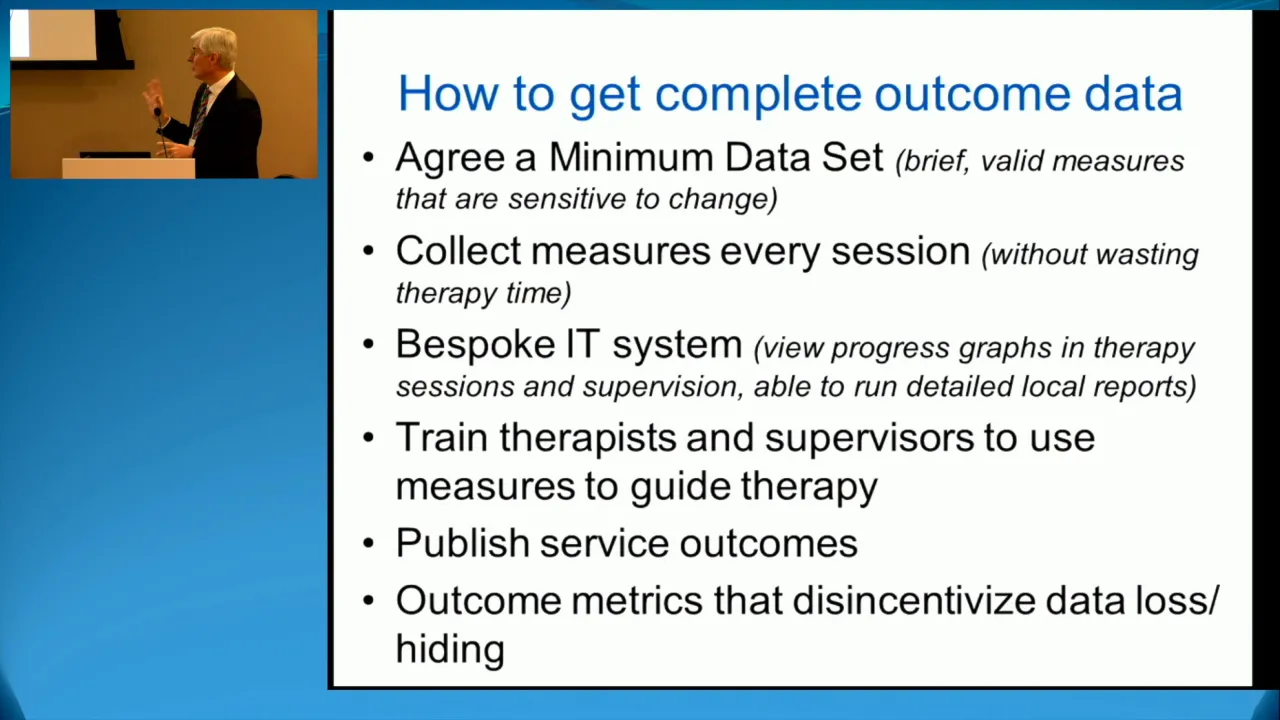
Measurement-based Care in Psychotherapy Workshop - Future of Psychotherapy Conference 2019
UofTPsych
243 views•2019-04-25

51:52
Psychology
Dr. Carol Tavris — Mistakes Were Made (But Not by Me)
skepticmagazine
14K views•2019-05-02
Trending

13:55
History
MIC DROP: Smithsonian Director Called Out For Woke Propaganda
TheAmalaEkpunobi
37K views•2026-07-23

9:05
Artificial Intelligence
2.4 BILLION Records Got Leaked...
DeepHumor
15K views•2026-07-22

16:52
Anthropology
Americans Confused in Australia for 17 Minutes Straight
IWrocker
17K views•2026-07-23

58:39
Business
The Cult of the Ultra-Wealthy with Ed Elson | Better Offline
BetterOfflinePod
16K views•2026-07-23