The Two Child Paradox demonstrates that when given the information 'at least one child is a boy,' the probability that both children are boys is 1/3 (33.3%), not 50%, because there are three equally likely possibilities (boy-boy, boy-girl, girl-boy) after eliminating the girl-girl case. The 'Tuesday Edition' variant shows that adding specific information about one child (born on Tuesday) changes the probability to 13/27 (48.1%), because more specific information narrows down which child is being referred to, making the other child's gender more independent and the probability closer to 50%.
Install our extension to search inside any video instantly.
The Most Controversial Puzzle in Probability? [2 Child Paradox]
Added:The next paradox is the two child paradox, which is stated like this. Mr. Smith has two kids. Given that at least one of them is a boy, what's the chance that they're both boys? And you might think, okay, you just told me about your first kid, then the chance of the second kid being a boy should be 50%. Right?
Wrong. The answer is a 33.3%.
And the reason I like this paradox, the 33.3 I, you know, I can get my head around that one. The thing that gets me with this one is it has a sequel, which I call the two child paradox to Tuesday edition. And it says Mr. Smith has two kids. Given that one of them is a boy born on a Tuesday, what is the chance that they're both boys? And now if you've done the first part of the paradox and you look at the second one, you're thinking, "Okay, you told me one of the kids is born on Tuesday, but that doesn't matter. So it should still be 33.3% again, right?" Wrong. This time the probability shoots up to 48%. It goes from 33 to 48. This is closer to your intuition of it should be close to 50%. It's not exactly 50%, just a little bit less. What is going on here? Well, we're going to see when we get to it.
And it goes like this. Mr. Smith has two kids. Given that at least one of them is a boy, what is the chance that they are both boys? And to answer this, we're going to have to make an assumption, which is we're going to assume the simplest possible thing that children are born 50/50, boy or girl, independently at random. Just like in the birthday paradox, this is not actually true to real life at all. But it is already an interesting problem.
Actually, sometimes people state this paradox with coin flips instead because we're basically treating each child as a coin flip. 50% boy, 50% girl. Not true to real life, but interesting math nonetheless. And if you make this assumption, you might have the intuition that okay, you're given that one of them is a boy. Well, the other one is just an independent coin flip. It should be 50/50, right? Um, so you might think uh question is the answer 50%. Uh, no.
That's what makes it a paradox. The answer is 1/3, also known as 33%. So we will show that that's the answer to the paradox. And the reason it's a third is kind of there's two ways that it can go boy girl. It can either go boy girl or girl boy. And you will see exactly what that means in the probability tree. So if we draw the probability tree for this situation, we're just going to do it by the first child and the second child.
The first child is either a boy or a girl. We're assuming it's 50% for each.
And then the second child is also either boy or girl in both situations. Now again, you can do this totally through the probability tree, but there is another nicer way to represent it in this situation, which is to use a grid.
And the reason the grid works so well is because the first child and the second child are independent. So regardless of what the first child is, what's going on in that second layer splits up the same way. So if we draw a grid it will look like this. The rows and the columns are both identical. So the rows represent the first child either boy or girl and the columns represent the second child also either boy or girl. And because the things are independent that is why everything sort of multiplies. All the lines are straight regardless of your x coordinate. Your y-coordinate is doing the same kind of thing in both situations. So we end up with this nice grid with four possibilities. Boy, boy, boy, girl, girl boy or girl girl. Now to solve the problem, we can either do it on the probability tree or on the grid.
We're going to use the same conditioning rule we learned in the rare disease paradox. We're going to cut away the impossible. In this situation, we are told, we are given that one of Mr. Smith's kids is a boy. So, we can cut away the situation of girl girl. We are not in the universe where Mr. Smith's children are girl girl. We were told that that's impossible. Let's cut it out of our tree. And if you do that, you cut away girl. On the grid, it would look like cutting away the bottom right corner. Now, there are three things left. There are boy, boy, girl, boy, or boy, girl. According to the to the rule for conditional probabilities, all three of these things, we should calculate the probabilities the way we were doing it before by multiplying. So, they're all going to be equally likely. And the only thing we have to do differently is we have to make sure when we reormalize, we divide by the right thing to make it sum up to one. So, that calculation will look like this. The conditional probability that Mr. Smith has two boys, boy, boy, given at least one is a boy.
So, it's going to look like this. Here's the proper calculation from the probability tree. The numerator is the multiplication rule. 50%* 50%. That's the boy boy category. And the denominator I have summed up all three things that can happen in the probability tree after we have cut away girl girl. So the three things that can happen are boy 1/2* a half girl boy 1/2* a half or boy girl one also 1/2* 1/2.
That is the proper calculation using the conditioning probability rule. things we want boy boy divided by all the things that are left in the probability tree.
It is easier to see in the grid. In the grid it looks like okay we got three squares. Boy boy boy is the top square over here and girl boy and boy girl girl are the other two squares. In fact each of these squares if you sort of think of the width of these things as being 1/2.
Each of these squares is area 1/4 1/2* a half. So if you think of area here as representing probability then this is exactly doing that calculation over there. And of course it simplifies. If you have one square out of three squares, the answer has got to be 1 out of three equals a third. That is the answer to the original version of the two child paradox. But the reason I like the two child paradox so much is that it has a sequel, the two child, two Tuesday paradox, which says that Mr. Smith has two kids. Given that at least one of them is a boy born on Tuesday, what is the chance they are both boys? And at first you say, okay, this being born on Tuesday has absolutely nothing to do with anything going on here. So, of course, the answer should still be 1/3 like we just calculated, right? But the answer is no, it's not a third anymore.
Now, the probability has jumped all the way up to the answer is something like 48%.
What on earth is going on? Why would the probability change when you're given that he is born on Tuesday? It is a very subtle thing and I think we can see it if we do the probability grid and the probability tree for this updated problem. So, the first thing we're going to do is we're going to change our probability tree. Instead of doing boy and girl, we're going to have three categories of things that can happen.
There's either boy born on Tuesday, boy born on not Tuesday, or girl. So instead of having two possible things in each level, we're going to have three possible things in each level. What does that look like? It looks like this. So our probability tree is splitting up into three. I have assumed that being born on a Tuesday has a 1 out of seven chance of happening and being born on a not Tuesday has a 6 out of seven chance of happening. And I've also assumed it's got nothing to do with whether or not you're a boy or a girl. So independently at random. That's why I get 1 7th * 50% and 67th* 50% for those two types of branches. Um you'll notice here I still have two levels on the tree for the first child and the second child. You could equally well set it up with being born on Tuesday or not as a separate level. So when you make a probability tree, it is up to you how you want to set it up. You should set it up in a way that is convenient for what you want to do. And this one is convenient for what I want to do. So I have it set up with two levels with these three categories.
Boy born on Tuesday, boy on not Tuesday, and girl. So, we've subdivided boy into two kind of different types of boys. The Tuesday boys and the not Tuesday boys.
If you do that on the grid, then what it's going to look like is the this girl square is not going to change at all, but the boy is going to get divided up into two. So, it's going to be kind of like split into two parts. The boy Tuesdays and the boy not Tuesdays. Let's see what that looks like. So, now it looks like this. So the girl the girls are still on the on the bottom row and the rightmost column are still 50% of the each row and column. But now boy has been subdivided into boy Tuesday and boy not Tuesday. I have tried to represent the fact that boy not Tuesday is more likely than boy Tuesday by making it a little bit wider. And once again if you do this correctly the areas in this shape should represent the actual probabilities of every single thing. You see the probability multiplication rule is the width time height rule for areas.
So areas become probabilities if you have this nice setup like we do here.
And now we have nine possible things that could happen. We have nine branches over here or nine little boxes over here. All of which are different sizes now. But now we can answer the question which we originally wanted which is what is the chance that it is both boys. And the thing that makes this a little bit harder is when we're doing our conditioning rule when we have to cut away uh the the things we have to cut away all the situations where Mr. Smith does not have a boy born on Tuesday. You see we were told Mr. Smith has a boy born on a Tuesday. So, we have to cut away everything where there is no boy born on Tuesday. What does that look like? So, if you do it on the probability tree, it's a little bit annoying. I'll just show you the final answer. Um, so girl, girl, girl, boy, not Tuesday, boy not Tuesday, girl, boy, not Tuesday, boy not Tuesday. Those all go away. How did I come up with that?
You have to think about it for a while.
But if you do it on the grid, it's actually very simple. And that's because you kind of recognize boy Tuesday is uh can either be this really thin column on the left or it can be this really thin row on the top. So because we definitely have a boy Tuesday, we're definitely somewhere in this top here. And so when we cut away everything that's impossible, it's kind of easy to see what it is. So here are those same exact nodes I cut away from the probability tree. I'll cut them away from the grid.
It's just two different ways of representing the exact same idea. So cutting away those four things. [music] Um and now it looks a lot more intuitive. We're cutting around of this big square that is not the very thin row or the very thin column. So finally we're ready to do our calculation. We're going to calculate the chance that Mr. Smith has two boys. Um but once again you have to recognize what does it mean to have two boys. And actually now there is more than one way because of our subdivision that he can have two boys.
The three ways that Mr. Smith can have two boys is are represented here, here and here. So these three which again a little bit tricky to see on the probability tree but very easy to see on the probability grid. They are just the three events in the sort of corner, right? So, they're the three pieces that were left over in the top corner that are also on the most narrow left or the very tippy top uh row. And that's where there's two boys, but also there's at least one boy Tuesday. So, kind of easy to see over here, a little bit harder to see over here, but it's exactly the same information. You could you could equally well work it out this way. Um, to be honest with you, the way I work it out, if somebody gives me the probability tree is I I draw the grid and then I figure it out and then I and then I copy the results over to the tree. There are two equally good ways of doing the problem mathematically, but sometimes one is more intuitive than the other.
Okay, now that we've recognized what is our conditional tree, we've cut away the things that we don't want. We have identified the things that we do want.
We can just divide them and that will be the probability that we want. So, what is the final answer? It's going to be a big calculation. The probability Mr. Smith has a boy. Given at least one is a boy born on a Tuesday, it is the division of a bunch of things. The top is a sum of three things. Those are the three ways that he can have two boys with one of them being born on Tuesday represented by this little corner over here divided by the same sum of those three things plus these other two things. Let me use this other green color for these other two things. And those represent the girl boy Tuesday situations on the top edge and the bottom side over here. Or if you want, they're the two nodes on our probability tree corresponding to these other situations where there is a boy born on Tuesday, but the other person was a girl. And you can see them visually over here on the top and bottom. Now, if you simplify this by multiplying through by sevens and so on, you'll get a nice answer, which is 13 / the same 13 plus another 14. Um, [music] and again, you can work it all out with the math. It is 13 / 13 + 14. But I want to show you that you can actually calculate that quite quickly from this picture. And that's because um you can sort of think of this girl with over here as seven parts and this girl width down here as seven parts. And the boy not Tuesday is six parts while the boy Tuesday is one part. And that's because of this ratio that we had of boy Tuesday to not boy Tuesday is a one over seven chance of being born on a Tuesday and a six out of seven chance of being born on not Tuesday. So if you think of the like proportions as being this like 1 to six proportions then you know this is going to be area 1 this is going to be area 6 this is going to be area 6 this is going to be seven and this is going to be seven. So what are the things? Well on the top it's 1 + 6 + 6 13 and on the bottom it's 1 + 6 + 6 again but now also + 7 + 7 also known as 14. So that's why it's 13 / 13 + 14 illustrated with a picture. uh if you don't like pictures, just uh you know, calculate it the oldfashioned way, crunch the numbers. In any case, however you do it, you're going to get the answer of 13 over 27, which is also known as 48.1%.
So, in this updated Mr. Smith paradox, when you know that one of the children is born on a Tuesday, the probability that the other person is a boy has shot up from 33% all the way up to 48%. What the hell? How is [laughter] it? Why why would the probability change when you're told that they are born on a Tuesday?
Well, let me show you mathematically what's going on here. You can kind of think about how big is that square in the corner. And really, it is like if you look at the ratio of this yellow rectangle to the girl rectangle right next to it, those are both equally sized. And the yellow rectangle over here and the girl rectangle down there, those are also both equally sized. So the reason it's less than 50% is exactly due to the overlap the area of the combination of boy Tuesday boy Tuesday.
So the rarer of the type of thing that Mr. Smith tells us if he says I have two boys and one of my boys was born under the full moon as the Gemini was in Saturn and Taurus was in blah whatever.
If he tells us some super rare thing, the chances that he would have two boys that were both born under these very specific circumstances is extremely small. And so the area of this overlap gets really really small and the probability that the other child is also a boy gets closer and closer to 50%.
Another way you can intuitit it is if when you say very very specific things about one of Mr. Smith's children, it sort of narrows down who that child is exactly or closer to exactly. And then once we know the identity of one of the children, well then the other child is like literally just a coin flip. Like imagine I told you uh Mr. Smith has two children and one of them is this guy.
What's the probability that his other child is a boy? Well, we'll just wait till Mr. Smith has the other child and then it'll be 50%. So, if you know the exact identity of one of the children, it's exactly 50%. And sort of the vagger information you give about Mr. Smith's child, the larger you make this area, and then the closer and closer it gets to 1/3. So, it's always going to be between uh 1/3 and a half where very specific things are close to a half and very vague things about his other boy go all the way down to 1/3 like we did in the first side of the paradox. And if you like this visual way of thinking about the probabilities instead of the probability tree, then there's a really excellent three blue one brown video where he does baze theorem using this kind of thing. Um, actually if you're at the end of this video and you're like, "Hey, this was great. I want to learn more." You should really learn bass theorem. So either go check out that vertacium video that I mentioned earlier or the three blue one brown video, it's a really great next step where you see how you can take these rules for conditional probability and package them into this like really simple to think about way theorem and the sort of Beijian way of thinking about things.
Okay, that's it.
Related Videos
Why is 1 not considered as a prime number?
curiosphere1499
1K views•2026-06-07
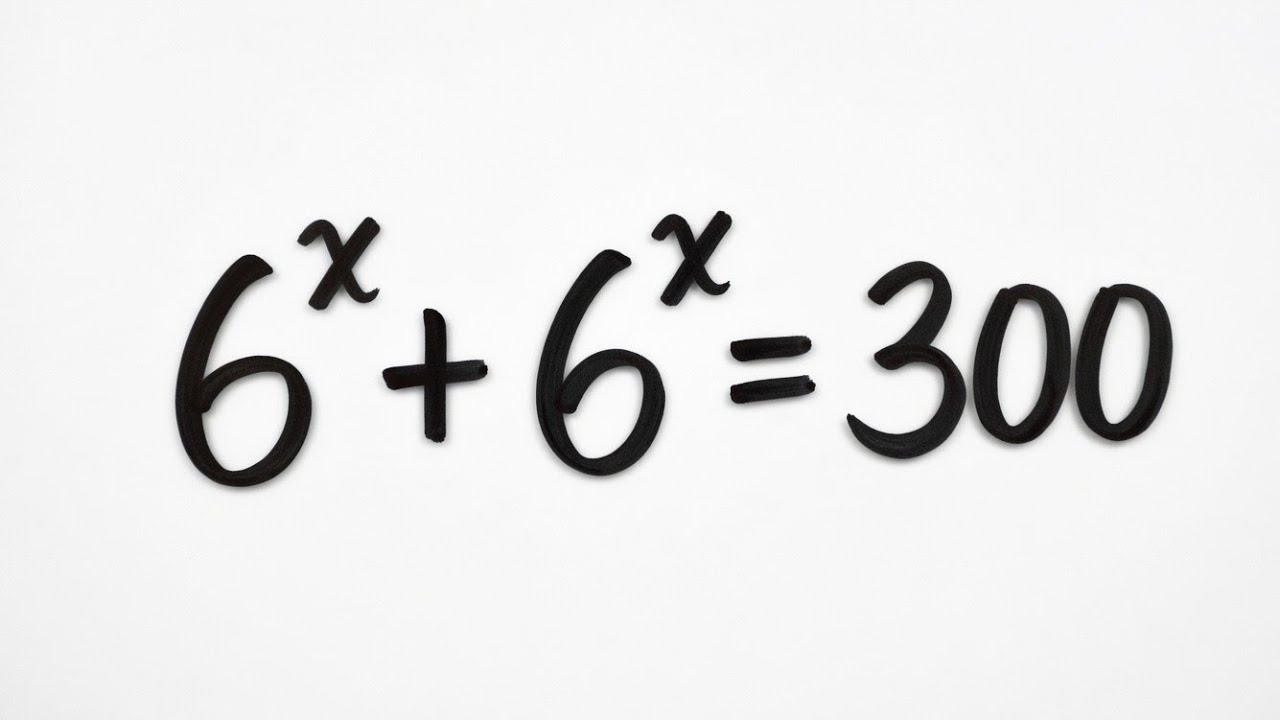
Olympiad Mathematics | Germany | Can You Solve This One?
PhilCoolMath
155 views•2026-06-09

470 Great Ideas for a Puzzle ... ?
CrackingTheCryptic
1K views•2026-06-11

Ages in 2030 birth years 2010 -2019
VeleaKornlorng
822 views•2026-06-08

BS-2 | BUSINESS STATISTICS-2 | UNIT-4 BAYES THEOREM | OU | SEMESTER-4 | @shivanipallela
shivanipallela
401 views•2026-06-07

Linear algebra question paper tough aaaa⁉️yaru sona very easy .....
3gvmaths
684 views•2026-06-11

Can Math Recreate Rembrandt? (Fourier Transform) 🎨
EquationtoArt
1K views•2026-06-08

0.12 vs 0.121212... How to convert a decimal to a fraction (regular decimal vs repeating decimal)
bprpmathbasics
34K views•2026-06-07