Dragonfly elegantly shifts the search for life from surface-bound rovers to atmospheric exploration, targeting the chemical bridge between matter and biology. It is a profound engineering feat that treats Titan as a frozen archive of our own cosmic origins.
Install our extension to search inside any video instantly.
From Greenbelt to Titan, NASA’s Dragonfly mission to seek answers on how life beginsAdded:
Dragonfly's a flying spacecraft headed to Saturn's moon Titan, designed to travel from place to place studying the surface. Inside a clean room at NASA's Goddard Space Flight Center in Greenbelt, Maryland, scientists covered head to toe in white suits are building and testing hardware, including a mass spectrometer which will analyze samples drilled from Titan's frozen ground.
>> It's essentially a chemistry suite built into one small instrument. This is small relative to other things. Titan is packed with organic material, the ingredients for life, but it's also extremely cold, nearly 290° below zero.
So, we're not a life detection mission.
Instead, scientists are trying to understand what happens next, how chemistry could lead to life. Titan is like the best example that we have that we can get to of a global environment where you've got an active chemistry cycle, you have all the surface processing, and the those things that may have been the magic sauce on Earth like billions of years ago could be we could be seeing the early stages of that on on Titan or parts of that going on at Titan. It's It's the best way to learn.
Dragonfly will make it into space no earlier than 2028, and once at Titan, it'll fly, land, and repeat, taking samples across miles of terrain to give scientists new clues about how life might begin. Unless we have a, you know, a little organism crawling on the camera, then obviously we'll say, "Yeah, that's life."
At NASA's Goddard Space Flight Center in Greenbelt, Mike Murillo, WTOP News.
Related Videos

Spiral Galaxy NGC 3370 from Hubble | NASA APOD 2025-11-05 #Shorts
galaxygallery
938 views•2026-05-30

SOMETHING inside the SUN is CHANGING
RaysAstrophotography
1K views•2026-06-03

There May Be A Giant Hole In The Universe... And We Might Be Inside It | The Cosmic Ledger Entry 015
TheCosmicLedger
145 views•2026-05-31

Captured the Blue Moon (with a twist) 🌙✨ #space #bluemoon #telescope
realAstroExplorer
674 views•2026-06-01

The Map We Sent to the Stars in 1977 — Why Scientists Now Regret It
TheAncientRecord7
183 views•2026-06-03

Is this a copy of our galaxy? Discover Galaxy M81!
UniverseDocumentaries-cc4mb
995 views•2026-05-31

10 Planet Where a Black Hole Replaces the Sun
cosmicexplorer-EN
147 views•2026-06-02
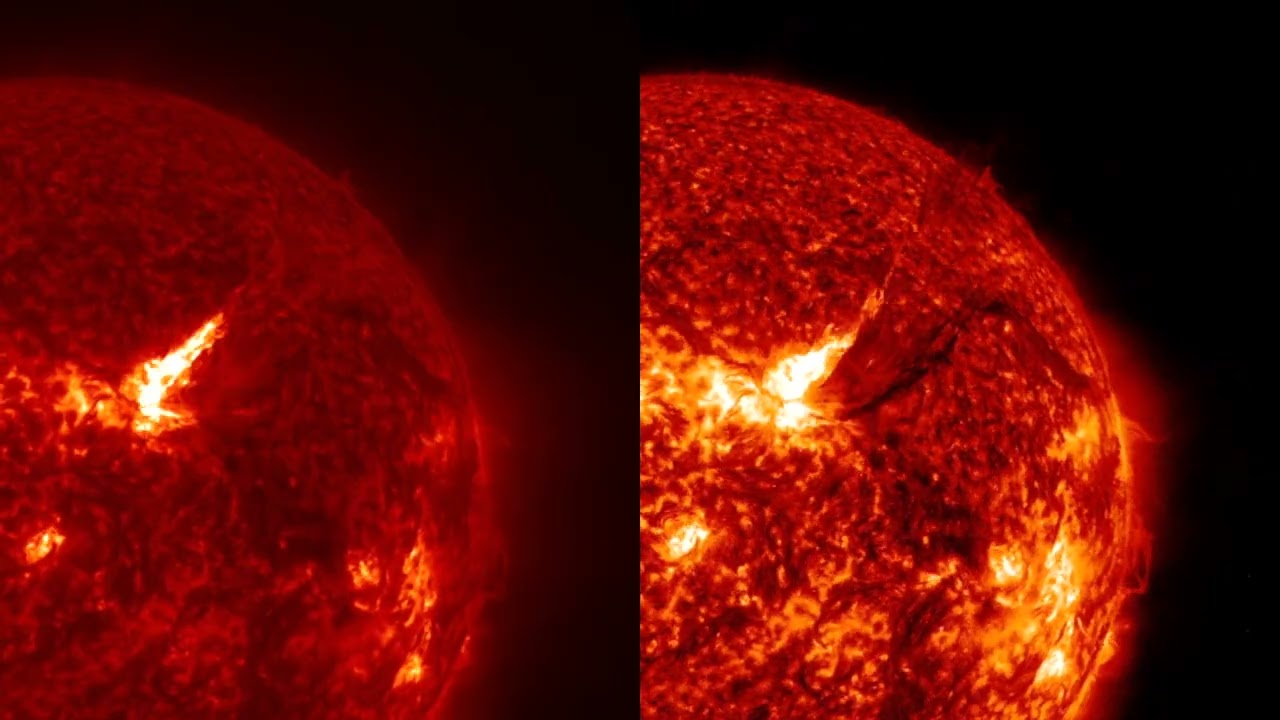
Solar Flares and CMEs at Earth - More Likely | S0 News June.3.2026
SpaceWeatherNewsS0s
2K views•2026-06-03



