Loeb uses his Harvard prestige to turn fringe speculation into a respectable academic pursuit, though his approach often feels like a calculated play for the spotlight. While his demand for hard evidence is a welcome shift, his eagerness for extraterrestrial explanations often blurs the line between science and showmanship.
Install our extension to search inside any video instantly.
This Harvard Astrophysicist Wants to Believe in UFOsAdded:
From the Free Press, I'm Will Ron and in this series I'm here to ask you a question. What should smart people, everyday Americans, think about UFOs?
Today, we are looking at the hard science of UFO studies. Serious scientists have been working on understanding potential extraterrestrial technology and UFOs for decades, and sometimes it's gotten complicated. Back in the 1950s and 1960s, the military brought in scientists specifically to debunk UFO sightings. But one of them, the astrophysicist J. Allen Heinik, became less certain over time that this phenomenon can or should be debunked.
That's not ideal if your assignment is to make the problem disappear. In 1968, he essentially torched his own credibility to get out of the job by blaming a series of UFO sightings over Michigan on quote swamp gas. Scientists are not keen on decisive statements without evidence. And the truth is there are cases of alleged UFO sightings that are hard to explain away. And once you admit that some of these cases remain unexplained, you have to decide how seriously to take them. Do you lean into the mystery or do you double down on skepticism?
Today's guest is someone who refuses to choose between those two options. Like Jay Allen Heinik, Harvard astrophysicist Dr. Avi Loe keeps an open mind and thinks the only way to approach this question is the same way you'd approach any scientific problem. You gather evidence, you test it, and you follow it wherever it leads. Even if the answer makes you uncomfortable or sounds at first a little bit crazy. When humanity discovered the first interstellar object to visit from outside our solar system, Loe invited controversy by arguing it was so unusual that it might have been built by an alien intelligence. He wasn't saying it was proof of aliens, but Lo says the scientific community is doing humanity a disservice when they insist that interstellar objects are little more than lost comets. We'll also talk about another Harvard professor, the late John Mack, psychiatrist who became a believer after hearing the accounts of people who said they had encountered aliens. Many of Mac's colleagues found his methods unound. He damaged his career and died in 2004. Lo takes a much different approach than his late Harvard colleague. However, so instead of asking whether UFOs are real, or whether the government is hiding something, we're going to ask a different question. There were something out there, something non-human, some advanced intelligence, how would we actually know? And what should we do about it? Dr. Avi Lobe joining us now.
Dr. Globe, thank you so much for being here today.
>> Thanks for having me. It's a great pleasure.
>> All right, I want to really start off with the question that's driving this whole series. Uh, this is the thing.
This is the key. What should smart people think about UFOs? When you're asked that question, what do you what do you say?
>> It's not about stories. It's not about testimonies.
It should be about facts, evidence.
uh you know our imagination uh is uh includes a lot of possibilities that are not realized in in reality in the physical reality that we all share. And very often wishful thinking leads us in directions that are not realistic. And you see that obviously on a daily basis in politics, any human endeavor. uh and the history of humans is full of stories that were faked not real. And the answer to that is the best path forward is the scientific approach which is uh basing your assessment on evidence that is tangible that everyone can look at on as much data as possible to inform us and you know um I I think that it's possible that we are being visited by some extraterrestrial uh products that were sent in our direction. The reason I say that is because the Milky Way galaxy has a 100 billion stars like the sun and about 10% of them have a planet the size of the earth roughly at the same separation and the the most common scientific folklore is that we came out of a soup of chemicals on the surface of earth. So you just do the same thing you know billions of times and I think it's arrogant of us to assume that the outcome would be different in all of these cases. Uh it's quite likely that things like us existed billions of years ago and it takes less than a billion years even for our 1970s technologies that were used to launch the Voyager spacecraft uh to cross the Milky Way galaxy, the Voyager spacecraft within a billion years will be on the opposite side of the Milky Way galaxy relative to the sun. And so that means that other civilizations that predated us because the sun is a late star, you know, it formed only in the last onethird of cosmic history. Most stars in the Milky Way galaxy formed billions of years before the sun. There was plenty of time for civilizations like us uh that started their technological clock earlier to have reached our backyard by now. This is completely reasonable. This is common sense. Uh the only thing uh we need to do as scientists is to check for any evidence related to that. Now it's possible the US government collected such data because they were monitoring the sky. They were monitoring the oceans. And we have to see the evidence before we believe it. Stories are not enough. You know, we all know about the uh even eyewitness testimonies that put the people on death row until DNA tests indicated that they are not guilty. and and so you know I I I would be very hesitant to believe what people tell me without seeing the evidence. So it it's really simple you know if I would see the materials or I would see uh the images of high resolution let's say coming from US government satellites that indicate something behaving in ways that cannot be reproduced by humanmade technologies then the answer to FM's paradox where is everybody is very simple right here.
>> Well that's interesting we were actually about to get right into fair paradox but I want to just kind of talk to just boil what you said down there. You're saying that what smart people essentially should do is wait for the evidence, wait for the physical evidence, and in the meantime keep an open mind.
>> Yes. And when you say smart people, you might say, "Oh yeah, of course the scientific community should be full of those people, right?" And so you would expect scientists all across disciplines to abide by this simple rule. Let's be guided by evidence and not by our imagination. You you might assume that's the case. Well, the answer is not quite so because within the mainstream of theoretical physics for 50 years, the prevailing paradigm is uh string theory trying to unify quantum mechanics and gravity by contemplating the possibility that we have extra dimensions. Now there are no experimental tests. We don't know if this idea is correct. There are no proposed experimental tests and in fact the theory does not even make a prediction that can be ruled out. And so you have the entire mainstream of theoretical physics for 50 years contemplating an idea that in the foreseeable future will never be tested.
And so you might say is that really physics? So I'm saying it's not as if you should assume that every scientist is um you know making a pledge to just dedicate time to ideas that are tested within their career. That's not the case within science right now. And what I'm saying is that's what smart people should do. Why? Because we can always imagine things that do not exist and waste our time exploring them. And even if it's, you know, the beaten path or or the mainstream uh considering things that were never tested, we shouldn't believe those things for the same reason that we shouldn't believe crackpots coming up with all kinds of conspiracy theories. Um we should be guided, smart people should be guided by evidence because over and over again we were uh we we witnessed situations where you know it was popular to believe something and then it turns out the reality is something else. Starting with the Vatican putting Galileo in house arrest when most people thought that the earth is at the center of the universe turned out to be wrong. Even though the sun moves in the sky, it's because the earth moves around the rotates around the its axis and uh the sun, you know, the earth moves around the sun and the Vatican admitted that in 1992 after it was completely obvious that was 350 years after Galilog died. They admitted that he was right. Uh, and that was an embarrassment, but it shows you that humans can believe for centuries in the wrong ideas. And smart people should basically follow what the data says if there are anomalies, things that do not line up with traditional thinking. We should be intrigued to get more and more data about these anomalies. Instead, what you see in the mainstream of science as much as in among conspiracy theorists is that you know these anomalies are often shoved under the carpet of traditional thinking or you know the imagination uh of of people and you know I wouldn't expect any encounter with an exother civilization to follow the uh script of uh movie writ science fiction writers in Hollywood because their training data set was limited to earth. Uh whereas anything coming from another star is being trained on a data set from that that includes much more real estate than you find on earth. And our imagination is very limited. It would be far more fascinating to have a real encounter with extraterrestrias than to go to the movie theater and see what you know those script writers had in mind.
Uh well, I just want to say first as a Roman Catholic, I want to extend my apologies to the Galileo family. That was that was really a thing we shouldn't have done. And and uh you know, we feel bad about it. Um and I want to talk to you a little bit about what that first contact might look like, but first I want to ask there seems to be I sense there's a an innate human reluctance uh to believe that we're not alone. Uh Obama made this comment uh President Barack Obama made this comment on a on a podcast. Uh he later clarified it, but he was asked it's like are aliens real and he said yeah they're real. Donald Trump President Trump then comes forward and says that he had released confidential information then promises this disclosure.
But there is again this innate human reluctance it seems to accept that even that's a possibility because I mean you're talking about an ex-president and the current president of the United States saying that they're going to release information on whatever these UFOs are. I'm using UFO not UAP because I I don't like the government language.
>> Yeah, it doesn't matter because we don't know what they are, >> right? We have no idea what they are. We can call them We can call them Jeff for all we care. So, but these UFOs, um, isn't this in a sense the biggest story in the world right now that we seem like we might be on the verge of some sort of disclosure or detection or first contact? It is. As long as there is substance behind those words, uh, it's clear. It's obvious to me looking at it from a distance because I was never privy to anything the government has. Um it's clear to me that there are things that the government is unable to identify. The intelligence agencies, the Pentagon, they have some data, let's say from US government satellites, from materials collected in various sites.
They have some data that they cannot easily explain as humanmade technologies. And the question is what is it? Now they don't put the the best minds in science uh to explore this data because they don't release it. They classify it and the reason they classify it is simple. Either the data was collected by classified sensors. So you don't want adversarial nations to know about our capabilities.
>> Sure.
>> Second reason is more um to protect those officials within the Pentagon or the intelligence agencies. You know, they are they prefer not to be scrutinized for not doing their job.
They're supposed to figure out what flies in the sky. And if they can't do that, it means that they're not doing their job. Because if this is something that another nation developed that they cannot figure out, uh that's a very bad situation and they would prefer Congress not to look over their shoulders. So they would classify or deliver the information to some uh partners um you know in corporations so that nobody can look at it. Nobody can ask for disclosure of that. So these kinds of tricks are meant presumably to avoid any scrutiny of the intelligence agencies and uh the question is what does the US president knows know about it? What what is this compartmentalized?
Um, you know, I had a visitor to my home uh that used to be a high level official uh in Loid Martin and he said that it's not wrong to assume that Loit Martin received uh materials from crash sites that are nonhuman uh and potentially technological and uh then I asked another one another former employee and he said he never heard about it. So it's possible that these things are not disclosed very broadly and they didn't put high level scientists to look into them and so it's sort of uh put aside brushed aside because if it's not humanmade it's not a matter of national security. Um my point is uh you know if if we are dealing with whatever was retrieved let's say 50 years ago uh it's completely irrelevant uh for today's technologies because humanmade technologies evolved so much over the past 50 years that what was whatever was found 50 years ago is not a security risk anymore. So if it's if it came from outside the solar system if something is scientifically important you know that's my day job as an astrophysicist to figure out what it means and they should share it with people like me. Uh and so I just don't know what they have now when people are reluctant to discuss it people that don't have access to the evidence. Uh it could be either because um you know that there is a lot of nonsense being said about this subject you know by people of all you you have conspiracy theories.
You have a lot of very loud people on the internet having all kinds of theories and and and at some point you know uh as you define smart people uh you know do not want to sleep in the same bed with all these uh crackpots and and people who spread misinformation. So they avoid the subject. That's one aspect of it. Uh and also there is so much noise that you don't know what the signal is. Um but I say that as a you know as a responsible scientist we can we cannot approach this like any other subject. You know the there used to be a time when humans didn't argue that we the human body should not be operated because it has a soul in it and you would hurt the soul if you open the human body. By now we know that's not real and in fact a lot of lives are being saved by medical procedures that open the human body. So we made progress even though we dealt with a controversial subject for centuries. So I think we can deal with any question in a responsible way and we shouldn't be uh steered away from it just because some other people uh you know make no sense when they speak about it. Um and with respect to why people uh you know are u reluctant to include it in the mainstream of science you know I think there is this tendency to think that we are at the top of the food chain that obviously on earth we have been more intelligent than many other species and we are allowing ourselves to eat them uh you know in restaurants they are served on the menu just because they're less intelligent than we are uh and and we tend to extrapolate that and say oh within the Milky way galaxy we are so unusual that there is nobody as intelligent as we are maybe we are alone maybe Elon Musk was the most accomplished space entrepreneur since the big bang 13.8 8 billion years ago.
To me, it makes no sense. Okay. I think it's arrogant. I think it's shortsighted. Uh, you know, we often the mainstream of the astronomy community that I belong to, uh, is, you know, define the search for microbes as the highest priority willing to spend 10 billion dollars or more in terrestrial microbes, >> space observatory, habitable space observatory. Yeah. Um, over the next two decades. And my point is, you know, if you go on a date, >> uh you can uh aim low or you can aim high. Uh you we know that the most common dating partners are mediocre. So you might say, you know, I want my dating partner to be a microbe. Uh that's not true for me. Uh I I I differ from the mainstream of astronomy because I say, let's aim high. Let's search for a partner that is more intelligent, more accomplished than we are because then we can learn from it. And you might say there are many more microbes. Yes, of course, uh, than intelligent beings.
That's true. But the signatures of those are very subtle and difficult to detect.
That's why we need to invest $10 billion in a telescope to do that to look for the chemical fingerprints in the atmospheres of exoplanets. But uh if if there is a a spacecraft arriving close to Earth, you know, just we just need a high resolution image of it uh to to figure out that it's not a rock. And and so it may be easier to look for packages in our backyard than, you know, to look far away into houses on our cosmic street and look for microbes there.
>> You're actively looking for intelligent life through the Galileo project. Uh I want you to talk a little bit about that. You mentioned how uh First Contact is probably not going to be anything like how we imagined it to be, but I'm interested. You must think about First Contact. You're you're looking up at the stars. You're examining the sky, and I know you're you're an optimist. uh you're a resolute optimist, but looking out at the sky, looking for intelligent life, looking for things that might be higher on the food chain than we are and might see us as food. Is some part of that terrifying to you as you look up?
>> That's an excellent question. You know, when you go on a blind date and here we're dealing with a blind date interstellar proportions, uh your dating partner may be friendly or maybe a serial killer. You never know.
>> You never know.
>> Uh and you know the way I see it is >> it's better to be an optimist because uh sometimes life is a self-fulfilling prophecy.
>> Yes.
>> Uh but also the fear from the risks involved will bring a huge amount of um funding to space exploration. Uh because um once we realize that we the risk from the sky is not just associated with rocks. You know, we know about the dinosaurs being extinguished as a result of the impact of a Manhattan islands size rock asteroid with with on earth you know 66 million years ago. Uh we are trying to protect the earth. The there is an office in NASA called planetary defense from uh impacts that could cause catastrophes on earth because we are smarter than the dinosaurs. But we've never contemplating uh what we should do in case there is alien technology out there uh coming towards earth and and that was my recommendation when 3i Atlas was discovered in July 2025. I said we should uh classify each interstellar object that we detect uh on a scale that is now called the lobe scale where uh zero is a natural object with no threat to humanity but 10 could be a significant threat sort of like a black swan event. You know most of the time you'll find rocks but every now and then you might find a technological device that could potentially be a threat. And I think it would be a blessing to space research because at that point we might say okay we need to defend earth. Um and um we should allocate a significant fraction of the annual budget for military purposes. It's $2.4 trillion worldwide every year. uh and suppose we invest a trillion dollars a year uh in space exploration just creating interceptors that would mitigate the risk from interstellar objects that could be alien technology by imaging them by deciding which one is uh a bigger threat uh or and then colliding with them or doing something u in that case you know with a trillion dollars a year a space budget I can imagine that within this century we will build a space platform that could accommodate humans and will have everything that humans need. Sort of like uh having a city in space. You know, we >> a life Noah's arc basically a life spaceship. Exactly. I mean, we made a transition from the jungles of Africa to a high-rise in a city. I think this transition will be even easier because uh going from a high-rise in a city to a a city in space is is less of a leap and with a trillion dollars a year we can definitely bring the best uh engineers, architects, scientists to a project that is uh orders of magnitude more than the Manhattan project. It's Manhattan project on steroids uh to build a space platform. And and this is really needed because if you think about it, a billion years from now, how will Earth be remembered? How will we be remembered?
Humanity, you know, if we die as a result of a self-inflicted wound like developing AI that will kill us or, you know, global warming, whatever risk you have in mind, or the sun becoming bright and then evaporating all the oceans, that will definitely happen in a billion years. um any kind of catastrophe that will kill humanity. You know, nobody out there would mourn our uh disappearance.
There there is nobody that cares because probably similar events occurred on exoplanets and and so we will not be remembered. The only way for us to be remembered. The only monuments that will preserve a sense that we existed in the history books of the Milky Way galaxy would be a a space platform, a spacecraft that we launch out of the solar system. Uh and that will carry, you know, a memory of where we came from and and um in the long term you know uh that is the only thing that counts. If you believe Darwinian evolution, you know, the fittest survives. Who are the fittest? those that are able to leave the the rock that they were born on, there is much more real estate out there, you know, and and and and then they could venture into new opportunities. And that's the future of humanity. If we are smart enough, that's what we will do. So far, we are not smart enough. We are just investing the trillions of dollars every year in either killing other people on this rock, fighting over territories or things, or protecting ourselves from others killing us. Just think about it.
We are very shortsighted as of now in in geopolitics.
>> You want that money. You want it spent on the us as a species moving to other planets, getting off of this planet and surviving should this planet go to hell, basically.
>> Oh yeah. I don't I don't believe in going to Mars, you know, because um Mars is the worst place to be on. If you think about it, it's a desert. Doesn't have an atmosphere. Your body gets bombarded by energetic cosmic rays and you're destined to die if you live on the surface within a few years for sure.
Uh and you can go underground. But why should we suffer like that? It makes more sense to build a space platform that can accommodate humans, has all the facilities uh that provide uh humans with what they need and with AI assisted medicine, humans can live longer and maybe live for the duration of very long journeys. Uh so I I believe in us creating a habitat rather than relying on a a rock that happens to be close to earth. It's a much worse place to go to.
Uh and um so so in the long term that's what matters I think. But I'm not naive.
I don't think that our political system will recognize that this is what we need to do. I believe that we need a wakeup call and the wakeup call will come from us noticing that someone else did it already. Okay? that we are being visited and someone else managed to to survive or at least make some monuments that allow us to notice that they existed billions of years ago very far away you know tens of thousands of light years away. Uh and once we see that we might be inspired to imitate them. Um you know like Oscar Wild said that the biggest form of flattery is imitation. And uh so and of course you know these would be siblings of our family of intelligent civilizations um and uh just like in in in any family sometimes you are jealous of your siblings if they're more accomplished but but I think it will bring us to a better place.
>> Okay. There's two questions I want to ask you. First of all just for people who are unfamiliar with your work before this. Uh, I want to put you somewhere on a scale. And I know that's a little bit unfair, but play along with me if you will. All right. If you're a 10, you believe that definitely extraterrestrial life exists, has visited Earth, has interfered in our affairs, the Roswell crash happened, blah blah blah, all of that stuff. If you're a one, you believe that all of that is just completely impossible, complete nonsense. There's nothing out there that we've encountered so far. Where are you on that? And I also want to ask you about the bet that you have with Michael uh >> Shermer.
>> Shurmer. Yes. Known skeptic, a science writer. You have a bet with him that by 2030 we're going to find alien life. And so those two questions to you. Where are you on the scale? And why are you so confident that by 2030 we're going to find this?
>> You know, in quantum mechanics, particles are not perfectly localized.
They are us they usually have a wave function that allows them to be in many different places at the same time. So my opinion on the scale that you mentioned is I I'm evenly spaced across that scale because I don't have tangible evidence for one or the other. So you're so I'm allowing for all these possibilities.
Now that makes me different from most scientists because they are locked on the idea that uh it's very unlikely that we have been visited. and I say I don't know but until I find the evidence. Now with respect to the bet with Michael Sherman there is one difference between me and him. He's not a practicing scientist. I am a practicing scientist.
I'm leading the Galileo project. So I have the benefit of collecting necessary evidence and promoting my chances of being right that we will find something.
Now we will find something if it exists and I don't know if it exists but without seeking the evidence we will never know. That's the mistake often done that people have an opinion and they say we shouldn't allocate any resources uh to the search because we believe that there is nothing to search for. I say no. Uh it makes actually as much sense to search for technological artifacts as to search for the relics of for the fingerprints of fake microbes.
uh let's hedge our bets and do both of them at the at the level of billions of dollars investment in the coming years uh because it makes a lot of sense and because the public cares so much about whether we are alone or not in terms of intelligent beings and uh so my my point is I hope that in the coming years through my work within the Galileo project through disclosure of whatever government has we will know more about it as of now I just don't No, because the evidence is not at our hand and I can, you know, if it will be then I can tell you my opinion of whether it's conclusive or not. Uh, but I don't know what the government has. I would love to help them figure it out. I'm willing to sign a non-disclosure agreement uh in which I will not tell anybody uh of what they tell me, but they haven't signed me on that as of yet. Uh and of course you know if in in a future interview uh I will avoid your question you would know that I know something. I I'm just think of me as a curious child.
You know I I'm just I just want to know the answer. It's not in order to uh become famous. In fact if I discover that aliens exist with the Galileo project I will not waste my time going to Stockholm uh for cocktail parties associated with the Nobel Prize because that would be a waste of time. I will play the Bob Dylan card and just avoid uh whatever messages I I get from the Nobel Committee because uh you know it's far more exciting and important to figure out what we can learn about uh our our neighbors uh you know other civilizations far more exciting than being appreciated by humans. One reason I, you know, seek a higher intelligence in interstellar space is because I don't often find it here on Earth, >> which is rather disturbing considering that you are a Harvard astrophysicist.
That's that's usually a profession that we associate with kind of high IQ folks.
>> Well, um, it's not so much about the IQ.
Um, >> it's a lack of curiosity. What what is it exactly?
>> Yeah. So you know we are born uh into this world with a sense of curiosity and and early on it's a learning experience as kids you know we ask a lot of questions the adults in the room often say stop asking these questions just accept whatever we tell you that's what the adults in the room do and as you become an adult you play the same role very often including in academia and I refuse to do that I basically say I want to maintain the approach of a kid. Uh, you know, when I see that the emperor has no clothes, I don't care if the adults in the room say that the clothes are invisible. When I see that the omua mua, the first interstellar object, has no cometary tail. I don't care that comet experts say that it's a dark comet where the the cometary tail is invisible because we haven't seen it. What are you talking about? Just be reasonable. If we don't see a cometary tail, it's not a comet. And the reason they said that is because it was pushed by some mysterious force and you couldn't assign the rocket effect to to this push because there was no gas or dust detected near it. So then they said it's a dark comet. But think about the spacecraft, you know, if it's being uh propelled or if it's being pushed by sunlight, something very thin like a light sail, you won't see any uh any any gas or dust around it. And so uh actually a few years after OMO was discovered, there was an object discovered with the same telescope in Hawaii um that is pushed away from the sun by reflecting sunlight and it turns out that one had the spectrum of a of stainless steel. It it turned out to be an upper stage of a rocket booster from a launch in 1966 by NASA. And in January 2nd uh 20 2025, there was an object found near Earth. It was cataloged as a near-earth asteroid by the minor planet center uh at at the Harvard Smithsonian Center for Astrophysics and within a day they said, "Oh, wait a minute. It follows the path of the Tesla Roadster car that was launched by SpaceX." So they said, "Sorry, it's not an astray.
It's not a rock. It's a car." And the only reason they knew that is because SpaceX launched it. But if there was a car that went through interstellar space, they would still insist it's a rock of a type that we've never seen before. So my point to those experts is, you know, just expand your training data set from rocks in space to include also technological objects cuz we know that we polluted space with technological objects and someone else could have done that. But that seems to be a very big ask. And you may say what I mean these are intelligent beings. Yes, of course, many scientists are extremely smart, but they're operating uh like the adults in the room because of societal uh psychological uh pressure. They don't want to take any risks because they worry about their reputation. They want to maintain the traditional opinions because that's the safe route for getting funding, getting honors, getting awards. And so they just have this herd mentality of following the beaten path.
And that's what you find in academia. I really am very frustrated by it because the whole point about getting tenure in academia is to explore ideas that may bring us to new knowledge. Ideas that are not necessarily within the beaten path. And if we invest all the resources along the beaten path and it leads nowhere, we wasted a lot of time and resources. uh and instead of just searching for microbes, why is it so difficult to allocate billions of dollars to the search for technological gadgets near Earth? It's really not very speculative. It's much less speculative than imagining extra dimensions, which is accepted as the mainstream in physics. I want to ask you about I mean you really burst onto the scene with the MUA MUA and uh another interstellar object the third interstellar object that we found three atlas we talked about that some months ago I know you're I read your blog your blog is fantastic I love reading it and uh you're still fascinated by that and the anomalies and I want to ask about both of those and which one you think might be more likely to be a craft uh that was built by somebody else uh but I also want to ask uh about the push back that you've received from the scientific community uh which has been I would say significant from my understanding uh and there was a fellow at Harvard uh back in the 1990s named Dr. John Mack uh he got a lot of push back. He was interested in the alien abduction narratives and he was studying those and he got in some trouble at Harvard. So those two questions to you I want to which one of those two things do you think is more likely to be a craft and Dr. John Mack did you know him at all? Do you see any parallels with his situation? I know he was in a totally different field of study. He was a psychiatrist but still he was somebody who was exploring something that was of interest to him and of interest to a lot of people and it hurt him. It hurt his career. Yes. So with respect to your first question I would say Mua was more pathological because it had a very extreme shape most likely flat and had this excess push away from the sun without any commentary tail whatsoever. Uh but 3 Atlas is also quite anomalous and I listed 18 anomalies.
Most recently uh I did an analysis of the Harvard space telescope images. We have 40 of them over the past few months. And when you remove the circular glow around this object, what you find is evidence for a symmetric system of three jets separated equally from each other uh coming out of the nucleus. And why would it be so symmetric if it's just pockets of ice on the surface of a rock? you know it's really surprising uh actually just yesterday I wrote a paper that uh uh shows that the latest data that we got from the web telescope from the Hubble telescope uh and from groundbased telescopes uh is presenting a big puzzle cuz if you adapt the size of three the nucleus of three atlas which is uh a diameter of 2.6 six kilometers, you can infer its mass. Uh, and then you do an estimate of the abundance of such objects if they're natural. You end up with a requirement for a mass reservoir that sends these objects into the solar system. That is orders of magnitude bigger than stars can accommodate. There is not enough mass in the planetary uh systems or protolanetary systems around stars to be ejected and make a large enough population of objects like three atlas.
So I'm talking about all the subbang the factor of a thousand at the very least mismatch. Uh and that is something I wrote about yesterday and um the astronomy community has not dealt with that. uh so that that there are a lot of unusual things about triatas we should try to understand them even if it's a natural object it means that you know we are missing something about it now with respect to the push back I would say most of my push back is coming from mediocre scientists I mean there was a recent situation that I wrote about in my essays and I have also a YouTube channel where I now feature uh those essays simply because there was AI generated fake videos of me and the only way for me uh to to fight against those uh fake YouTube channels is by creating my own content and then asking the administrators of YouTube to remove those fake uh video channels about me that were trying to make money out of me saying things that uh are not uh that I don't approve of. But at any event um I mentioned in one of those recent essays that there there was an editor in one of the most respected astrophysics journal that basically tried to block my papers one after the other without sending them to peer review. That never happened to me. I have more than a thousand scientific papers. But for some reason when I wrote three papers over the past few months about interstellar objects that particular editor basically said they are not of interest to the scientific community and therefore I will not send it to peerreview and I thought that's that's when the first one was blocked I sent it to another journal where it was accepted promptly without you know and I hear a lot of feedback from the people who saw the paper that you know they're happy and interested in it and then it occurred to me after the third one was blocked by the same editor that this was academic harassment. So I basically reported about it in an essay and um you know I just think it's completely inappropriate in the 21st century for an editor to block uh discussions that are obviously of scientific interest because a lot of people respond to those. Uh so that's one aspect of the but and I've never met that editor. I believe that that editor is unable to really understand the the scientific content in those papers and therefore dismisses those simply because they don't follow the narrative that that editor is used to. Uh and then uh in addition to those within the scientific community that I never met, many of which are basically just mediocre uh you have uh science popularizers. These are people that comment about my work you know and some of them are well known uh for example like Neil deGrass Tyson or you know people but if you look at their record they're not practicing astrophysicist Neil de Tyson didn't write a single scientific paper over the past 15 years you know these are people that talk about work done by other by other scientists and they're trying to basically their goal is to be popular that's all so wherever the wind blows they would follow and if tomorrow the US government releases data on UFOs or UAPs that indicates beyond any doubt that these are extraterrestrial technological objects they would immediately switch and say of course we always talked about it. We just said that the data was not out. So you know they are they will change their the color of their opinions based on whatever is being popular at the time just because they want to get a lot of likes on social media and everywhere and to make money. these science popularizers are just like commentators watch watching a a soccer match. I'm a player in the field.
>> Yeah.
>> And the the biggest benefit I have relative to this commentator, you know, I publish a paper every week, every few days, I have something. Um the difference between me and them is that I can actually score a goal on the field.
I just don't I don't need to talk about, you know, what is legitimate or not legitimate to do on the soccer field from the bench. I I can actually play and that's the difference. And but they are pretending to protect science. How dare they? They're not doing science and they want to protect science against practicing scientists like myself. This makes no sense whatsoever. Okay. So that's the kind of push back and of course there is also push back from scientists that are respectable but are simply jealous of the attention that my work is getting and I would say you know the strongest force in academia is jealousy.
>> Yeah.
>> Now within Harvard you know I served for a period of nine years as chair of the astronomy department at Harvard. the longest serving chair. I will uh served as director the founding director of the black hol initiative at Harvard. Steven Hawking came to my home for Passover when we inaugurated that that center uh for black hole research uh in 2016. Uh and then I also have been for 20 years the director of the institute for theory and computation. I chaired the board on on physics and astronomy of the nationalmies wrote nine books. So at Harvard people who know me you know in fact I gave a colloquium just a couple of weeks ago and uh a lot of people came to me as senior people who said everything you you you say makes a lot of sense. Um and um I have no push back you know very different from I don't know the story about John John Mack. I I've never met him but there is another distinction relative to Mac and that is he focused on what people tell him.
>> Yeah.
>> So that's the whole point and imagine Stories versus evidence. You're talking about >> stories versus the hard evidence. Yeah, >> exactly. Because you can have you might say, "Oh, well, people say tell the same stories. It's all about flying saucers and they were abducted in this and that way." Well, first of all, they hear about each other. Secondly, whatever they say, if it's consistent, even though they don't know about each other, might be a figment of their imagination.
basically a a some signature of the way they that humans think, the way that they imagine things happening. Uh and I don't care about human psychology. This is really not my uh you know my my interest. I don't care what humans say.
In fact, I I really I'm really curious about nature, not about what humans tell me.
>> Uh and so I'm very different in German.
I would never uh spend any time uh you know doing research on what on the stories that human tell me because many of these stories must be you know either wishful thinking or figments of the imagination uh and I don't care why they came up with similar stories and why why they went through all kinds of psychological transformations that is completely out of you know this I'm trying to figure out we have a neighbor just think about it I'm sitting at home.
There are lots of family members telling me things and I just want to know if we have a neighbor. Now, many of my family members might say, "Of course, we have a neighbor because I saw one day someone approaching the backyard in this strange way and that someone tried to push me aside or now, how do I know that this story is right that the family member tells me?" I just want to look around and see a clear signature that we have a neighbor. either seeing the neighbor knock on the the front door or seeing some package from the neighbor that arrived to the mail the the mail post, you know, and uh or um the the the mailbox or um finding a tennis ball that was thrown by neighbor or seeing from a distance some construction project in the neighbor's yard. You know, I don't care what signature it is, but it has nothing to do with what the family members are telling me whether they were abducted or not. That's not the point. I want to see the evidence and that is really key and that's the way that a physicist should work.
>> President Trump after President Obama made those comments, President Trump said that he was going to disclose uh what the government knows about UAPs, UFOs, aliens, whatever we're talking about here, this phenomenon that we are studying. in your wildest dreams, like what what is the thing that that you would hope to see there than some sort of document dump? Is it is it a clear photo? Is it is it uh biological remains? Is it what in your just wildest imagination could you imagine coming out of that?
>> Right. And I should say I'm not just waiting for the government to bring this data. The Galileo project that I'm leading is operating three observatories when we now have the ability to figure out distances of objects by triangulation looking at the object from different directions. We can figure out velocities, accelerations and if they lie outside the performance envelope of humanmade technologies, we know that we are dealing with something else. So at any event, what I would like to see is a high resolution image. Suppose US government satellites which are now monitoring ballistic missile launches from Iran, you know, they can uh look down at at Earth with very high resolutions, you know, uh few centimeters or or so. If they see an object moving, they can easily measure the speed, acceleration of it, there will be no doubt if an object is performing outside uh the envelope of humanmade technologies. No doubt about it. I would like to see that an object moving and perhaps in high resolution.
It this kind of data may exist and was never released because the the sensors are being are classified. Uh or if they retrieve materials from crash sites that obviously they do in order to find the technologies from adversarial nations.
You know that's a practice that any government does. Retrieve materials from crash sites. Um but if some crash sites include materials from uh nonhuman uh uh technological origin, I would like to see it. Uh I would like to examine it.
It's easy to verify that for example the isotope abundances in this material are inconsistent with the solar system origin. All the material in the solar system has isotopes. Isotopes are basically an isotope of an element is uh basically the element the atom having different number of neutrons in the nucleus. I mean the neutrons do not affect the chemical properties of the atom because they're neutral. Uh the chemical properties are controlled by the number of electrons that the atom has which equals the number of protons that the atom has. But you can add neutrons and by that have isotopes of the same atom. it behaves the same way chemically. Um, and the only way to change the isotope ratio of an atom is by nuclear reactions which require temperatures above 10 million degrees.
You don't have those in most circumstances. So when you find material with a different abundance ratios of isotopes, you can tell that it came from a different source in solar system materials. I can do that experiment very quickly. I did that with respect to materials we retrieved from uh the Pacific Ocean. We retrieved materials uh by by going on an expedition to um a site where the stellar meteor was found.
So um so that's what I would like to see either materials or a very high resolution image that beyond any reasonable doubt indicates technologies from outside of this earth.
>> That beyond reasonable doubt is is a tough thing to clear. I mean there's a lot of people who believe that the tic tac video for example uh you know >> well they're not good quality they're not scientific quality and moreover we don't know the distance to the objects so I would like to have um enough evidence that makes it clear and you know if such objects exist we should be able to to see them we don't need to wait for the US government uh we can actually look up >> uh I hope you find them first just as a personal matter and when you do would you please tell me first?
>> That's what Steven Spielberg asked me uh when I met him at the honorary degree uh gathering at Harvard University. He said please let me know first because he wants to make a movie about it. I guess I'll make a movie to tell you as well.
Both you and him I can text you. Yes.
>> I I'm willing I'm willing to share this information with Stephen Spielberg. But if you could just leave it to the two of us that would be great. All right. Just a quick lightning round if you will indulge me.
>> Sure. Go ahead. Um, okay. So, did you see the documentary The Age of Disclosure?
>> Yes.
>> Yes. And you had Marco Rubio there back when he was a senator before he was a secretary of state. And he's uh since clarified his his remarks in there, but the there's a quote from him that I love. He said, "We have people with very high jobs in the US government that are either a liars, b crazy, or c telling the truth. And two of those options are not good. If you had to get bet, would you go with A, B, or C?
>> Oh, and I mean people that tell the truth are definitely the ones we want.
>> Yes. Yeah. But do you think that the the people who have the whistleblowers who are coming forward and test?
>> No, I think it's a mixed bag. I think most of the most of the objects that are being talked about are probably humanmade and um I would say at le the fraction of mysterious objects is probably less than 1%. Yeah. I mean um uh it's very likely that people had seen humanmade technologies or natural events and thought that they are unusual but they're not >> and were perhaps told they were UFOs as the Wall Street Journal reported.
>> I mean one wrong reason to have this narrative is uh in order not to let adversarial nations uh realize what the intelligence agencies know. So they would say, "Oh, we found materials in a crash site and it may be alien." But in fact, they know exactly that it was made by the Soviet Union or Russia or made by China and we just don't want to reveal that. So they dress it up as if it's sort of speculative. And then some people in the government hear those things and they believe that we have in our hands something from an another planet. But in fact it's it's it's just a way to to hide the the knowledge that the US intelligence agencies have. I know you're a man who is looking for hard evidence. You're a scientist.
That's what you do. But I think you're also just a discerning individual and you know how to read people. Have you ever talked to somebody who's had some sort of UFO experience and found yourself believing them?
>> Um, well, many of these people are quite sincere. Yes, I had very reliable people, you know, that speak with me at dinners and events and they seem to be very reliable, you know, there were reliable people also in the US testifying in front of the US Congress.
Uh, so I I believe that they are sincere. They really saw things that are unusual. But without having scientific quality data from instruments, you know, that's the key for doing science. You need instruments to record it.
>> Uh without that, without camera data, without material evidence, we just don't know. Again, I go back to the DNA test that brought a lot of uh crim people who were thought to be criminals. they were exonerated um after from death row as a result. And so without the DNA evidence, uh I would never cast a judgment on on on this matter.
>> In terms of what we have and what you've seen, what is the most compelling evidence that you've seen that perhaps we have been visited? As of now, it's just that we we saw the these very anomalous interstellar objects that we don't fully understand. There are things we don't understand about them. Uh and the scientific community is really trying to put them into boxes that are uh comets or asteroids.
And that's what I would um uh at this point relate to. Uh and I I'm really curious to know what the US government has. I'll be delighted to help them figure it out if they have something beyond that. But even free Atlas you know there was a foyer request freedom of information act request to the CIA whether they have any records about Free Atlas and they said that we cannot deny nor confirm such records and uh at the end of >> 2025 Vladimir Putin was asked by a journalist what what does he know about the Free Atlas from his intelligence agencies and he gave a very well-informed on the overview of FIA Atlas. So that demonstrates to me at least that perhaps within governments some people pay attention to what I say. Uh and if and if so uh they did discuss three Atlas within governments worldwide uh as a potential black sworn event that could bring risk to humanity.
Uh they just want to wanted to clear it up. uh but um it's progress and you know if we do find clear evidence for a future object that is definitely technological I think everything will change we should be ready for that we should think about that speaking of governments and your relationship with them and them listening to uh you there are three members of Congress who have really just come out and really been identified with this issue Anna Paulina Luna Tim Berschett Eric Berles who do you think is leading the charge they are doing the best job. Who are you most impressed with in this push for disclosure?
>> I'm impressed by all three of them and in fact in contact with them but uh most importantly with representative Anna Paulina Luna because um she actually contacted me over the past six months.
We we are in steady contact um and she wanted to learn more about 3i Atlas and she wrote letters to NASA encouraging them to get as much data as possible about 3A atlas. after I gave her the briefing on on on what we know about it and I'm really impressed by her vision.
Uh she's leading the charge u of the task force on unexplained phenomena and trying to um materialize the promise from uh President Trump that there would be some release of material. So they they have specific files that this task force wants to see that they know about that.
Uh and I I very much look forward to what her task force will find and as I communicated to her I will be delighted to provide scientific advice if they need it.
>> Do you have a sense from their conversations uh from these conversations of what were what is in those files?
Uh I I think that they learned from other sources that these files exist. Uh I visited Arrow, the old domain anomaly resolution office in the Pentagon uh just before I met Representative Luna uh in Congress uh on the 1st of May 2025.
And uh I asked them, you know, uh do you think you have access to everything within government? They said yes. I said, did you find anything unusual?
They said no except for a few FBI reports that were given by credible uh uh people that but without a lot of evidence that is gathered by instruments but nevertheless these are reports about unusual encounters uh from FBI agents.
So um you know there is definitely something to look into uh that is not being disclosed right now including those FBI reports and um I hope that there is more than that and the fact that former President Obama and President Trump are talking about it means that you know this is something that should be looked into because uh you know it's either a matter of national security if it's if we're dealing with things that are manufactured by adversar nations or it's the biggest discovery ever made by humanity and either way it's a matter of great importance and we shouldn't brush it aside and I'm happy to help government figure it out using all the knowledge that I have based on 50 years of practice of science I think we we should look into that with open eyes and um I wouldn't care much about what my colleagues say because once the evidence is out they will change the their um uh narrative uh and all these uh uh science communicators will change their narratives. Everything will change. Uh but I my ambition is to bring humanity to a better place where we would realize that we are all on the same in the same boat, you know, here on earth. Uh we are all part of the human species because we have a neighbor. Just think about it. If you have a loud argument within your family and someone knocks on the door, uh this argument immediately gets silenced. You don't want to leave a bad impression of the on the neighbor that uh looks at at the family from the front door. And um I think the same thing will happen as soon as we realize that we have a neighbor. Uh we would realize that we should change our priorities.
Instead of trying to kill each other, we should work together uh to preserve uh the longevity of the human species uh over billions of years in the future.
And the fact that someone else managed to do so or at least send us relics that are doing so will inspire us. And um I don't think it will affect religious beliefs because you know thinking that God can attend only to one child is very limiting. Uh we could have a family even if you're religious. U you know we might have siblings that are even more accomplished than we are and we it's to our benefit to learn about them.
>> Perhaps they have religions of their own and we can have a conversation.
>> Dr. We might we might ask them for example what happened before the big bang. Do you have any clue about it? You know where is the nearest hub where we can socialize with other intelligent beings. So that there are lots of benefits for us out of such an encounter.
>> Dr. Lo, thank you so much for being here today. We really appreciate it. Thank you so much. Thanks for having me.
Related Videos

Spiral Galaxy NGC 3370 from Hubble | NASA APOD 2025-11-05 #Shorts
galaxygallery
938 views•2026-05-30

SOMETHING inside the SUN is CHANGING
RaysAstrophotography
1K views•2026-06-03

Captured the Blue Moon (with a twist) 🌙✨ #space #bluemoon #telescope
realAstroExplorer
674 views•2026-06-01

There May Be A Giant Hole In The Universe... And We Might Be Inside It | The Cosmic Ledger Entry 015
TheCosmicLedger
145 views•2026-05-31

The Map We Sent to the Stars in 1977 — Why Scientists Now Regret It
TheAncientRecord7
183 views•2026-06-03

10 Planet Where a Black Hole Replaces the Sun
cosmicexplorer-EN
147 views•2026-06-02

Is this a copy of our galaxy? Discover Galaxy M81!
UniverseDocumentaries-cc4mb
995 views•2026-05-31
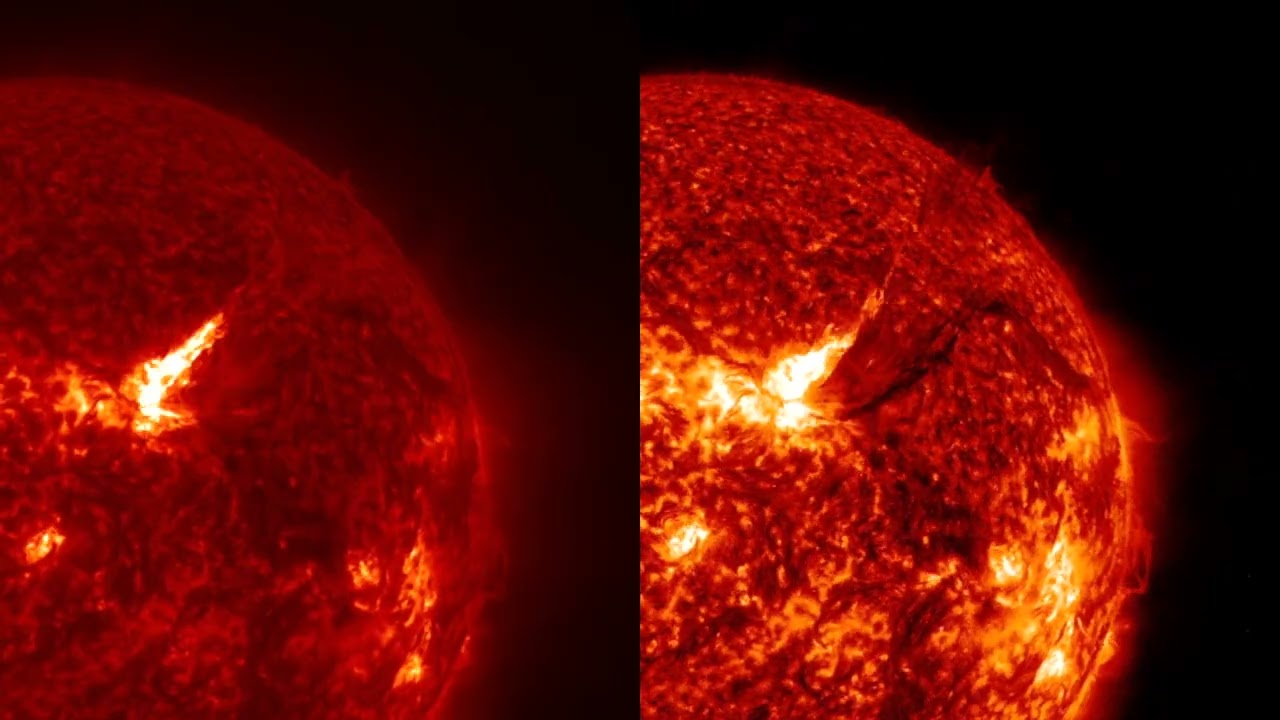
Solar Flares and CMEs at Earth - More Likely | S0 News June.3.2026
SpaceWeatherNewsS0s
2K views•2026-06-03



